
A minimalist sofa isn’t a single look but a set of structural decisions, about height, seat depth, material, and visual weight, that you can tailor to your room’s size, your lifestyle, and your budget. Whether you need a low-profile piece for a compact apartment or a deep-seated investment for a large open plan, the right choice hinges on how you balance clean lines against practical support. The six interpretations that follow range from under $600 to multi-thousand-dollar heirlooms, each with specific dimensions and maintenance demands you should know before you commit.
Key takeaways
Low-profile frames work best in rooms with under 36 inches of floor-to-seat clearance, but avoid them if you’ve pets or mobility needs that favor a standard 17-19 inch seat height. Warm neutrals like greige and taupe hide daily dust better than cool grays, while bright white fabrics require professional cleaning every 6-12 months to avoid visible staining. A 3-seat minimalist sofa (72–84 inches wide) suits medium rooms, but in small spaces under 150 square feet, choose a 60–65 inch two-seater that leaves at least 16 inches of walkway clearance. For renters, a slipcovered sofa with a washable, durable weave (like cotton-polyester blend) offers a bolt-on path, you can change the cover instead of reupholstering, and a modular base allows doorway disassembly without damage to walls.
Low-Profile Silhouettes: Why They Work and Who They Suit

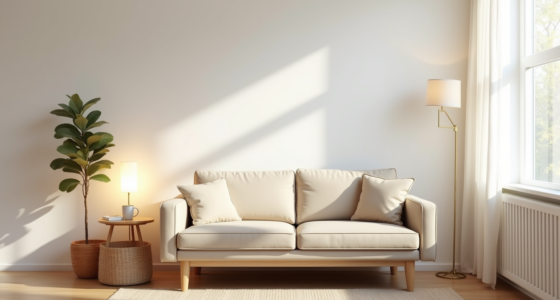
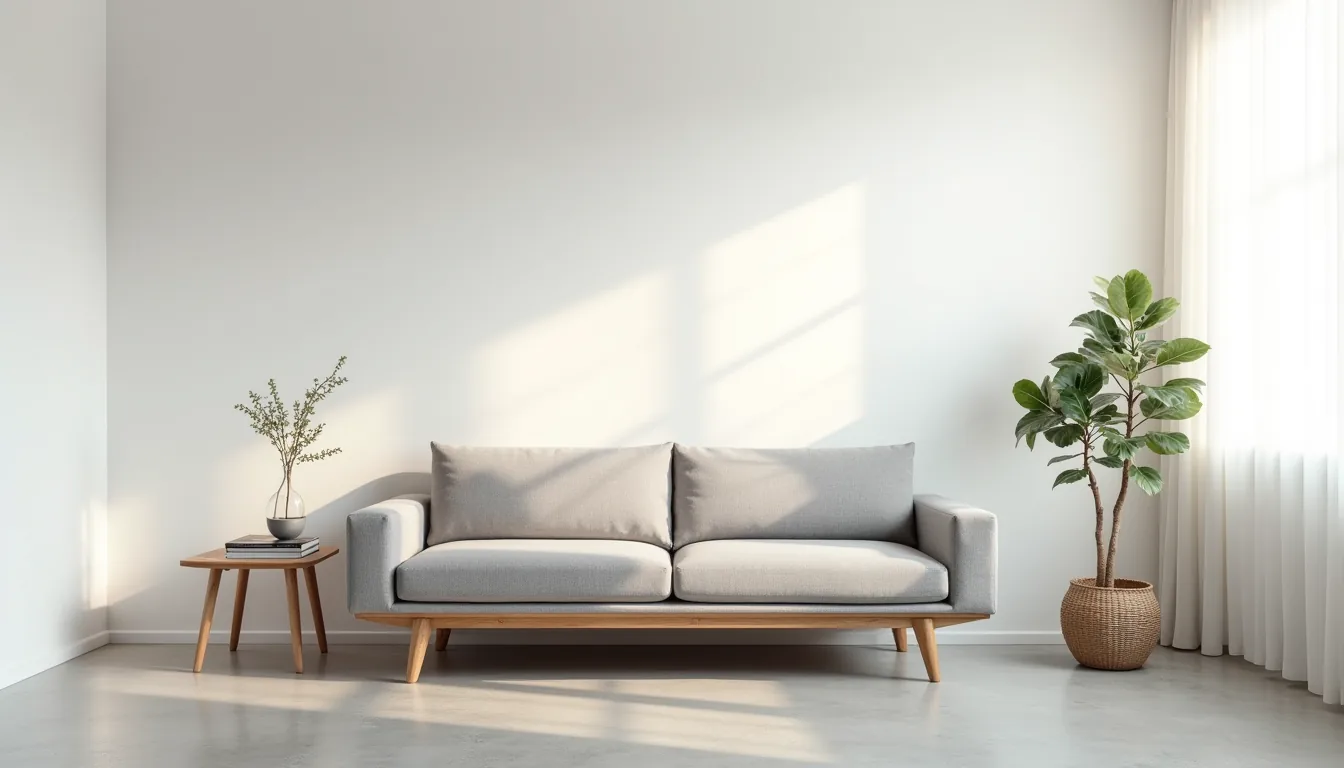
The defining feature of a low-profile minimalist sofa is its seat height, typically landing 16-18 inches from the floor. This is closer to the ground than the standard 19-21 inches you’ll find on traditional couches, and it works because it lowers your eye line, making the entire piece feel grounded and visually lighter. The frame in this setup uses tapered legs that create a clear 6-8 inch clearance underneath, which is critical: that open gap lets light pass through and makes a compact room feel larger than it’s.
If you’re furnishing a studio apartment or a space with low windowsills, this silhouette prevents the sofa from blocking sightlines and keeps the room feeling open.
The trade-off is practical. A lower seat angle puts more pressure on your knees and lower back, so this style suits people who sit upright to read or chat more than those who want to lounge for hours. To keep the low profile minimal but comfortable, you need a firm, high-resilience foam core cushion, soft down-filled versions will compress too much and leave you sitting on the frame within a year.
If you’re over 5’10” or have mobility concerns, test the depth (aim for 22-24 inches) before committing, because getting up from a 16-inch seat is noticeably harder than from a standard height.
Neutral Color Palettes: Warm vs Cool Tones for Minimal Spaces
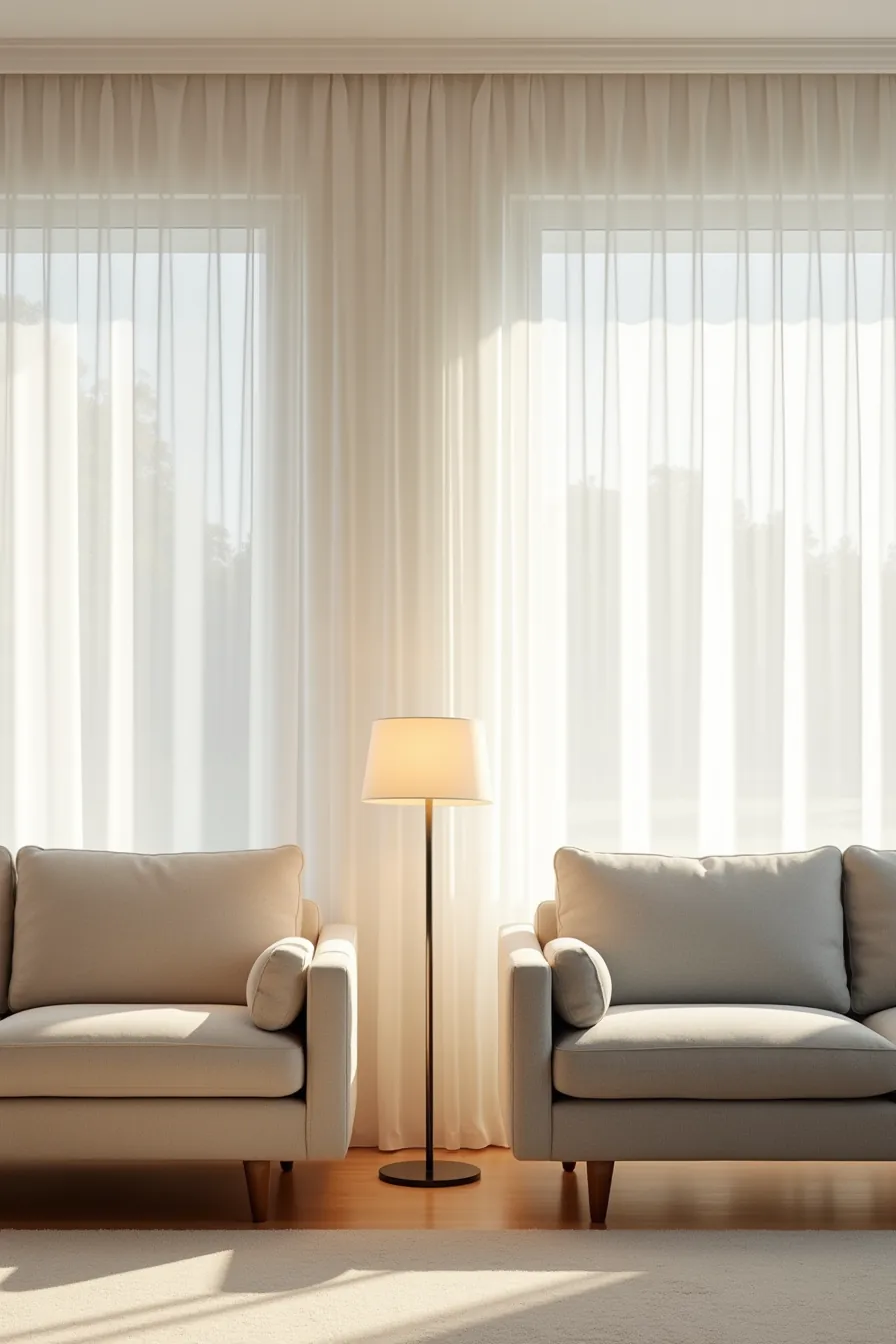
Warm neutrals like greige, sand, and warm gray carry yellow or red undertones. They absorb and soften natural window light, making a north-facing room feel cozier and preventing the space from feeling sterile. Cool neutrals such as dove gray, slate, and soft white contain blue or green undertones that reflect light, which suits south-facing rooms where warm tones can read as muddy or overly yellow by midday.
To decide between them, consider the room’s primary function. A warm greige sofa encourages relaxation and pairs well with wood floors, rattan, and brass accents. A cool dove-gray sofa sharpens a space meant for focus, think home offices or reading nooks, and pairs cleanly with black metal, marble, or chrome.
Test fabric swatches against your actual flooring and wall color at different times of day; a warm gray that looks perfect at noon can pull distinctly pink under evening lamps.
Whichever undertone you choose, keep upholstery in a matte, textured weave rather than a glossy or patterned finish. Matte fabric diffuses light evenly and hides daily wear, while a sheen will spotlight every crease and dust particle. If your floor is warm-toned wood, a cool sofa creates contrast that prevents the room from blending into a single beige mass; if your floor is gray or concrete, match the sofa’s undertone to it for a smooth, intentional look.
Material Selection: Durability and Maintenance for Minimal but Comfortable Sofas
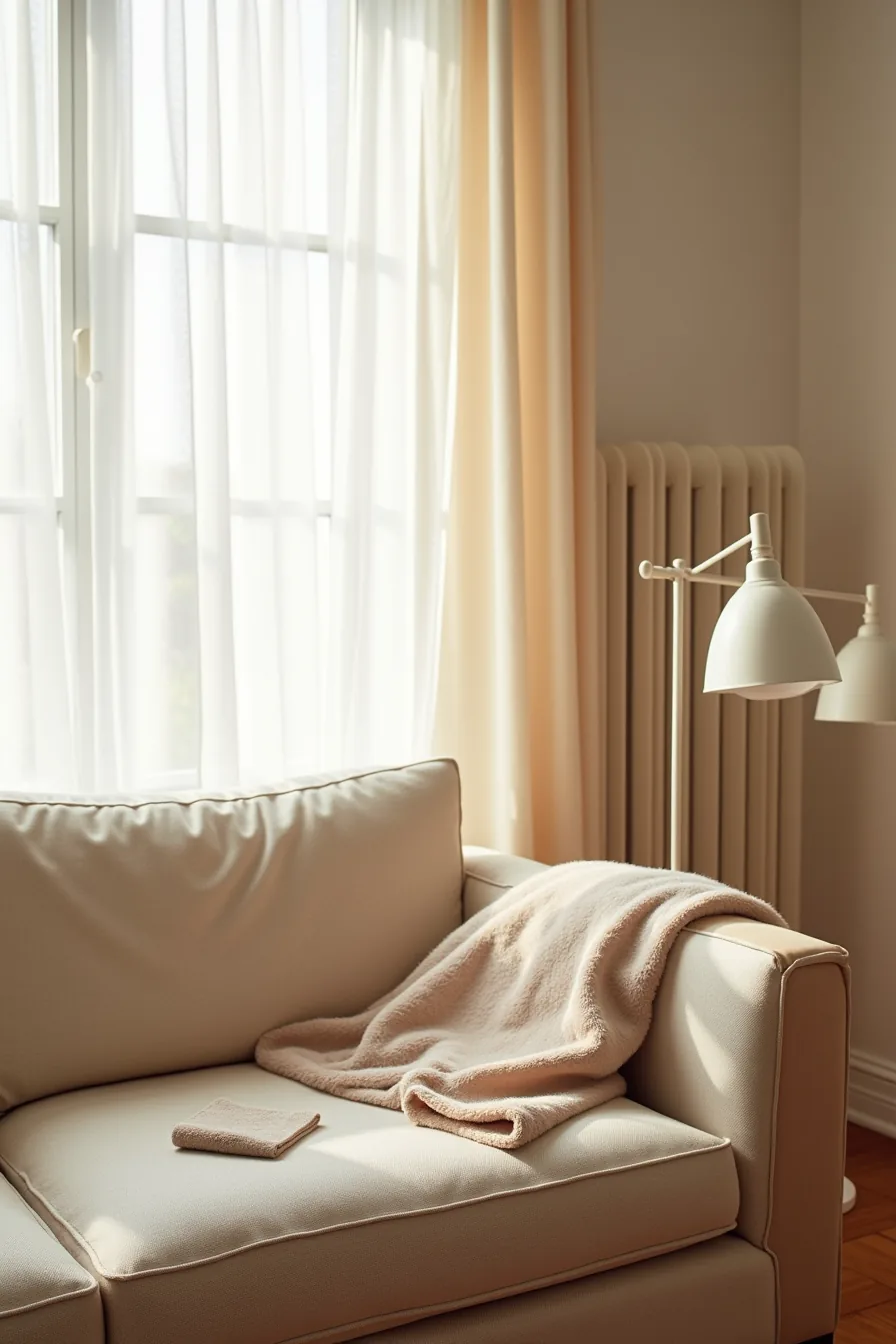
The fabric weave on one corner and the leather panel on the other represent the two ends of the minimalist material spectrum. A tight-weave performance fabric, typically a polyester-olefin blend in the $800–$1,500 range for a three-seater, resists water droplets beading on the surface and holds up to pets and children for roughly 7–10 years before pilling becomes visible. Leather, by contrast, runs $2,500–$5,000 for the same footprint but develops a patina rather than wearing out, lasting 15–20 years with biannual conditioning using a pH-neutral cleaner.
Your maintenance routine hinges on which side you prioritize. The fabric corner requires vacuuming weekly with an upholstery attachment and immediate blotting of spills; machine-washable slipcovers simplify this but need re-tightening after every wash. The leather panel asks for nothing beyond a dry microfiber cloth for dust and occasional conditioning, but it will show scratches from pet claws and sharp belt buckles permanently, a trade-off you can’t reverse.
The seam detail running along both corners matters for repair costs: reinforced double-stitched seams survive heavier use, while single-stitch seams on budget sofas ($400–$700) tend to split within three years, making reupholstery impractical at nearly the sofa’s original price. If you can’t commit to either extreme, choose a crypton-treated fabric that mimics leather’s stain resistance at half the cost.
Scale and Proportion: Fitting a Minimalist Sofa to Small, Medium, and Large Rooms

Start with your floor plan before you shop. Lay painter’s tape on the floor outlining the sofa’s footprint, then measure clearance on all sides. You need 18–24 inches between the sofa and coffee table for comfortable walking, and at least 30 inches behind it if the piece isn’t against a wall.
For a small room under 150 square feet, a compact 72-inch two-seater with a 32-inch depth keeps sightlines open; anything deeper visually eats the floor space. Medium rooms, roughly 150–300 square feet, accommodate an 84-inch three-seater with a 38-inch depth, which gives you proper lounging without crowding a side chair. Large rooms beyond 300 square feet can carry a 96-inch sectional, but only if you position it to define a conversation zone rather than float it mid-room and block circulation.
The three room outlines on the floor with the measuring tape show exactly this progression: the tape markings matter more than the sofa style, because a minimalist silhouette fails if its proportions fight the wall length. Match the sofa’s total width to roughly two-thirds of the wall it sits against, anything more feels stuffed, anything less leaves awkward negative space.
Placement Strategies for Visually Busy Homes
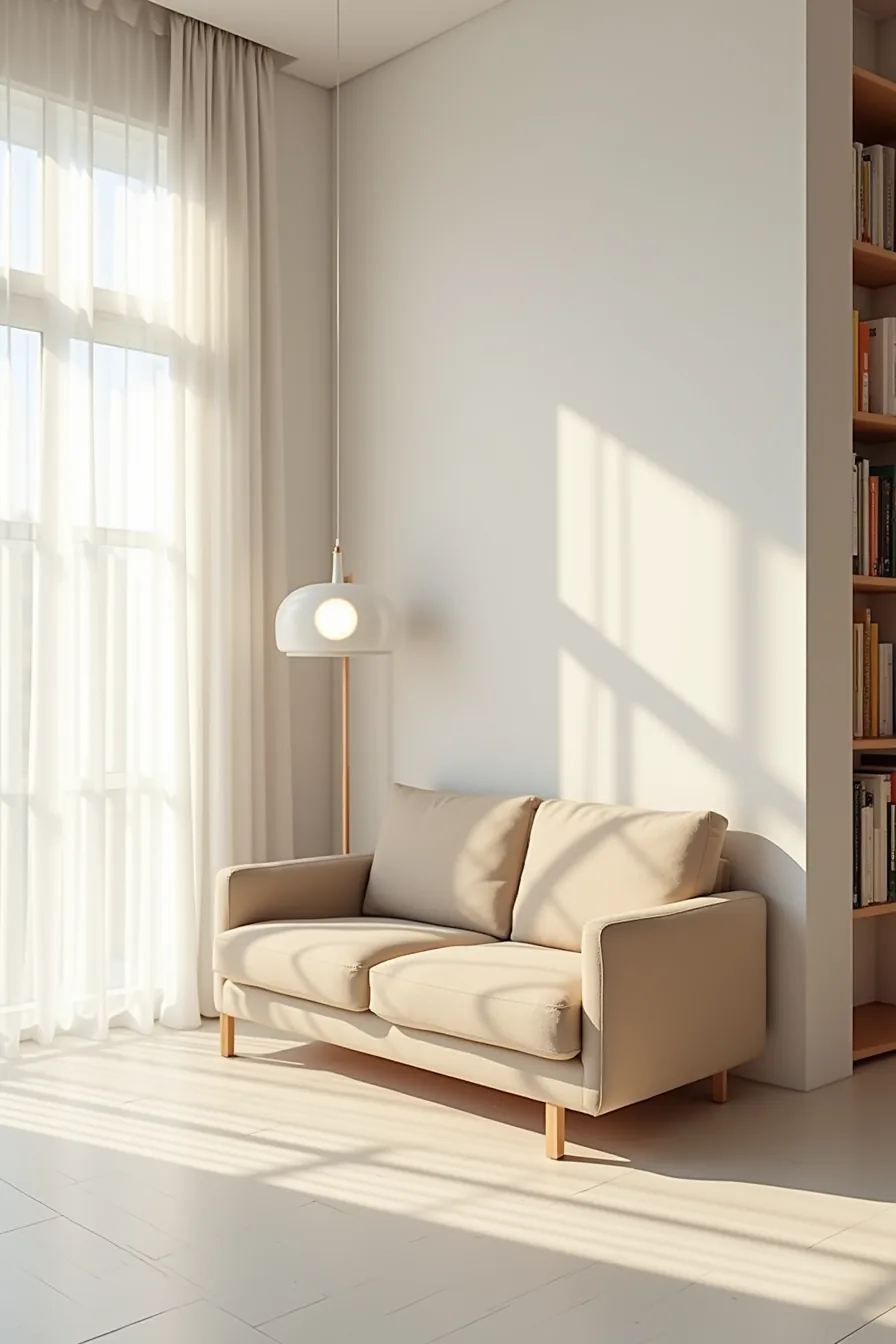
When a room carries visible clutter, bookshelves, plants, baskets, wall art, the sofa must act as a visual reset button. Position it perpendicular to the wall, facing the room’s main entry point, so the eye lands on the clean back and seat plane before scanning the surrounding shelves. This orientation creates a clear sight line across the floor, and the empty foreground becomes negative space that absorbs the busyness behind it.
A minimalist sofa works as an anchor only when it owns a simple backdrop; pushing it flat against a wall crammed with shelving makes the sofa compete with the shelves instead of calming them.
Use the sofa to segment a long or L-shaped room. Placed perpendicular with its back to the room’s center, it defines a sitting zone on one side and a circulation path on the other, no need for a bulky bookcase or screen to do the same job. Keep at least 30 inches of clear floor in front of the sofa, and resist placing side tables on both ends; one table and one open arm keeps the silhouette clean.
The shelving unit on the far wall stays visible, but the sofa’s uninterrupted profile gives the eye a resting point, turning visual noise into background texture rather than competition.
Budget, Rental, and Investment Routes: Three Paths to Your Minimalist Sofa
Your budget determines which minimalist sofa strategy makes sense. A flat-pack option typically runs $400–$900, and it suits short-term living or guest rooms where durability matters less than cost. Expect a medium-density foam seat that holds its shape for three to five years; the frame is usually engineered wood, so avoid placing it in direct sunlight or high-humidity spaces where particleboard can swell.
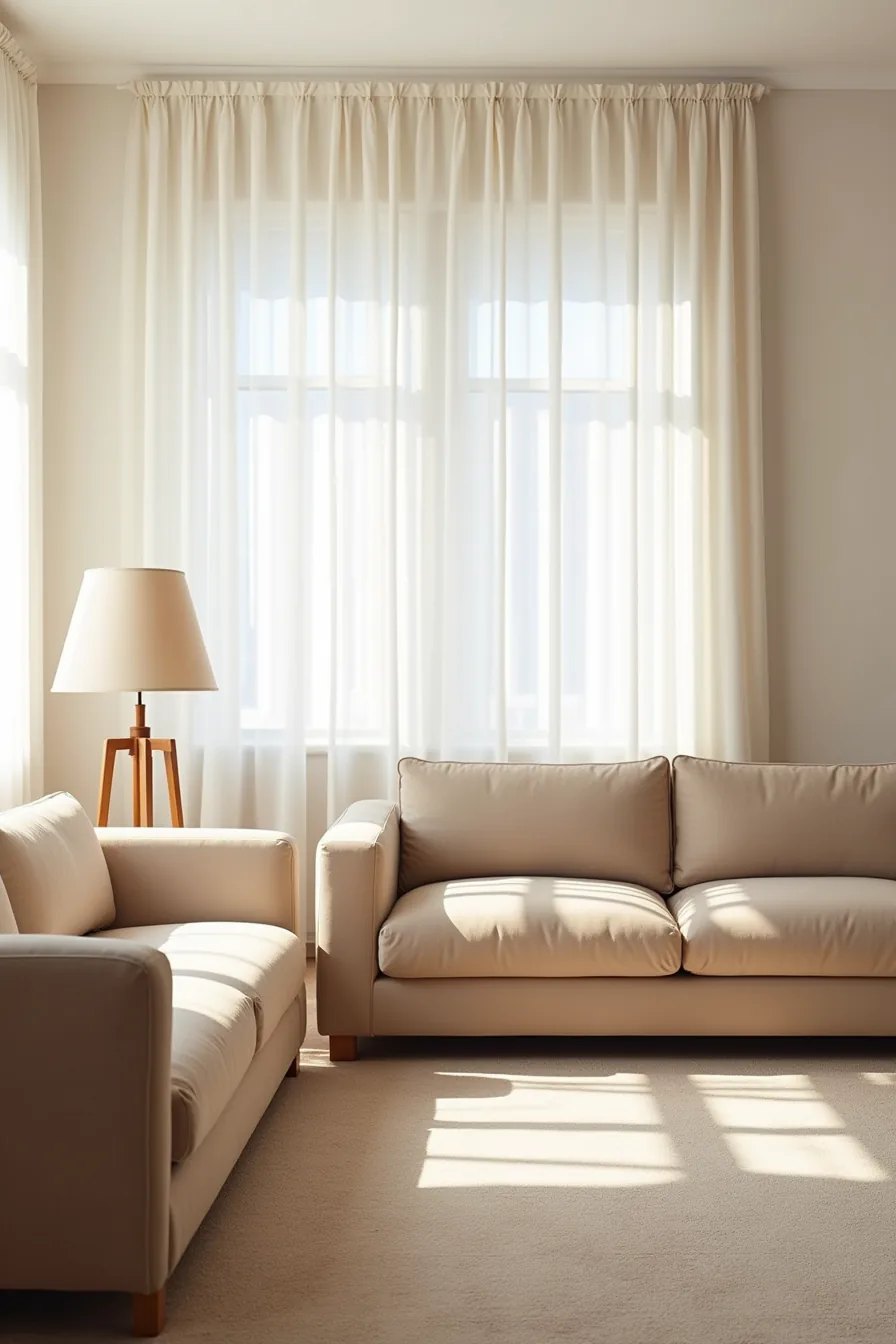
The renter-friendly modular sofa in the center solves the deposit-risk problem. Its removable cover unzips for machine washing, and the sectional pieces separate into units you can carry through narrow stairwells. Most modular systems in this category range $1,200–$2,500, and the covers are the first thing to wear, budget for a replacement cover at the two-year mark, typically $150–$300.
The investment leather piece commands $3,000–$6,000, but a full-grain hide and kiln-dried hardwood frame justify the price. Quality leather develops a patina over 10–15 years instead of cracking, and a well-maintained designer sofa retains 40–60% of its value on the resale market. You’re paying for replaceable seat cushions, a lifetime frame warranty, and the ability to reupholster once, which alone costs less than replacing a budget sofa twice.
Choose this route when the sofa anchors a room you plan to keep for a decade.
Your next step
Start by measuring your room, length, width, and door clearance. Write down your target sofa depth (most minimalist frames fall between 35-40 inches) and your budget ceiling before you browse anything else.
Then save three reference images that match your space’s proportions, not just the style you admire. That single habit will filter out eighty percent of the wrong options before you ever sit down on a showroom floor.
Frequently Asked Questions
What is the difference between a minimalist sofa and a modern sofa?
A minimalist sofa prioritizes pure function with zero ornament, think clean lines, neutral tones, and exposed legs. Modern sofas, however, include bold silhouettes, mixed materials, or sculptural shapes that still read contemporary but aren’t necessarily stripped back.
Can a minimalist sofa work in a small apartment or studio?
Yes, if you choose a compact two-seater (60–70 inches wide) with slim arms and raised legs. Avoid deep seats or chaise extensions; they visually and physically crowd a studio. Measure your doorway and stairwell before buying.
How do I keep a light-colored minimalist sofa clean with kids and pets?
Choose a performance fabric with a Crypton or Sunbrella finish, stain-resistant and wipeable. Vacuum weekly and spot-clean spills within 60 seconds using mild soap and water. Machine-washable slipcovers are your best ally; buy a second set for rotation.
What leg height should a minimalist sofa have for visual lightness?
Aim for 5–7 inches of clearance from floor to frame bottom. This height allows light to pass underneath, making the sofa appear to float, and it accommodates a robot vacuum. Lower legs (under 4 inches) feel grounded and heavier, while higher legs look airy but can feel unstable.