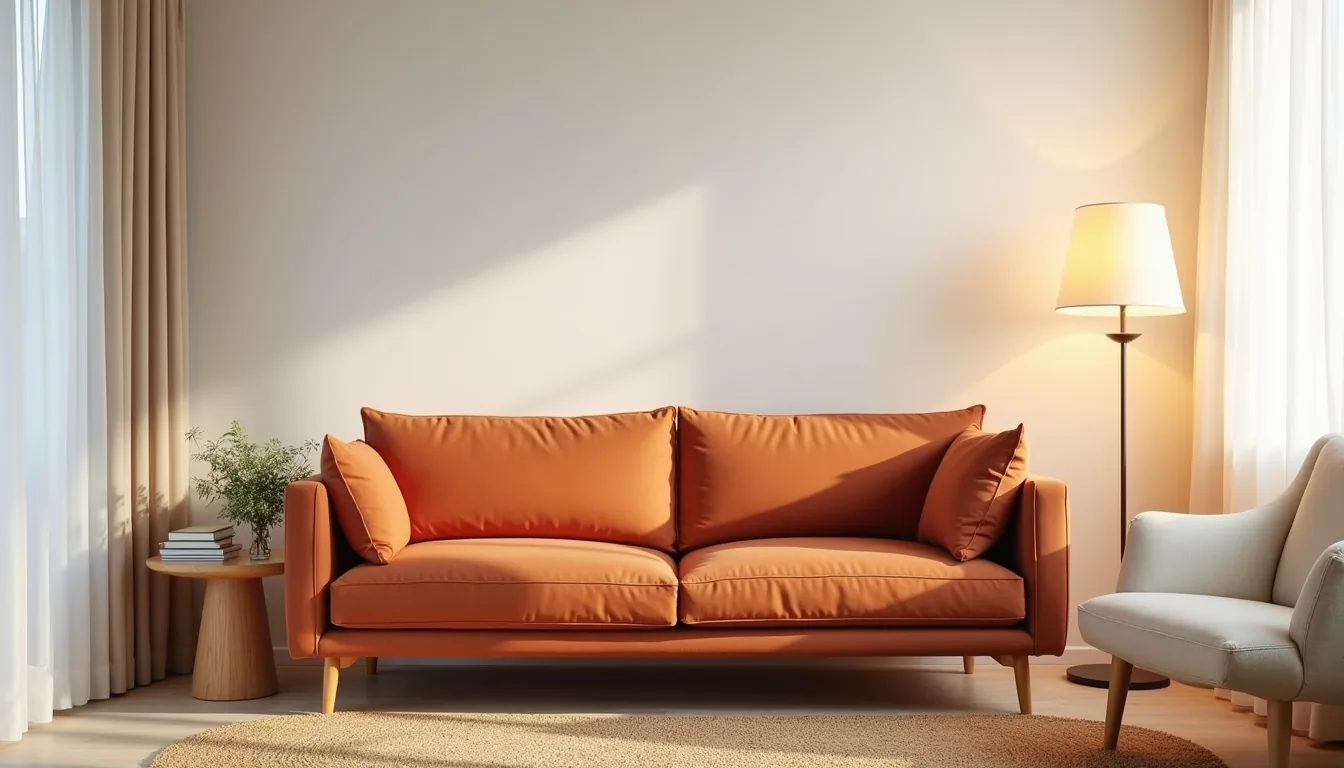

A rust sofa is a commitment piece, but its success in your living room depends less on the color itself and more on the specific neutrals, textures, and proportions you pair with it, here are six distinct ways to get that combination right. Whether you’re working with a 10-foot-wide city apartment or a 20-foot open-plan great room, each setup below addresses a different spatial constraint and budget threshold. You’ll find one route that costs under $300 to execute, one that requires zero permanent wall changes, and one built for a decade of heavy use, so the decision comes down to your lifestyle, not just your paint swatches.
Key takeaways
Pair rust with olive to anchor the palette, since the complementary tones balance warmth without requiring a full room redesign. Layer warm neutrals like cream, tan, and caramel to make the sofa adaptable across seasons, using throws and pillows you can swap for under $50. Scale the sofa to the room by leaving 18–24 inches of walkway clearance in small spaces, and in larger rooms, float it with a console behind to define the zone. Choose your route by commitment: a washable slipcover costs under $200 for rentals, a thrifted rust sofa with reupholstery runs $600–$1,200 for budget builds, and a full-grain leather rust piece at $2,500+ works as a 10-year investment.
Rust Plus Olive: The Foundation Pairing
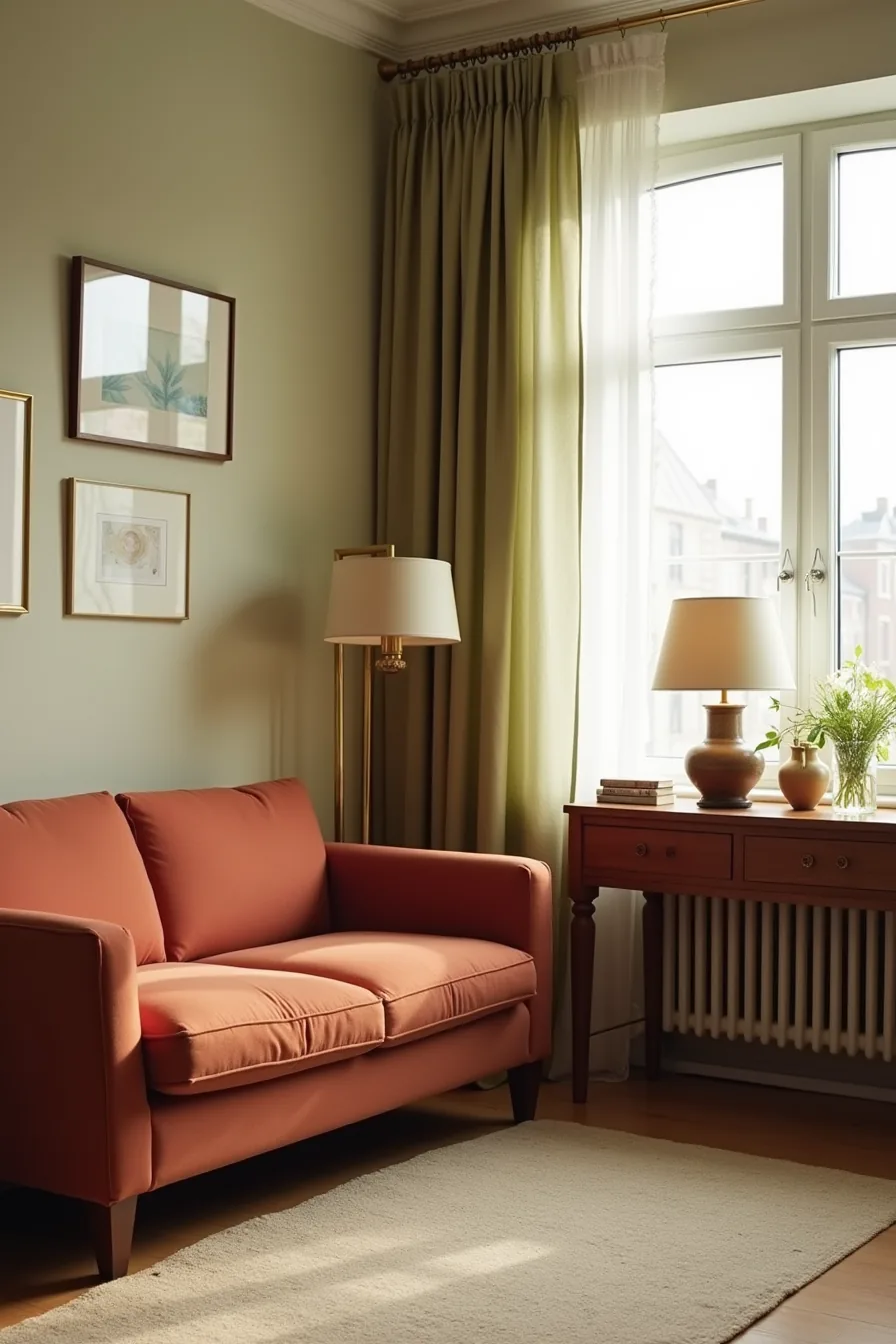
Rust and olive work because they sit opposite each other on the color wheel, rust carries warm orange-red undertones, while olive brings cool, muted green. That opposition creates visual tension without clashing, which is why the pairing reads as intentional rather than accidental. The rule of thumb is 60-30-10: let olive claim roughly 60 percent of the vertical surfaces (walls, curtains), rust take 30 percent (the sofa), and reserve the remaining 10 percent for metallic accents.
For this setup, the olive-painted wall and linen curtains frame the rust sofa, so the sofa becomes the room’s focal point instead of competing with the walls. The small wooden console table behind the sofa bridges the two colors, its warm grain echoes the rust, while its placement against olive ties the scheme together. A brass lamp and ceramic vessel on the console add the metallic and textural finish that prevents the pairing from feeling flat.
This combination suits medium-sized living rooms with good natural light; in darker rooms, the olive will read closer to brown, so test paint swatches at different times of day before committing.
Warm Neutral Layering for Year-Round Appeal

A rust sofa can read as strictly autumnal if you pair it with dark woods and heavy textures. Warm neutral layering solves that by introducing cream, tan, and beige elements that lift the visual weight while keeping the palette cohesive. The cream throw pillows and tan linen blanket draped over one arm break up the rust’s large surface area; the beige ottoman and light wood coffee table carry that lightness through the lower half of the room, preventing the sofa from feel grounding the space too heavily.
This setup works because it relies on varied fabric weights rather than color contrast. Cream curtains soften incoming daylight, which mutes the rust’s orange intensity and keeps the scheme fresh in summer. The balance suits medium-sized rooms with neutral walls; for year-round appeal, the finish is matter of swapping the blanket for a textured weave in warmer months rather than replacing furniture.
Budget-wise, this route is accessible, the investment sits almost entirely in the sofa while every other piece can be sourced secondhand or at mid-range retailers.
Small-Space Rust Sofa Setup
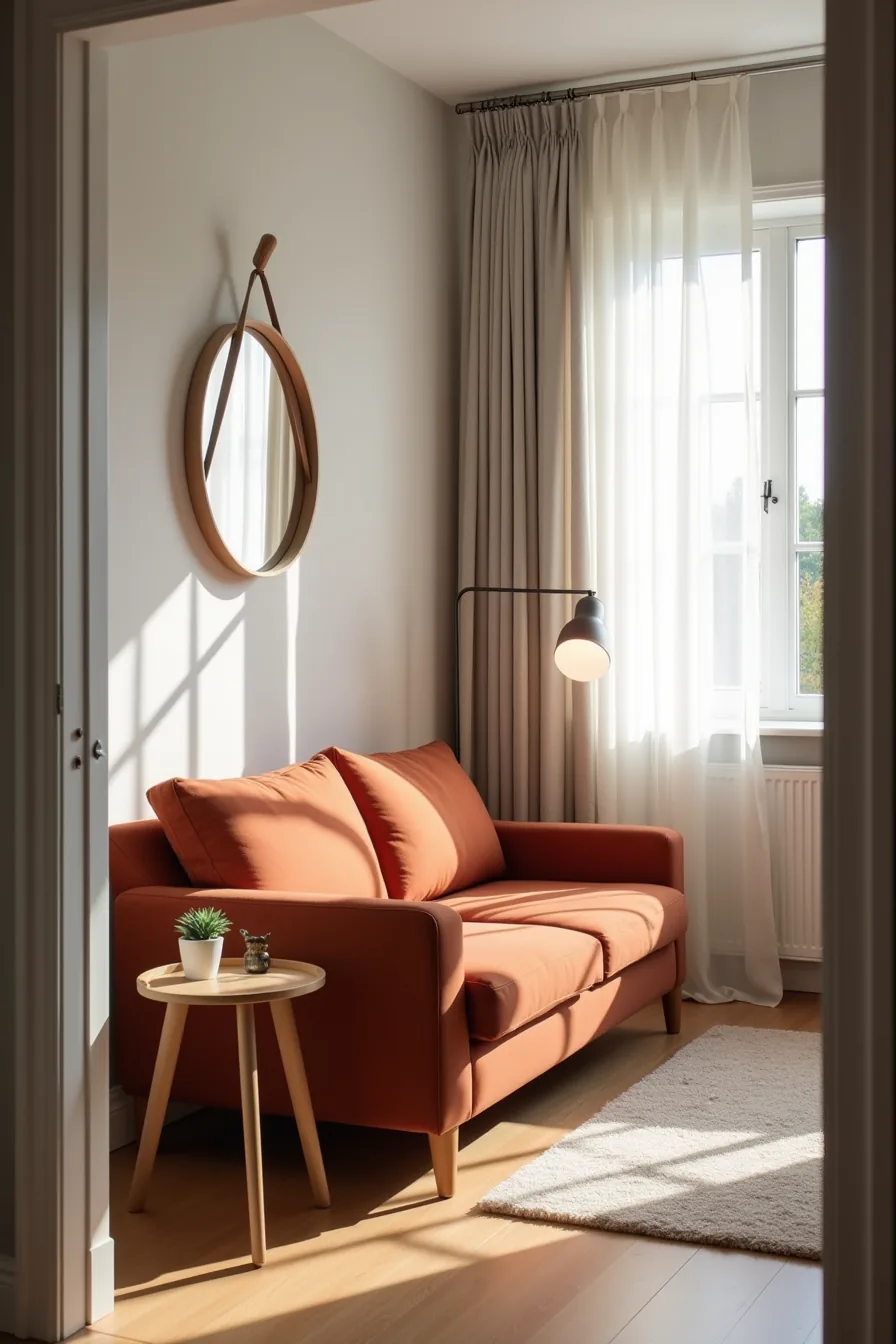
In a compact room, the rust sofa becomes the architecture. Push it fully into the corner to free up the center of the floor, and pair it with a single narrow side table rather than a coffee table, this keeps a clear walking path to seating. Light gray walls are your strongest ally here: they reflect daylight and visually recede, so the sofa’s saturation reads as intentional rather than overwhelming.
The small round mirror hung above the sofa serves a dual purpose: it breaks up the wall of upholstery and bounces light back across the room, making the space feel deeper than its physical dimensions. Keep accents minimal, one potted plant on the side table is enough, as additional decor would compete with the sofa’s visual weight. Select a sofa with exposed legs to reveal floor area beneath; this small gap creates breathing room that a skirted base would eliminate.
For scale, a 72–84 inch sofa works in most 10×12 to 12×14 foot living rooms, leaving roughly 18 inches of clearance on the open side.
Medium-to-Large Room Styling with Rust as Anchor

In a larger space, the rust sofa stops being a color choice and becomes the structural anchor of the room. Center it on the longest wall and resist the urge to push it against the perimeter; leaving 24–36 inches of clearance behind it creates a defined walkway and lets the sofa read as architecture rather than a floating island. A gray area rug is non-negotiable here, it should extend at least 12 inches beyond the sofa’s sides and front, so aim for an 8×10 or 9×12 rug under a standard 84–96 inch sofa.
This ground plane visually claims the territory the sofa anchors.
Flanking the sofa with two wooden end tables balances the composition and gives each seating position a surface within arm’s reach. The gallery wall above should span roughly two-thirds of the sofa’s width, with the bottom frames hung 8–12 inches above the backrest to avoid a cramped feel. This setup suits open-plan rooms where the sofa must hold its own against adjacent dining or kitchen zones, the dark wood and neutral wall art keep the rust from competing with other textures.
Choose matte wood finishes over gloss; they absorb light and prevent the anchor from turning into a distraction.
Make a Rust Sofa Feel Fresh for Spring
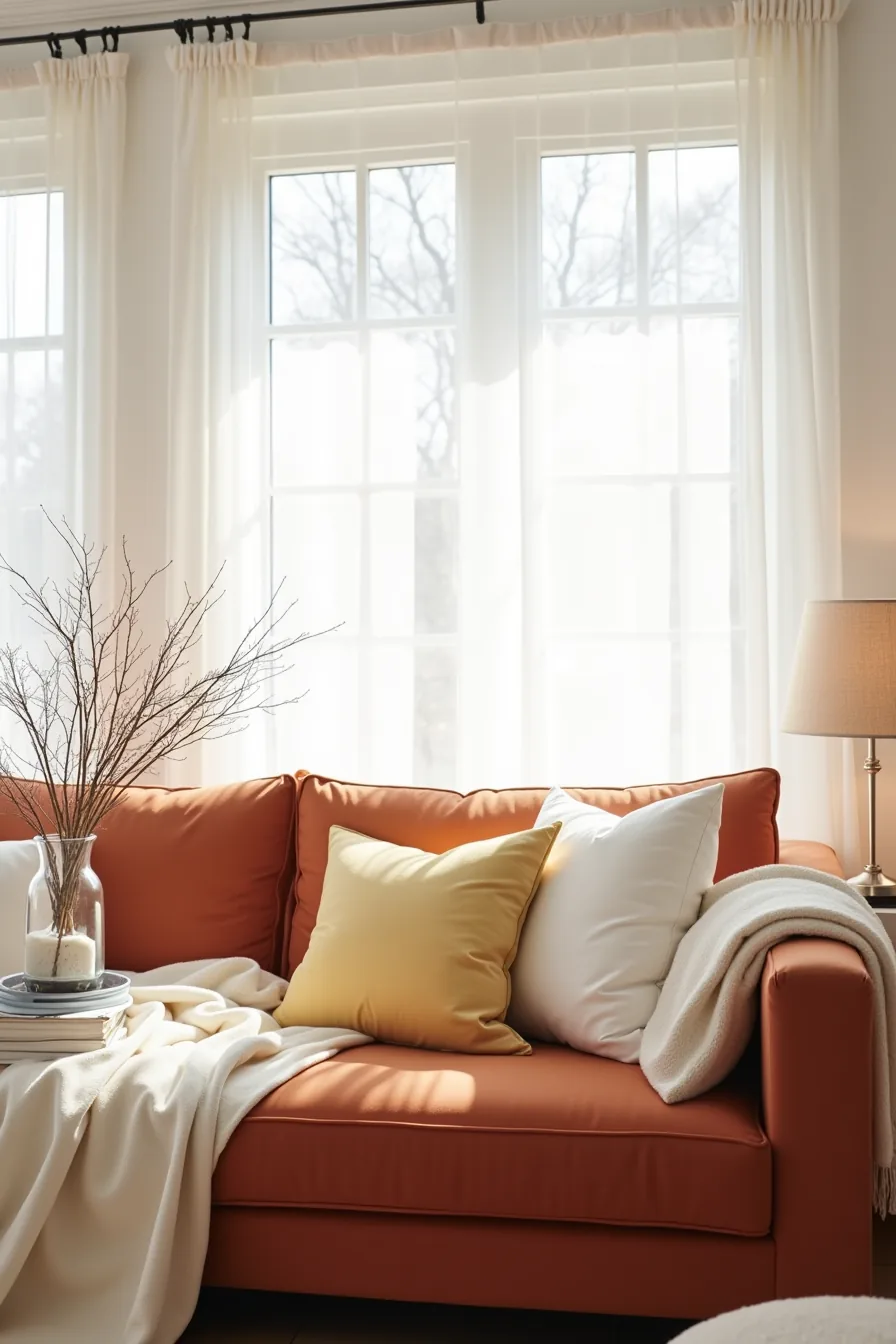
Swap heavy winter textures for airy ones, and rust reads as warm instead of heavy. Dress the sofa with white and pale yellow throw pillows, two of each, alternating, and layer a cream linen throw across the backrest. Linen’s open weave reflects light, while the yellow introduces a seasonal contrast that works because rust and yellow sit adjacent on the color wheel.
Place fresh branches in a clear glass vase on the side table to echo the vertical lines of the sheer white curtains filtering the daylight. You aren’t changing the sofa’s character; you’re shifting its context from autumn-cozy to spring-bright. Keep the swap to under 30 minutes and under $60 if you already own neutral cushions, just remove the darker textured pieces and reintroduce them in October.
This quick refresh suits anyone whose rust sofa sits in a north-facing room that needs lightening, and it requires no permanent commitment.
Budget, Rental, and Investment Routes

Start with the budget route if the sofa is a hand-me-down or a thrift find: a fitted stretch slip cover in a heathered oatmeal tone transforms the rust base for roughly $80–$150, and it survives the wash cycle better than you might expect. Pair it with two solid rust throw pillows and one patterned option in burnt orange; the color family stays cohesive while the cover does the heavy lifting. This approach suits a temporary apartment or a room you plan to redesign within two years.
For a renter-friendly middle ground, skip the slip cover entirely and keep the rust sofa exposed. Layer removable throw pillows in ochre, deep teal, and cream, then anchor the setup with a washable area rug that has a rust border, nothing permanent, nothing that requires patching walls or drilling into flooring. The visible rust reads as intentional when you repeat the color in a pair of curtain panels and a ceramic vase on the coffee table.
The long-term investment route assumes the sofa is a keeper: custom tight-back upholstery in a performance-grade velvet with a Crypton or Sunbrella backing resists fading and spills in a high-traffic family room, typically costing $1,200–$2,500 for reupholstery depending on frame condition. Budget the same amount again for built-in shelving flanking the sofa and integrated lighting, a low-voltage LED strip under each shelf and a picture light above the center cushion. This setup works for a permanent home where the rust is the anchor, not an experiment, and the maintenance is straightforward: vacuum weekly, spot-clean with a mild soap solution, and rotate the cushions every three months to prevent uneven wear.
Where to start first
Start with the scale check: measure your room’s longest wall and confirm your rust sofa fits with at least 36 inches of walkway clearance. That single measurement prevents the most common layout failure. Then decide your route, a thrifted rust sofa with a slipcover budget, a washable performance-fabric rental piece, or a full-grain leather investment.
Pick one supporting color from the palette that matches your flooring (warm wood, cool tile, or neutral carpet) and buy two throw pillows in that shade. Do that today, before you touch anything else.
Frequently Asked Questions
Can a rust sofa work in a modern minimalist living room?
Yes. Choose a clean-lined, low-profile rust sofa in a solid, matte fabric. Pair it with white walls, a concrete or oak floor, and one sculptural floor lamp. Avoid patterned cushions or bulky throws.
What wall color makes a rust sofa look less dated?
A warm greige, soft sage green, or muted terracotta-white works best. These tones harmonize with rust’s orange undertones without matching it. Steer clear of cool gray or stark white, which emphasize the orange and make it look tired.
How do I prevent a rust sofa from dominating a small room?
Anchor it against the longest wall and leave at least 18-24 inches of clearance on each side. Use a slim, light-colored coffee table and a low-profile rug in cream or sand. Keep wall art minimal and above eye level.
What accessories help transition a rust sofa from autumn to spring?
Swap heavy knit throws for lightweight linen in sage or dusty blue. Change cushion covers to white, oat, or pale yellow. Add a ceramic vase with fresh greenery and replace dark wood trays with rattan or glass. Store wool blankets away.