
A single couch chair earns its place in a room not by matching your sofa, but by filling a specific function, a reading nook, a guest seat, or a visual anchor, and the six setups below show you how to choose, place, and maintain one for your space and budget. You’ll learn which frame depths suit a 10-square-foot corner versus a sprawling open plan, when to pay for kiln-dried hardwood versus engineered panels, and how a rental-friendly slipcover differs from a long-term leather investment. Each option includes the exact trade-offs in cost, upkeep, and footprint so you can match a chair to your actual habits, not a catalog photo.
Key takeaways
Measure first, a single chair needs 28–36 inches of depth and at least 18 inches of clearance from the sofa to keep traffic flow comfortable. Match the seat height to your sofa’s cushion height (within 2–4 inches) so the pairing reads intentional, not accidental. Use a swivel or armless chair in corners under 40 inches wide to avoid blocking windows, vents, or door swings. Budget chairs under $300 typically use kiln-dried hardwood frames and medium-density foam, expect 3–5 years of daily use before re-stuffing or re-covering is needed.
Reading Nook vs. Conversation Anchor

The same single couch chair can serve two entirely different functions, and your choice comes down to one question: do you want to retreat or to connect? When you place the chair in an isolated corner facing a small side table with a floor lamp positioned behind it, you create a reading nook that signals solitude. This arrangement works best for a secondary living space, a bedroom, or any room where you want an escape from the main traffic flow, you get focused light over your shoulder and a surface for a drink or book within arm’s reach.
Position the identical chair across from a sofa at conversational distance, roughly 7 to 8 feet apart, and you’ve built a dialogue zone instead. The chair becomes an anchor that completes the seating circle, making it ideal for open-plan living rooms where guests naturally gravitate toward the center of the room. For most rooms, choose the reading nook if you live alone or want a personal corner; choose the conversation anchor if you entertain regularly or have a household where multiple people gather simultaneously.
Both layouts require the same footprint (a chair needs about 20 to 28 inches of clearance on each side), so the decision is purely about daily use rather than square footage.
Corner Placement for Small Spaces
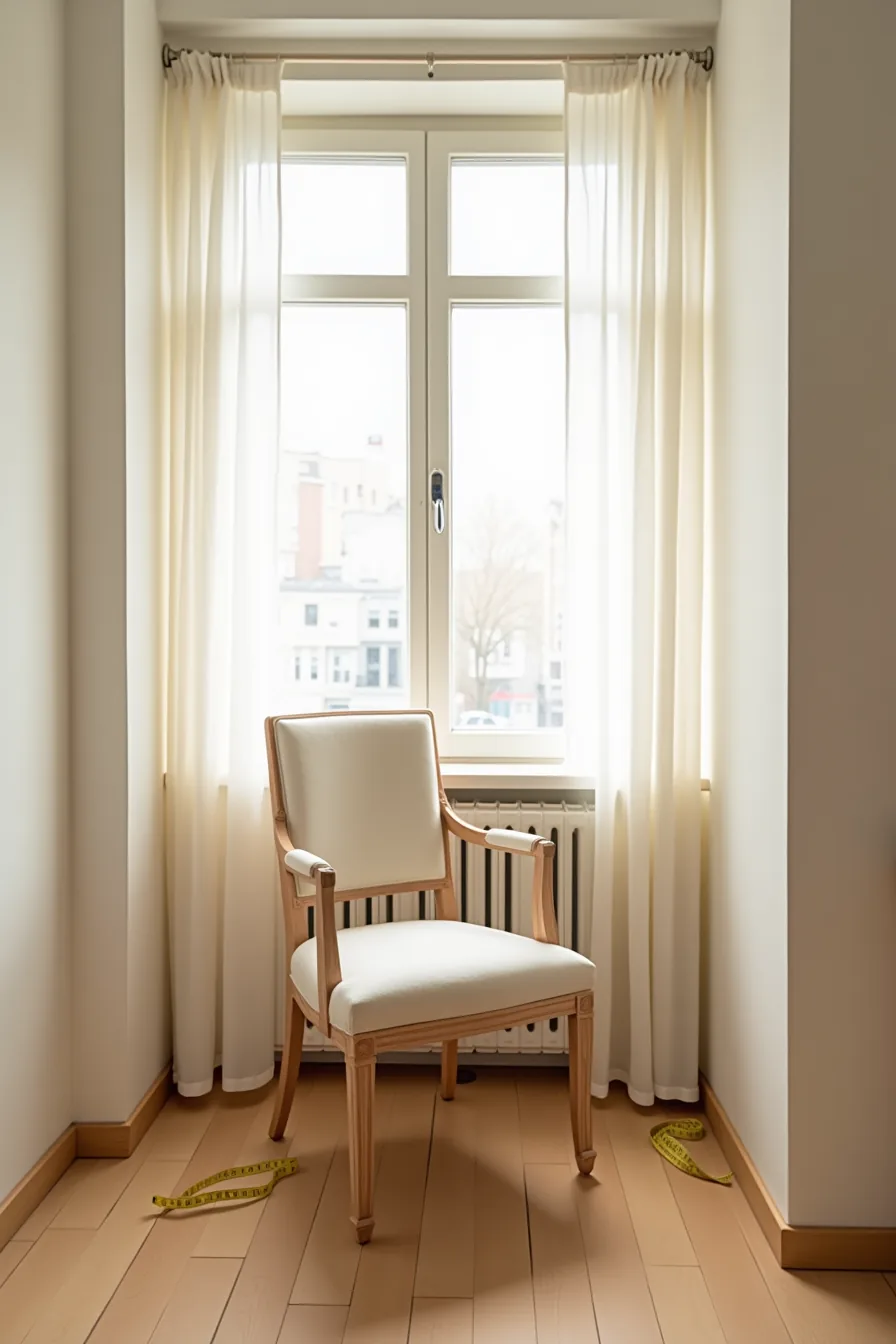
When square footage is scarce, corner placement is the single most effective way to reclaim your floor plan. A chair pushed flush into the corner can add a seat without breaking the room’s sightline, which is why it’s the go-to strategy for apartments, dens, and narrow living areas. Measure the diagonal width of your chair first, roughly 24 to 30 inches for most armchairs, and confirm that distance against the free wall space on both sides of the corner.
That 45-degree outward angle in your setup matters: it lets the person seated face the room’s center rather than the wall, which makes the chair feel intentionally placed instead of exiled. Keep the back at least 2 inches from the window frame behind it so curtains can move freely and airflow stays unobstructed. Use the measuring tape along the floor to mark 4 to 6 inches of breathing room between the chair arm and each wall, this prevents scuff marks on the paint and keeps vacuum access practical.
Visually, a corner chair breaks up the empty void that small rooms often have, but it only works if you avoid blocking a door swing or a radiator’s heat path. If your corner fails that test, skip this layout entirely and choose a wall-anchored position instead.
Pairing a Chair and Sofa for Layout Balance

A single chair and sofa pairing works when both pieces share a common focal point, typically a coffee table, and the distance between them stays within conversation range. Position the chair 6 to 8 feet from the sofa’s edge, angled slightly toward the table’s center. That gap keeps voices audible without forcing anyone to lean forward, and it leaves enough floor space for a person to pass behind the chair without shuffling sideways.
The wingback chair and gray sectional in this setup anchor the seating zone because their sightlines converge on the low coffee table between them. The chair’s high back contrasts the sectional’s low profile, creating visual variety without competing for attention. For a medium living room, keep the chair’s width under 32 inches so it doesn’t dwarf the sofa; in larger spaces, you can push the distance to 9 feet if the table is wide enough to bridge the gap.
Match the chair’s wood or metal legs to the table’s finish to tie the grouping together, and leave 18 inches of clearance between the chair’s front edge and the rug’s border so the rug doesn’t look crowded.
Budget-Friendly Single Chair Options

You don’t need to sacrifice durability to stay under $300. The fabric blend armchair in this lineup uses a high-density foam core wrapped in a woven polyester-cotton blend, that combination resists pilling and holds its shape for roughly 3 to 5 years of daily use. The polyester chair, meanwhile, trades a bit of breathability for stain resistance; a spill wipes off with a damp cloth, making it the strongest choice for households with kids or pets.
The canvas slipcover chair takes a different approach: its cover removes and machine-washes, which extends the life of the piece far beyond what the frame alone would offer. Expect slipcovers to wrinkle after washing, that’s normal, and the casual look hides it well. All three sit in the 28- to 32-inch seat height range, so they work with standard 18-inch dining tables or 16-inch console desks.
For renters, skip the fabric blend and choose the slipcover version; you can pack it flat into a car and reassemble it in a new apartment without a moving truck.
Investment Pieces That Last Years
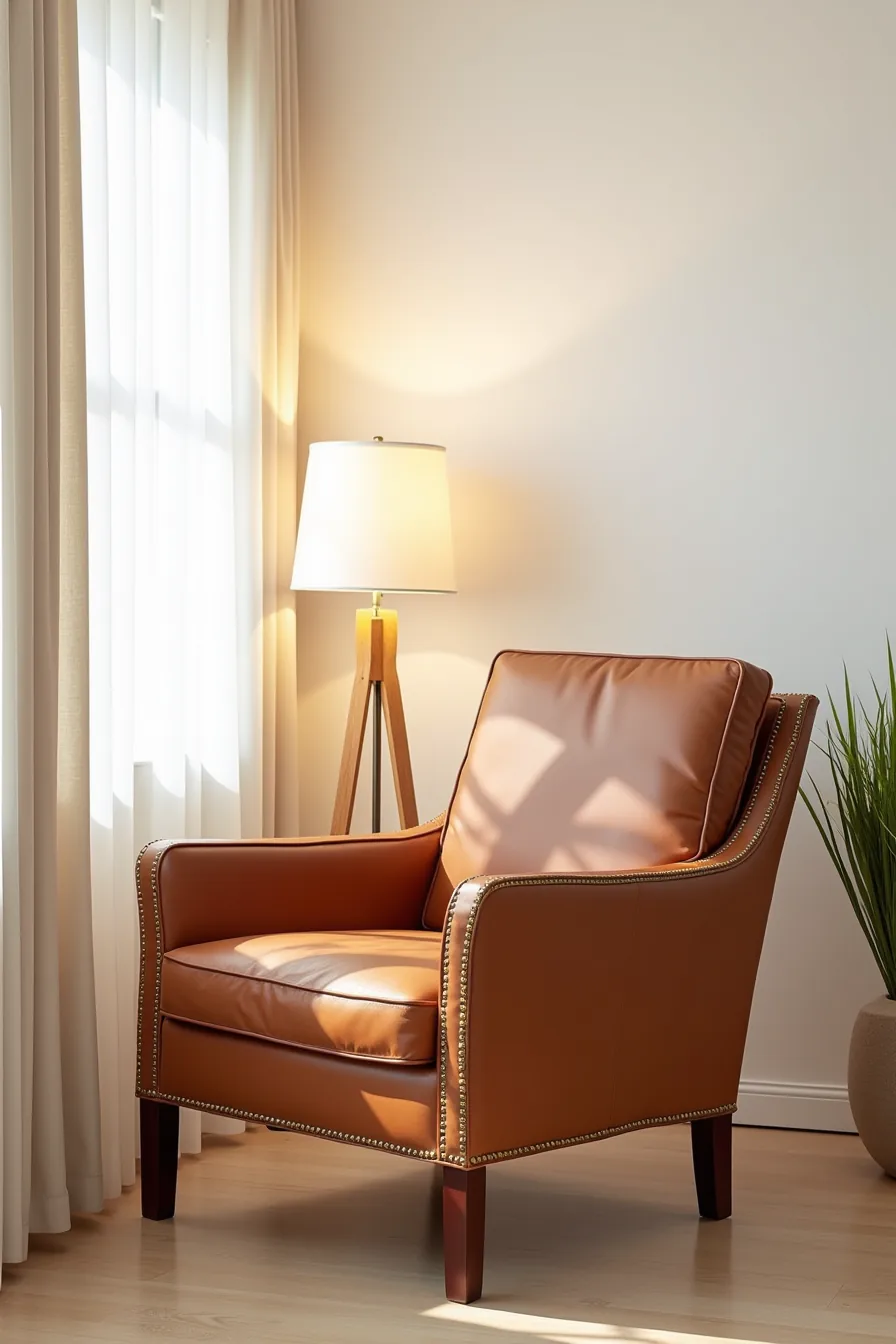
When you spend $800 to $1,500 on a leather single couch chair, you’re paying for a frame you can’t easily break. Look for kiln-dried hardwood legs joined with dowels or mortise-and-tenon construction, not staples. That joinery, combined with visible brass nailheads securing the leather panels, signals a piece engineered for 10 to 15 years of regular use rather than 3 to 5.
The leather itself matters more than the color. Full-grain or top-grain leather develops a patina and hides scratches; bonded leather will peel within two years. Test the cushion by pressing down, high-density foam wrapped in down should rebound within 30 seconds.
The wood frame on this example runs 2 to 3 inches thick at the arms, which prevents the wobble you feel on cheaper chairs after a year.
Maintenance is minimal but non-negotiable: condition the leather every 6 to 12 months with a pH-balanced cream, and keep the chair out of direct sunlight to prevent fading. This route suits homeowners or long-term renters who want one statement piece rather than a rotation of disposable furniture.
Styling Underused Bedroom Corners
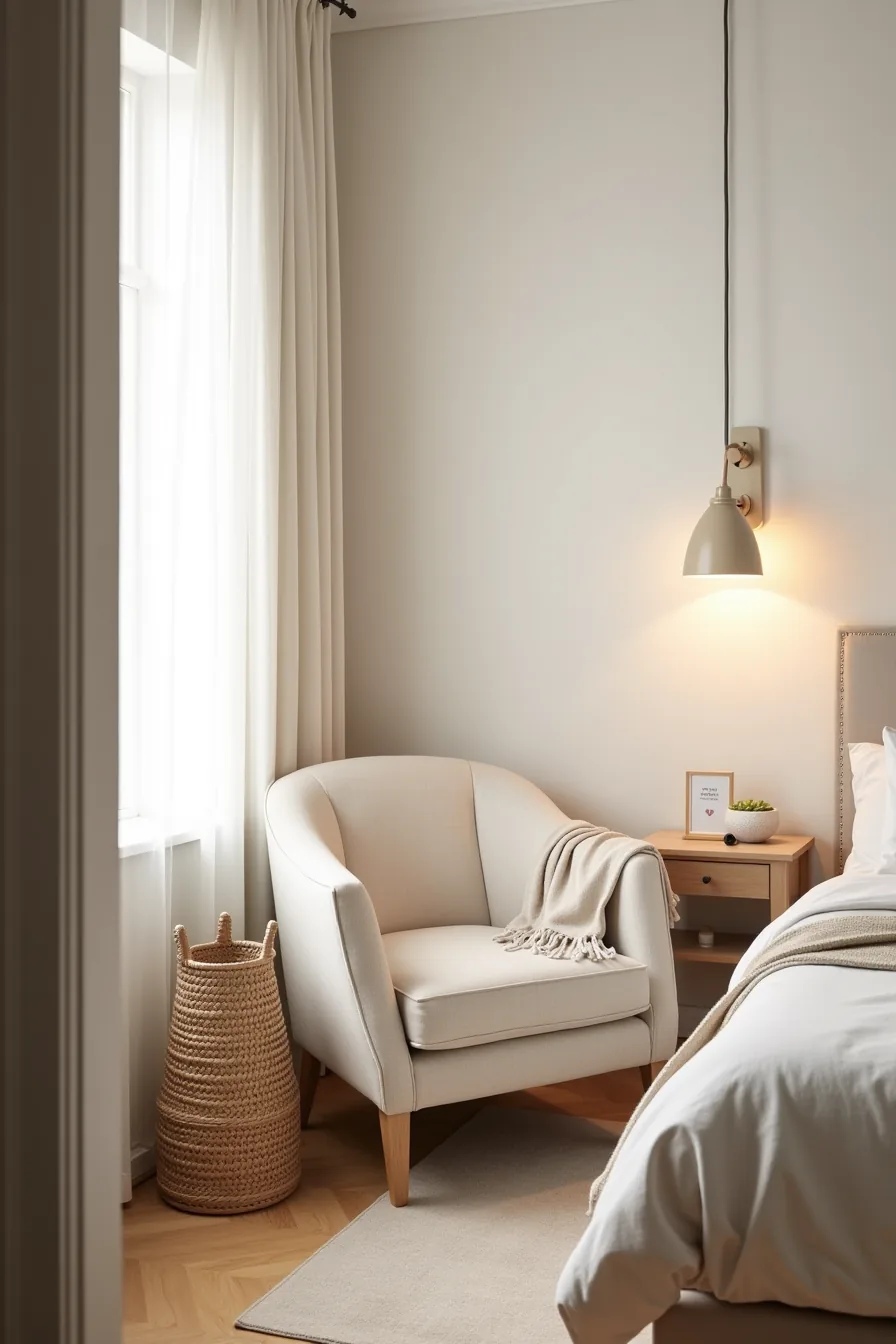
The single couch chair earns its place in a bedroom corner when you treat the corner as a separate zone, not an afterthought. Angle the club chair at 45 degrees toward the center of the room so you see the door and window without craning your neck. A nightstand pulled close keeps a book, phone, or coffee within arm’s reach, while the woven basket to the chair’s left catches laundry or extra throws.
The pendant light mounted on the wall rather than the ceiling frees floor space and casts reading light directly over your shoulder.
The linen throw draped over the arm does two jobs: it adds texture against the upholstery and gives you something to pull over your legs during early morning reading. Choose a chair with a seat height between 17 and 19 inches so your feet rest flat on the floor when you sit sideways. For a 10-by-12-foot bedroom, keep the chair’s overall width under 32 inches so the corner remains passable at night.
This setup suits anyone who wants a quiet spot without dedicating a whole room to it. If you prefer a modern look, check out the compact frame options in the next section.
Your Decision Checklist
Before you buy, confirm the chair’s depth matches your room’s clearance, you need 18–24 inches for comfortable legroom and traffic flow. Verify the frame material against your lifestyle: solid hardwood suits long-term investment, while kiln-dried plywood offers budget-friendly durability. Measure your doorway and stairwell clearance first; many accent chairs assemble in place but won’t handle narrow turns.
Your next step: Grab a tape measure and mark the intended spot with painter’s tape. Live with the outline for 24 hours. If circulation feels tight, adjust placement or downsize before spending a cent.
Frequently Asked Questions
What is the difference between a single couch chair and an armchair?
A single couch chair typically features a wider seat, deeper cushioning, and a higher back than a standard armchair, often including a chaise or recliner mechanism. Armchairs prioritize compact upright seating, while single couch chairs emphasize lounging and full-body support.
How much floor space does a single couch chair typically need?
Most single couch chairs require a footprint of roughly 30–40 square feet when placed with clearance for entry and leg stretch. Allow at least 18 inches behind the chair and 24 inches in front for comfortable movement in a living room.
Can you use a single couch chair as a bed alternative?
Yes, for occasional overnight guests, a single couch chair with a pull-out trundle or reclining back can serve as a short-term sleep surface. However, it lacks the lumbar support and mattress depth of a dedicated sleeper chair, so limit use to a few nights.
What upholstery material is easiest to clean on a single couch chair?
Performance polyester or microfiber is the easiest to clean, requiring only a damp cloth and mild soap for most spills. Leather is also low-maintenance but needs periodic conditioning. Avoid linen and velvet, which stain and wear quickly in high-use chairs.