
A dusty pink sofa isn’t a single shade, it spans muted rose, clay blush, and weathered terracotta, so your first decision is less about picking a color and more about defining which of these six distinct looks fits your space, budget, and lifestyle. Each option below pairs a specific fabric and frame with the room that suits it best, from a renter-friendly slipcover to a long-term linen investment. You’ll also get concrete scale guidance for small, medium, and large layouts, plus the maintenance trade-offs that separate a low-effort purchase from a high-care centerpiece.
Key takeaways
- Choose dusty pink as a neutral anchor by pairing it with warm whites, greiges, and light woods, this works best in monochromatic rooms where the sofa becomes the focal point without competing for attention.
- For a soft contrast that reads naturally, match dusty pink with sage green accessories and walls, but keep the green at 30-40% of the visual weight to avoid overwhelming the pink in medium-sized living rooms.
- In small spaces, select a dusty pink sofa under 80 inches with a low back (around 28-32 inches) and slim arms to preserve sightlines, and place it against a lighter wall to prevent the room from feeling boxed in.
- For long-term investment, opt for a performance fabric with a rub count of 30,000-50,000 cycles and a Crypton or Sunbrella blend, which resists stains and fading, expect to pay 20-40% more upfront than a standard polyester option.
Dusty Pink Sofa as a Neutral Anchor in Monochromatic Rooms
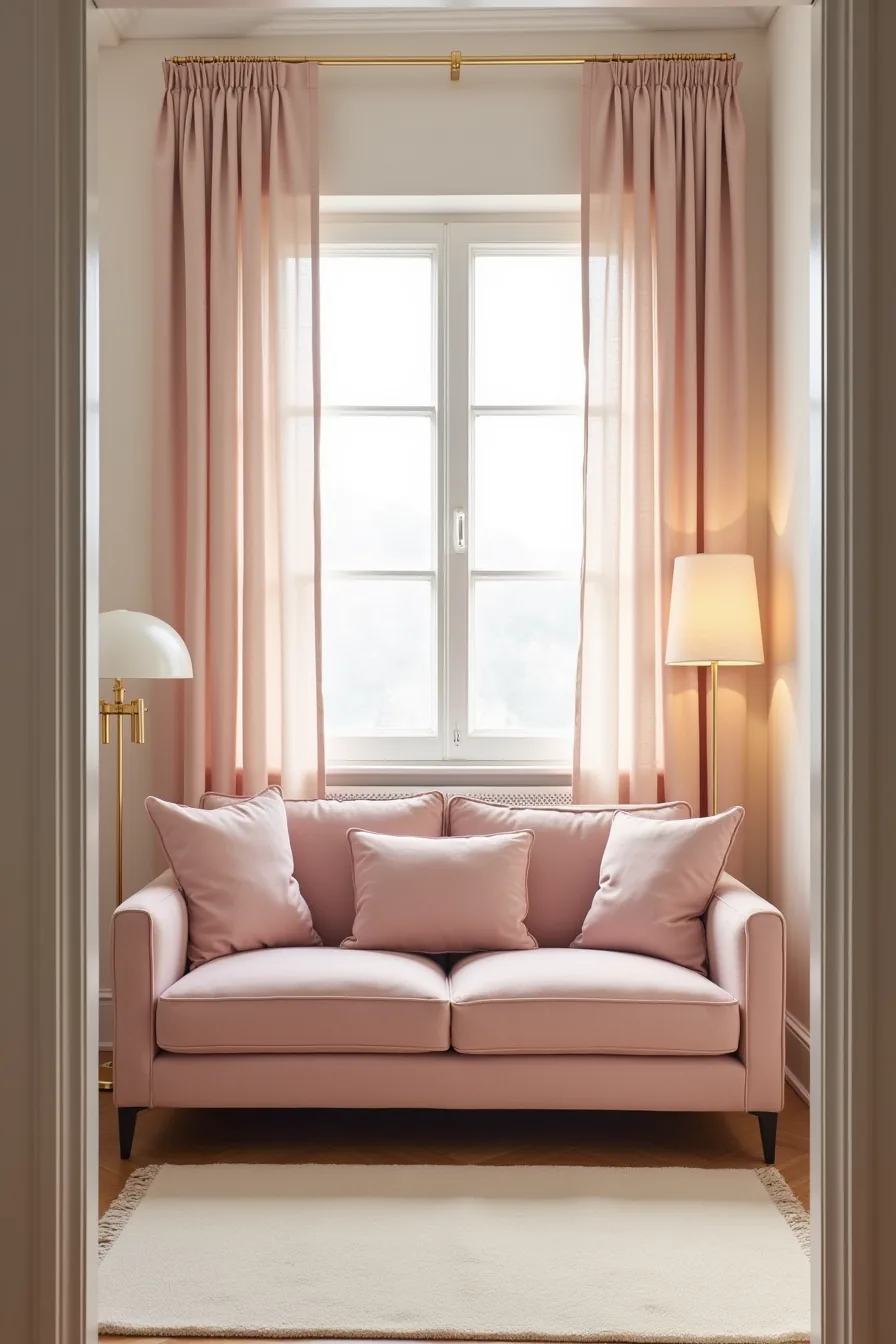
A dusty pink sofa stops being a statement piece when the entire room speaks the same tonal language, it becomes structure. This setup works because the sofa, with its three pink throw pillows arranged across the cushions, does the heavy lifting while the matching dusty pink linen curtains frame the window behind it to define vertical space. The creamy area rug beneath the seating carves out the zone without adding a competing hue.
This approach suits medium to large living rooms, roughly 12 by 14 feet or larger, where you can afford for the sofa to be the single dominant mass. In a compact space under 10 by 12 feet, the tonal scheme risks flattening depth, you would need to break the pink with a deeper wood tone or a darker floor covering. Place the sofa against the longest wall, angled slightly into the room, rather than shoved corner-to-corner, so the monochrome reads as intentional layering instead of a shrinking box.
For accents, stay within the pink family but vary saturation: a muted mauve throw, a blush floor lamp, or a terracotta-toned ceramic vase. Avoid pure white accessories, they interrupt the tonal flow; opt for the cream of the rug or a warm ivory instead. Budget-wise, this look is forgiving on fabric quality because the eye reads the overall wash of color before texture, so a mid-range polyester-wool blend at $800–$1,200 holds up fine.
Renter-friendly? Favor a slipcovered sofa in a blush-linen look so you can remove and replace the cover when you move. Maintenance is simple: vacuum weekly and spot-clean with a damp cloth, since tonal rooms show stains less than high-contrast schemes.
Pairing Dusty Pink with Sage Green for Soft Contrast
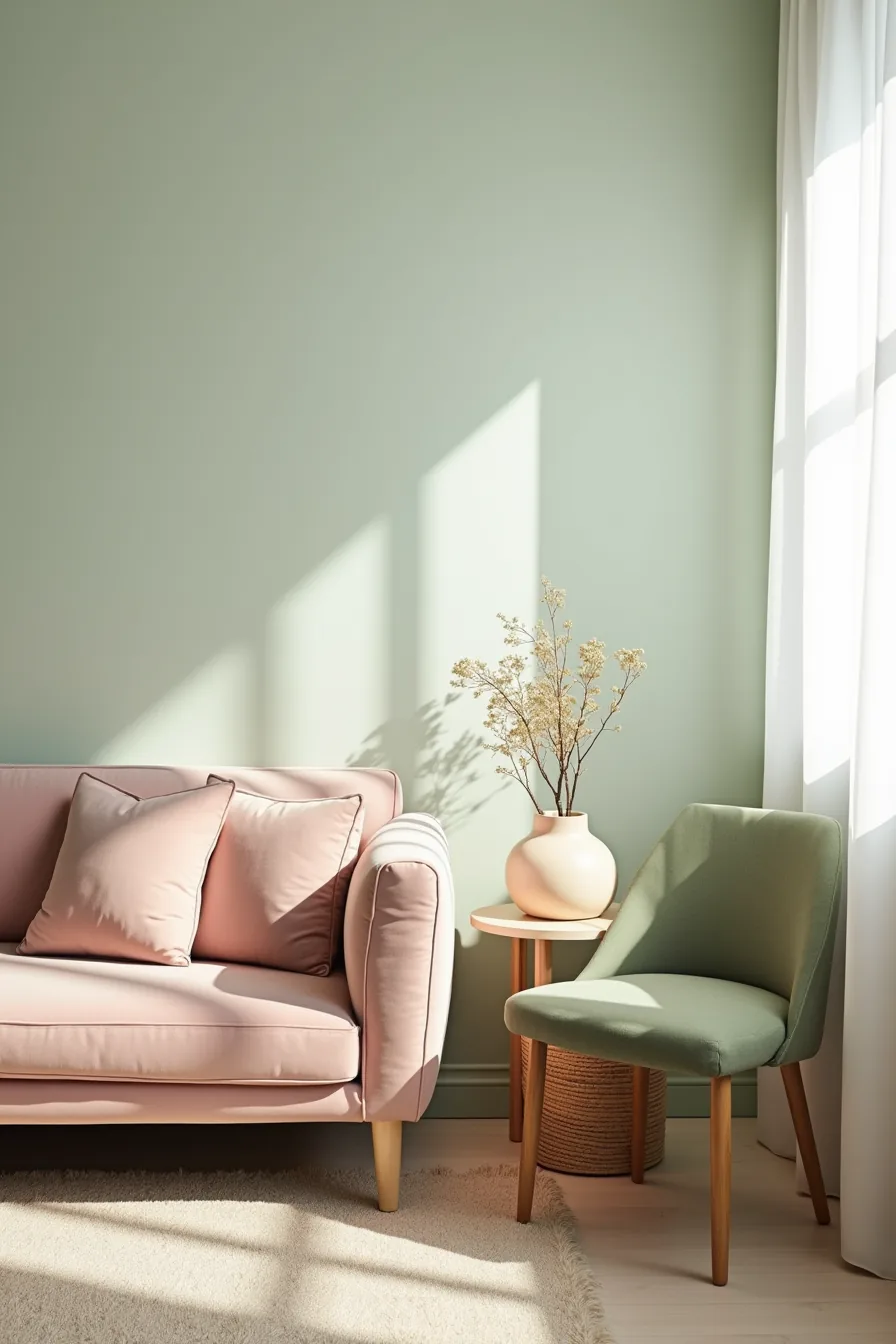
Sage green operates as the perfect counterweight to a dusty pink sofa because both colors share a muted, slightly grayed undertone that keeps the pairing calm rather than saccharine. In this arrangement, the pink sofa serves as the warm anchor while a sage green velvet armchair to its right pulls the eye horizontally, creating visual balance without symmetry. The wooden side table between them introduces a natural midpoint, while the ceramic vase on top and the woven floor basket tucked beside the armchair reinforce the organic quality of the palette.
Dusty pink should occupy roughly 60 to 70 percent of the visual mass, the sofa itself and any throw pillows, while sage green takes the remaining 30 to 40 percent through an armchair, curtains, or an accent wall. This ratio suits medium-sized living rooms around 12 by 14 feet; in larger spaces, add a second sage piece like a storage ottoman to avoid the sofa looking stranded. For smaller spaces of 8 by 10 feet or less, keep the sage green limited to the wall only and let the two upholstered pieces sit closer together, allowing the materials and textures to compensate for less square footage.
Wood tones in a warm oak or walnut bridge both colors naturally, so avoid gray-washed finishes that can mute the soft contrast.
Dusty Pink Sofas in Warm Autumn Rooms with Terracotta and Ochre
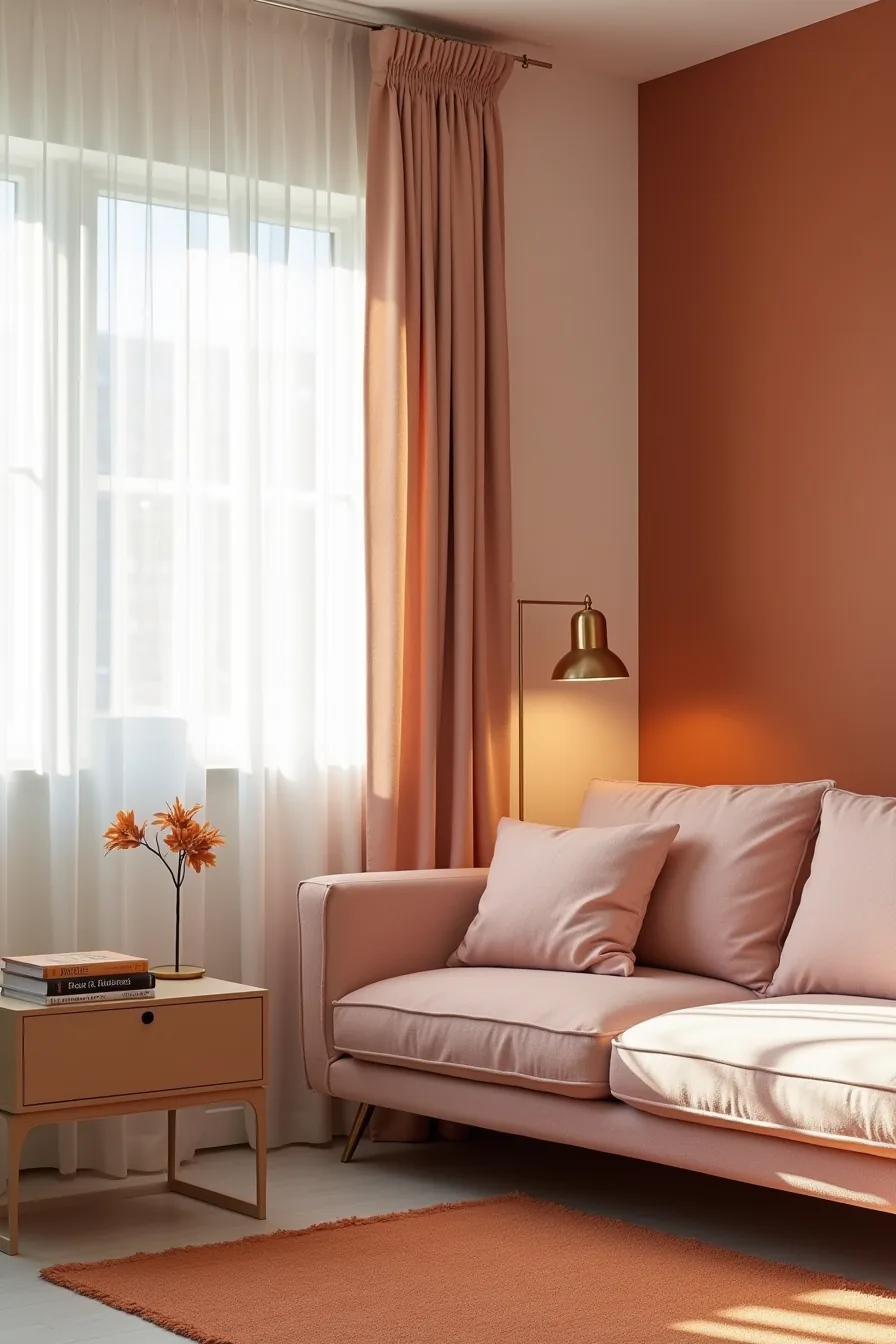
This palette works because terracotta and ochre share dusty pink’s clay-based DNA, they all carry the same brown undertone, so the combination reads as tonal rather than clashing. A terracotta-painted accent wall behind the sofa gives the pink upholstery a grounded backdrop, while ochre linen curtains on the adjacent wall add vertical warmth without competing for attention at eye level.
The rust-toned area rug anchors the seating zone and defines the room’s footprint, which matters more here than in neutral schemes because the wall color already does heavy lifting. Floor-to-ceiling curtains make an 8-foot ceiling feel taller, and the warm brass table lamp on the low wooden console introduces a hard, reflective surface to balance all the matte textiles.
Keep the terracotta wall to one surface only; painting all four walls would push the pink sofa toward tomato-red territory and date the room within a season. If you want the look without committing to paint, swap the accent wall for a large terracotta-toned canvas or a rust-colored linen throw draped over the sofa’s back, both deliver the same warmth and are reversible in an afternoon. For Dusty Pink Sofa Ideas for Warm Autumn Rooms, this combination suits north-facing rooms that receive limited natural light, since the warm earthy tones compensate for cool daylight.
Small-Space Solutions: Dusty Pink Sofas Under 80 Inches
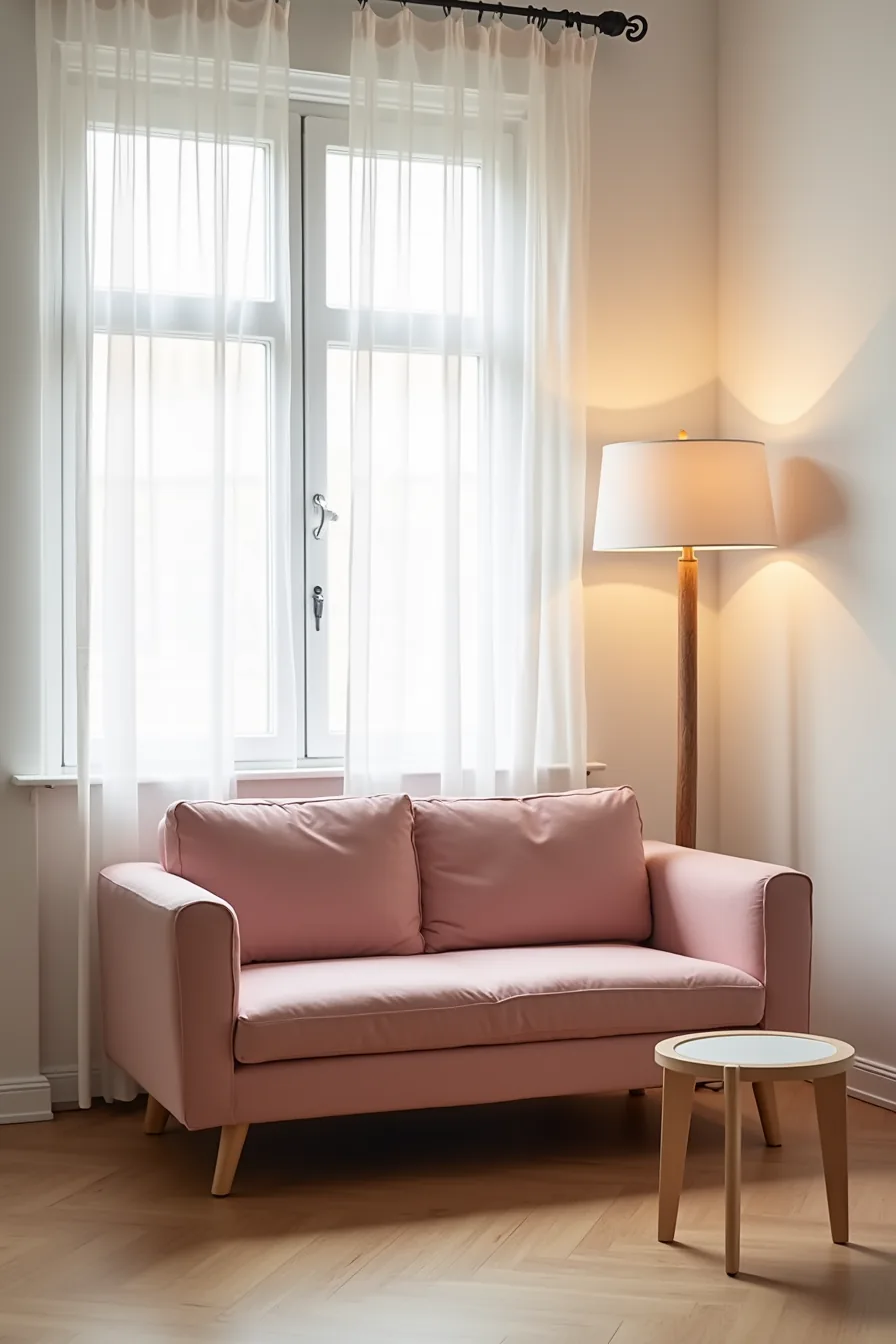
A compact dusty pink sofa, typically running 70 to 80 inches, fits studio and one-bedroom layouts where a full three-seater would consume the entire living zone. Look for a depth around 33 to 36 inches rather than the standard 38 to 40; that extra three to five inches of freed floor space is what lets you pull a coffee table within arm’s reach without blocking the path to the kitchen or balcony door.
Exposed wooden legs make the piece read visually lighter, letting light pass underneath and keeping the floor plane visible. In the setup shown, the compact sofa sits against the narrow wall with a small round side table flush beside the armrest, no wasted corner clearance, while a tall floor lamp behind the sofa draws the eye upward and makes the apartment window feel like part of the seating zone rather than a distant asset.
For renters, prioritize a dusty pink sofa with removable, machine-washable covers in a slip-on style. They protect against landlord-approved damage, and you can swap the cover for a neutral hue if you move into a space with clashing floors or trim. Avoid dark metal legs in small rooms; they anchor the piece too heavily and make a 72-inch sofa read closer to 68 inches visually.
Investment-Grade Dusty Pink Sofas: Durability and Fabric Selection

A tufted back and rolled arms signal traditional construction, but the real investment lies beneath the upholstery. Look for kiln-dried hardwood frames with reinforced corner blocks, these typically support 8 to 12 years of daily use, while softwood frames sag within 3 to 5. The visible wooden frame at the legs and armrest edges on this piece indicates a solid joinery approach rather than glued dowels, which is your first durability checkpoint.
Performance fabrics in the 50,000 to 100,000 double-rub range handle pets and kids far better than standard linen, which pills around 15,000 rubs. The fabric swatch samples draped over one arm let you compare abrasion resistance and cleanability side by side before committing to a full order. Expect to pay 30 to 50 percent more for performance blends over commodity linen, but factor in the trade-off: a quality performance fabric resists fading and staining for a decade, while a cheaper weave may need professional cleaning within two years.
The button detailing and seaming require precision stitching that cheaper factories skip, inspect these points for loose threads or uneven spacing, as they’re the first failure zones. For warranties, seek at least a 5-year frame warranty and a 3-year fabric warranty to justify the higher upfront cost.
Styling Dusty Pink Sofas with Layered Textiles and Lighting

A dusty pink sofa can read as flat or washed-out without deliberate contrast. You fix that at the textile layer. Start with five throw pillows in three textures, linen for matte softness, velvet for depth, and chunky knit for visual weight.
Distribute them unevenly: two on one side, three on the other, with the largest (typically 20–24 inches) at the corners and smaller squares (16–18 inches) in front.
Drape a cream cable-knit throw blanket over one arm, not across the back. The arm placement adds casual asymmetry while leaving the seating surface unobstructed, which matters if you actually sit on the sofa. Position a brass floor lamp just behind the arm opposite the blanket.
Warm 2700K–3000K light from the lamp neutralizes the pink’s cool undertones during evening hours, when standard overhead lighting would otherwise make the fabric look gray. The brass finish echoes the warmth in the knit texture, tying both layers together without introducing a third color family.
Your decision checklist
Before you buy, confirm the sofa’s depth works with your room’s traffic flow, most standard models run 35–40 inches deep, leaving at least 24 inches of walkway. Test the fabric in person if possible; velvet shows wear faster than performance weaves, and linen wrinkles unless blended with polyester. Set your budget ceiling first: slipcovered versions start around $800, while quality frame-and-upholstery investments typically land between $1,500 and $3,000.
Start here: measure your doorway width, then order a fabric swatch set from three vendors before committing to anything.
Frequently Asked Questions
Does a dusty pink sofa work in a room with warm lighting, or will it look gray?
Warm lighting (2700-3000K bulbs) enhances dusty pink’s rosy undertones, keeping it blush and inviting. Avoid cool white or daylight bulbs, which drain warmth and push the fabric toward gray. Test a swatch under your actual lamps first.
What’s the difference between dusty pink and mauve, and which reads better in small spaces?
Dusty pink leans warm with brown or peach undertones; mauve skews cooler with gray or purple hints. In small spaces, dusty pink reads brighter and expands visual space, while mauve can feel heavier and more enclosed. Choose dusty pink for compact rooms.
Can you put a dusty pink sofa against a white wall, or does it need a colored backdrop?
Yes, white walls work, they let the sofa become the focal point. Use warm white (like Swiss Coffee) rather than stark white to prevent a sterile look. Add a textured rug or wood tones nearby to anchor the pink and avoid flatness.
How do you keep a dusty pink sofa from looking dated in five years?
Pair it with timeless neutrals, cream, charcoal, oak, and avoid matching pink accessories. Choose a classic silhouette like a mid-century or track-arm design rather than a trendy tufted style. Swap throw pillows seasonally to refresh the look without reupholstering.