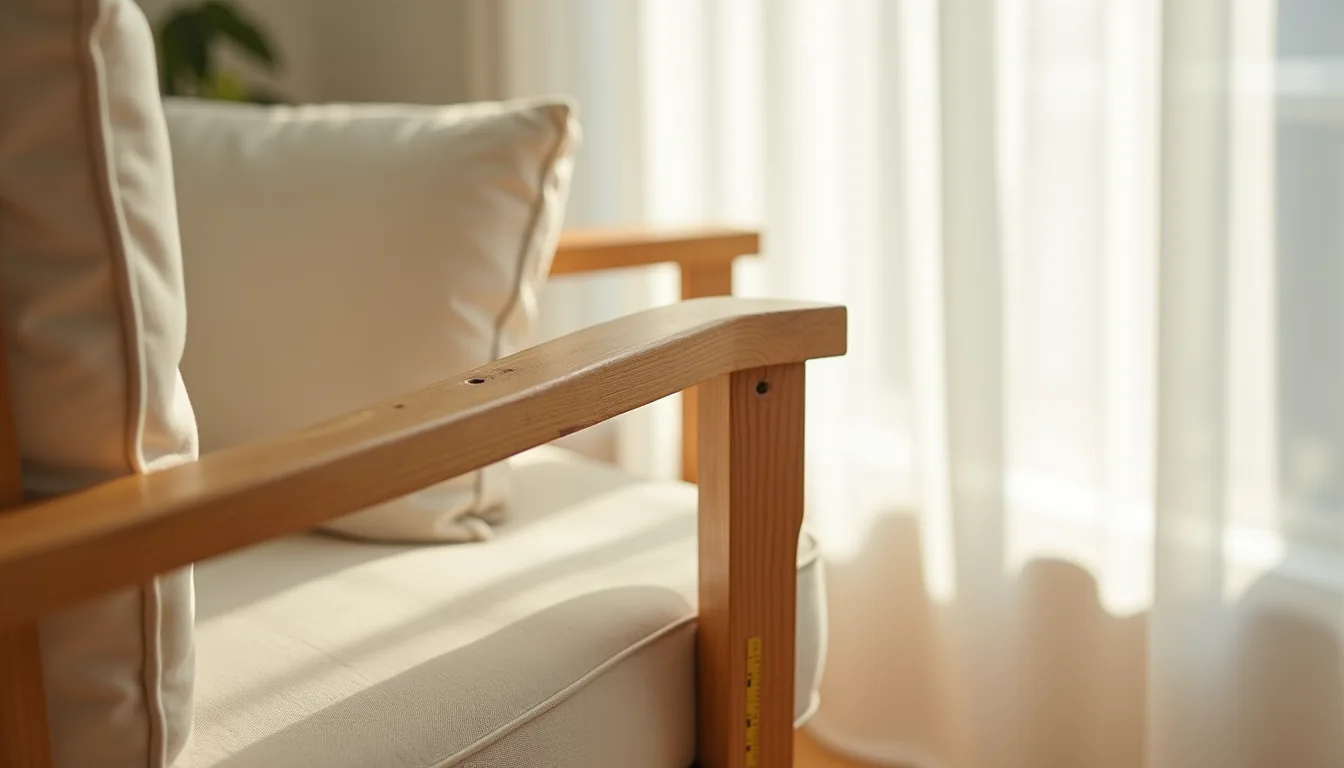
The sofa frame is the skeleton that determines whether your seating survives five years or twenty, and its construction, from kiln-dried hardwood to engineered panels, dictates everything from upfront price to long-term comfort. Before you commit to a purchase, you need to match that internal structure to your household’s actual habits, room proportions, and budget. The six approaches below break down exactly which frame types suit small apartments, high-traffic family rooms, and investment pieces, so you can stop guessing and start comparing specs that matter.
Key takeaways
- Hardwood frames (oak, maple, ash) deliver 15-20 years of use, but only if joints are double-doweled and corner-blocked, not just stapled.
- Plywood and engineered wood cut costs by 30-50% versus hardwood, yet still hold up for 5-10 years when the panels are at least ¾-inch thick and glued, not nailed.
- Eight-way hand-tied springs cost $200–$400 extra per sofa but outperform sinuous wire for comfort, lasting 10+ years with proper webbing support beneath.
- Kiln-dried wood (below 10% moisture content) prevents warping and creaking in humid climates, so check the frame’s underside for a stamp or ask the retailer directly before purchase.
Hardwood Frame Construction for Long-Term Investment
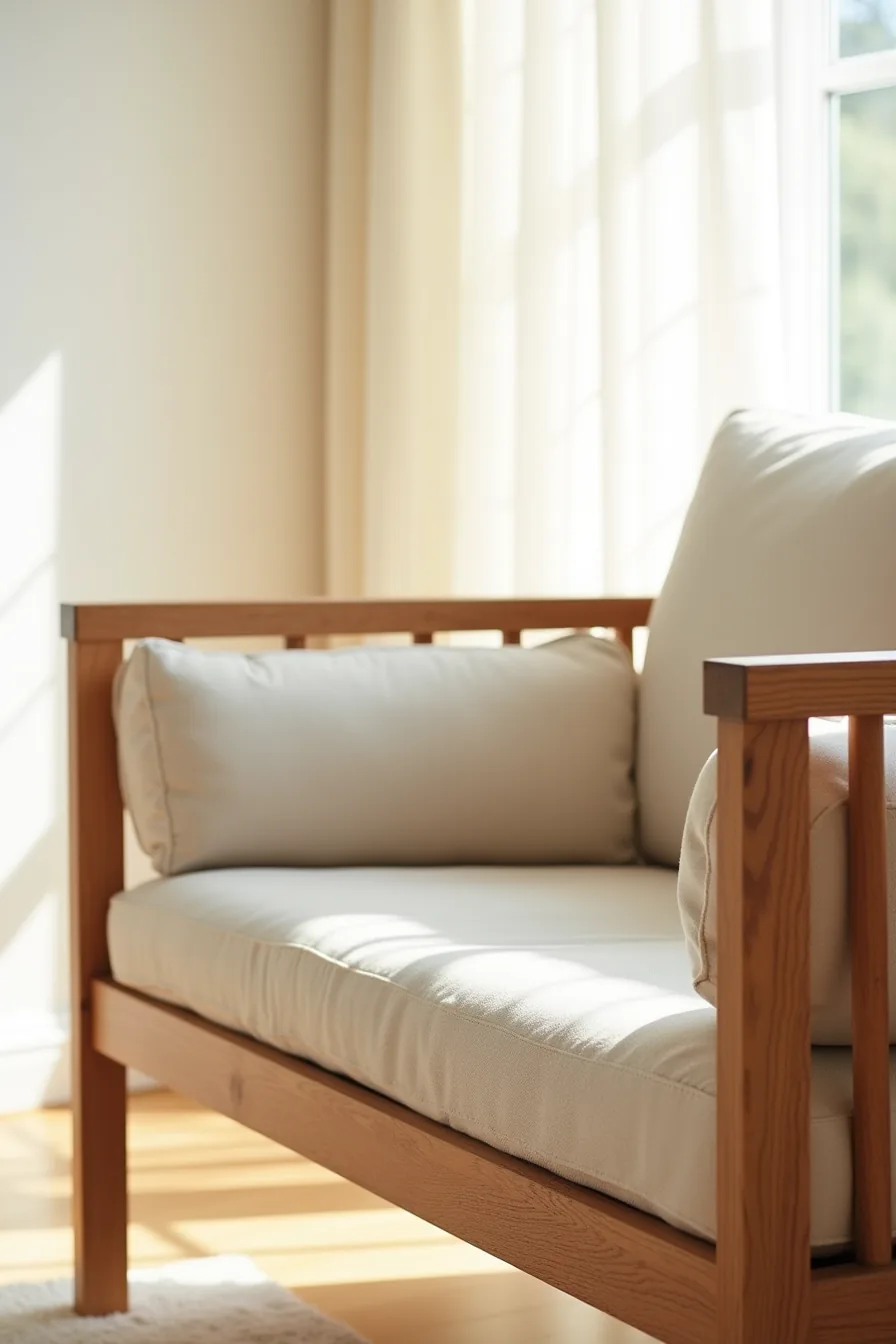
Solid hardwood is the gold standard in sofa frame construction because it resists sagging, warping, and joint failure for decades. Kiln-dried oak and walnut rails, like those in a mid-century frame with visible corner blocks, retain their structural integrity despite seasonal humidity shifts. These species register at the harder end of the Janka scale, oak around 1,290, walnut near 1,010, making them markedly more durable than softwoods like pine.
A well-built hardwood frame typically supports 15–20 years of daily use before cushions need replacing, while the structure itself can last generations. You can verify quality at the showroom by pressing on the outside arm; a solid oak rail should feel completely rigid, with no give or creak. Expect to pay 2–3 times more than an engineered wood equivalent, but the cost pencils out to roughly $50–$80 per year of lifespan, far less than replacing a conifer-based frame every 5–7 years.
Inspect the exposed corner blocks where the image shows sunlight hitting the wood; good kiln drying prevents minute surface cracks that later compromise glue joints.
Engineered Wood and Plywood: Budget-Friendly Frame Anatomy
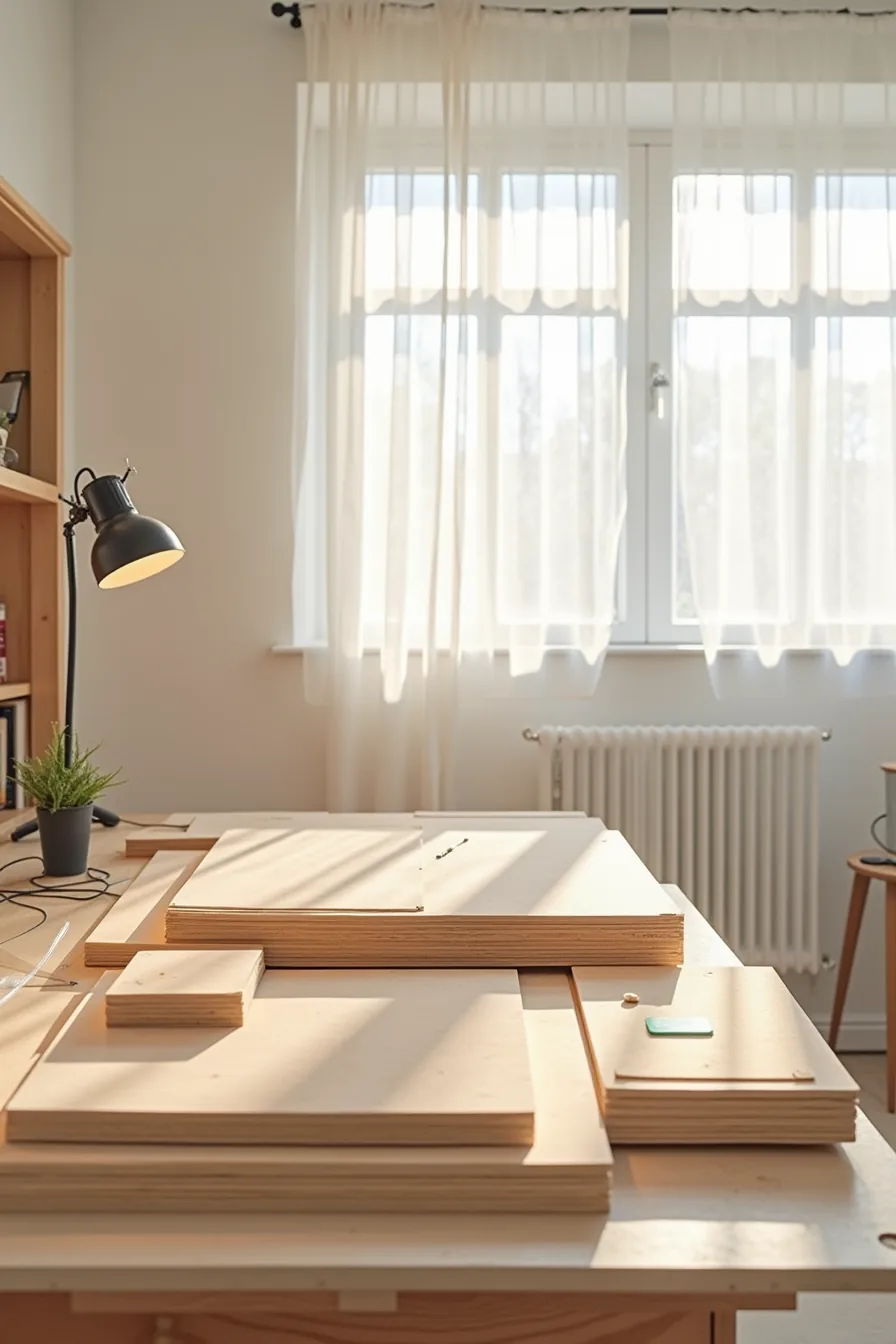
Engineered wood frames cut cost by using layered plywood and dense particle board instead of solid timber, which lowers material expense by roughly 40–60% while still handling 5–8 years of typical use. The flat-lay setup of plywood panels, particle board, metal brackets, and dowels reveals how these components interlock: the plywood forms the structural rails, particle board fills non-load-bearing panels, and metal brackets reinforce corner joints where stress concentrates. Dowels align the pieces during assembly, preventing the shifting that causes squeaks in cheaper frames.
This construction suits secondary living spaces, guest rooms, home offices, or rental apartments, where daily heavy use is unlikely. It performs poorly in high-traffic family rooms, where joints loosen within 3–4 years. When shopping, check whether the plywood is at least 12 mm thick and whether brackets are screwed rather than stapled; stapled frames fail fastest.
For a tighter budget, choose plywood over particle board wherever possible, plywood resists moisture better and holds screws firmly, while particle board crumbles when wet. Expect minor surface wear sooner than hardwood, but a protective finish extends the frame’s life noticeably.
Eight-Way Hand-Tied Springs and Support Systems
Eight-way hand-tied construction means a craftsman ties each coil to its eight neighbors with knotted twine, creating an interconnected suspension grid rather than independent springs. The underside view reveals the full system: hand-tied springs with distinct twine connections between coils, webbing strips stretched across the frame rails for initial support, and burlap covering that protects the springs from the upholstery above. This assembly distributes weight across the entire seating surface, so you never feel a coil edge through the cushion.
The trade-off is cost and time. A single frame can require 8–12 hours of tying labor, which is why sofas with this system typically run 30–50% more than comparable sinuous-spring models. Sinuous springs, continuous zigzag wires clipped to the frame, cost less and feel firmer initially, but they concentrate pressure at the wire contact points and sag faster under repeated use.
Eight-way hand-tied suits buyers planning to keep a sofa for 15+ years; the springs maintain their resilience roughly twice as long as sinuous alternatives before needing replacement. For the joint and support view, run your hand beneath the seat rail: eight-way frames feel uniformly taut across the full width, while sinuous models show visible wire runs and looser give between attachment clips.
Modular Frame Design for Renters and Small Spaces
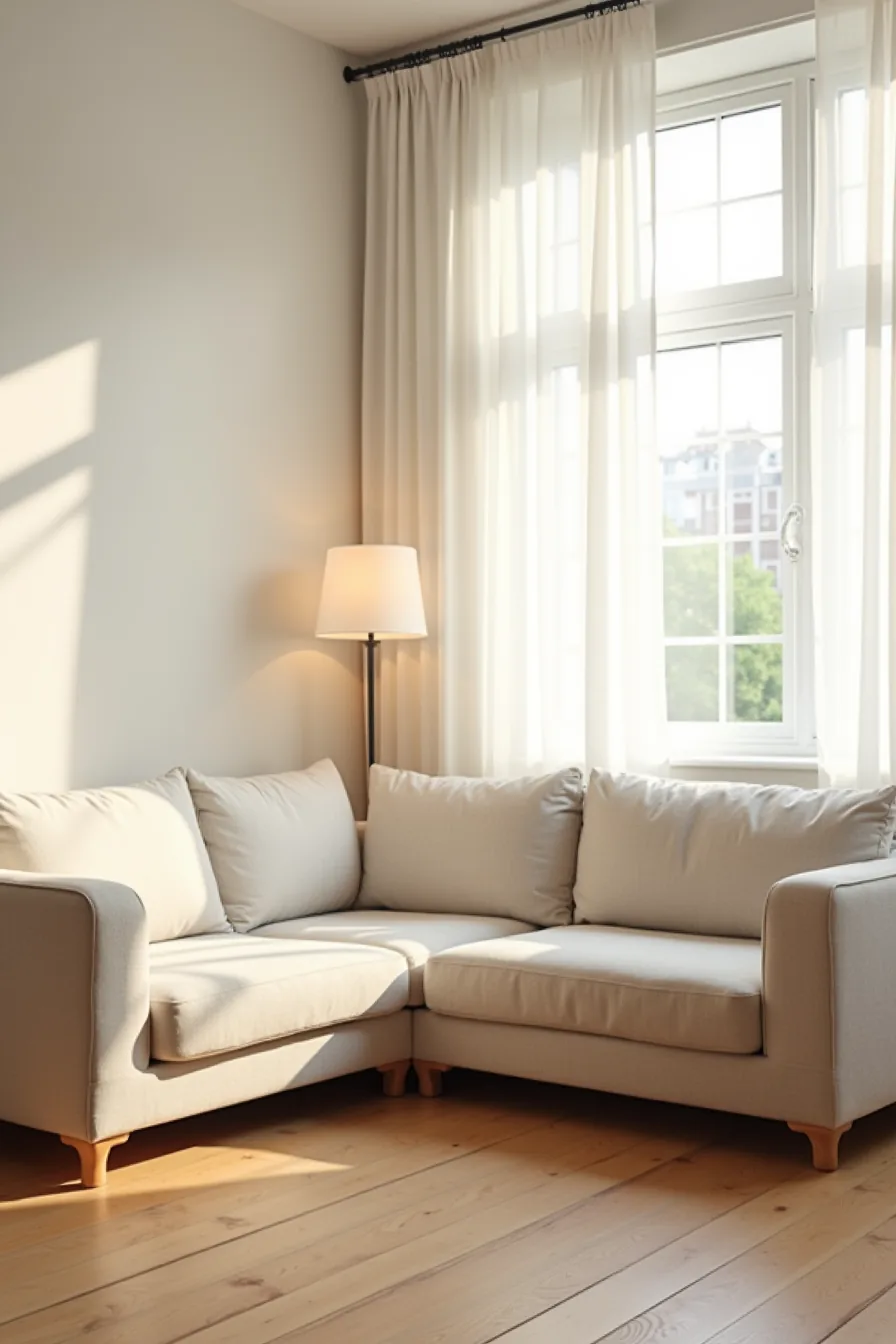
Modular frames sidestep the biggest obstacle in compact living: the doorway, the stairwell, and the freight elevator. Instead of one rigid monolith, the frame breaks into individual seat units, typically 30–36 inches wide, joined by steel connector brackets that clamp the adjacent rails together. Those brackets are the load-bearing compromise, so look for interlocking metal plates with a friction fit rather than plastic clips, which loosen after a few reconfigurations.
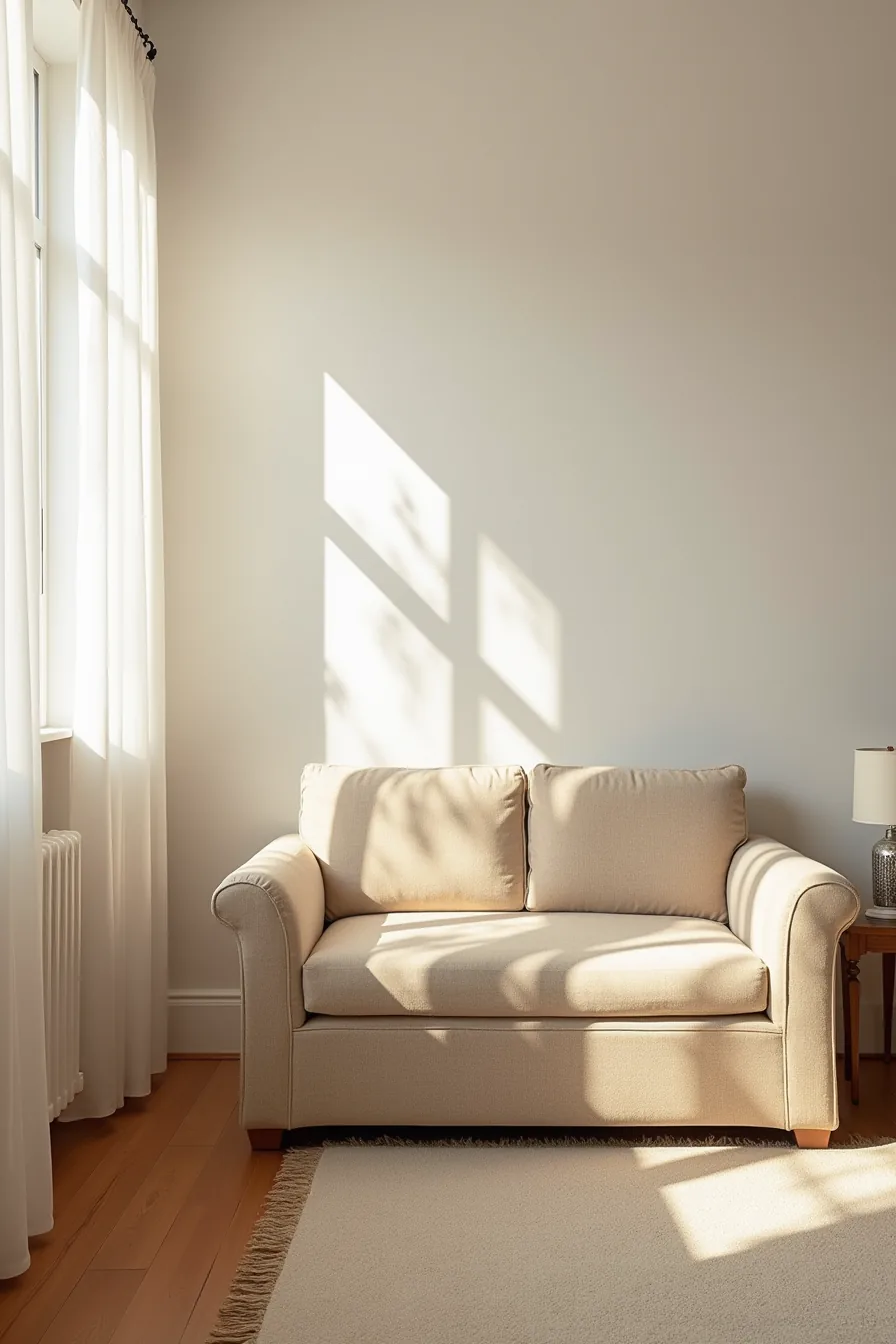
The sectional pieces in front of you, positioned separately to maximize floor space, halve the perceived bulk of a full L-shape while offering the option to hinge them into a corner next weekend.
This design suits renters who want to transport a sofa through narrow apartment doors (factory-tight passage is rarely wider than 29–32 inches) or anyone unsure whether their next layout will open up. The reconfiguration cost you’ll pay is assembly time: expect 20–40 minutes per connection point, ideally with a second person holding units flush while you tighten. For small spaces, keep the frame’s seat depth between 35–40 inches; anything deeper and the unit dominates a 10×12 room.
Finish matters less here than weight, there are no crossbars welded across the base, so you’re really lifting 60–80 pounds, not 150, per section. Canvas or brushed cotton over a solid hardwood frame keeps it durable without adding pounds, though you’ll want to check which joints are glued versus dependent solely on the hardware.
Kiln-Dried Wood and Moisture-Resistant Joinery

Kiln-drying reduces lumber moisture content to 6–9%, which stops the seasonal warping and cracking you’d otherwise hear as creaks by year three. If you live somewhere humid, think coastal regions or the Gulf South, that drying step is non-negotiable, since green wood will twist inside a glued joint and pull the frame apart within two seasons. The corner of your frame should show a mortise-and-tenon joint, where the rail’s tenon slides into a carved socket in the leg post; a pair of hardwood dowels pinning through both pieces adds shear strength without the cost of a full dovetail.
Run a humidity meter against the bare frame wood before you commit. Ideal readings land between 40–50% relative humidity; anything above 55% means the shop skipped final conditioning, and that frame will move on you. A slight patina on the wood is fine, it signals natural grain rather than a cheap veneer, but check for visible glue beads at the joint line, which indicate a tight fit that won’t rack sideways under daily use.
This inside construction matters most for families who plan to keep a sofa for a decade or more, since moisture-resistant joinery is the difference between a re-glue repair and a full rebuild.
Frame Inspection Checklist: Inside Construction Details Worth Checking Before Buying
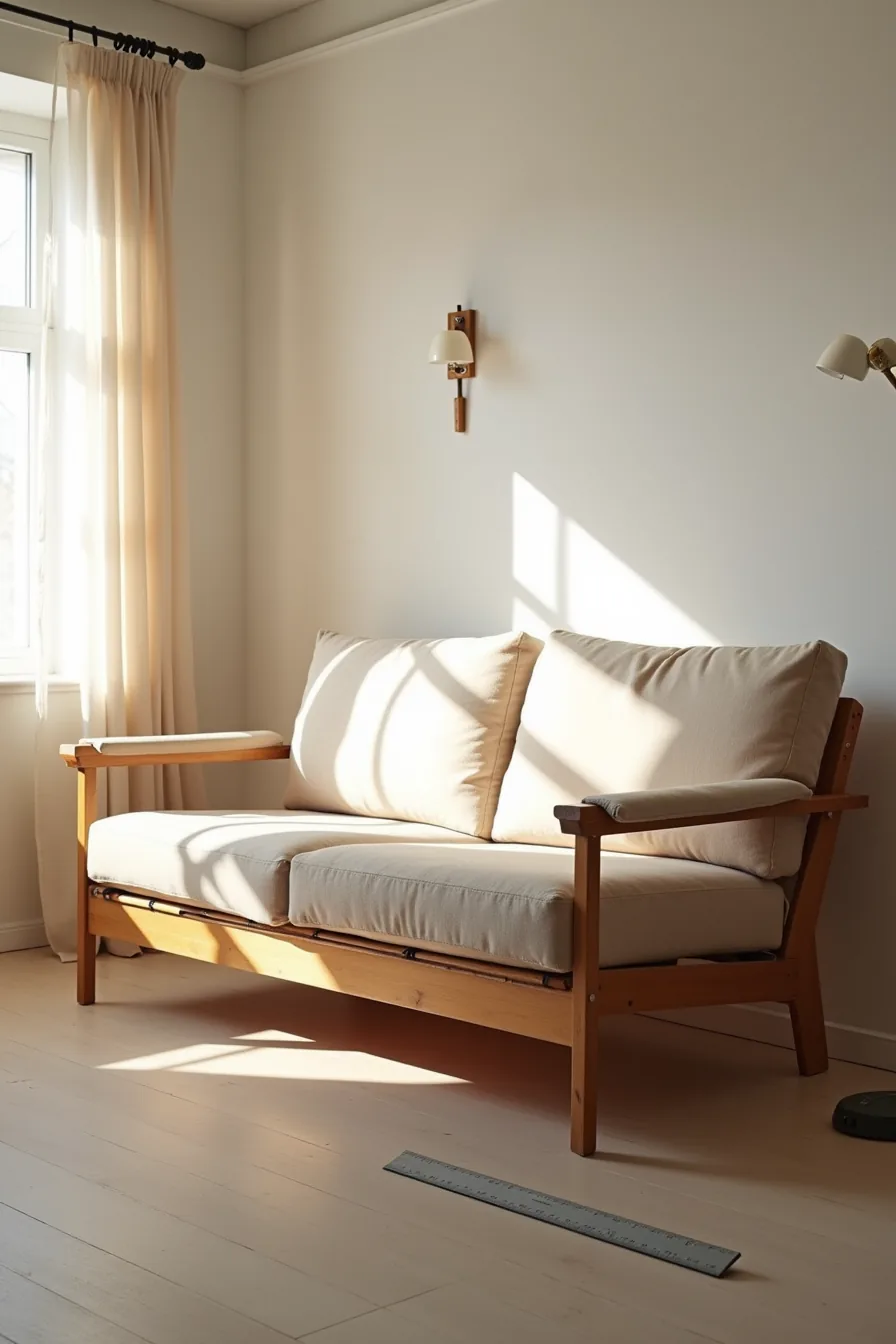
When you flip a sofa on its side with a ruler and flashlight in hand, you’re looking for five specific things. First, measure the frame rails: hardwood rails should run at least 1½ inches thick, while anything under 1 inch signals engineered wood that will crack within five years of regular use. Press your palm against the webbing straps, they should feel taut like a drumhead, with no sagging beyond a quarter-inch of deflection when you push firmly.
Run the flashlight along every joint intersection. You want to see continuous wood grain meeting wood grain, not particleboard edges or MDF layers peeking through. Check the spring attachment points specifically: quality sofas use metal clips screwed into the rail, while cheap builds staple the springs directly into soft wood, which pulls loose in about eighteen months of daily sitting.
Finally, compare warranty language: a frame warranty covering ten years or more typically signals solid hardwood construction, while a one-year frame warranty almost always means particleboard or finger-jointed softwood underneath.
Your Decision Checklist
Before you buy, verify the frame material by lifting one corner, a solid hardwood frame shouldn’t flex or creak. Check the joinery: dowelled and glued corners outlast staples or screws alone. Match the depth to your room’s proportions, not the showroom size.
If you’re renting, choose a knock-down frame with removable legs for easier moves. For a long-term piece, budget for kiln-dried hardwood and eight-gauge sinuous springs. Test the seat height against your existing tables, most standard sofas run 17-19 inches from floor to seat top.
Start now: Measure your doorway width and hallway turns before you fall for any frame.
Frequently Asked Questions
What is the difference between eight-way hand-tied springs and sinuous wire springs in sofa frame construction?
Eight-way hand-tied springs are individually coiled and tied in eight directions, offering even, luxurious support but costing more. Sinuous wire springs run zigzag across the frame, providing firmer, budget-friendly support with less labor.
How long does a hardwood sofa frame typically last compared to engineered wood?
A kiln-dried hardwood frame, like oak or maple, typically lasts 15–25 years with regular use. Engineered wood, such as plywood or particleboard, usually lasts 5–10 years before sagging or cracking under stress.
Can I tell if a sofa frame is well-constructed without taking it apart?
Yes. Lift one corner, if the frame twists or creaks, it’s weak. Check for corner blocks, glue, and screws, not just staples. Also, feel for solid wood through the fabric; particleboard feels hollow and cold.
What sofa frame construction works best for renters who move frequently?
A modular sofa with a bolt-together hardwood frame, not glued, is ideal. It disassembles into manageable pieces, resists damage in transit, and often uses sinuous springs, which are lighter and easier to repair than hand-tied systems.