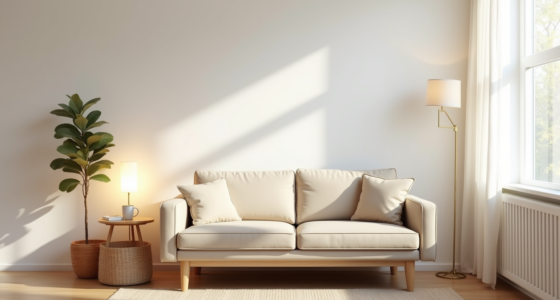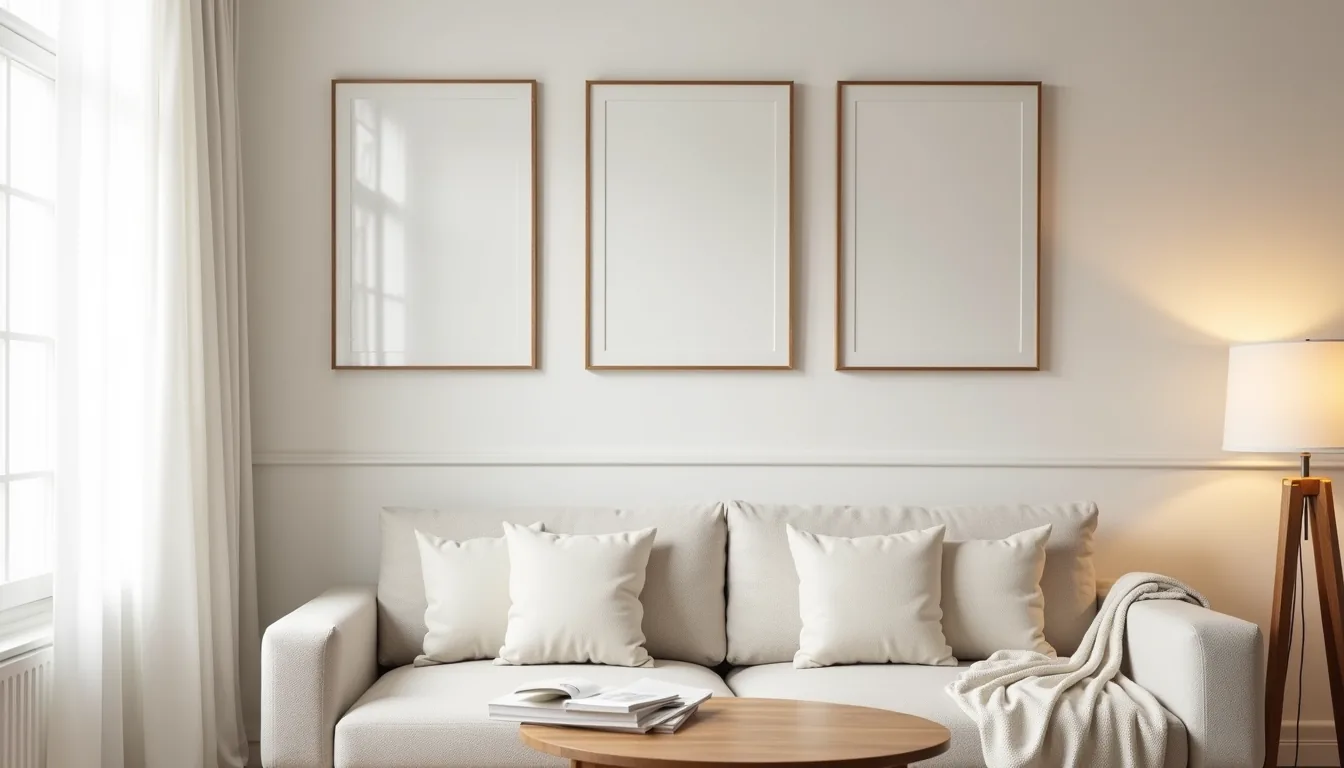
The wall behind your sofa is the largest uninterrupted surface in your living room, and what you do with it determines whether the space feels finished or accidentally empty. Six distinct approaches, from a single oversized artwork to a full built-in library, can transform that blank zone into a functional anchor. Each option carries specific trade-offs in cost, installation effort, and daily usability, so the right choice depends on your room’s dimensions, traffic flow, and whether you rent or own.
Before you buy a single frame or hammer a nail, weigh your priorities against the practical constraints ahead.
Key takeaways
Measure your sofa height first, hang artwork or mirrors with their centerline 57–60 inches from the floor, or roughly 6–8 inches above the sofa back, to avoid a floating or cramped look. Choose a gallery wall over a single piece when your sofa spans 72 inches or longer, using 2–3 inch gaps between frames and a total width equal to 60–75% of the sofa’s length for balanced proportion. Mount floating shelves 12–18 inches above the sofa back with a depth of 8–10 inches, and keep items under 6 inches tall to prevent head clearance issues and visual clutter. For renter-friendly walls, use peel-and-stick sconces or removable wallpaper that leave no residue, but verify the adhesive rating for textured surfaces and expect to reapply annually in humid rooms like kitchens or bathrooms.
Mirror vs Artwork: Which Suits Your Room
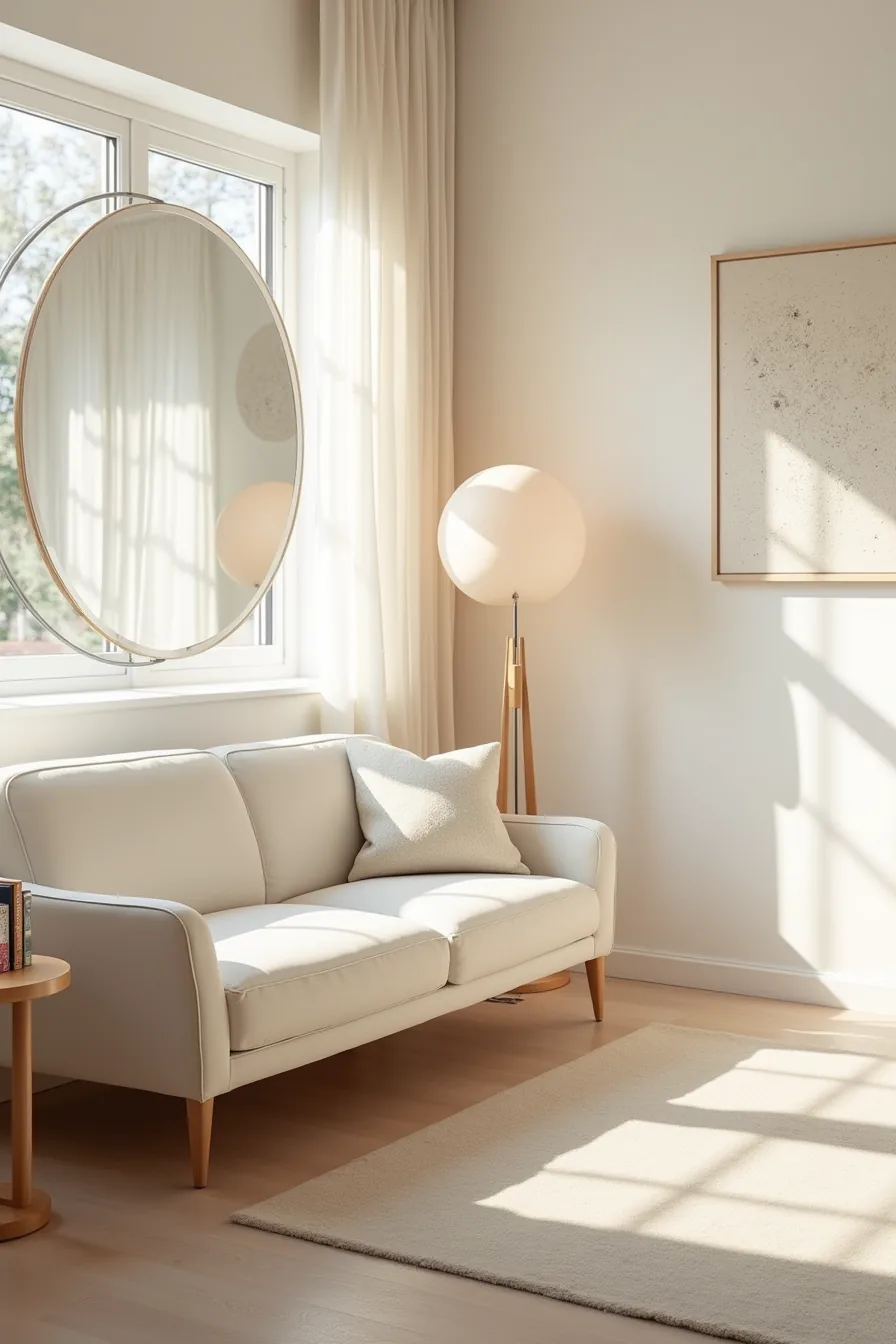
The split-focus setup, a large round mirror above a low-backed sofa on one wall, textured artwork on the adjacent wall, is a masterclass in using both without competition. The mirror reflects the morning light beam from the window, effectively doubling the pale-wall brightness across the room. Artwork, by contrast, absorbs light; it anchors the eye rather than redirecting it.
For a small or north-facing room, choose the mirror as your primary wall behind sofa piece. For a larger, well-lit space, the artwork will hold its own and give the sofa visual weight.
Sizing is where most decisions fail. A mirror above a sofa should span roughly two-thirds of the sofa’s length; 50–60% works for artwork. Hang both so the center sits 57–60 inches from the floor, eye level for most seated adults.
The round mirror softens the sofa’s horizontal line; a rectangular artwork on the adjacent wall adds contrast without competing for the same sightline. If you want both, follow this exact split: mirror on the main wall, art on the perpendicular one.
Gallery Wall Layout and Spacing
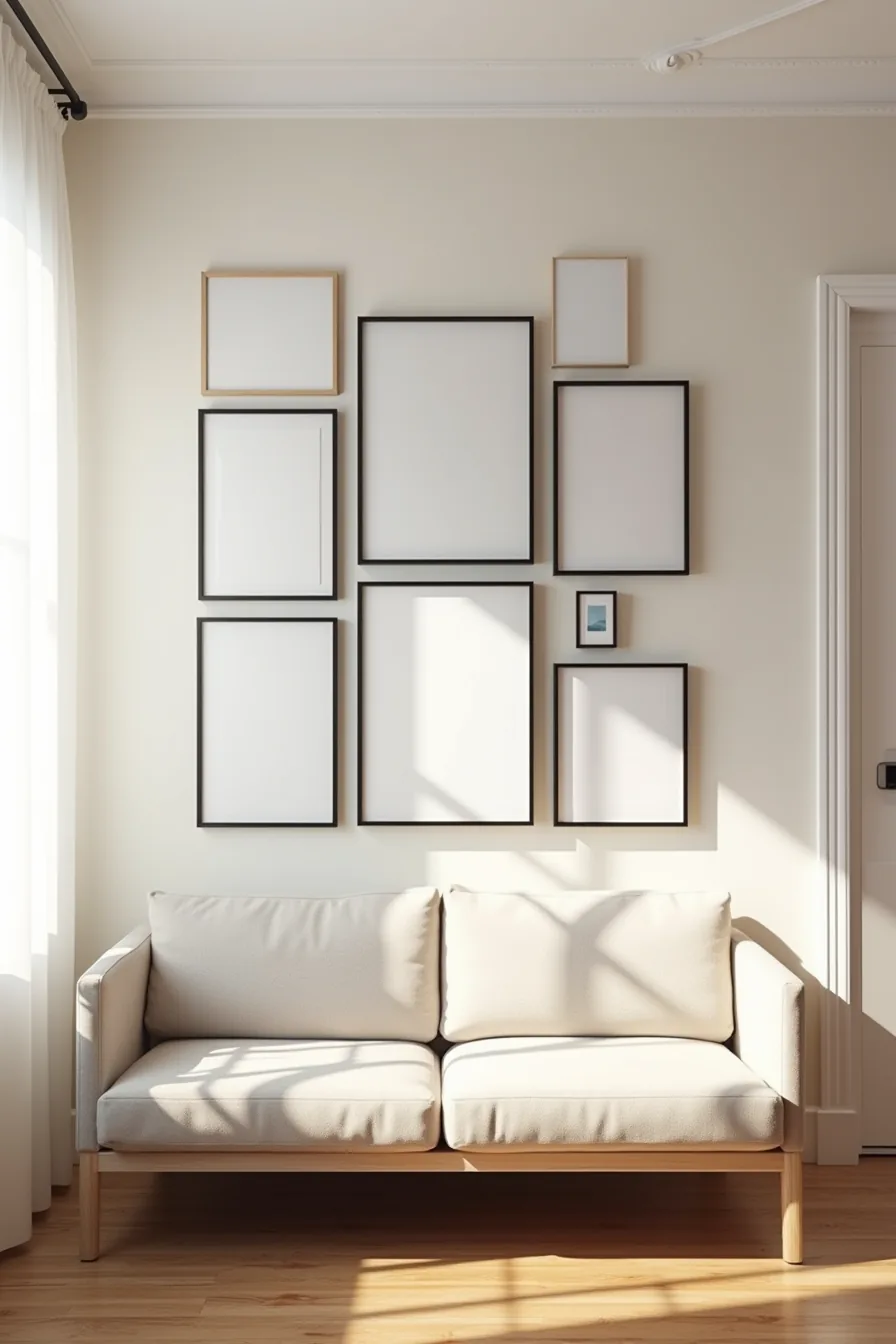
A gallery wall behind your sofa works when the arrangement reads as one intentional unit, not nine separate frames fighting for attention. The staggered grid in this setup, mixing wood frames with black metal ones across varied depths, creates rhythm through contrast. For a nine-piece composition, keep the outer edges aligned to an invisible rectangle; the internal staggering is what gives it that curated, collected-over-time feel.
Spacing is non-negotiable: maintain a consistent 2–3 inches between every frame edge, no exceptions. Measure the total width of your planned layout first, then aim for it to span 60–75% of your sofa’s length. Hang the center of the entire grid at 57–60 inches from the floor, aligning with the sofa’s midpoint.
Start by laying the frames out on the floor to lock in your spacing before committing to nail holes. This approach suits a medium-to-large living room where the sofa anchors the space, in a smaller room, drop to five frames in a tighter cluster to avoid overwhelming the wall.
Floating Shelves for Storage and Display

Two horizontal floating shelves at shoulder height turn the wall behind your sofa into usable storage without the footprint of a bookcase. The lower shelf should sit 18–24 inches above your sofa’s backrest so you can reach items while seated; the upper shelf goes 12–16 inches above that. This setup suits renters because most floating shelf brackets require only two screw points per shelf, patchable with spackle when you leave.
Weight is the real constraint. Drywall anchors hold roughly 20–35 pounds per pair in standard 1/2-inch drywall, so keep the combined load on each shelf under that. Stacked books, ceramic vessels, and terracotta pots all fall safely within range.
Reserve the bottom shelf for items you actually retrieve, books, remotes, reading glasses, and use the top shelf purely for display pieces you won’t touch weekly. Styling rule: group objects in odd numbers, vary heights, and leave 20–30% of each shelf surface empty so the wall reads as intentional, not cluttered. Dust these shelves weekly; open display collects noticeably more than framed art.
Sconce Placement and Lighting Design

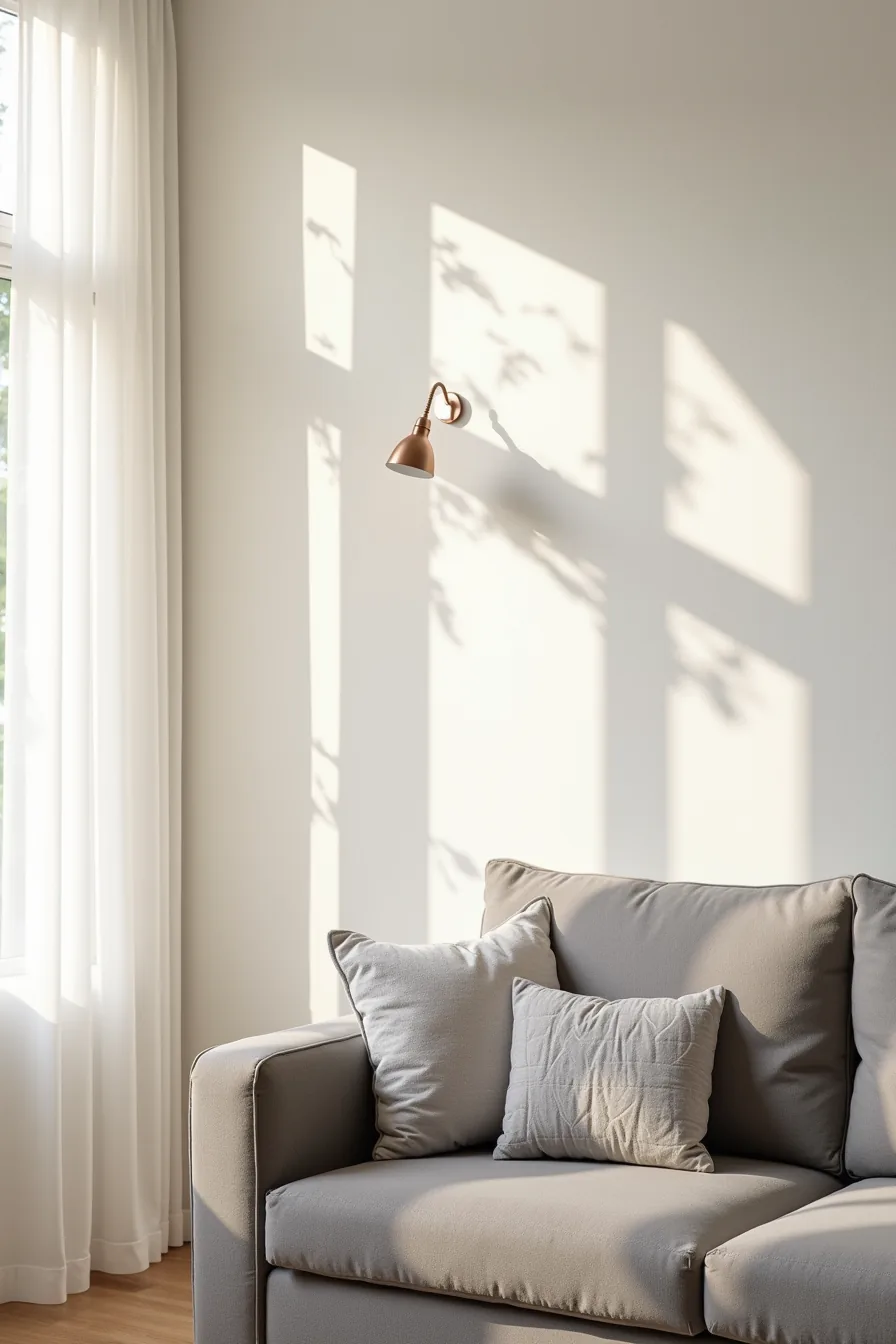
Wall sconces flanking your sofa create a focused pool of light for reading or ambiance without competing with overhead fixtures. In the setup visible here, two brass sconces sit symmetrically on either side of a central rectangular mirror against a charcoal accent wall, casting warm pools that visually widen the seating area. This configuration works best when the sconces are mounted 60–72 inches from the floor, placing the light source slightly above seated eye level to reduce glare.
For sconce placement, the real decision is hardwired versus plug-in. Hardwired sconces require an electrician and wall surgery, budget $150–$400 per fixture for installation, but deliver clean lines and a permanent look. Plug-in sconces with cord covers cost $40–$120 each, install in under an hour with two screws, and suit renters since the cords route discreetly down the wall.
Choose a swing-arm style if you need adjustable task lighting for reading; fixed sconces suit purely ambient purposes. Fixture width should stay under one-third of your sofa’s length, a 72-inch sofa pairs with sconces no wider than 20 inches each. Brass, matte black, or aged bronze finishes all work, but match the metal to your other hardware (mirror frame, table lamps) for cohesion.
Clean sconces monthly with a dry microfiber cloth; glass shades need occasional damp wiping to avoid buildup.
Renter-Friendly Wall Treatments Without Damage
Peel-and-stick wallpaper delivers the visual impact of a permanent accent wall with zero commitment. The geometric pattern on this apartment’s white wall covers roughly 8–10 square feet behind the sofa, which is enough to anchor the seating zone without overwhelming a smaller room. Expect to pay $2–$5 per square foot for quality material that won’t damage drywall upon removal; cheaper rolls under $1 per square foot often tear or leave adhesive residue.
Fabric panels draped asymmetrically above the sofa add texture that wallpaper alone can’t achieve. Use lightweight canvas or linen (2–3 yards per panel) hung from removable adhesive hooks rated for 5–10 pounds each, no nails, no anchors, no patching fees at move-out. The asymmetrical arrangement suits renters because it doesn’t demand precise alignment; you can adjust the drape by eye in under ten minutes)Skip the command strips for anything heavier than a framed poster; they fail on textured walls and in humid rooms.
For the sofa itself, keep it 4–6 inches from the wall so the wallpaper pattern remains visible and the fabric panels don’t brush against your shoulders. When you move, the wallpaper peels off in one piece if you pull at a 45-degree angle, and the fabric panels fold flat into a storage bin, your deposit stays intact.
Paint and Accent Wall Techniques
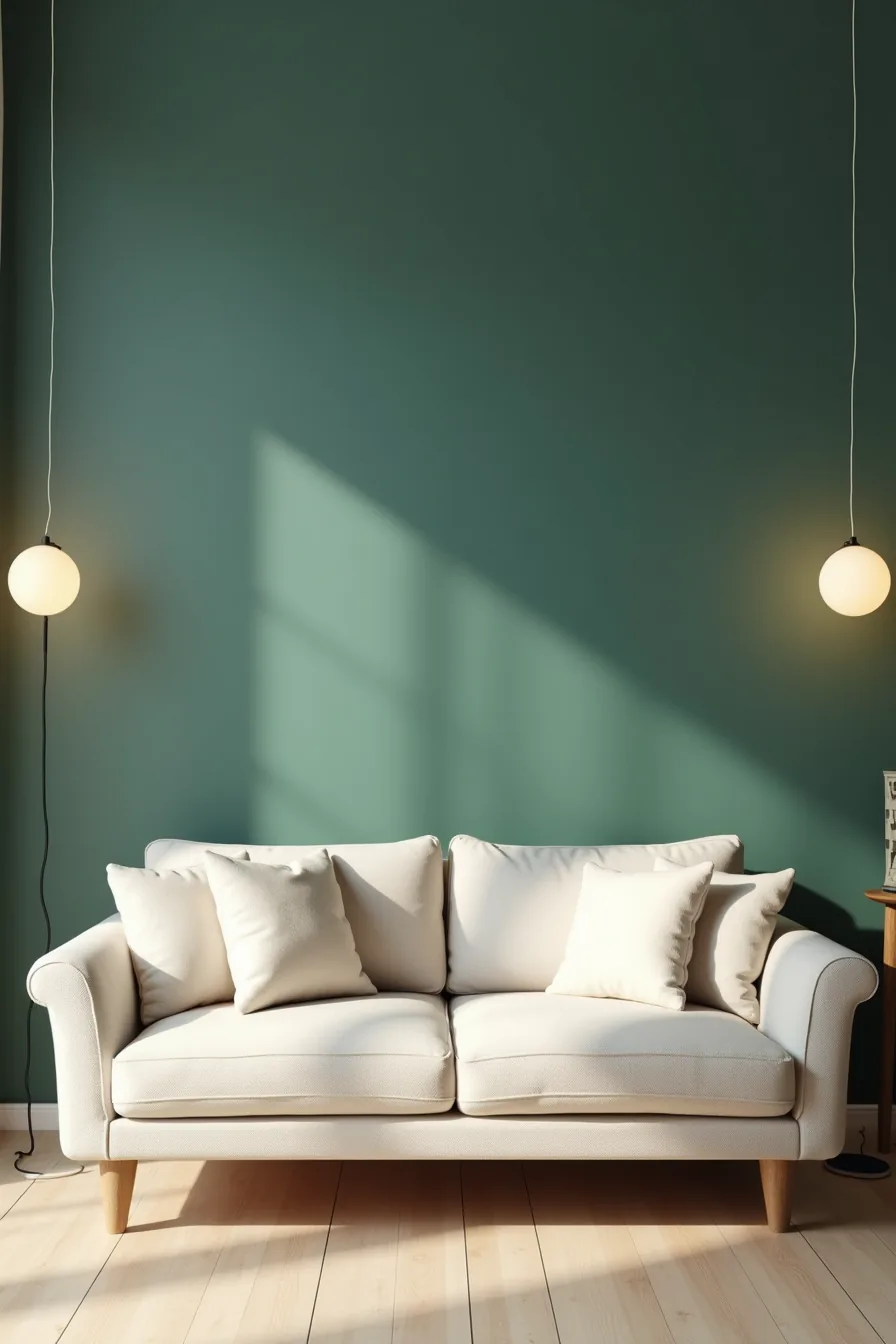
A single painted wall behind the sofa remains the most cost-effective way to define a seating zone. The deep forest-green finish on this wall costs roughly $40–$70 in premium matte paint for a standard 10-by-8-foot section, and it delivers a saturation that lighter shades simply can’t match. Matte paint hides minor drywall imperfections better than satin or gloss, though it scuffs more easily, budget for a touch-up quart and keep a soft sponge handy for the inevitable armrest collisions.
Green works here because it cools the room without darkening it, and the cream throw pillows on the sofa pull the warm neutral furnishings on both flanks into balance. Before committing, test a 2-by-2-foot swatch and observe it at morning, midday, and evening light; the same green can shift from teal to charcoal depending on your window orientation. Limit the accent wall to one surface only, painting all four walls in this depth would shrink a modest living room by a noticeable degree.
Where to start
Walk behind your sofa right now and measure the empty wall from floor to ceiling and edge to edge. That single measurement will eliminate half the options before you even browse a single product page. If your space is under 5 feet wide, skip the gallery wall and large art altogether, a single oversized mirror or one sculptural sconce will do more without crowding the seating area.
Your next decision is permanence. Renters should start with peel-and-stick wallpaper or a tension rod curtain panel; homeowners can commit to built-in shelving or a large-scale commission. Both routes take under an hour to mock up.
Your next step: Tape a rectangle on the wall at your chosen dimensions using painter’s tape. Live with it for a day. If it feels overwhelming or underwhelming, adjust the size before you spend a single dollar.
Frequently Asked Questions
What height should I hang artwork or a mirror on the wall behind my sofa?
Hang the center of your artwork or mirror at 57–60 inches from the floor, matching standard gallery height. This works whether you’re sitting or standing, keeping the piece visually balanced with the sofa back.
Can I use command strips or adhesive hooks to hang heavy mirrors behind a sofa?
No. Command strips hold up to about 4–7 pounds per set; heavy mirrors risk falling and damaging the sofa or injuring someone. Use wall anchors or studs for anything over 10 pounds, especially in high-traffic areas.
How far apart should floating shelves be spaced on the wall behind a sofa?
Space shelves 12–16 inches apart vertically to allow for tall decor without crowding. Keep the bottom shelf 6–8 inches above the sofa back, leaving enough room to access items without knocking your head.
What’s the best way to style a small wall behind a sofa without making it feel cluttered?
Choose one large statement piece or a tight cluster of three small items, leaving 6–10 inches of negative space on each side. Stick to a two-color palette and avoid filling every inch, empty wall is part of the design.