The mid century modern sofa isn’t a single silhouette but a family of design choices defined by exposed frames, tapered legs, and a commitment to function over ornament, and the version you choose should hinge on your room’s dimensions, your daily habits, and your tolerance for upkeep. That means a low-profile three-seater works in a narrow living room where a deep, curved sectional would choke the walkway, while a boucle-upholstered piece demands more vacuuming than a performance-polyester alternative. The next six configurations break down exactly what to measure, what to spend, and which trade-offs you can live with.
Key takeaways
Start with the legs: Tapered, angled legs are the single most reliable visual cue of a mid century modern sofa, so check that the frame’s legs are at least 6–8 inches tall to allow for easy cleaning underneath and a lighter visual footprint. Match the seat height to your room: Low-profile frames with 15–17 inch seat heights suit compact spaces by making ceilings feel taller, but verify clearance for anyone with mobility issues before committing. Use a 60/40 fabric-to-wood ratio: For an authentic look, pair a wool or linen blend in muted earth tones (olive, rust, mustard) with exposed oak or walnut arms, and expect to vacuum upholstery weekly to prevent pilling. Buy the frame, upgrade the cushions: A budget-friendly route is a solid hardwood base with foam cushions you replace after 3–5 years with high-resilience or down-blend inserts, extending the sofa’s life by a decade without paying premium upfront costs.
The Tapered Leg Foundation: Why It Defines Mid Century Modern Sofas

Look underneath any authentic mid century modern sofa and you’ll find the same structural signature: splayed wooden legs angled outward at roughly 12 to 18 degrees. That taper isn’t decorative, it visually lightens the entire frame, making even a deep three-seater appear to float above the floor. The angle also shifts the load outward, which improves stability on carpet while keeping the silhouette clean from every viewing position.
When you inspect the joinery, the construction quality becomes obvious. Mortise-and-tenon or dowel joints mounted flush to the frame indicate a sofa built to last decades, whereas simple butt joints or metal brackets signal cheaper assembly. A measuring scale alongside the leg reveals the typical range: most legs run 5 to 8 inches in height, which leaves just enough clearance for a vacuum nozzle or a robotic cleaner to pass underneath.
For a small apartment, that exposed floor line extends the perceived depth of the room; in a large open plan, it prevents the sofa from reading as a solid, heavy block. Press down firmly on one arm, if the frame flexes more than a quarter inch, the leg attachment is too weak for daily use.
Low-Profile Frames for Compact Rooms
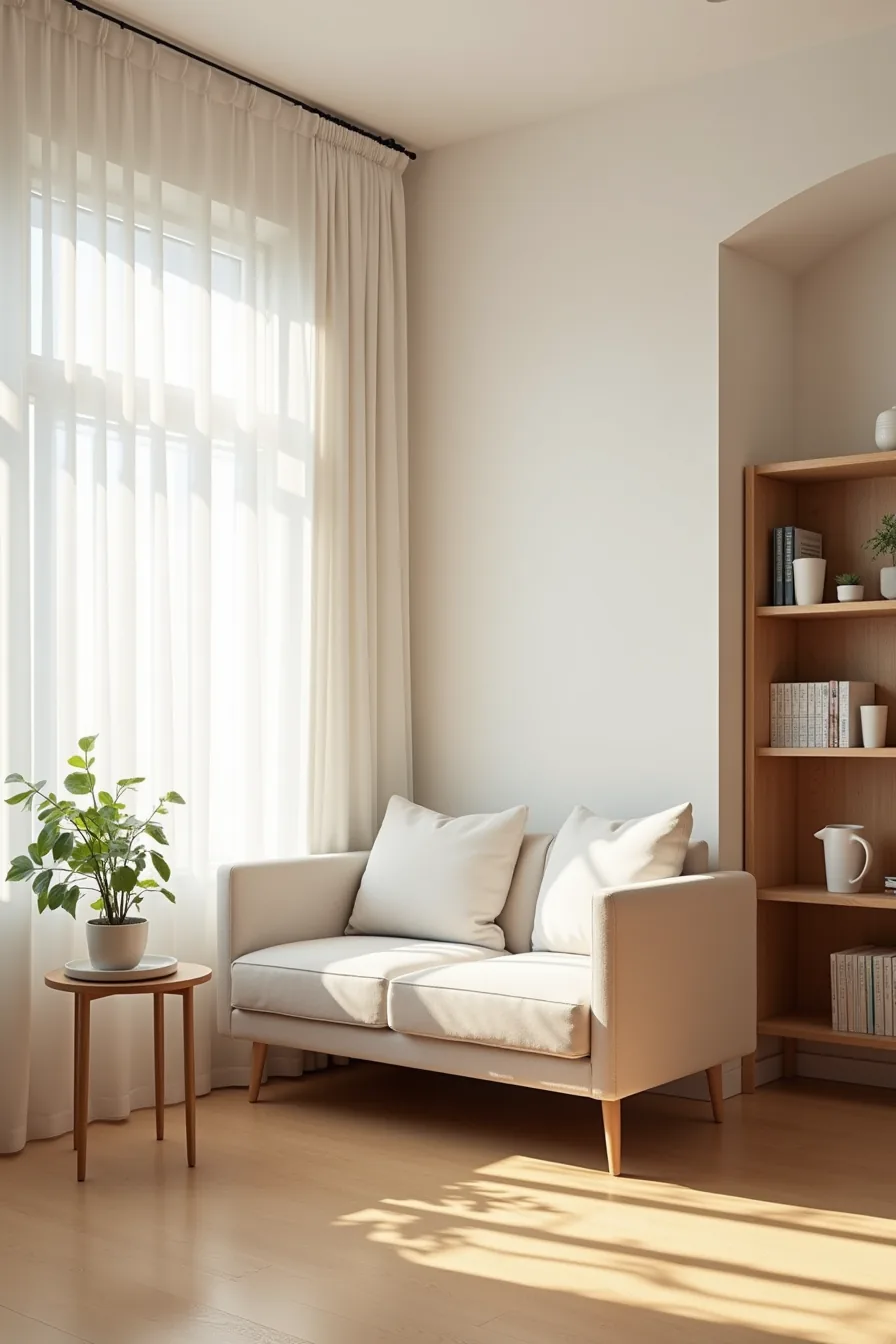
For a living area under 150 square feet, arm height matters more than overall length. Choose arms no taller than 20 to 24 inches, anything higher reads as a wall and shrinks the sightline across the room. Pair that with a seat depth of 32 to 36 inches, not the 40-plus found on loungers, so you can sit upright without the back cushion swallowing the space.
Position the sofa in a corner nook, angling it diagonally so the low arms lead the eye toward the open floor rather than a solid wall. Flank it with a narrow bookshelf (12 to 16 inches deep) and a small side table, then anchor the grouping with a potted plant at the corner junction. The tapered legs do the heavy lifting: with 5 to 8 inches of clearance, the floor line continues beneath the frame, tricking the eye into reading more square footage.
Skip a coffee table in favor of a slim console behind the sofa, you preserve the walkway and keep the silhouette unbroken. Style Mid Century Sofas for Smaller Living Rooms by prioritizing leg clearance and arm height over fabric pattern, which only adds visual noise in tight quarters.
Retro vs Contemporary Mix: Blending Eras Without Clashing

The gray sofa anchors the room, but the mix around it determines whether the look reads as curated or chaotic. A modern glass coffee table introduces transparency and sharp angles, while the vintage brass floor lamp brings warmth and a patina that contemporary pieces rarely replicate. Throw pillows in solid, saturated tones, think rust, ochre, or deep teal, bridge both periods because they echo mid-century color blocks without committing to a full retro palette.
The rule of thumb is a 70/30 split: let the era-dominant furniture lead, then add 30 percent from the opposing style. If your sofa is mid-century, resist pairing it with other period-specific pieces like a sunburst clock or kidney-shaped ottoman. Instead, choose contemporary items with clean silhouettes and one tactile material, glass, marble, or matte metal, that contrasts the sofa’s upholstered mass.
When the mix fails, it’s usually because both styles are competing at equal volume, so keep the neutral backdrop consistent and let the brass lamp’s vertical line break the sofa’s horizontal plane. This retro vs contemporary mix suits rooms where you want character without committing to a full period reenactment.
Era-Inspired Palette: Fabric, Leather, and Color Choices

The five swatches in a flat-lay arrangement, warm tan wool, mustard linen, cognac leather, charcoal tweed, and cream vinyl, represent the authentic material range you can pull from. Wool and tweed offer durability and a matte texture, but they require dry cleaning or spot treatment only; expect to refresh them every 5–7 years. Linen breathes well in warm climates, yet it wrinkles easily and stains faster than synthetic blends, making it a poor choice for households with young children or pets.
Cognac leather develops a rich patina over time and wipes clean with a damp cloth, though it needs conditioning twice a year and runs 20–40 percent higher than comparable fabric options. Cream vinyl reads convincingly retro, costs less than leather, and handles spills with a simple wipe, but it feels cold in winter and can crack within a decade if exposed to direct sunlight.
Your household use dictates the choice: leather or vinyl for daily family rooms, wool or tweed for formal spaces, linen for low-traffic studios. The mustard linen and warm tan wool swatches pair best with walnut wood frames; charcoal tweed suits oak or black metal legs. Whatever you select, order a physical swatch before committing, screen color varies significantly, and the texture will ultimately decide whether the piece feels right in your space.
Scale and Proportion for Medium and Large Spaces
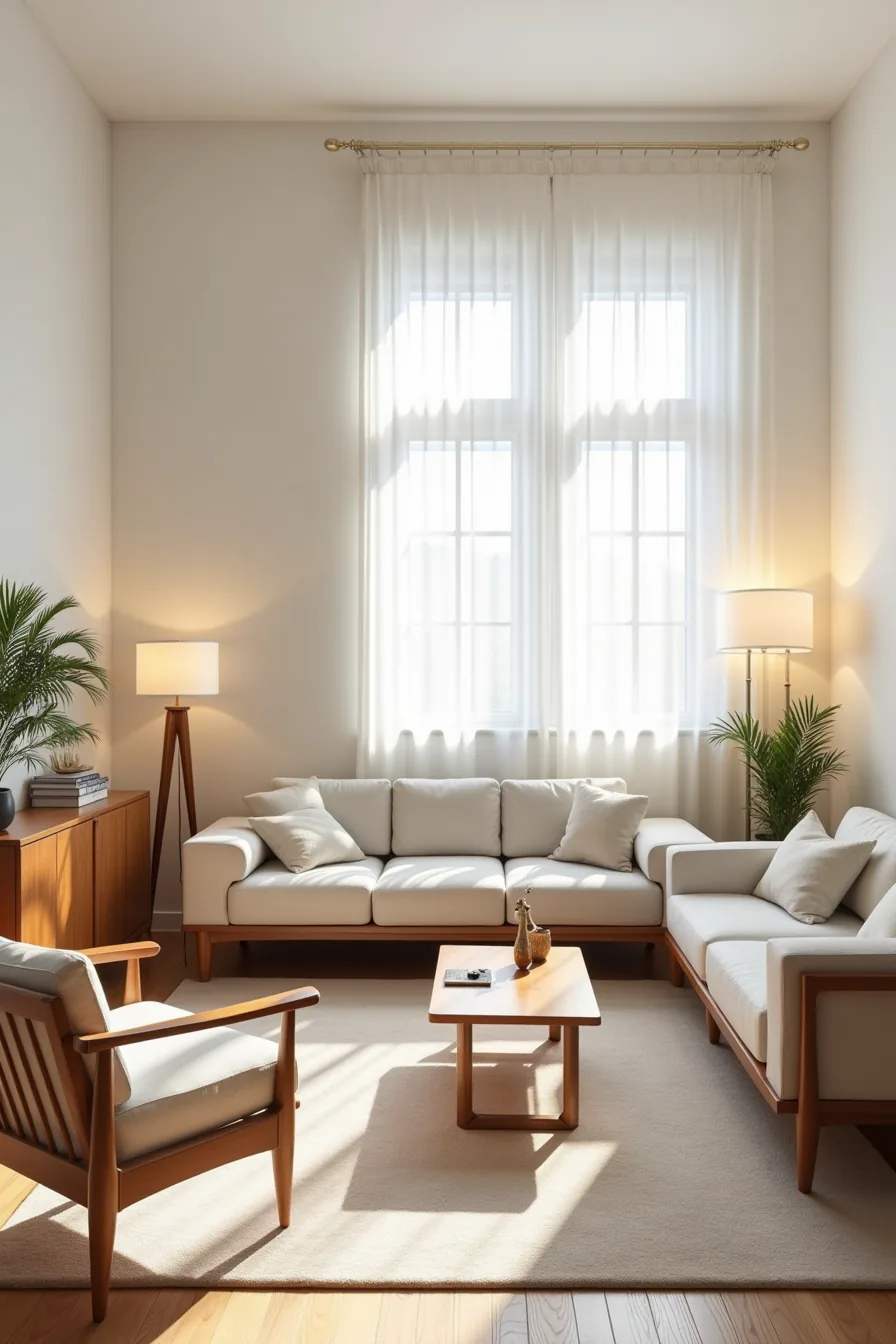
For rooms exceeding 200 square feet, the standard three-seater mid century modern sofa, typically 78 to 90 inches long, anchors the space without overwhelming it. Position the sofa with 18 to 24 inches of clearance from the credenza behind it, allowing traffic to flow behind seated guests without forcing them to shuffle sideways. A large area rug should extend at least 12 inches beyond the sofa’s sides, visually tying the seating group together.
Flank the sofa with matching armchairs angled slightly inward to create a conversation zone that doesn’t require shouting across the room. Keep the distance between the sofa and armchairs between 8 and 10 feet for comfortable dialogue. In rooms with high ceilings, the credenza’s height becomes critical, choose one that reaches at least 30 inches tall to bridge the visual gap between low-profile seating and the vertical space above.
Budget, Rental, and Investment Routes

A new reproduction sofa, think clean lines, kiln-dried hardwood frames, and performance fabrics, offers the lowest barrier to entry, typically landing between $800 and $1,500 for a three-seater. You sacrifice the patina of age but gain a 5- to 10-year warranty and fabric choices that resist pet claws and wine spills. This route suits first-time buyers or anyone furnishing a guest room where durability outranks provenance.
For renters, a secondhand vintage piece with original upholstery showing honest patina sidesteps the “new furniture in a temporary space” dilemma. Expect to pay $300 to $700 at estate sales or Facebook Marketplace, plus $100 to $200 for professional cleaning. The trade-off is real: original wool or tweed fabrics may be fragile, and you can’t verify the frame’s joinery without flipping it over, do that before handing over cash.
At the top end, a custom-built sofa frame in progress reveals the real investment: benchmade construction with eight-way hand-tied springs and solid walnut legs runs $2,500 to $6,000, with a 6- to 10-week lead time. You choose every dimension, from seat depth to arm height, and the piece becomes a family heirloom. Only commit if you can live with the same silhouette for 20 years, recovering it later costs $800 to $1,500 alone.
What to do first
Start by measuring your room’s longest wall and seating area before browsing anything. A 72-inch sofa suits most 10×12-foot living rooms, while 84–96 inches works best in open-plan spaces over 15 feet wide. Write down your door widths too, many mid-century frames with tapered legs clear standard 30-inch openings, but avoid angled-back designs that exceed 34 inches in depth.
Then pick one anchor material: solid teak or walnut framing for investment pieces, or powder-coated steel for budget builds. Match the upholstery to your household, performance polyester for pets, wool bouclé for a textured statement. Finally, set a firm budget range before comparing vintage restoration costs against new reproductions.
That one measurement and one material choice will eliminate half your options instantly, making the remaining decisions far simpler.
Frequently Asked Questions
What exactly makes a sofa ‘mid century modern’ versus just retro-looking?
True mid century modern sofas prioritize clean, horizontal lines, exposed tapered legs, and low profiles (typically 15–17 inches seat height). Retro merely borrows era motifs; MCM follows functionalist principles, form follows structure, not decoration.
Can I fit a mid century modern sofa in a small apartment, and will it look cramped?
Yes. Choose a two-seater (55–65 inches wide) with slim arms and raised legs. This creates visual floor space.
Pair with a narrow side table, not bulky coffee tables. Avoid deep seats (over 24 inches) to prevent dominating the room.
How do I know if a tapered-leg sofa is structurally sound or just cheap-looking?
Check leg attachment: solid hardwood legs bolted to the frame with metal brackets are strong; glued or screw-only legs fail. Flip it, the frame should be kiln-dried hardwood, not particleboard. Push down on corners; minimal flex means sound joinery.
What’s the difference between buying a reproduction mid century modern sofa and an authentic vintage one?
Reproductions (e.g., Article, West Elm) cost $800–$2,000, use modern foam and performance fabrics, and ship new. Authentic vintage (e.g., Danish teak frames) ranges $1,500–$5,000+, requires restoration, and offers original craftsmanship but needs careful inspection for sagging springs.