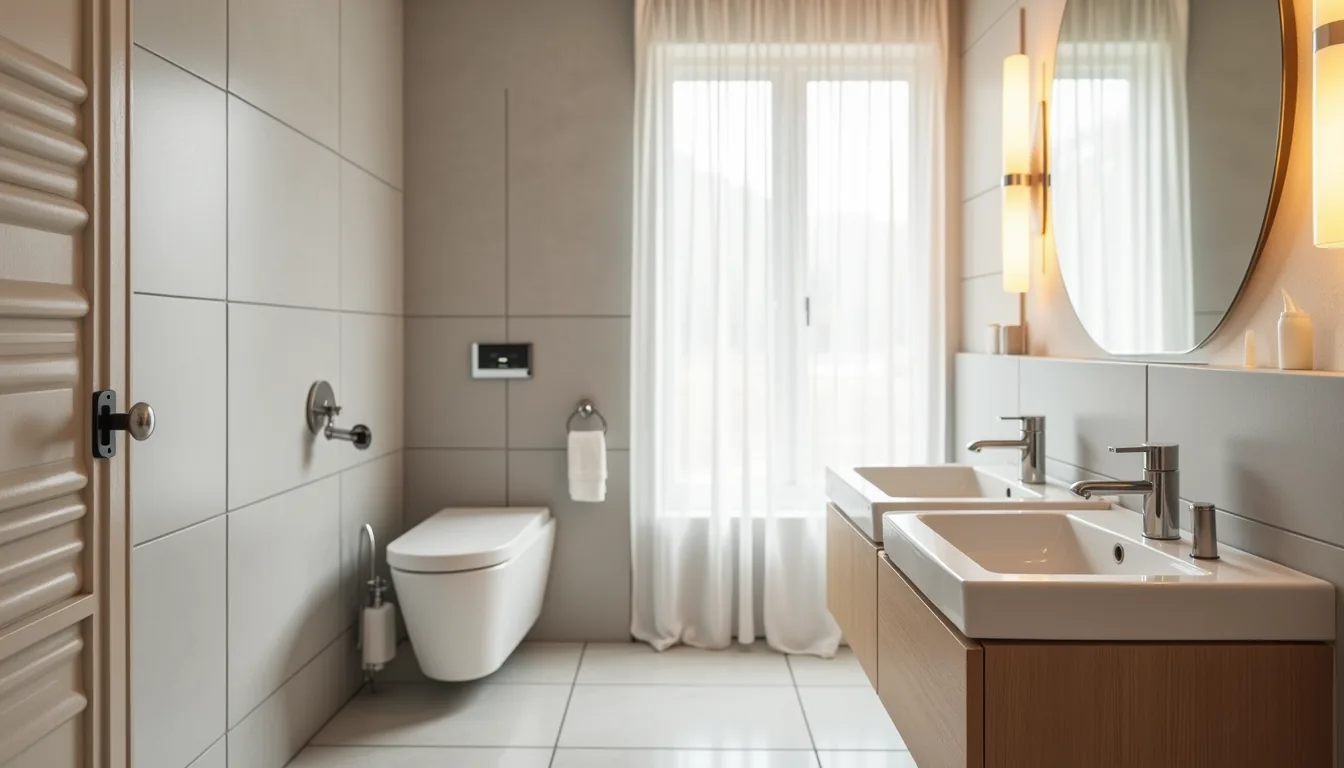
A modern black bathroom is less about a single color scheme and more about a deliberate ratio of dark, matte surfaces to light-reflecting accents, and the six approaches below show you exactly how to balance that equation for your space. The common thread is contrast, textured black tile against warm wood, or deep cabinetry beside a bright white basin, but the execution varies wildly depending on your square footage and budget. You’ll see a renter-friendly peel-and-stick route, a mid-range remodel with factory-finished panels, and a full investment-grade renovation with custom stone.
Each option includes the exact dimensions, placement logic, and maintenance caveats you need before you buy a single can of paint.
Key takeaways
- Large-format dark tile (12×24 inches or larger) anchors a modern black bathroom by minimizing grout lines, which cuts visual clutter and makes small walls feel taller, but requires a waterproofing membrane and professional installation to avoid costly leaks.
- A wall-mounted black vanity with a floating design frees up floor space for a cleaner look, yet you must verify your wall studs can support its weight and account for hidden plumbing access before committing.
- Warm LED lighting at 2700-3000K, placed at eye level or below, counteracts the starkness of black surfaces without creating glare, while overhead-only fixtures will make the room feel like a cave.
- Natural texture via wood and linen, like a teak bath mat or a woven basket, breaks up black’s flatness and adds warmth, but requires routine sealing or dry brushing to prevent water damage and mold in humid conditions.
Large-Format Dark Tile as Your Anchor
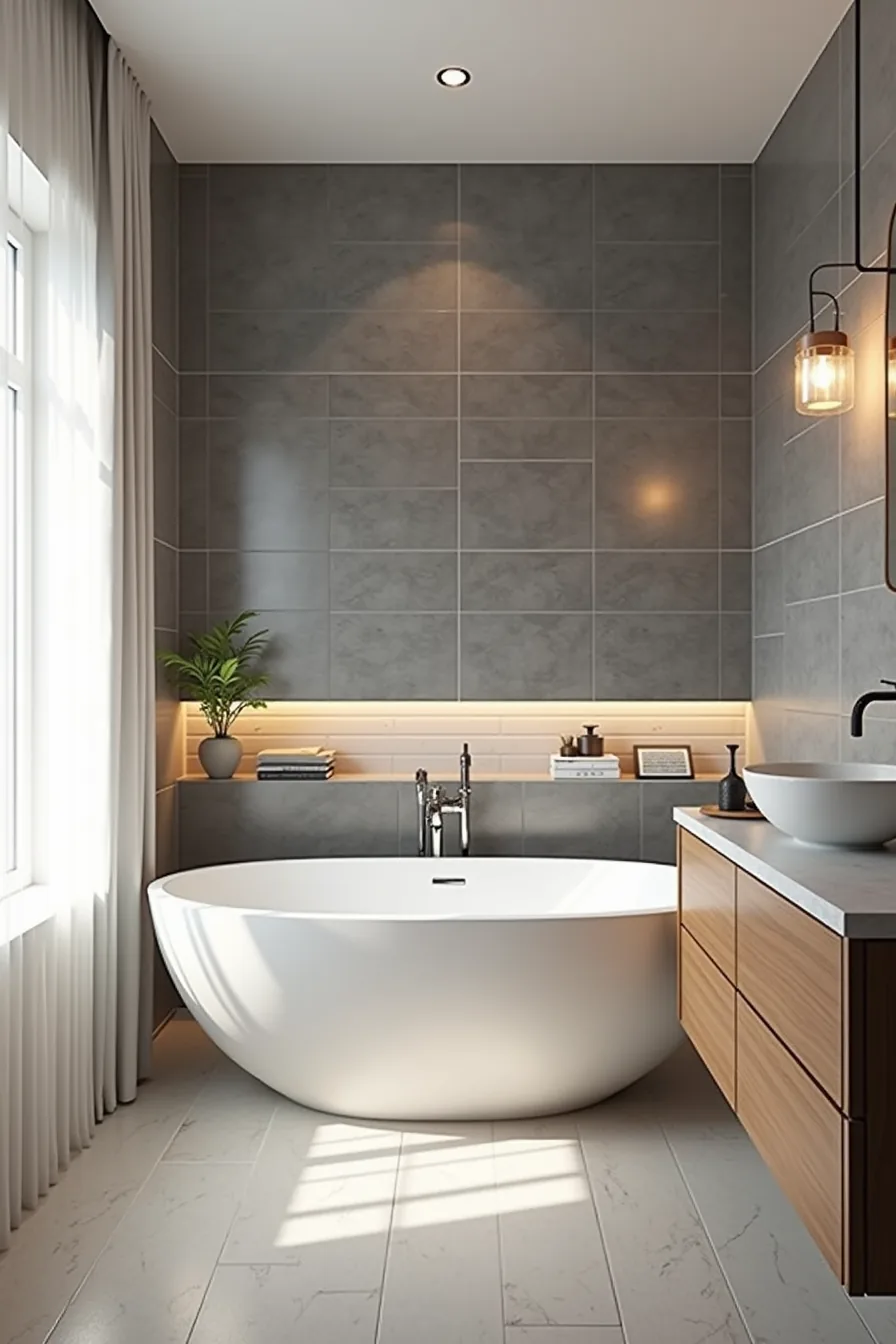
Oversized tiles, typically 12 by 24 inches or larger, are the fastest way to commit to a modern black bathroom without turning the room into a cave. The running bond pattern you see here offsets the vertical stacking, which visually lengthens the wall and prevents the grid from feeling monotonous. That ceiling-to-floor coverage works best in rooms with at least one window or a bright vanity light, because matte black surfaces absorb roughly 90 percent of the light that hits them.
Choose matte over polished if you’re installing floor-to-ceiling. Polished dark tile reflects light but shows every water spot and soap streak, making it a poor choice for a shower enclosure you plan to use daily. The single horizontal strip of white subway tile at mid-height breaks the dark mass at eye level, giving the eye a resting point and making the ceiling feel higher than it’s.
Before committing, test a full sheet of tile in your actual space for 48 hours. Dark walls compress a small bathroom significantly; if the room measures under 40 square feet, limit the dark tile to one wall or the shower zone only, and keep the remaining walls white to preserve depth. Use a contrasting grout color, light gray works well, to emphasize the tile shape, and budget for a professional install, as large-format tile requires a perfectly flat substrate to avoid lippage.
Minimal Black Vanity: Storage Without Visual Weight
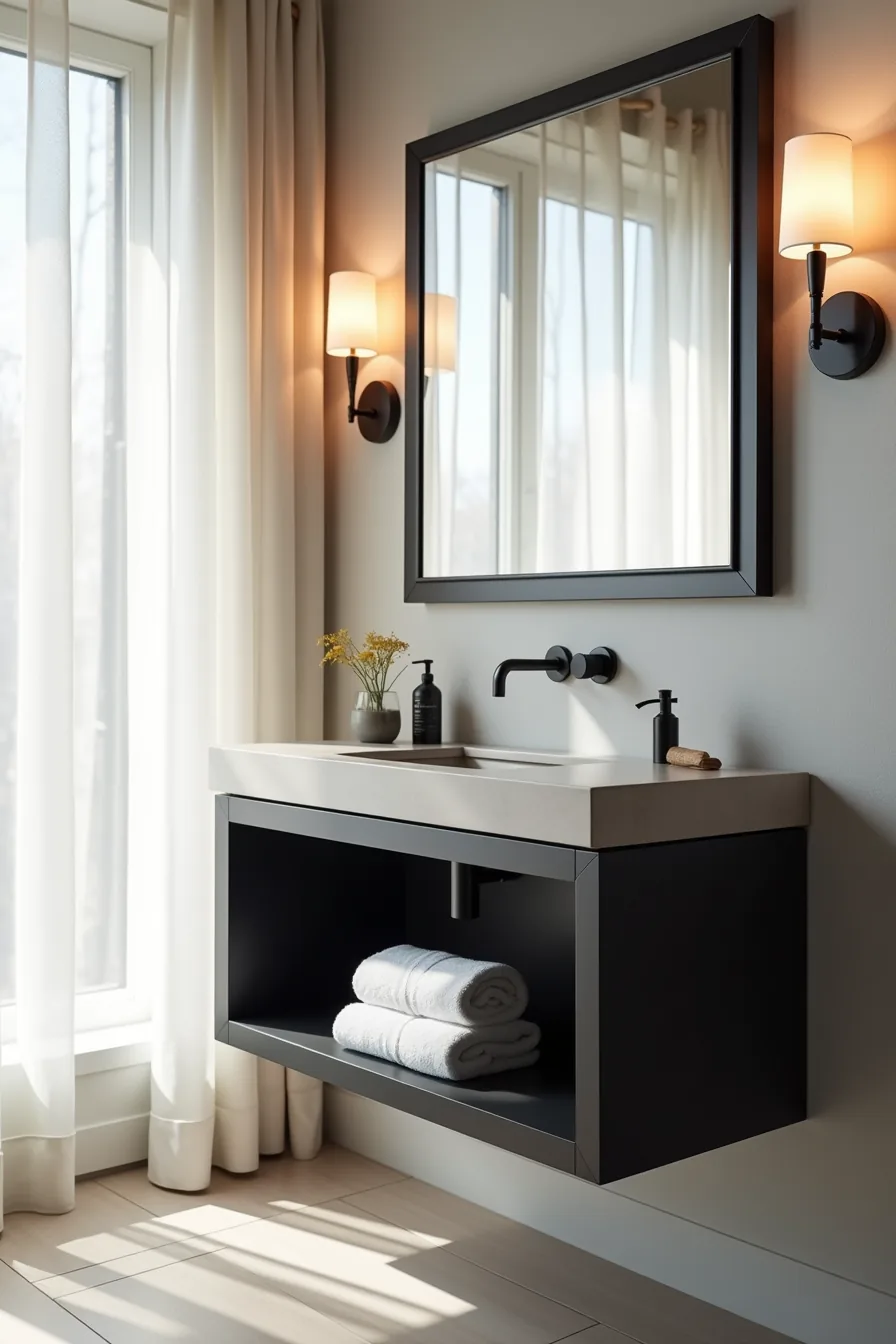
A floating black vanity with recessed handles grounds the room while keeping the floor visually open, an effect that matters most in bathrooms under 50 square feet. The polished concrete countertop adds a cool, industrial note that contrasts with the matte cabinet finish, and the open shelving below trades privacy for accessibility: rolled towels become part of the decor instead of hidden clutter. For standard-height mounting, keep the countertop at 32 to 36 inches from the floor; any lower and the floating effect reads as awkward rather than intentional.
Closed cabinetry suits households that need to hide toiletries, but it adds visual bulk at eye level. If you choose open shelving, limit it to items you use weekly, dust and hard-water spots accumulate fast on exposed black surfaces, so budget for a monthly wipe-down. A minimal black vanity 24 to 30 inches deep fits most layouts; anything deeper eats into clearance in front of a toilet or tub.
For a 60-inch wall, select a 48-inch vanity and let the surrounding wall breathe rather than filling every inch.
Warm Modern Lighting to Counter Dark Surfaces
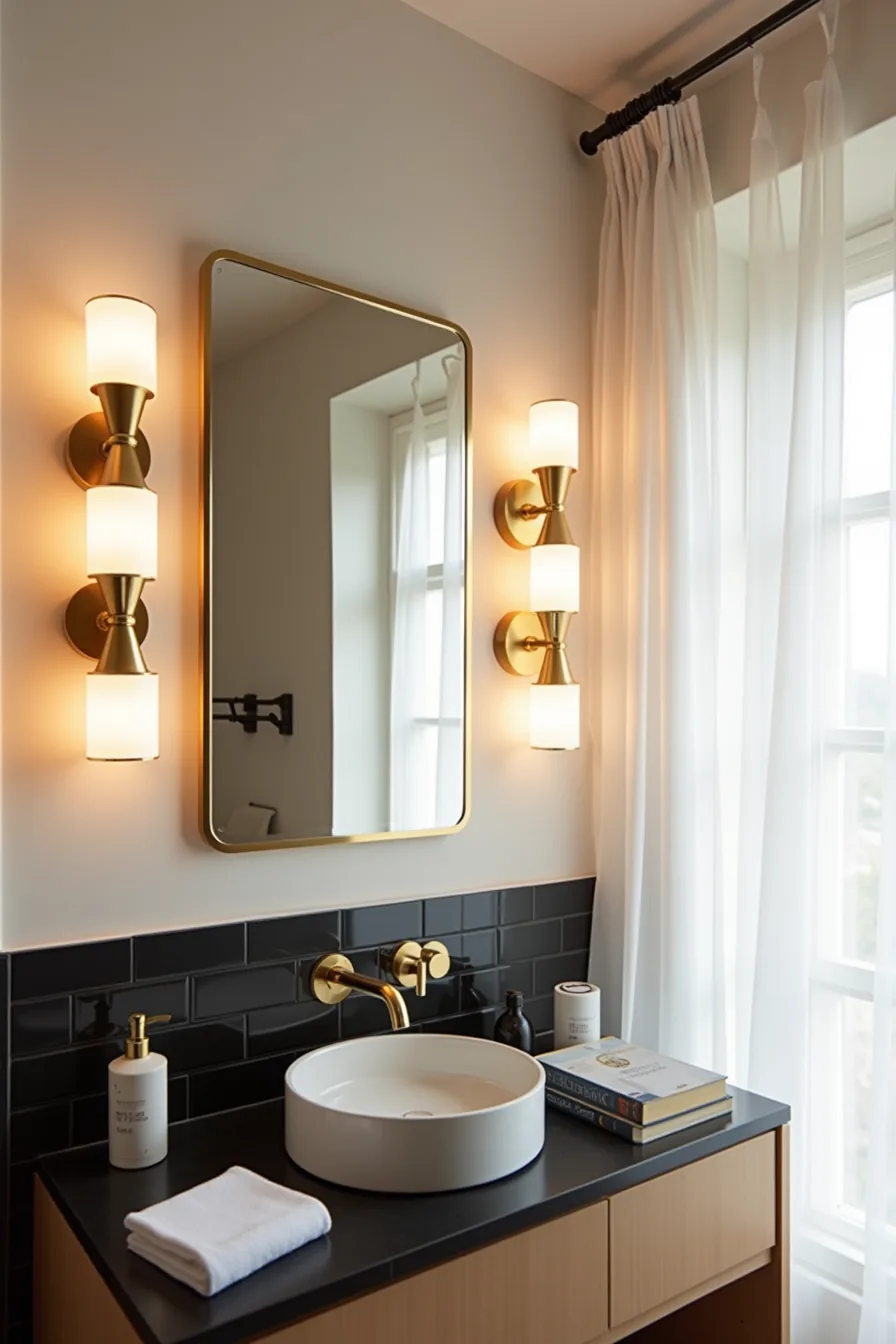
Warm modern lighting is what keeps a black bathroom from reading as a cave. The brass sconces flanking the mirror at eye level, roughly 60 to 66 inches from the floor, cast a 2700K-to-3000K glow that softens the black tile wall behind them. Colder daylight bulbs will make dark surfaces look flat and sterile, so commit to warm LEDs throughout the space.
The overhead recessed ceiling light handles general illumination, but it should never be your only source. Position it directly above the mirror’s outer edge rather than centered over the sink, which prevents your own shadow from falling across your face. The combination of four sconces plus recessed lighting creates three distinct layers: task light for grooming, ambient light for movement, and accent light that picks up the texture in the tile.
Install each sconce on a dimmer, you’ll use 100 percent output for morning routines and drop to 30 percent for evening baths.
Soften a Modern Black Bathroom With Natural Texture
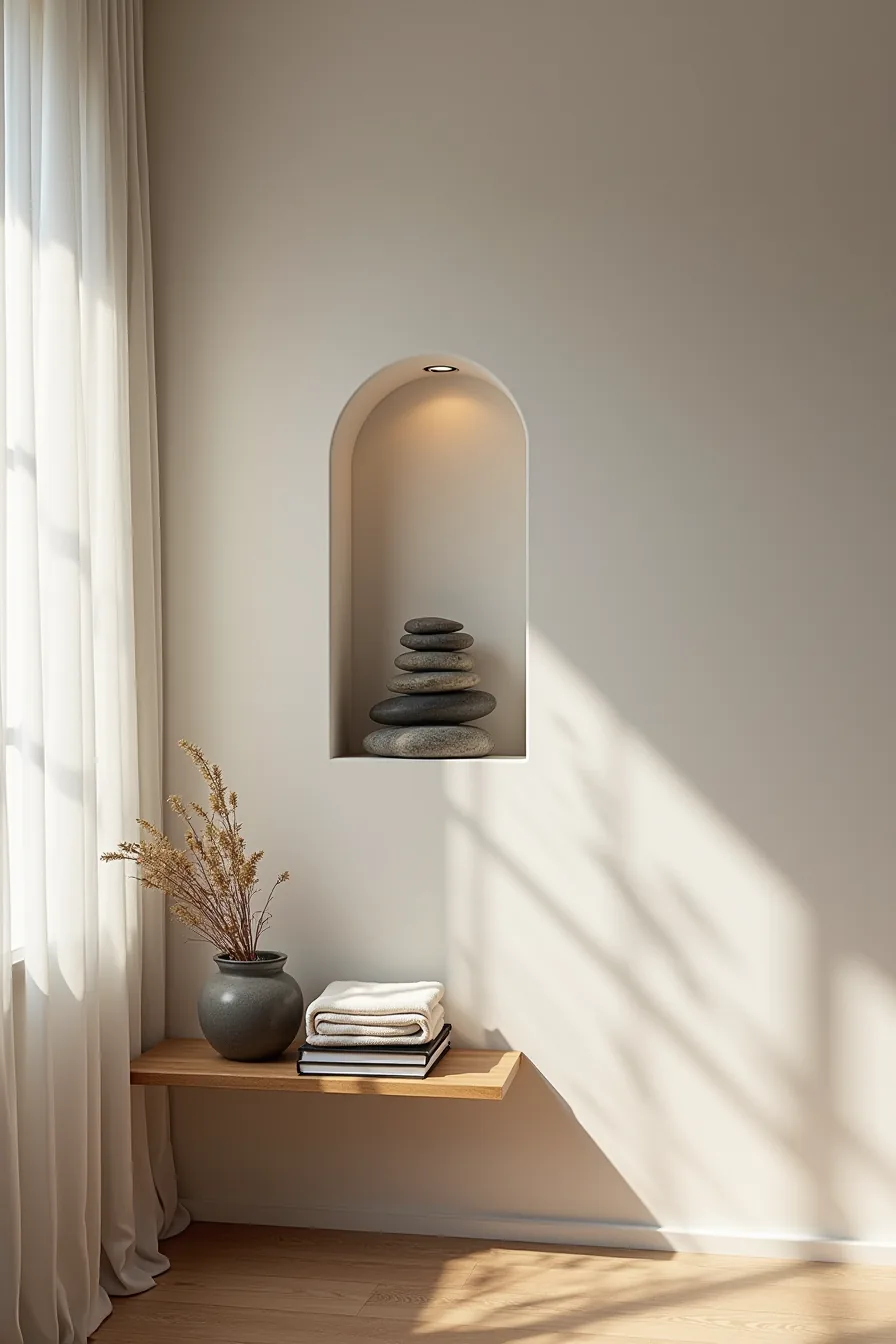
Matte black tile absorbs light and reads as flat, so pair it with materials that have visible grain, irregular edges, or woven surfaces. The recessed niche stacked with natural stone pebbles breaks up the monotony of a dark tiled wall while the cream linen towel introduces softness and a lighter visual weight. A wood floating shelf mounted below provides warmth, oak or walnut works best, as pale maple can look washed out against black.
Keep textured accents within 20 to 30 percent of the visible surface area; exceed that and the contrast becomes chaotic rather than intentional. The concrete vessel adds an industrial counterpoint without competing with the stone, while the dried botanical stem supplies organic height and movement. These materials all tolerate humidity well, but reseal natural stone annually and treat wood shelves with a waterproof finish to prevent warping from steam.
Adapting Modern Black Bathrooms to Different Sizes
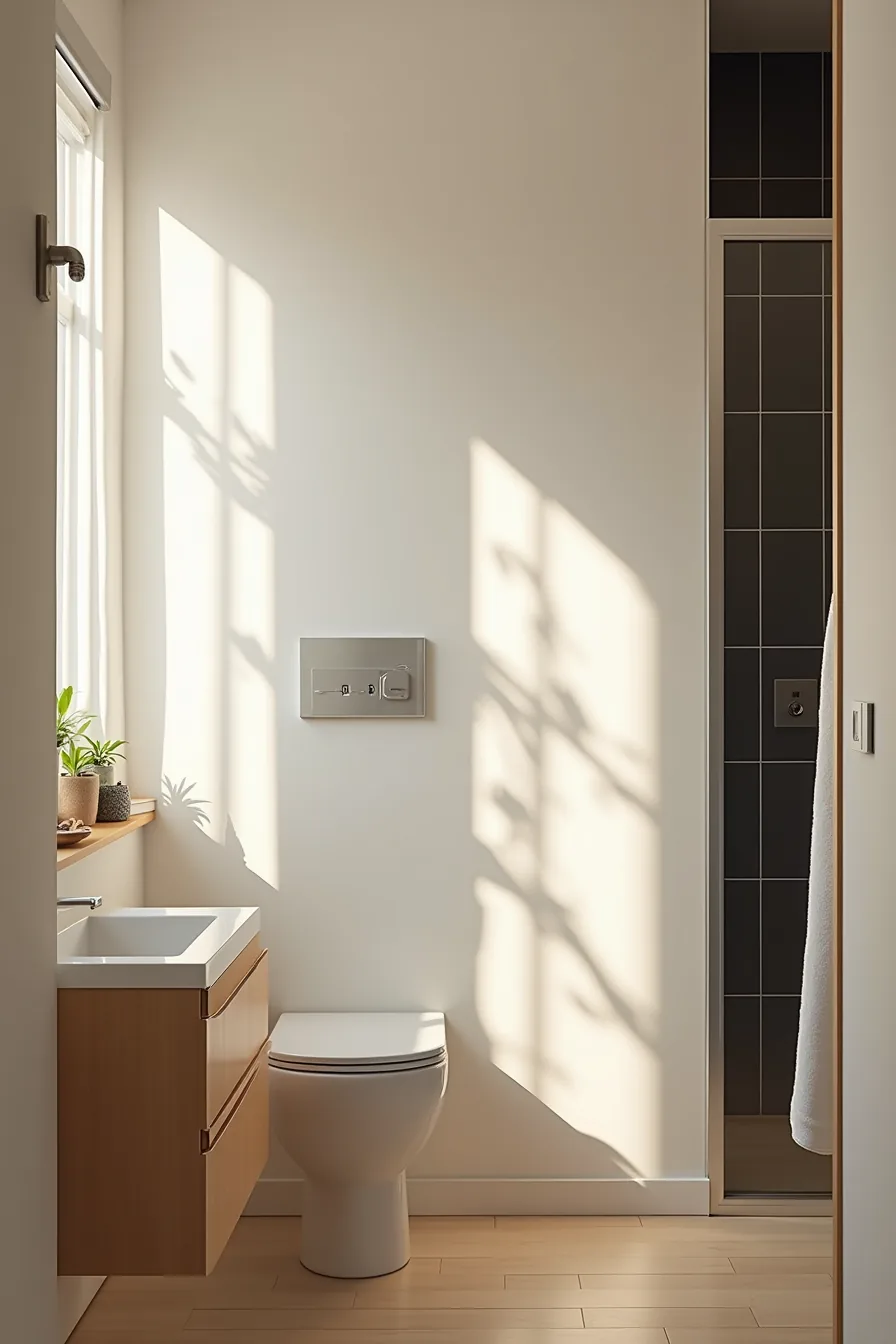
In a bathroom under 40 square feet, restrict black tile to one accent wall, the wall behind the toilet or vanity, and keep the other three surfaces light. A corner vanity, compact toilet, and narrow shower enclosure arranged in an L-shape preserve a clear floor path of at least 30 inches; the mirror positioned across from the accent wall bounces light back into the room and prevents the dark surface from visually shrinking the space.
Medium baths between 40 and 80 square feet can handle black on two adjacent walls, such as the shower surround and the vanity backsplash, without feeling heavy. Break the continuous dark mass with a light ceiling and white fixtures, which give the eye a resting point and define the vertical boundaries of the room.
For baths over 80 square feet, black tile can cover the entire shower enclosure or a full feature wall, but rely on large-format tiles, 12×24 inches or bigger, to avoid a busy patchwork effect at that scale. In a larger footprint, introduce a freestanding tub or a double vanity in a contrasting finish; without those visual anchors, the black surface can read as an empty void rather than a deliberate design choice.
Budget, Renter, and Investment Routes
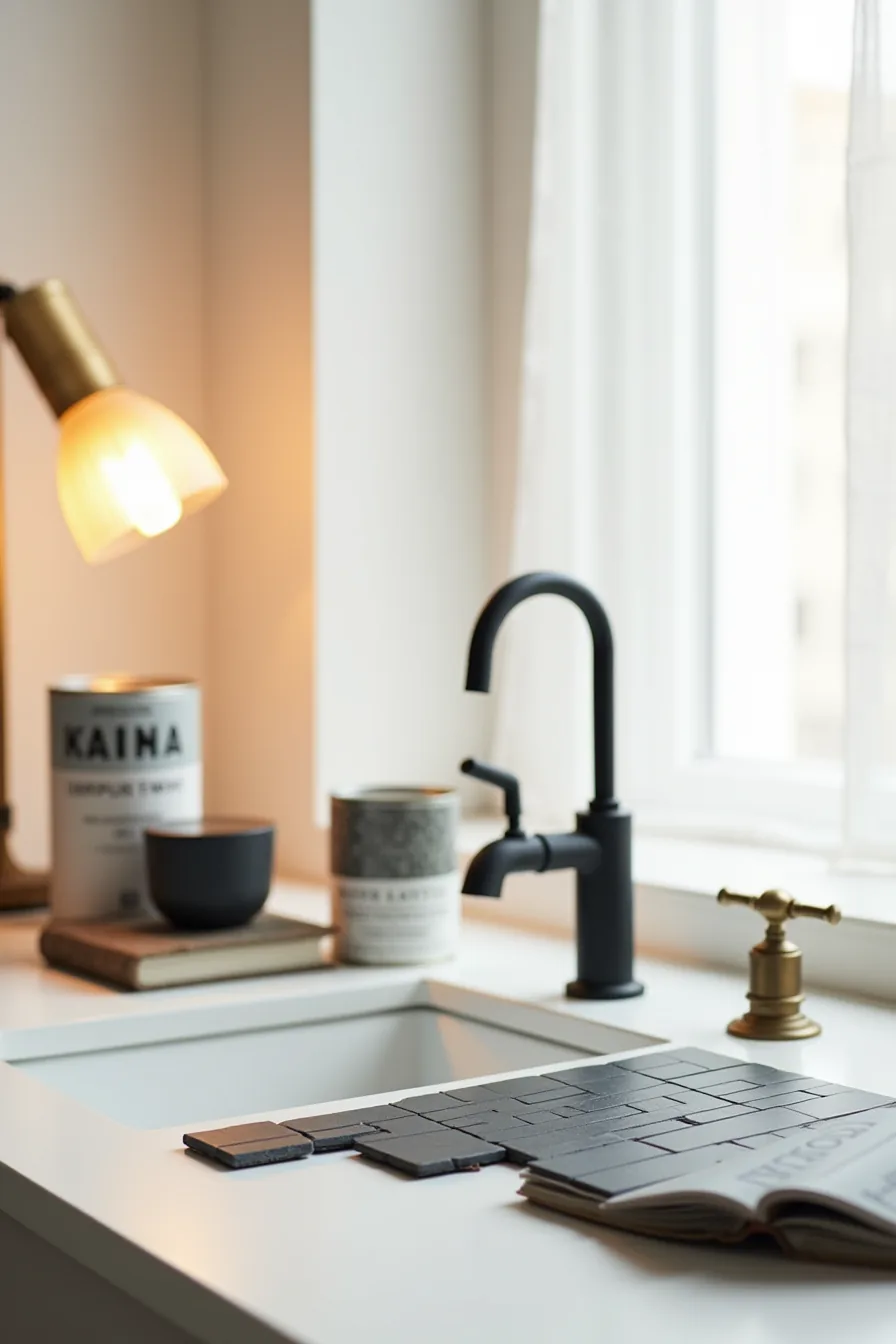
You’ve three distinct paths to a modern black bathroom, each with different costs, permanence, and maintenance demands. The cheapest route relies on peel-and-stick tiles, most brands cost $2–$4 per square foot and remove cleanly without damaging walls, though they can peel near moisture sources unless you seal the edges with silicone. A small can of black paint offers another low-cost option, but only on surfaces you own; rental agreements generally restrict painting without approval.
The mid-range route pairs a single ceramic tile sample you commit to as a backsplash or shower niche with new plumbing fixtures. Replacing a standard chrome faucet with a brass or matte black model runs $80–$250 and transforms the room’s character without construction.
The investment path centers on high-end matte black hardware, think solid-brass knobs, hinges, and shower valves in the $30–$60 range each. These pieces carry a longer lifespan than coated alternatives, and their weight and finish justify the premium when you plan to stay in the home for five-plus years. For renters, stick to the first two routes; for owners, mix all three, but never buy the cheap hardware for permanent installations, since its coating wears and exposes the base metal within two to three years.
Your Decision Checklist
Before you commit, weigh these four factors: your lighting situation, room size, budget, and timeline. Black absorbs light, so a dim north-facing room needs more reflective surfaces or layered lighting. Small spaces benefit from matte finishes and high-contrast accents; large rooms can handle glossy tile and darker cabinetry.
Match your route to your circumstances. Renters should prioritize peel-and-stick tile and removable wallpaper. Budget-conscious homeowners can refresh with paint and hardware swaps.
Long-term investors should invest in quality fixtures and natural stone.
Your next step: Choose one surface, vanity, wall, or floor, and test a sample swatch in your actual lighting for 48 hours before buying anything else.
Frequently Asked Questions
Does a modern black bathroom make a small bathroom feel smaller?
No, if you use matte black on one feature wall and pair it with white or light gray, the contrast creates depth. Fully wrapping a small room in black will shrink it visually.
What’s the difference between matte and polished black tile in a modern bathroom?
Matte tile absorbs light, hides water spots, and feels contemporary, ideal for floors and wet areas. Polished tile reflects light, makes a space feel larger, but shows every streak and requires more frequent wiping.
Can you rent an apartment and still create a modern black bathroom?
Yes. Use peel-and-stick black tile on a backsplash, swap in a black shower curtain and mat, and install a black faucet that replaces your existing one without permanent plumbing changes. All are removable and leave no damage.
How do you prevent a modern black bathroom from looking cold or cave-like?
Introduce warm textures: brushed brass fixtures, a wood vanity, or a linen towel. Add layered lighting, sconces at eye level, a vanity light, and a dimmable ceiling fixture, to soften shadows and prevent the cave effect.