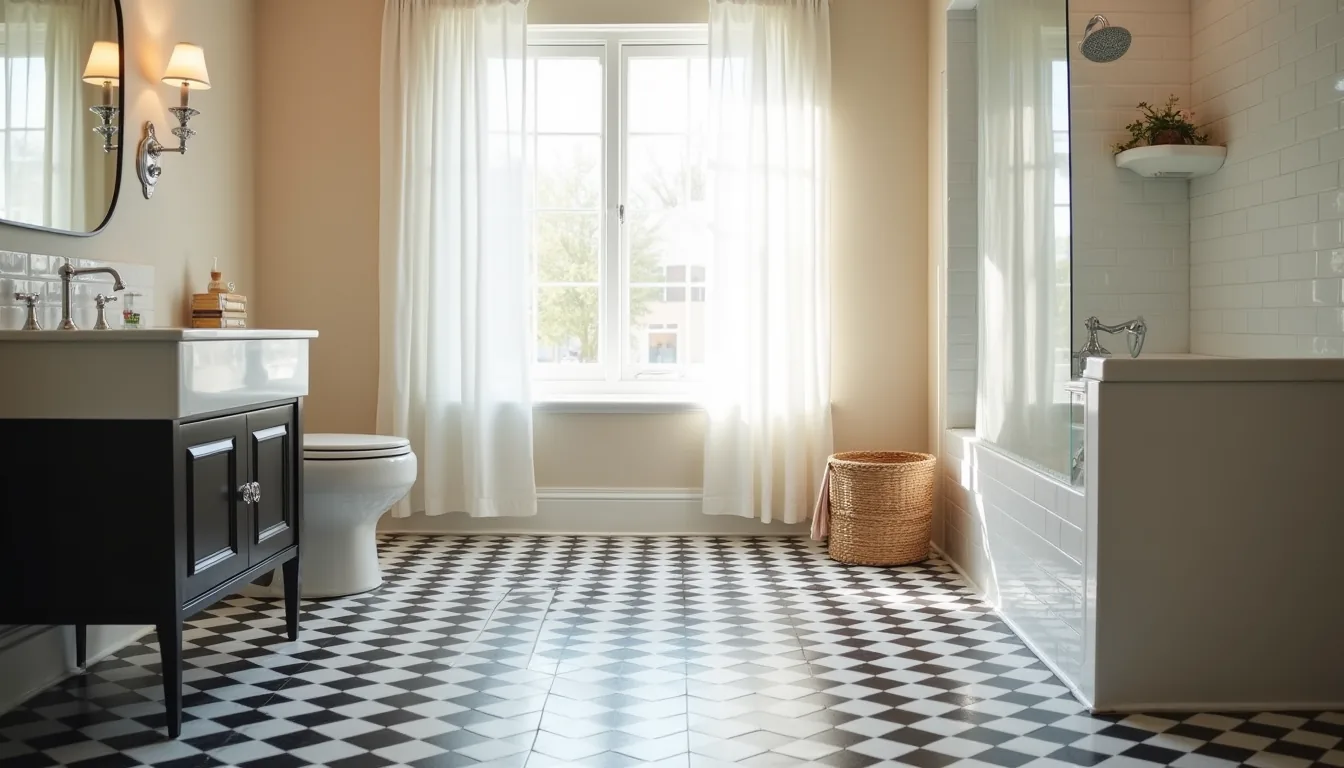

A black and white bathroom isn’t one look but a design system with at least six distinct, reproducible directions, each demanding different materials, budgets, and maintenance commitments. Before you pick tiles or paint, you need to decide which of these systems fits your space, your habits, and your tolerance for upkeep. From high-contrast graphic patterns to soft gray-toned minimalism, the choices diverge sharply in cost, installation effort, and how forgiving they’re of hard water or daily use.
Here’s how to match the right black-and-white strategy to your actual bathroom, with the trade-offs spelled out.
Key takeaways
High-contrast tile patterns work best in small bathrooms, where bold geometric or checkerboard layouts visually expand the floor space without overwhelming the room. Monochrome with warm neutrals suits medium-sized bathrooms, as oak or walnut accents soften the stark black-and-white contrast while keeping the palette cohesive. Black fixtures on white walls require matte or brushed finishes to avoid fingerprints, and you should budget for frequent cleaning if you choose glossy black hardware. Dark grout lines on white subway tile are a renter-friendly upgrade, since they only require a grout color change and can dramatically redefine the tile pattern without replacing anything.
High-Contrast Tile Patterns for Impact
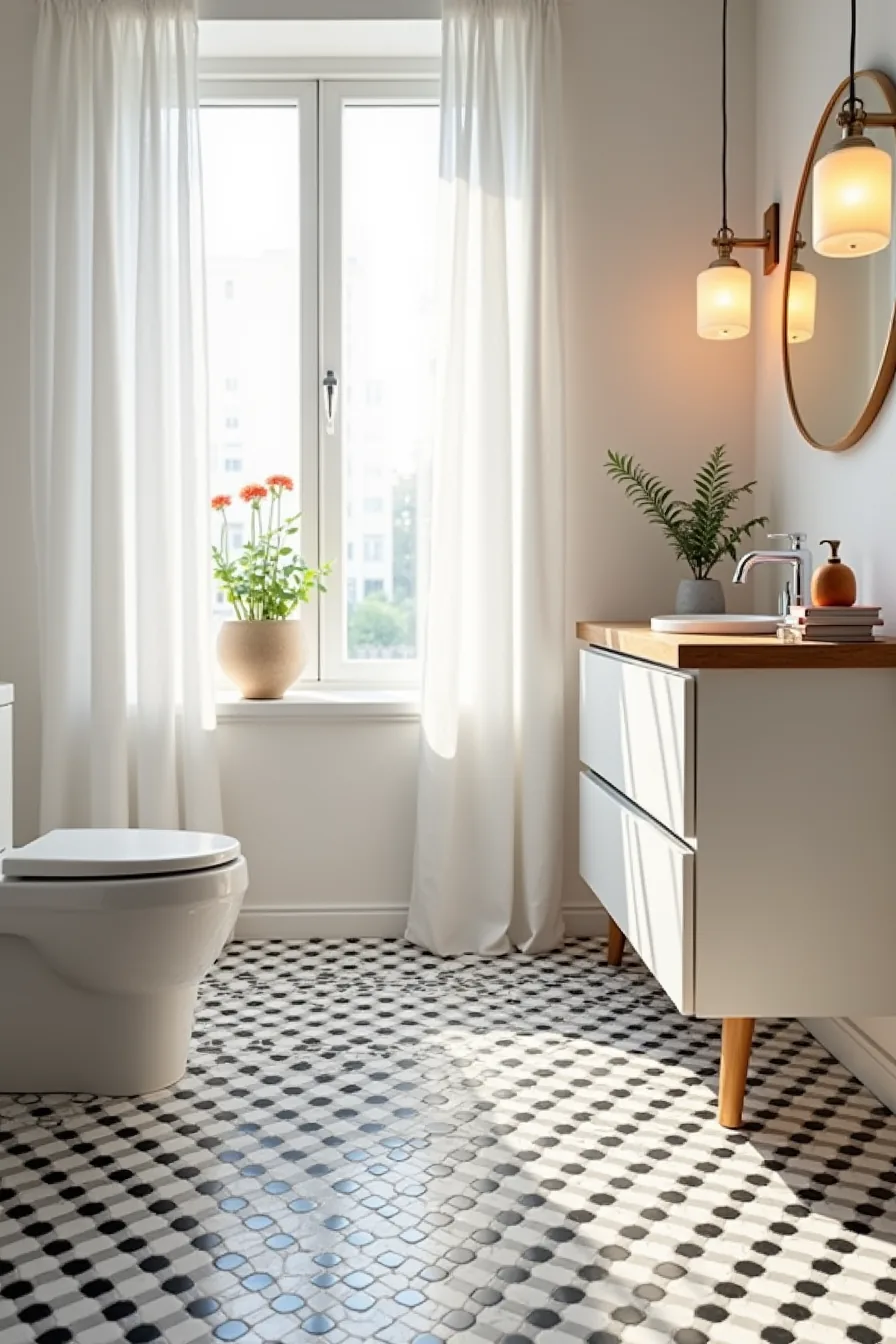
A checkerboard or geometric layout is the definitive black and white bathroom statement. The hexagonal tiles arranged in an alternating pattern create visual movement without requiring you to commit to a fully dark room, making this ideal for medium-sized bathrooms where you want drama but not claustrophobia. The crisp grout lines are the secret here, matching your grout to the darker tile keeps the pattern cohesive, while white grout makes each shape pop individually.
Scale dictates success. For floors under 40 square feet, use tiles measuring 2 to 4 inches across; anything larger overwhelms the sightline. In a spacious ensuite, you can double that scale safely.
The white wall baseboard grounds the pattern, preventing the floor from feeling like optical noise. This setup suits renters and budget remodelers alike, as peel-and-stick hexagonal tile in black and white runs roughly $2 to $4 per square foot and installs in a weekend without demolition. Pair it with simple white fixtures and let the floor carry the entire aesthetic.
Monochrome with Warm Neutrals and Wood
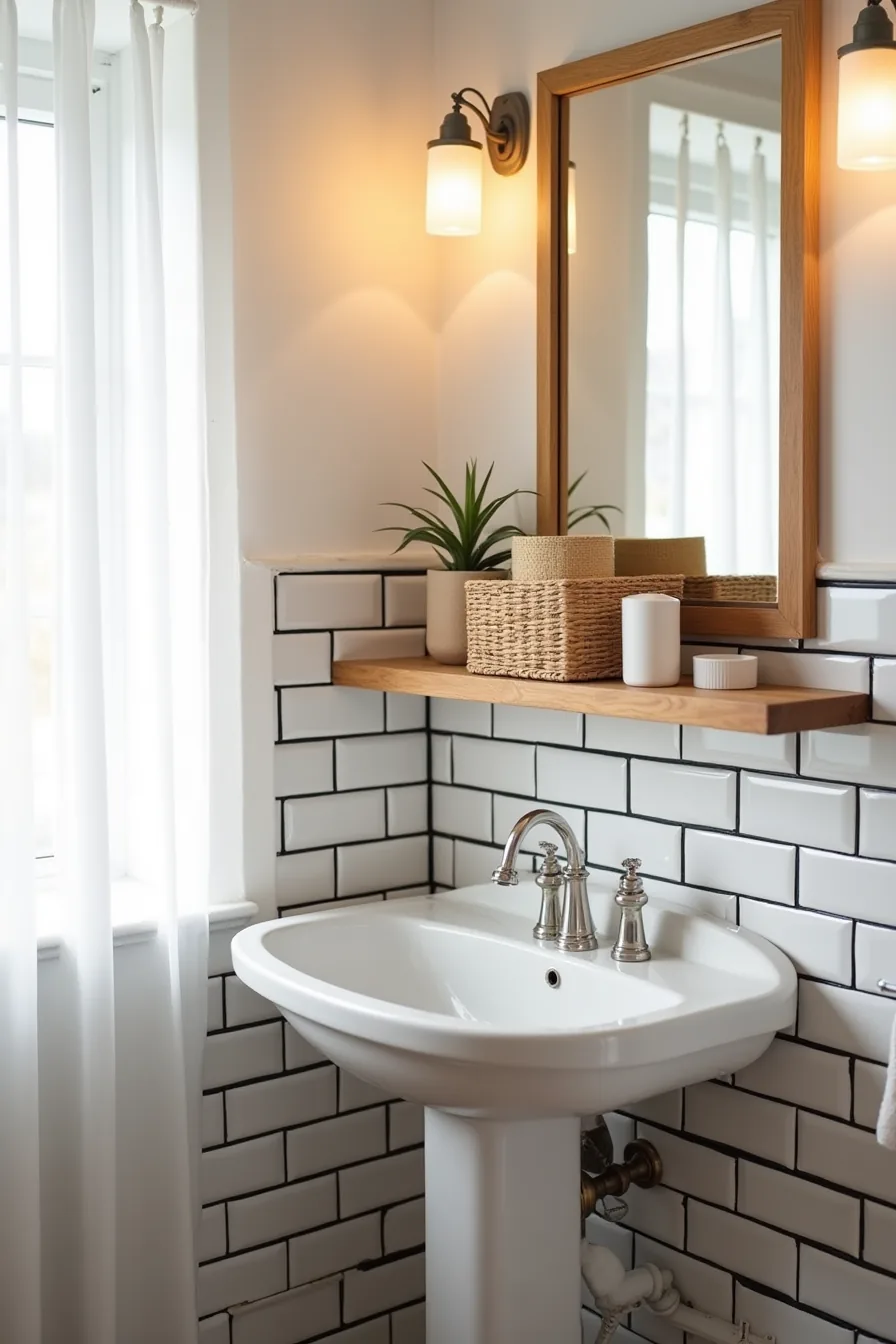
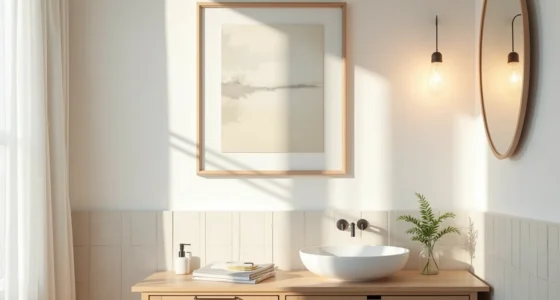
Pure black and white reads clinical in a bathroom, the fix is introducing natural materials that absorb light and add tactile warmth. A wood floating shelf above a white pedestal sink breaks up the vertical tile field while giving you a landing spot for daily-use items. The rattan storage basket on that shelf pulls double duty: it hides cotton rounds and hair ties while contributing a woven texture that softens the hard surfaces around it.
This combination suits bathrooms with north-facing windows or cool LED lighting, where stark monochrome can feel sterile rather than crisp. The warm wood tone, whether oak, walnut, or teak, should contrast visibly against the white subway tile; if the tones are too close, the effect reads as muddy. Choose a shelf with a matte, sealed finish rated for humid environments; untreated wood will warp within a year.
This approach costs marginally more than a pure tile-and-paint scheme, expect $40 to $80 for a quality floating shelf and $15 to $30 for a medium rattan basket, but it transforms a trendy look into a timeless black and white bathroom that ages gracefully.
Minimalist Black Fixtures on White Walls
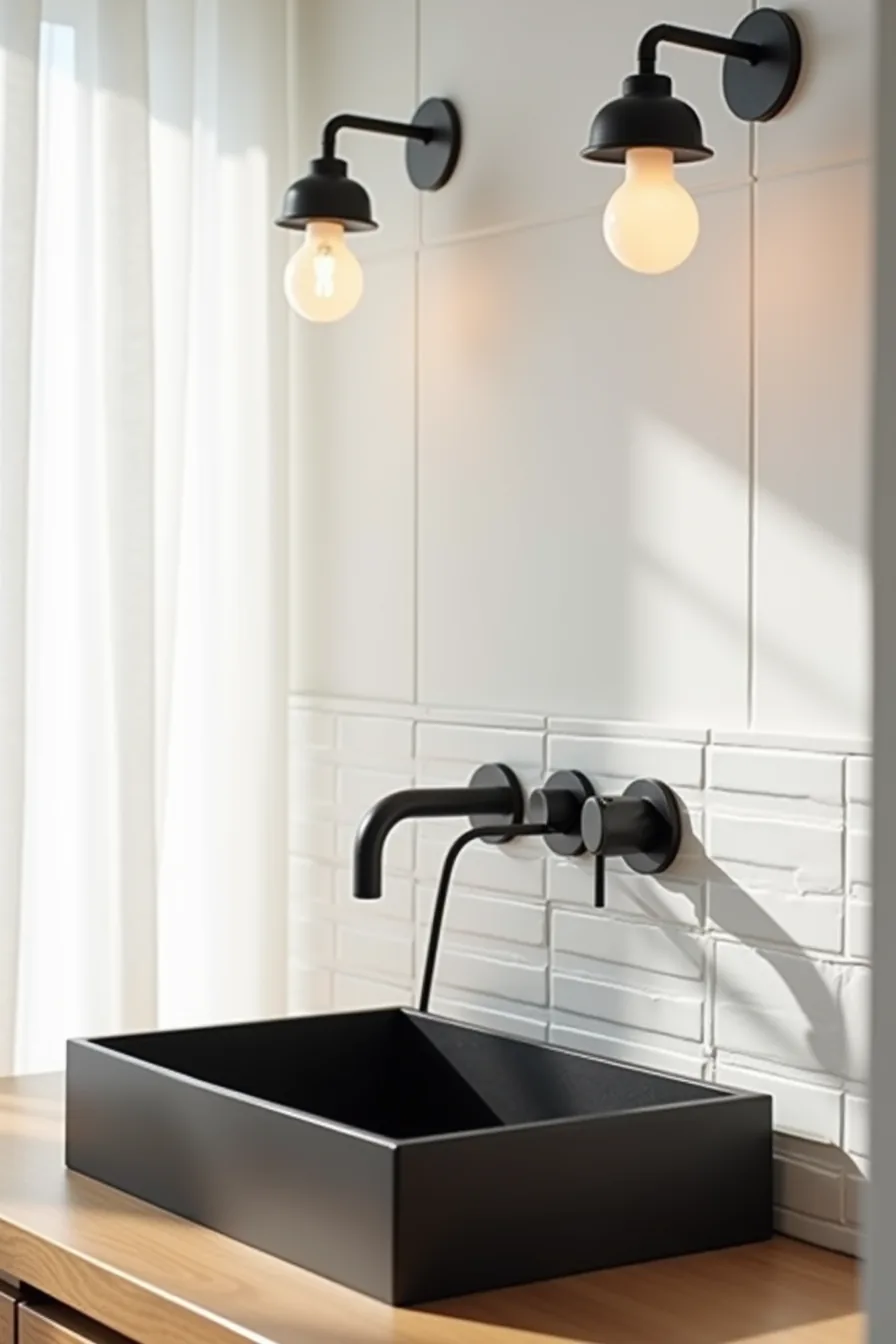
If you want a black and white bathroom that avoids pattern entirely, let the fixtures carry the contrast. A matte black wall-mounted faucet paired with a sleek black rectangular basin against white subway tile creates a graphic moment through shape and finish alone, no tile patterns, no wallpaper, no visual noise. The matte surface on both pieces prevents glare in bright bathrooms and hides water spots far better than polished chrome, which shows every fingerprint within days.
This setup works best for compact spaces, typically 40 to 60 square feet, where the uninterrupted white field visually expands the room while the black fixtures anchor it. The wall-mounted faucet requires plumbing access behind the wall, so it suits renovations or new builds rather than quick updates. Expect to pay $150 to $300 for a quality matte black wall-mount faucet and $200 to $450 for a vessel-style rectangular basin, roughly 30 percent more than standard chrome equivalents.
For renters, a deck-mounted matte black faucet on an existing sink achieves a similar effect without structural changes. Pair black fixtures with white grout, not dark grout, to keep the focus on the hardware rather than the tile joints.
Subway Tile with Dark Grout Lines
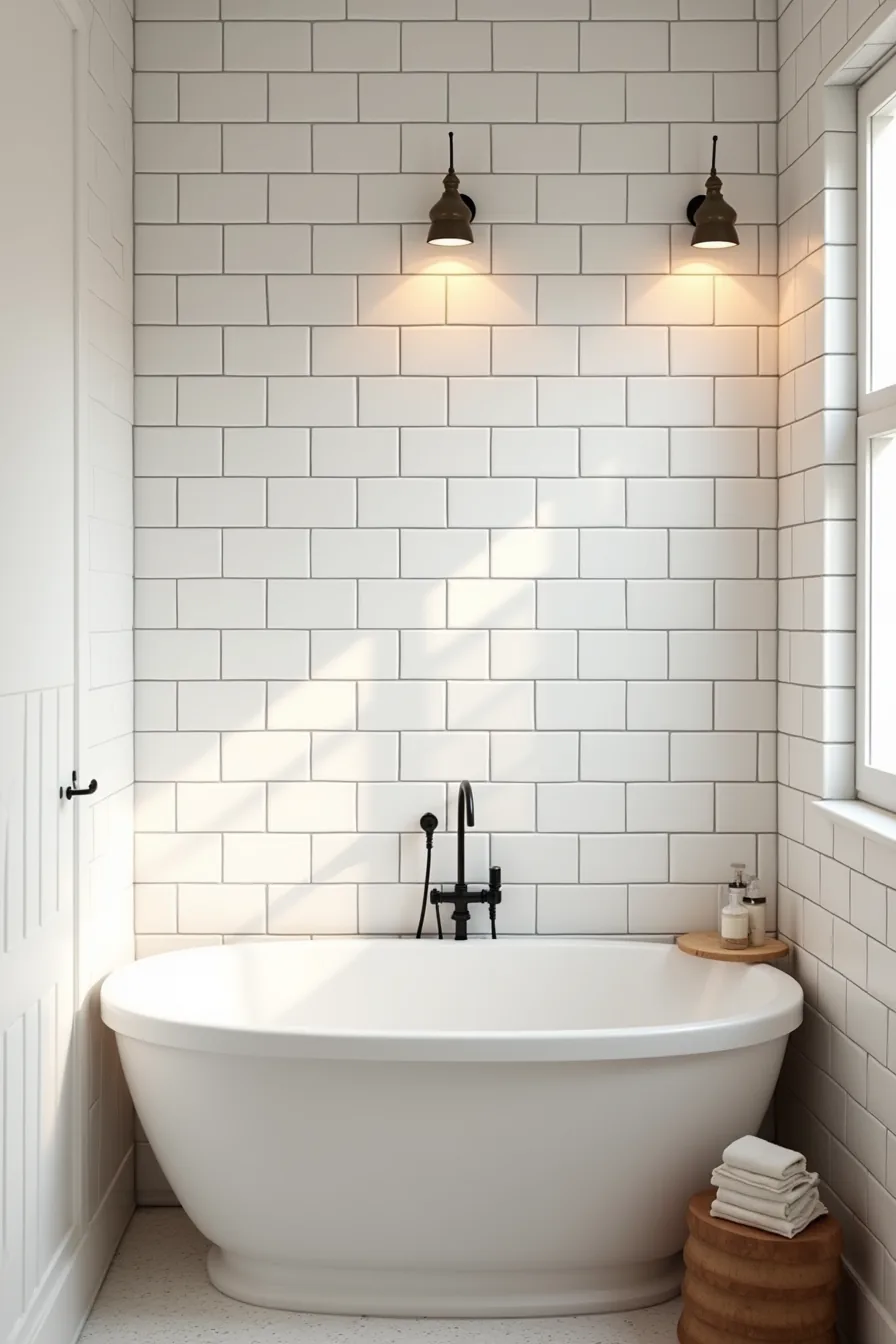
Dark grout transforms ordinary white subway tile from a background material into the room’s primary pattern. By specifying charcoal or near-black grout at roughly one-quarter inch wide, you create a grid that reads clearly from across the room, the tile becomes a graphic element rather than a neutral field. The horizontal layout reinforces the sense of width, making the wall feel longer than it actually is, which suits narrow bathrooms in the 35-to-50-square-foot range.
This approach carries a moderate budget: expect $4 to $8 per square foot for ceramic subway tile and $30 to $60 per bag of epoxy grout that resists staining in wet areas. The maintenance trade-off matters, dark grout hides dirt on the surface but demands a high-quality sealer applied every 12 to 18 months, or moisture and soap scum will lighten it unevenly. For a renter-friendly adaptation, use white peel-and-stick subway tile with a dark grout pen drawn over the seams, which achieves a similar grid effect for under $100 and removes cleanly.
The technique works in any room size, but skip it in large bathrooms above 100 square feet where the pattern repeats too heavily and reads as visually busy.
Statement Black Accent Wall or Feature
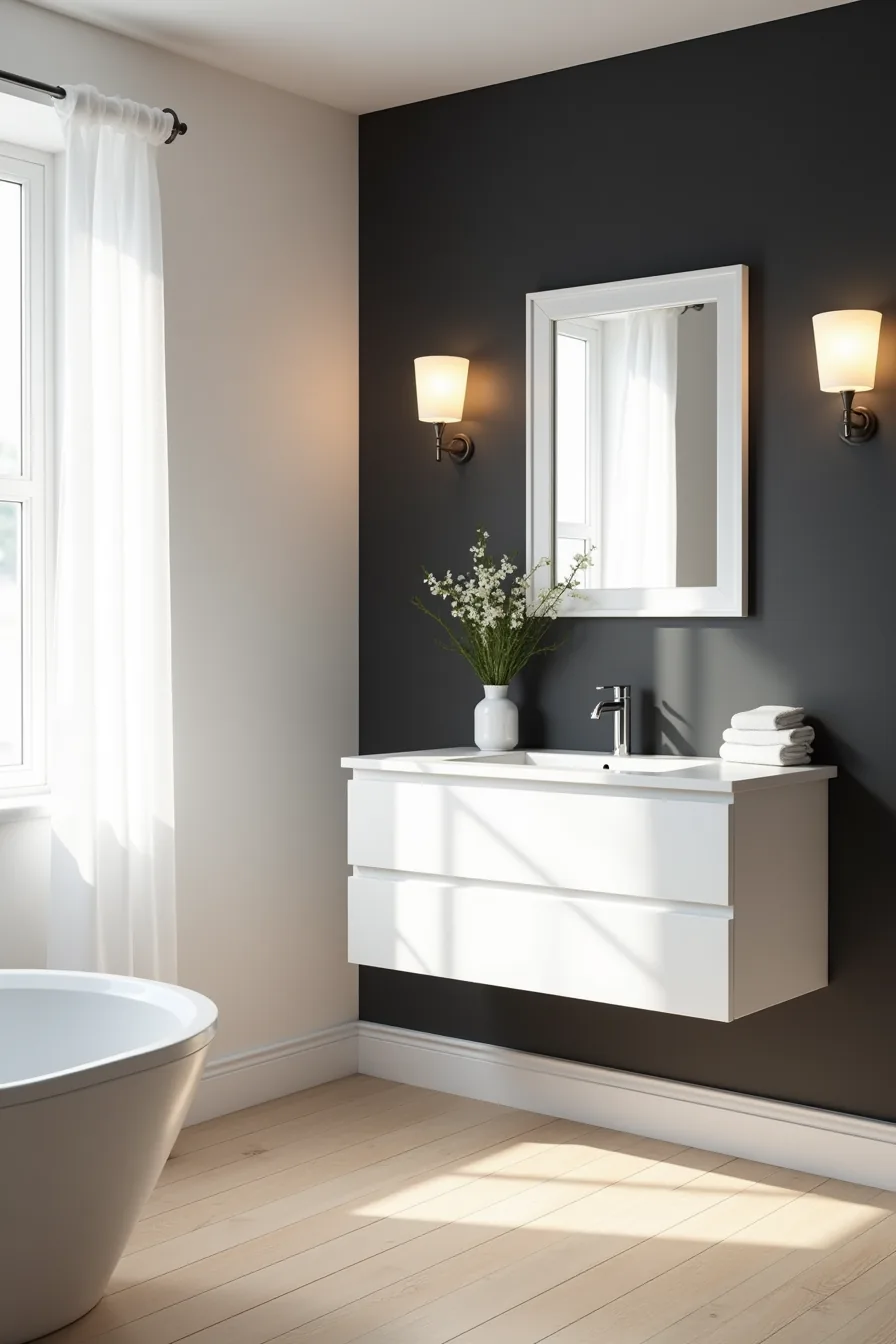
A single matte black wall delivers maximum contrast with minimal square footage committed to the dark side. In the pictured setup, three white walls keep the room bright while the black wall anchors the space, with a white vanity positioned opposite and a white-framed mirror mounted directly on the black surface to sharpen the visual boundary. The matte finish absorbs light rather than reflecting it, which prevents glare and makes the dark wall recede slightly, a useful trick in a compact powder room where you want depth without enclosure.
Paint remains the most economical permanent route: estimate $40 to $80 for premium matte black paint plus primer for a typical 40-square-foot wall, and budget half a day for prep and two coats. For renters, removable black wallpaper runs $2 to $5 per square foot and peels off without damaging standard drywall, though it requires a perfectly smooth surface to avoid bubbles. Skip the black wall in rooms under 25 square feet where it can swallow available light, and pair it with a gloss or semi-gloss white trim to preserve clean sightlines.
This is a practical bathroom design choice that works across renter and owner scenarios, but the payoff depends entirely on keeping the adjacent walls pristine white, any yellowing will dull the contrast.
Layered Textures: Matte, Gloss, and Natural
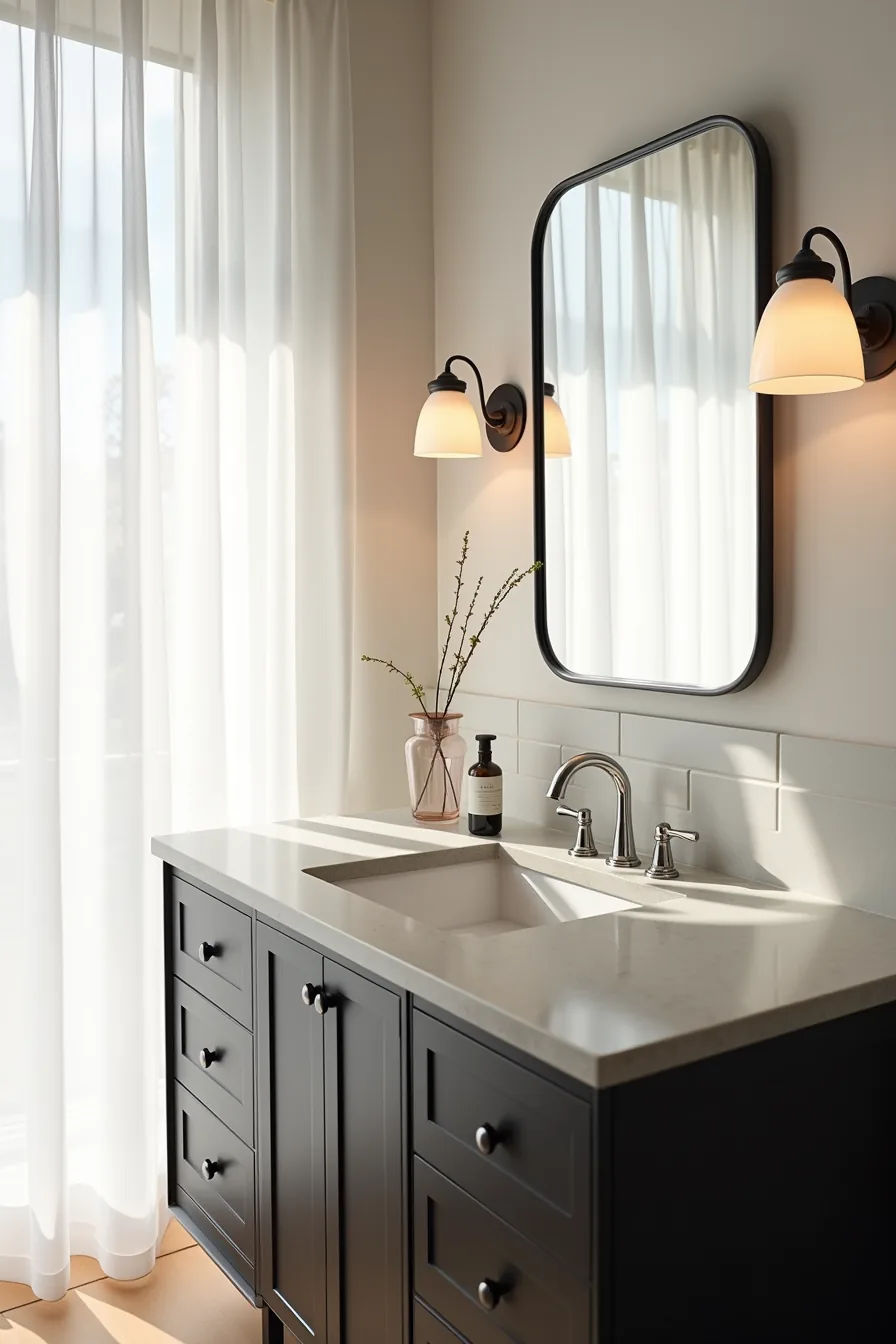
The most common failure in a black and white bathroom is flatness, two colors with identical finishes read as a single gray blur. Layering three distinct surfaces fixes that: matte black cabinetry absorbs light, glossy white ceramic tile reflects it, and a light gray natural stone countertop with visible veining introduces organic irregularity that neither manufactured surface can replicate. The polished chrome faucet adds a fourth finish, catching direct light and creating a bright focal point exactly where your hands land.
This combination suits medium to large bathrooms (roughly 60 square feet and up) where the eye has enough distance to register each texture separately. In a smaller room, drop the stone and use the glossy tile as the countertop material instead, you keep the reflectivity without the visual weight of veining. Budget roughly $800 to $1,500 for a 36-inch stone vanity top, $300 to $600 for matte black cabinetry doors, and $15 to $30 per square foot installed for large-format glossy tile.
Seal the stone annually with a penetrating sealer to prevent staining from toothpaste and cosmetics, and wipe chrome fixtures dry weekly to avoid water spots.
Your first move
Start with the wall that faces the door, it sets the tone for the entire room. Pick one dominant surface (tiles, paint, or wallpaper) and commit to it before choosing fixtures. If you’re renting, limit permanent changes to peel-and-stick tiles and a matte black shower kit; both reverse without damage.
For a permanent upgrade, invest in a large-format tile (12×24 inches or bigger) to minimize grout lines, then introduce black through hardware and a single vanity. That one decision anchors the palette and keeps every later choice simpler.
Now measure your floor-to-ceiling height and sketch your layout on graph paper. That 15-minute exercise will tell you exactly which of the six ideas fits your space, before you spend a dollar.
Frequently Asked Questions
How do you keep a black and white bathroom from looking too clinical or cold?
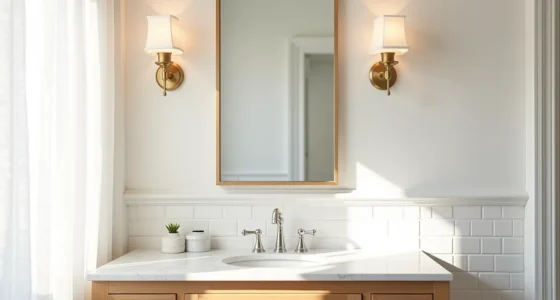
Incorporate warm textures: brushed brass fixtures, natural oak vanity, or linen towels. Soften the contrast with matte black finishes instead of glossy, and add organic shapes like a curved mirror or rounded sconces to break up hard lines.
What’s the best black and white bathroom layout for a small space under 40 square feet?
Use a walk-in shower with a clear glass panel instead of a tub, and place a wall-mounted floating vanity opposite. Keep the toilet against the shortest wall. This maximizes floor visibility, which visually expands the room.
Can you achieve a black and white bathroom on a budget without replacing all fixtures?
Yes. Paint existing cabinetry in high-gloss white or matte black, swap hardware and faucet for oil-rubbed bronze, and add peel-and-stick tile on a single accent wall. Replace only the mirror and lighting, these two changes have the highest visual impact per dollar.
How often do you need to clean grout in a black and white tile bathroom?
Seal grout once a year, then wipe down tiles weekly with a pH-neutral cleaner. Deep-clean grout lines every 3–4 months using a baking soda paste and a stiff brush. White grout in high-moisture areas shows staining faster, so switch to epoxy grout if you want lower upkeep.