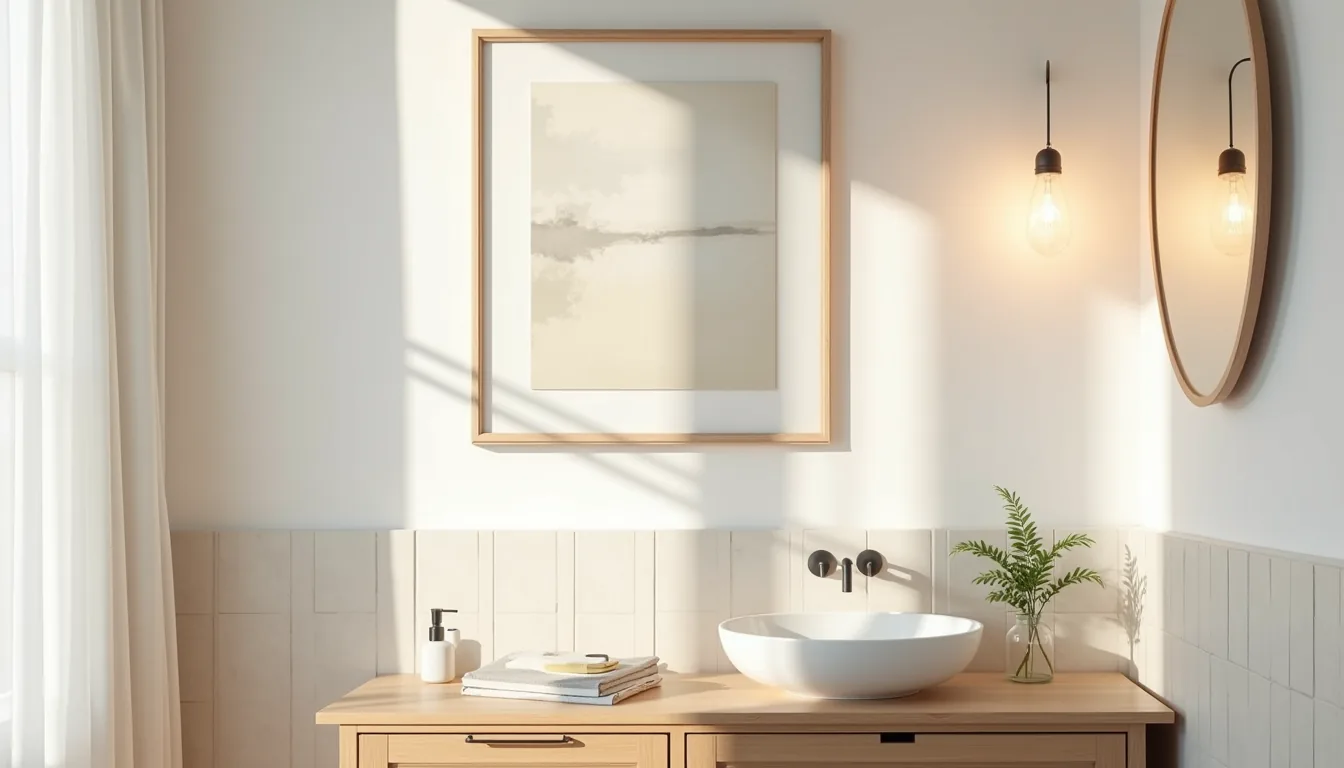
Bathroom wall decor isn’t about filling empty space, it’s about choosing surfaces, materials, and objects that survive humidity, fit your square footage, and match how you actually use the room. A towel bar does more visual work than a framed print in a 3-by-5-foot powder room, while a large-format tile feature wall suits a primary bath with ventilation. The real question is whether your choices earn their square footage.
The six approaches below break down what works, who it suits, and the exact conditions required to pull it off.
Key takeaways
- Pick one anchor, a large mirror or single art piece, before adding shelves, since competing focal points in a small bathroom create visual clutter.
- Budget decor hinges on shelf styling: use waterproof trays, glass jars, and rolled towels under $30 total, but skip paper art unless it’s framed behind glass.
- Renters should opt for removable adhesive hooks and command strips rated for humidity, which hold up to 5 pounds and leave no residue when removed.
- For long-term walls, choose ceramic tile, sealed stone, or powder-coated metal over raw wood or canvas, and expect to reapply sealant every 12–18 months in steamy showers.
Art vs. Decorative Mirror: Choosing Your Primary Wall Feature
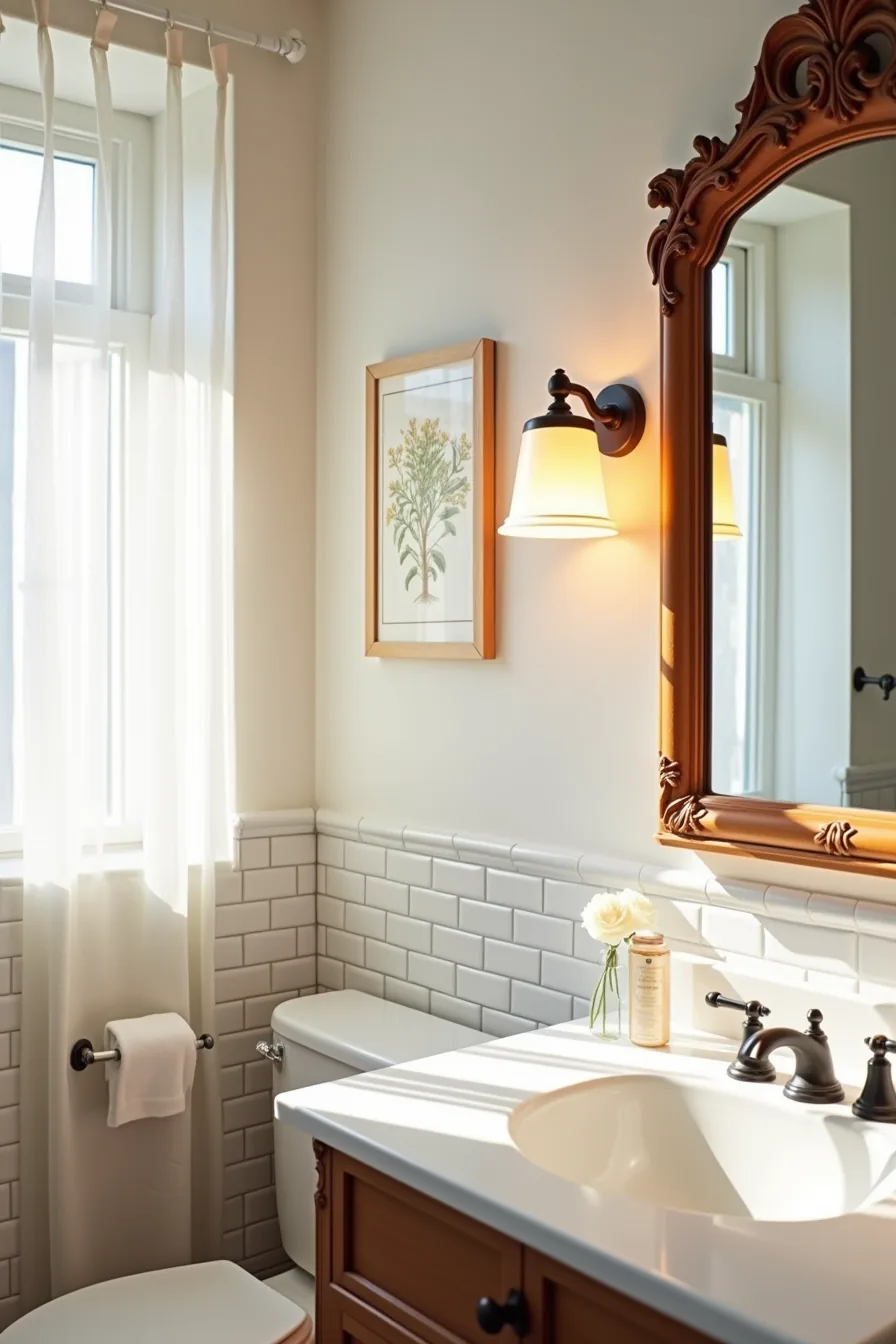
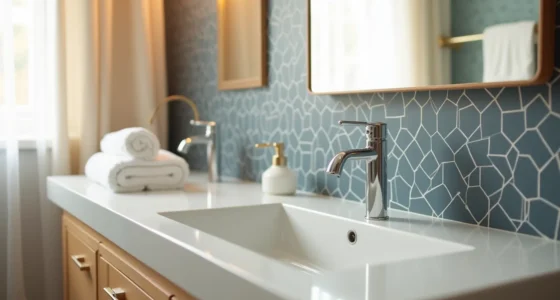
Your primary wall feature sets the room’s entire tone, so the art-versus-mirror decision comes down to moisture exposure and what you want the space to do. An unframed botanical print mounted in a clear acrylic sleeve above the towel bar brings organic color into a small powder room without risking water damage, acrylic seals the paper completely. You’ll pay roughly $20–$60 for this setup, and it suits renters or anyone who swaps decor seasonally.
A large ornate wooden-framed mirror changes the game entirely. Positioned opposite a window, it bounces natural light across the tile and visually doubles a narrow bathroom’s depth. Expect to spend $150–$600 for a quality frame, and note that solid wood requires a sealed finish to survive daily steam; place it at least 24 inches from a shower head.
The botanical print offers cheap, replaceable personality; the mirror delivers lasting utility. Choose art when you want color on a budget, the mirror when you need light and space.
Shelf Styling for Bathroom Wall Decor on Any Budget
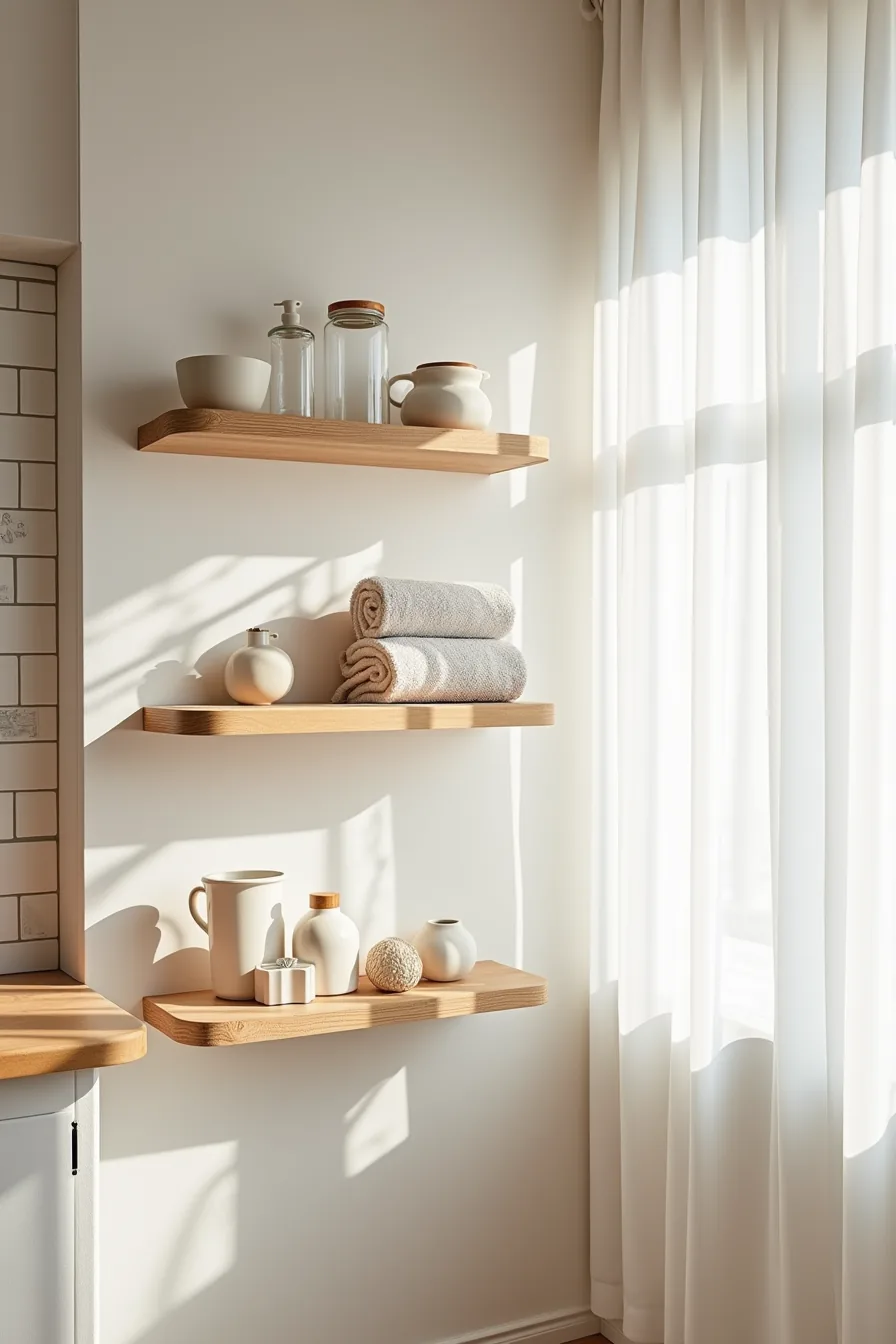
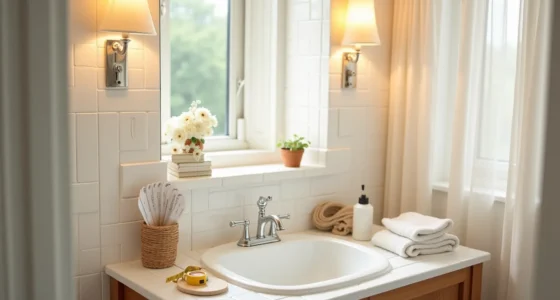
Floating shelves deliver the highest versatility-per-dollar of any bathroom wall decor option, letting you layer texture and function without committing to permanent fixtures. In a medium bath with subway tile, three staggered shelves at 12-, 24-, and 36-inch heights create a rhythm that draws the eye upward and makes a 5-foot vanity wall feel intentional rather than crowded. Rolled towels on the lowest shelf keep daily essentials within arm’s reach, while glass jars and ceramic vessels on the upper levels introduce varied heights that prevent the arrangement from reading as flat.
For small bathrooms under 40 square feet, use one 24-inch shelf positioned 18 inches above the toilet tank, this keeps the sightline open while adding storage you would otherwise lose. Large bathrooms can handle paired shelf columns flanking the vanity mirror; keep the total width under 60 percent of the wall to maintain breathing room. Budget buyers should choose pine or MDF shelves with a waterproof polyurethane finish, which typically run $15–$40 each and last 3–5 years in steamy conditions.
Invest $60–$120 per shelf in solid teak or sealed oak if you want a long-term piece that resists warping. Glass jars should have tight lids to protect contents from humidity, and you should wipe shelf edges weekly to prevent soap film buildup.
Minimal Bathroom Wall Decor for Tight Spaces
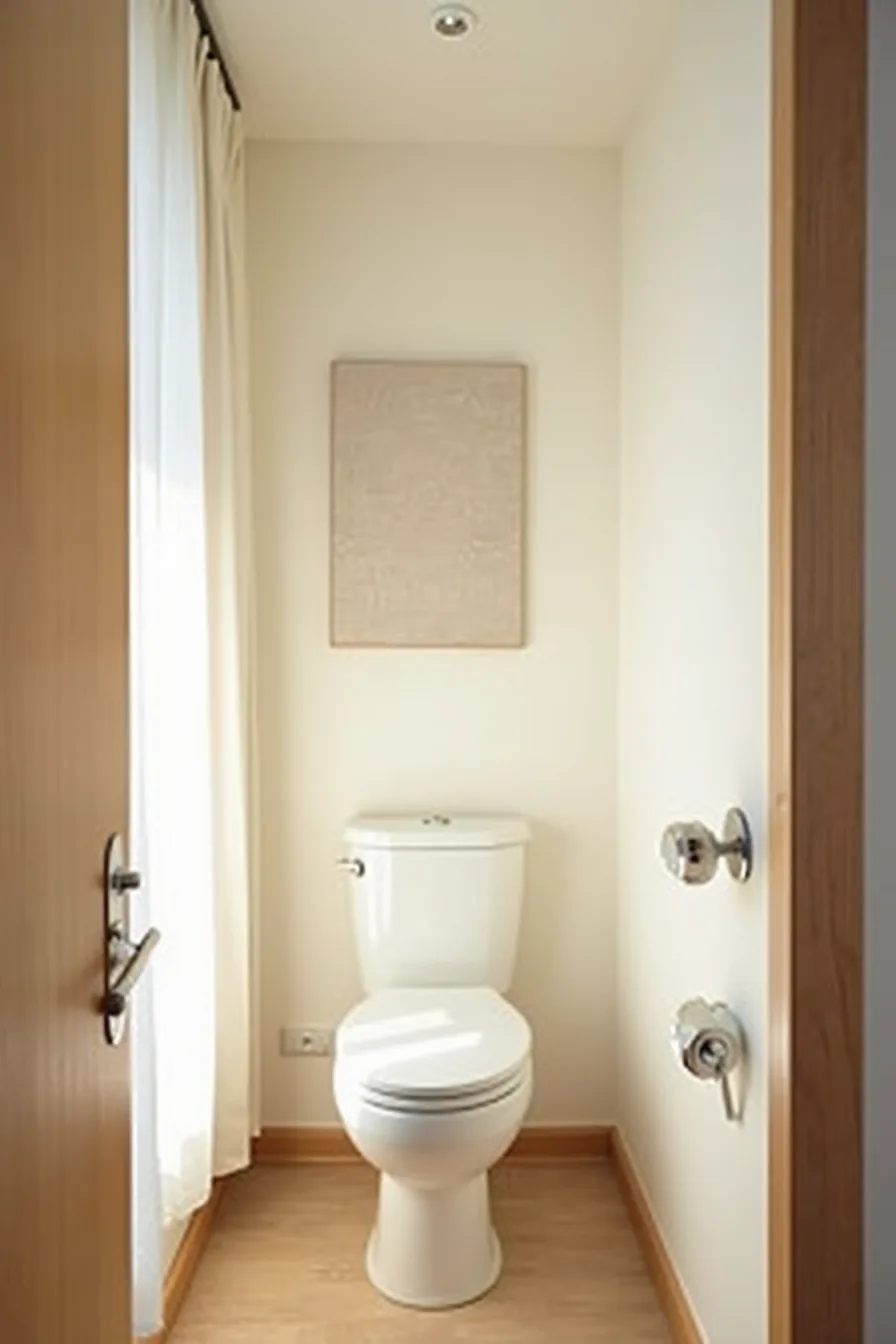
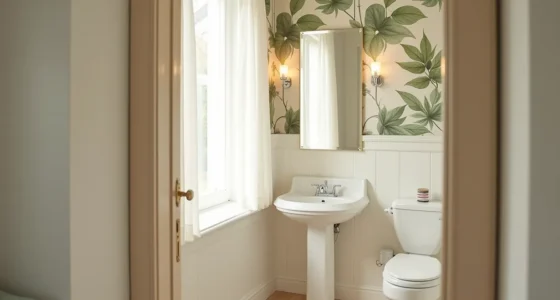
When square footage is scarce, a single vertical canvas centered above the toilet tank creates a deliberate focal point without eating into usable wall space. This setup, one 10-by-24-inch piece flanked by a chrome towel ring below, keeps the eye moving vertically, which visually elongates a narrow wall and makes the room feel taller than it’s. The pale wall color lets the artwork carry the design weight, so you avoid the clutter that multiple small frames would introduce.
This approach suits powder rooms under 40 square feet or anyone who prefers a spa-like calm over gallery-wall busyness. The vertical orientation works because it mirrors the natural sightline when you enter the room, drawing attention upward instead of across the cramped width. For the towel ring, mount it 12–18 inches below the canvas, high enough to clear the toilet tank but low enough to remain within easy reach.
Minimal bathroom decor thrives on restraint: one piece, one material accent, and empty wall space that lets both breathe. If you worry about humidity, choose a canvas with a sealed, waterproof coating or swap in a pressed-aluminum panel for similar impact without warping risk.
Bathroom Wall Decor for Rental-Friendly Refreshes
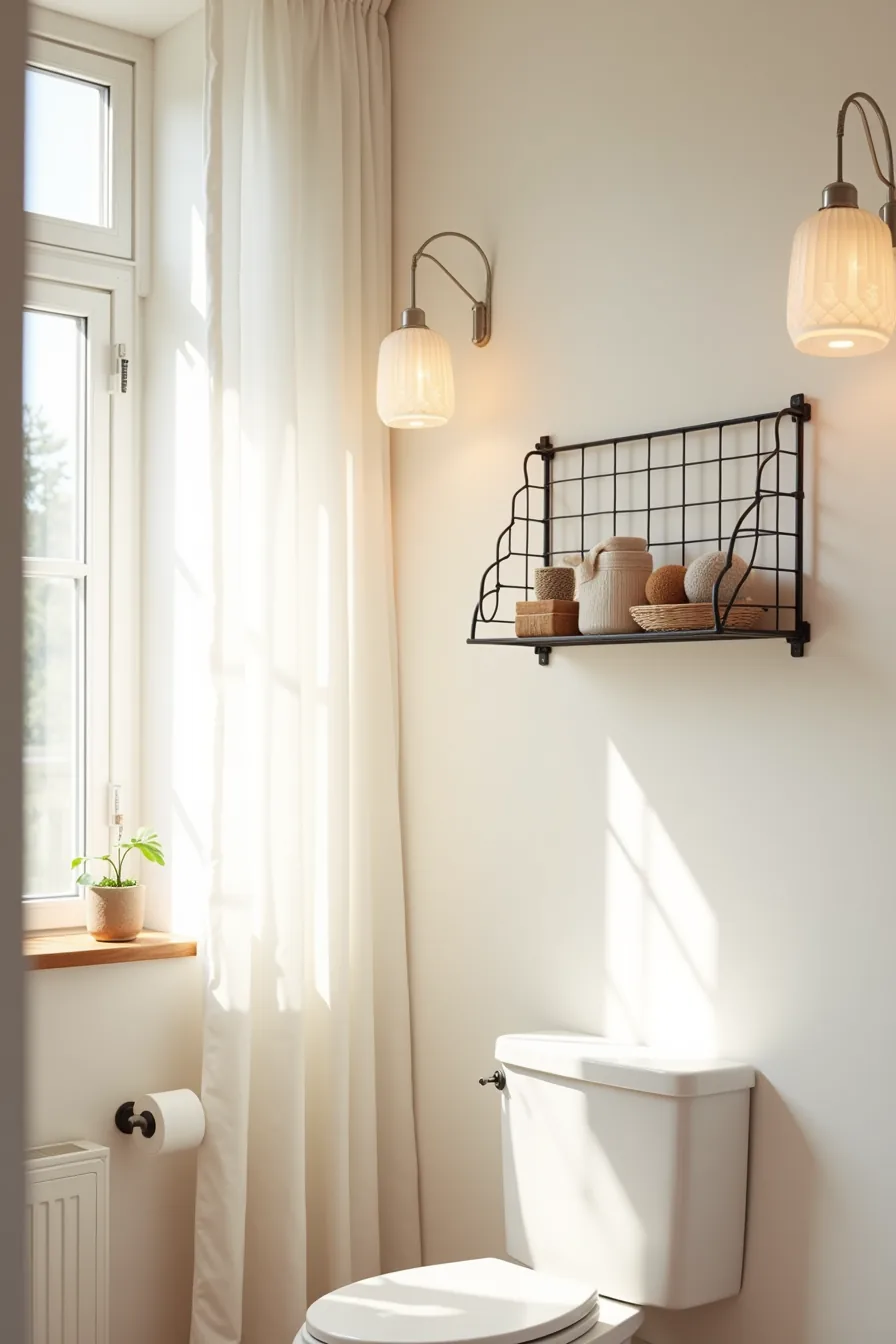
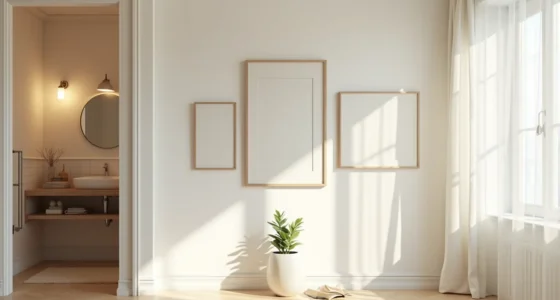
When drilling is off the table, your options shift to pressure-mounting, static cling, and adhesive systems that release cleanly. A geometric pattern of removable adhesive decals placed on a plain white wall delivers visual texture without committing you to paint or tile, most brands remove with a gentle pull and leave no residue if you follow their application instructions precisely. Pair those decals with a wire shelf mounted on command strips, which hold up to 7–10 pounds per pair when installed on smooth, clean surfaces; load it with a small plant and a rolled towel, not heavy glass bottles.
This route suits renters, dorm dwellers, or anyone who changes their aesthetic seasonally. Command strips fail on textured or freshly painted walls, so test a small strip in an inconspicuous corner first, if it peels paint, switch to decals only. Stick to layouts that avoid the shower splash zone; steam weakens adhesive over months, so keep decals at least 24 inches from the showerhead.
For a cohesive look, choose decals in the same metal tone as your fixtures, and mirror that finish on the wire shelf to tie the composition together.
Moisture-Resistant Materials and Long-Term Maintenance
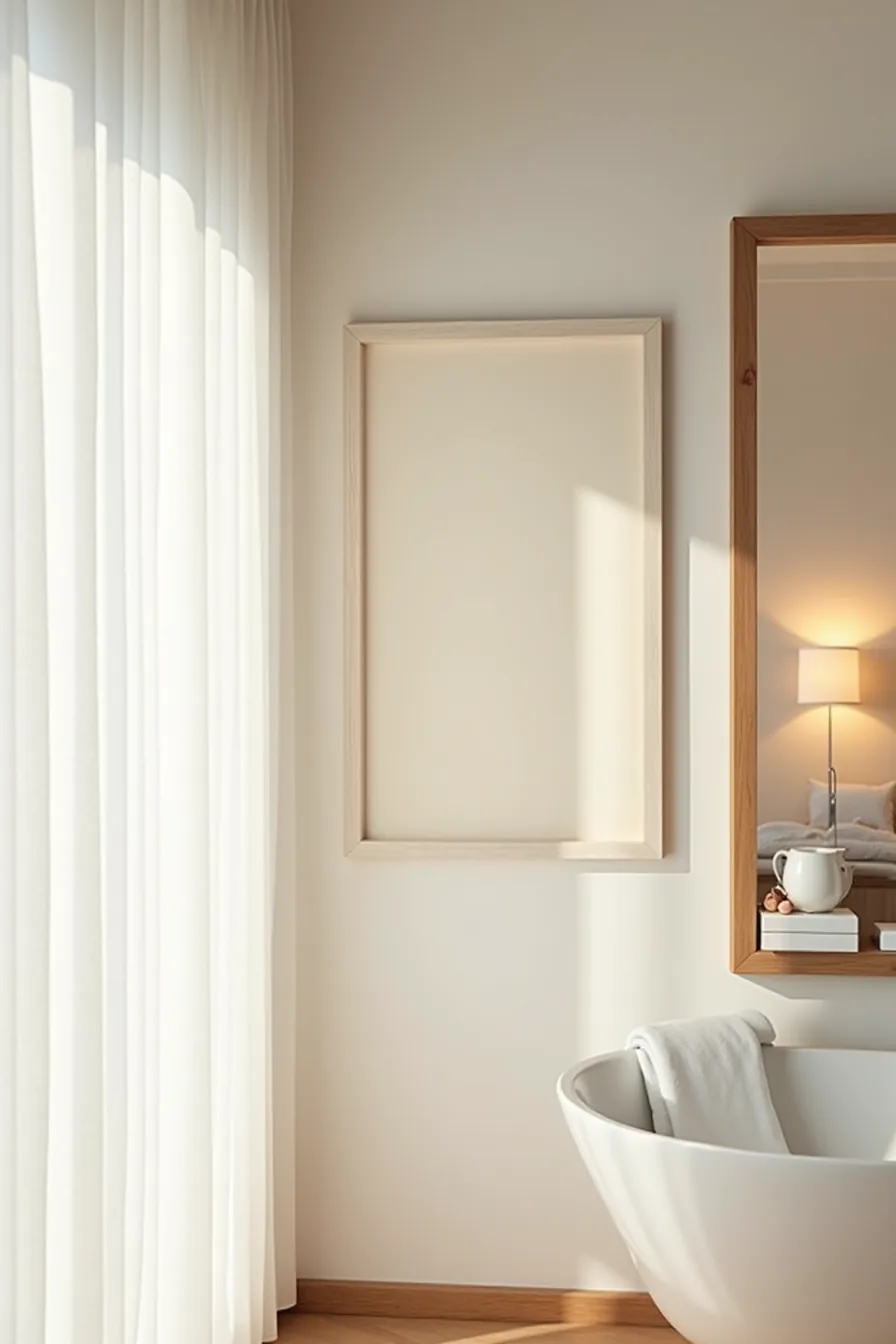
Your wall decor’s lifespan depends less on its initial beauty and more on how it handles steam. Wood frames fail quickly in bathrooms unless sealed on all six sides with marine-grade varnish or polyurethane; a sealed wooden frame around artwork resists the warping that destroys unprotected pieces within a single humid season. Match that protection with waterproof paint, satin or semi-gloss finishes repel moisture better than flat matte, which absorbs humidity and breeds mildew spots you can’t scrub away.
Ventilation is your first line of defense. A ducted exhaust fan run for 20 minutes after every shower drops ambient humidity from near-saturation to safe levels, protecting the artwork backing from curling and the frame’s seal from breaking down. For cleaning, dust the frame monthly with a microfiber cloth and wipe the wall surface with a damp sponge, never solvent-based cleaners near the sealed edges, as they degrade the varnish over time.
Inspect the seal annually in spring; reapplying a thin varnish coat every two to three years doubles the setup’s lifespan, making it a wise long-term investment for permanent bathrooms.
Scale, Placement, and Color Coordination Across Bathroom Sizes
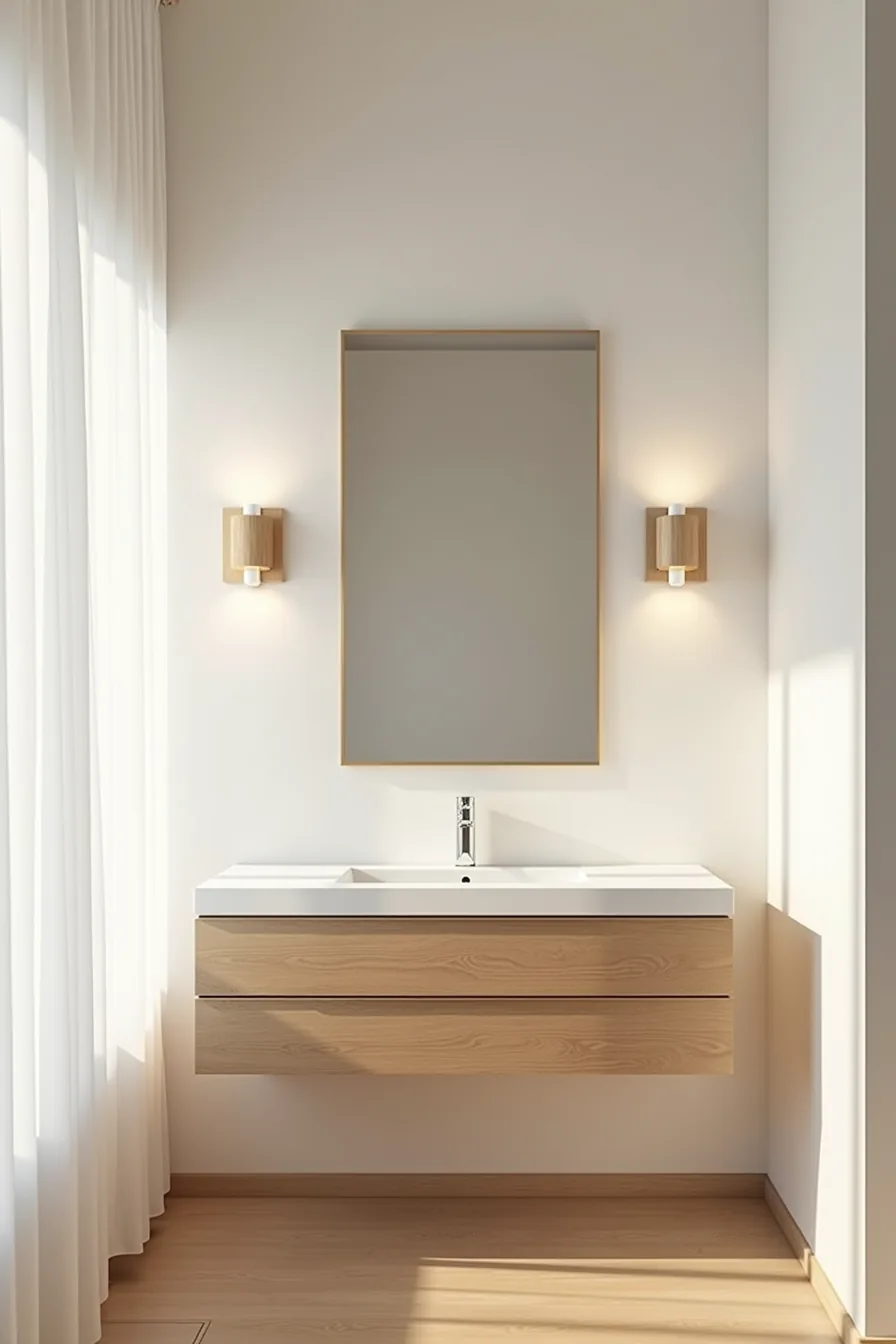
Start with the mirror as your anchor. For most 36-inch vanities, a medium-scale mirror spanning roughly 28–32 inches wide centers the composition; flank it with two smaller framed pieces at equal distance, leaving 4–6 inches between each frame and the mirror edge to maintain visual breathing room.
The gap between the vanity countertop and the mirror bottom should measure 5–8 inches, while the side frames’ midpoint aligns with the mirror’s vertical center, typically 60–65 inches from the floor. In smaller bathrooms, skip side flanking entirely and stack one narrow piece above the toilet; in large spaces, you can push that same stack wider across an unused wall, but never let any piece encroach within 6 inches of a shower door or towel bar swing path.
Color coordination follows the dominant fixture tone. Chrome fixtures pair with cool grays, blues, or crisp whites; brushed nickel or brass calls for warm creams, sage, or terracotta tones that echo the hardware’s undertone. Match one accent color from your tile, not the dominant shade, in the frame or matting to tie the arrangement into the existing palette without competing with it.
What to do first
You now have six distinct directions, each with clear trade-offs in cost, permanence, and maintenance. None of them require a contractor, and all of them work in rentals with the right adhesive or hanging system.
Start by measuring your largest empty wall, the one you see when you enter the room. Stand back and mark the area you want to fill; that single measurement determines whether you need one oversized piece or a cluster of smaller ones. Then choose the one option that solves your biggest problem first: if moisture is your issue, pick the teak or sealed ceramic route.
If budget is the constraint, the framed fabric art costs under $40 with materials from a craft store.
Buy the materials for that one wall this week. Install it before your next guest arrives, and you’ll have a finished decision to build around, not another inspiration board.
Frequently Asked Questions
What materials work best for bathroom wall decor in high-humidity environments?
Sealed ceramic, glazed porcelain, powder-coated metal, and tempered glass handle steam best. Avoid raw wood, unsealed canvas, or bare iron. For wood, use marine-grade varnish or oil-based polyurethane with at least two coats.
Can I use regular artwork in a bathroom, or does it need special treatment?
Yes, but protect it. Frame with acrylic instead of glass, and add a moisture barrier behind the mat. Alternatively, apply a UV-resistant spray sealant to the print surface.
Replace paper posters with vinyl or waterproof canvas prints for long-term durability.
How do I style bathroom wall shelves without making them look cluttered?
Limit each shelf to three items: one functional piece, one plant or organic element, and one small art object. Vary heights by using stacked boxes or risers. Leave at least 30% of shelf surface empty, and group items in odd numbers.
What are the best damage-free bathroom wall decor options for renters?
Use command hooks for lightweight frames, adhesive tile decals, and over-the-door hooks. Tension rods work for hanging towels or lightweight art. Removable wallpaper panels or peel-and-stick wainscoting add pattern without residue.
Avoid suction cups in humid showers, they fail.