A modern TV wall isn’t about hiding the screen, but about making deliberate choices on scale, material, and placement that turn the largest black rectangle in your room into a considered architectural feature. That means deciding between a flush-mounted slab, a framed gallery approach, or a floating console that grounds the composition, each with distinct trade-offs in cost, installation effort, and visual weight. The right option depends on your room’s proportions, your lease terms, and how much you’re willing to invest in structural work.
Below are six concrete interpretations, matched to specific spaces and budgets, so you can pick the one that fits your walls rather than forcing an aesthetic that fights them.
Key takeaways
Concealed wiring requires planning before mounting, so budget for an electrician if your wall lacks an existing outlet behind the TV position. Built-in shelving works best when the depth stays under 12 inches to avoid a bulky silhouette that overwhelms a small room. An accent wall behind the TV should contrast with the screen’s bezel, matte dark paint or textured panels reduce glare and visual clutter. Strategic lighting means bias lighting behind the TV, which costs little to install and cuts eye strain during evening viewing.
Floating Wall-Mounted TV with Concealed Wiring
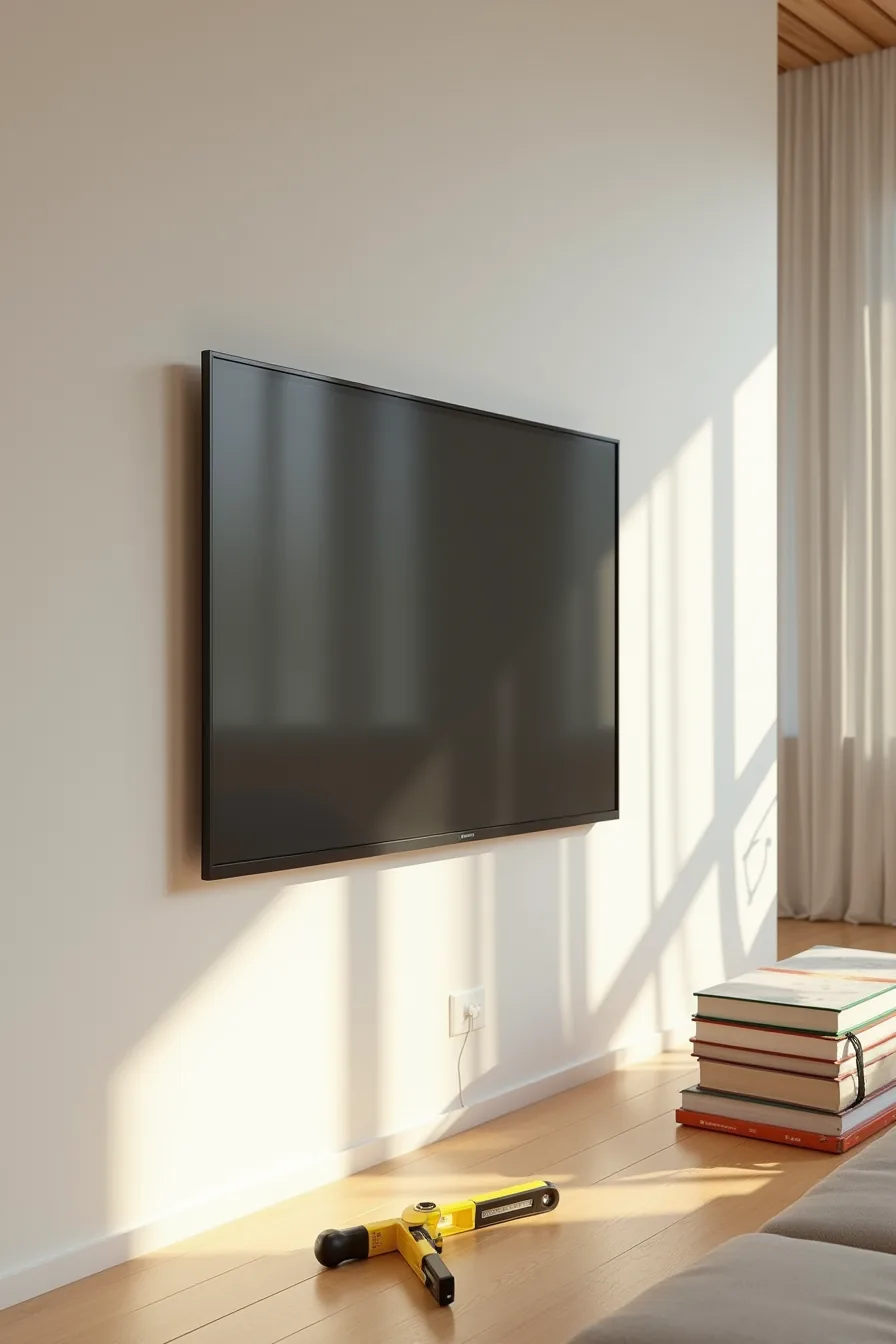
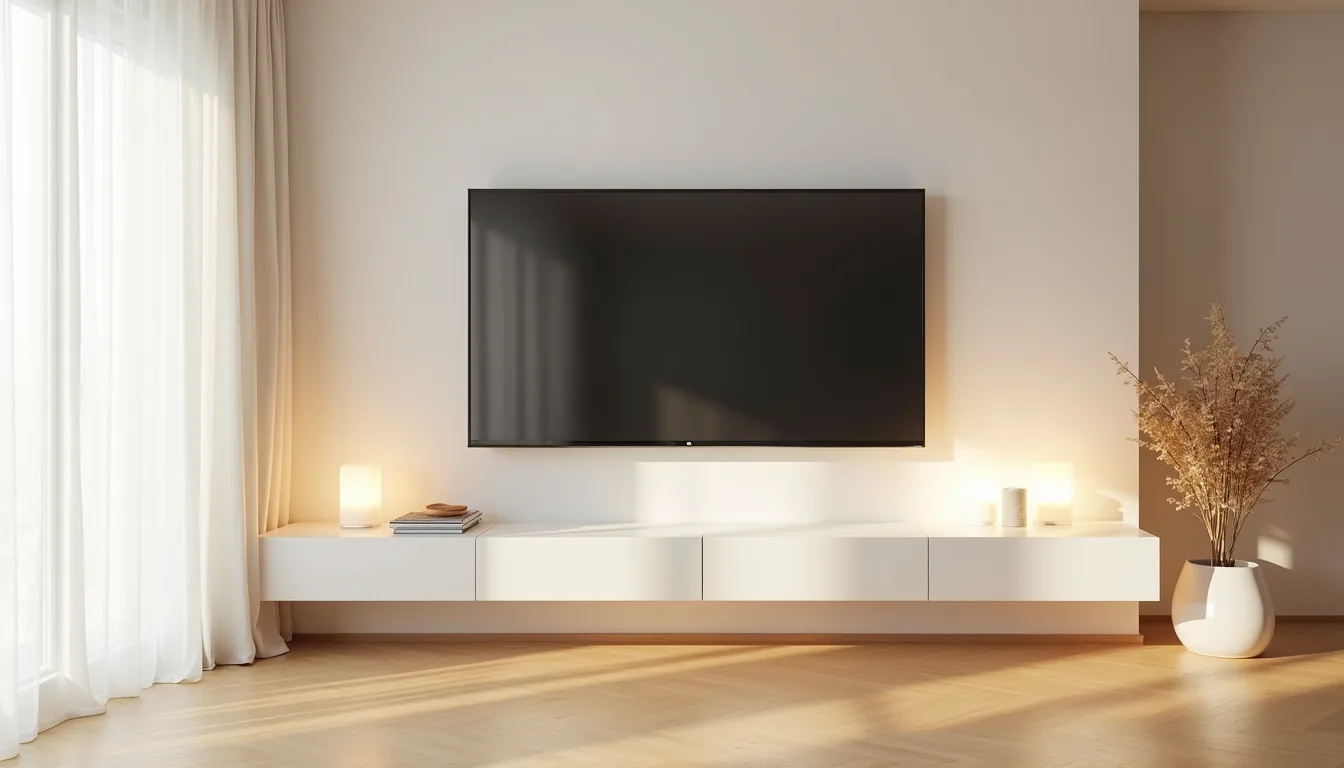
A 65-inch screen floating on a white accent wall works because it removes the visual clutter of a stand entirely, making the television feel like a permanent architectural feature. This setup suits living rooms and open-plan spaces where you want the wall to remain a clean focal point, and it pairs best with a separate low console placed elsewhere for media storage.
To reproduce this, you need a stud finder to locate solid anchoring points, a level to guarantee a straight mount, and a metal wall plate rated for your TV’s weight. Wires route through the wall cavity, which requires cutting two small openings, one behind the screen and one near the baseboard, then fishing a power cable and HDMI line between them. Budget roughly 5 to 8 hours for a first-time install, and factor in an in-wall-rated power kit (20 to 40 dollars) to meet electrical code.
This approach is a long-term investment: it raises resale appeal but makes future cable changes more labor-intensive.
Built-In Media Shelving Around the Screen
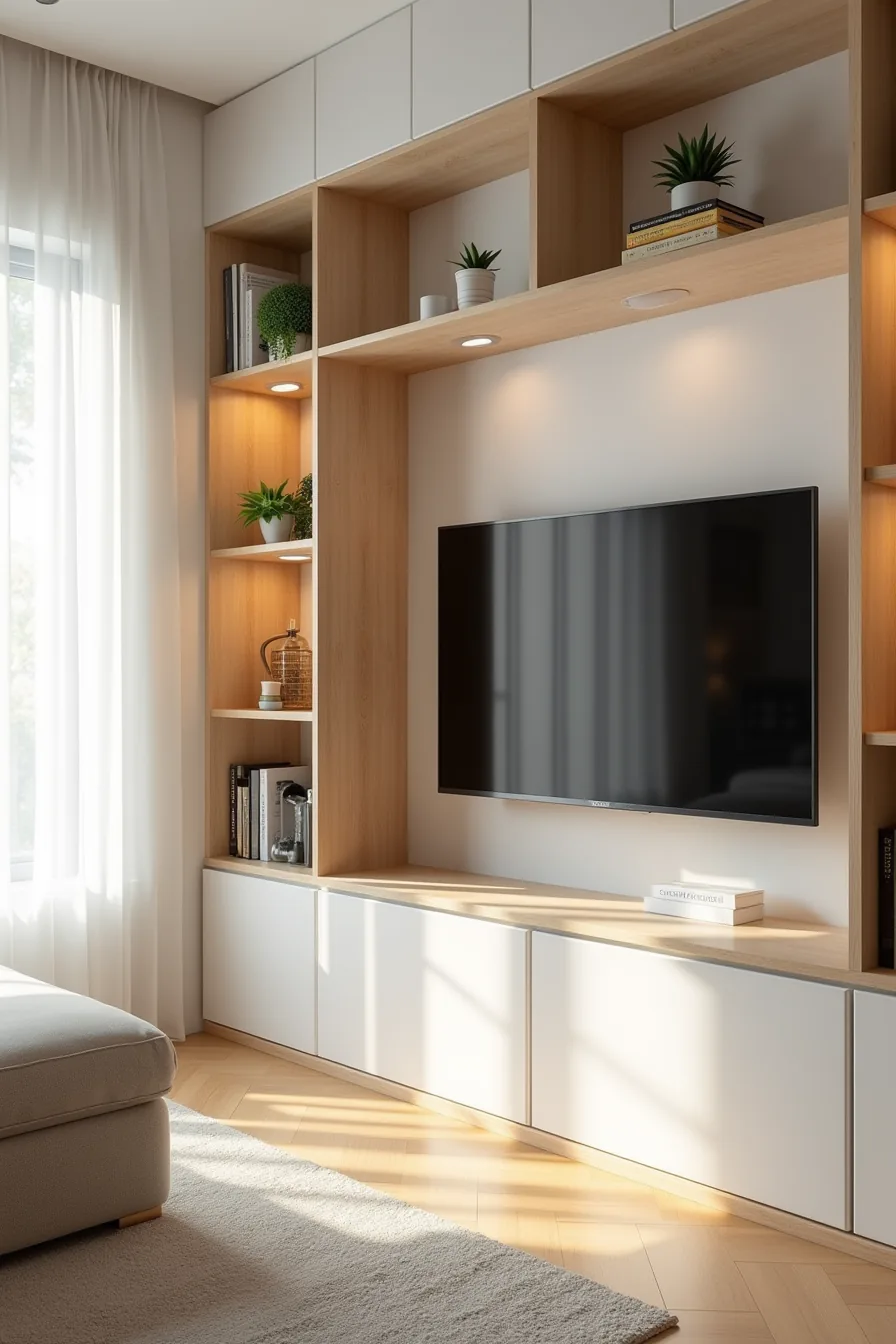
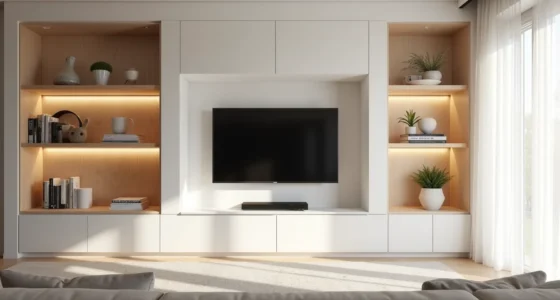
A 50-inch TV recessed into custom shelving turns the television into one component of a larger storage system rather than the sole focal point. The open shelves on both sides hold decorative boxes and potted plants, which soften the screen’s hard edges, while the closed cabinet below hides routers, game consoles, and cable boxes behind solid doors. This layout works best for family rooms and rentals where you need visible storage but want to avoid the cluttered look of exposed electronics.
Custom-built units give you exact control over shelf depth, plan for 14 to 16 inches to accommodate media components, but modular systems from retailers like IKEA achieve a similar effect at roughly half the cost. For small walls under 8 feet wide, keep the shelving flush with the TV’s width rather than extending beyond it, or the room will feel cramped. On larger walls, extend the unit floor-to-ceiling to create a proper Stylish entertainment walls feature; just leave 2 to 3 inches of clearance above for ventilation and access to wiring.
Accent Wall with Texture or Paint Behind the TV
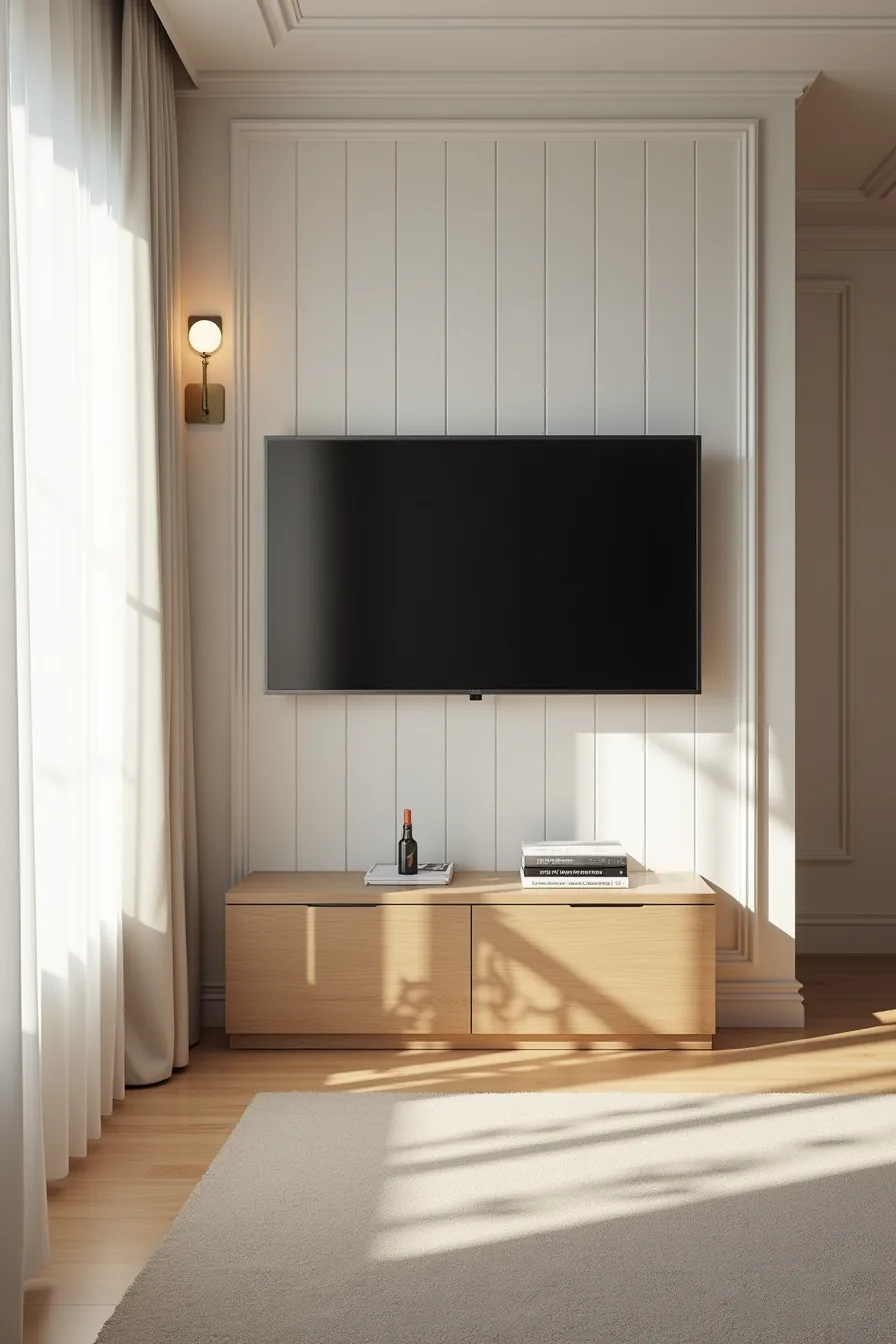
A 55-inch TV against a shiplap backdrop painted deep charcoal creates depth without adding a single piece of furniture. The dark paint recedes visually, pulling the screen forward and making it feel integrated rather than attached. The white shiplap boards above and around the screen, framed by white trim, break up the dark mass so the wall reads as intentional design rather than a black hole.
This treatment suits media rooms and north-facing living spaces where you want to mute glare without closing curtains.
Shiplap runs $2 to $4 per square foot for MDF planks, but painting existing drywall with a textured roller achieves a similar effect for under $60 in materials. Durability matters here: flat paint shows fingerprints within weeks, so specify a satin or eggshell finish that wipes clean. Dark charcoal also hides cable shadows and minor drywall flaws, which is why it outperforms lighter tones behind screens.
For a Modern TV wall inspiration with less commitment, use peel-and-stick wallpaper in a textured stone pattern, it removes cleanly and costs $30 to $80 per roll. Keep the accent wall to the single TV surface; extending the color around corners shrinks the room perceptibly.
Low Console with TV Elevated Above
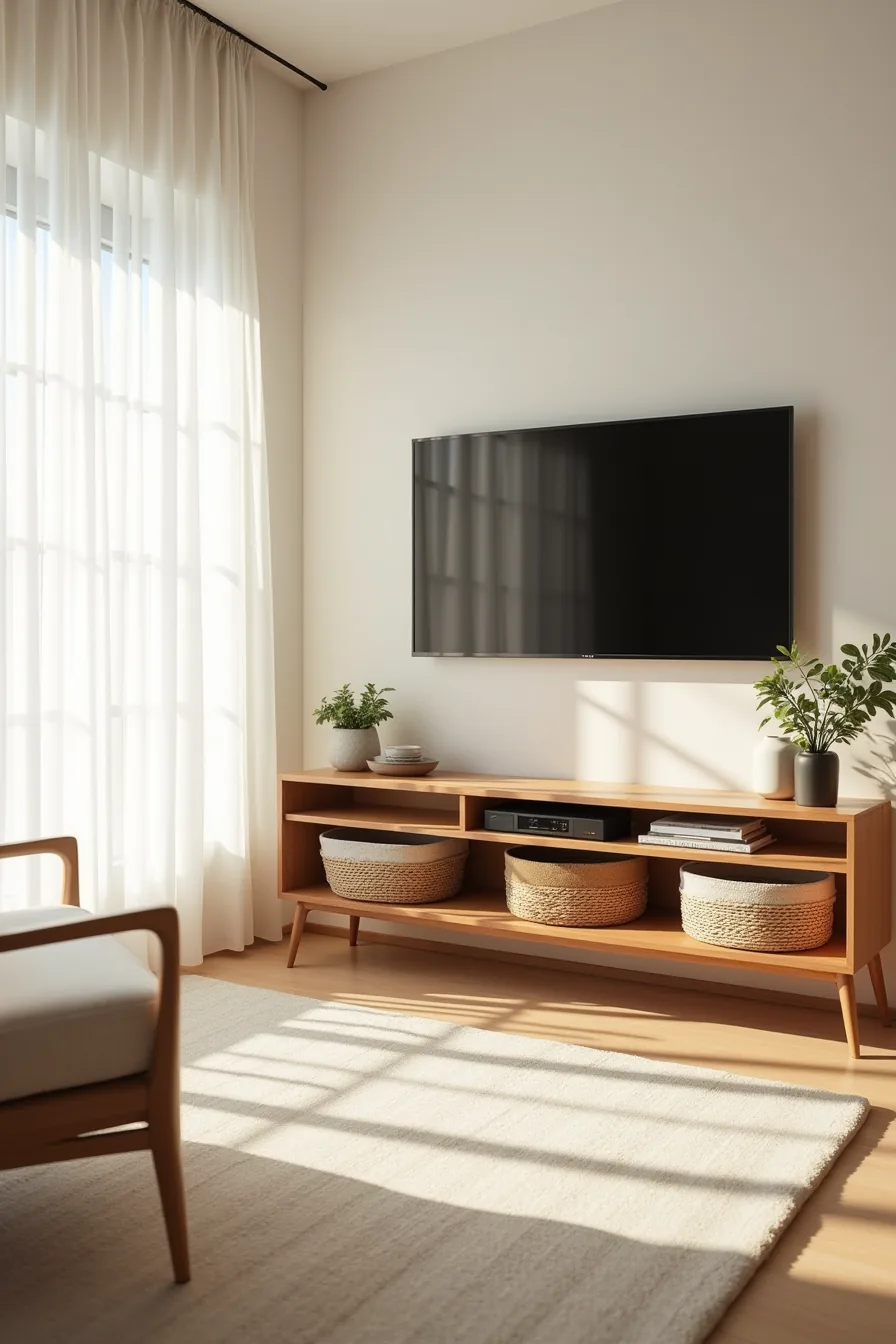
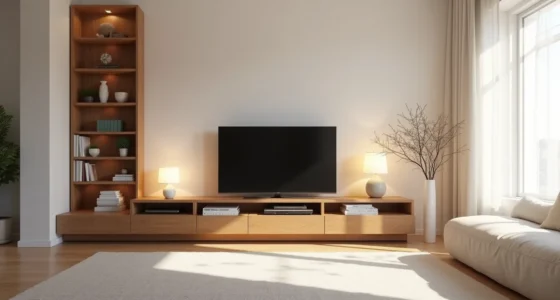
A wall-mounted 55-inch TV positioned with its center around 48 inches from the floor pairs cleanly with a 24-inch-tall credenza console below. That vertical gap, roughly 18 to 24 inches, creates breathing room between the screen and the furniture, so the setup reads as two deliberate layers rather than a cramped stack. You calculate the height by sitting in your primary viewing seat and leveling your eyes with the middle of the screen; adjust up or down by a few inches if you often recline or watch from a barstool.
The low credenza with open shelving and woven storage baskets keeps cables and peripherals tucked away while adding warmth through natural texture. This layout suits renters and frequent movers because the only permanent change is two bracket bolts in the studs; the console and baskets travel with you. Wall brackets cost $30 to $60, and the console ranges from $200 for particleboard to $1,500 for solid oak, so you can match the investment to how long you plan to stay.
Keep the console width at least as wide as the TV, ideally 10 to 20 percent wider, to anchor the visual weight of the screen above. For practical TV wall layouts in apartments, skip the floating shelves on either side; they add clutter and force you to patch extra holes when you leave.
Statement Paneling or Geometric Wall Treatment
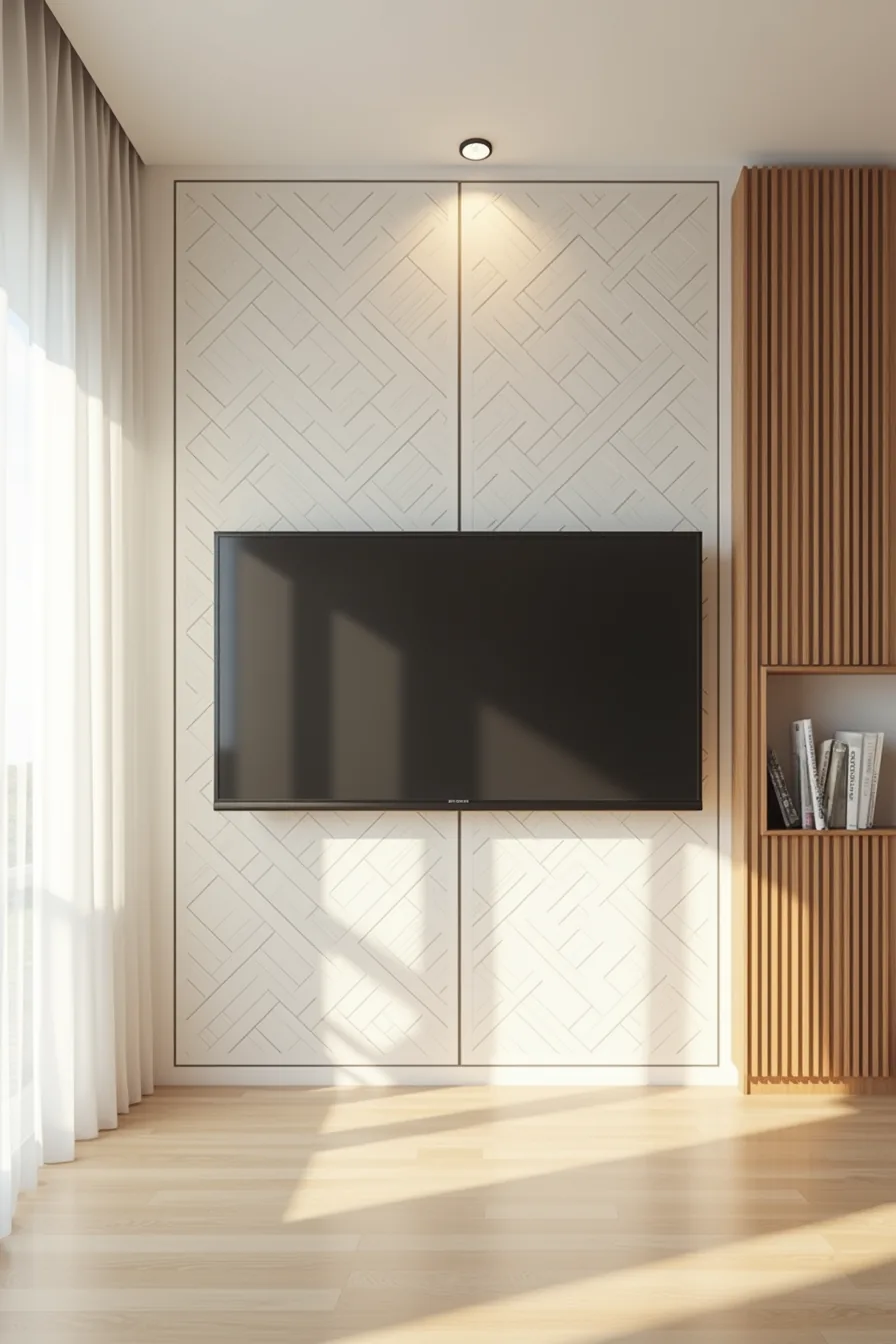
A 60-inch TV mounted against a wall of white and natural wood slat paneling in a herringbone pattern transforms the screen into part of the architecture rather than an add-on. The key is treating the entire wall surface, not just a strip behind the TV, so the pattern reads as intentional design. Wood slat panels typically cost $3 to $8 per square foot for MDF versions, while solid wood runs $10 to $20; installation adds 4 to 8 hours of labor if you DIY, or roughly $400 to $900 for a professional.
The herringbone angle creates visual movement that suits living rooms with neutral furniture, where the wall becomes the focal point. In smaller spaces, limit the paneling to the TV wall only and keep the pattern orientation vertical, horizontal lines make ceilings feel lower. This is a long-term investment route: removal requires patching the entire wall, so renters should skip it unless your landlord approves permanent changes.
For a budget-friendly alternative, 3D PVC panels mimic the geometric look at $1 to $3 per square foot, though they read as less premium up close.
Minimalist Open Wall with Strategic Lighting
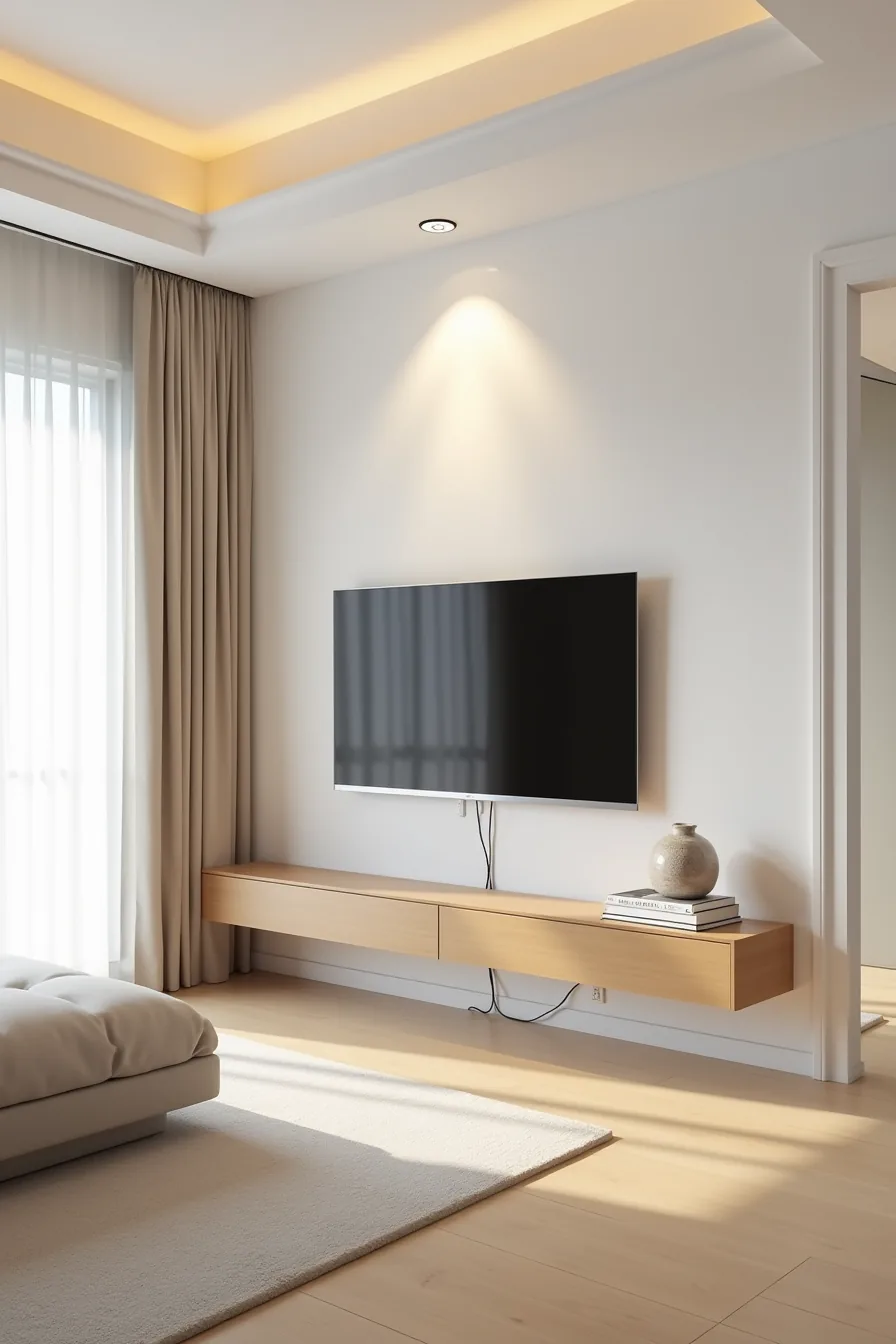
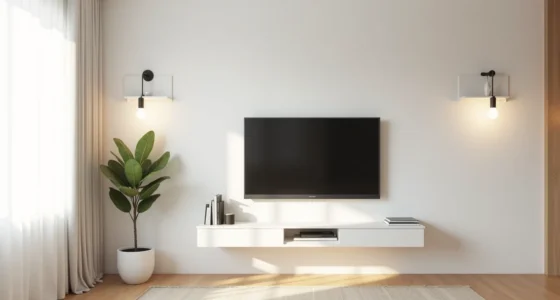
A 55-inch TV on a plain white wall works because the lighting does the decorating. Recessed ceiling lights positioned 24–36 inches in front of the screen wash the wall with soft glow, eliminating the hard shadow a TV would otherwise cast. A linear wall sconce mounted beside the screen adds a warm accent that draws the eye horizontally, making the wall feel wider than it’s.
Cables routed behind the TV or through a paintable conduit keep the surface clean, which is the entire point of this approach. The floating shelf below holds exactly one object, a small sculpture or plant, so the composition reads as deliberate rather than empty. This suits modern and Scandinavian interiors where negative space carries visual weight, and it’s the cheapest route in this guide: a sconce runs $50–$150, conduit under $30, and you need zero structural work.
Renters can install a sconce with a plug-in cord and adhesive clips, leaving the wall untouched when you move.
Your 20-Minute Starting Point
Before you buy anything, measure your wall and sketch the viewing distance from your primary seat. Most rooms need 8-10 feet between sofa and screen for comfortable viewing, so let that constraint drive your design choice, not the other way around.
Pick one priority, hiding cables, adding storage, or achieving a floating look, and let that single decision narrow your options. If you rent, skip the wall-mounting route entirely and invest in a quality console instead. If you own and hate visible wires, book an electrician for an in-wall outlet before you hang anything.
Your next step: Grab a tape measure, mark your screen’s ideal height on the wall with painter’s tape, and live with it for 48 hours before committing to a design.
Frequently Asked Questions
What height should a modern TV wall be mounted at?
Center the TV at eye level while seated, typically 42–48 inches from floor to screen center. For bedrooms, mount slightly higher, around 50–55 inches, to accommodate reclined viewing.
Can I use modern TV wall design ideas in a rental apartment?
Yes. Use renter-friendly routes like freestanding media consoles, peel-and-stick panels, and cord covers that mount with adhesive. Avoid drilling into walls; opt for tension rods or furniture-based solutions that leave no permanent damage.
How do I hide cables behind a wall-mounted TV?
Install an in-wall cable kit with a power outlet behind the TV, requires cutting drywall, so check local codes. For rentals, use a paintable cord cover raceway that adheres to the wall and routes cables down to the console.
What’s the difference between a TV accent wall and a full media wall?
An accent wall adds texture, color, or paneling only behind the TV, leaving the rest of the room untouched. A full media wall is a built-in or modular unit spanning floor to ceiling, integrating storage, shelving, and sometimes a fireplace, requiring more space and investment.