
If you’re tired of scrubbing soap scum off vinyl or wrestling with a rod that sags, the shower curtain is the first thing to go in a bathroom refresh, and these six alternatives replace it with better function, less upkeep, and a cleaner sightline. Each option below solves a specific problem, from budget rentals to permanent remodels, and comes with the exact trade-offs you need to match it to your space, your habits, and your tolerance for maintenance.
Key takeaways
Frameless glass enclosures cost roughly $800–$2,500 installed, but they eliminate curtain maintenance entirely and suit large bathrooms with existing tile waterproofing. A partial fixed screen works for small spaces by blocking splash at the showerhead while leaving the rest open, typically using 3/8-inch tempered glass that requires no door hardware. Sliding glass doors on a budget run $300–$700 as a DIY kit, but you must measure the exact opening width and account for track clearance of about 2 inches on each side. A wet room layout demands a sloped floor toward a linear drain and full waterproofing membrane, expect $4,000–$8,000 in remodel costs, making it a long-term investment rather than a quick fix.
Frameless Glass Enclosures

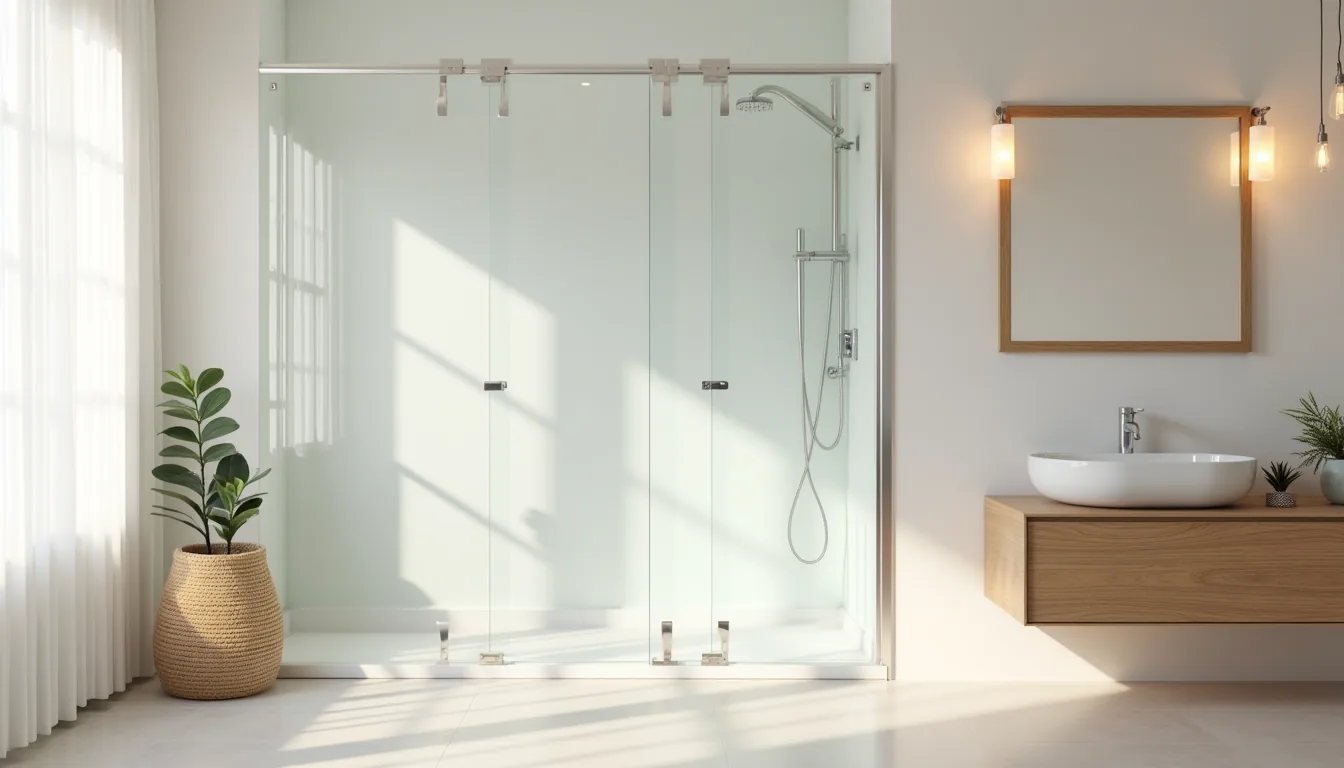
If your bathroom runs medium to large and you want a permanent, premium upgrade, full-height frameless glass panels deliver the strongest return. This setup uses two transparent panels joined in an L-shape around a freestanding shower, with a stainless steel floor drain collecting water at the base. The concrete floor continues uninterrupted on three sides, which keeps the visual line clean and makes the space feel larger than a curtained stall ever would.
Frameless glass works because it eliminates the visual break a curtain or tracked door creates. You see the tile, the fixtures, and the light all the way through, which suits modern, industrial, or minimalist bathrooms. Expect to spend $1,200 to $3,000 for a custom L-shaped configuration, depending on panel thickness (typically 3/8-inch to 1/2-inch) and hardware finish, chrome, as seen here, remains the most affordable option.
This is a long-term investment route, not a budget fix. You need a perfectly level floor and a plumber or contractor to position the drain correctly before installation. Maintenance is straightforward: squeegee the glass after each use to prevent hard-water spots, and reseal the bottom joint every 12 to 18 months.
If you rent, skip this option, it’s permanent and non-refundable.
Partial Screen Option with Open-Look Design

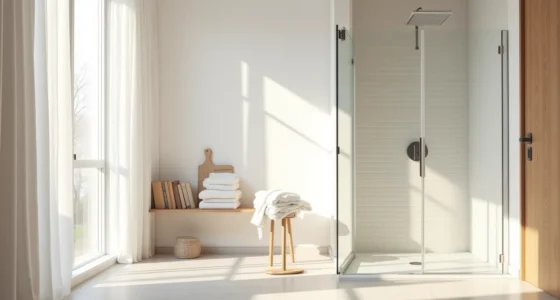
A three-quarter-height clear glass screen delivers most of the splash protection without the enclosed feel, making it the strongest compromise for small bathrooms and renters negotiating with landlords. The panel mounts directly to the wall and stops at roughly shoulder height, typically 48 to 60 inches from the floor, leaving open air above. You keep the sightline across the tiles and fixtures, which makes a tight corner read as larger than it’s.
This partial screen option suits bathrooms where a full enclosure feels claustrophobic or where a ceiling-mounted track isn’t permitted. The open-look bathroom effect comes from the minimal frame: slim aluminum edging and clear glass, not frosted or patterned panels that block the view. Expect to pay $400 to $900 for the panel plus installation, and confirm your landlord allows wall drilling before committing.
Water control is imperfect. The open top lets steam escape, but splash can still reach the floor at the unscreened end, so position the shower head to aim away from that gap. Wipe the glass with a squeegee after each shower and clean the bottom channel weekly to prevent soap scum buildup.
Choose 1/4-inch tempered glass for safety and ease of handling in smaller spaces.
Sliding Glass Doors on a Budget
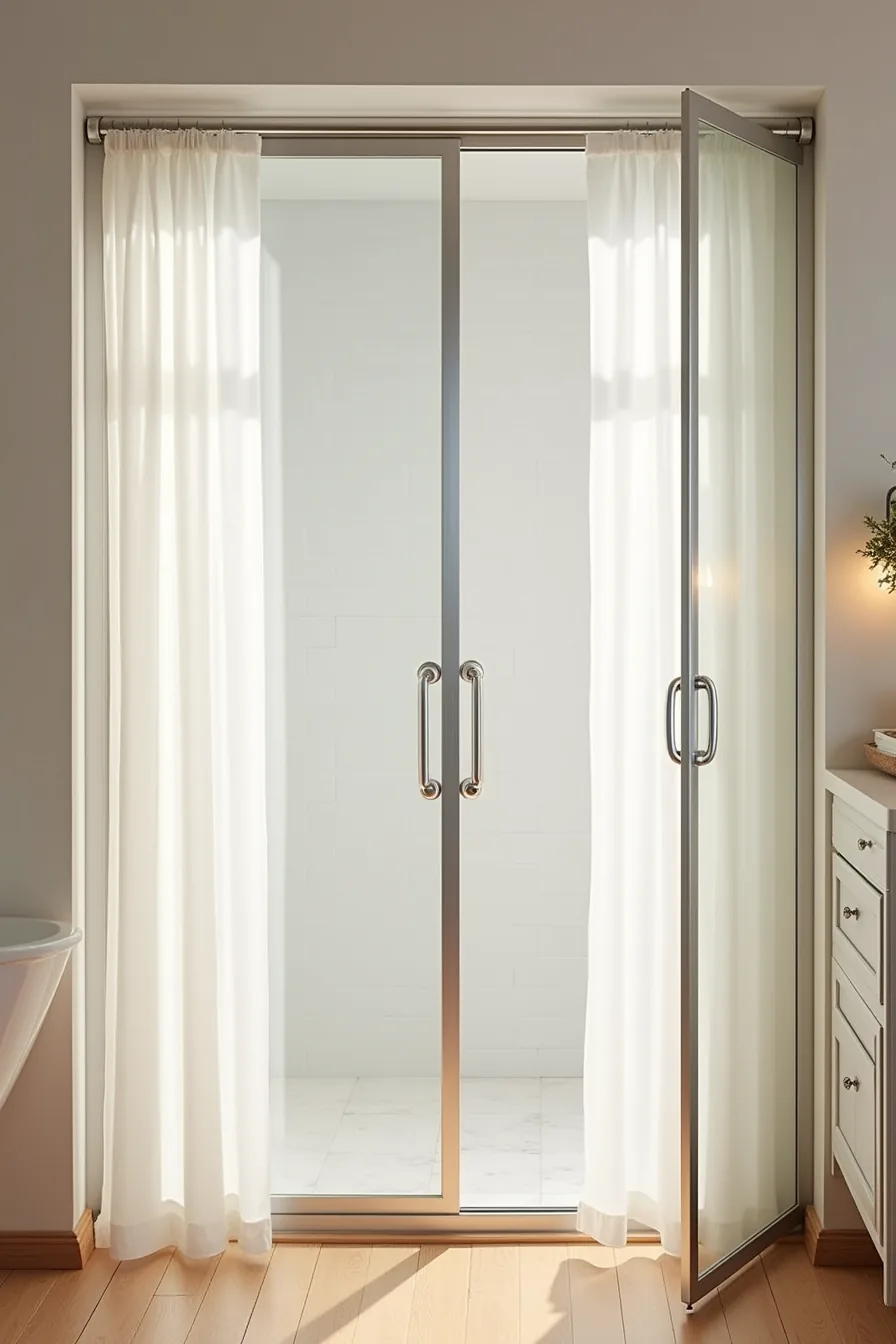
Framed sliding doors in an aluminum track system offer the lowest-cost glass alternative to a shower curtain, typically landing between $250 and $600 for the complete kit. The budget comes from the frame doing the structural work, the glass panels are thinner and lighter than semi-frameless options, so you skip the expensive heavy-duty hinges and thick tempered panes. In a narrow alcove with basic white subway tiles and a chrome towel bar, two framed panels slide past each other on top and bottom tracks, with one door open and one closed exactly as you would use them daily.
You gain full splash protection without the swing radius a hinged door demands, which makes this the right choice for tight 24- to 30-inch-wide openings. Installation is moderate DIY territory: the tracks anchor to the alcove walls and tub lip, so you need a drill and a steady hand, but no structural modifications. The visible aluminum frame and track require more regular attention than a curtain, wipe the bottom channel weekly and dry the glass after each shower, or hard-water spots will etch the surface within months.
Wet Room Layout Without Barriers
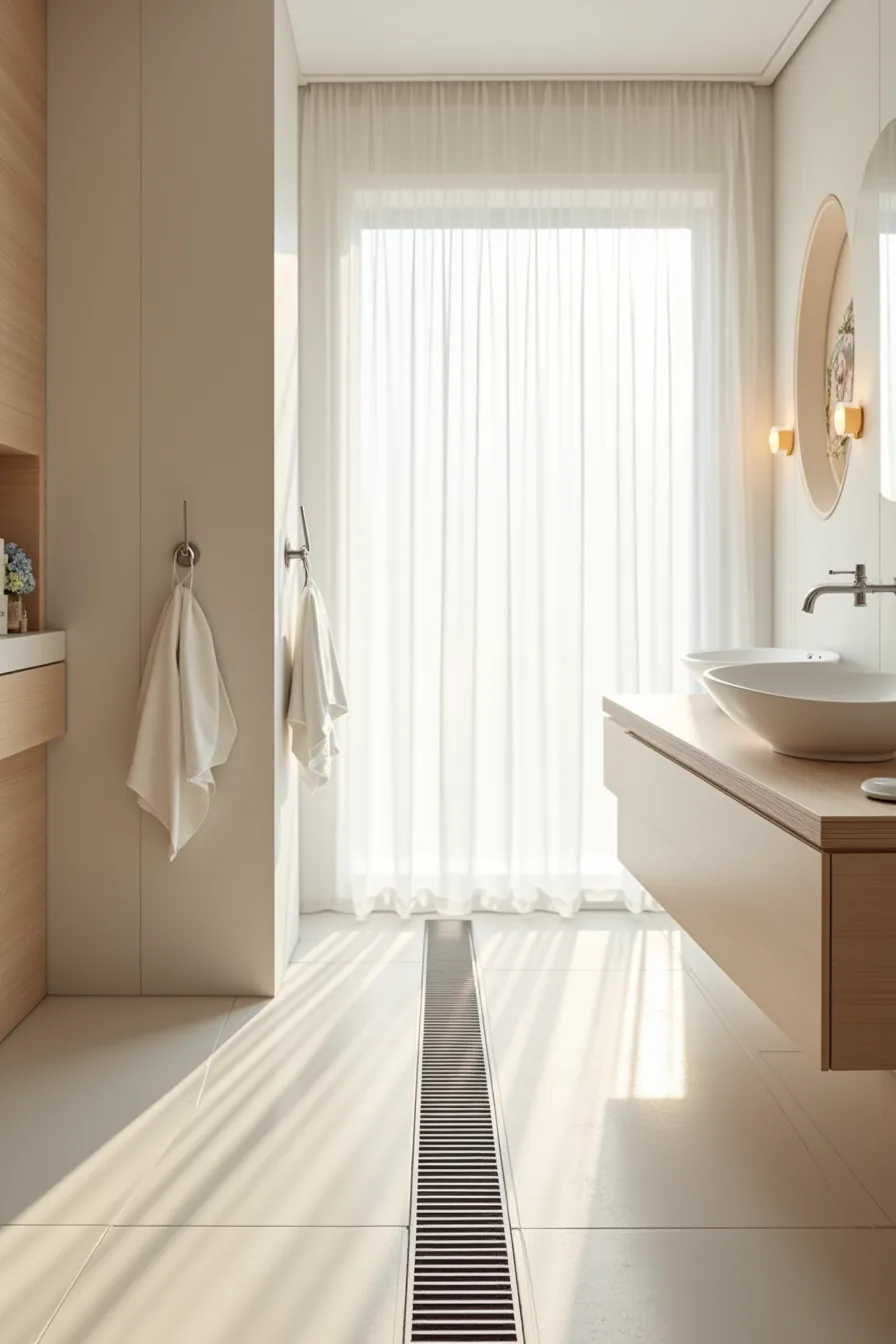
A wet room eliminates the need for any curtain or enclosure by sloping the entire floor toward a single linear drain channel, typically pitched 1.5 to 2 percent across a 6- to 10-foot span. The stainless steel grate sits flush with the concrete surface, so water travels across the full floor plane and exits without pooling, no threshold, no glass, no fabric to maintain.
This suits a primary bathroom remodel or a basement conversion where you can alter the subfloor and waterproof the entire footprint, not a quick refresh. You’ll need a licensed contractor to set the slope correctly and install a redundant waterproofing membrane, which pushes most wet rooms past $8,000 depending on tile and labor costs in your region.
The trade-off is thermal and practical: the open space feels more spacious, but you must squeegee the entire floor after each shower to prevent soap scum buildup, and the room runs cooler without an enclosure trapping heat. Use large-format tiles (12×24 inches or bigger) with tight grout lines to minimize cleaning crevices, and specify a drain channel rated for 2-3 gallons per minute to handle typical shower flow without backup.
Curved and Corner Shower Enclosures

A curved glass panel bowing outward into the room turns an awkward corner into usable space without sacrificing the visual openness of a wet room. Unlike a straight panel that cuts diagonally across the corner, the curved chrome frame follows the glass contour, giving you roughly 8-12 inches more shoulder room at the midpoint where you stand. This design suits square-ish bathrooms where a traditional 36-inch enclosure would feel cramped against adjacent fixtures.
Measurements matter more here than with flat panels because the glass arc requires precise radius matching to the frame. You’ll need a professional template of the corner, most manufacturers require a 1-inch tolerance for the curved track, and installers typically charge 20-30 percent more for curved versus straight glass. Budget $1,200 to $2,500 for a 48- to 60-inch curved enclosure, including hardware, with tempered glass rated at 6mm thickness as the minimum safe option.
The inward-facing shower fixtures stay protected from drafts, but you must keep the curved wall free of heavy shampoo bottles, a slip in the corner can crack the track seal and lead to leaks.
Shower Curtain Alternatives for Easier Bathroom Cleaning

If your current shower curtain collects soap scum and mildew within weeks, switching to a rigid panel cuts your cleaning time by roughly half. Glass surfaces require a quick squeegee after each use to prevent hard-water spotting, while acrylic panels tolerate weekly wipe-downs with a mild spray. A microfiber cloth resting on the shower edge serves as your daily maintenance tool, run it across the glass surface to catch water droplets before mineral deposits etch into the material.
Frameless glass demands the most consistent upkeep but resists mold permanently because there’s no fabric or plastic liner to harbor bacteria. Acrylic offers a middle ground: lower upfront cost, less streak-prone than glass, yet prone to scratching if you use abrasive pads. For renters, a temporary acrylic panel secured with tension rods avoids drilling while still eliminating curtain fabric from the equation.
Expect to replace adhesive seals every 2-3 years on any rigid option, as degraded silicone lets moisture seep behind the panel and defeat your cleaning efforts.
Where to start
You don’t need to overhaul the entire bathroom at once. Pick the option that solves your most pressing problem first, whether that’s eliminating mildew, adding privacy, or opening up a cramped space.
Your first move: measure your tub or shower opening and note the clearance on both sides. That single measurement will immediately eliminate half the options above.
Then choose one solution, commit to it for two weeks, and assess whether it improves your daily routine before making further changes.
Frequently Asked Questions
What is the most affordable shower curtain alternative?
A tension-mounted shower rod with washable fabric panels is cheapest, often under $30 total. Skip water-resistant coatings; choose quick-dry polyester or cotton canvas and swap panels seasonally for a fresh look.
Can renters install a shower curtain alternative without damaging walls?
Yes. Use spring-tension rods for panels or a freestanding shower screen that presses against the tub edge. Avoid drilling; both options remove cleanly and leave no holes, though screens need stable, level flooring.
How do I prevent mold and mildew on glass shower enclosures?
Squeegee glass after every use and run the fan for 20 minutes post-shower. Apply a rain-repellent auto glass sealant monthly; it creates a hydrophobic barrier that stops water spots and organic growth.
What’s the difference between frameless and semi-frameless glass shower doors?
Frameless uses thick 3/8- to 1/2-inch tempered glass with minimal hinges and clips, costing more and requiring perfect wall alignment. Semi-frameless has a metal frame on edges and door, allowing thinner glass and easier installation at a lower price.