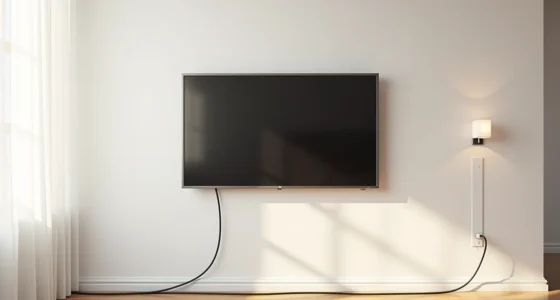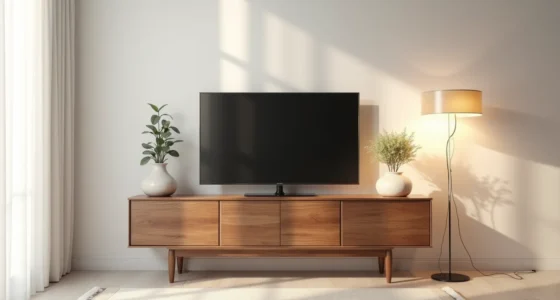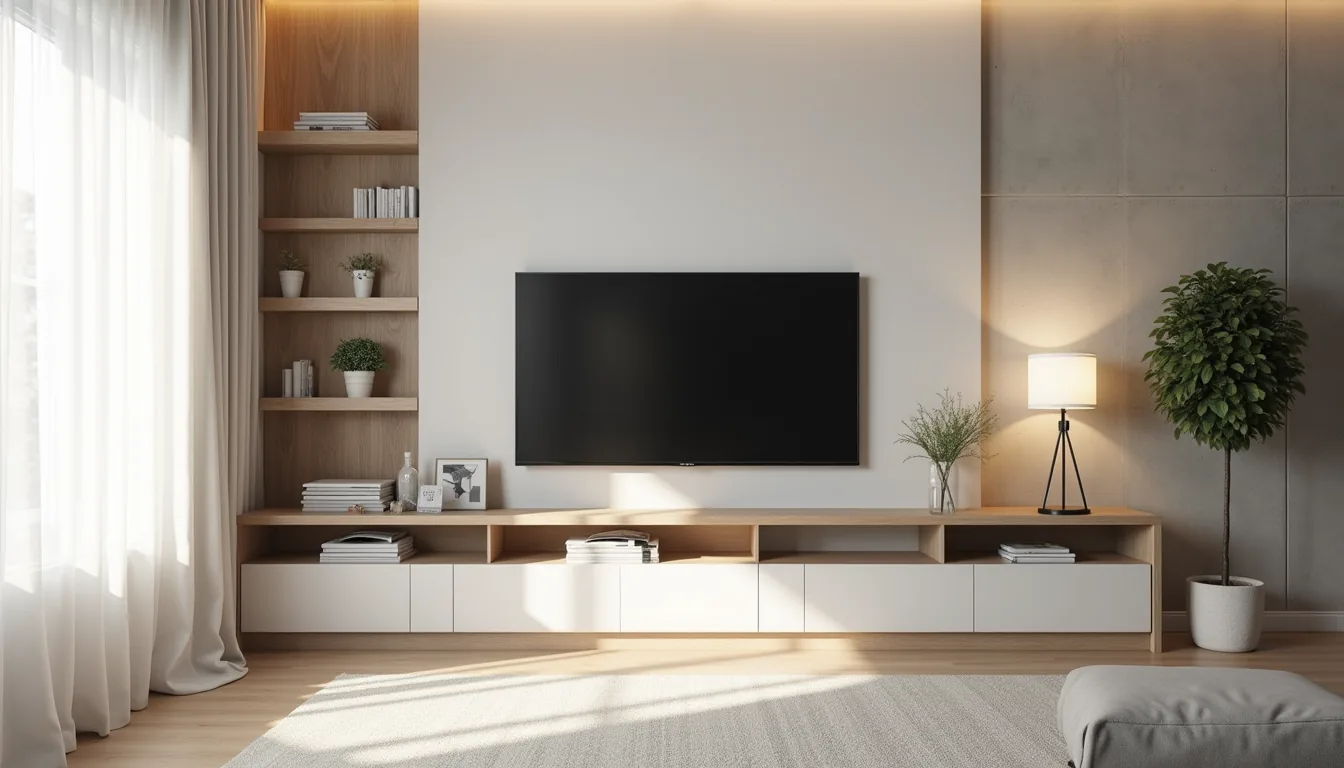

A small TV unit design modern succeeds when it does three things at once: anchors the screen without dominating the room, hides the inevitable cable clutter, and leaves enough walking space that you never have to sidestep furniture to change the channel. The challenge is that most ready-made units fail on at least one of these counts. The six approaches below break down exactly which layout, material, and mounting strategy fits your square footage, your lease terms, and your budget, so you can stop guessing and start measuring.
Key takeaways
Floating units free floor space visually but require solid-wall mounting, so confirm you can anchor into studs or masonry before committing. Corner TV units reclaim dead zones best when the screen sits at a 30–45-degree angle, keeping viewing distance comfortable in rooms under 12 feet wide. Closed storage hides cables and clutter but costs more per linear foot; open shelves suit low-traffic rooms where dusting every 2–3 weeks is realistic. Light matte finishes and wall-matched colors expand perceived depth, while glossy or dark fronts shrink a small room and show fingerprints within days.
Floating vs Floor Unit: Which Anchor Works for Your Space
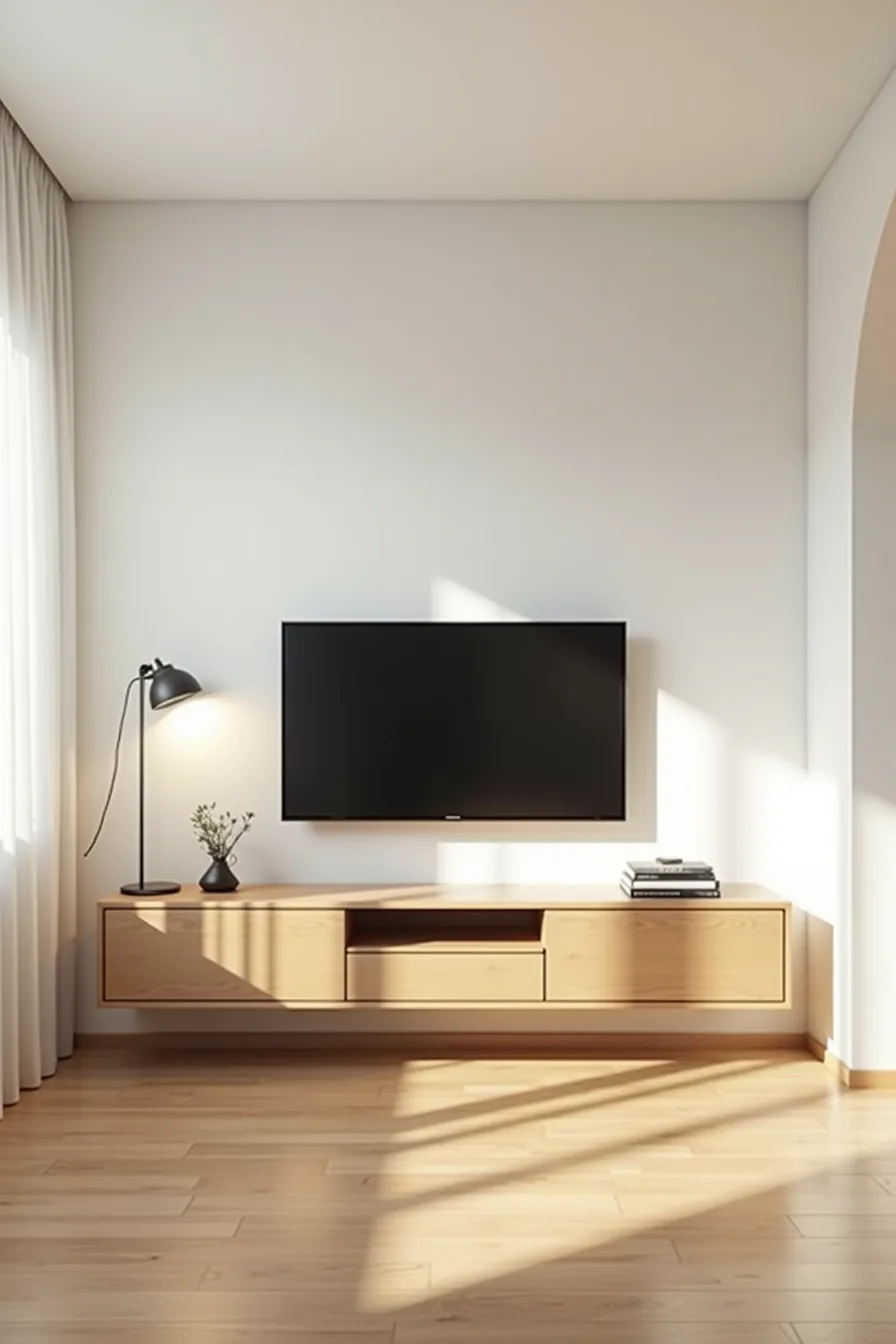
The straight-on comparison between a floating console suspended 18 inches above light oak flooring and an identical unit sitting directly on the floor comes down to two different jobs. The floating version visually expands the room because the exposed gap beneath it lets the flooring line run uninterrupted, a trick that makes a small space feel longer. The floor-mounted unit reads as heavier and more grounded, but it delivers roughly 30 percent more usable storage if you choose a taller, full-height cabinet in the same footprint.
Floating units suit homeowners or long-term renters who can anchor into studs and patch holes on move-out. You lose shelf capacity below, but you gain an easier cleaning path and a place to tuck a low-profile soundbar or cable tray. Floor units win for renters on strict leases, since they need no wall reinforcement, and they work better in rooms where you want hidden storage for gaming consoles, media accessories, or children’s toys.
Expect installation time of 30–60 minutes for a floor unit versus 2–3 hours for a floating one, including stud-finding and leveling.
Slim Wall-Mounted Media Wall for Tight Apartments
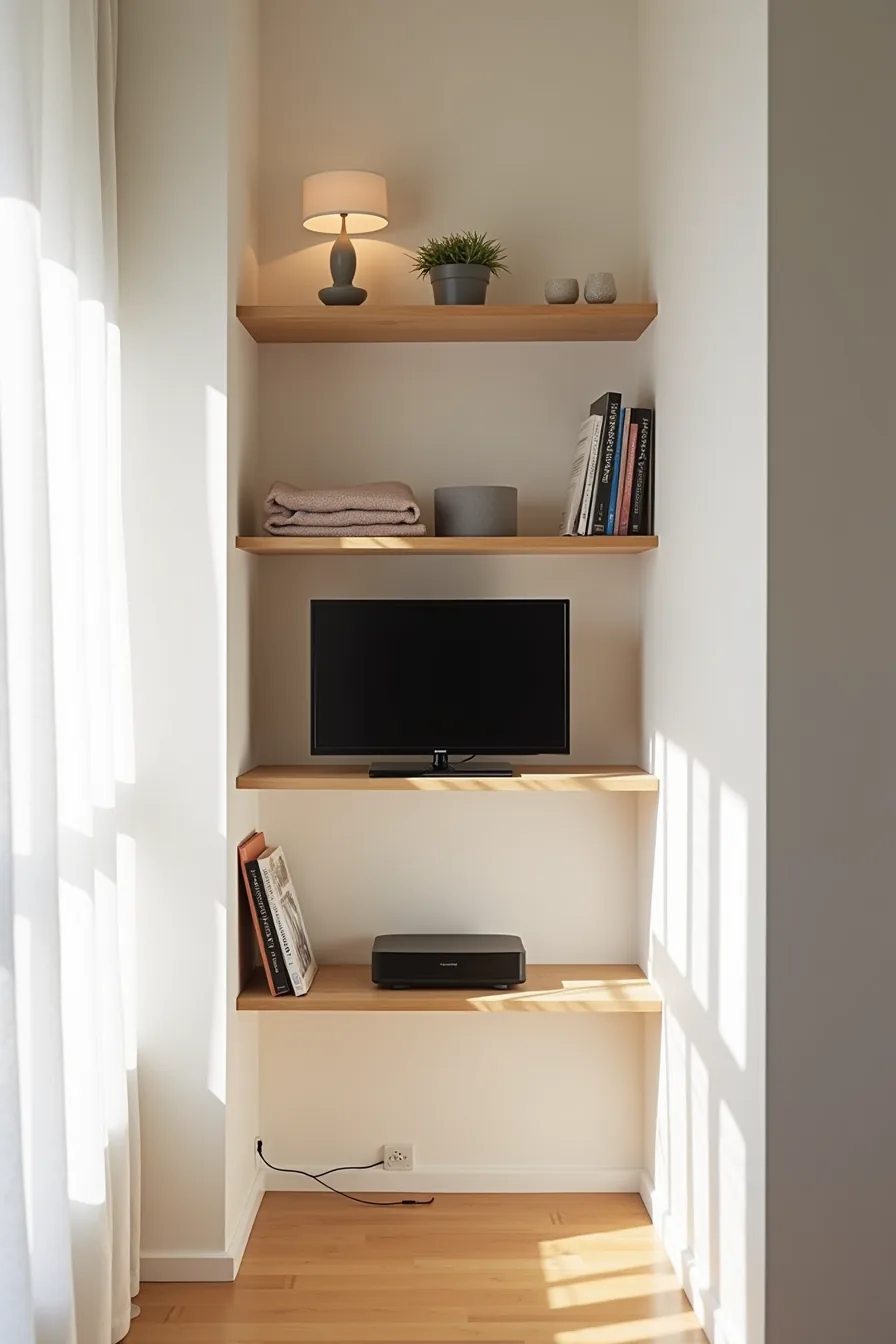
A vertical media wall changes the game in rooms under 150 square feet because it uses the one dimension you’ve plenty of: height. The setup pictured here runs roughly 24 inches wide and extends floor-to-ceiling, mounting directly into studs on a white drywall corner. You trade horizontal footprint for vertical stacking, the TV sits at eye level, a wireless speaker perches on an upper shelf, and two rolled textiles add softness without consuming drawer space.
A cable box tucks behind the shelving, with channels routed discretely behind the drywall to keep the front plane clean.
This approach suits renters who can patch a few screw holes and owners who want a permanent anchor in a narrow corner. You lose the deep storage of a console, but you gain an unobstructed walking path, critical in a room where every inch of floor counts. Use matte white or light oak shelving to keep the structure visually quiet, and budget $150–$400 for materials plus 3–4 hours for installation if you’re handy with a level and stud finder.
Corner TV Solutions: Maximizing Unused Square Footage
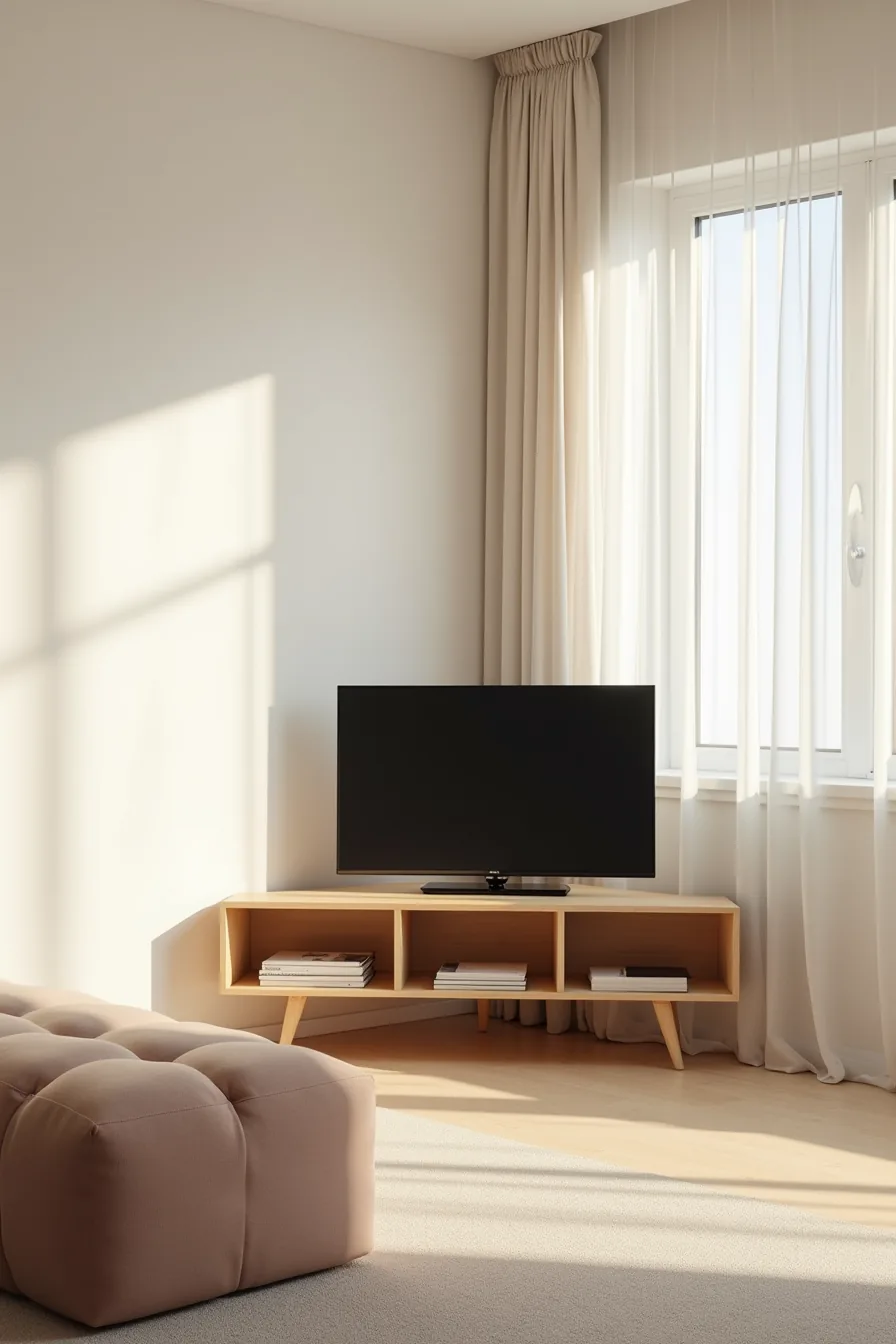
A triangular TV stand set at 45 degrees to both walls turns dead corner space into your primary viewing zone. The unit here features a light wood frame with an open base and no back panel, letting the corner walls show through behind the television. Calculate required depth first: measure from the corner along each wall to where you want the point of the triangle to end, most setups work with legs spanning 22–30 inches per side, keeping the front edge 12–18 inches from the corner.
You need that open base because it preserves the floor line, so the stand reads more like an accent piece than a bulky entertainment block.
This corner solution suits you best when a wall-mounted console would block a doorway, radiator, or window on both adjacent walls. The TV faces diagonally into the room, which actually improves sightlines if your primary seating sits opposite the corner rather than parallel to a wall. You gain double-fronted access to the stand, reach shelves from either side, but you sacrifice the continuous surface you might use for a soundbar; mount that above the TV instead.
Stick to light woods or white to keep the assembly weightless, and rank that it only holds whatever fits within the open frame, roughly 10–12 inches of depth per shelf.
Open Shelving vs Closed Storage: Trade-Offs for Modern Small TV Units
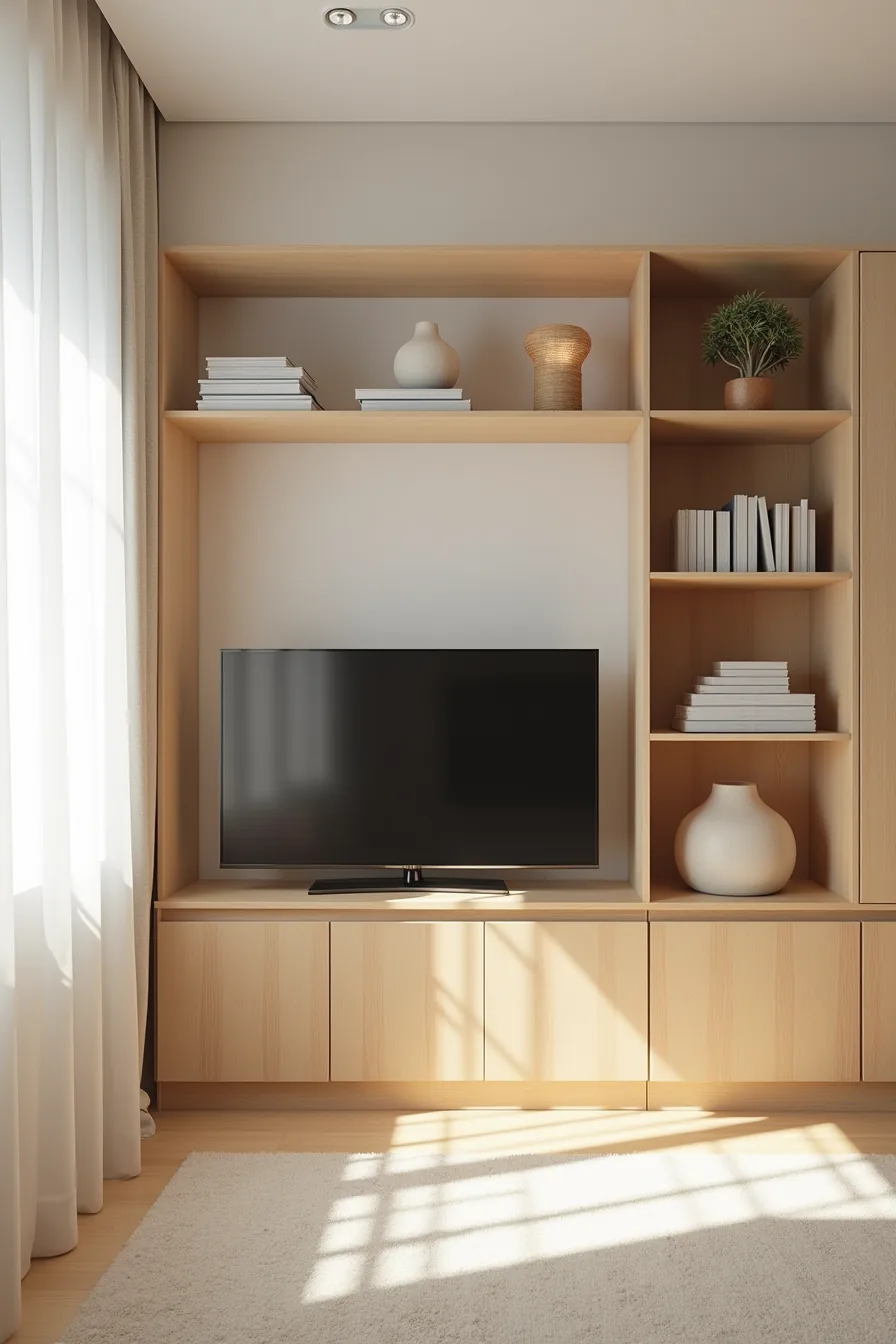
A split-design unit, open shelves on one half, closed cabinets on the other, lets you balance visual lightness against practical dust control. The open side displays stacked items like books and media players, but those horizontal surfaces collect dust visibly within a week, demanding a quick wipe every 7–10 days. The closed side hides cables, game consoles, and rarely used accessories behind doors, cutting your cleaning routine to a monthly pass with a microfiber cloth.
Open shelving suits you if your TV room doubles as a display space for ceramics, framed photos, or a tidy media collection. It reads visually lighter because the wall shows through between objects, which helps a compact unit feel less monolithic. Closed storage suits you if you own mismatched electronics, stacks of DVDs, or children’s toys that need hiding, but full-door designs risk looking boxy in a small room unless you choose a light finish.
A 60/40 split, more closed than open, gives you the best of both: one display shelf for a single accent piece and the rest behind doors. Budget buyers should skip glass-front doors, which show every fingerprint and cost 15–20% more than solid panels; matte laminate doors are the most forgiving for daily use.
Material and Color Choices That Keep Small Rooms Feeling Spacious
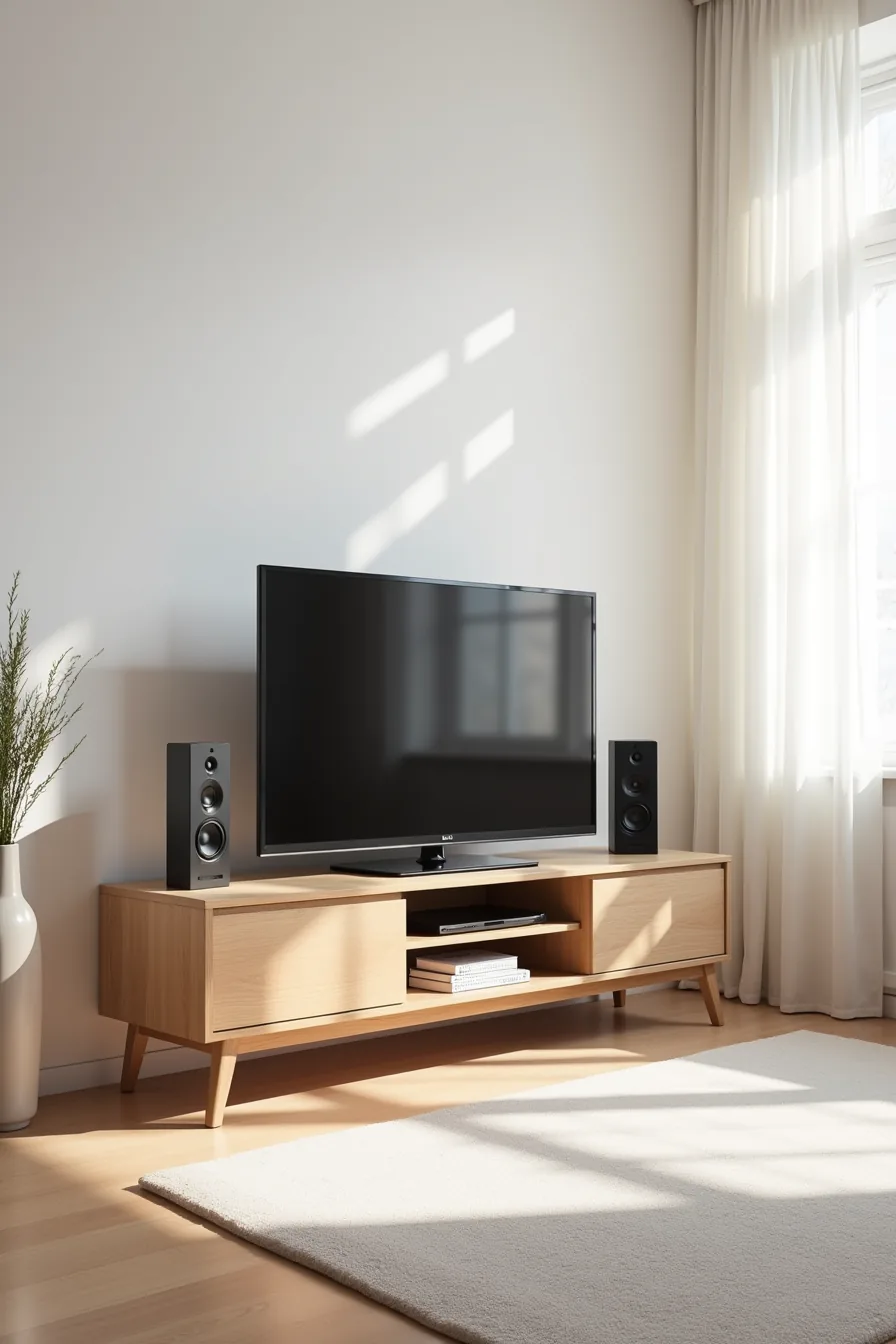
Light natural oak veneer reflects roughly 40–60% more ambient light than matte charcoal, which is why the middle unit in the lineup visually recedes against the white wall while the dark one appears to advance. If your room receives strong daylight, a mid-tone oak or warm white laminate keeps the wall-to-unit contrast low, making the furniture read as part of the architecture rather than an object occupying floor space. Matte charcoal suits you only if your room has dedicated accent lighting, without it, the unit will absorb light and shrink the perceived depth of the space by a noticeable margin.
Brushed steel with glass shelves offers the highest reflectivity but demands weekly cleaning because every smudge, dust streak, and cable shadow shows within 24 hours of normal use. Glass shelves also reduce visual weight by revealing the wall behind them, which works best in rooms under 120 square feet where the unit sits perpendicular to a window. Skip polished chrome handles on any finish; satin or brushed hardware hides fingerprints far better and costs the same per unit.
For maintenance, matte laminate tolerates a damp cloth with mild soap monthly, while oak veneer needs a dry microfiber wipe every two weeks and occasional furniture polish to prevent drying. A single matte charcoal accent panel behind the TV, not on the unit itself, anchors the composition without darkening the whole wall.
Scaling Modern Small TV Units Across Room Sizes
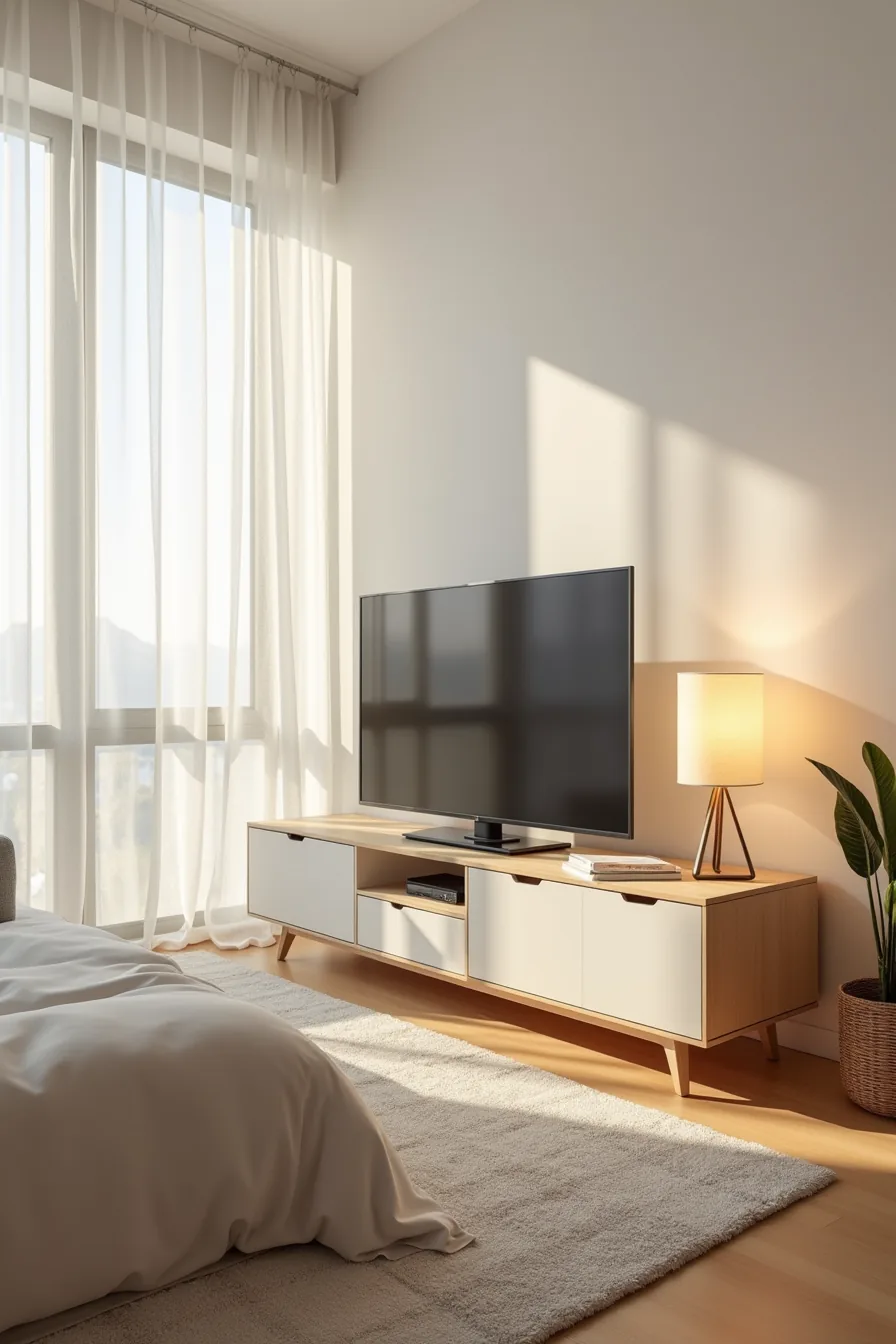
For a studio under 350 square feet, anchor the setup with a 42-inch TV on a compact TV unit no wider than 36 inches. That leaves roughly 15–18 inches of breathing room on each side, which prevents the furniture from dominating the wall. A 24-inch depth keeps the unit from intruding into walkways; anything deeper will force you to squeeze past it when the sofa is pulled out.
In a one-bedroom around 600–750 square feet, a 55-inch TV pairs with a medium TV unit at 48–52 inches wide. This proportion works because the extra width lets you add closed storage for media accessories without visually splitting the wall. The 16–18-inch depth keeps the front edge roughly even with the wall, so the unit doesn’t create a visual bottleneck in a narrower room.
For a medium living room over 200 square feet, a 65-inch TV needs a large TV unit of 60–64 inches to balance the screen’s visual weight. Scale the unit’s height to 18–20 inches so the TV’s center sits at seated eye level, roughly 42 inches from the floor. If you undersize the unit here, the TV will float awkwardly above it; if you oversize it, the clean modern storage look turns bulky and eats floor space you’ll miss.
Your first move
Start with the wall, not the unit. Measure the viewing distance from your seating position, most rooms work best with a TV that’s roughly one-third the wall width, and a unit that’s slightly wider than the TV itself.
Choose one constraint to lock in first: your budget, your rental agreement, or your floor space. That single decision eliminates half the options immediately.
Take this step today: Photograph your wall, note the exact width and depth in inches, and write down your maximum spend. You’ll have your answer within an hour of browsing.
Frequently Asked Questions
What is the ideal depth for a small TV unit in a compact apartment?
For a compact apartment, aim for a depth of 12–16 inches. This accommodates most TV stands and media components while leaving ample walkway space, typically 30–36 inches, in front of the unit.
Can you mount a modern TV unit on a rental apartment wall without damaging it?
Yes, use renter-friendly options like freestanding floating units with legs, or mount a unit using heavy-duty, removable adhesive strips rated for your TV’s weight. Alternatively, use a tension rod system between floor and ceiling, leaving walls untouched.
How do you hide cables and wires in a floating TV unit?
Use a cable management kit with adhesive-backed channels that run vertically from the TV to the unit’s back. Route wires through a pre-drilled hole in the unit’s top or side, then secure them inside with zip ties. For a smooth look, install a cord-hiding wall panel.
What’s the minimum clearance needed between a TV and seating in a small room?
For a 40–50 inch TV, maintain at least 5–7 feet of viewing distance. In a small room, this ensures comfortable viewing without eye strain and allows a clear walking path of at least 3 feet between the TV and sofa.