

A sofa chair for your bedroom isn’t a luxury, it’s a functional decision that turns a sleeping-only room into a space for reading, dressing, or unwinding, provided you match the piece to your floor plan, traffic flow, and daily habits before you buy. The right chair adds a second surface for clothes, a quiet corner for morning coffee, or a spot to sit while you tie shoes, but the wrong scale or fabric will make a 12-foot room feel cramped and collect lint within a month. You need to know which silhouettes fit tight corners, which materials survive pets, and where to place the chair so you never block a closet door.
The six approaches below break down the options by room size, budget, and maintenance, so you can pick the one that works with your actual space rather than a catalog photo.
Key takeaways
- Measure first, then shop: Most bedroom chairs need 28–36 inches of clear floor space in front for comfortable standing and walking, so check your room’s walking paths before committing to a piece.
- Match the chair’s depth to your use: A 20–22-inch seat depth suits upright reading, while 24–26 inches supports lounging, but deeper seats demand more clearance behind your knees when you stand up.
- Choose upholstery by your real habits: Performance polyester or Crypton resists pet claws and coffee spills, while linen and velvet require spot-cleaning within minutes to avoid permanent staining.
- Budget for delivery and assembly: Renter-friendly modular options often ship flat and need 30–60 minutes of setup, whereas a solid-wood frame with a lifetime warranty typically costs 2–3 times more but outlasts a particleboard base by decades.
The Compact Lounge Seat for Small Bedrooms
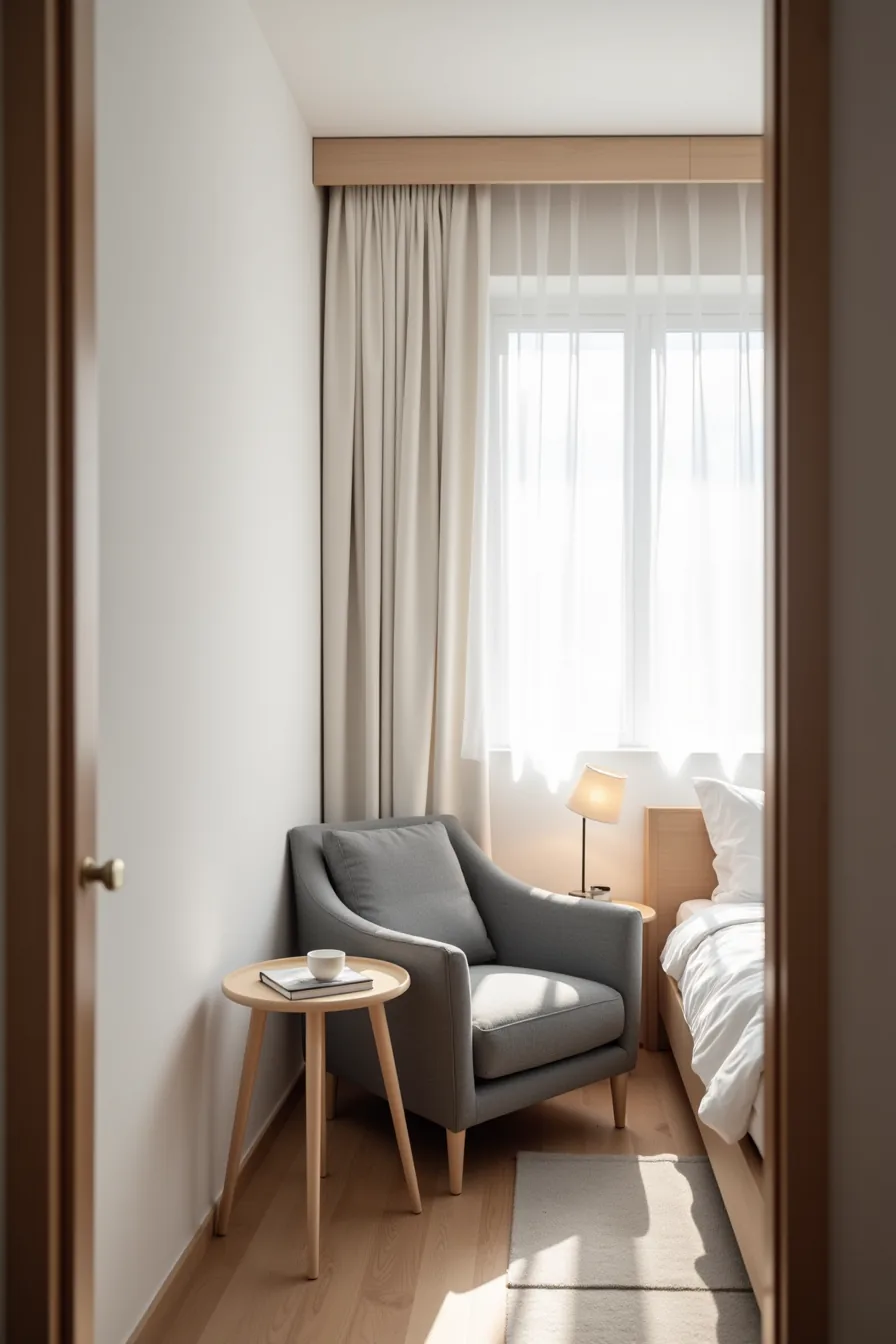
A single-seat sofa chair is the most honest solution for bedrooms under 120 square feet. You get the upright back support of a sofa without the depth that swallows floor space. For tight rooms, target a seat width of 24–30 inches and an overall depth of 28–32 inches, anything deeper turns the corner into a cave and blocks your path to the bed frame.
Position the compact lounge seat flush against the wall at the foot of your bed, leaving a 24-inch clearance for walking. A small round accent table (12–16 inches in diameter) fits beside the armrest without crowding the corner. The gray fabric upholstery works here because it hides dust and pairs with any bedding scheme, but avoid light linen if you drink your morning coffee in this spot, the beverage cup on the table is one wobble away from a permanent stain.
This setup suits a single occupant or a guest room where the chair doubles as a landing pad for clothes. Skip it if your bedroom doubles as a home office; you’ll need the floor space for a rolling desk chair instead.
The Bedroom Reading Zone with Accent Seating
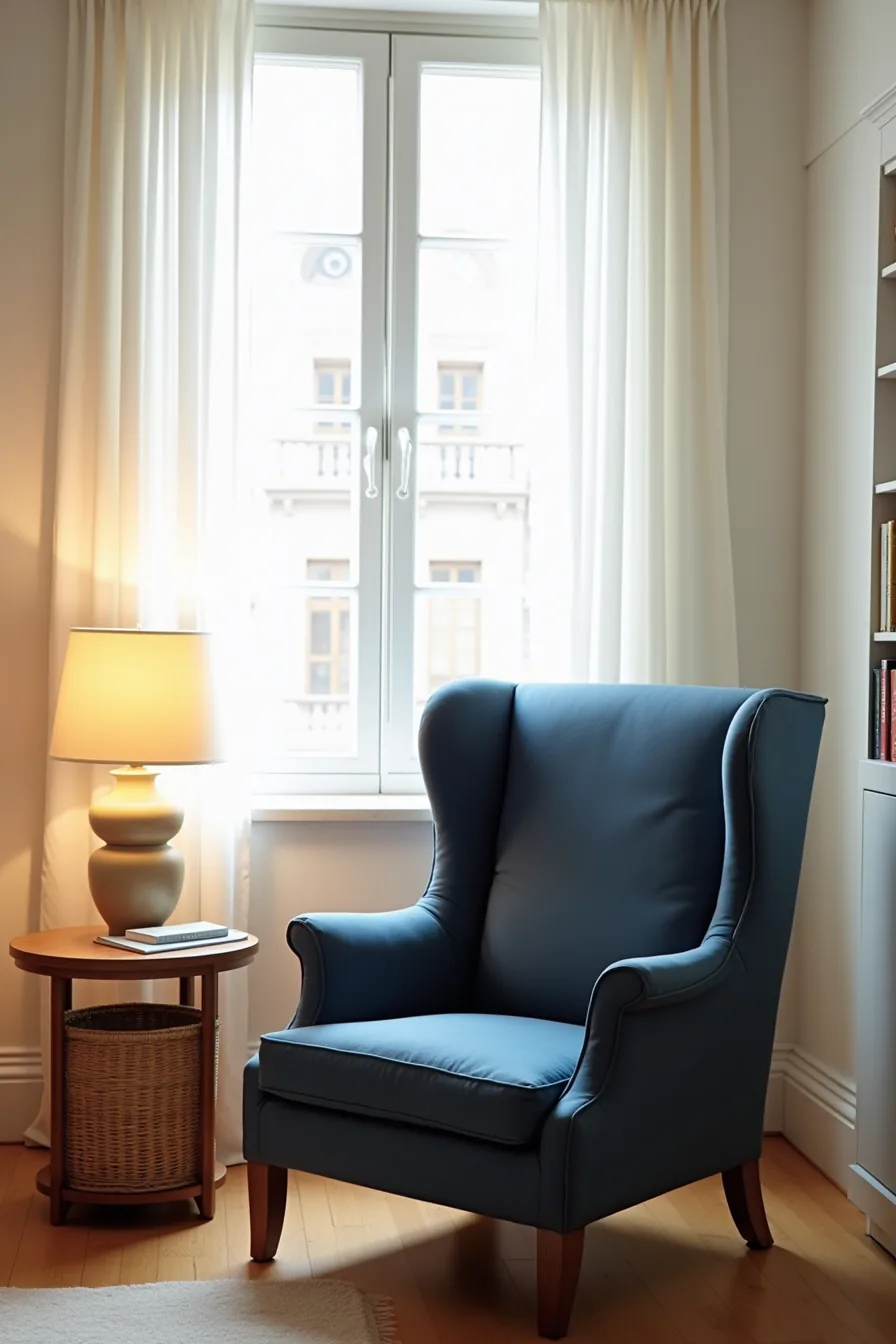
A dedicated reading corner changes how you use a bedroom, and a single-seat sofa chair is its anchor. For this setup, choose a wingback chair in navy upholstery, the high back cradles your neck during 30-minute reading sessions, while the dark color hides the inevitable coffee splashes from a mug perched on the armrest.
Place the chair beside a window to capture natural light during daytime reading. The wooden side table on one side holds a reading lamp for evening sessions; position the lamp at elbow height (roughly 26–30 inches) to avoid casting shadows across the page. A woven basket on the opposite side catches books, blankets, or a tablet when you finish.
This layout suits medium bedrooms (120–200 square feet) where a corner would otherwise sit empty. For small rooms, swap the side table for a wall-mounted shelf and the basket for a floor stack. Keep a 24-inch clearance between the chair and the nearest furniture piece to preserve a clear path to the bed.
The wingback proportions, typically 30–36 inches wide, fit most window alcoves without blocking the light source.
Bed and Chair Balance in Medium Rooms

In a medium bedroom (roughly 150–250 square feet), the bed and chair are competing focal points. The key is visual weight distribution: pair a large, dark bed frame with a lighter chair in a warm tone, and vice versa. A mid-century modern lounge chair in mustard upholstery placed at a 45-degree angle opposite the bed creates a conversational asymmetry that feels intentional rather than haphazard.
The low console table between them acts as a visual anchor, holding decorative objects that echo the chair’s color palette. Position the chair so its back faces the window, this prevents glare on your screen if you work from bed and gives the chair its own defined zone. Keep a 30–36 inch walkway between the bed’s foot and the console table; anything narrower makes the room feel like a corridor.
For larger medium rooms, angle the chair toward the bed’s side instead of the foot to create a secondary sitting area without competing with the bed’s dominance. Bed and chair balance fails when both pieces demand equal attention, let the bed win by scale, and the chair win by color.
The Renter-Friendly Modular Option

Modular armchairs solve the permanence problem that leases create. A lightweight sectional module in light gray fabric with wooden legs typically breaks into two or three carryable pieces, each under 25 pounds, so you can move it yourself without a truck or a favor. The low-profile frame sits 16–18 inches off the floor, which keeps the visual weight minimal against a bedroom wall and makes the unit feel like temporary furniture, not a commitment.
Position it centered against the wall with visible floor space around all sides, as the stacked cardboard moving boxes nearby suggest, you want enough clearance to slide the module apart without scraping the baseboard. This setup suits studio renters who need extra seating for guests but refuse to buy furniture that dictates their next apartment layout. Choose a washable slipcover in a neutral tone like light gray; it hides the inevitable scuffs from repeated disassembly and reinstallation.
The trade-off is structural: modular chairs rarely match the seating depth or lumbar support of a solid-frame lounge chair, so treat this as a practical spare seat, not your primary reading spot.
Slow Weekend Mornings: The Statement Lounge Setup
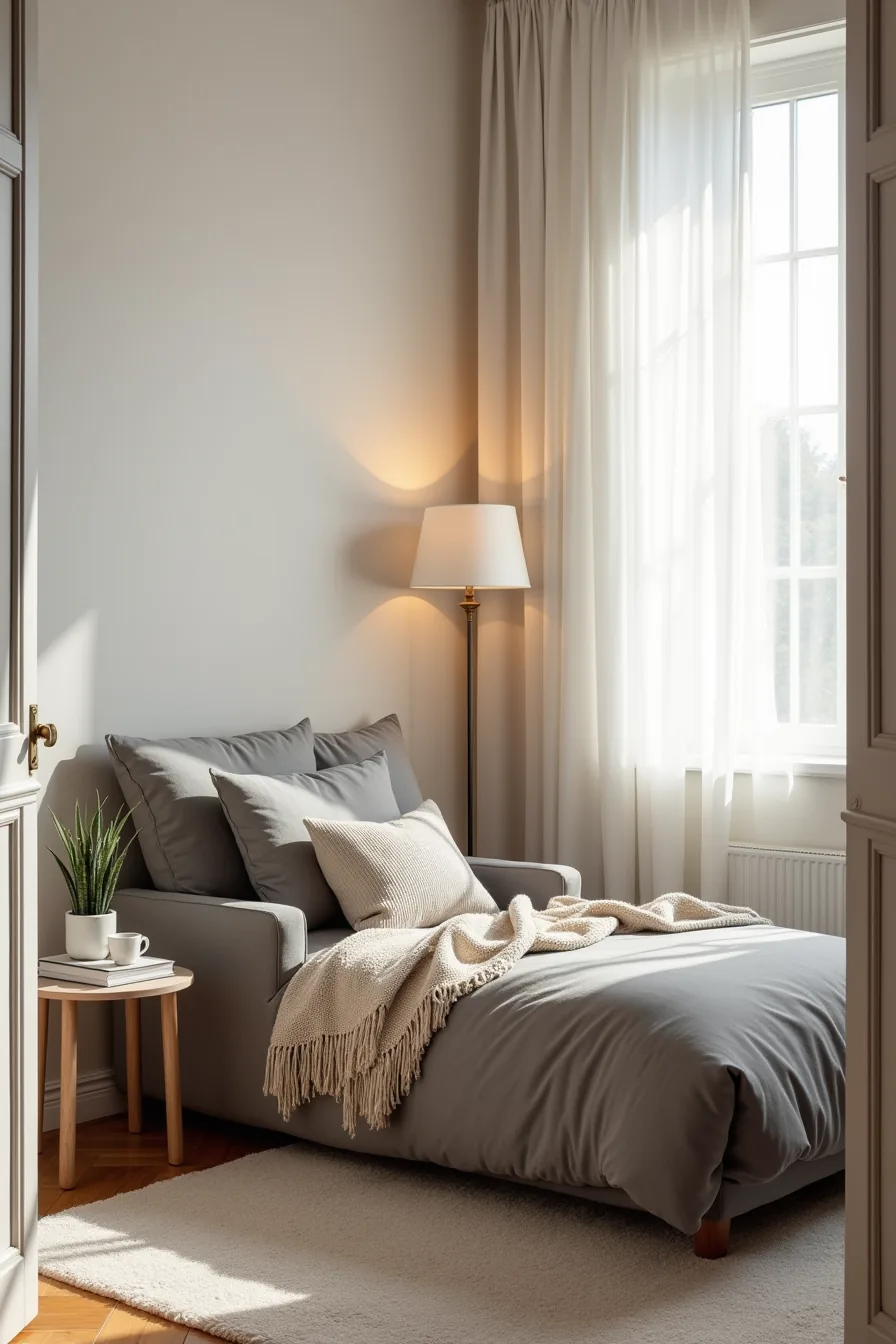
A chaise lounge in charcoal linen turns the bedroom into a retreat rather than just a place to sleep. The deep seat, typically 21–23 inches from seat edge to backrest, allows you to tuck your legs up fully, which is exactly what you want for coffee and a book before the day starts. Positioning it at an angle from the bed, facing the window, claims a corner without blocking the path to the closet or the door.
The fringed throw blanket draped over one arm isn’t decorative; it protects the linen from body oils and daily wear, which matters because linen pills over time under repeated friction. A side table beside the lounge holds your coffee cup and a small plant, so you never have to reach across your body to set something down. This setup suits anyone who reads or journals daily and wants a permanent, sculptural anchor in the room, expect to pay two to three times more than you would for a modular chair, and choose kiln-dried hardwood legs and high-resilience foam if you plan to keep it for a decade.
Material and Maintenance Trade-Offs by Lifestyle
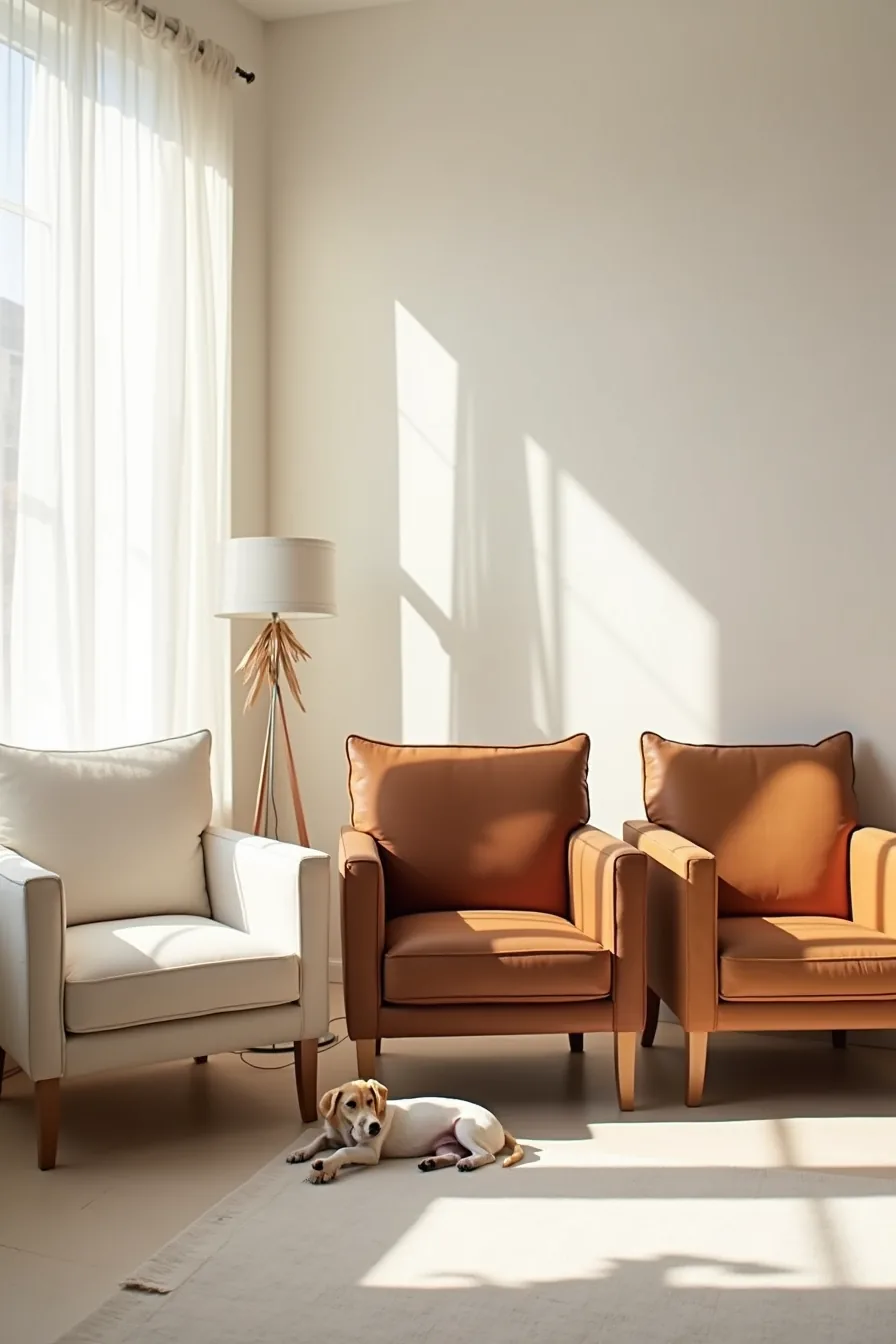
The three chairs side by side, light linen, cognac leather, and performance microfiber, represent the full spectrum of what you should weigh before buying. Linen breathes beautifully and feels cool against bare skin, but it stains readily and needs professional cleaning every 6–12 months; skip it if you eat in bed or drink red wine there. Cognac leather develops a patina with age and wipes clean with a damp cloth, but claws will scratch it permanently, and it costs roughly 40–60% more than decent fabric options.
Performance microfiber is the pragmatic middle ground: it resists spills, stands up to pets, and cleans with mild soap and water. The pet toy near the microfiber chair signals why it wins for households with animals, its tight weave prevents snagging, whereas linen loops catch claws easily. For daily lounging, choose a fabric with a rub count of 30,000 or higher; for occasional use, 15,000–20,000 is adequate.
Leather needs conditioning twice a year, microfiber needs none, and linen needs immediate spot treatment within minutes of any spill. Match the material to your actual habits, not the aesthetic you admire.
Decision Checklist Before You Buy
Measure your room’s clear floor space first, not the wall width. Armchairs need 18-24 inches of clearance in front for comfortable sitting and standing. Confirm the door swing and closet access remain unobstructed.
Test the seat depth against your height, your knees should bend at roughly 90 degrees when seated. Choose removable, washable covers if you eat or drink in bed. For rentals, skip wall-mounted options and stick with freestanding pieces.
Your next step: grab a tape measure, mark the proposed chair footprint with painter’s tape, and live with that outline for 24 hours before purchasing anything.
Frequently Asked Questions
What size sofa chair fits a bedroom under 100 square feet?
Choose a compact chair under 30 inches wide and 30 inches deep. Look for armless or low-arm designs and a slim track base to preserve walking space around the bed.
Can you put a sofa chair next to a bed without making the room feel cramped?
Yes, if you leave at least 24 inches between the chair and bed for access. Position the chair perpendicular to the bed’s foot or in a corner to avoid crowding the main walkway.
What’s the difference between a bedroom sofa chair and a living room accent chair?
Bedroom chairs prioritize compact scale, lighter fabrics, and a lower seat height for lounging. Living room accent chairs focus on visual impact, firmer support, and higher wear resistance for frequent social use.
How do you keep a bedroom sofa chair clean if you use it daily?
Vacuum weekly with an upholstery attachment and rotate cushions monthly. Spot-clean stains immediately with a mild detergent; choose a removable, machine-washable cover to simplify deep cleaning.