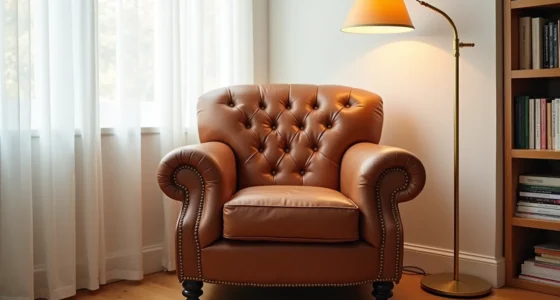

Table Chair Design starts with a single measurement: the distance between your tabletop and your chair seat, which should land between 10 and 12 inches for comfortable dining. That gap, called seat-to-table clearance, determines whether your knees hit the apron or your elbows strain at the plate. Get it wrong, and even the most handsome set fails daily.
Get it right, and you free yourself to mix materials, shapes, and budgets. The six approaches ahead cover the full spectrum, from a $150 renter fix to a heirloom-grade commission, each with the exact proportions and spacing you need to replicate it.
Key takeaways
- Mixed seating wins when your room has irregular wall lengths, because a 50/50 match can visually shrink a narrow dining area.
- Match chair height to the table’s underside: aim for 10–12 inches of clearance between seat top and tabletop, and test with a folded towel if you’re between sizes.
- Use heavier chairs (solid wood or upholstered) on long tables over 72 inches to anchor the silhouette, while lighter metal or acrylic frames suit compact 48–60 inch setups.
- For renters, skip permanent built-in benches and choose a mix of stackable chairs and a budget-friendly table with a removable apron, this keeps your deposit safe and allows a 30-minute style reset.
Matching Sets vs. Mixed Seating: When Each Works
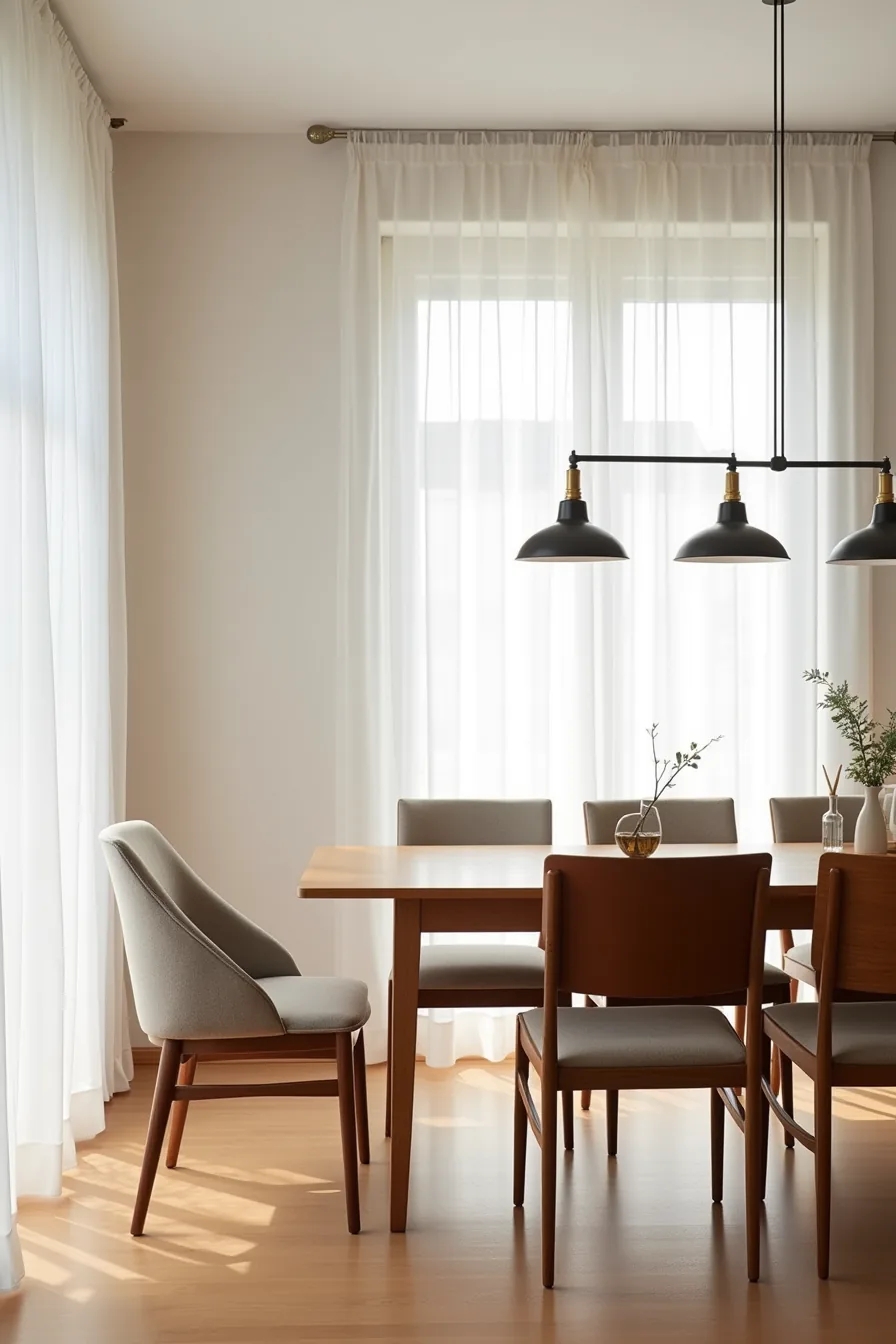
The choice between a matching set and mixed seating comes down to the atmosphere you want to enforce. Six identical upholstered chairs with matching wood frames create immediate visual order, they read as formal, intentional, and symmetrical. This setup suits dining rooms where you host guests who value predictability, or spaces with busy floors or bold wall coverings where a uniform line of chairs provides necessary visual rest.
Mixed seating flips that logic. Pairing a leather chair with a fabric one, a wood slat chair, and a metal industrial frame around the same table introduces texture and personality, but demands you control the variables. Keep the seat heights within 1–2 inches of each other and match the chair arm heights to the table apron so the mismatched set still feels composed.
This approach works best in casual, open-plan living areas or eclectic interiors where contrast reads as curated rather than chaotic. If you lean toward mixing, commit to a unifying element, common seat height, similar wood tones, or consistent upholstery color, to avoid the random-garage-sale effect.
Getting Chair-to-Table Scale Right
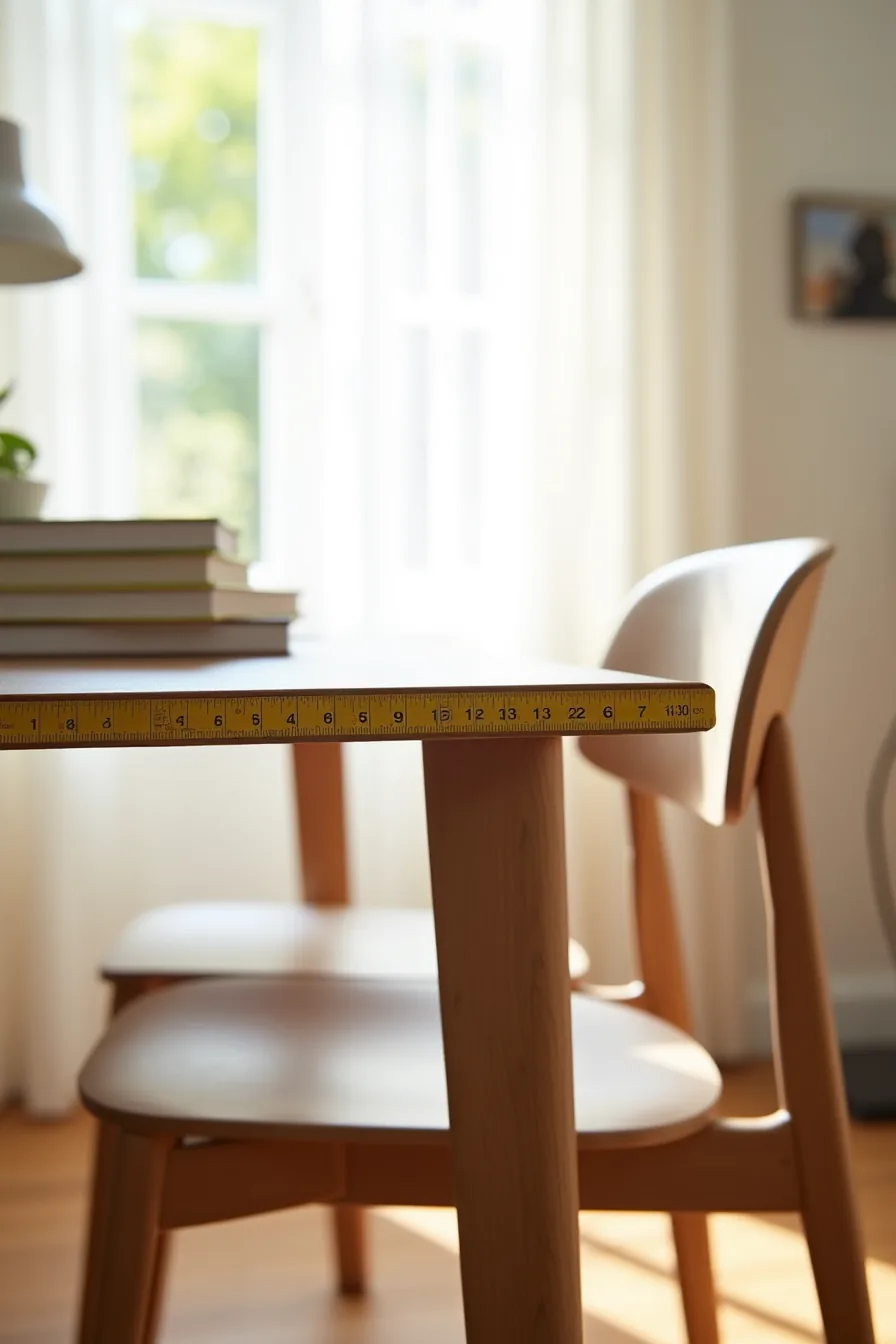
The most common dining mistake is a chair that either towers over the table or sinks below it. Aim for a seat height of 17–19 inches against a standard 29–30-inch table, leaving roughly 10–12 inches of clearance between the seat and the tabletop. That gap matters: too much space makes the chair feel dwarfed and forces you to reach awkwardly for your plate; too little and your knees press against the underside.
Assess the chair’s footprint before you commit. When you pull a dining chair out to sit, measure the distance from the front edge of the seat to the back of the chair legs, that depth needs to clear the table’s apron by at least 6–8 inches so you can sit and rise without scraping your shins. For armchairs, check that the armrests slide fully beneath the table apron; if they catch, the chair will sit too far out and widen your circulation path by 4–6 inches per chair.
For a small 42–48-inch round table, keep chair width at 18–20 inches so four chairs fit without overlapping armrests. On a longer 96-inch rectangular table, you can push seat height toward the 19-inch end and use wider 20–22-inch chairs, but always verify that pulled-out chairs leave 18–24 inches of walking space behind them. A measuring tape at the table edge settles every guess, no chair works on paper alone.
Fix Awkward Dining Proportions With Better Chair Choices
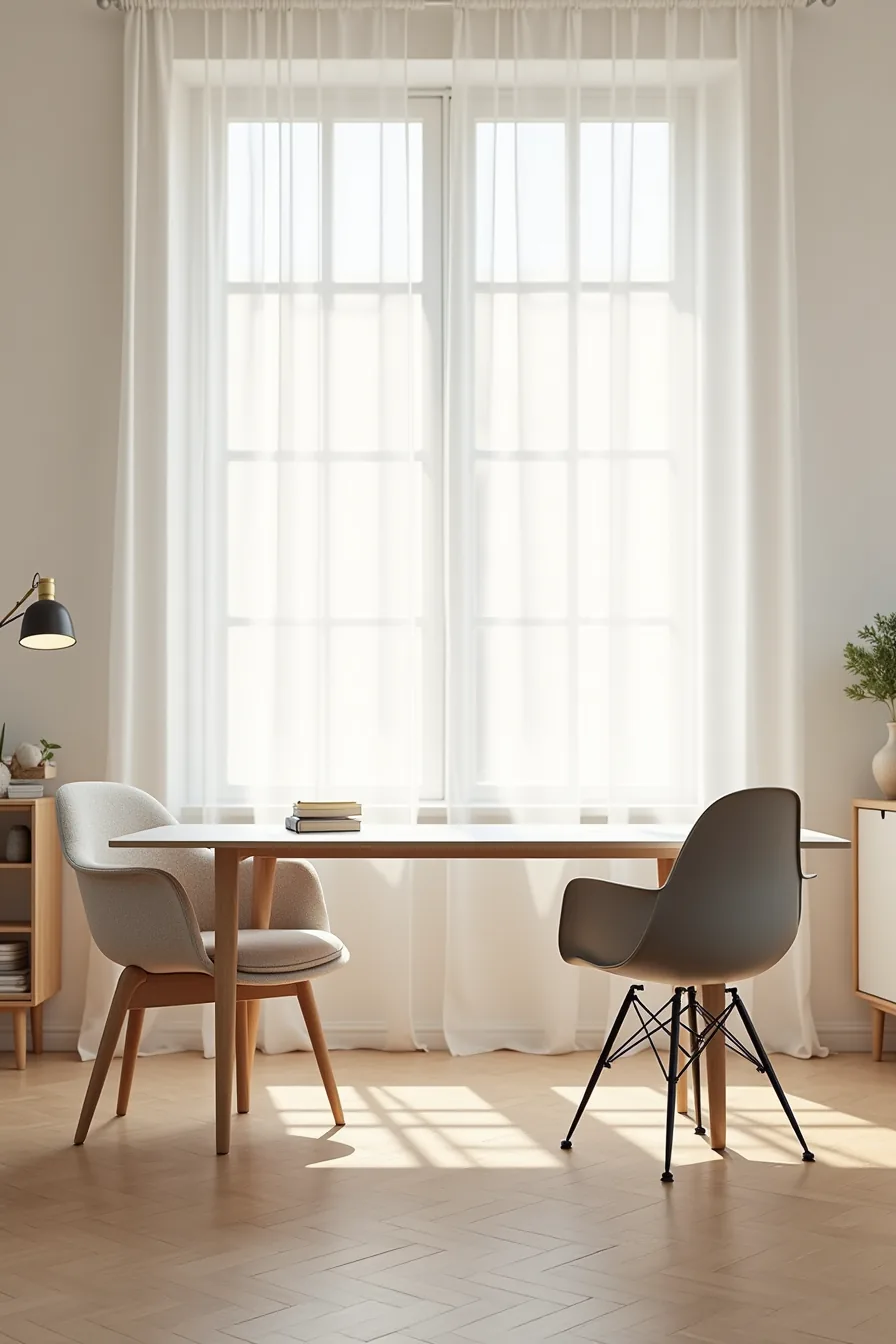
An oversized rectangular table that swallows a room’s visual center of gravity needs chairs that carry weight upward. A tall-backed upholstered chair with tapered legs offsets the table’s mass by drawing the eye vertically, creating a balancing rectangle that echoes the table’s horizontal span. The tapered legs keep the chair from looking blocky next to the heavy tabletop, while the upholstered back adds silhouette volume that the table’s underside lacks.
The low metal-frame chair with a chunky base fails here because its compressed height emphasizes the table’s scale rather than countering it. It suits the opposite problem entirely: a thin, undersized table that feels dwarfed in a large room. That base’s visual weight below the seat anchors the table and fills the void beneath, so the pairing reads as intentional rather than sparse.
Match chair backrest height to your table’s proportions before you commit. Undersized tables pair well with low-back or armless chairs; oversized tables need chair backs that rise at least 16–18 inches above the seat. Seat depth also matters, choose a shallower 16–18-inch seat for oversized tables so your legs dangle naturally without the chair’s bulk hiding the table’s edges.
Material Contrast and Durability Trade-Offs
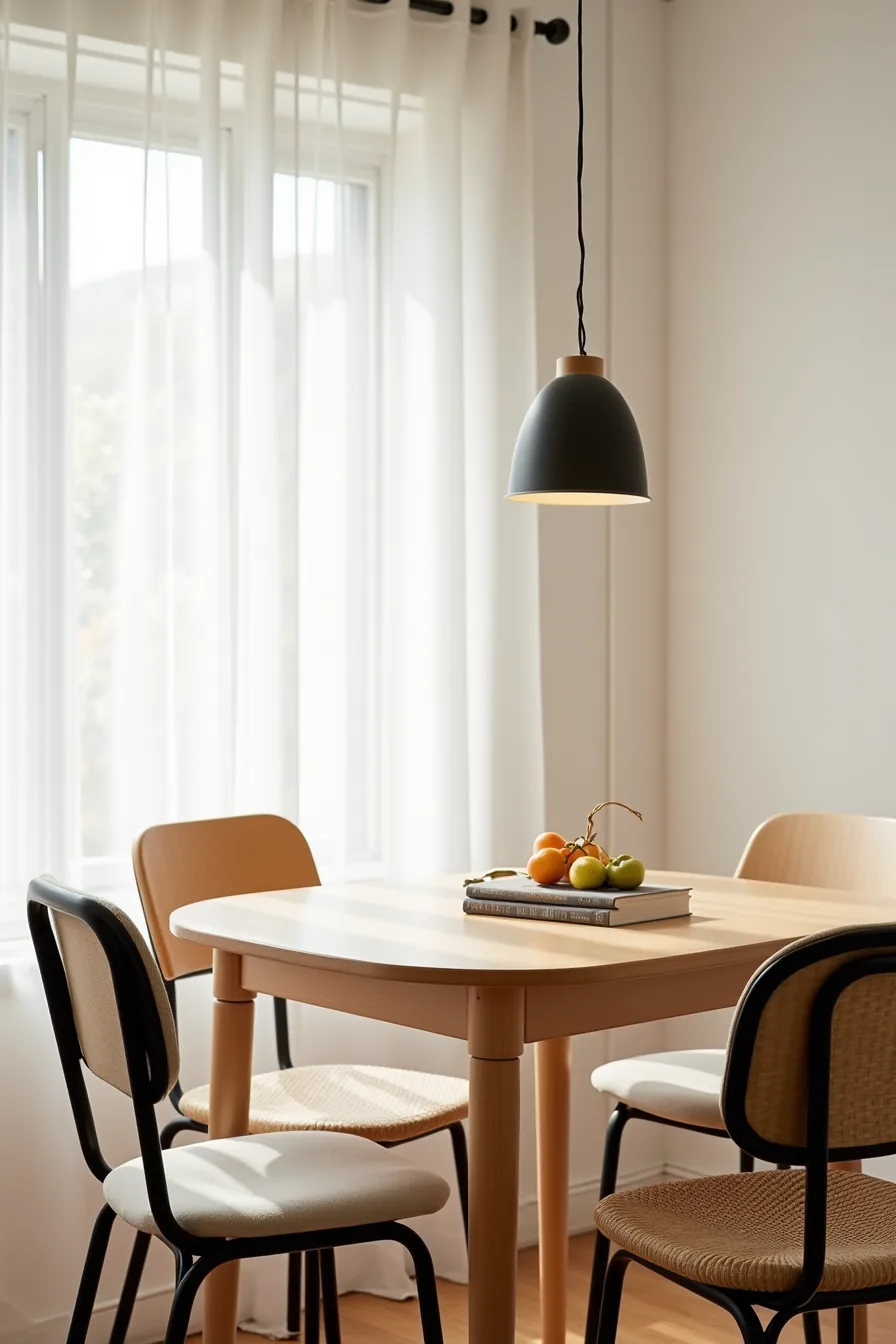
Pairing a natural wood chair seat, black metal frame, light linen upholstery, and woven rattan seat around one table surface creates the visual interest that identical sets rarely achieve. Material contrast works because it breaks the table’s monotony into distinct zones, giving each diner a different tactile experience. The metal legs bring structural lightness, the wood adds warmth, the linen softens acoustics, and the rattan introduces texture that catches shifting light.
The trade-off is maintenance. Linen upholstery needs spot-cleaning within hours of spills and will fade after two to three years of direct sunlight. Rattan requires annual conditioning with a mild soap solution to prevent cracking in dry climates.
Wood scratches, metal chips, and none of these materials age identically, so your set will develop a patina unevenly, which is precisely the point.
Match this mix to high-traffic households with caution. If you host children or pets daily, swap the linen for performance-grade fabric and skip the rattan, which traps crumbs. For adult-only dining rooms used twice weekly, this combination offers a decade of service with minimal intervention.
Budget, Rental, and Investment Routes
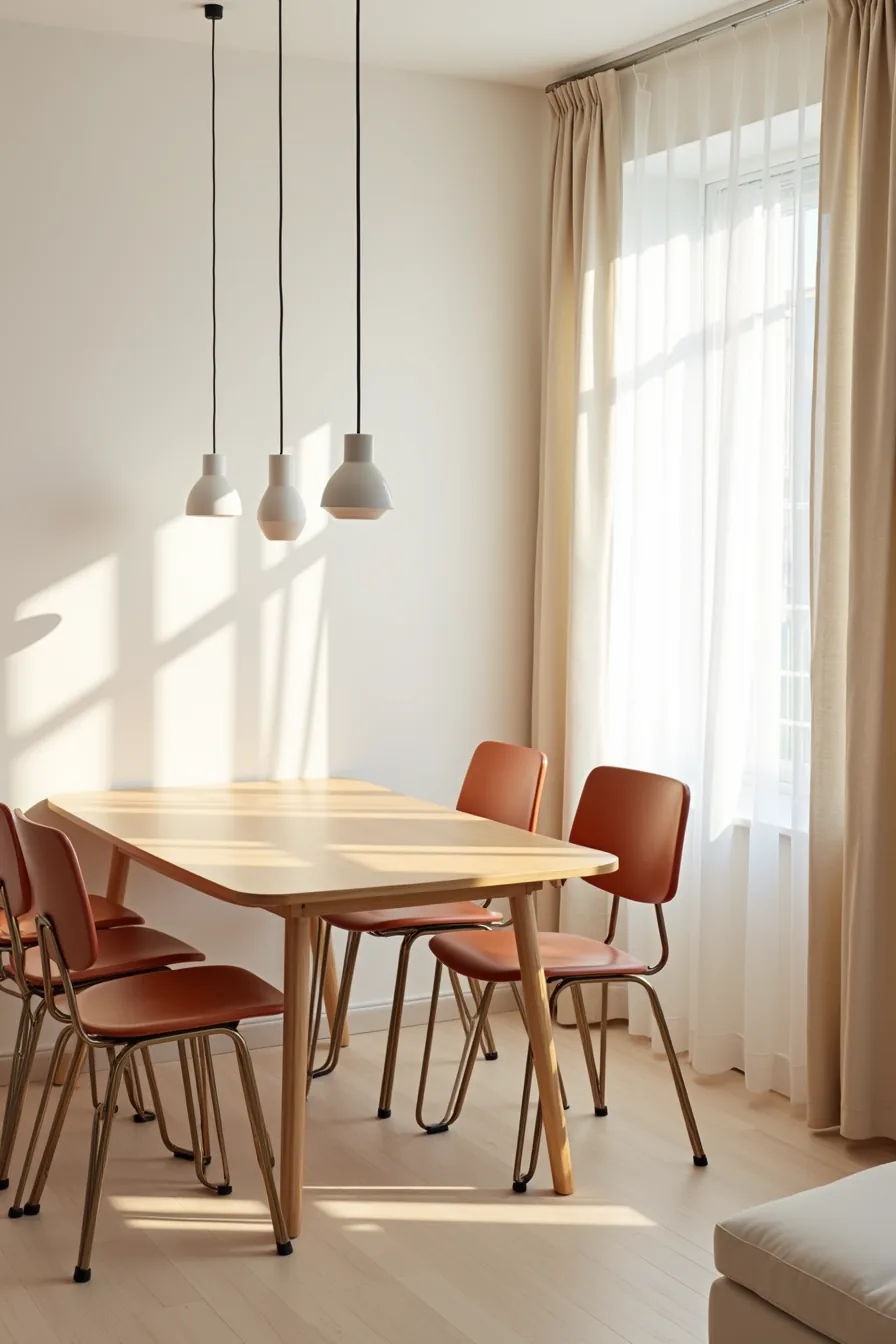
Your three-tier approach starts with a flat-pack table paired with basic plastic chairs, a functional starter setup that runs roughly $150–$400 total and survives five to seven years of casual use. Plastic chairs wipe clean in seconds and stack for storage, but they wobble on uneven floors and will crack under heavy adults within a few years. This route suits first apartments, dorm rooms, or households expecting a move within three years.
The middle path pairs a modular nesting table with stackable metal chairs. The nesting design expands from a 47–55 inch console to a 72–84 inch dining surface, and the chairs tuck underneath to reclaim floor space. Expect to pay $500–$1,200, and the powder-coated metal resists rust for a decade indoors.
Renter-friendly because nothing mounts to walls, and the pieces fit through standard doorways when disassembled into two-person loads.
The investment option is a solid wood table with leather-upholstered chairs, budgeting $2,500–$6,000 for the set. Hardwood tops (oak, walnut, or ash) resurface twice over a 20–30 year lifespan, and full-grain leather develops a desirable patina rather than wearing out. This route demands commitment, you need a permanent dining area, a 10 by 12 foot minimum footprint, and the willingness to condition leather twice annually.
Adapting Table Chair Design to Your Space
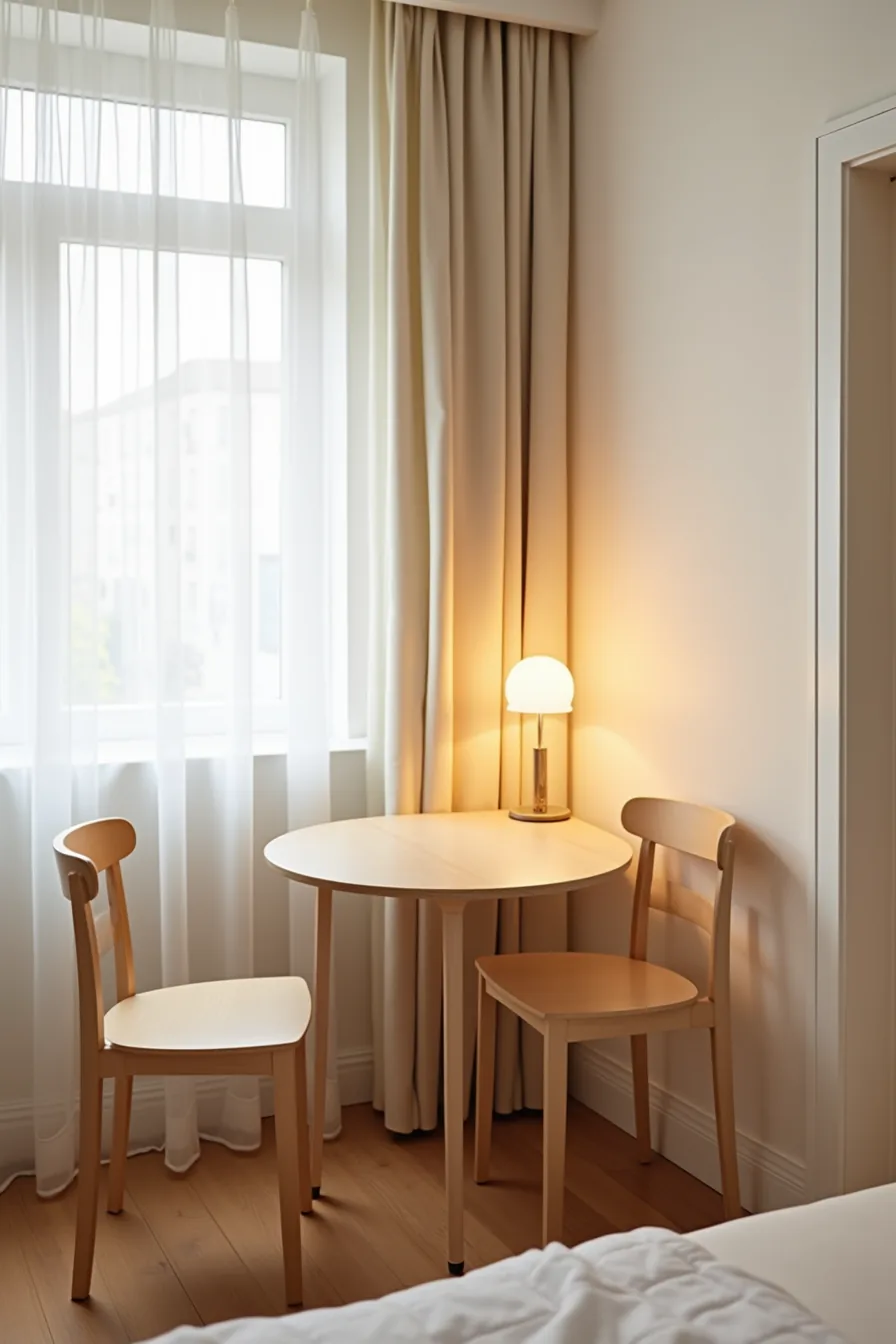
In an apartment corner, the configuration matters more than the furniture’s price. A compact round table, typically 30–36 inches in diameter, pushed against a wall leaves a natural circulation path behind the chairs. Position one dining chair directly facing the table and pull the second slightly away from the edge, that offset angle keeps the passage clear while still allowing two people to eat comfortably.
You need at least 36 inches between the table edge and the nearest wall or doorway for a chair to slide back without scraping the frame. If that passage runs narrower, swap standard dining chairs (which need 18–20 inches of pull-back space) for armless models with tapered legs; they tuck tighter and read visually lighter in a tight corner.
For open-plan homes, float the table away from walls entirely, centering it so you maintain 42–48 inches of clearance on the traffic side. Formal dining rooms can afford a 60–72 inch rectangular table with six chairs, but only if the room measures at least 11 by 13 feet, anything smaller turns the space into a cluttered corridor. Scale down to a 48–54 inch pedestal table in a 10 by 11 foot room; the central base allows chairs to tuck fully underneath, reclaiming up to 8 inches of legroom per seat.
Where to start
Before you buy anything, measure your floor plan and draw the table’s footprint at scale. A chair needs 24–30 inches of clearance behind it when pulled out, so factor that into your layout before you commit to a style.
Match the design to your reality: renters should prioritize freestanding chairs over built-ins, tight budgets call for mixed-material dining sets, and long-term owners can invest in custom joinery that lasts decades.
Your next step: tape out the table’s exact dimensions on your floor and live with the space for 48 hours. If you can walk around it without sidestepping, you’re ready to purchase.
Frequently Asked Questions
What is the ideal seat height for a dining chair relative to table height?
Aim for 10-12 inches between the seat and tabletop. Most standard tables run 28-30 inches tall, so pair them with chairs seating 17-19 inches high.
Can you mix different chair styles around the same table without it looking chaotic?
Yes, if you unify them. Match at least one element: wood tone, finish, seat material, or silhouette. Limit yourself to two styles total, and position matching chairs opposite each other for balance.
How do I know if my dining chairs are too big or too small for my table?
Slide a chair under the table fully. You need 4-6 inches of clearance between the armrests and the table edge. For armless chairs, ensure the seat front clears the table apron by at least 2 inches.
What materials hold up best for everyday dining chair use?
Solid oak, walnut, or teak frames resist warping and scratches. For upholstery, choose performance polyester, Crypton, or solution-dyed acrylic fabrics, they withstand spills and daily wear far better than linen or cotton blends.