Key takeaways
- Mount the TV with its vertical center at eye level when seated, typically 42 to 50 inches from the floor, to prevent neck strain.
- Position the screen perpendicular to windows rather than facing them to minimize glare and avoid the need
Best TV Set Up Bedroom Styles Worth Copying
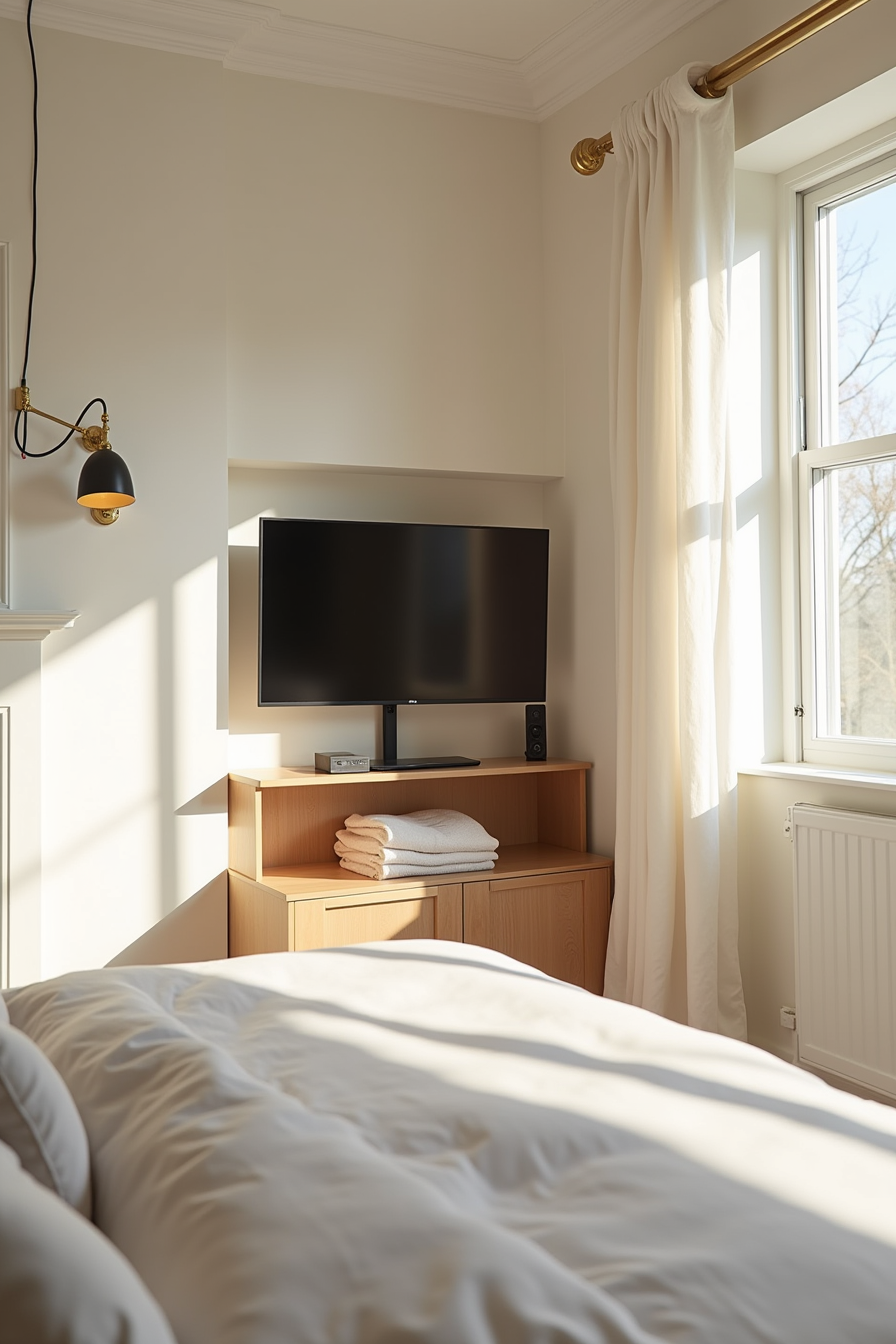
A swivel wall bracket mounted in a corner gives you the most flexible viewing angles of any Best Tv Set Up Bedroom example. You can angle the screen toward your bed for evening viewing, then swing it flat against the wall when you want the room to feel less like a media space. This setup suits medium to large bedrooms where the bed sits at an angle to the wall, and it works best with a bracket rated for your TV’s weight and a stud finder for secure installation.
Position the bracket above a built-in shelving niche to make the corner earn its square footage. The niche holds folded linens and a small speaker, keeping the floor clear and giving the TV a visual anchor. This combination suits renters and owners alike — the niche can be a simple freestanding unit if you can’t cut into drywall, and the swivel bracket means you never compromise on viewing comfort.
Budget, Renter-Friendly, and Long-Term Investment Routes
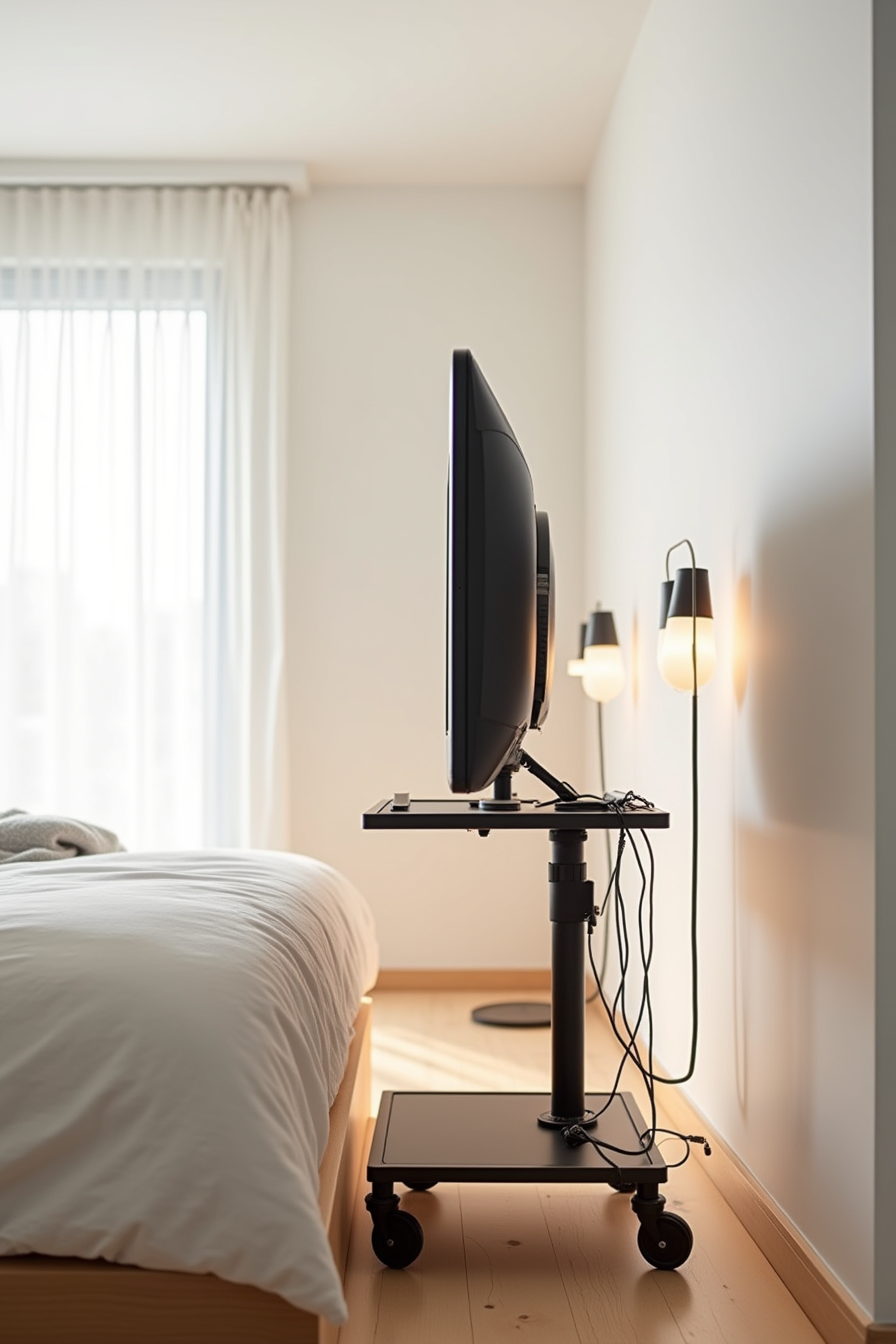
The most direct budget route is a rolling media cart with a strap buckle securing the TV at the foot of your bed. Cord clips along the cart leg keep cables off the floor, and the whole unit costs roughly $80–$150—far less than a mounted installation. The trade-off: you need floor space for the cart, and the strap must be tightened every time you move the cart.
For renters, skip drilling entirely. Place the TV on a low dresser or bookshelf, then anchor it with an adhesive wall strip rated for the TV’s weight. These strips hold firmly on painted drywall but come off cleanly at move-out, typically costing $15–$40 per pair.
The limitation is that you can’t achieve swivel or tilt angles, so position the furniture head-on to the bed.
A long-term investment means built-in cabinetry with a recessed TV niche and hidden cable raceways. Budget $1,500–$4,000 depending on carpentry and finish, and expect a permanent fixture that raises resale value. These are practical TV set up bedroom planning tips for anyone who wants a smooth, furniture-free look.
Adapting Your TV Setup to Small, Medium, and Large Bedrooms
In a small bedroom, floor space is your scarcest resource. A narrow floating shelf holding a slim television keeps the wall usable while a slender nightstand and a stack of paperback books occupy minimal footprint. Choose a 32–40 inch screen, mount it flush, and set the shelf height so your sightline from the pillow lands at the screen’s center.
Skip swivel arms—they add depth you can’t spare and narrow the walkway.
Medium bedrooms (roughly 100–150 square feet) accommodate a low dresser or media console, letting you step up to a 43–55 inch TV. Use a tilt mount if you alternate between sitting and lying, and keep a clear 24-inch walkway beside the furniture for daily circulation.
For large bedrooms over 150 square feet, a full-motion mount on a solid wall lets you angle the screen toward a reading chair or the bed. Extend the shelf into a wide console, and push the screen to 55–65 inches without letting it dominate the room. Match the furniture footprint to roughly one-third of the wall width for balanced proportion.
Getting Scale, Placement, and Viewing Distance Right
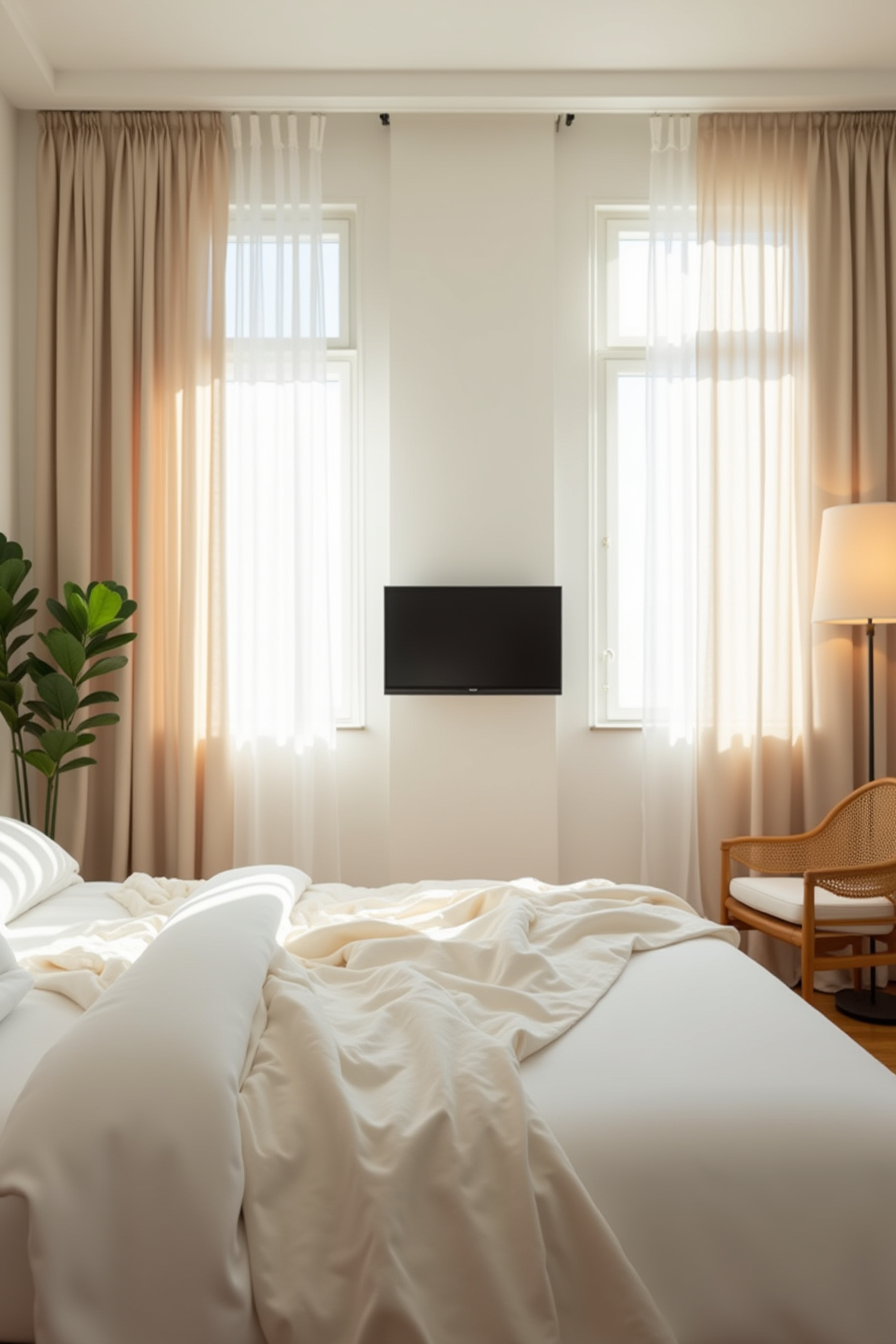
In a TV set up bedroom, mounting height matters more than any other dimension. Set the center of the wall-mounted television at your eye line when lying flat on the pillow—typically 36 to 42 inches from the floor, lower than the living-room standard. This keeps your neck neutral and removes the strain that builds during a long movie.
Pair screen size with viewing distance. For a 4K panel, sit about 1.5 times the screen diagonal away—roughly 6.5 to 9 feet for a 55-inch model, or 5 to 6.5 feet for a 43-inch one. If your room can’t give that space, choose the smaller panel instead of forcing a larger one closer.
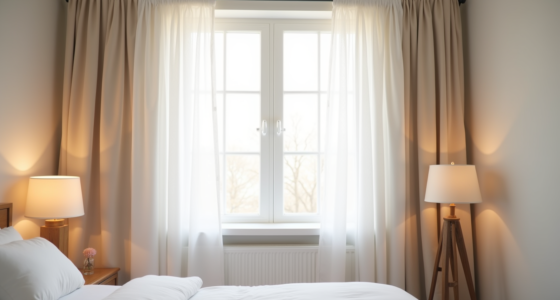
Plan for glare when you pick the mount. The sheer curtains beside the side window diffuse afternoon sun before it washes out the display, and avoiding overhead light that bounces off the wall behind the screen keeps reflections off the glass. Draw those curtains as the sun shifts, and the picture stays watchable through the brighter half of the day.
Materials, Color, and Maintenance for a Lasting Setup
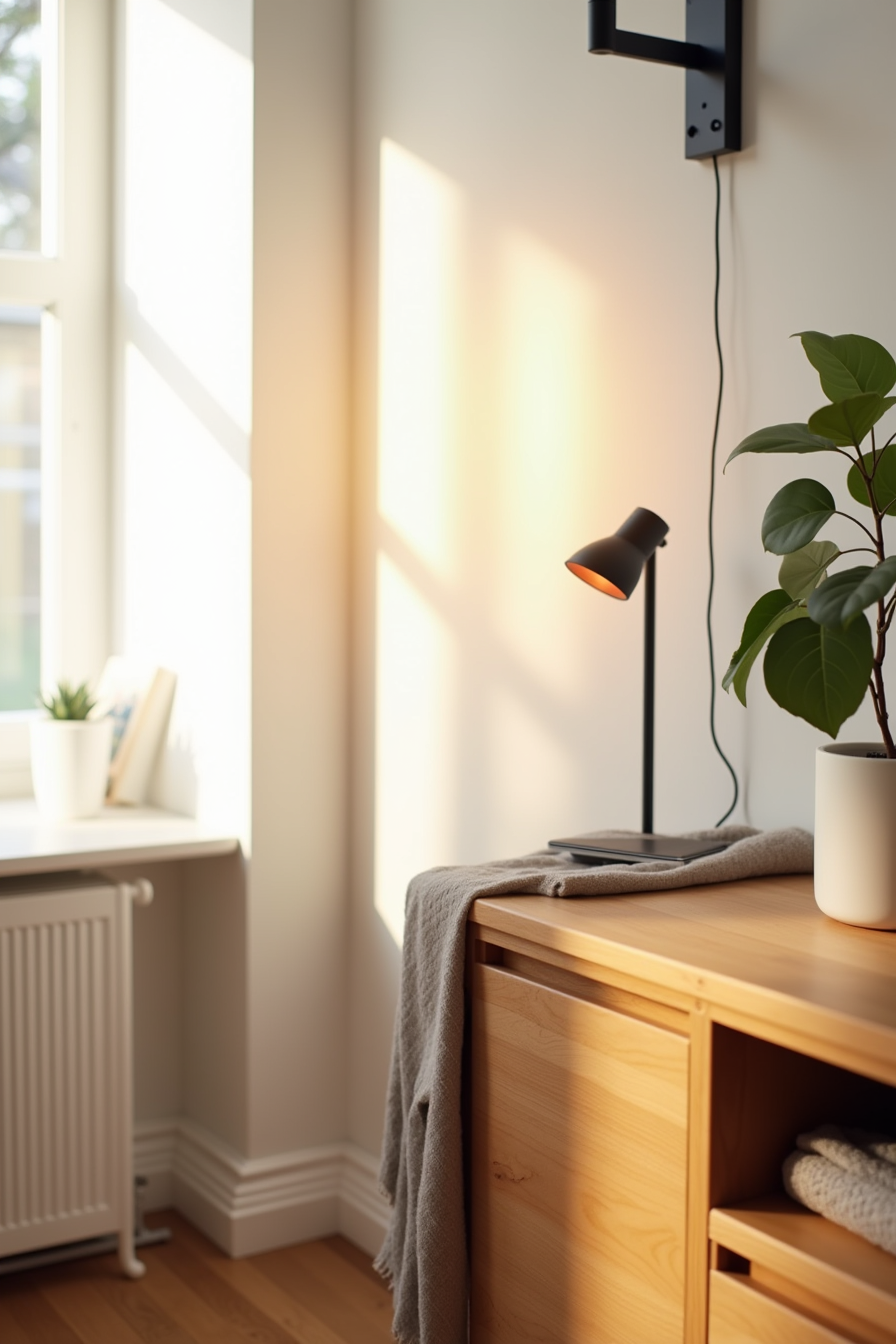
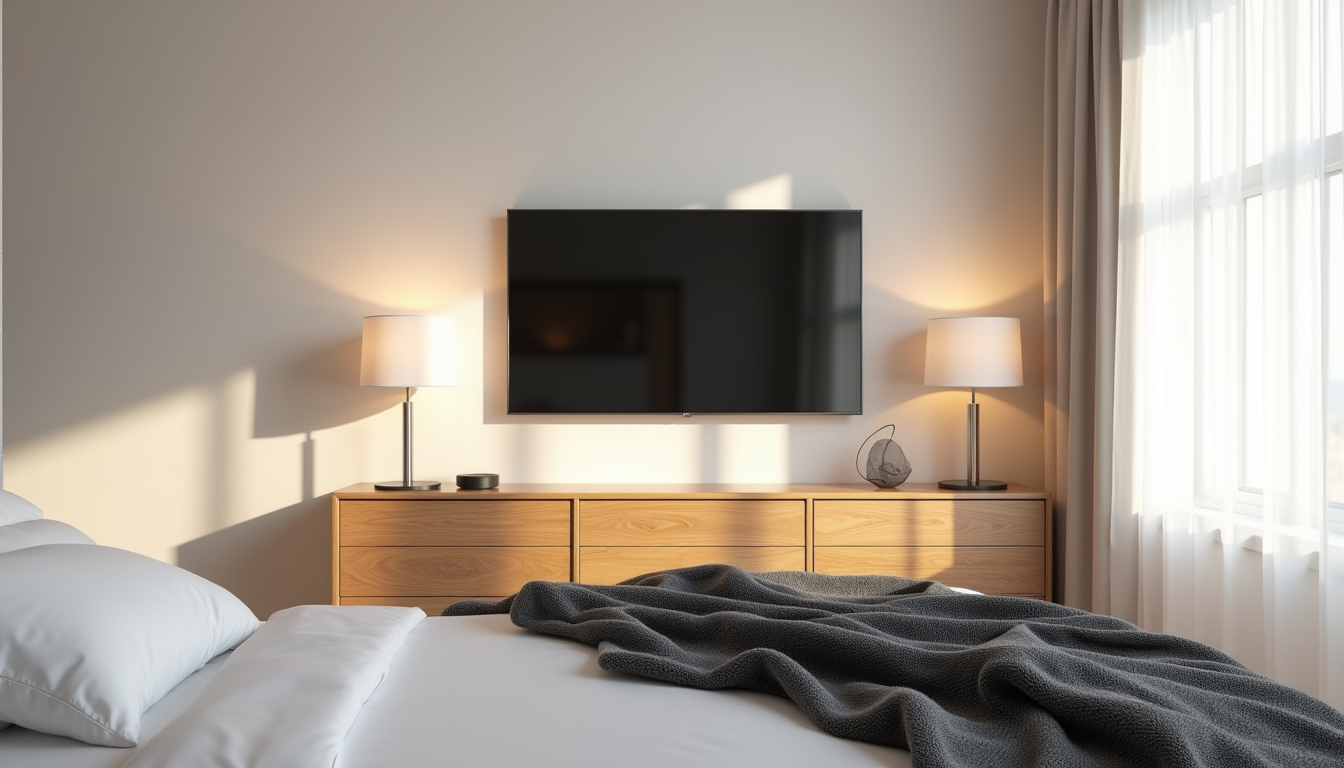
That wooden media console pairs a solid oak carcass with a veneered MDF top—sturdy where it matters, affordable where no one looks. Solid wood masks everyday dings, while laminate surfaces will resist the annoying scratches that appear when you slide a game controller across. Match the walnut stain to your nightstands within two to three shades; a big mismatch here reads as accidental rather than intentional.
The matte black metal mounting bracket disappears against a dark accent wall but becomes a deliberate design statement on white paint. Route every cable through that management box to keep tension off the connections—a closed-top version also traps dust that would otherwise settle into the ports. Wipe the screen with the soft cloth dry, never with polish, and check the mounting bolts for tightness a few times a year; the wood expands and contracts with humidity, which is what actually works the screws loose.
TV Set Up Bedroom Mistakes to Avoid
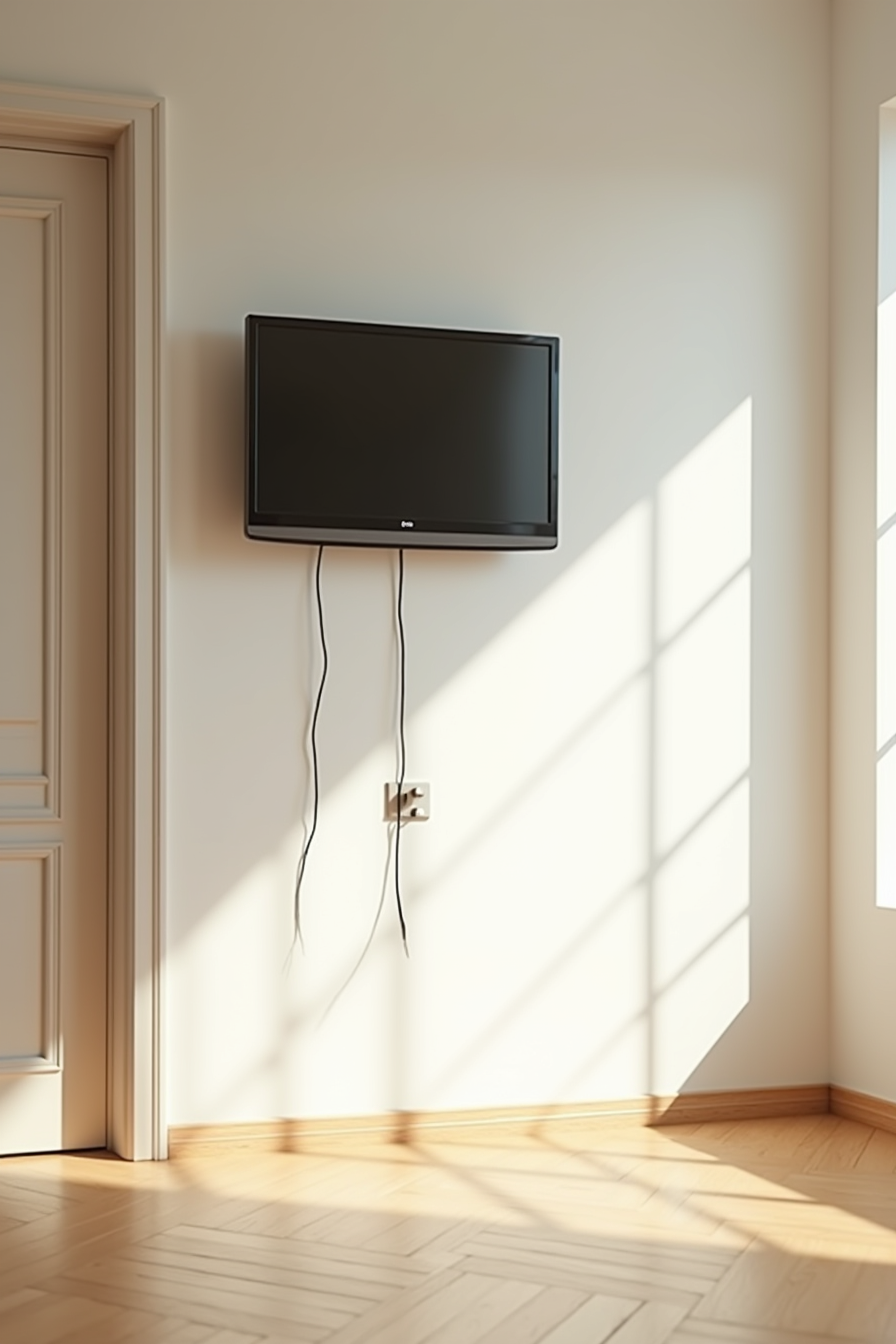
The most common error is mounting the television directly over an electrical outlet. This setup forces a visible cord to dangle straight down the wall, which looks messy and creates a constant tripping hazard near your bed. Instead, plan for in-wall cable routing or position the screen on a different wall where you can hide the wires behind furniture.
Blocking a closet door frame with your bracket is another frequent miscalculation. If the TV edge overlaps the trim, you lose full access to your wardrobe and risk damaging both the door and the screen when you swing it open. Measure the clearance on both sides before drilling, and keep at least 3-4 inches of space between the screen edge and any door frame.
Oversizing the television for your room depth causes eye strain and neck fatigue. For a typical bedroom with a bed positioned 7-10 feet from the wall, a 43- to 50-inch screen works comfortably; anything larger demands a viewing distance of 10 feet or more. A wall mount with a 20-30 degree tilt helps correct the angle when you watch from a reclined position.
Ignoring the structural support behind your drywall is a critical safety mistake. A heavy TV anchored only into drywall can pull free and cause serious injury, so verify you’re drilling into wood studs or use heavy-duty toggle bolts rated for at least double the screen’s weight. For larger televisions over 55 inches, hiring a professional to assess the mounting point is the safer investment.
Find your starting point
Begin by measuring your room and identifying the primary viewing position. That single measurement determines whether a floating console, a corner unit, or a simple wall mount makes sense for your space.
Once you know your dimensions, consider your habits. A renter might prioritize a freestanding, damage-free setup, while a homeowner can invest in built-in cabinetry with concealed wiring. For most bedrooms, starting small—a 40-55 inch screen paired with a slim console—delivers the best balance of comfort and proportion.
Your next step is simple: measure your wall, then move your current setup to test the sightline before buying anything new.
Frequently Asked Questions
How high should a TV be mounted on a bedroom wall?
Mount the center of the screen 42–48 inches from the floor if you watch sitting upright. For reclined viewing, raise it to 55–65 inches so your neck stays neutral. Adjust for your pillow height and sightline.
What size TV is right for a bedroom compared to a living room?
Living rooms typically use 55–75 inches because viewing distance is longer. Bedrooms usually need 32–50 inches. Measure the feet from bed to wall and multiply by 2 to