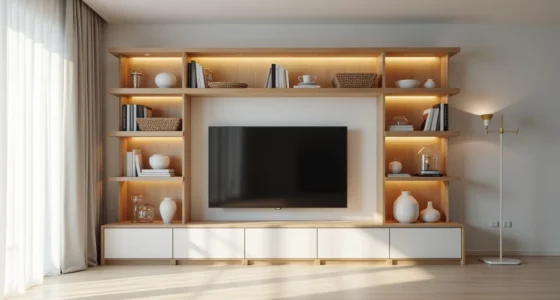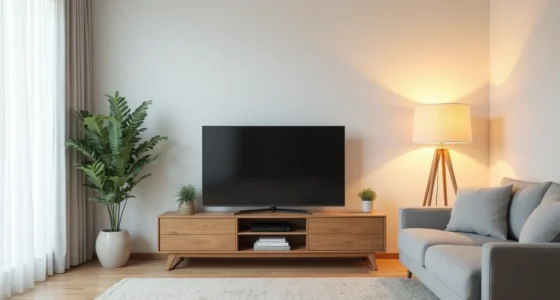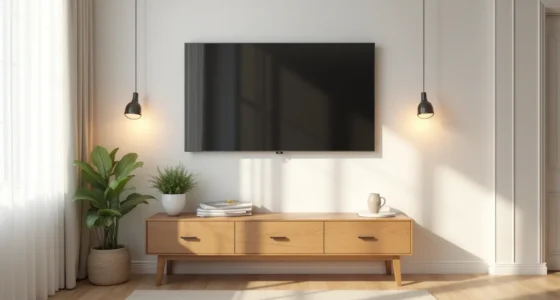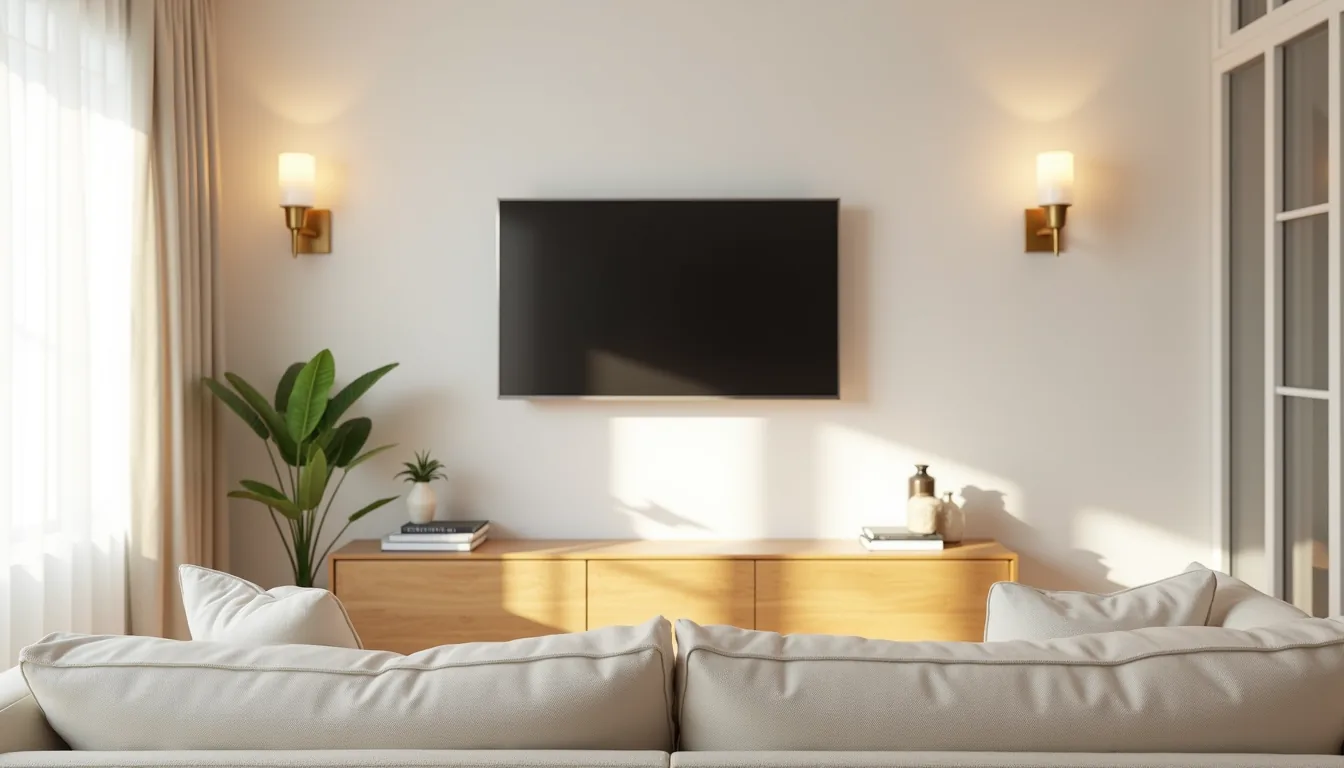
Wall sconces next to your TV solve a problem most media rooms share: ambient lighting that doesn’t wash out the screen or glare across the glass. The trick is matching fixture type, height, and finish to your room’s proportions, not just picking a pretty lamp. Below, six layouts cover everything from renters on a budget to permanent custom builds, each with placement specs, brightness trade-offs, and the maintenance reality you need before drilling.
Key takeaways
- Choose your layout by measuring the TV width first: symmetric sconces flanking the screen suit rooms over 12 feet wide, while asymmetric placement works for narrower spaces under 10 feet.
- Position sconces at least 12-18 inches from the screen’s edge and angle them toward the wall to cut glare, using matte or black baffles to reduce reflection on the display.
- Opt for plug-in sconces with cord covers if you rent, they install in under 30 minutes with no wiring, while hardwired models cost $150–$400 more in electrician fees.
- Scale sconce height to your ceiling: mount them 60–66 inches from the floor for 8-foot ceilings, and add dimmable LEDs (2700K–3000K) to lower brightness for cozy movie nights without washing out the picture.
Symmetry vs Asymmetry: Choosing Your Layout
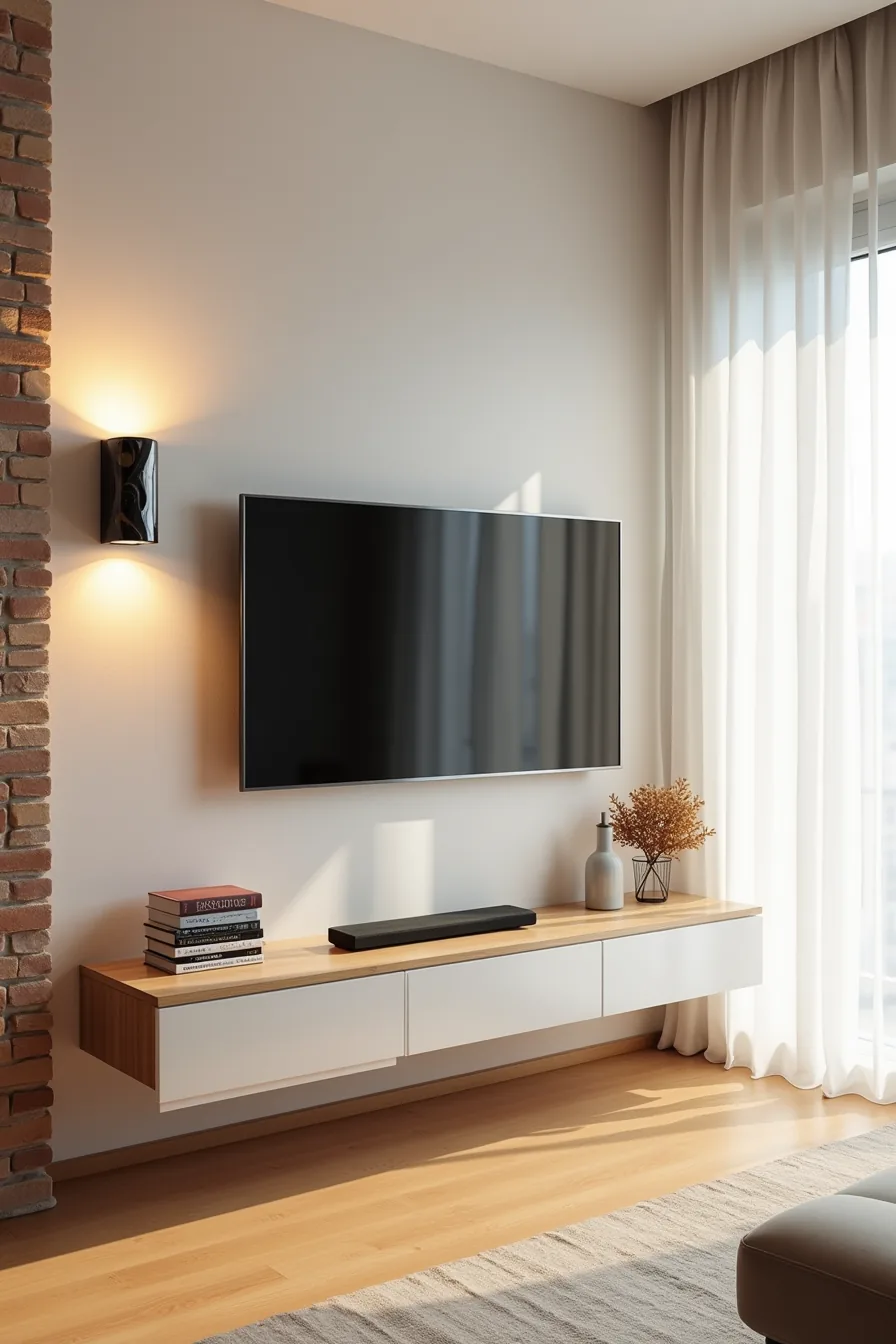
Matching sconces flanking a centered TV create a formal, balanced frame that suits symmetrical sofa arrangements and rectangular rooms. This layout works best when the television is the undisputed focal point and you want the lighting to reinforce that hierarchy without competing for attention.
The asymmetric approach, which suits off-center TVs, L-shaped seating, or rooms with an existing architectural feature like a brick wall, relies on visual weight distribution rather than mirror imaging. In this setup, a single geometric sconce hangs left of the screen, drawing the eye upward and adding task-level warmth to the viewing corner. On the right side, a floating shelf anchors the composition, its decorative objects providing enough mass to balance the sconce’s light output and metallic presence.
Choose asymmetry when your furniture arrangement creates an unequal viewing angle or when you want to highlight a secondary zone. Use symmetry when the TV sits dead-center on the wall and you need to tame a wide, blank expanse. For asymmetric layouts, position the sconce 6-12 inches from the TV edge and keep the shelf’s total visual weight roughly equivalent to the sconce’s, otherwise the composition will feel lopsided.
Managing Glare Consideration When Lighting Near Screens
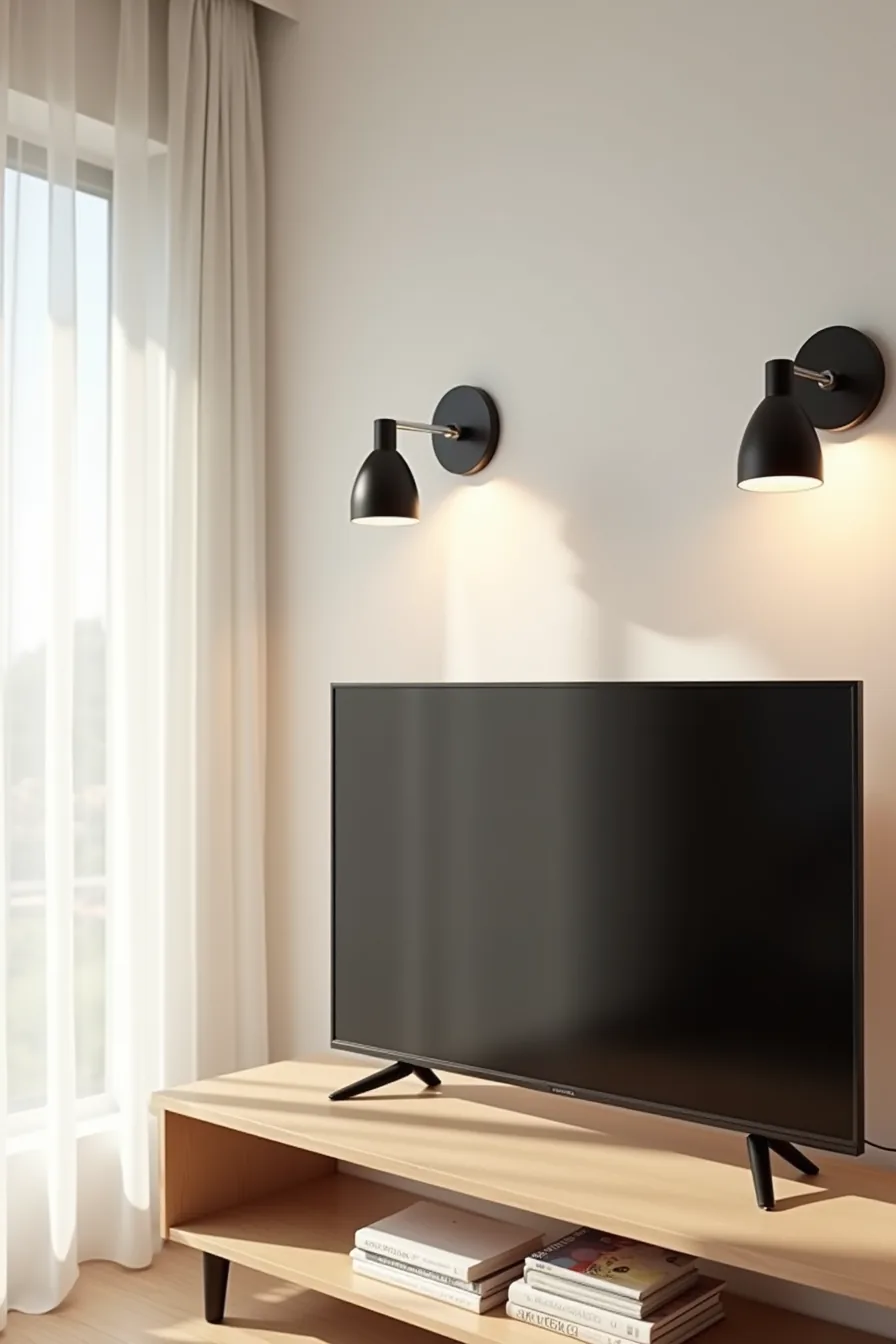
The matte-black sconces mounted at 45-degree angles above and outward from the TV frame in this setup solve the primary problem with screen-side lighting: reflection. Because the light direction is parallel to the glass plane rather than perpendicular, it washes over the wall without bouncing off the display, a critical distinction when you want ambient illumination without a visible hotspot.
Bulb selection matters as much as placement. Use frosted or sandblasted bulbs with a narrow beam spread, typically 15 to 30 degrees, so the light stays contained on the wall surface. Bare filament bulbs create harsh point-source reflections, while wide 60-degree spreads spill onto the screen’s edges.
A matte-black finish on the sconce housing also absorbs stray light that polished chrome or brass would scatter toward the glass.
For practical glare consideration, position sconces so the bulb sits at least 12 inches from the TV’s outer frame and aim the light upward, not across the viewing plane. Dimmable LED bulbs in the 2700-3000K range let you drop the intensity during movie watching while keeping enough output for casual browsing without eye strain. If you notice a reflection at your seated eye level, raise the sconce an inch or two until the shadow line falls above the screen’s top edge.
Sculptural Side Lighting for Visual Interest
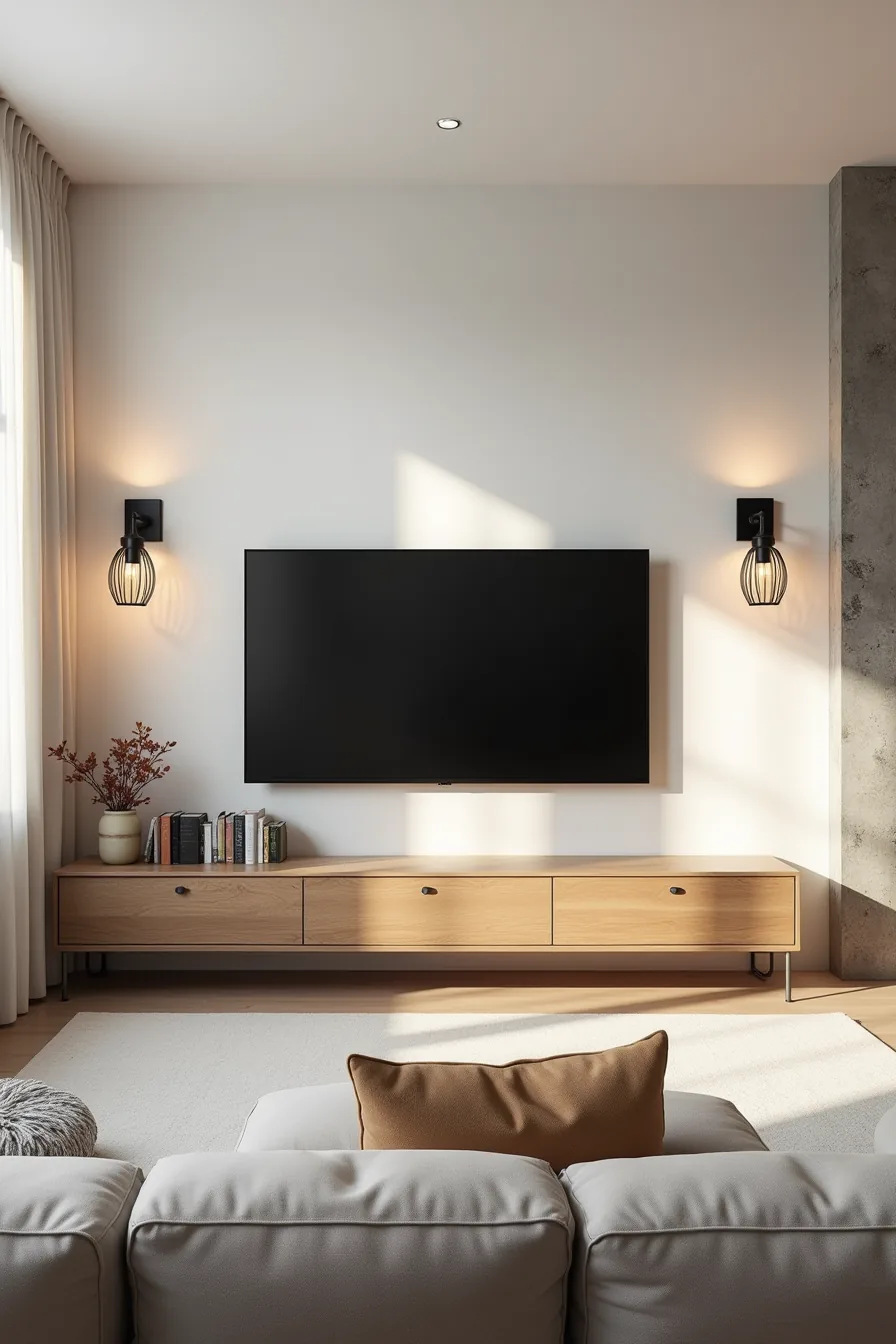
Sculptural side lighting treats the sconce as a design object rather than a mere light source, adding a third dimension to an otherwise flat media wall. In this setup, two cage-design sconces in black metal flank the TV against an exposed concrete wall, creating a deliberate contrast between the raw texture and the angular, industrial silhouettes. The open-cage construction lets the bulb read as part of the sculpture, so the fixtures hold their own visually without needing to be large or loud.
This approach suits rooms where the TV wall feels like the focal point but the screen alone isn’t enough to carry it. The depth from the sconces breaks up the surface plane, which works particularly well in open-plan living areas visible from multiple angles. When the screen is off, the fixtures become the visual anchor; when it’s on, their dark finish recedes so they don’t compete with the moving image.
Match the sconce’s finish to other metal details in the room, door hardware, table legs, or picture frames, to tie the sculptural elements into the broader scheme. For a concrete or brick wall, use masonry anchors rated for the fixture’s weight; most cage sconces range from 45 to 65 pounds when installed.
Wall Sconces That Make TV Areas Feel Cozier
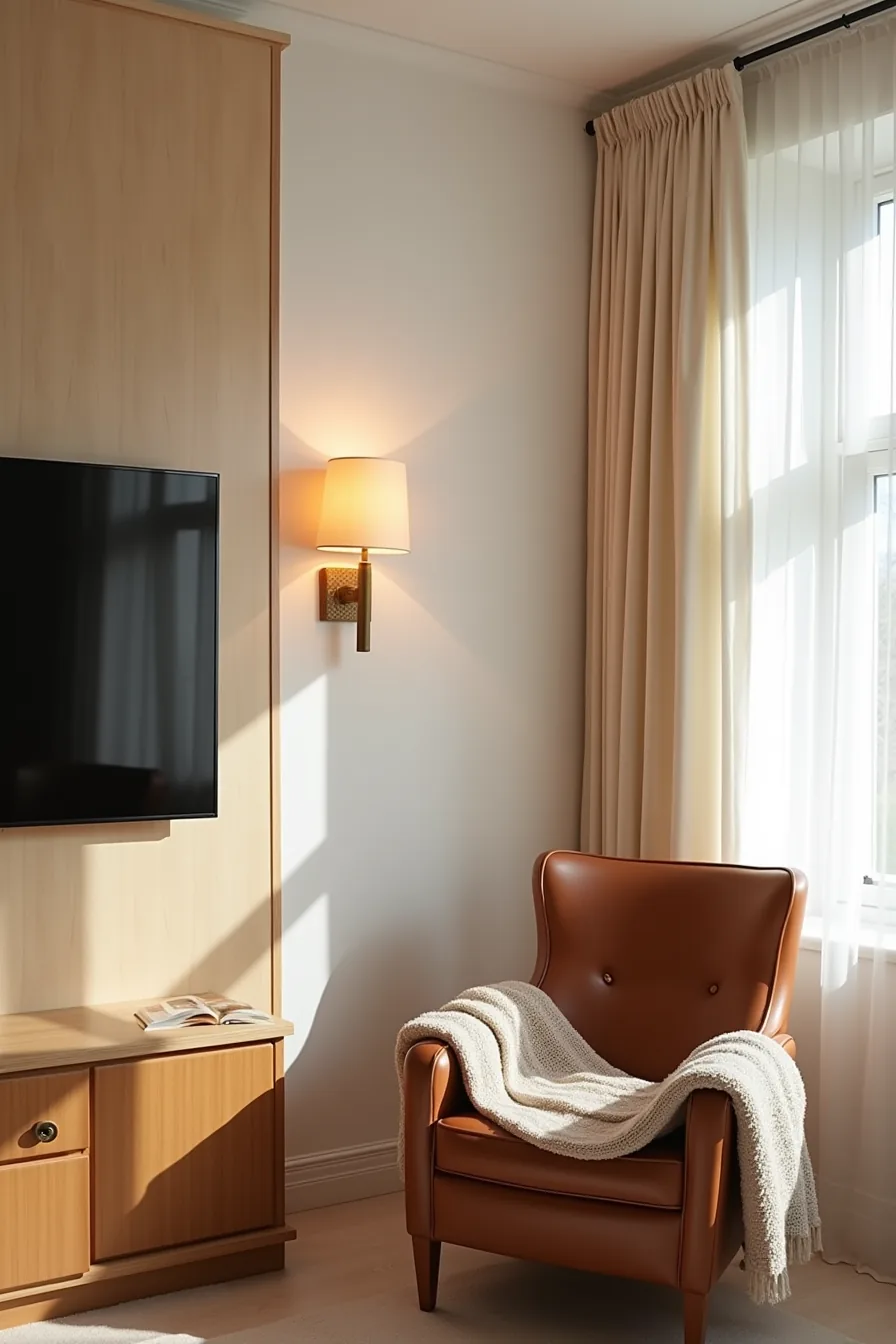
Warm brass sconces with linen shades do what recessed ceiling lights can’t: they pull the room’s glow down to seating level, where it actually matters. Positioned on either side of the TV on a wood-paneled wall, these fixtures cast a soft, golden wash across the surrounding surfaces rather than onto the screen itself. The linen diffuses the bulb completely, eliminating glare while keeping the light source warm enough to read as firelight rather than task lighting.
You want dimmable sconces here, and you want them on a separate switch from the overhead lights. Candlelit warmth at 2400–2700K paired with a dimmer lets you drop to 10–20% output for movie nights, turning the TV zone into something closer to a lounge than a screening room. The leather armchair and knit throw in this setup are a clue to the room’s intent: the lighting is designed to support conversation and reading, not just viewing.
If your TV room doubles as a gathering space, this treatment delivers the coziest result per dollar spent.
Scaling Sconces to Your Room Size
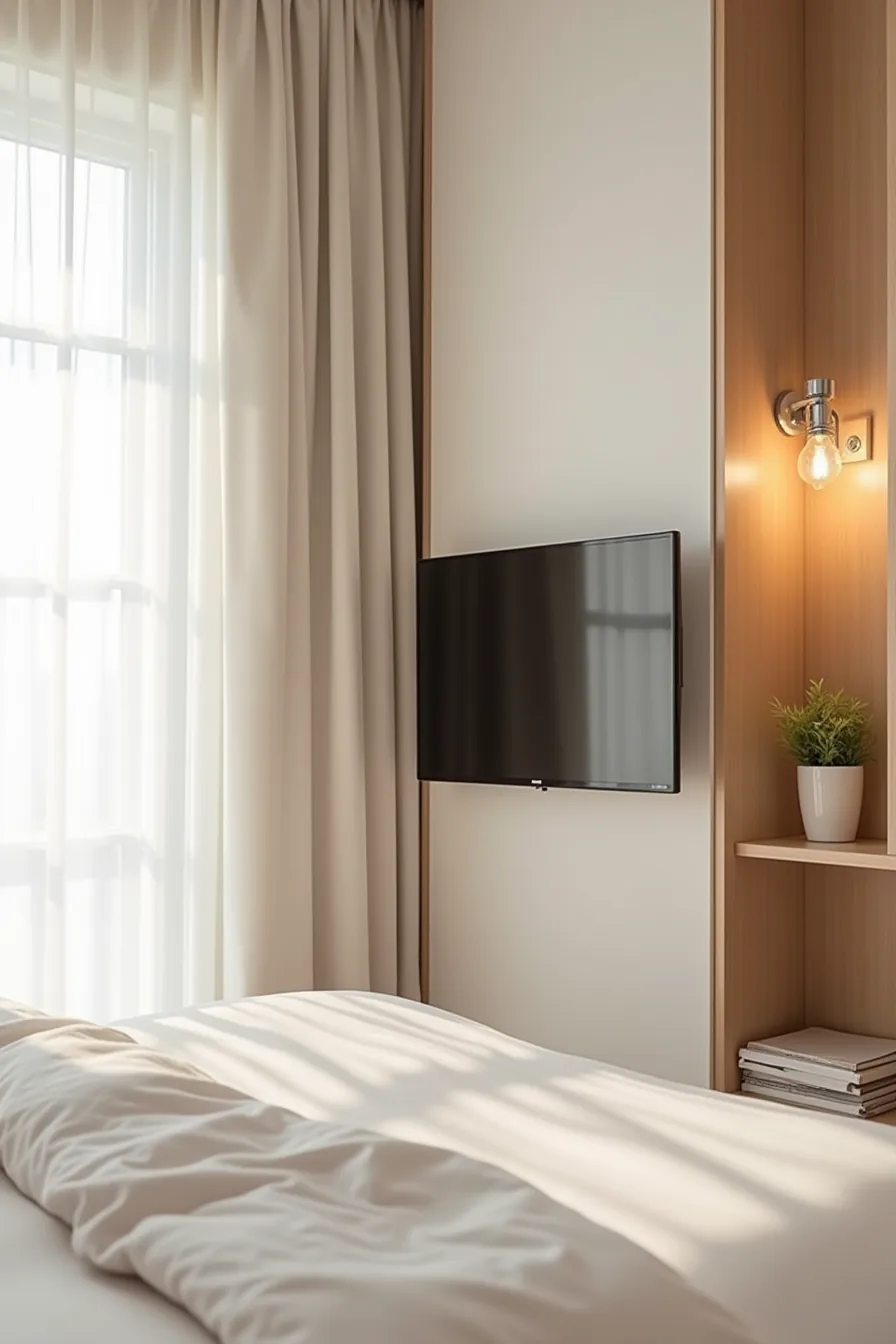
Proportion hinges on three numbers: fixture width, mounting height, and distance from the TV frame. In a compact bedroom with a small flat-screen TV on a narrow wall, the chrome sconces sit close to the frame at shoulder height, roughly 60–66 inches from the floor to the fixture’s center. Petite sconces with shades 6–8 inches wide suit TVs under 43 inches; anything larger visually overwhelms the setup.
Mount them 12–18 inches out from the TV’s edge so the light grazes the wall, not the screen.
For medium rooms with 55–65-inch TVs, scale up to shades 10–12 inches wide and push mounting height to 66–72 inches. In large spaces, sconces 14–16 inches wide bracket the TV at 72–78 inches, keeping the fixture tops near the screen’s midpoint to avoid a top-heavy look. The chrome finish here works because it recedes against the wall; brushed brass or matte black would draw the eye toward the light source, competing with the screen during daytime viewing.
Whatever your room size, keep the sconce’s center line below the TV’s top edge, that prevents the fixture from becoming the visual anchor instead of the display.
Installation and Maintenance for Renters and Owners
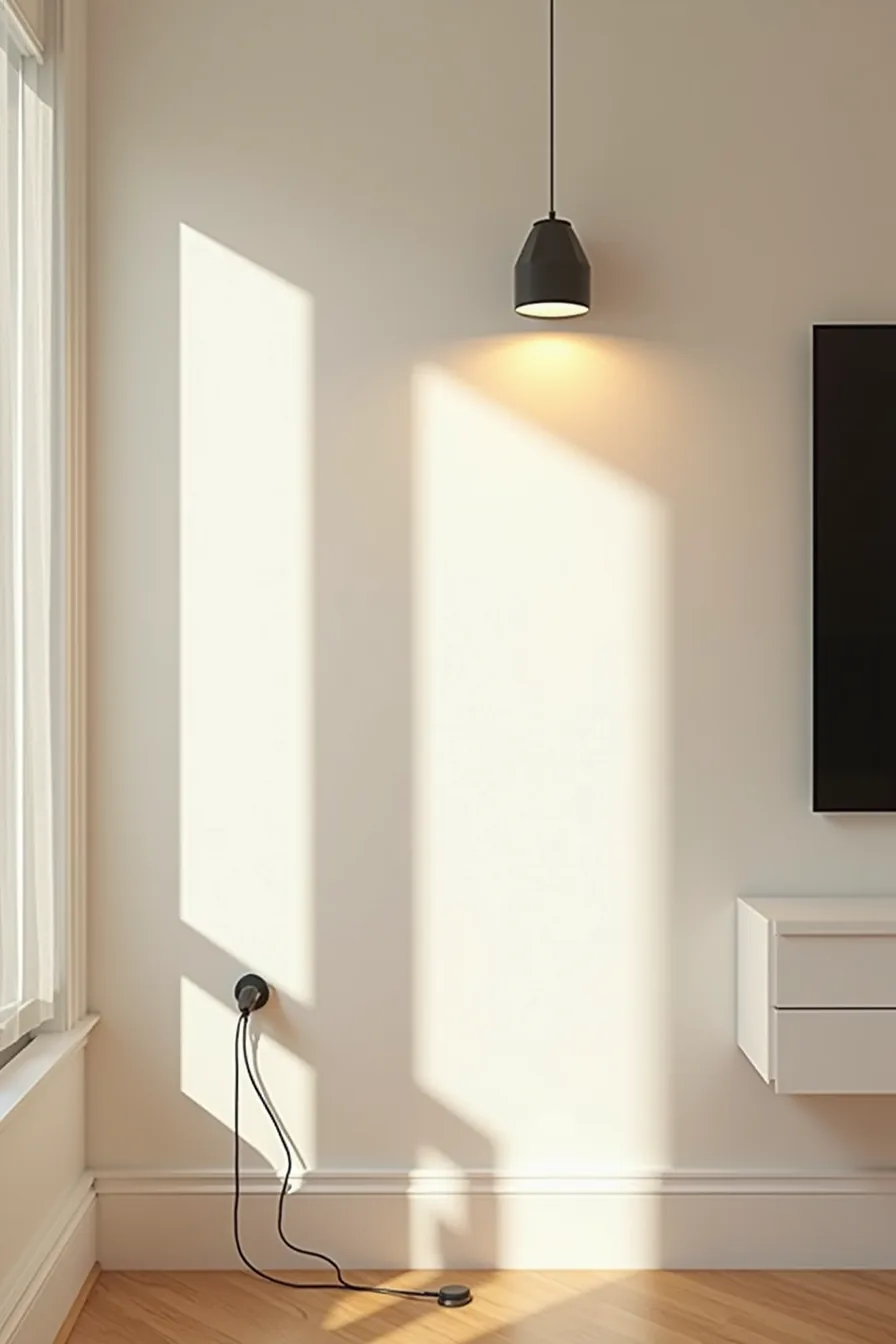
The plug-in sconce beside the wall trim solves the renter’s core problem: you get the lighting effect without cutting into drywall or modifying the electrical circuit. Route the cord along the trim’s edge and secure it with adhesive cord clips rated for painted surfaces, they pull off cleanly with a hair dryer and a putty knife when the lease ends. Expect to manage a visible cord unless you choose a sconce with a built-in channel; the trade-off is a 10–15 minute install against zero deposit risk.
The hardwired sconce with its flush-mount plate replaces the outlet box entirely, which is the long-term investment route. A licensed electrician typically charges based on whether the junction box already exists behind the wall; adding a new box in a finished wall runs higher than swapping an existing fixture. If you own the space and the TV wall already has junction boxes from prior fixtures, the swap takes under an hour per sconce.
Dust collects fastest on upward-facing shade interiors, wipe them with a dry microfiber cloth every two to four weeks. LED bulbs in hardwired fixtures last years, but plug-in models with integrated LEDs require replacing the entire sconce when the light dims, so check the rated lifespan on the spec sheet before buying.
Your Decision Checklist
Before buying, measure your TV width and note the wall space on both sides. Sconces should sit roughly 6–12 inches from the TV edge and extend no more than 10–14 inches from the wall to avoid visual crowding.
Choose swing-arm models if you read or work near the TV; fixed sconces suit pure ambience. Match finishes to existing hardware, brass warms, matte black recedes, nickel blends.
Renters: use plug-in sconces with cord covers. Owners: hardwire for a clean look, budget $150–$400 per fixture plus installation.
Start with one adjustable sconce on your dominant viewing side, test it for a week, then mirror it.
Frequently Asked Questions
Should wall sconces next to a TV be the same brightness on both sides?
Yes, match brightness and color temperature on both sides. Uneven light draws your eye away from the screen and creates visual imbalance. Use identical bulbs and dimmers for consistency.
Can you use wall sconces next to a TV if you have a soundbar or media console below?
Yes, but mount sconces higher, typically 60–66 inches from the floor, to clear the soundbar’s height and avoid light washing over the console. Keep sconces at least 6–8 inches from the TV’s edges.
What’s the best bulb type for wall sconces next to a TV to avoid glare?
Use frosted or diffused LED bulbs with a warm white (2700–3000K) output. Avoid clear glass bulbs or exposed filaments, which create harsh reflections on the screen. Dimmable LEDs give you control over glare.
How far from the TV should wall sconces be mounted to look balanced?
Mount sconces 8–12 inches from each side of the TV frame, centered vertically at eye level (about 55–60 inches from the floor). For larger TVs (65+ inches), push them to 12–15 inches out to maintain proportion.