
White Christmas decor is a single color palette, but it’s far from a single look. From crisp, minimalist whites to layered, textured winter whites, the palette adapts to your space, budget, and lifestyle. The key is knowing which interpretation fits your room’s proportions, traffic flow, and maintenance tolerance, so you can avoid the common pitfalls of sterile or cluttered results.
Key takeaways
- White Christmas decor works best when you mix at least three textures, matte, glossy, and fuzzy, so the palette reads as intentional rather than flat.
- For small spaces, swap a full-size tree for a 4- to 5-foot tabletop tree on a console, and hang garlands vertically along doorframes to save floor area.
- Renter-friendly lighting means using battery-operated LED string lights with adhesive clips, which install in under 10 minutes and leave zero wall damage when removed.
- Avoid all-white monotony by limiting pure white to 60% of the display and adding one metallic accent (brass, silver, or champagne) plus one natural tone (wood, pinecone, or linen) for contrast.
Monochromatic White Trees and Garlands
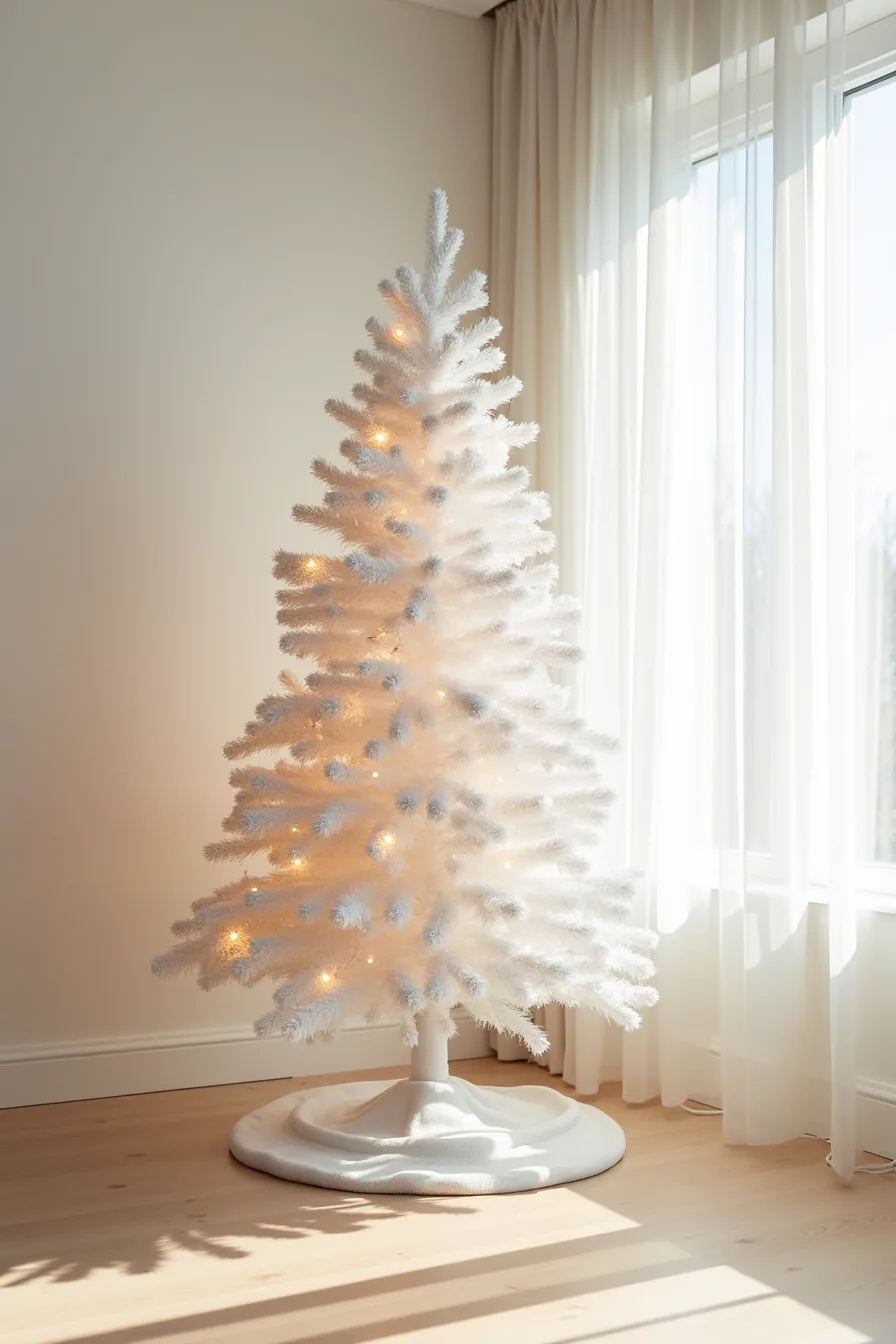
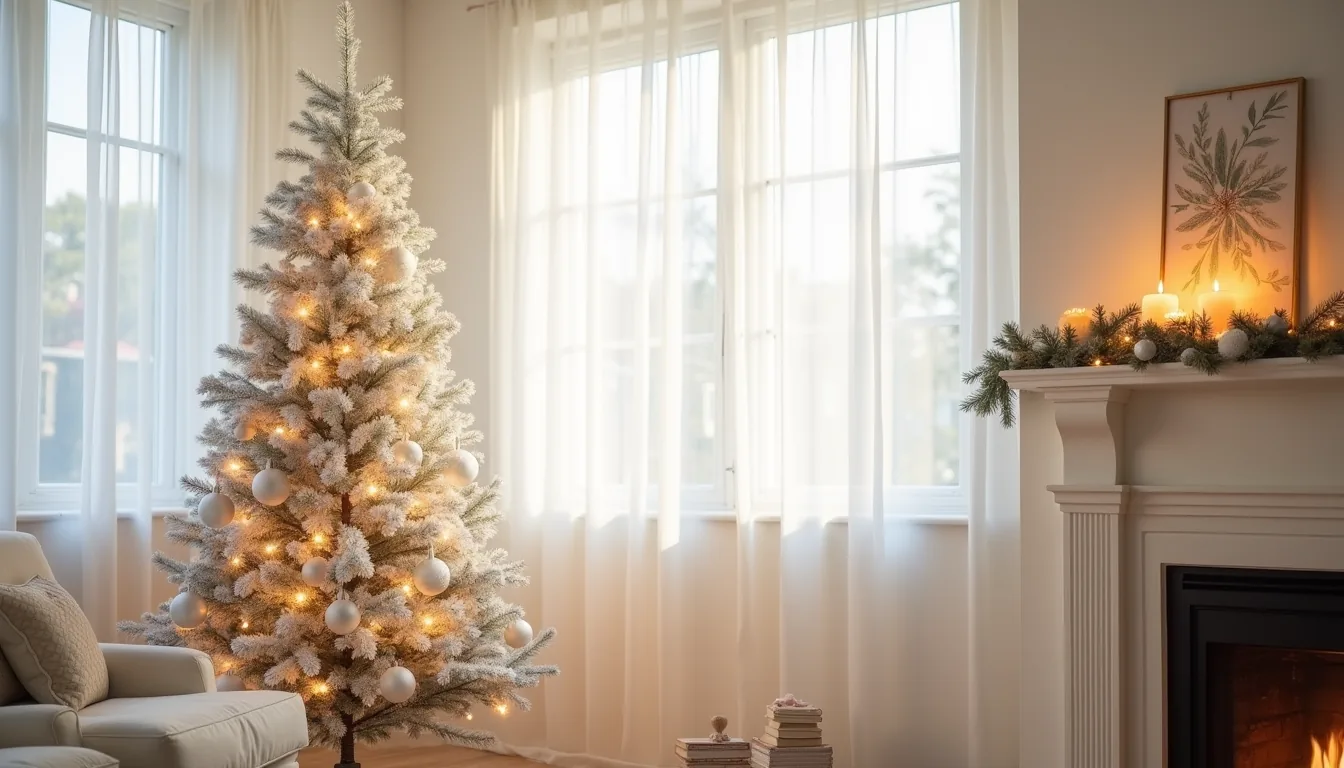
The most direct route to white Christmas decor ideas is a monochromatic tree scheme, and it works because it trades visual clutter for texture and light. A 7-foot white faux tree with flocked branches gives you that snow-dusted look without the shedding mess of a real tree, though you’ll pay for it: flocked trees typically run 30-50 percent more than standard faux pines. Pair it with white LED lights, around 100-150 bulbs for a 7-foot tree, and the flocking reflects the glow, making the whole tree appear to emit light rather than just hold it.
This setup suits medium to large living rooms with at least 8 feet of ceiling clearance. The white garland swags draped along the floor edge anchor the tree visually and hide the stand, but keep them 12-18 inches from walls so you don’t trap heat against baseboards. Maintenance is seasonal: dust the flocking with a soft brush before storage, and expect to replace LED strands every 3-5 years.
It’s the best white Christmas decor ideas example for renters too, no drilling, no paint, and the tree breaks down into a 2-foot storage box.
Layered Whites with Metallics and Naturals

Pure white can feel flat without contrast, which is where metallic and natural accents come in. The image here shows a 5-foot tree combining white and gold ornaments, copper wire accents, and a natural wood bead garland, three distinct materials that each catch light differently. Gold adds warmth, copper introduces a subtle rosy glow, and the wood beads break up the shine with organic texture.
A working ratio is 60 percent white ornaments, 25 percent metallics, and 15 percent natural elements. That proportion keeps the scheme cohesive while preventing the tree from reading as either too sterile or too busy. The birch logs and gold-painted branches leaning against the base ground the tree visually and disguise its stand, a practical trick that costs nothing if you’ve scrap wood and spray paint.
This approach suits rustic-modern and Scandinavian interiors best. If your room leans cool-toned, swap gold for silver; if it’s warm, copper works better than yellow gold. Sourcing is straightforward: wood beads run a few dollars per string, and you can paint existing branches rather than buying decor.
Expect to re-fluff the tree each season, and dust the wood elements, they collect film faster than plastic ornaments. For practical white Christmas decor ideas planning tips, assemble this look in one afternoon, but budget an hour for spray-painting branches and letting them cure outside.
Minimalist White Mantel and Entryway Styling
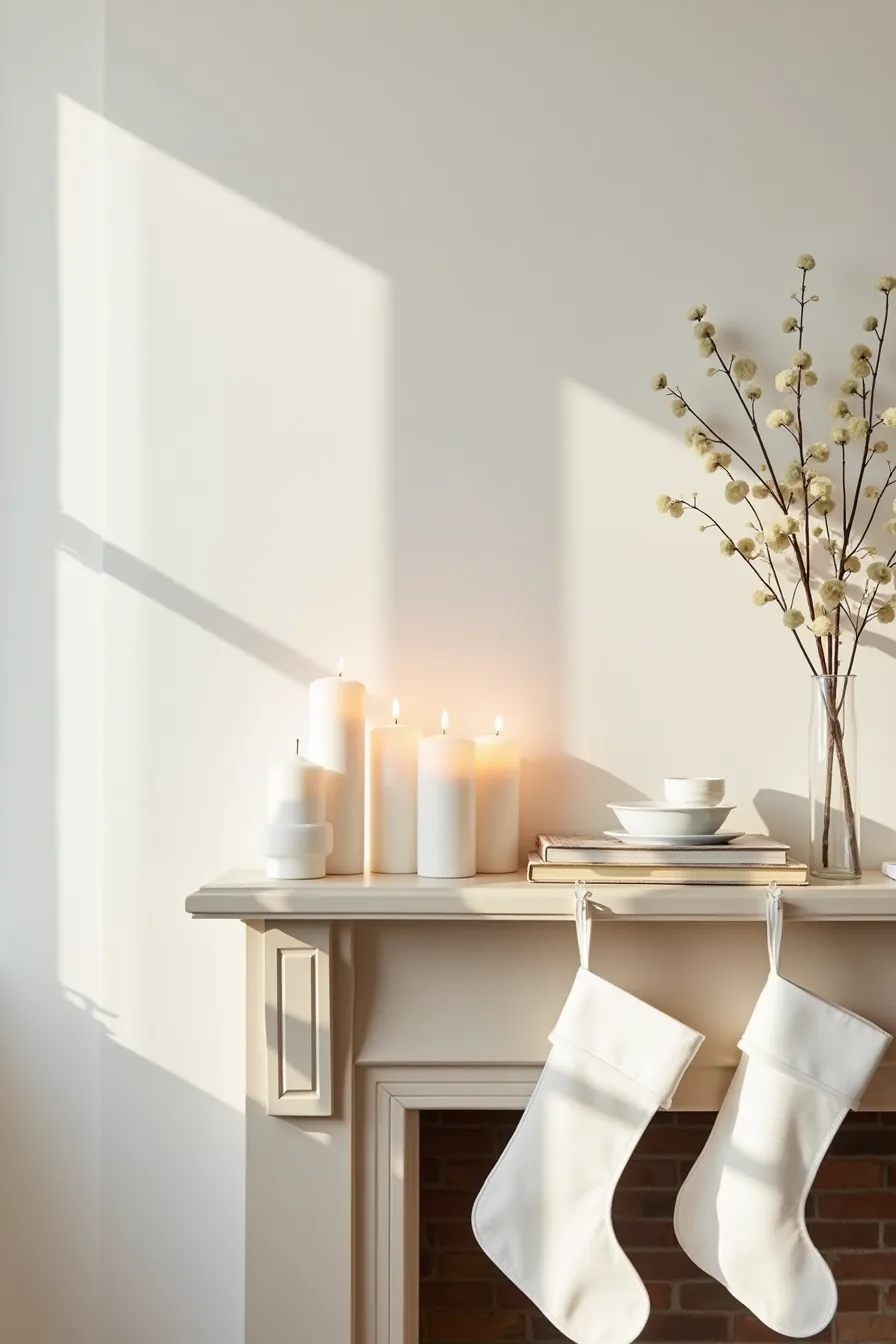
A 48-inch mantel leaves roughly 9 inches of breathing room on each side when you place five pillar candles across it. Space them at 8-inch intervals, this creates a rhythm that reads as intentional rather than sparse. Cluster the ceramic vessel at one end and the eucalyptus branch at the other, keeping the center clear for visual rest.
This setup favors linear arrangements over clustered displays, which suits narrow entryways and low-traffic living rooms where you want a calm first impression. The clear acrylic hooks for the stockings leave no visible hardware, making this entirely renter-friendly, they peel off without residue at season’s end. Expect to replace the eucalyptus every two weeks; dried branches last longer but drop needles onto the mantel surface.
For a 48-inch mantel, keep total decor height under 18 inches to avoid blocking sightlines into the room.
White Lighting as Primary Decor
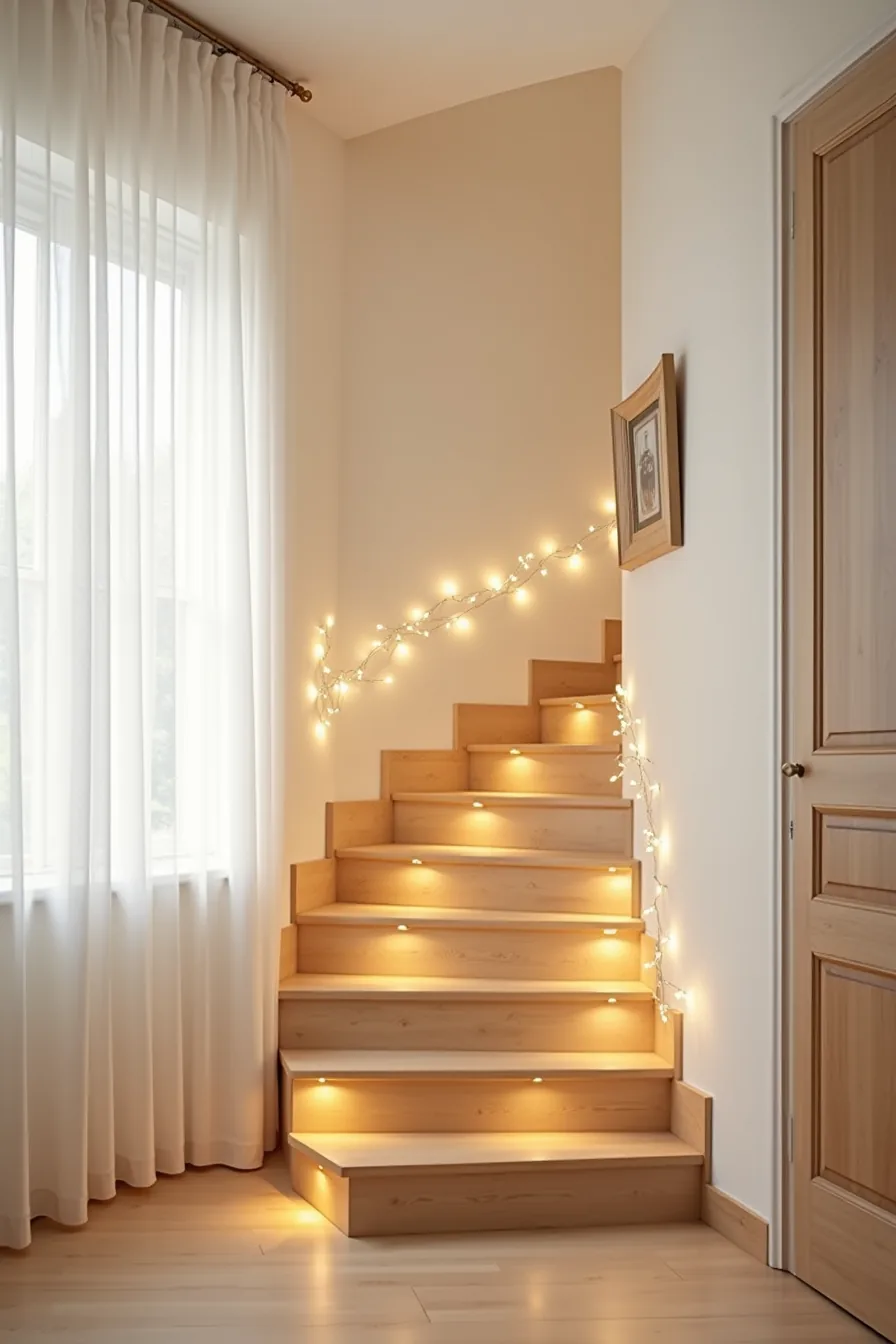
Cool-white LEDs read as crisp and snowy, while warm-white strings cast a honeyed glow that softens shadows, layering both creates depth that a single temperature can’t achieve. On a standard 10-foot banister, a spiral wrap uses roughly 40–60 feet of string lights; count on 100 bulbs per 3 linear feet of railing for even coverage. Drape the warm-white fairy lights loosely along the wall edge rather than stretching them taut, gentle curves catch more light and hide the wire’s straight lines.
This approach suits staircases and open-plan rooms where you want ambience without furniture rearrangement. Use clip-on hangers rated for outdoor use even indoors; they grip banisters without screws or adhesive, making them ideal for rentals. LED strings run at roughly 10% of incandescent wattage for the same brightness, so a 200-light set draws about 7–10 watts total.
Check the UL rating for indoor use, and skip any set with frayed insulation, heat buildup behind wood trim remains a real fire risk.
Textured White Fabrics and Soft Furnishings
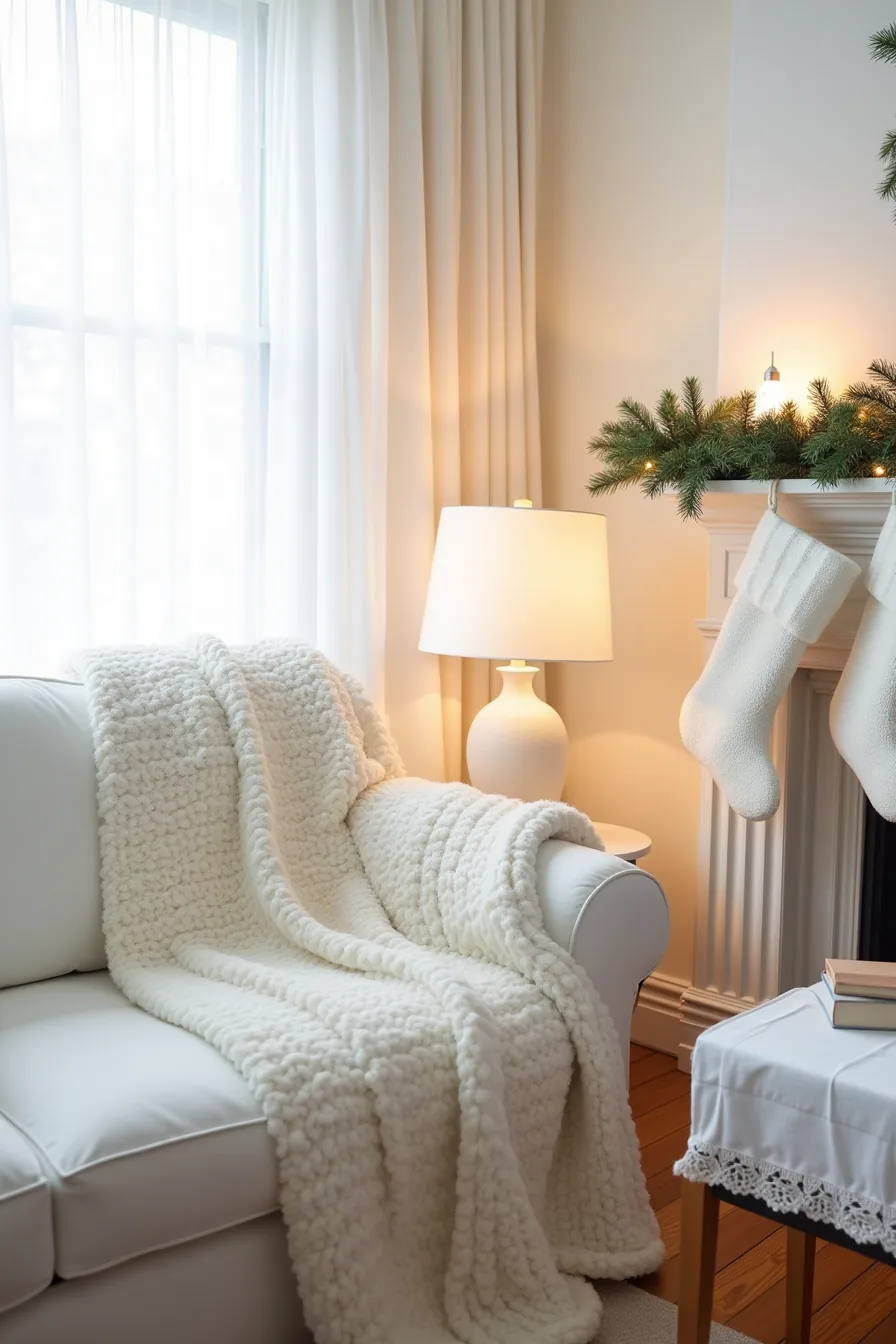
Faux fur, chunky knits, and crisp linen each catch light differently, so a room dressed entirely in white textiles still reads as layered rather than flat. The tree skirt’s faux fur piles high enough to hide a standard 27-inch tree stand base, while the knit throw’s open weave adds visual weight without trapping heat, both materials tolerate machine washing on cold, though you’ll want to air-dry the fur to prevent matting. White knit stockings stretch to fit most mantels, but check the loop density: loosely knitted stockings snag on ornaments and lose their shape by mid-January.
This combination works best in living rooms 150–300 square feet, where the textiles break up large furniture silhouettes without competing with wall color. In smaller spaces, swap the sofa throw for a single lumbar pillow and keep the table runner to a 12-inch drop on each end, excess fabric visually shrinks a room. Store everything in breathable cotton bags with cedar blocks; plastic bins trap moisture and yellow white fibers within a single off-season.
Avoiding Common White Christmas Decor Mistakes
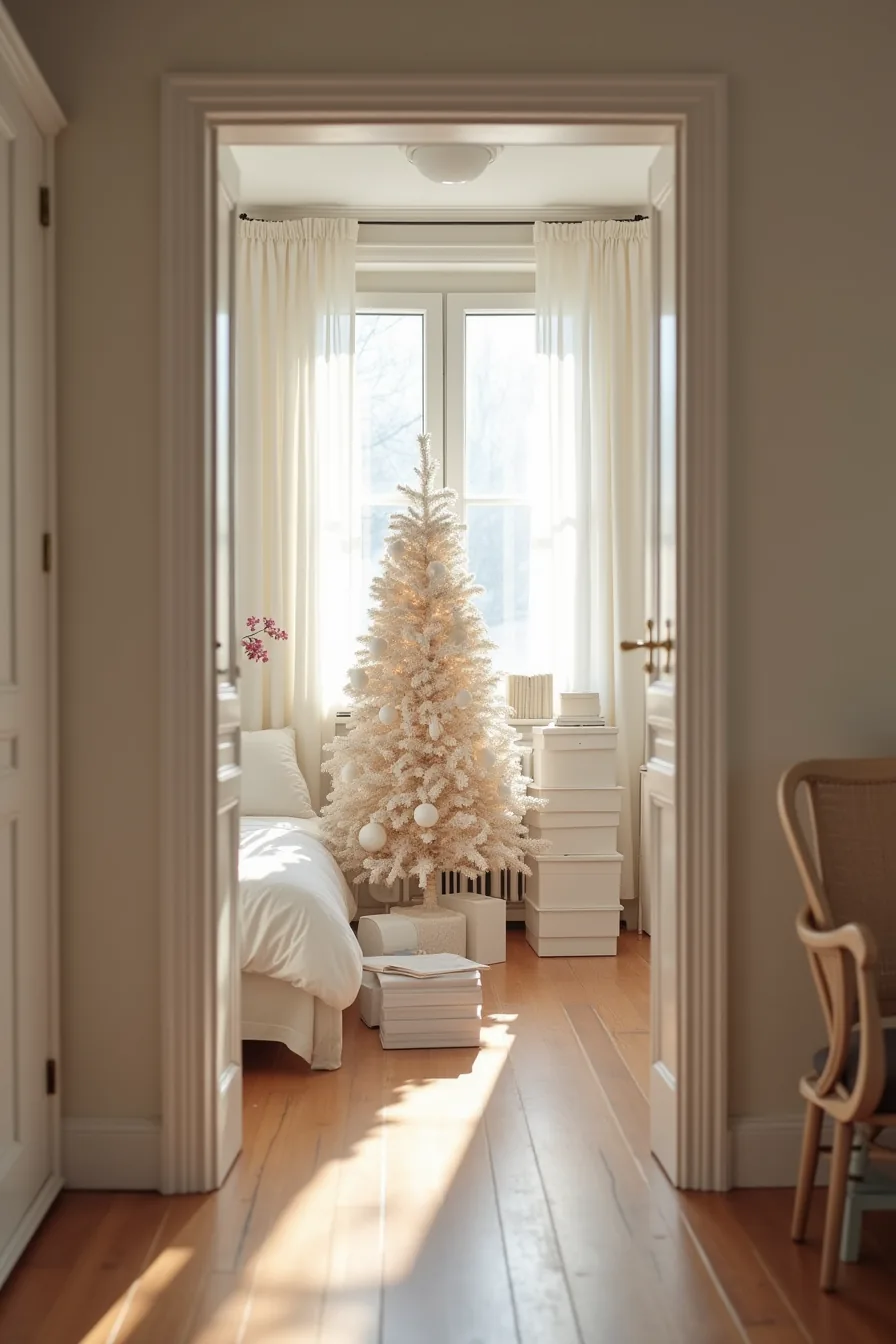
A white Christmas theme fails when every surface gets the same bright treatment. In a 10-by-12-foot bedroom with a 6-foot tree, that stacked arrangement of white boxes, layered lights, and excessive garland creates visual overload, the eye has nowhere to rest, and the space feels smaller than it’s. The primary mistake is uniformity: when every element shares the same shade and finish, the room flattens into a monochrome blur.
Budget versus splurge matters here. Cheap white plastic ornaments yellow within two seasons and crack in storage; investing in matte ceramic or frosted glass pieces costs more upfront but survives years of handling. Another frequent error: skipping texture contrast.
White velvet ribbons, matte baubles, and glossy tree skirts each reflect light differently, without that variation, even expensive decor looks like a clearance bin. Finally, resist filling every vertical inch. Leave negative space around the tree and mantel; breathing room lets each piece register instead of blending into a whiteout.
For maintenance, dust weekly with a microfiber cloth, and store delicate items separately to prevent chipping.
Your First Move
Before buying anything, take 15 minutes to walk through each room you plan to decorate. Note wall colors, natural light, and existing furniture tones. That single assessment determines whether warm ivory, cool white, or mixed metallics will harmonize.
Start with one focal point, a mantel, entry table, or tree base, and build outward. Purchase the largest anchor piece first, then layer smaller accents around it. This prevents the scattered-boutique look that plagues white schemes.
Commit to one material texture as your constant: matte ceramic, brushed brass, or frosted glass. Then repeat it across three placements minimum. Consistency reads as intentional design, not random accumulation.
Frequently Asked Questions
How do I make white Christmas decor look intentional rather than sparse?
Layer multiple textures, faux fur, matte ceramic, glossy baubles, and chunky knit, so the eye reads richness, not emptiness. Add metallic accents in silver or gold, plus varied heights via candlesticks, vases, and branches. This creates depth without relying on color.
Can I use white Christmas decor in a rental without losing my security deposit?
Yes, if you avoid permanent adhesives, nails, or paint. Use removable command hooks, freestanding trees, and tension rods for garlands. Skip flocking sprays on walls or floors; stick to washable fabrics and portable items like tabletop trees.
What’s the difference between cool-white and warm-white Christmas lights, and which should I choose?
Cool-white lights emit a blue-toned, bright glow (think daylight), while warm-white lights give a soft, amber-tinted glow (like candlelight). Choose warm-white for cozy, traditional spaces; cool-white works better in modern, minimalist rooms or to mimic snow.
How much white decor is too much for a small apartment or room?
Keep white to about 60% of your visible decor, beyond that, the space feels sterile and flat. In a small room, limit white to one focal area (like a tree or mantel) and balance with natural wood, greenery, or one dark accent. Avoid filling every surface.