Your porch is the first thing guests see and the last thing you pass through each day, yet most fall decorating advice ignores the practical realities of weather, space, and budget. The fix is choosing looks that survive rain, fit your square footage, and cost less than a seasonal splurge. Below are six distinct approaches, from rustic minimalism to layered traditionalism, each with exact material specs, placement rules, and maintenance timelines so you can commit without guesswork.
Key takeaways
- Anchor your porch with hardy mums in galvanized or ceramic planters, choosing varieties like ‘Sheffield Pink’ for late-season color that survives light frosts.
- Layer a flat-weave outdoor rug in a rust or mustard tone beneath seating, securing it with rug tape to prevent curling and tripping hazards in high-traffic areas.
- Swap in LED taper candles inside sealed glass lanterns for a flicker-free glow that won’t blow out, and pair them with a motion-sensor warm-white path light for safety.
- Cluster three pumpkins in odd-numbered sizes, one tall, one round, one squat, on a wooden crate or stack of bricks to add height without blocking your door’s swing path.
Mums and Planters: The Seasonal Foundation
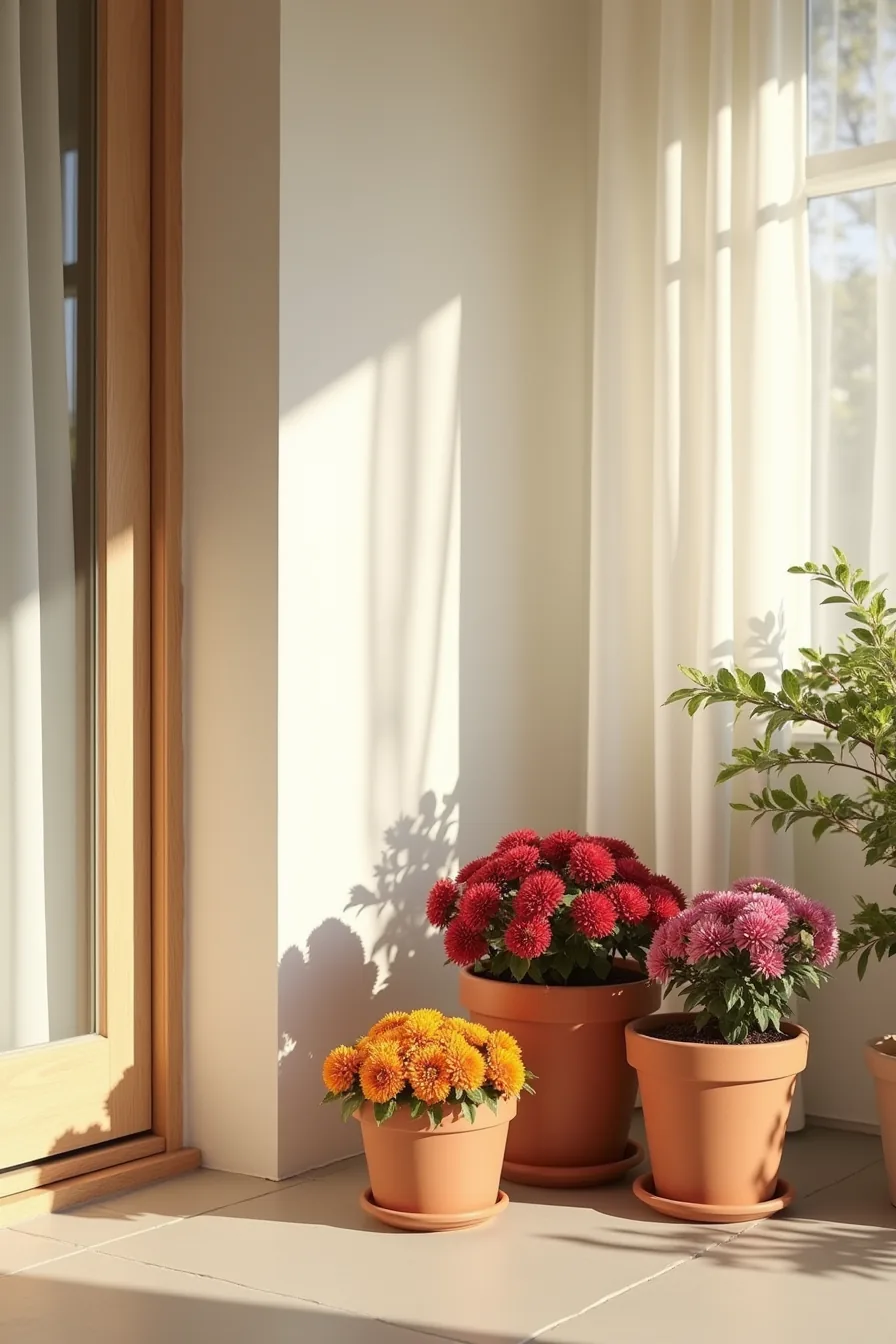
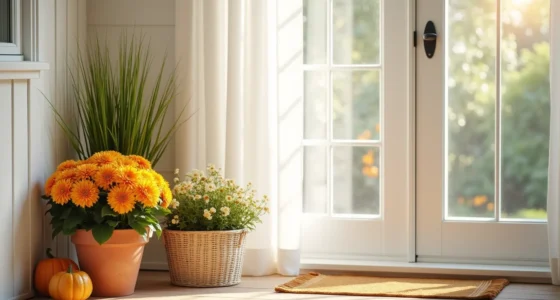
Start with three terracotta pots in burgundy, orange, and cream, arranged in descending height. This staggered grouping creates visual rhythm without clutter, anchoring your entryway with roughly 18–24 inches of total width, enough presence for a medium porch but adaptable to smaller spaces if you scale pot diameters down to 10–12 inches.
The concrete floor beneath matters: mums in terracotta dry out faster than plastic or glazed ceramic, so plan to water deeply every 2–3 days in mild fall weather, and daily if your porch faces south. Soil depth of 8–10 inches supports the root system through early frosts, but these are technically short-lived, plan to compost them after the first hard freeze rather than expecting perennial survival.
For small porches, place the tallest pot against the doorframe and step shorter ones forward. Large porches benefit from doubling the trio on both sides of the steps. If you want a lower-maintenance alternative, swap one pot for a hardy ornamental kale, which tolerates neglect and holds color into December.
Layered Textiles: Rugs, Pillows, and Throws
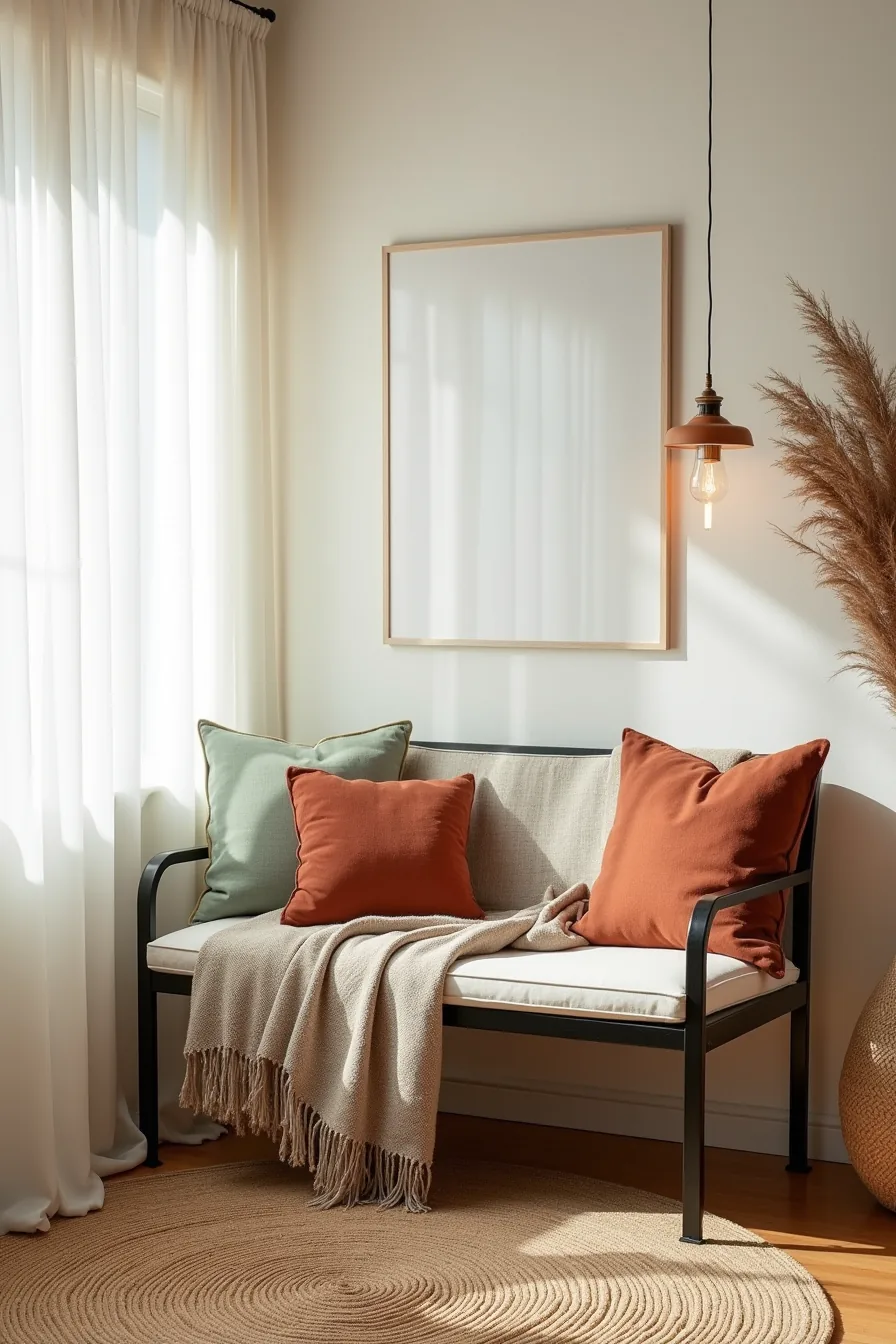
Textiles do the heavy lifting when turning a bare porch into a lived-in autumn retreat. The key is anchoring the space with a jute rug, its natural fiber adds texture while forgiving dirt and morning dew. Choose a 5’x7′ rug for a medium porch; scale down to 3’x5′ for a small landing, leaving at least 12 inches of exposed floor around the edges to avoid a wall-to-wall look.
For seating, a metal bench paired with a plaid wool throw draped over one arm introduces classic fall pattern without overwhelming. Add two linen pillows in rust and sage propped against the backrest, these muted tones echo the changing leaves without clashing with the mums from the previous section. Linen breathes well and resists mildew better than cotton, but bring cushions indoors during heavy rain.
Sizing rule: pillows shouldn’t exceed 18 inches square on a standard bench, and the throw should hang no lower than 4 inches from the ground. For renters, skip permanent fixtures, use a rug that rolls up for winter storage and pillows that fit in a closet. Budget buyers can swap wool for a polyester-blend throw at half the cost, though it won’t regulate moisture as effectively.
Lighting Transitions: From Warm Bulbs to Lanterns
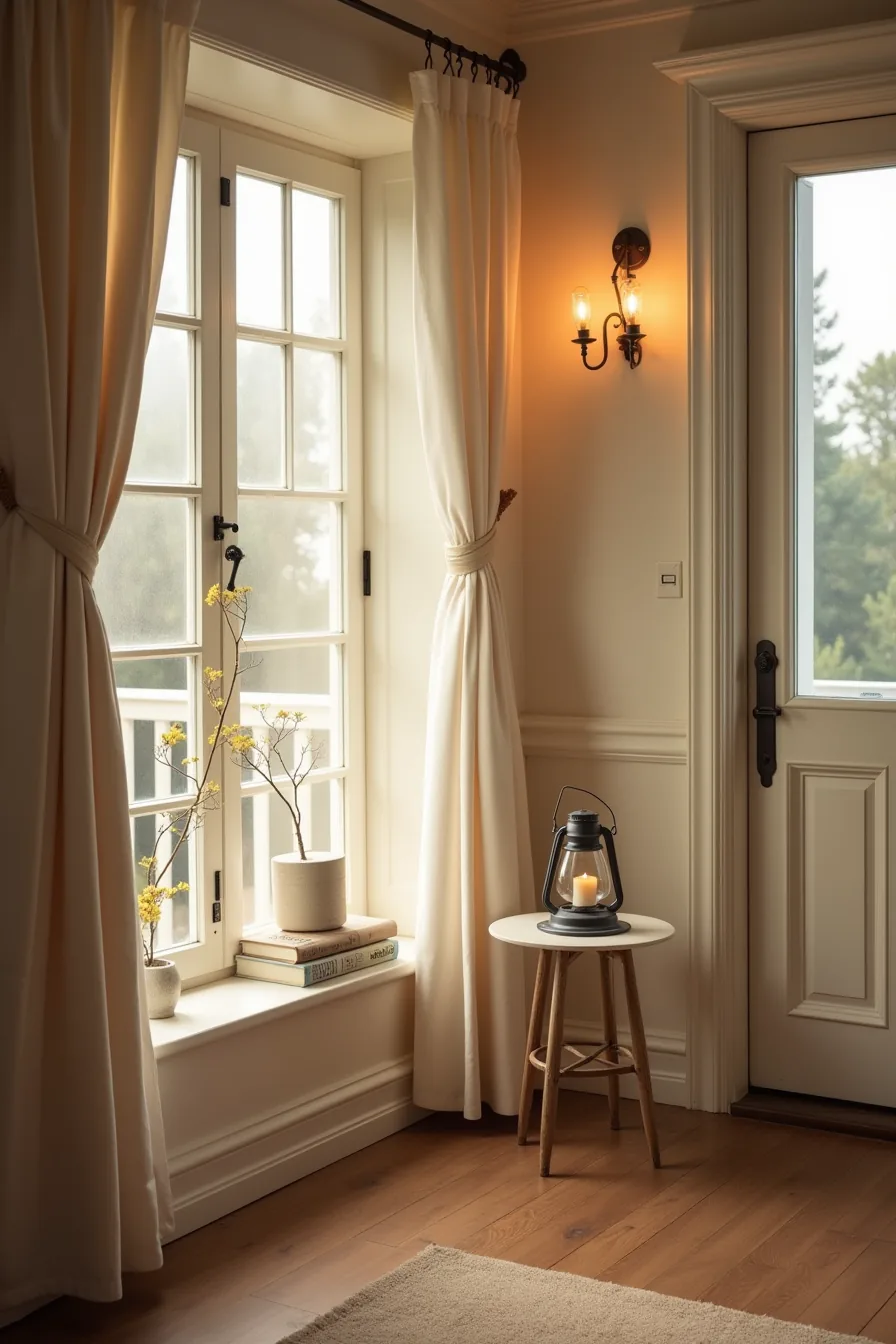
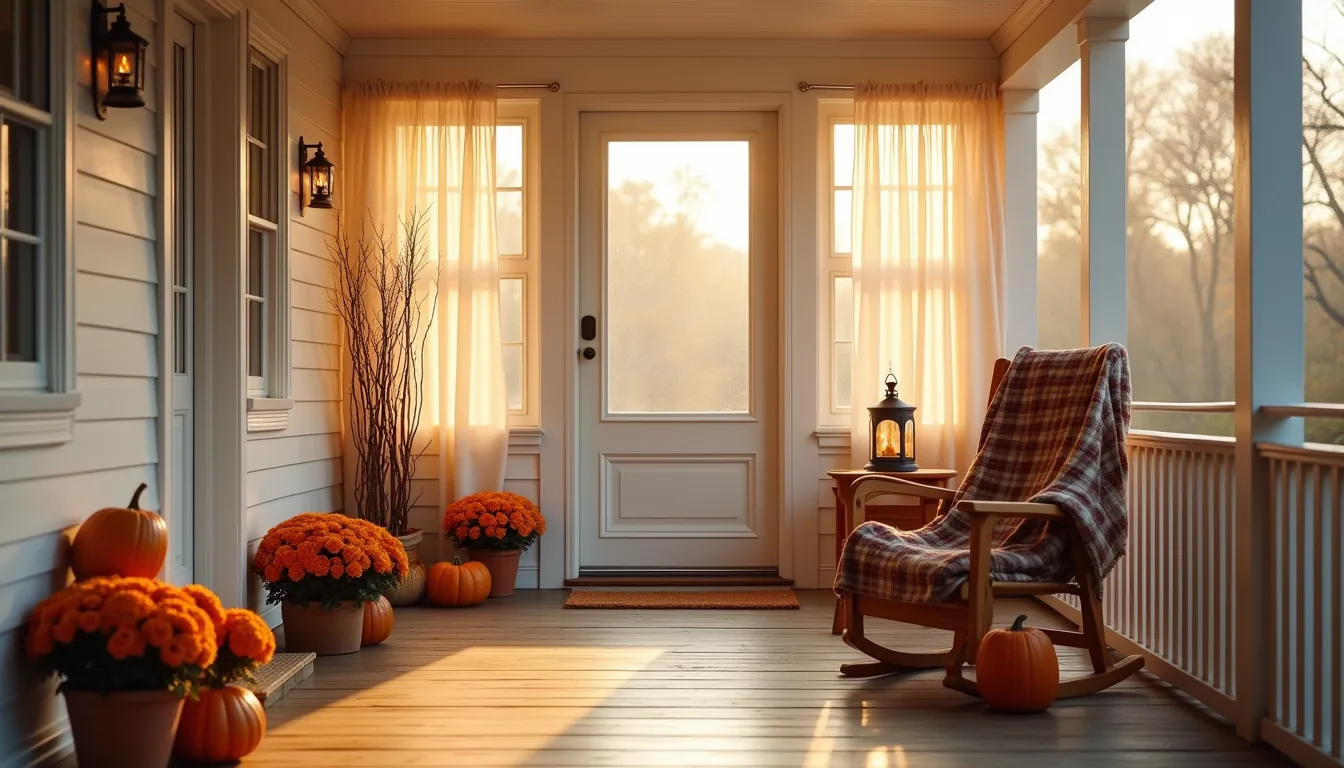
Lighting shifts the porch’s mood more than any other element because it changes how the textures and colors from the previous sections read after sunset. Swap cool daylight bulbs for warm white LEDs in the 2200K–2700K range, this mimics candlelight and makes orange and rust tones appear richer rather than flat. For a medium porch, a combination of a wall sconce above the door and a single metal lantern on a side table provides enough layering without turning the space into a runway.
The metal lantern with a lit candle serves as the focal point at dusk, while string lights with warm bulbs looped across the railing create a horizontal boundary that visually widens a narrow porch. A wall sconce glows above the door, drawing the eye upward and balancing the low lantern. For renters, use plug-in string lights and a battery-operated lantern instead of hardwiring, this avoids drilling and lets you move the setup seasonally.
Cost trade-off: a quality metal lantern runs $25–$60, while a comparable battery-operated version costs $15–$30 but needs new batteries every 40–60 hours.
Harvest Vignettes: Pumpkins, Gourds, and Branches
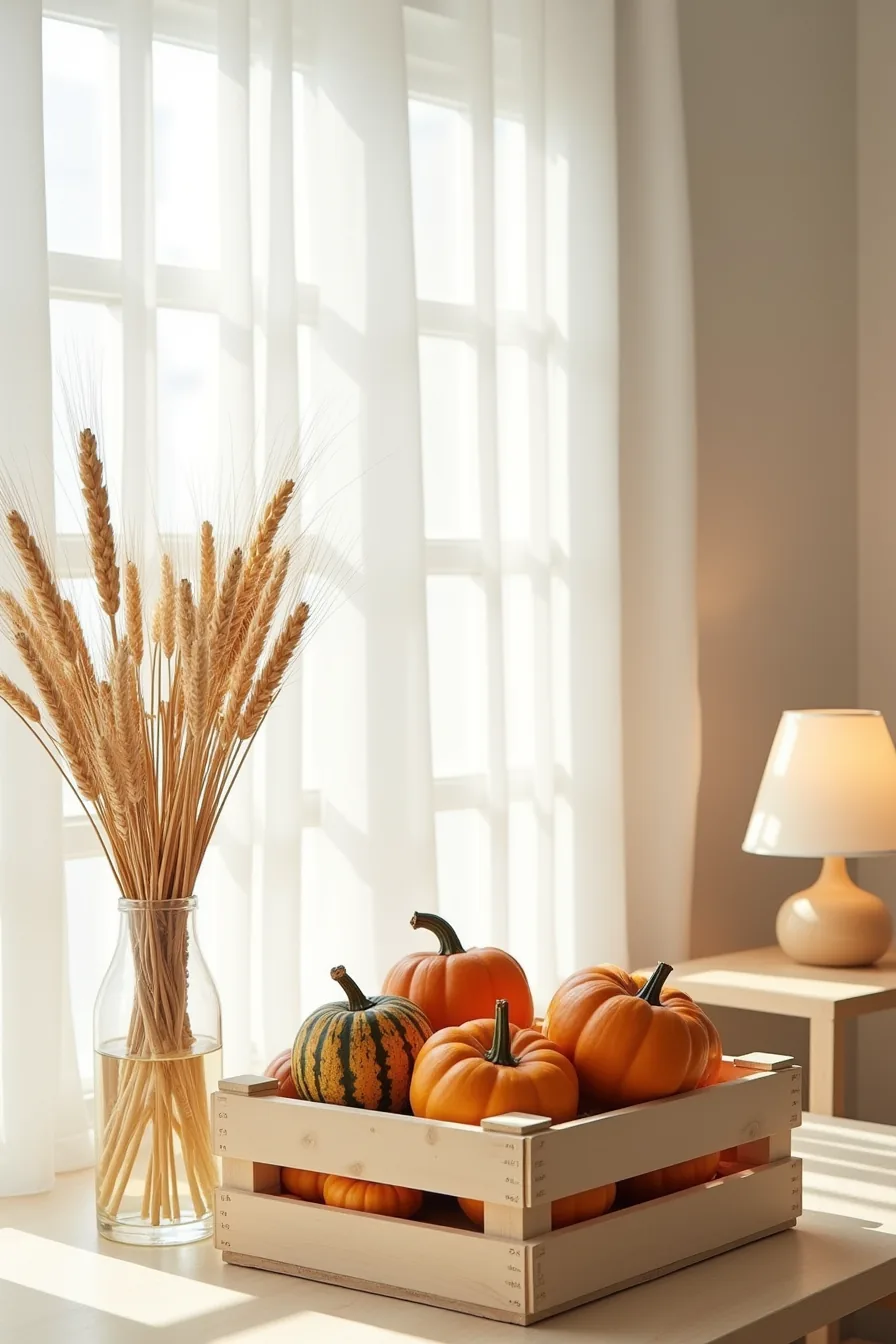
The low wooden crate anchors the arrangement by providing a rectangular base that prevents the rounded forms of sugar pumpkins and striped gourds from rolling into visual chaos. Place the crate so its front edge sits flush with the porch floor, not the door threshold, this keeps the walkway clear while giving the vignette a deliberate footprint of roughly 2–3 feet across. Cluster the pumpkins and gourds in odd numbers, three or five, and vary their heights by setting one on a small overturned pot hidden behind the crate’s lip.
Wheat stalks add vertical contrast without competing with the taller branches in the glass vase beside the crate. Fresh sugar pumpkins last 4–6 weeks outdoors before softening, while gourds hold their color for 8–10 weeks; wheat begins to droop after 2 weeks and looks best swapped for faux stems if you want the arrangement to survive until Thanksgiving. If you choose faux pumpkins, pick ones with a matte, waxy finish, glossy plastic reads as artificial from the street.
On a small porch, skip the crate and use a single shallow bowl with two mini pumpkins and a handful of wheat; on a large porch, you can double the crate width and add a second vase, as long as you leave 18–24 inches of clear floor space around the grouping for foot traffic and door swing.
Structural Elements: Wreaths, Garlands, and Railings

A wreath of dried leaves and twigs suits a covered porch where it avoids direct rain; exposed to full weather, the leaves fade and crumble within 3–4 weeks, so reserve natural materials for sheltered entries and switch to faux for open exposures. Size the wreath to the door, not the trend: a standard 24-inch wreath looks right on a 36-inch door, while a 32-inch door calls for a 20-inch piece, going larger crowds the hinge side and obstructs the swing arc.
The garland of faux berries and greenery draping the railing works because it follows the horizontal line of the balustrade rather than fighting it. Secure it with zip ties wrapped around the rail posts, not the top rail, to prevent sliding and preserve the grip surface. Renters should use removable adhesive hooks rated for 5–10 pounds on the door and tension wire along the railing, both come off without residue in under 10 minutes.
Faux berry garlands hold their color for 2–3 seasons outdoors before UV fading turns them orange-pink; budget $30–$60 for a quality piece that lasts beyond one season.
Avoiding Common Porch Decorating Pitfalls
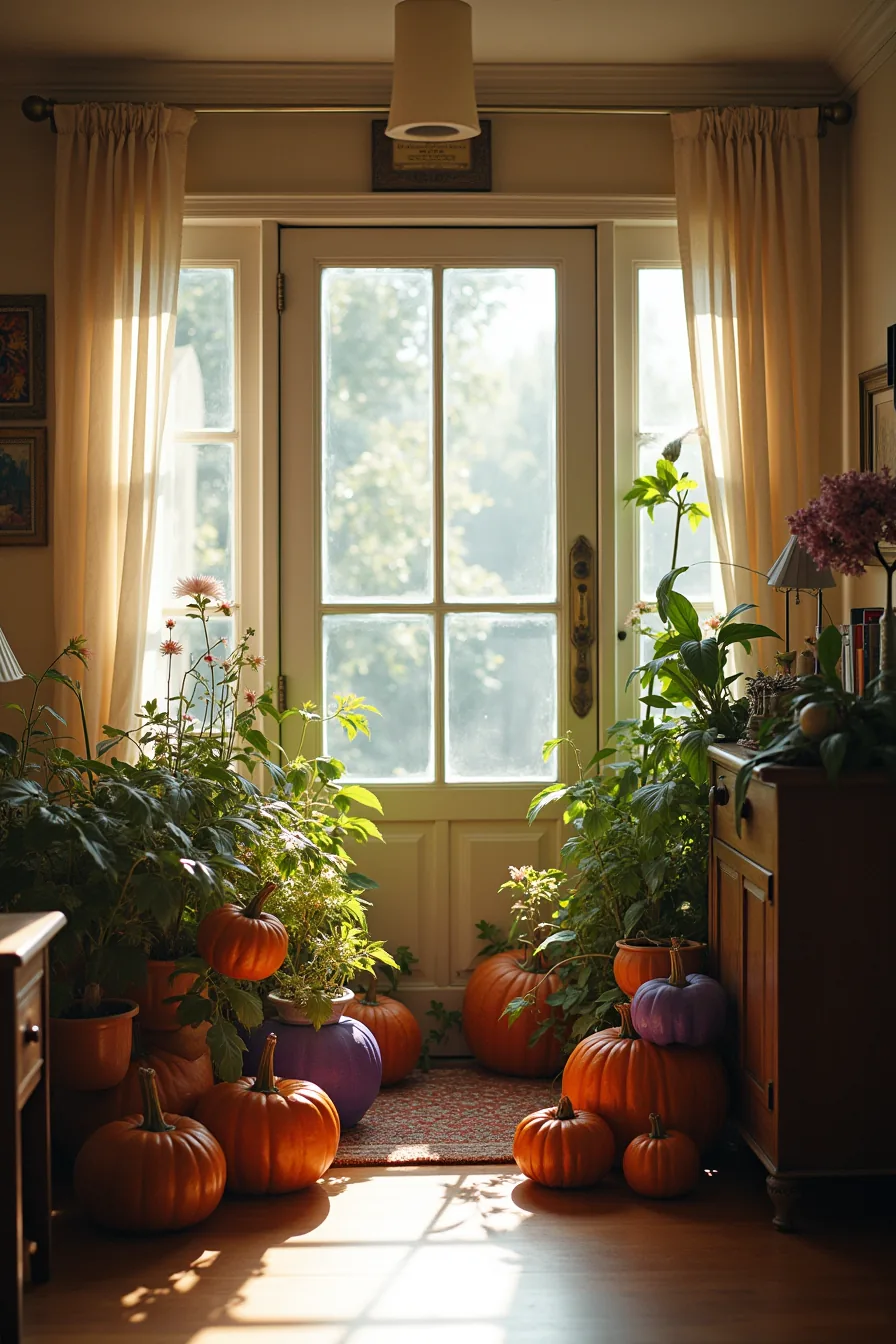
The most common mistake is treating your porch like a storage shelf. When overcrowded pots crowd the threshold and tangled cords snake across the floor, you’ve created a hazard, not a display. Keep a clear 36-inch path from the sidewalk to the door handle; anything that forces you to step sideways to enter fails the function test.
Color clashes undermine your fall intent faster than any other error. Bright orange, deep purple, and neon green fight each other instead of evoking autumn warmth, stick to a 60-30-10 ratio: one dominant earthy tone, one supporting neutral, and one small accent. Deteriorating paper decorations scream neglect by mid-October; the moment you see curling edges or water spots, swap them for treated corn stalks or faux leaves that survive a rain shower.
The maintenance burden matters more than the initial look. If a decoration requires daily fluffing or weekly repositioning, you’ll abandon it by November 1st. A common Budget vs. Splurge Fall Decor Ideas For The Home Porch mistake is buying twenty cheap pieces instead of five quality ones, splurge on one weatherproof anchor item, then rotate small, inexpensive accents around it.
Your Porch Plan in Five Minutes
You now have six distinct directions, each with clear trade-offs in cost, upkeep, and visual weight. Match your choice to your porch’s actual dimensions, a 40-inch-wide stoop can’t hold a bale-and-pumpkin cluster without blocking the door, while a 12-foot wraparound can carry two separate vignettes.
Pick exactly one idea from the list above. Measure the floor space where it will sit, then write down the three materials you need to buy. Do that today, and you can source everything this weekend.
Frequently Asked Questions
How do I decorate a small front porch for fall without making it look cramped?
Limit yourself to three elements: one doormat, one vertical arrangement, and one ground-level cluster. Anchor everything to one corner, leaving the walking path completely clear. Scale pieces to roughly one-third of your porch’s width.
What fall porch decorations work for renters who can’t drill or paint?
Use freestanding items only: a leaning ladder, stacked hay bales, potted mums in decorative sleeves, and a weighted doormat. Command hooks work for lightweight wreaths under 5 pounds. Avoid adhesive strips on painted or textured surfaces, as they can peel finish.
Should I use real pumpkins or artificial ones on my porch, and how long do they last?
Real pumpkins last 4–8 weeks in cool, dry conditions but rot faster in rain or heat. Artificial pumpkins last years and cost more upfront, typically $15–$40 each versus $5–$12 for real. Choose real for seasonal scent and authenticity; choose artificial if you want a reusable, zero-maintenance display.
How do I keep fall porch decorations from looking messy or cluttered?
Stick to one color palette, like burnt orange, cream, and deep green, and repeat it across all items. Group odd numbers (3 or 5) in tight clusters rather than scattering pieces. Remove anything that doesn’t serve a purpose, and sweep debris daily to maintain a clean base.