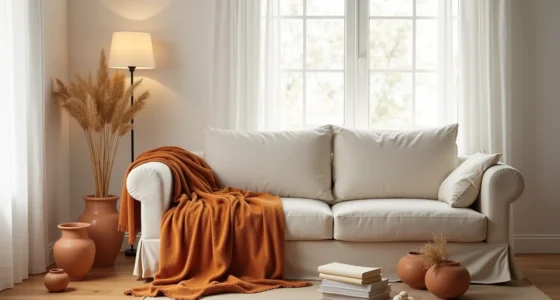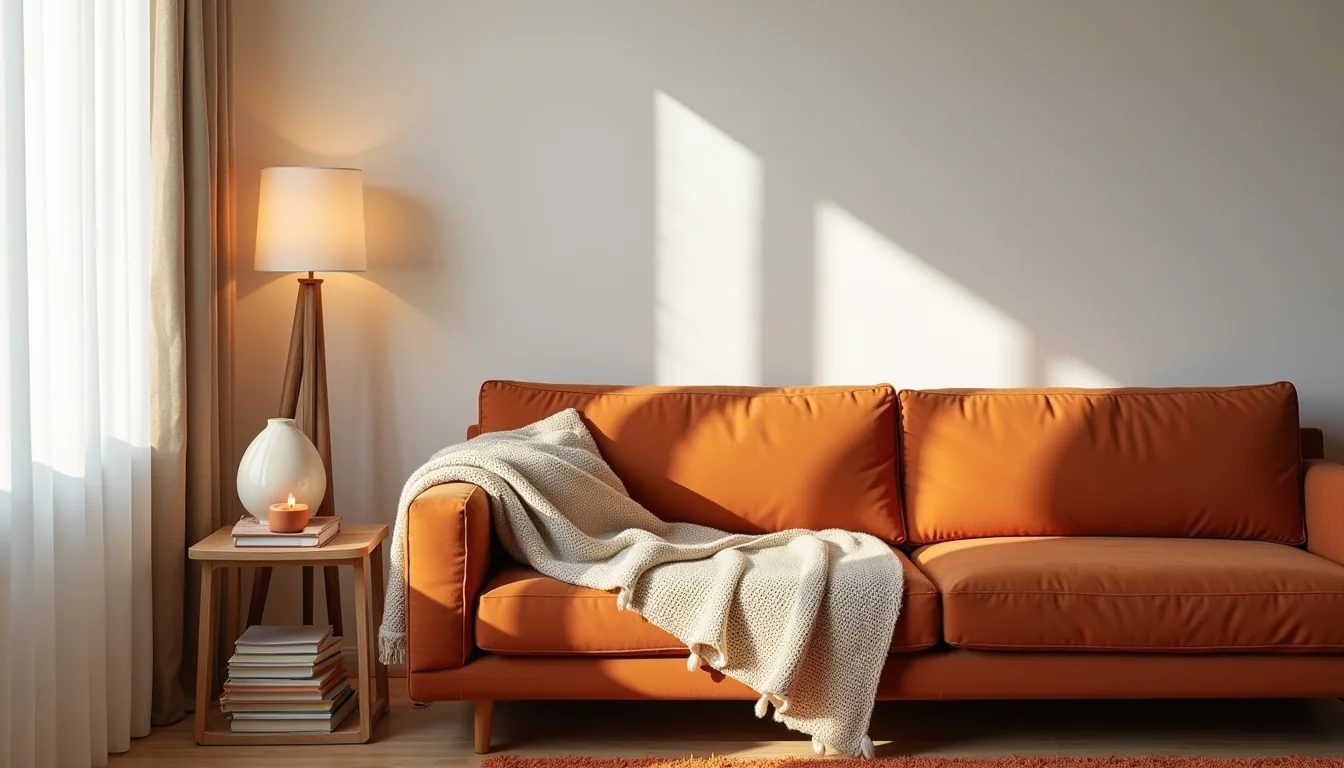

Fall home decor living room ideas fail when they prioritize looks over livability, so this guide breaks down six distinct approaches, each with the exact scale, materials, and maintenance trade-offs you need to decide if they fit your space, budget, and rental agreement. You’ll find one renter-friendly route, one budget route, and one long-term investment strategy woven into the mix. The goal is to help you match a seasonal look to your actual floor plan and daily habits, not to a Pinterest fantasy.
What follows are six concrete paths, from a 10-minute swap to a weekend project, each with the specifics that make it workable or not.
Key takeaways
Layer wool, velvet, and faux-fur throws over sofas and chairs to add warmth without committing to a seasonal reupholstery, and stick to a palette of burnt orange, olive, and cream for cohesion. Swap out lightweight summer curtains for heavier linen or velvet panels to trap heat and instantly shift the room’s mood; this works in any size space and takes under an hour. Use removable peel-and-stick wallpaper on a single accent wall behind the TV or fireplace for a renter-friendly focal point that peels off cleanly, costing roughly $30–$60 per roll. Invest in a custom slipcovered sofa or built-in shelving with warm wood tones if you own your home, these pieces last 10–15 years and anchor the fall aesthetic without needing yearly updates.
Warm Layered Textures for Medium Spaces
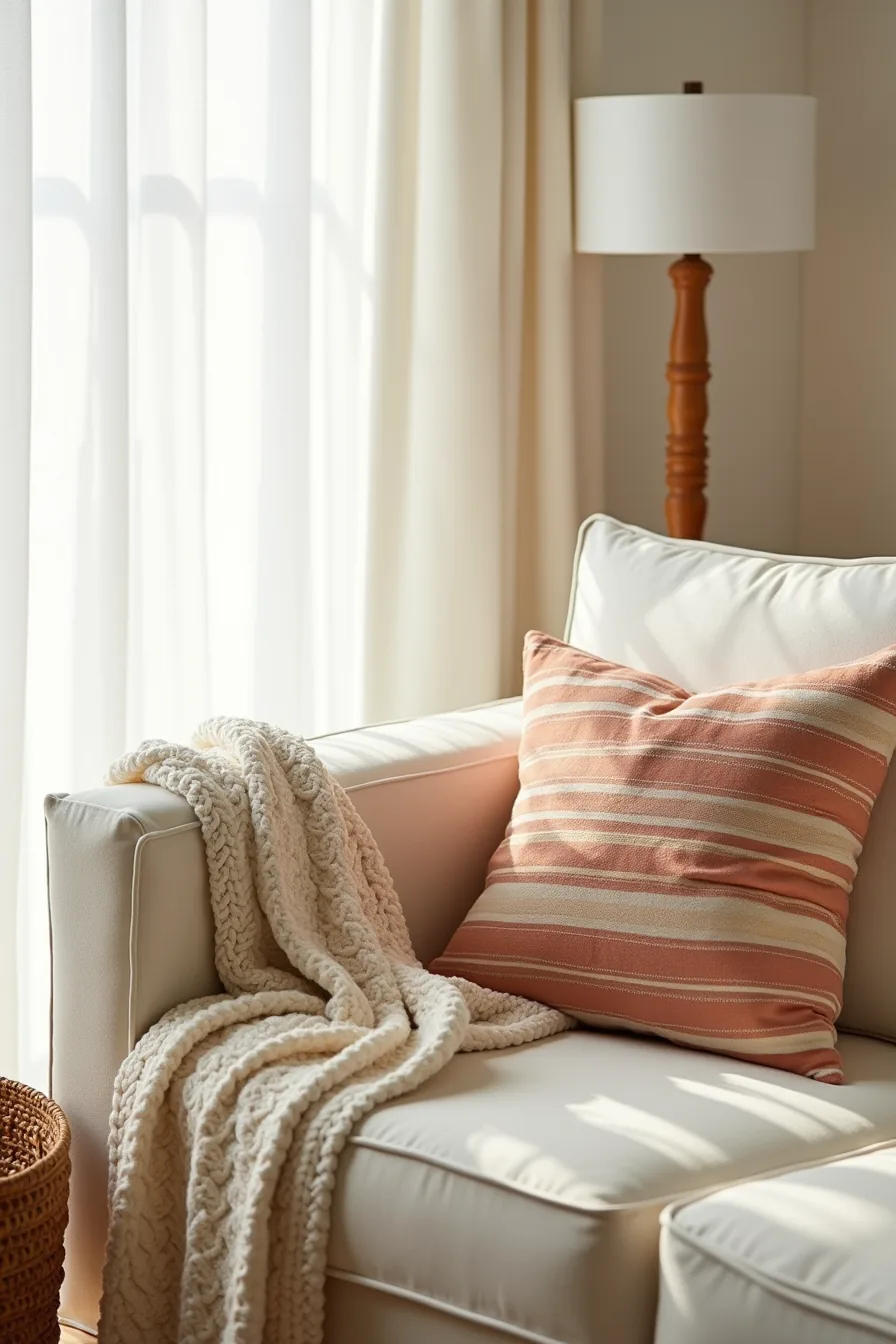
In a 250–350 sq ft living room, texture does the heavy lifting that color can’t. The setup of a cream cable-knit blanket draped over the sofa arm, a terracotta-and-cream striped pillow, and a woven basket tucked beside the seat works because it builds depth vertically without consuming floor space. The blanket reads as warm and inviting, the pillow introduces the season’s signature rust tone, and the basket adds organic structure while hiding a remote or extra throw.
This arrangement suits rooms where the sofa already anchors the layout and you need to avoid adding bulky furniture. Keep proportions deliberate: the blanket should hang no more than halfway down the arm, and the basket should sit at roughly seat height to maintain visual balance. For maintenance, choose a machine-washable knit and a basket with a smooth interior weave to prevent snags.
This is one of the best fall home decor living room examples for renters, since nothing here requires permanent alteration.
Accent Wall and Focal Point Strategy
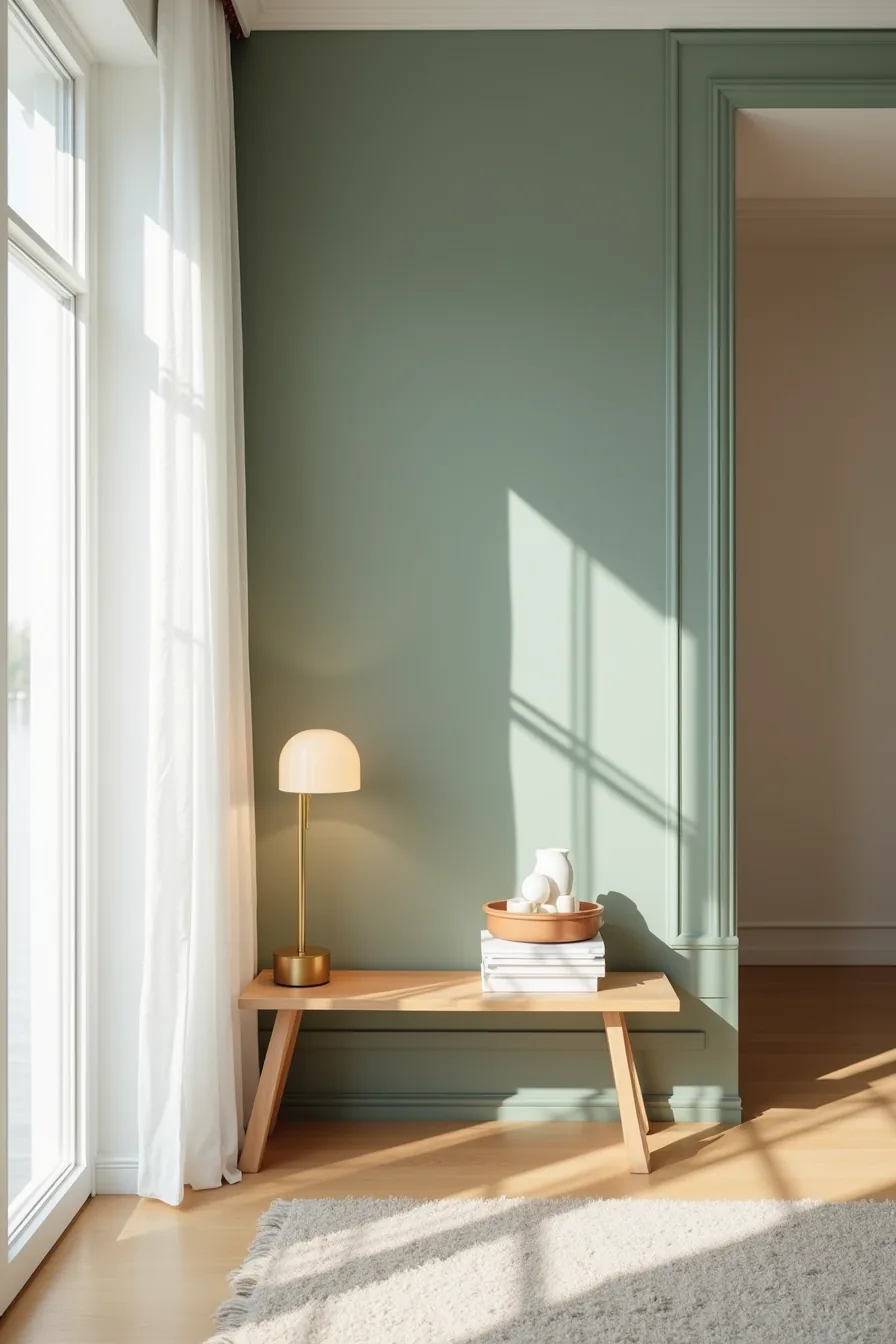
When your living room dips under 200 sq ft, an accent wall becomes the most efficient way to commit to a seasonal mood without sacrificing square footage. A deep sage green shiplap wall behind a low wooden console table does two jobs: it pulls the eye horizontally to make the room feel wider, and it creates a dark backdrop that makes fall’s metallic and ceramic accents glow. The brass lamp and stacked ceramic boxes on the console work because they sit against that saturated color, brass reads warmer, and the clay tones in the ceramics echo the season’s palette without adding clutter.
This strategy suits open-plan layouts where the living area bleeds into a dining or kitchen zone. The accent wall carves out a distinct “room” visually, so you don’t need a rug or furniture break to define the space. For Practical Fall Home Decor Living Room planning tips, keep the console at 30–36 inches tall and ensure the wall color has a slight gray undertone, pure green can clash with neutral sofas.
Shiplap requires a nail gun and wall prep, so budget four to six hours for installation, or use peel-and-stick wallpaper in a matching tone for a renter-friendly alternative.
Budget Route: Swaps and Seasonal Styling
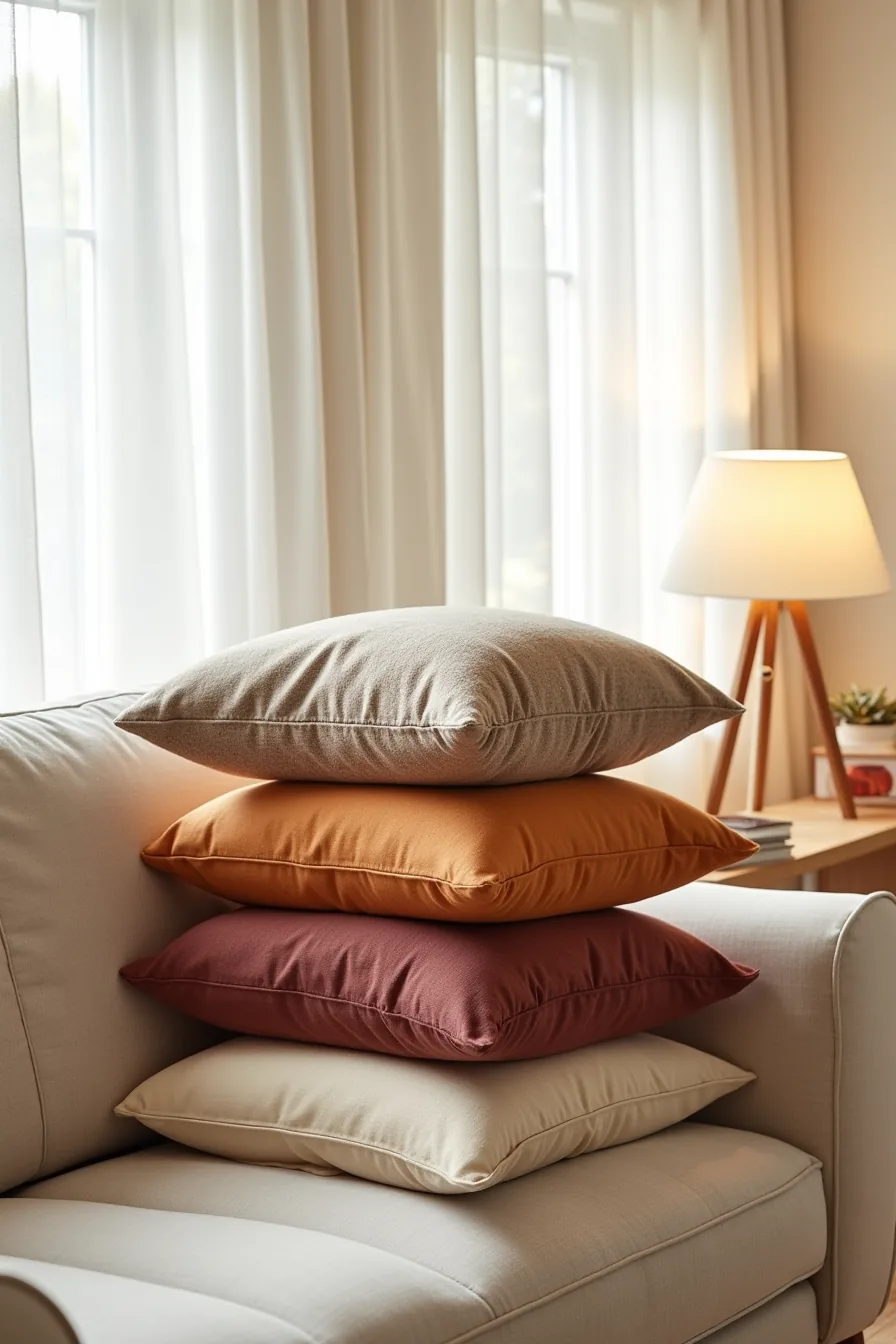
Your fastest path to a fall home decor living room is a 30-minute rotation of what you already own, not a shopping trip. Swap in four pillow covers, ochre, burgundy, taupe, and cream, on the neutral sofa you live with year-round; the mix costs $25–$60 total if you buy covers only, and it changes the room’s temperature without altering your furniture footprint.
This approach suits anyone decorating on a strict timeline or testing a palette before committing to paint or upholstery. Stack the covers fanned on the sofa’s corner to show each pattern, then rotate them across the cushions weekly so wear stays even. The budget vs. Splurge fall home decor living room difference comes down to fabric weight, wool blends at $30-plus per cover hold their shape for three to five seasons, while polyester under $12 pills after one.
Wash all covers on cold before first use to set dye, and keep the sofa’s existing throw folded beneath to anchor the arrangement.
Renter-Friendly Approach: Removable Updates
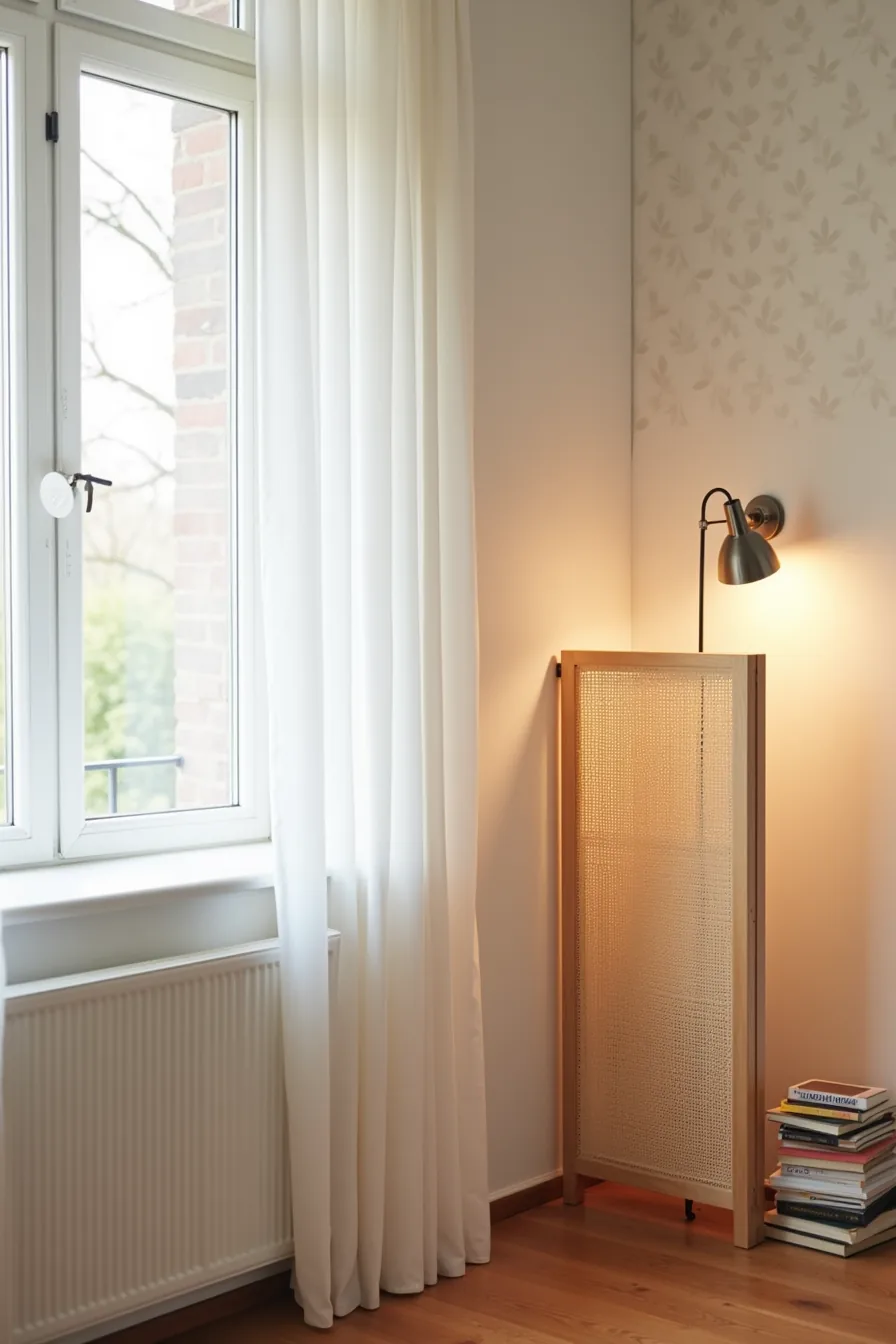
Peel-and-stick wallpaper transforms a living room without a single nail, screw, or paintbrush. Choose a subtle leaf pattern and apply it to one wall section, behind the sofa or a console, to create a focal point that reads as intentional, not temporary.
The key is limiting the scale. Covering one wall section, roughly 8 to 10 feet wide, costs between $40 and $120 depending on the roll quality, and takes about two hours to install. Avoid covering an entire room; the seams are more visible in larger spans, and removal becomes tedious.
Pair the wallpaper with a portable room divider featuring woven panels. A 5-to-6-foot-tall divider defines a seating zone or hides a corner, and it folds flat for storage. Look for panels with a powder-coated steel frame, they hold up better than all-wood versions, which can warp near heat vents.
For the floor, use non-slip furniture pads under every leg. They protect hardwood from scratches and prevent rugs from bunching, which matters in rentals where the flooring deposit is at stake. When you move out, the wallpaper peels off with a hairdryer on low heat, and the divider moves with you, no patching, no repainting.
Long-Term Investment: Custom Upholstery and Built-Ins
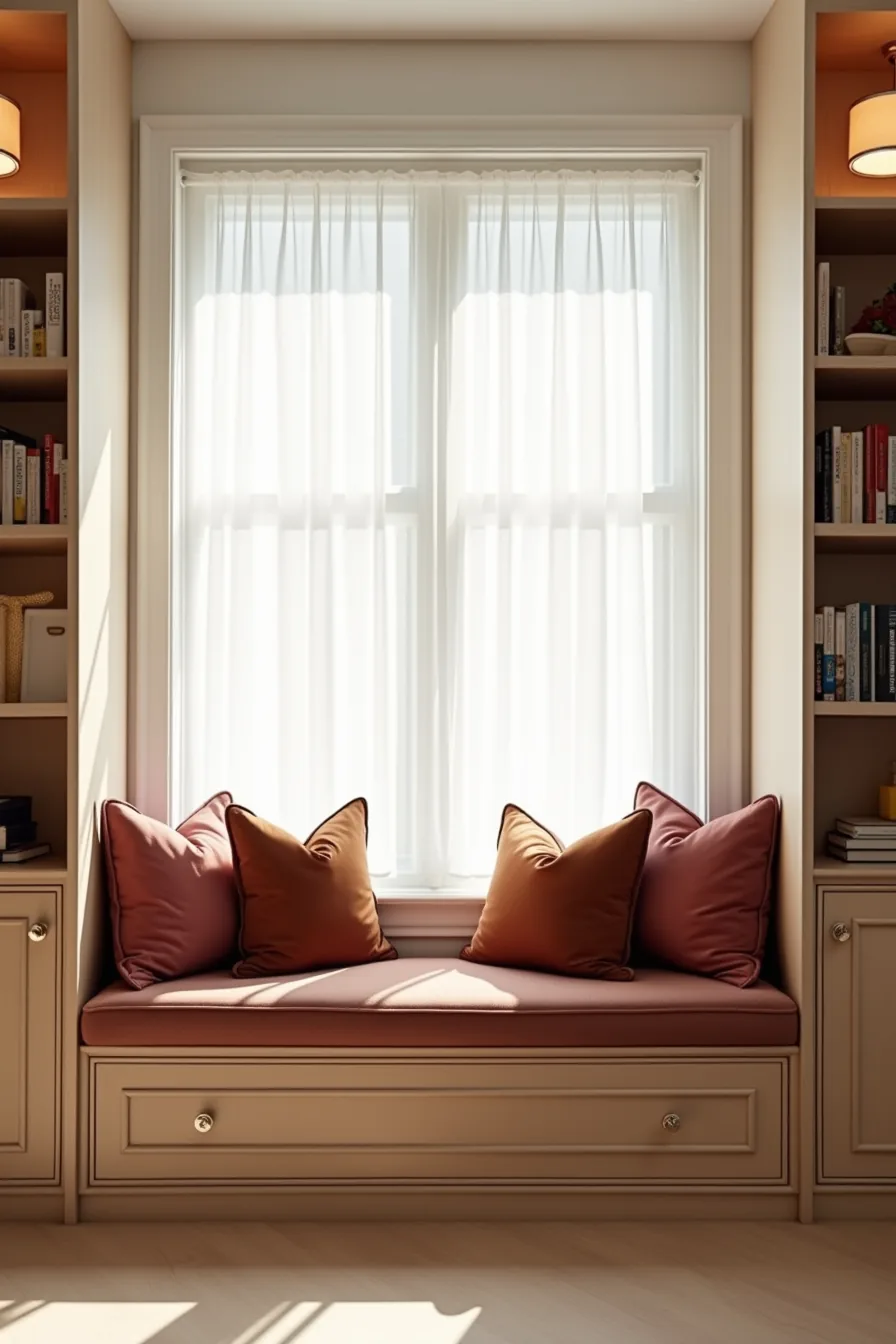
A built-in window seat with a custom deep-brown upholstered cushion anchors a fall living room in permanence. You choose the foam density, high-resilience foam rated for daily use holds its shape for 8 to 12 years, while standard polyfoam compresses within 3. Specify a zippered, removable cover in a solution-dyed acrylic or performance velvet; both resist fading from window light and wipe clean with mild soap.
Cabinetry built around the seat, with wooden shelving above, gives you storage that doubles as display. Budget $1,200 to $3,500 for the carpentry alone, depending on your market and whether you finish it yourself. The jewel-tone throw pillows on the cushion are the budget-friendly part: swap them seasonally for $25 to $60 each, refreshing the room’s color without touching the structural pieces.
This route suits owners planning to stay put for five-plus years. A custom cushion runs $200 to $600 in materials alone, so it’s poor value if you move soon. Protect the investment by vacuuming the upholstery monthly and keeping direct sun exposure under four hours daily.
Common Pitfalls and Scale Adjustments
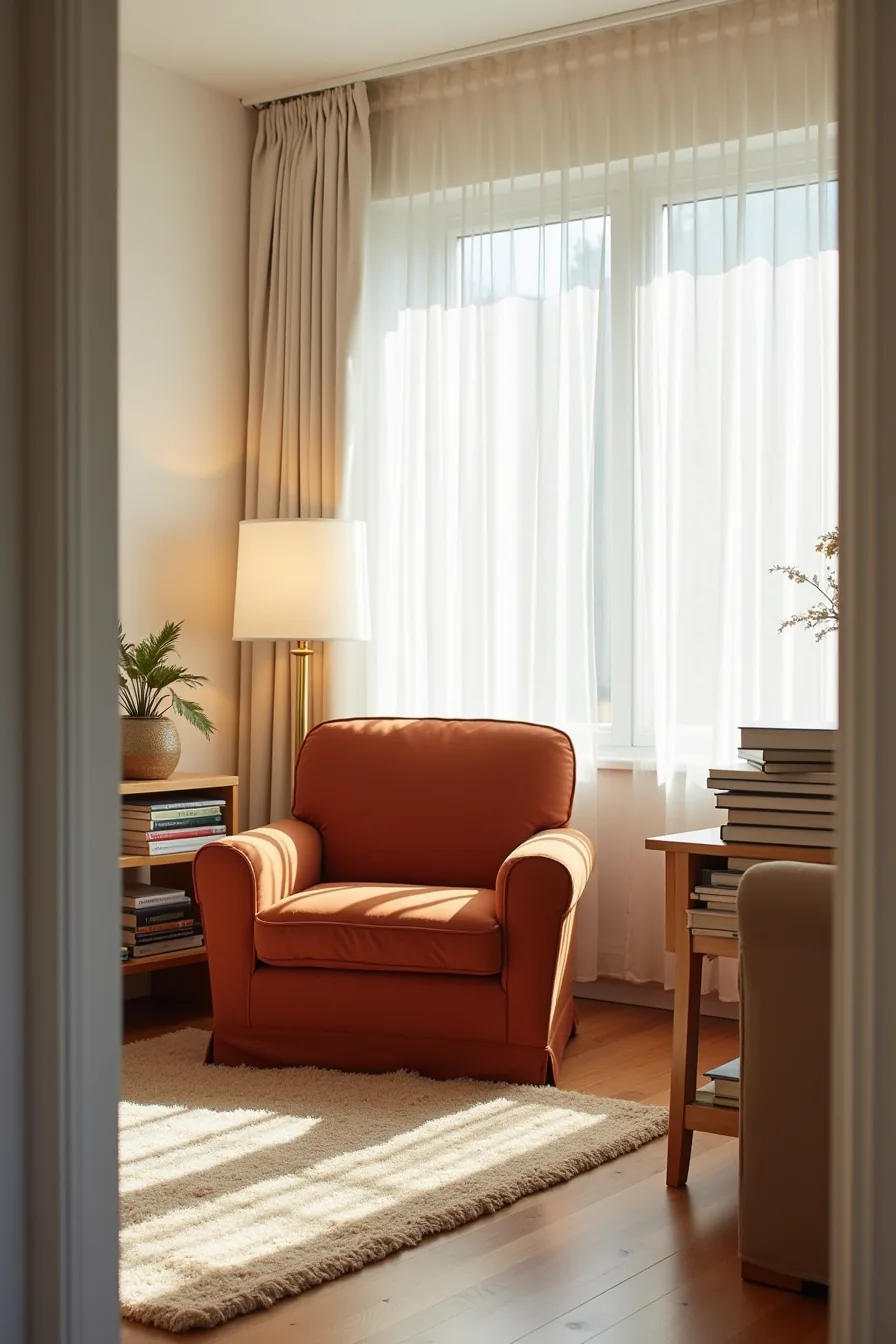
The most frequent failure in fall home decor living room arrangements is scale miscalculation. An oversized rust-colored armchair in a 10-by–12-foot space eats the walkway, leaving under 24 inches of clearance; you need at least 30 inches for comfortable passage. That bunched rug, too large for the footprint, creates a trip hazard at the edges; choose one with 12 to 18 inches of bare floor around all sides instead of forcing a bigger size.
A crowded side table stacked with candles, a tray, and stacked decorative books overwhelms visually and collects dust. Limit surfaces to three objects max, and group them by height rather than scattering. Dark burgundy and deep orange walls shrink small rooms, reserve saturated hues for accessories, keeping walls neutral.
For rentals, avoid adhesive hooks for garlands; Command strips take off paint, so use tension rods inside window frames or freestanding ladders draped in faux foliage. Real pumpkins rot within weeks indoors, switch to ceramic or wood versions that you can store and reuse annually.
Your Quick Start Checklist
Before you buy anything, measure your dominant surface, a coffee table, console, or mantel, and decide on one focal point. For a small room, choose one textured throw and a single tabletop vignette; for a large space, layer a floor basket, plush pillows, and a mantel garland to anchor the eye.
Prioritize materials over motifs: wool, linen, wood, and dried botanicals read as autumnal without literal pumpkin prints. Skip fragile decor if you’ve pets or kids, and opt for unbreakable ceramic or fabric alternatives.
Start with one swap, pillow covers or a throw, and live with it for a week. Then, add one natural element, like a bowl of pinecones or seasonal branches. This incremental approach lets you refine your palette without overspending or cluttering your room.
Frequently Asked Questions
What colors work best for fall home decor living room in a north-facing room with limited natural light?
Choose warm, mid-tone colors like burnt orange, mustard, and terracotta. These reflect available light better than deep browns or burgundy, which absorb it and make the room feel darker and smaller.
How do I transition fall home decor living room to winter without replacing everything?
Swap lightweight textiles for heavier ones. Replace cotton throws with wool or chunky knits, and switch linen pillow covers for velvet. Keep your base color scheme, just add deeper tones like forest green or navy.
Can I use fall home decor living room in a rental apartment without losing my security deposit?
Yes. Use removable adhesive hooks for lightweight wreaths, and drape fabric over furniture instead of hanging it on walls. Avoid anything that stains, like real pumpkins on wooden floors or oil-based candles on shelves.
What’s the difference between seasonal fall home decor living room and a permanently warm color scheme?
Seasonal decor adds removable accents, pillows, throws, and centerpieces, over your existing base. A permanent warm scheme changes wall colors, large furniture, and flooring. Seasonal is reversible in hours; permanent requires redecoration and a bigger budget.