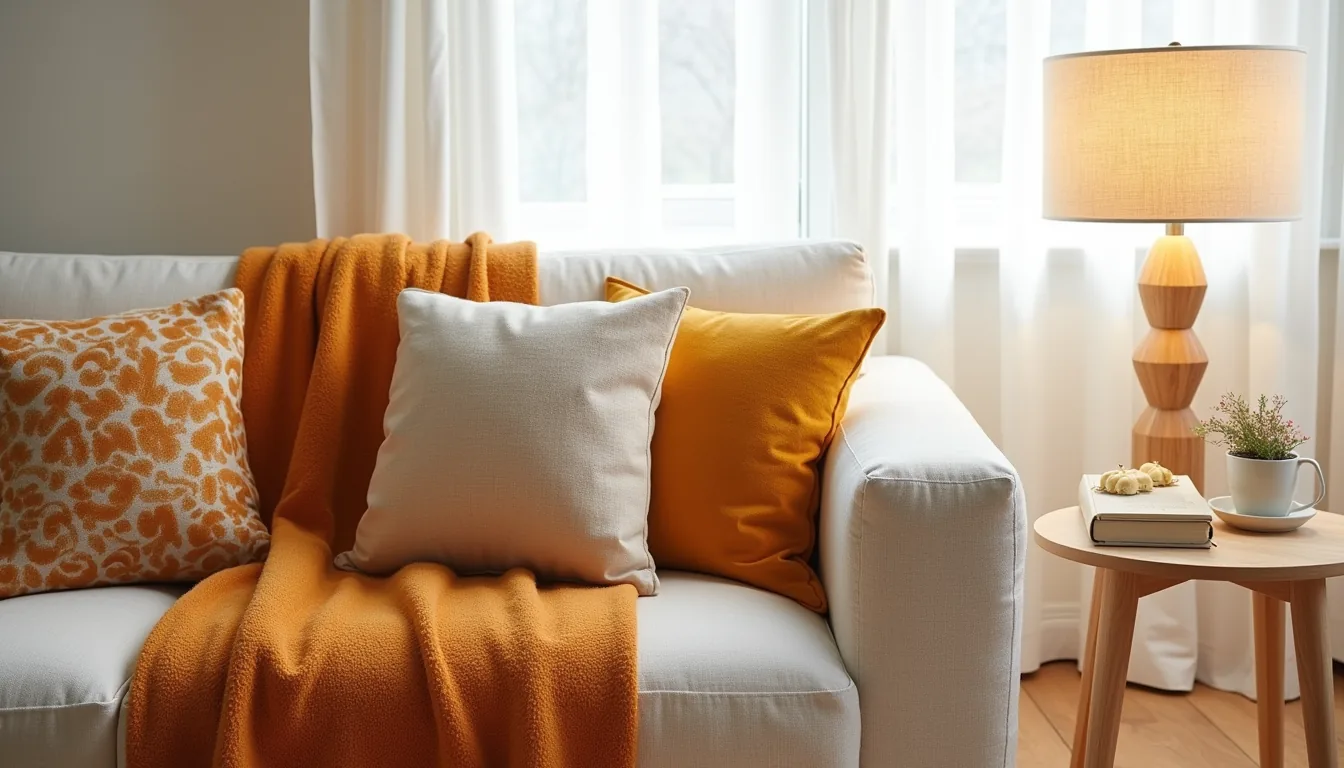

You don’t need to redecorate your entire home to make it feel like fall, and the six DIY projects below prove that a focused, deliberate update beats a cluttered seasonal overhaul. Each idea targets a specific zone, from a 15-minute mantel refresh to a weekend-worthy entryway upgrade, so you can pick the exact scope that fits your space, budget, and skill level without sacrificing function.
Key takeaways
- Layered textiles deliver the highest warmth-per-dollar return, with a chunky knit throw and two textured cushions transforming a neutral sofa in under 15 minutes.
- Fresh foliage lasts only 5–7 days indoors, so opt for preserved eucalyptus or dried grasses if you want a display that survives the entire season without weekly replacement.
- Swapping bulbs to 2700K warm white in your existing lamps costs under $20 and instantly shifts a room’s mood, outperforming any candle or string-light addition for the same price.
- Scale your centerpieces to 1/3 of the table’s width for clear sightlines, and never cluster more than three decor items on a single surface to avoid a cluttered, unlivable look.
Layered Textiles: The Fastest Route to Seasonal Warmth
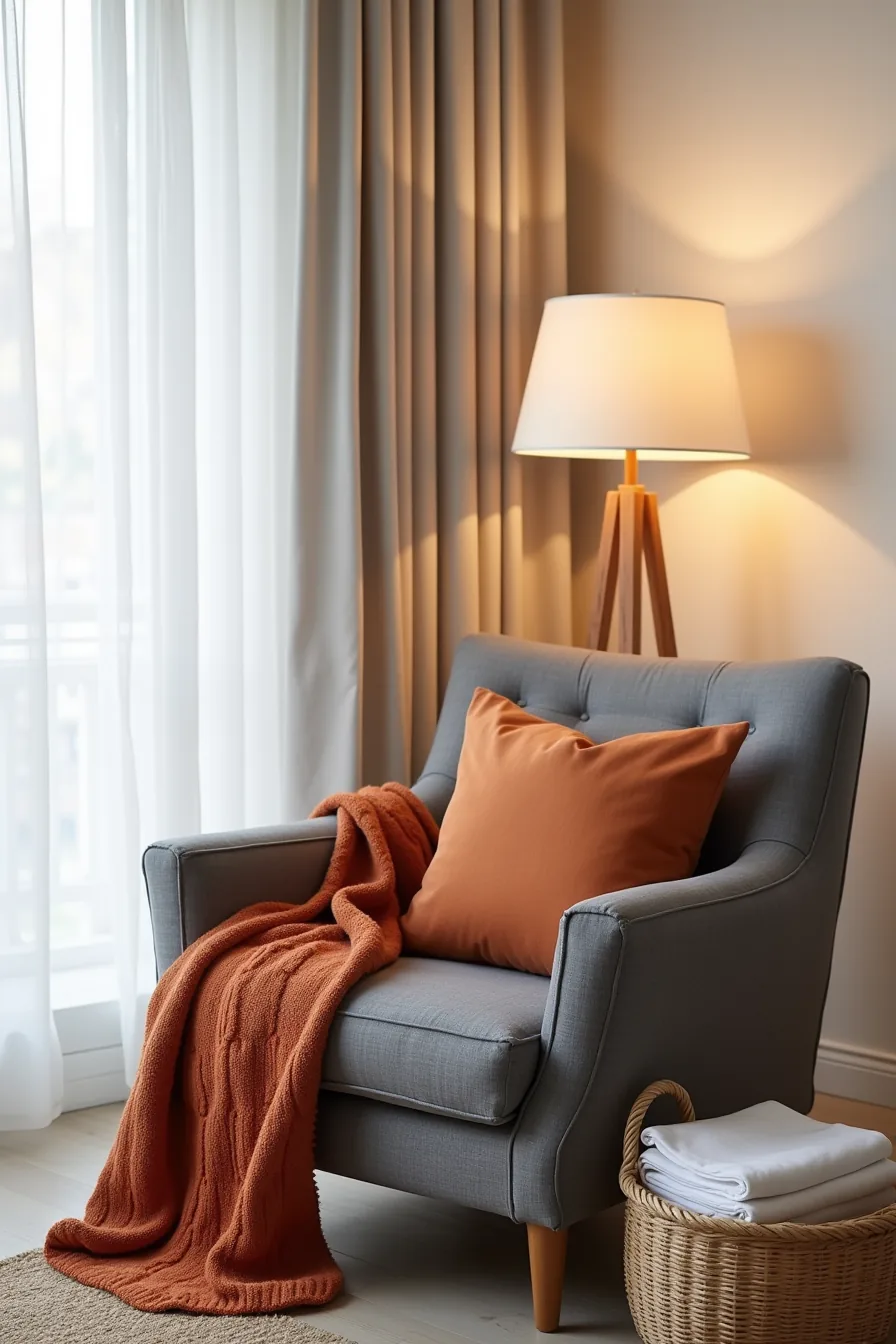
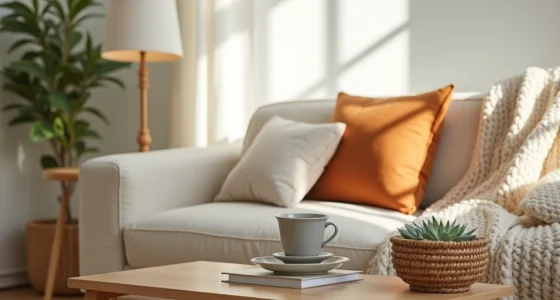
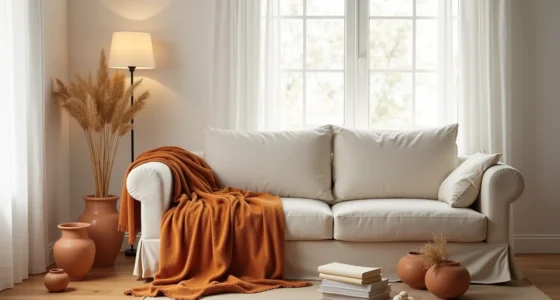
When you want fall decor ideas for the home DIY that don’t require a single tool or nail, layered textiles deliver instant coziness. The setup is simple: a gray upholstered armchair gets a rust-toned knit throw draped casually over one arm, while a terracotta pillow tucks into the seat corner. A small woven basket on the floor beside it holds folded linens, extra layers ready for chilly evenings.
This works because it adds visual warmth without committing to paint or permanent fixtures.
Why it works: The rust and terracotta hues echo autumn leaves, while the knit and woven textures invite touch. It suits living rooms, reading nooks, or bedrooms where you want a quick seasonal shift.
Adaptations: In a small space, choose one chair and one throw, skip the basket to avoid clutter. For a large open-plan room, repeat the palette across a sofa and two armchairs, using larger baskets.
Budget vs. Splurge: Thrift store throws and pillow covers cost under $20; a handwoven wool throw is the splurge upgrade.
Practical notes: Machine-washable knits are essential for high-traffic homes. Keep the basket within arm’s reach for easy access, but don’t block walkways or door swings. Rotate textiles every few weeks to prevent dust buildup and uneven wear.
Foliage and Branch Arrangements: Fresh vs. Preserved Trade-offs
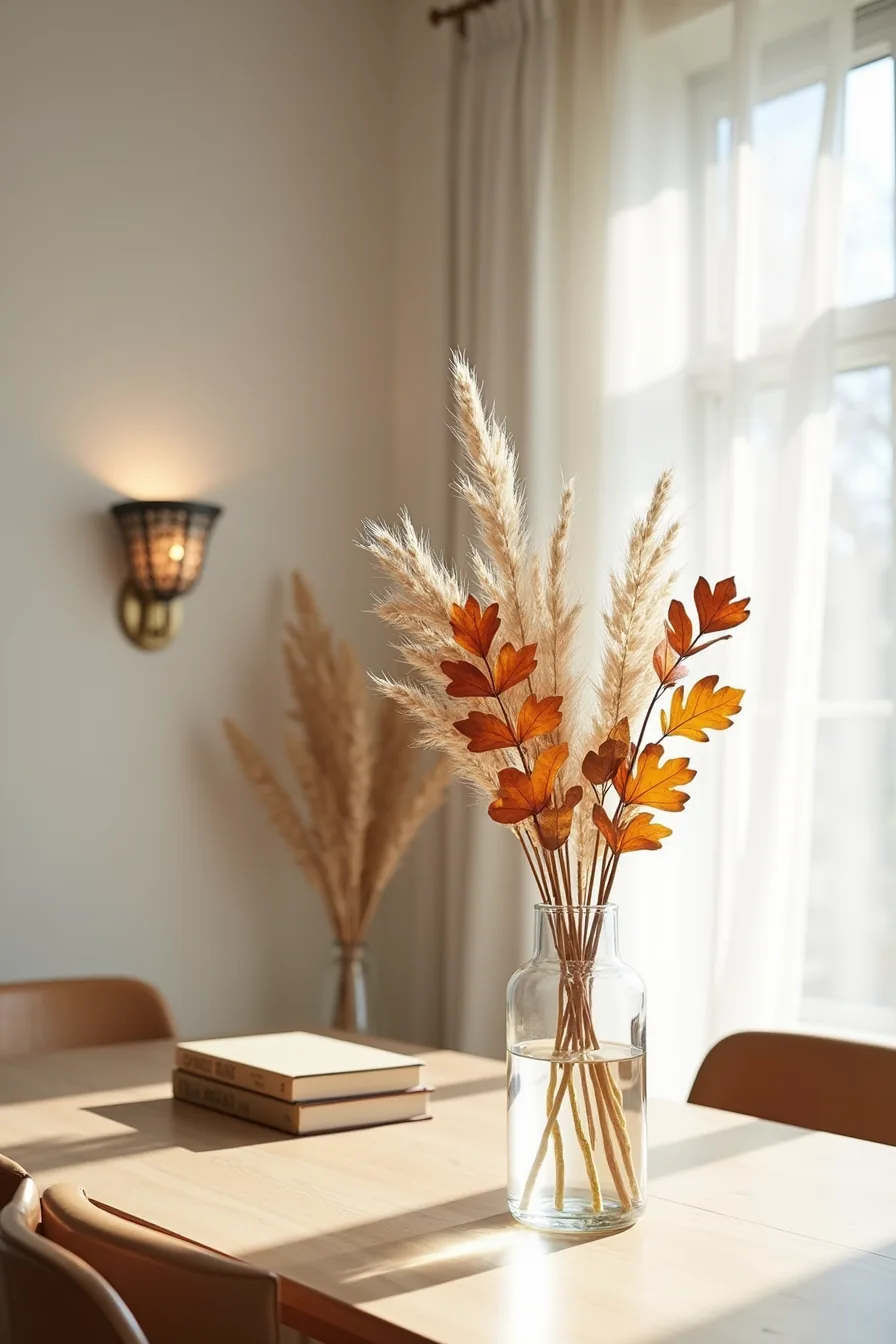
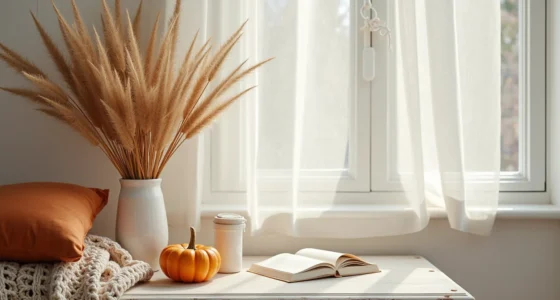
A glass cylinder vase filled with tall dried branches, preserved oak leaves in amber and rust tones, and a few sprigs of dried wheat gives you a centerpiece that lasts the entire season. Fresh cut foliage wilts within 5–7 days indoors, while preserved material holds its color for 12–18 months with zero water or maintenance. The trade-off is upfront cost: a DIY dried arrangement runs $15–$40 in craft-store stems, versus $8–$12 for a fresh bouquet you’ll replace weekly.
This setup suits dining tables, buffet boards, or entryway consoles where you want height without blocking sightlines across the table. Keep the vase at 12–16 inches tall so conversation flows over it. For renter-safe wall installations using branches, use removable adhesive hooks rated for 5–10 pounds rather than nails.
Preserved leaves shed dust, gently shake them outdoors every two weeks, and keep the arrangement away from direct sunlight to prevent fading. In small spaces, scale down to a 6-inch vase with three branches; for large rooms, cluster two vases of varying heights on a sideboard.
Lighting Shifts: Warm Bulbs and Layered Sources
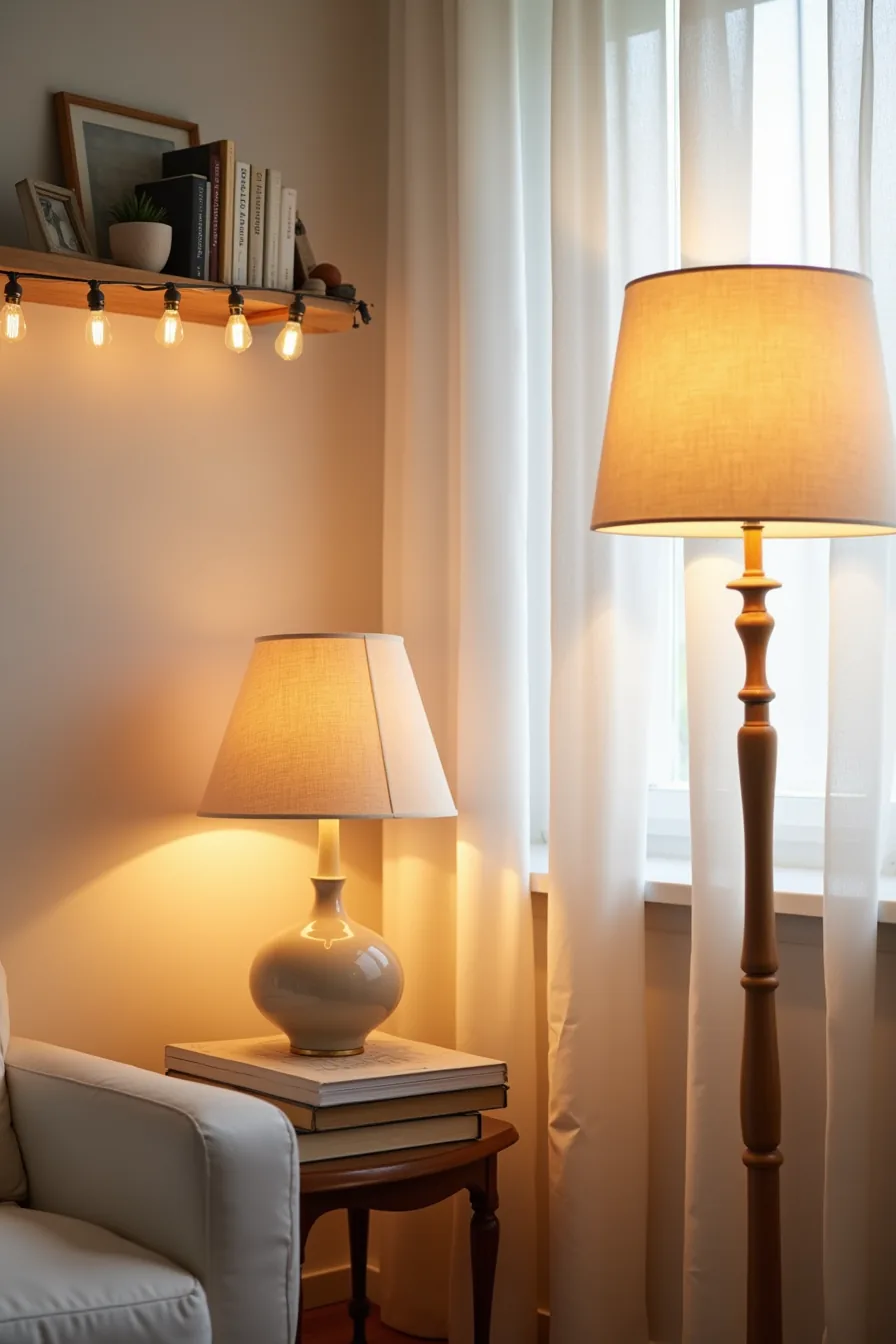
Swap your daylight bulbs (5000K–6500K) for soft white or warm amber versions (2700K–3000K) and the entire room reads as cozier within minutes. The effect multiplies when you layer three light heights: a table lamp with a warm-toned shade on a side table, Edison-style bulbs draped along a shelf edge for mid-level glow, and a floor lamp with a linen shade casting diffused light from above. You don’t need new fixtures, only bulbs and placement.
For a typical living room, use 60–100 watt equivalents in lamps and 40–60 watts for accent strings. Dimmer switches (around $12–$25) let you drop brightness in the evening without rewiring. Renters: replace existing bulbs and keep the originals in a drawer; clip-on lamp shades convert harsh fixtures for under $15.
Budget route: a single warm bulb and a thrifted shade costs less than $10. This setup works best in seating areas, reading nooks, and dining corners where you want intimacy, not task lighting.
Color Palette Swaps: Walls, Accents, and Temporary Paint
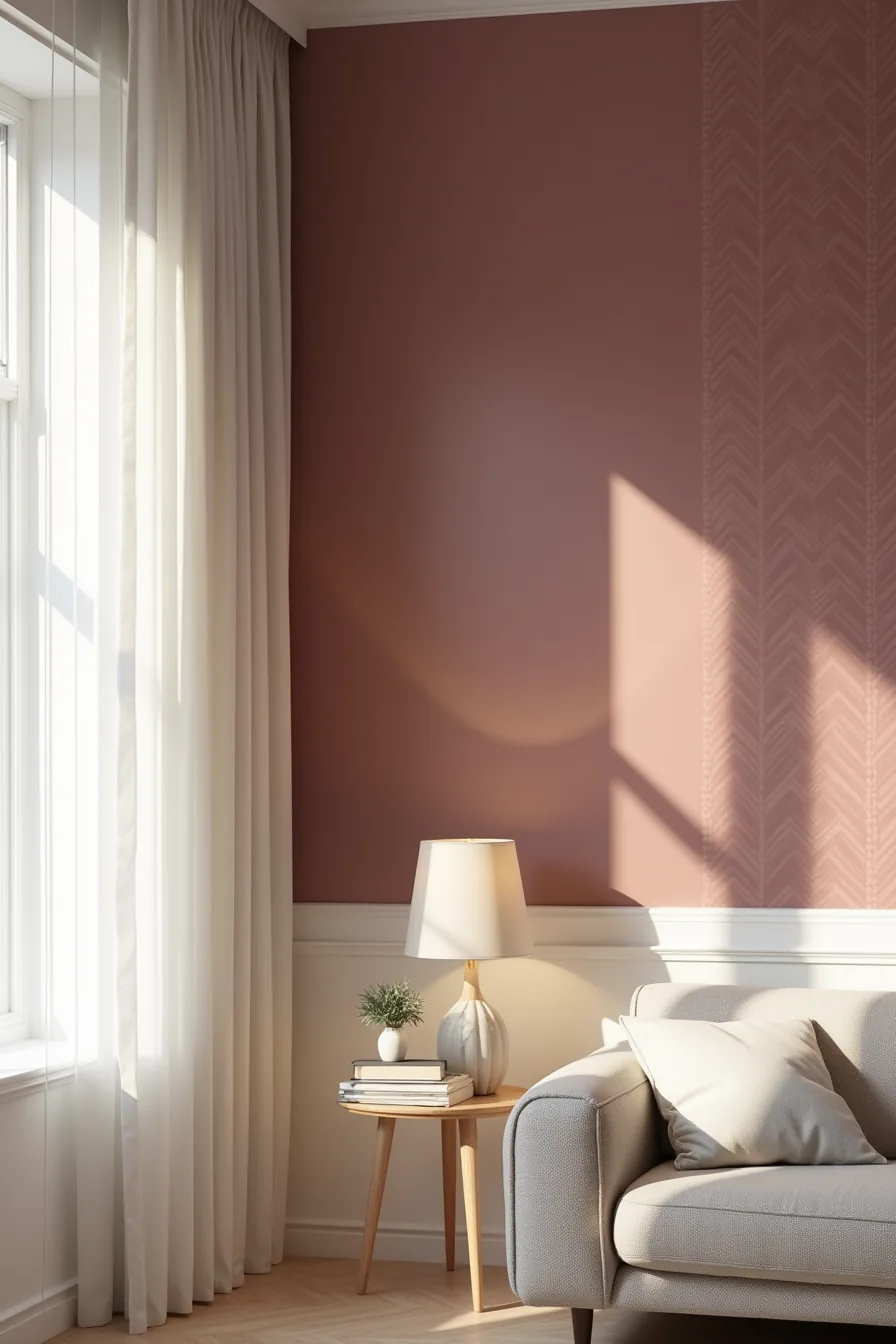
Color is the fastest way to shift a room’s mood without committing to a full renovation. For fall, think burnt orange, deep olive, rust, mustard, and muted terracotta, shades that echo turning leaves but stay grounded enough for year-round wear.
The lowest-effort route is swapping throw pillows, blankets, and table linens in those tones. A single rust-colored velvet cushion on a neutral sofa changes the entire visual temperature. If you want more permanence, consider temporary peel-and-stick wallpaper on one accent wall.
Choose a deep burgundy with a subtle geometric pattern; it reads as sophisticated, not holiday-themed. The application takes an afternoon, and removal is damage-free, ideal for renters.
For a painted accent wall, use a matte finish in a shade like “smoked paprika” or “forest floor.” Measure the wall first: a good rule is to keep accent walls under 40% of the room’s total wall surface to avoid visual heaviness. Darker colors make a small room feel smaller, so reserve them for larger spaces or behind a bed or sofa where they anchor rather than overwhelm.
Maintenance-wise, matte paint shows scuffs more than satin, so keep a small touch-up pot handy. Peel-and-stick wallpaper needs a clean, smooth surface to adhere, textured walls will cause bubbling. If you’re testing a bold hue for the first time, buy sample swatches and tape them up for a few days.
Observe how the color changes from morning to evening light before committing.
Functional Decor: Seasonal Storage and Display Pieces
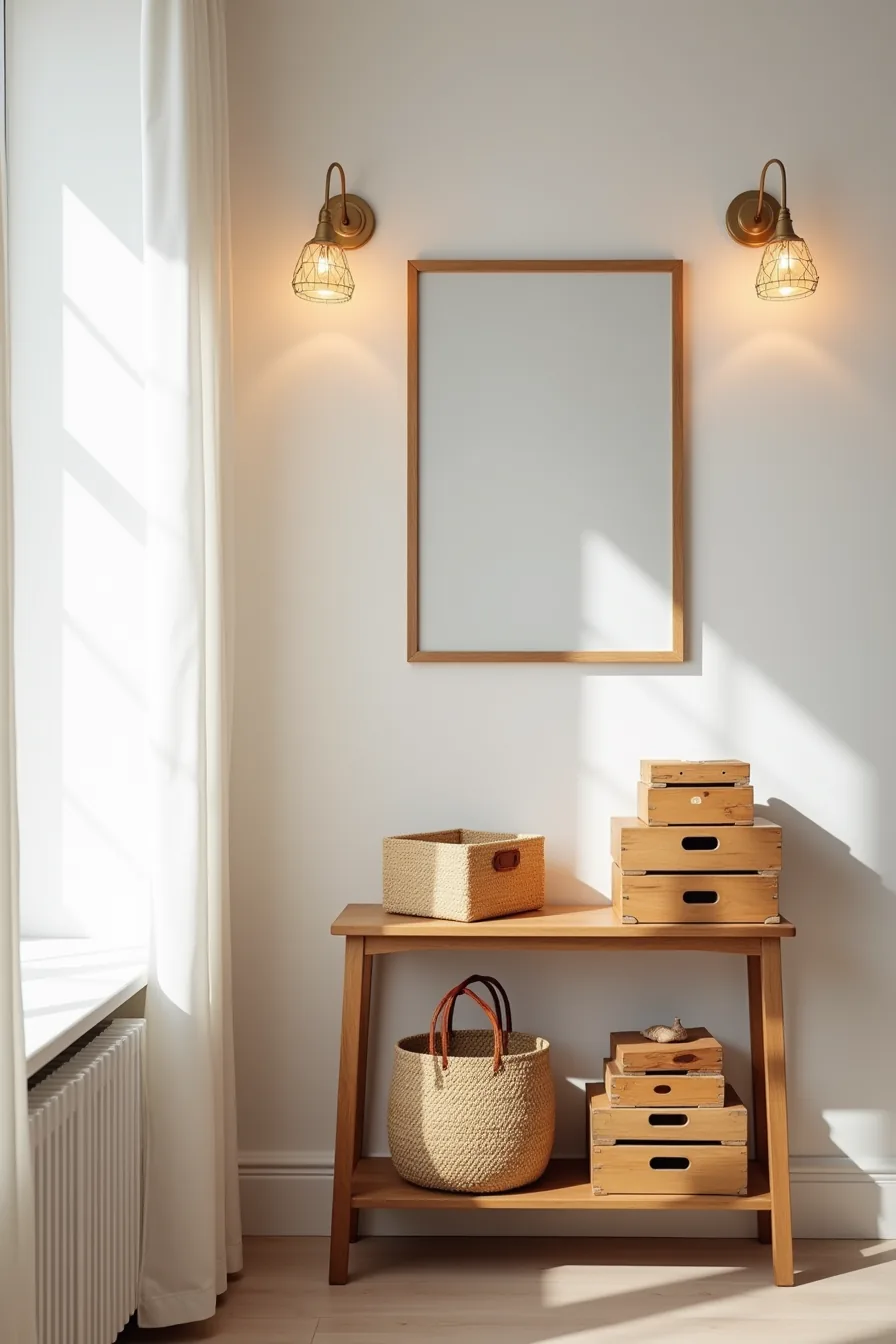
Fall decor doesn’t have to be purely ornamental. The most practical approach involves pieces that store your everyday items while displaying seasonal texture. A wooden console table against a hallway wall serves as the anchor: place a woven storage basket with leather handles at one end for throws or mail, a decorative wooden box in the center for remotes or keys, and stack vintage wooden crates on the opposite side to hold magazines or firewood.
The framed mirror above doubles the light and makes the vignette feel intentional rather than cluttered.
This strategy suits medium to large entryways and living rooms where floor space allows a table depth of 12–16 inches. For small apartments, swap the console for a wall-mounted shelf and use just the basket and one crate. The cost-per-use math favors this route: a quality woven basket runs $30–$60 and serves daily for years, whereas a seasonal wreath delivers visual impact for only six weeks.
Choose baskets with tight weaves and leather handles, they resist sagging and survive heavy use. Dust the crates monthly and vacuum the basket liner to keep allergens at bay.
Avoiding Common Missteps: Scale, Clutter, and Maintenance Pitfalls
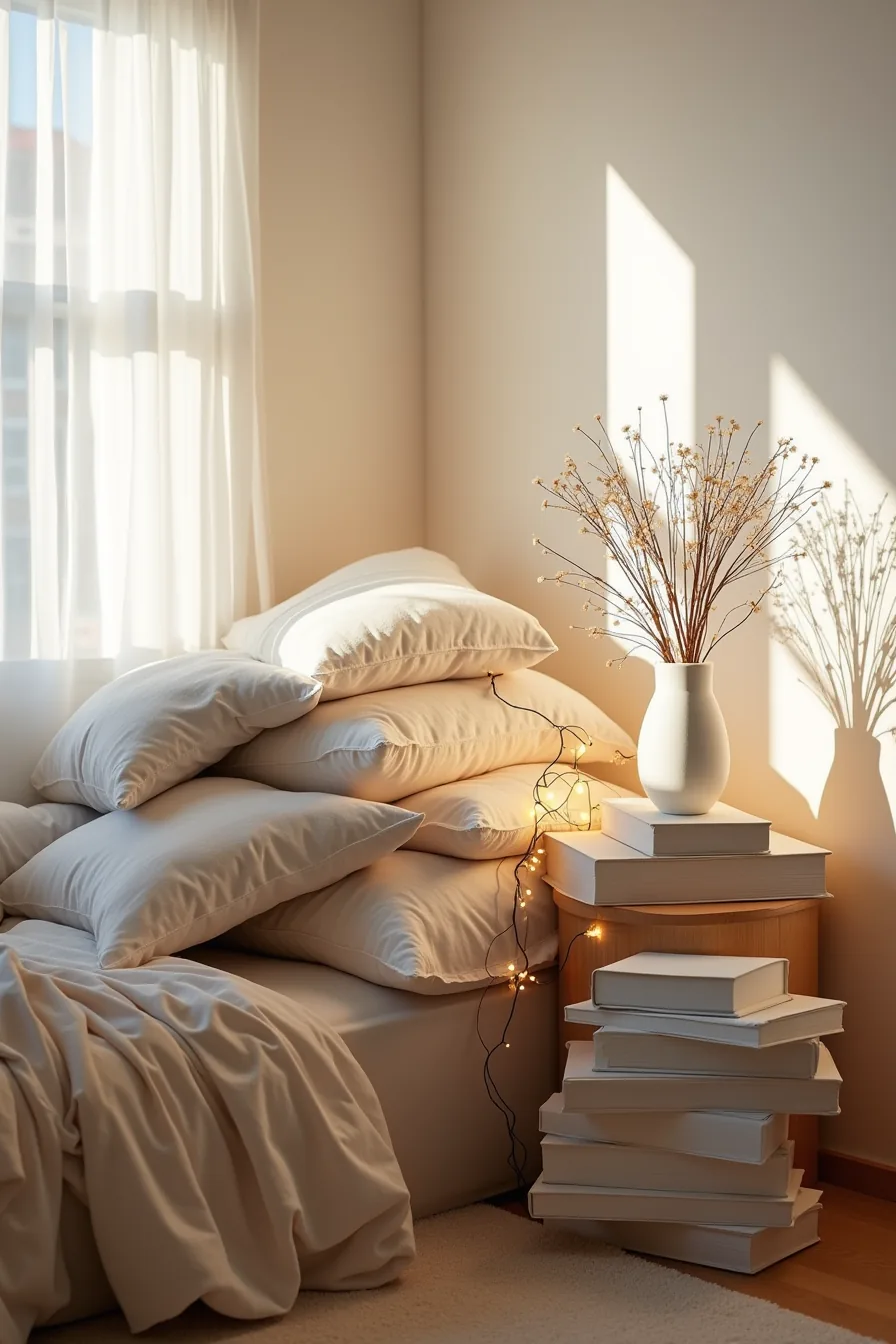
The fastest way to undermine your fall decor ideas for the home diy is to crowd one surface with everything seasonal at once. Picture a bedroom side table holding three throw pillows, a tangled string of lights, wilted flower stems in a vase, and stacked boxes on the floor below. That setup creates visual congestion, blocks your bedside access, and demands daily upkeep, wilted stems need replacing every 3–5 days, and tangled lights take ten minutes to untangle each time you want them on.
Apply a one-in, one-out rule per surface. If you add a pillow stack, remove the boxes. If the lights stay, skip the vase.
For small rooms, limit decor to two zones maximum: one eye-level focal point and one floor-level accent. Maintenance math matters too, choose dried flowers over fresh if you can’t commit to weekly swaps, and favor battery-operated lights with timers over plug-in strands that require cord management. When a piece needs more attention than it gives visual return, it’s a mistake, not decor.
Where to start
Pick your bottleneck first. If you rent, start with the tension-rod curtain and swapable pillow covers, zero wall damage, under an hour each. If you’re on a tight budget, the clothespin garland and candle vignette cost less than one store-bought wreath.
If you’ve a large open-plan room, invest in the oversized wool throw and branch arrangement to anchor the space.
Your next step: Measure one wall or mantel, then commit to a single project this weekend.
Frequently Asked Questions
How long should fall decor stay up before it looks dated?
Keep fall decor up from early September through Thanksgiving, roughly 10–12 weeks. Remove obvious harvest pieces like pumpkins and gourds by early December. Neutral-toned items like wood and dried botanicals can stay through winter without looking stale.
Can I use fall decor ideas for the home DIY in a small apartment without it feeling cramped?
Yes. Limit yourself to three focal points, one tabletop, one wall, and one shelf. Use vertical arrangements and compact items under 12 inches tall.
Avoid floor decor in rooms under 100 square feet to preserve walking space.
What’s the cheapest way to refresh a room for fall without buying new items?
Rearrange existing furniture and swap out textiles you already own, darker throws, heavier curtains, or wool blankets. Add foraged branches, pinecones, or dried leaves from outdoors. Reposition lamps to create warmer, lower lighting.
Total cost: zero.
How do I adapt fall decor for a rental without losing my security deposit?
Use removable adhesive hooks, tension rods, and freestanding items only. Skip anything that requires drilling, painting, or nailing. Place felt pads under all decor to prevent scuffs.
Document every placement with photos before and after removal.