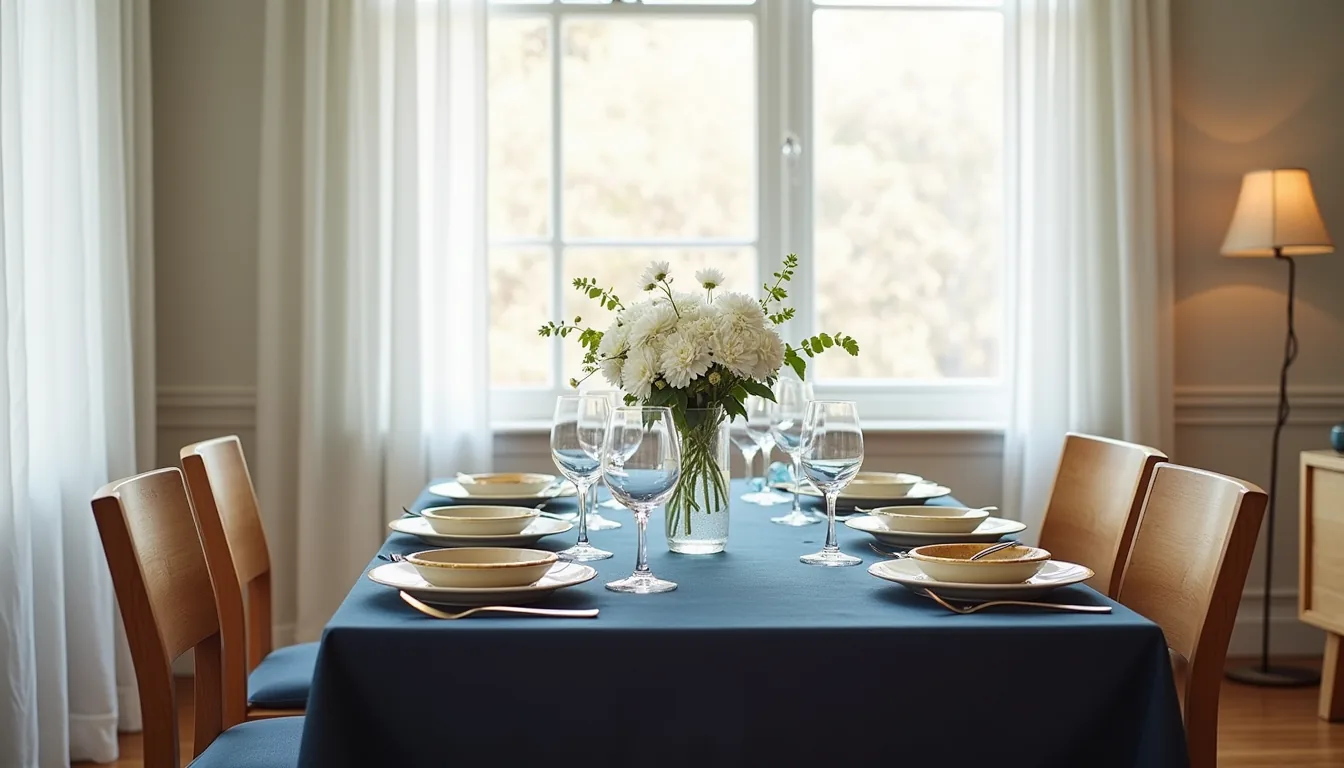
Blue Thanksgiving table decor works because it sidesteps the predictable orange-and-brown palette while still honoring the season’s richness, and you can pull it off in six distinct ways depending on your budget, budget, space, and willingness to maintain it. Each route below ranges from a $20 cloth napkin swap to a permanent set of stoneware you’ll use year-round, with specific guidance on what each choice demands in upkeep. You’ll also find which options suit a 6-foot table versus a 12-person setup, and the one renter-friendly trick that leaves zero holes in your walls.
Key takeaways
Navy and cream reads formal because the high contrast visually defines place settings, so reserve it for dining rooms with at least 36 inches of clearance behind chairs. Coastal blue with warm metallics works best in bright, casual spaces, pair matte navy runners with brushed gold flatware, never polished chrome, to avoid a cold glare. Jewel-tone blue via washable tablecloths and thrifted glassware costs under $40 total and peels away without residue, making it ideal for rented apartments. Slate blue linen in a 10- to 12-ounce weight hides wine stains better than lighter weaves but requires dry cleaning, so budget roughly $15–$25 per table setting upfront.
Navy and Cream: The Formal Approach
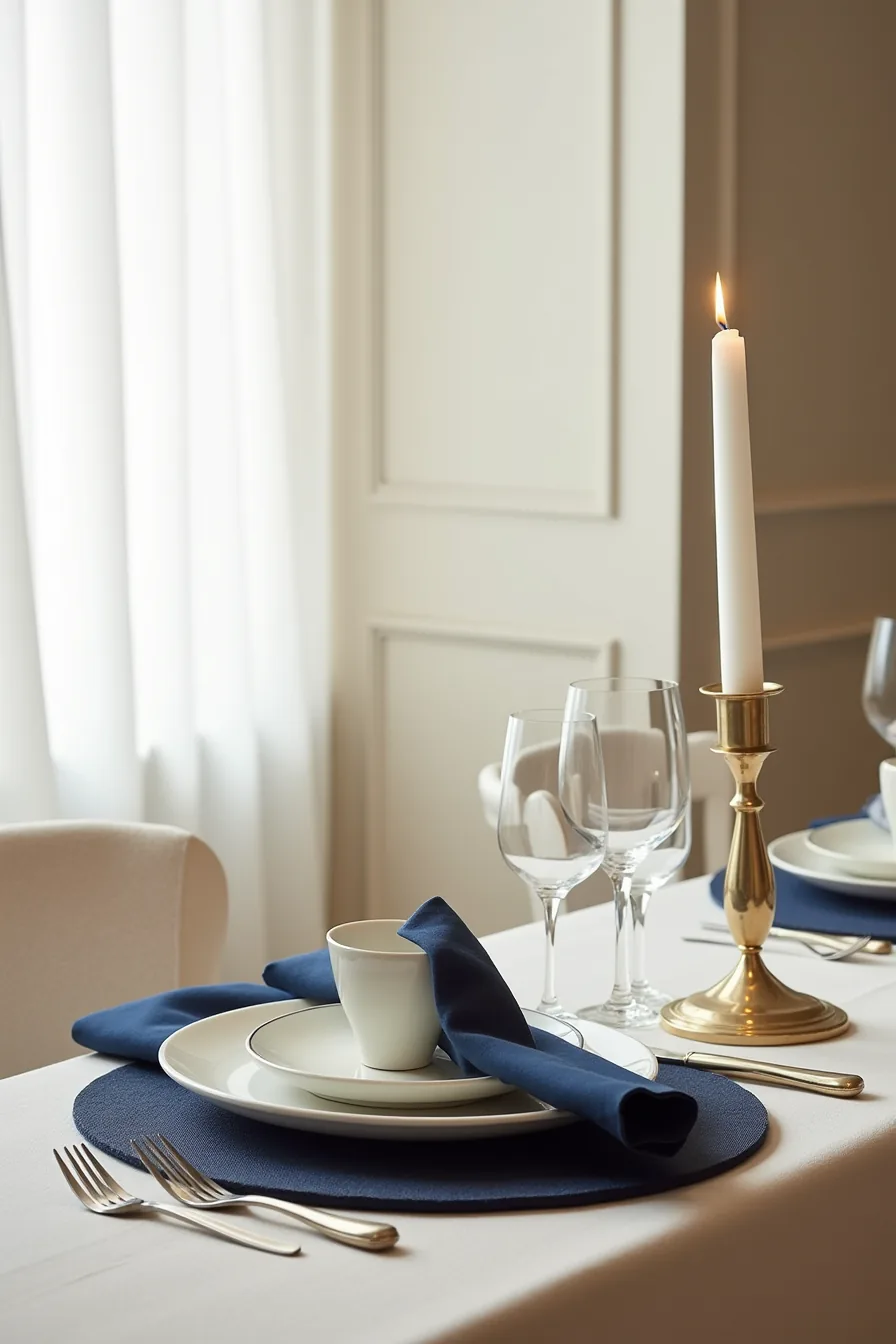
This is the most structured way to interpret Blue Thanksgiving Table Decor, pairing deep navy linens with bright cream dinnerware to create crisp contrast that reads as intentional rather than thematic. The setup works best in dining rooms roughly 8×10 feet or larger, where the darker palette won’t visually shrink the space or compete with existing wall color.
Build the place setting in layers: a navy placemat anchors the composition, with stacked cream plates above it. Silver cutlery placed symmetrically on either side adds traditional formality, while a navy napkin folded into a clean triangle rests atop the plates for geometric repetition. A single gold candlestick with an unlit taper candle beside each setting introduces warmth without sacrificing the tailored aesthetic.
This approach suits hosts who prefer a refined, symmetrical table that photographs well and transitions easily into winter holiday decorating. Expect to spend the most time on napkin folding and cutlery alignment, allow 15–20 minutes per place setting during setup. The navy linen will show lint and pet hair readily, so budget for a final pass with a lint roller before guests arrive.
Coastal Blue with Warm Metallics
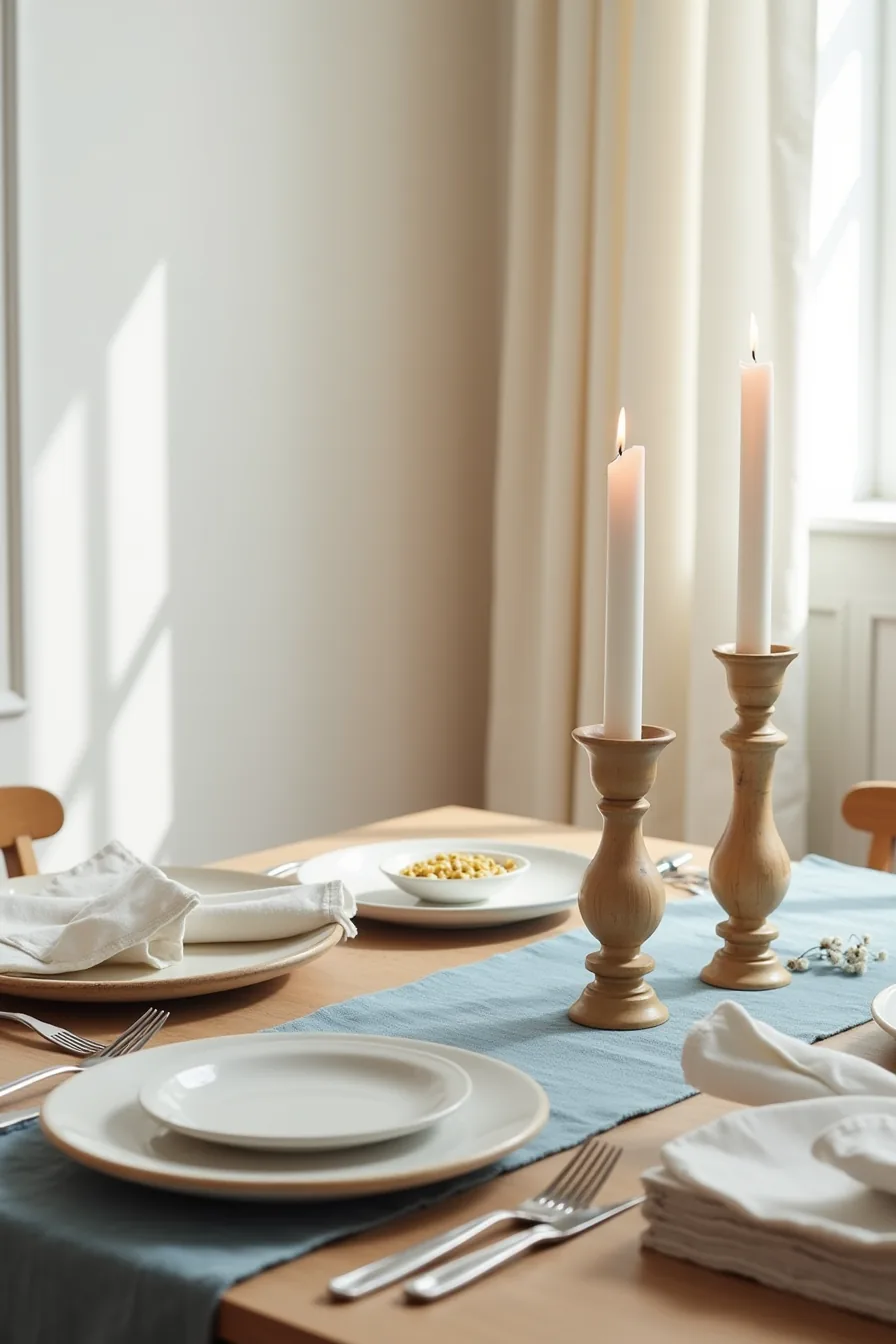
This interpretation of Blue Thanksgiving Table Decor trades formality for breezy ease, pairing a soft blue table runner with natural wood chargers and warm brass candlesticks. It suits hosts who want a polished but unstuffy gathering, ideal for open-concept spaces where the table flows into the living area and needs to feel inviting rather than imposing.
The linen napkin adds texture without competing with the runner, while the small white ceramic bowl pulls in the neutrality of the plates. Brass introduces the metallic warmth that keeps the palette from feeling cool or oceanic. Scale matters: keep the runner at 12–14 inches wide for a standard 36-inch table, and cluster candlesticks at varying heights (8, 10, and 12 inches) to create visual rhythm without blocking sightlines across the table.
Maintenance is straightforward, machine-wash the linen pieces on gentle, and wipe brass with a dry cloth to avoid tarnish buildup. Cost-wise, this route sits mid-range: expect to spend $40–$80 for a complete runner-and-napkin set plus $15–$30 per brass candlestick if you shop off-season. For a tighter budget, substitute painted ceramic candlesticks and cotton-blend napkins.
Jewel Tone Blue: Budget-Friendly Renter Route
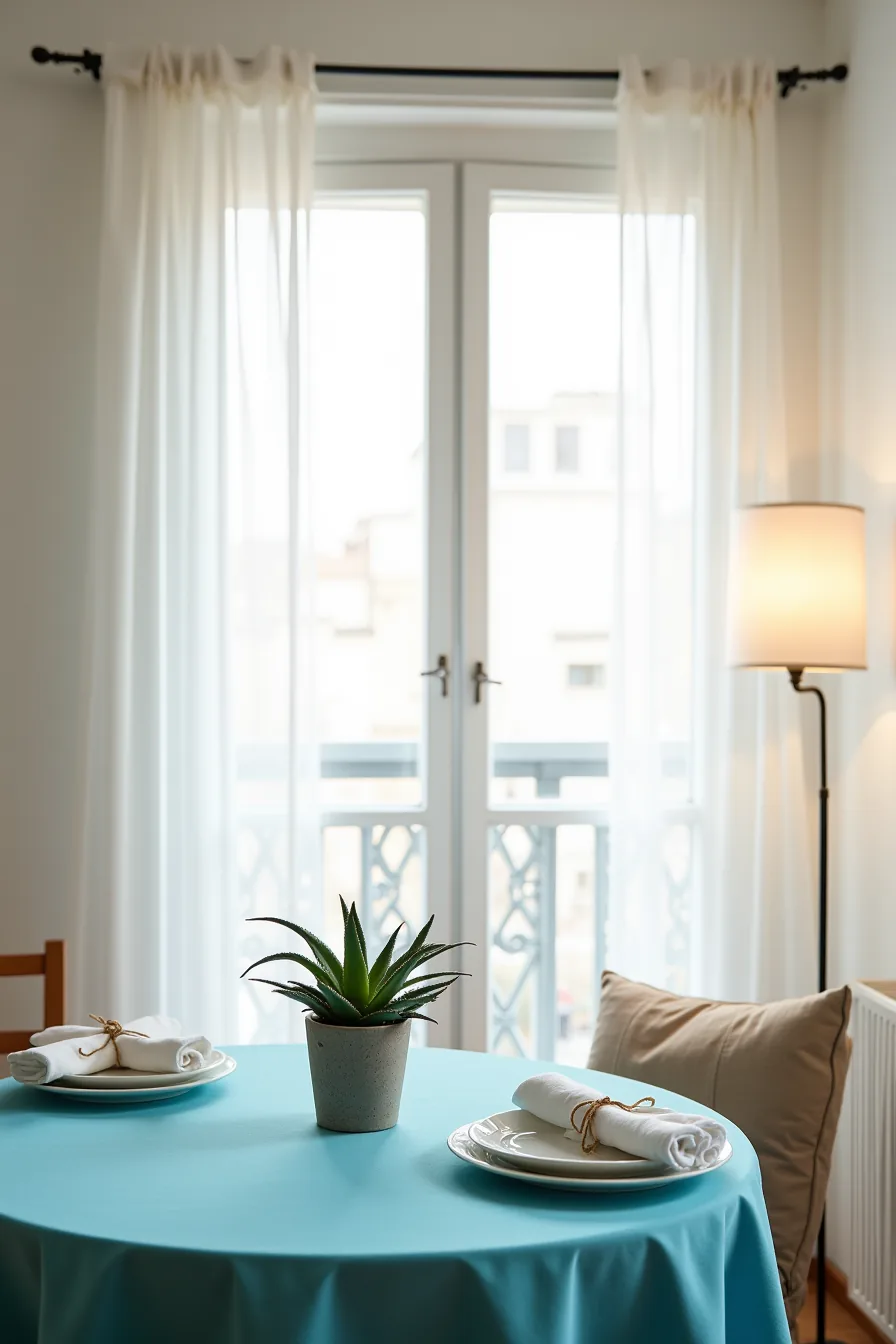
For renters, the goal is maximum visual impact with zero permanent changes. A jewel-tone blue tablecloth, think sapphire or deep cobalt, delivered in a removable, fitted style transforms a basic builder-grade table instantly, then folds into a drawer when you move. Pair it with white plates to anchor the saturation, and use cotton napkins tied with simple twine for a rustic contrast that keeps the look grounded rather than costume-y.
Skip the runner entirely, since adhesive strips or pinned draping can damage rental finishes. Instead, make a temporary potted succulent your centerpiece, it costs $8–$15, requires no vase rental, and travels with you. This route runs $25–$45 total, putting the budget vs. Splurge Blue Thanksgiving Table Decor decision firmly on the thrifty side without reading as cheap.
Just confirm the tablecloth is machine-washable and iron-on-low, because high-cobalt dyes can bleed on the first wash, wash it alone with cold water to protect both the fabric and your deposit.
Ombré Blue Gradient: Small-Space Strategy
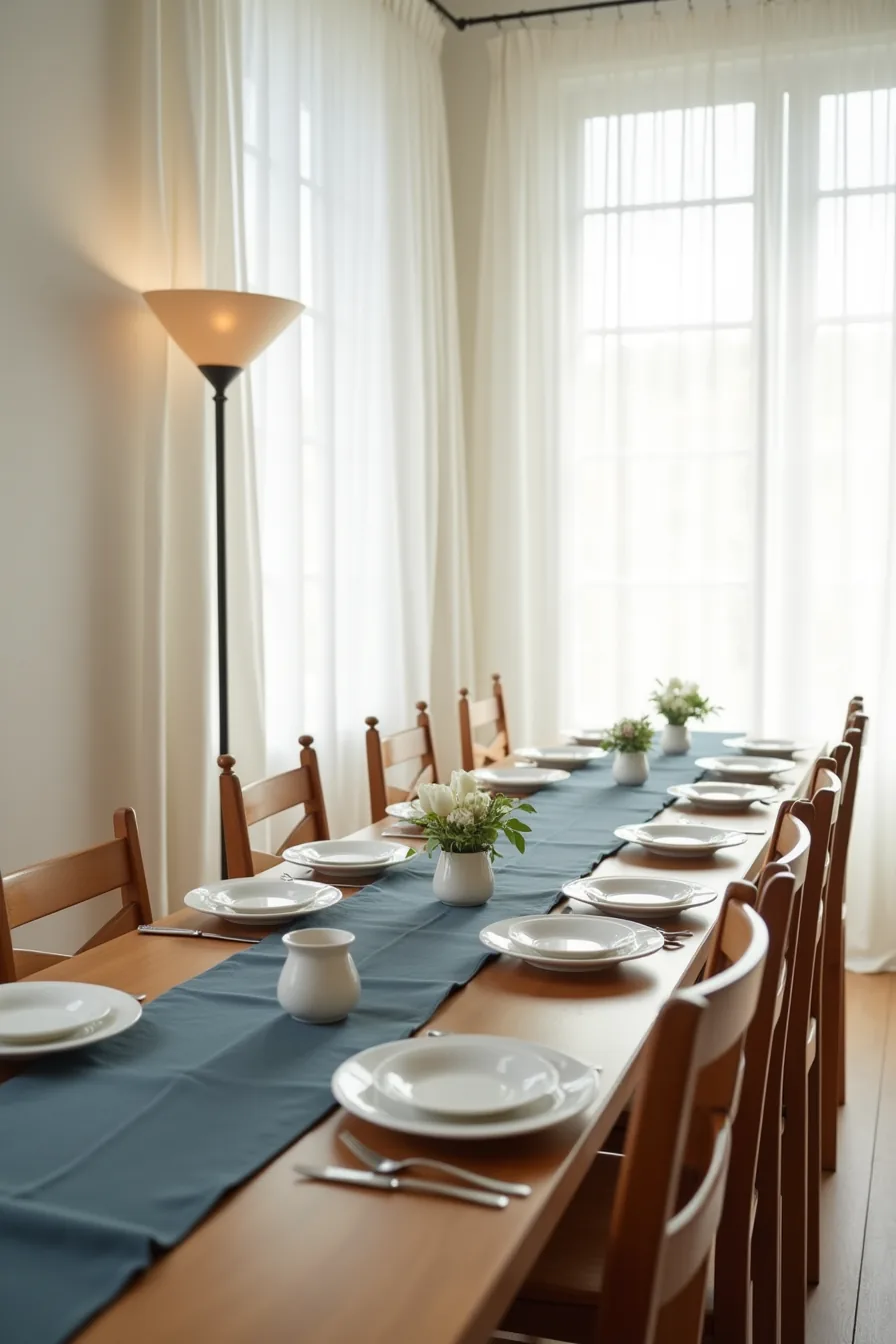
When your table runs under 6 feet wide, a single solid blue reads as heavy, while multiple competing colors fragment the setup. The fix is a gradient: layer three runners progressing from dark navy at the head to light periwinkle at the foot. This progression creates the illusion of length, drawing the eye horizontally and making a cramped dining nook feel deliberately styled rather than cluttered.
Build the look with two or three cotton runners, roughly 14–16 inches wide each, overlapping by 2–3 inches so no table surface gaps through. Center white plates on each section, keeping place settings at 18–20 inches apart to preserve circulation in tight quarters. A small vase with a single stem per setting adds vertical interest without consuming width.
Cotton is the right call here: it drapes flat, holds the dye gradient visibly, and machine-washes without the bulk of linen. Expect to spend $30–$50 on runners alone; if you source them secondhand, verify the dye is colorfast before the first wash.
Slate Blue Investment: Long-Term Linen Setup
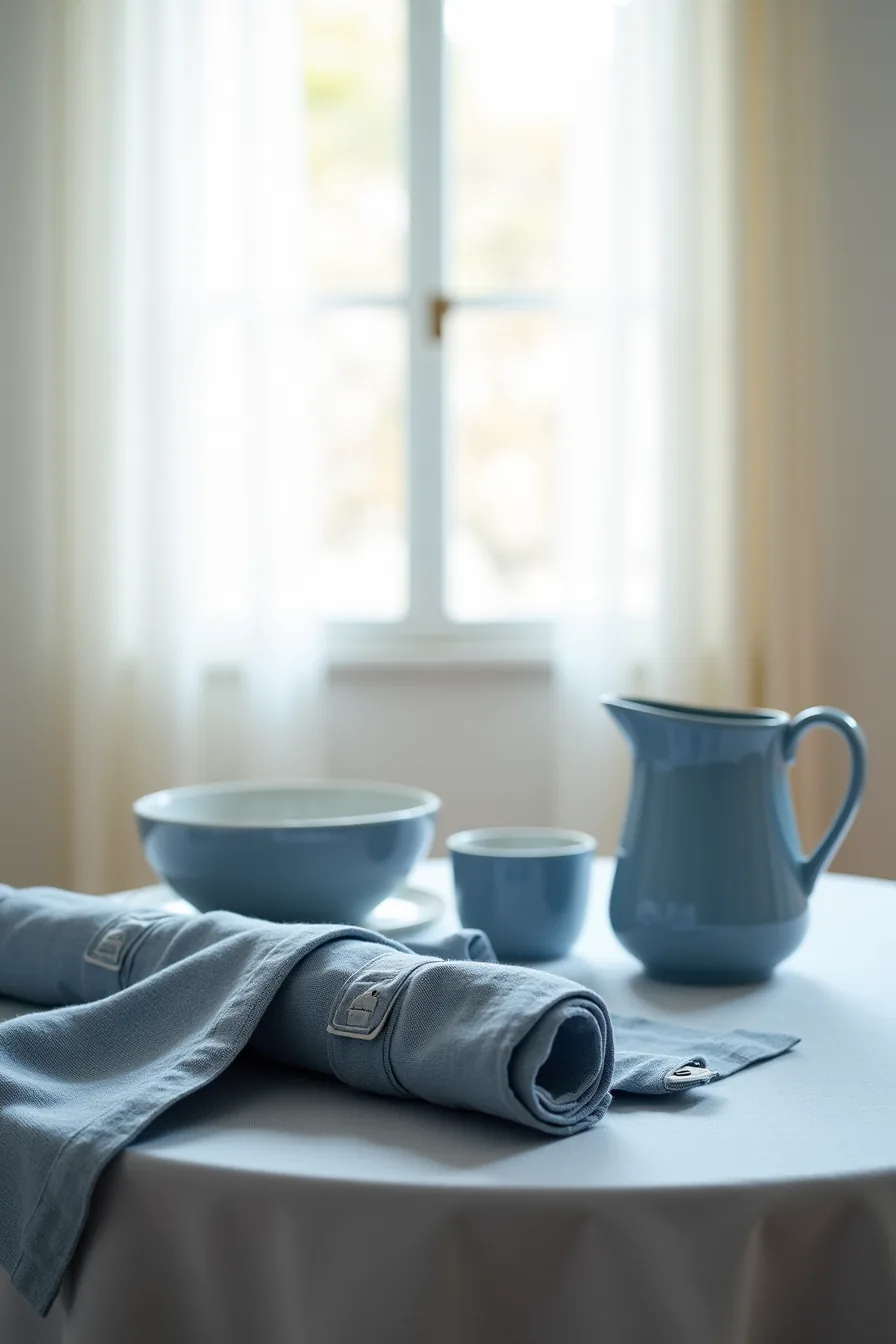
If you entertain more than twice a year and hate replacing holiday decor, slate-blue linen justifies the upfront cost through durability alone. A heavyweight linen tablecloth in this shade, typically 100% flax, around 200–250 grams per square meter, survives decades of washes and actually softens with age. You’re paying for a fabric that resists fading, which matters for a hue that sits between navy and periwinkle: cheaper cotton blends in this range often lose their depth within a dozen machine cycles.
Pair the cloth with matching slate-blue napkins rolled in simple linen rings, then bring in a coordinating blue serving bowl and pitcher in stoneware or ceramic. Stoneware is the practical choice, it goes from oven to table, handles dishwasher cycles, and chips less readily than earthenware. Expect to invest $120–$200 for the full four-piece setup if you buy new; the trade-off is that you won’t need to repurchase for years, and the pieces work across every season, not just Thanksgiving.
Wash linen in cold water on a gentle cycle, hang to dry, and iron while slightly damp to keep the tabletop presentation sharp.
Mistakes That Compromise Your Blue Table
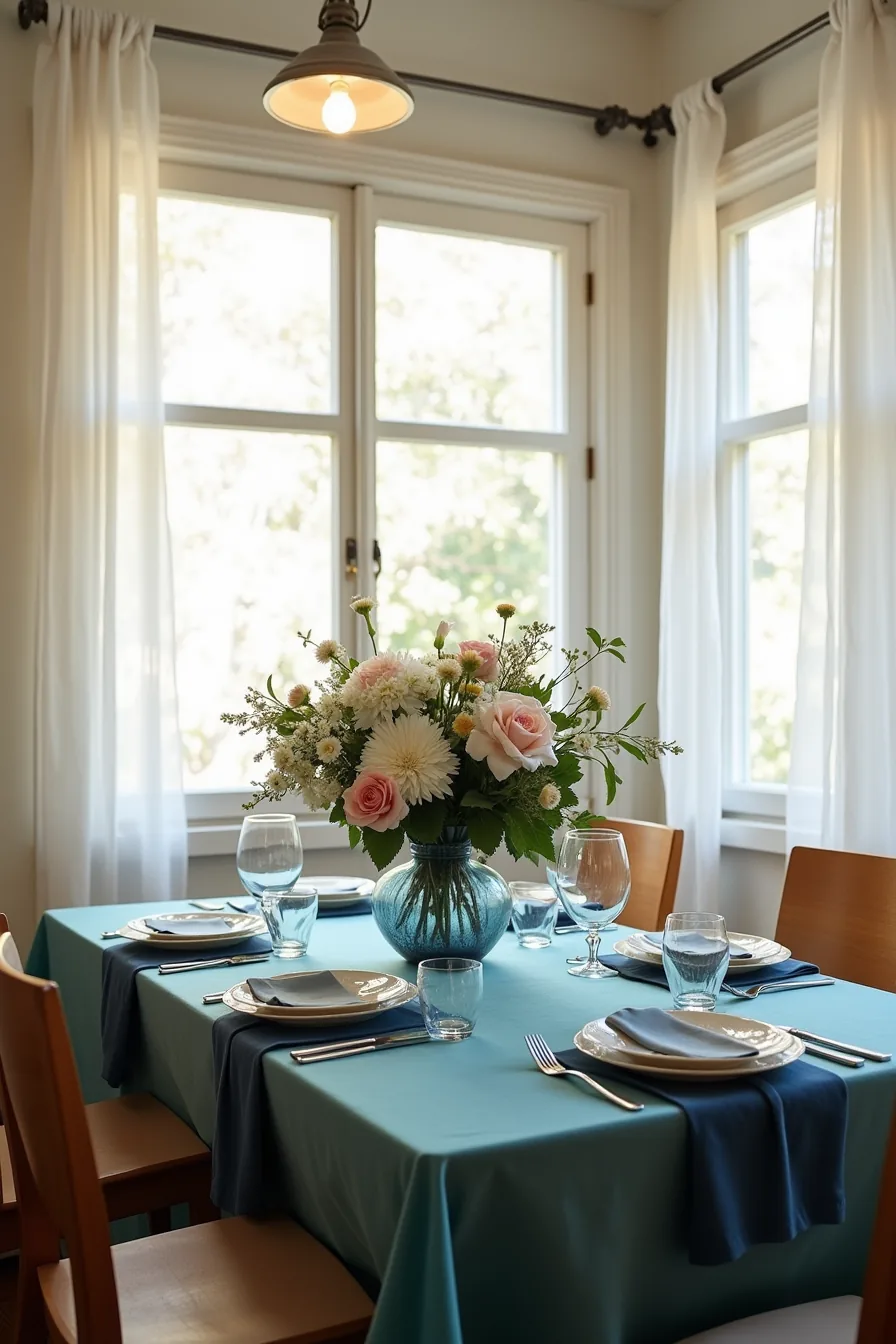
A crowded table fails before the first guest sits down. An oversized floral arrangement, anything rising more than 12 inches above the tabletop, blocks sightlines and forces diners to lean around it to converse. Scale it down: a low, wide centerpiece under 10 inches tall keeps sightlines clear while still anchoring the table.
Mismatched blue undertones create visual noise. Navy and teal linens collide because they sit on opposite sides of the color wheel, cool, green-leaning teal fights warm, red-leaning navy. Stick to one undertone family across all fabrics: cool blues with gray undertones, or warmer blues with purple undertones, but never both.
Dim ceiling light compounds the problem, washing out deeper shades and flattening texture; add a dimmable table lamp or candlelight at eye level to restore depth.
Cramped place settings are the most common scale error. Each setting needs a minimum of 24–30 inches of table width, anything less forces elbow collisions and clattering silverware. If your table runs narrow, skip chargers entirely rather than squeeze them inchesnap; you gain breathing room, not clutter.
Competing blue fabrics, a patterned runner, striped napkins, and solid placemats all in different blues, turn your palette into a patchwork; limit yourself to two blue textiles max, and let neutrals carry the rest.
Your Next Step
Start with just one element, a set of navy linen napkins or a single cobalt ceramic vase, and build outward. Test the palette against your existing dinnerware in natural light, then layer in texture with wood, brass, or matte stone. The goal isn’t perfection; it’s a tablescape that feels intentional and inviting.
Before you shop, measure your table’s length and width to gauge how many runners, candles, or place settings you can comfortably fit. A crowded table blocks conversation and makes serving awkward, so prioritize breathing room over sheer quantity.
Choose the option that matches your lifestyle: washable cotton for daily use, thrifted glass for a budget-friendly refresh, or heirloom-quality stoneware for longevity. Once you’ve picked your anchor piece, set the table tonight, even if it’s just for a weeknight dinner, and see what adjustments feel right.
Frequently Asked Questions
What shade of blue works best for Thanksgiving table decor?
Deep navy or muted slate blue pairs best with autumn tones. These darker shades ground the table, contrast warmly with gold, orange, and cream, and hide minor spills better than lighter blues.
Can I use blue Thanksgiving table decor in a small apartment?
Yes. Choose a narrow runner instead of a full tablecloth, and use small blue napkins or glassware. Skip large centerpieces; a single blue candle cluster works without crowding a 30-inch table.
How do I keep blue linens from fading or staining?
Wash navy or cobalt linens in cold water with a color-catching sheet, and air-dry them out of direct sunlight. Treat grease stains immediately with dish soap before washing.
What’s the most budget-friendly way to add blue to a Thanksgiving table?
Buy a pack of blue cloth napkins (typically $10–15 for four) or use blue painter’s tape to create a geometric stripe on plain white candles. Both cost under $20 and require no special skills.