Autumn 2025 home decor moves decisively away from mass-produced pumpkin patches and toward layered, tactile interiors that blend warm neutrals with deep, moody accent colors, and the six approaches below range from a sub-$50 refresh to a long-term investment in custom joinery, so you can match your space, budget, and maintenance tolerance. Whether you rent a compact studio or own a sprawling living room, each idea prioritizes function over fleeting novelty, from peel-and-stick wood panels to heirloom-quality built-ins. You’ll learn exactly which textures, hues, and fixtures deliver the most impact per dollar, plus the simple upkeep that keeps them looking intentional through winter.
Key takeaways
Warm neutrals with texture layering work best in living rooms because bouclé, linen, and wool read as autumn without a single orange pumpkin. Dried botanicals like pampas grass, bunny tails, and preserved eucalyptus cost $15–$40 per bundle and last 1–3 years if kept out of direct sunlight. Moody jewel tones, emerald, sapphire, plum, belong in throw pillows, ceramic vases, or table lamps under $50 each, so you can test the look before committing to paint. Functional seasonal storage means swapping summer-weight throws into labeled baskets by the entryway, freeing closet space while making the autumn layers part of your decor.
Warm Neutrals with Texture Layering
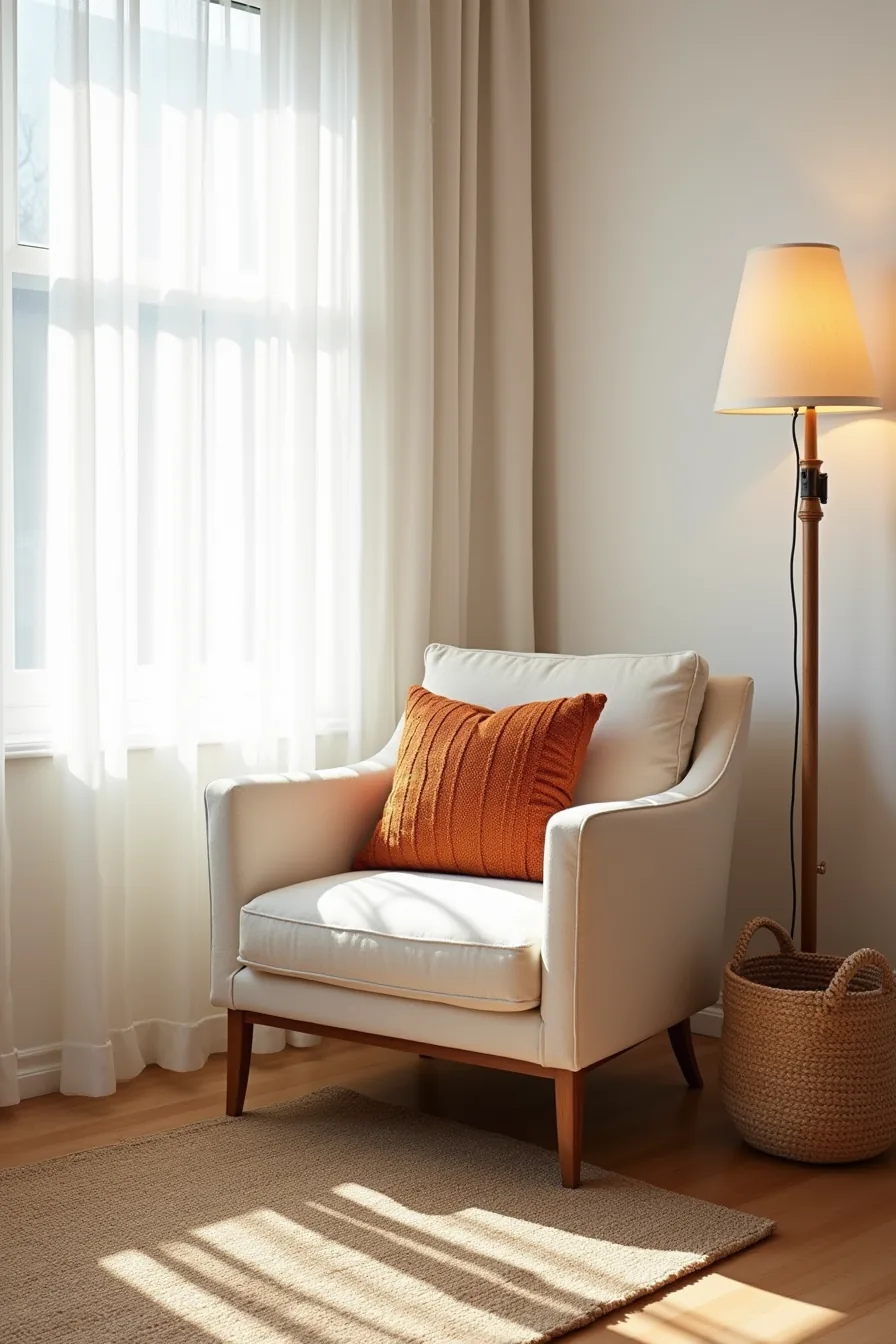
The 2025 take on warm neutrals replaces flat beige with a tactile mix of cream, taupe, and rust. The setup here pairs a cream upholstered armchair with a rust-colored knit cushion, a taupe wool area rug, and a woven jute basket tucked beside it. What makes this work is the contrast in weight: the dense wool grounds the space, the chunky knit adds softness, and the jute introduces a coarse, natural finish that prevents the palette from feeling washed out.
This approach suits living rooms where you want visual depth without introducing pattern. To reproduce it, stick to three to four tones within the same warmth level, avoid cool grays that will clash with rust. For a practical seasonal decor idea, swap the cushion cover and basket liner seasonally rather than replacing the furniture.
Budget route: source a jute basket for $20–$40; the rug is the long-term investment, so expect to spend more there for wool that will hold up for a decade.
Botanical Elements and Dried Botanicals
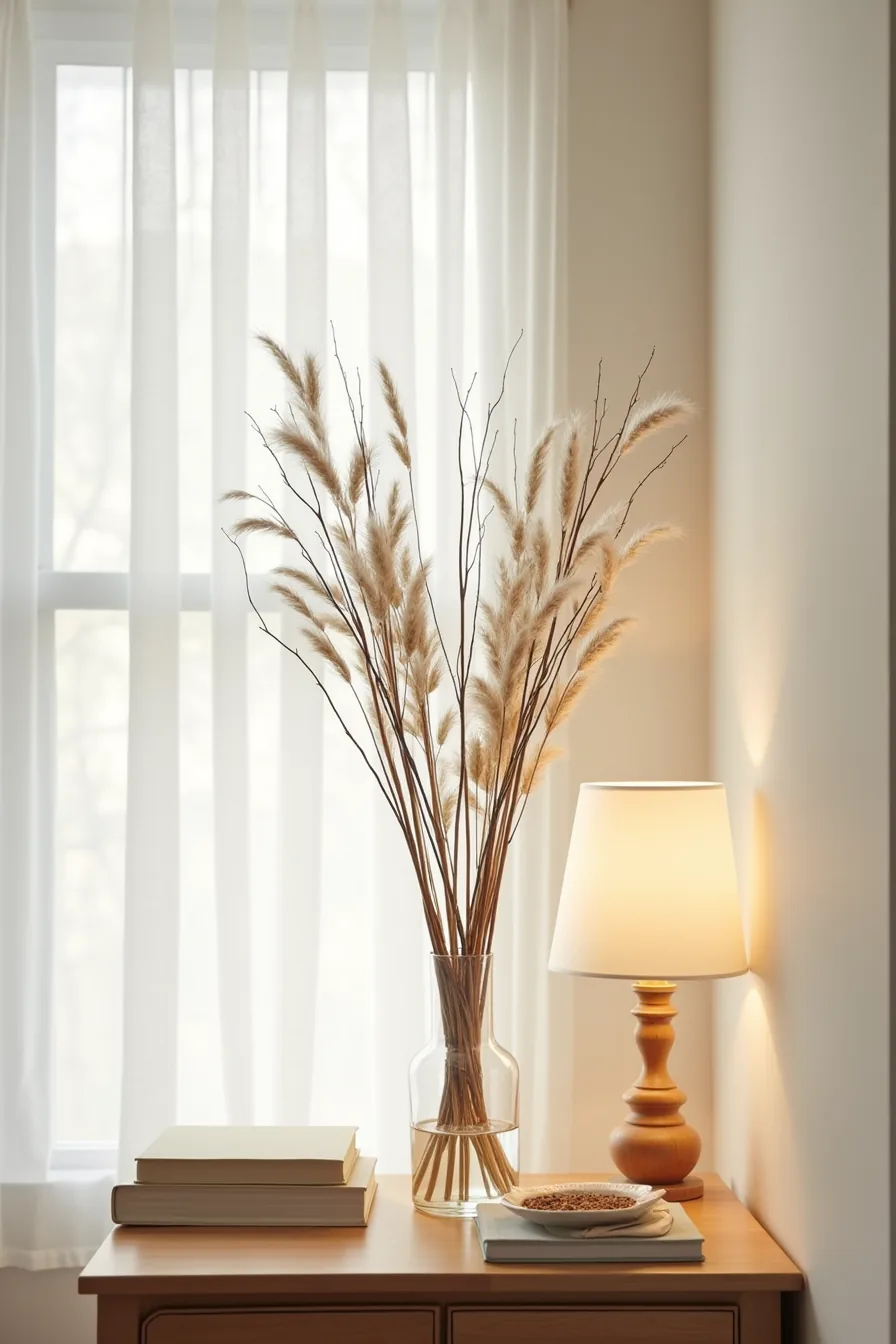
Preserved grasses, seed pods, and bare branches give you the sculptural presence of flowers without the weekly replacement cycle. A clear glass cylinder vase filled with pampas grass, seed pods, and branches arranged at varying heights, tallest at the back, shortest at the front, creates a natural focal point that lasts 12 to 18 months with minimal upkeep. This arrangement works best on a narrow console table against a plain wall, where the vertical lines have room to breathe without competing with patterned wallpaper or busy shelving behind them.
For small spaces, scale the arrangement to roughly one-third the width of the console to avoid overwhelming the sightline, most narrow consoles run 36–48 inches, so a vase around 10–12 inches wide fits proportionally. Large rooms can handle a second arrangement on a mantel or sideboard, provided you repeat the same material palette to keep the look cohesive. Maintenance is straightforward: shake off dust monthly and keep the vase away from direct sunlight, which will bleach the pampas within a few weeks.
This is the most renter-friendly route in this trend lineup because nothing is mounted, painted, or permanently altered, the vase and botanicals move with you.
Moody Jewel Tones in Accent Pieces
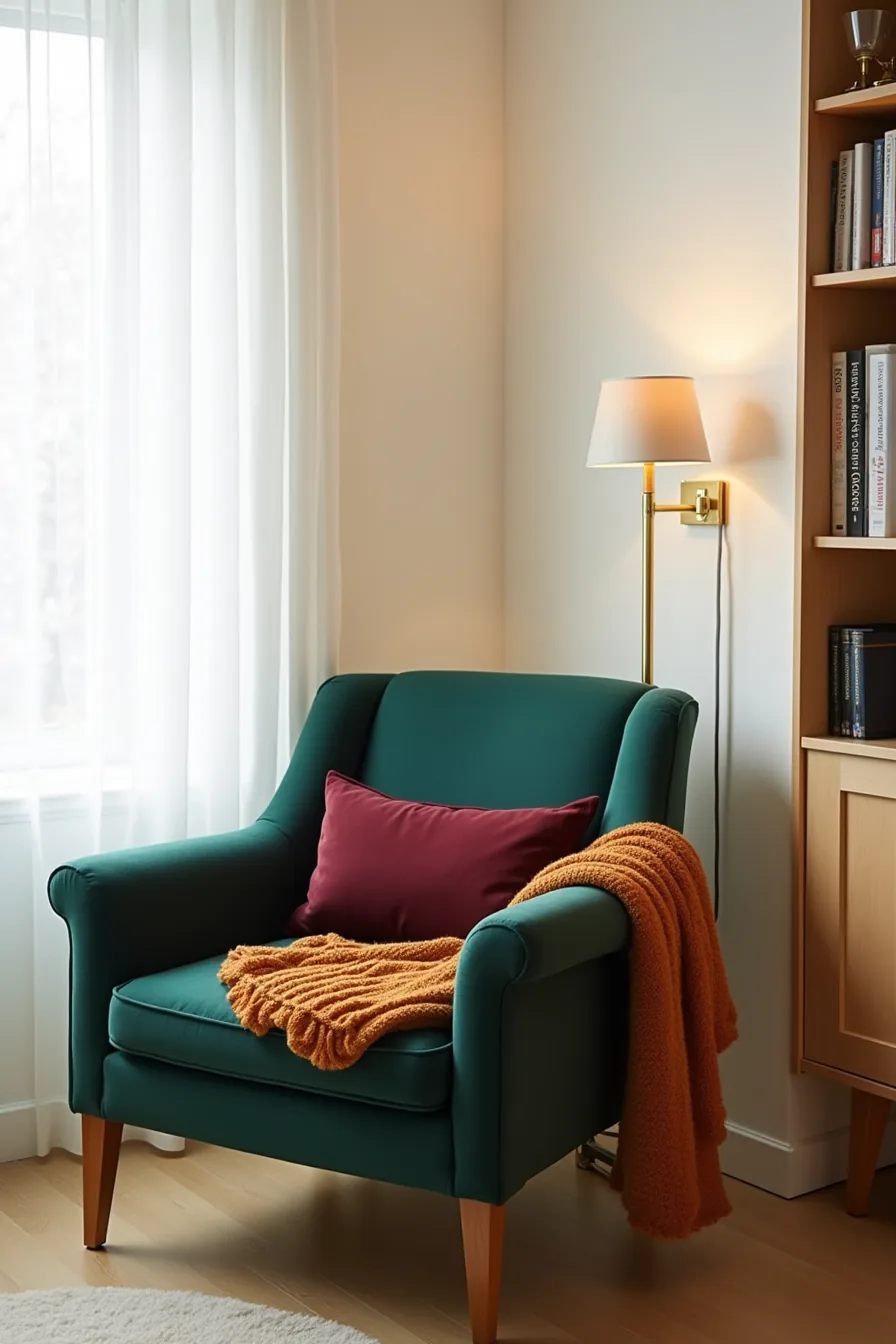
Deep emerald, burgundy, and amber provide the richest color story for fall 2025 without committing you to a full room repaint. Anchor the palette with an upholstered dining chair in deep emerald fabric, then layer a burgundy velvet pillow and an amber-toned knit throw draped over the backrest to create a vignette that reads as intentional, not accidental.
This approach suits renters perfectly, every element is removable and packable, requiring zero permanent changes. The jewel tones work best in rooms with neutral walls (warm greige, cream, or soft taupe) where they can pop rather than compete. For a medium-sized dining area, use two accent chairs at the head of the table; in a larger open-plan space, extend the palette to a bench cushion or floor cushion.
Limit pillow sizes to 18–22 inches square and throws to 50–60 inches long to maintain proportion. Clean velvet with a fabric brush weekly and wash knit throws on a gentle cycle to keep the color saturated through the season.
Vintage and Thrifted Finds as Focal Points
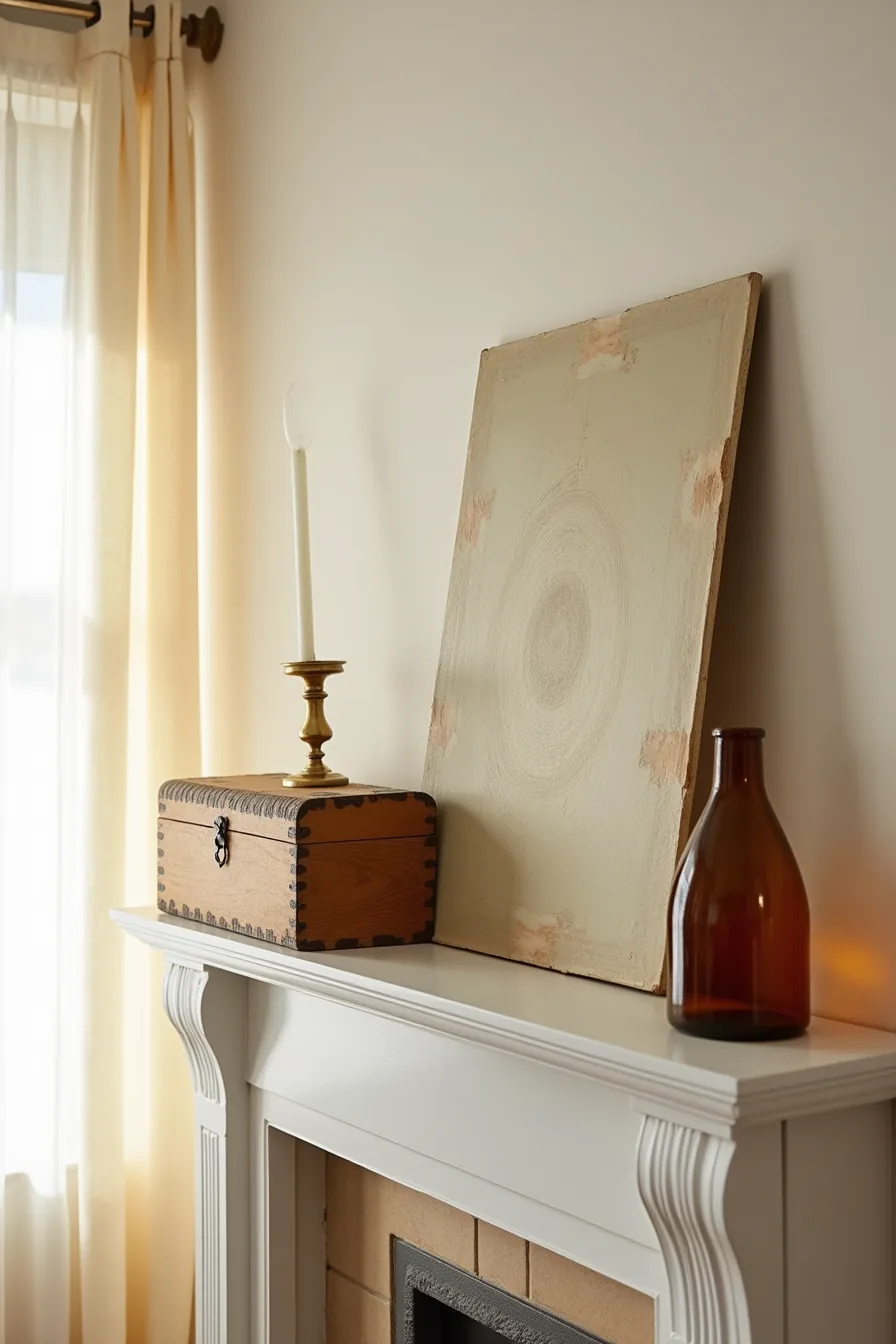
A mantelpiece staging a worn brass candlestick beside an aged wooden box, a vintage amber glass bottle, and a faded oil painting leaning against the wall creates a focal point that no retail display can replicate. This styling works because the mixed-era pieces carry patina and imperfection, qualities that read as authentic history rather than manufactured rusticity. The varying heights matter: the candlestick and bottle provide vertical contrast against the squat wooden box and the painting’s horizontal plane, giving the eye a deliberate path to travel.
This route suits anyone with a flexible timeline, since sourcing takes weeks rather than an afternoon. Check estate sales and Facebook Marketplace first for the best pricing on brass and glass; thrift stores yield more unpredictable results but often charge under $15 per piece. Before buying, inspect brass for deep corrosion (surface tarnish polishes out; pitting doesn’t) and hold glass up to light to confirm the amber color is uniform, not a coating that will flake.
For a small mantel, limit the arrangement to three pieces; a wider console or buffet can handle all five. Dust brass and wood with a dry microfiber cloth weekly, and keep the painting out of direct sunlight to prevent further fading, which also protects its value.
Functional Seasonal Storage and Display
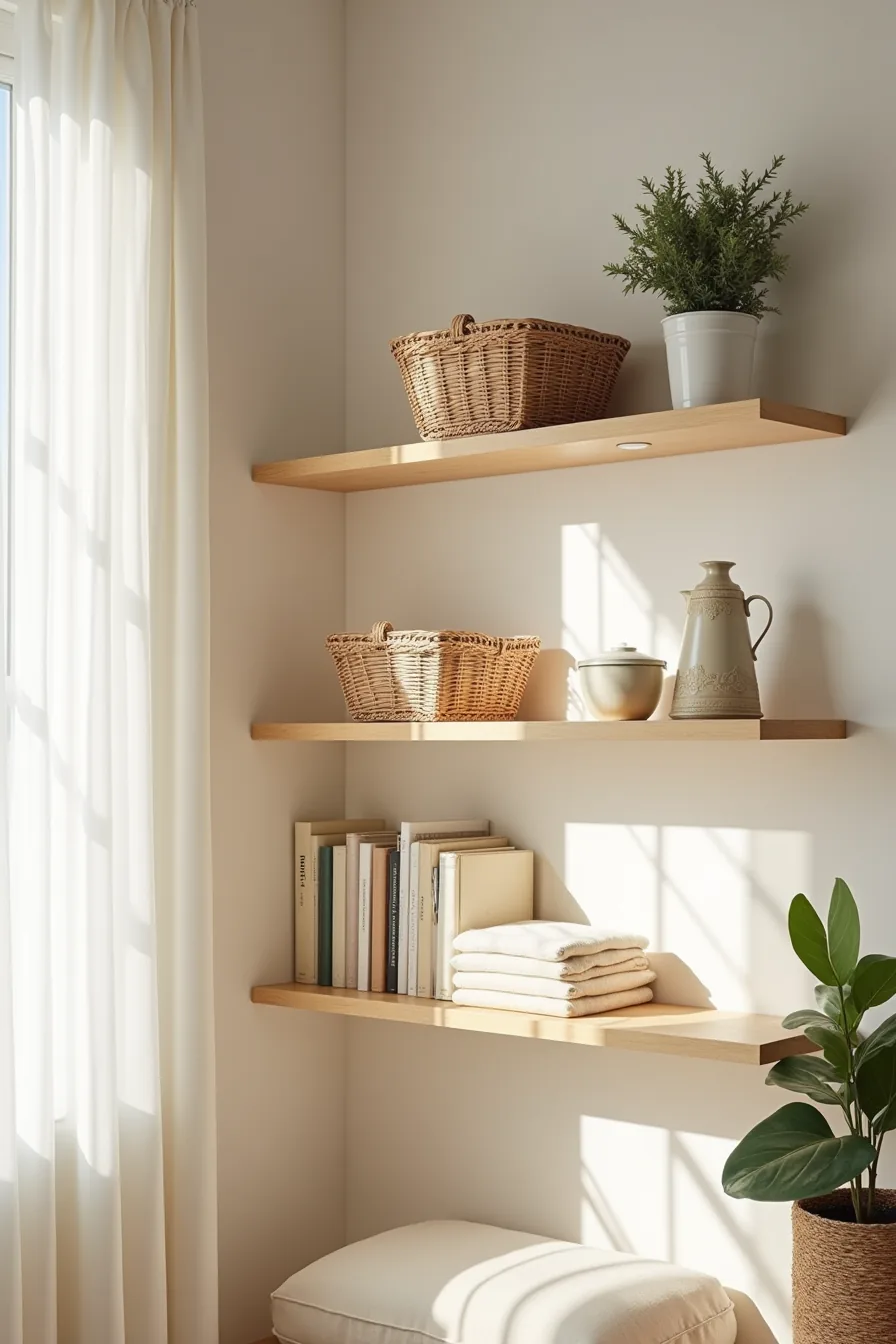
Wall-mounted open shelving transforms seasonal decor into a working storage system you’ll use past March. The setup here pairs woven baskets for hidden clutter with a decorative ceramic container for everyday items, while folded cream linens and a small potted plant keep the composition soft rather than utilitarian. The trick is assigning each shelf a job: baskets on the lower row for heavy throws and boots, ceramics at eye level for keys and mail, linens on top as a texture layer you can grab without rearranging anything.
This approach suits renters because the only permanent change is the shelving hardware, use removable adhesive strips rated for your wall type if drilling isn’t allowed, or freestanding ladders if you want zero holes. For a small apartment, one 30- to 36-inch shelf above a console replaces a coat rack and a basket tower. A large living room can handle two matching units flanking a fireplace, but keep the spacing at least 18 inches between shelf edges to avoid a cluttered wall.
Rotate contents seasonally: autumn’s chunky knits and amber glass give way to lightweight cottons and ceramics by spring. Wash baskets twice a year to prevent dust buildup, and check the plant’s drainage tray weekly so water never damages the shelf surface. Budget route: three identical baskets cost $30–$45 total; the ceramic container can be a repurposed soup pot.
Lighting Layers for Autumn Ambiance
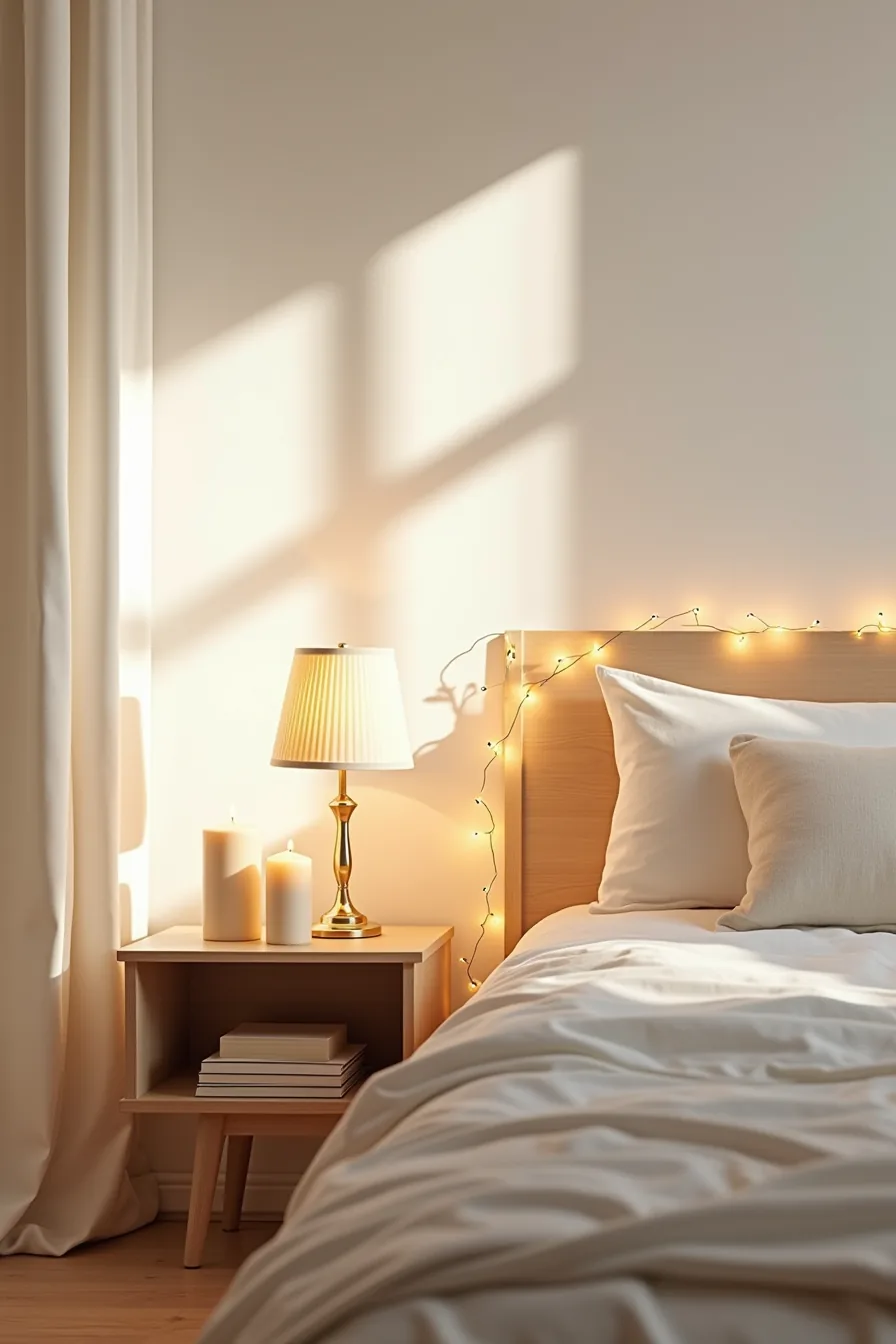
Lighting does more than illuminate, it sets the evening mood. The bedside table holds a warm-toned brass table lamp, switched on to cast a soft, amber glow across the linens. Beside it, a cluster of unlit cream pillar candles in varying heights adds sculptural interest, ready to be lit for a flickering alternative.
Along the headboard, a string of warm fairy lights is draped loosely, creating a gentle, star-like backdrop that softens the wood’s edge. Dusk is the ideal time to switch on the lamp, then layer in the candles as the room darkens. Use LED candles if you prefer worry-free flames, especially with low-hanging fabric nearby.
The fairy lights run on a timer to conserve energy, and their thin wire stays hidden behind the wood slats. This combination suits a bedroom that needs cozy, flexible illumination without overhead glare. For larger rooms, scale up with a floor lamp in the corner; for petite spaces, skip the table lamp and rely on the candles and string lights alone.
Clean the brass monthly with a dry cloth, and replace any burnt-out bulbs promptly to maintain the warm, consistent cast.
Your First Move: Pick One Focal Point
Start with a single anchor, a door wreath, a mantel arrangement, or one large throw blanket, and build outward. Most rooms need only three to five seasonal accents to read as “fall.” Limit yourself to two colors plus one natural texture (burlap, wood, dried grass) to avoid visual noise..
If you rent, stick to removable hooks and tabletop vignettes; if you own, invest in one quality piece like a wool throw or ceramic vase that lasts years. Skip anything requiring daily maintenance, like real pumpkins indoors, unless you enjoy weekly replacement..
Your next step: Measure your primary surface (mantel, console, or entry table) and order one anchor item that fits within two-thirds of its width, then style around it.
Frequently Asked Questions
How do I adapt fall decor for a small apartment without overwhelming the space?
Choose one focal point, a mantel, entry table, or windowsill, and limit decor to three items there. Use vertical elements like hanging dried stems to draw the eye upward, freeing floor space.
What’s the best way to transition fall decor if I rent and can’t paint or drill?
Use tension rods inside doorways for lightweight garlands, command hooks for wreaths, and freestanding floor vases or ladders. Stick to removable adhesive strips rated for your wall finish, and test a small patch first.
How long do dried botanicals last before they need replacing?
Most dried grasses, wheat, and preserved eucalyptus hold color for 3-6 months indoors, then fade or shed. Replace them at the start of winter; dried citrus and pinecones can last up to a year if kept dry and away from direct sunlight.
Can I mix different fall color palettes in an open-concept home without it looking chaotic?
Yes, if you anchor with one neutral base, cream, warm gray, or taupe, and repeat it across all zones. Limit to two accent palettes, like burnt orange plus deep green, and use the third color only in small accessories like pillows or candles.