
Cozy fall home decor isn’t about buying pumpkins and calling it done, it’s a system of layered textures, warm light, and strategic color that you can scale to any room, budget, or lease agreement. You’ll get six distinct interpretations below, each paired with the exact materials, placement rules, and cost trade-offs required to pull it off. The goal is a space that feels seasonally warm without sacrificing function, rental deposits, or your long-term furniture budget.
Key takeaways
- Layer textiles like chunky knit throws, linen pillows, and a faux-fur rug to add warmth without committing to seasonal upholstery changes.
- Swap in warm lighting with dimmable table lamps and 2700K LED bulbs to create a cozy glow that works in any rental without wiring changes.
- Anchor with earthy tones, terracotta, olive, and mustard, as accents on pillows, curtains, or a single wall to shift the mood instantly, and clean them monthly to prevent dust buildup.
- Invest in reusable decor like a ceramic vase filled with dried eucalyptus or a cast-iron candle holder; these last multiple seasons and cost less than $50 upfront, unlike single-use pumpkins or synthetic sprays.
Layered Textiles: The Foundation of Cozy Fall Home Decor
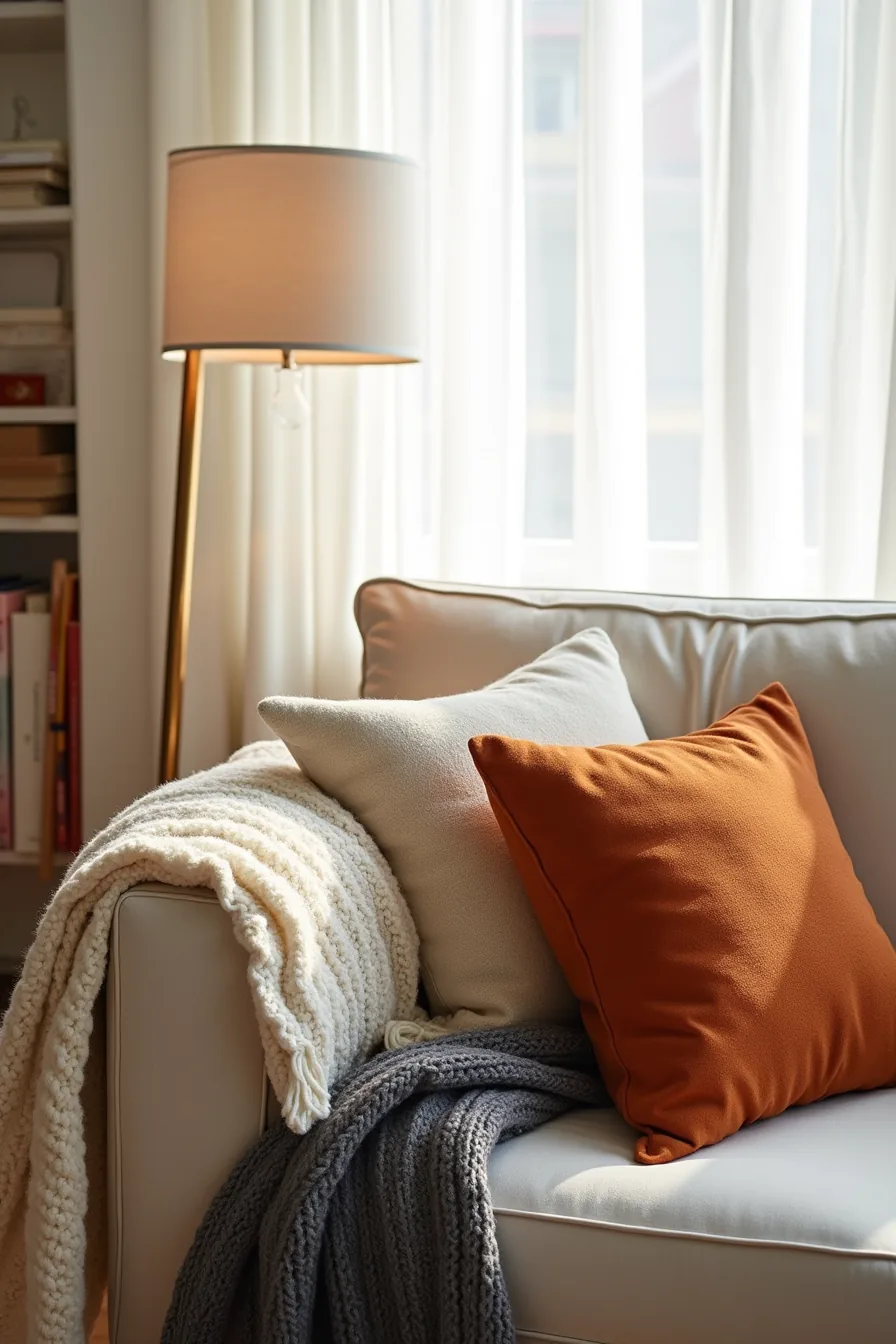
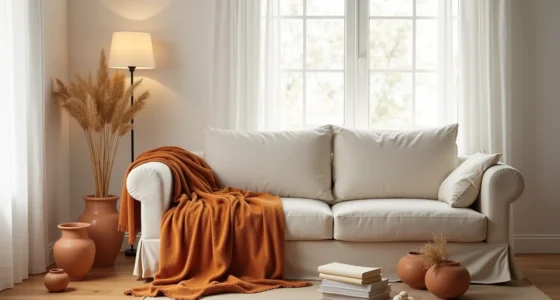
Start with the sofa corner: a cream throw draped over the armrest, a burnt orange one folded across the seat, and a charcoal layer pooled at the edge. This triple-stack works because each fabric has a different weight, cable knit for structure, wool for density, linen for softness, so the pile reads as intentional texture rather than laundry. Match it with a linen pillow against the back cushion and a cable knit one in front to echo the same rhythm.
For a standard 72-to-84-inch sofa, limit yourself to three throws and four pillows max; beyond that, you lose seating depth and the look tips from cozy into cluttered. In a small apartment, drop to two throws and two pillows and let the rug carry the remaining warmth. Every piece here needs care: wool and cable knit require dry cleaning or a gentle hand wash, while linen can machine-wash cold and hang dry, expect to rotate them weekly if you actually use them, since body oils dull the fibers fast.
Warm Lighting: Creating Ambient Depth Without Rewiring
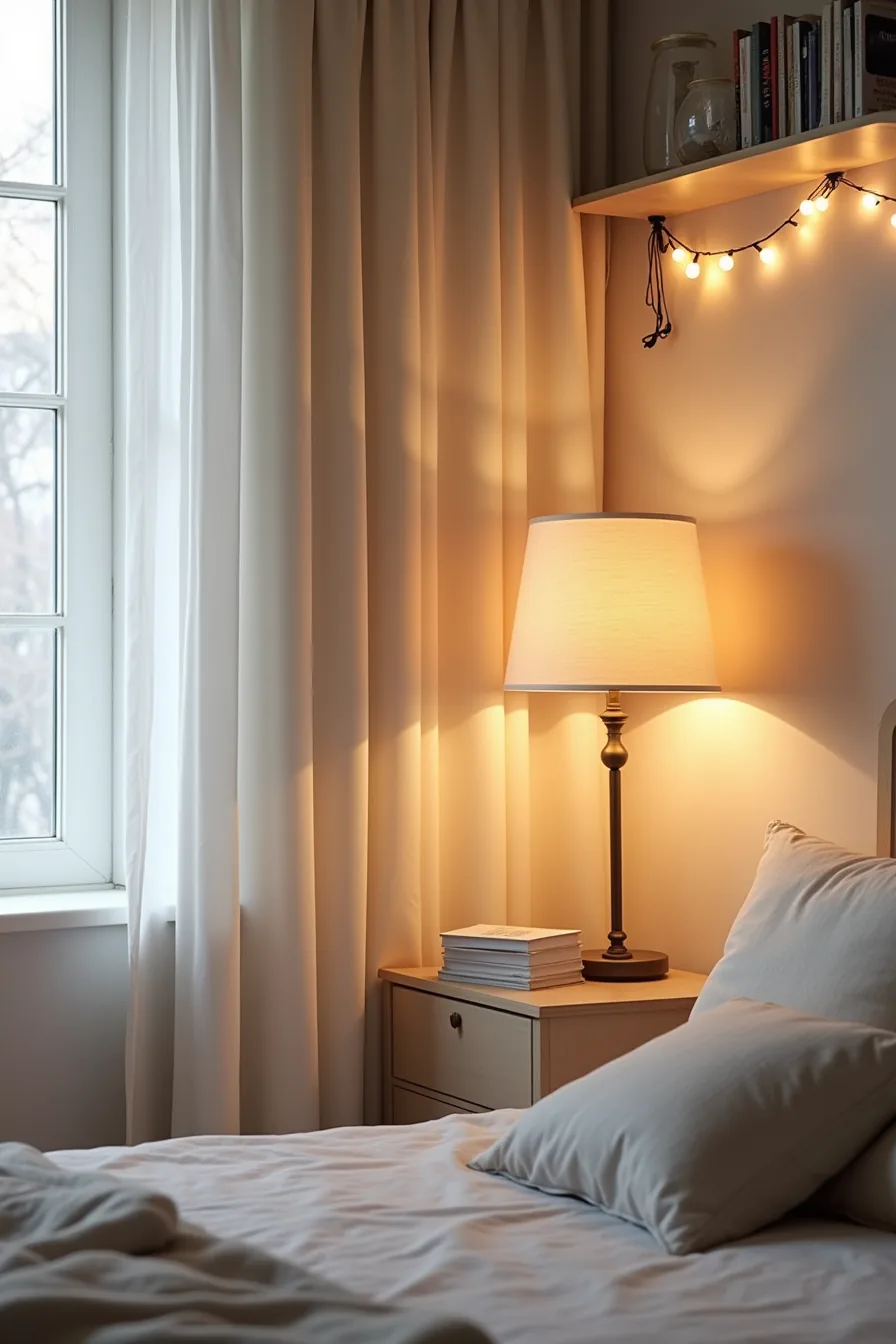
Lighting does more to sell a cozy fall home than any single textile, because it changes how every other material reads. On a bedroom nightstand, a brass table lamp with a warm bulb, aim for 2200K to 2700K, casts a honey-toned pool that flatters wood and wool alike. Across the room, a floor lamp with a linen shade beside a reading chair softens harsh shadows; the translucent shade diffuses light rather than concentrating it, which suits anyone who wants reading visibility without a hospital glare.
The trick is layering heights: table lamp at 28-32 inches, floor lamp at 58-64 inches, and string lights draped loosely along a shelf above to pull the eye upward. Skip overhead fixtures entirely; they flatten the gradient you’re building. String lights with a dimmer switch give you 10-100 percent control, and since everything here plugs into existing outlets, renters can replicate this look with zero permanent changes, just budget for a few extension cords to hide along baseboards.
Seasonal Color Palettes: Choosing Hues That Work for Your Space
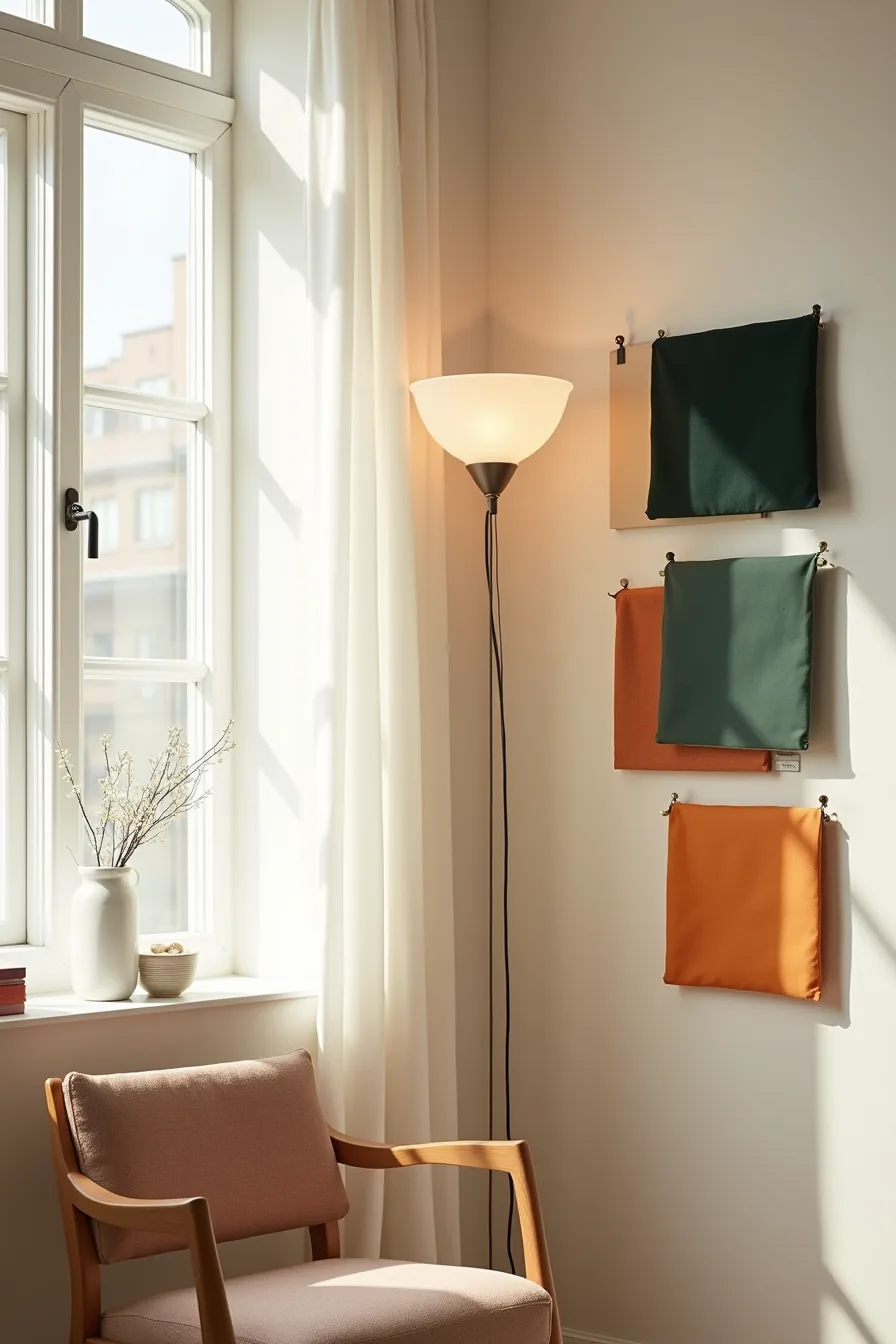
Deep jewel-tone velvet, burnt orange linen, warm taupe, and forest green, each reads differently depending on your room’s square footage. In a compact space under 150 square feet, burnt orange and taupe dominate because lighter mid-tones reflect more available light and prevent visual crowding. Large rooms over 300 square feet absorb deep jewel tones and forest green without feeling heavy, since the extra wall and floor area gives dark colors room to breathe.
Test your palette the way the arrangement on your neutral wall suggests: pin fabric samples beside paint cards and live with them for three days, checking them at 9 a.m. And again at 7 p.m. Under artificial light.
Warm taupe and burnt orange share an undertone that pairs well in small rooms; jewel tones and forest green work best as accent walls or upholstery in larger spaces. For medium rooms in the 150-300 square foot range, limit yourself to one dark hue per wall and pair it with two light neutrals.
Natural Elements: Wood, Branches, and Dried Botanicals
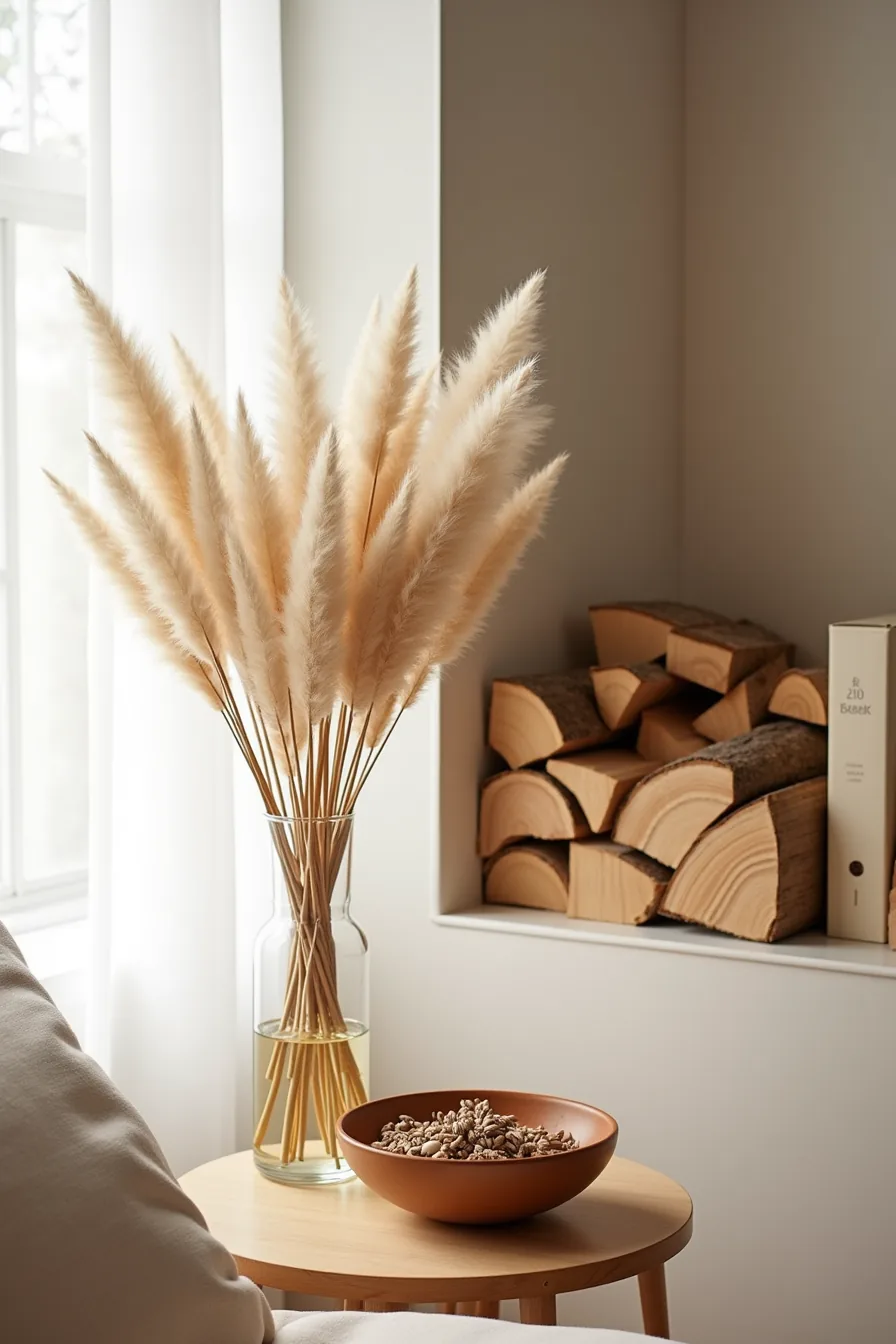
The arrangement you see works because it layers three textures, smooth glass, rough bark, and dry organic matter, without adding a single drop of color. A tall glass vase filled with pampas grass and branches draws the eye upward, while the wooden bowl of seed pods anchors the composition at table height. This contrast in elevation matters: the vase should reach roughly two-thirds of your table’s width in height, so on a standard 48-inch side table, aim for a 28-32 inch stem cluster.
Sourcing is straightforward. Dried pampas grass and seed pods cost $8-15 per bundle at craft stores, but you can harvest them free from public trails in early autumn before rain ruins the plumes. Branches from your yard need a week of indoor drying to prevent sap bleeding onto your floor.
The real trade-off is longevity: pampas grass holds its shape for 12-18 months but sheds fine fibers when brushed, so place it away from high-traffic walkways and vacuum weekly.
For maintenance and pests, skip the firewood segments if you rent or live in a humid climate. Stacked logs harbor wood-boring beetles that emerge indoors when temperatures stay above 65°F. Seal any indoor firewood in a plastic bin or use the hollow log slices as a visual substitute instead.
Dust the entire arrangement monthly with a soft brush attachment, compressed air will scatter the seed pods across the room. To refresh, swap the pampas for dried eucalyptus stems ($6-10 per bunch) after two seasons; the color shift from beige to silver-green reads as intentional, not worn out.
Functional Decor: Candles, Baskets, and Scent Strategy
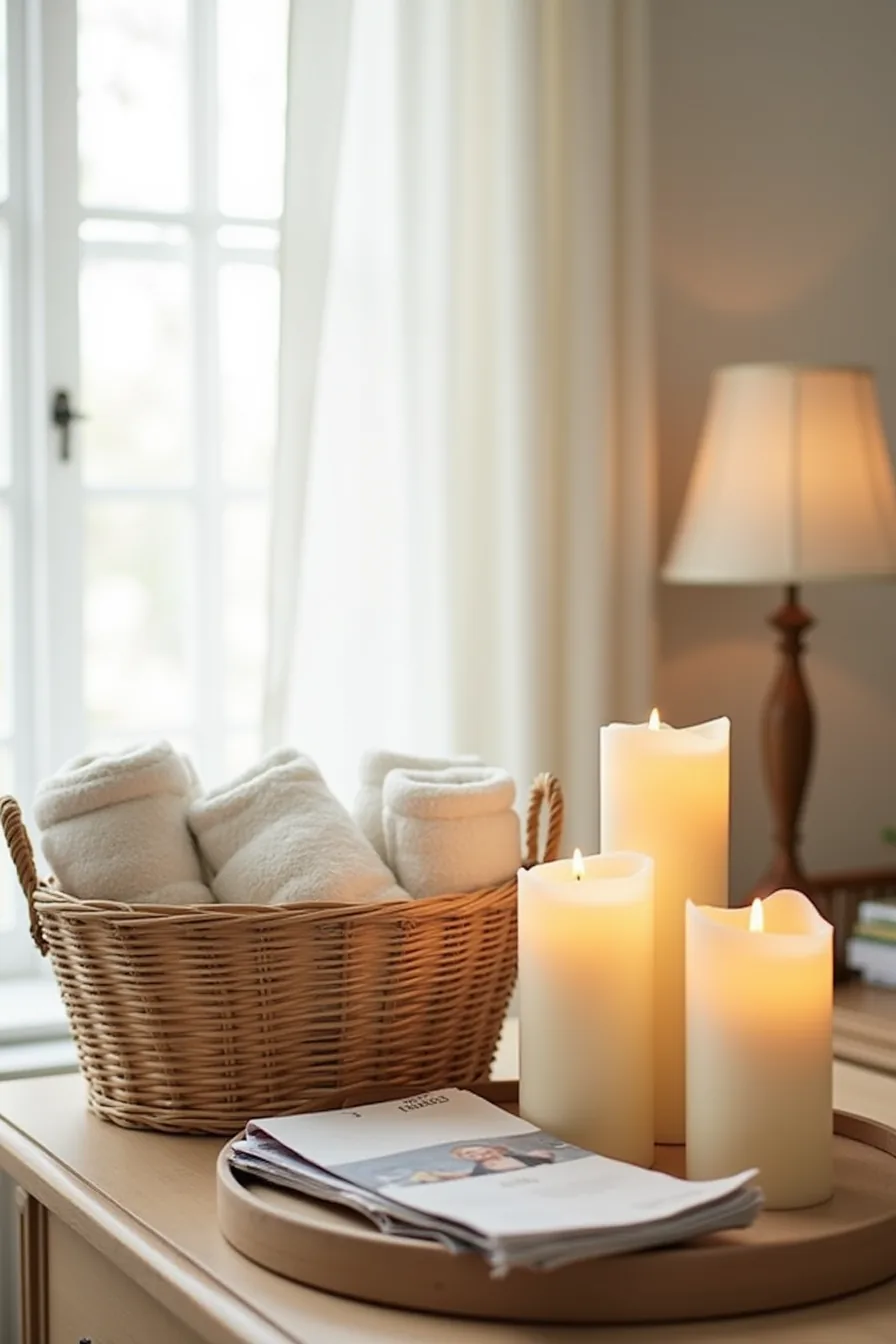
For a low coffee table or ottoman, group three pillar candles at staggered heights, 10, 8, and 6 inches, in cream and amber tones. Place the tallest candle at the back-left, the shortest at the front-right, leaving a 4-inch gap between each to prevent heat damage and ensure even light distribution.
Woven baskets serve a dual purpose: they hide clutter while adding earthy texture. Use a 12-inch round seagrass basket for rolled throw blankets, and a 14-inch rectangular one for magazines stored vertically. Position them off-center, not symmetrically, to create a relaxed, lived-in feel.
For scent, choose one dominant fragrance, like spiced apple or cedarwood, rather than mixing competing candles. Burn the tallest candle first for two hours to create an even melt pool, then rotate usage among all three to extend their life to roughly 40-50 hours total. Keep candles at least 3 feet from curtains and always extinguish before leaving the room.
If you prefer flameless, opt for battery-operated timers that mimic a 4-hour flicker cycle, which are safer for homes with pets or children.
Budget, Renter, and Investment Routes: Adapting to Your Situation
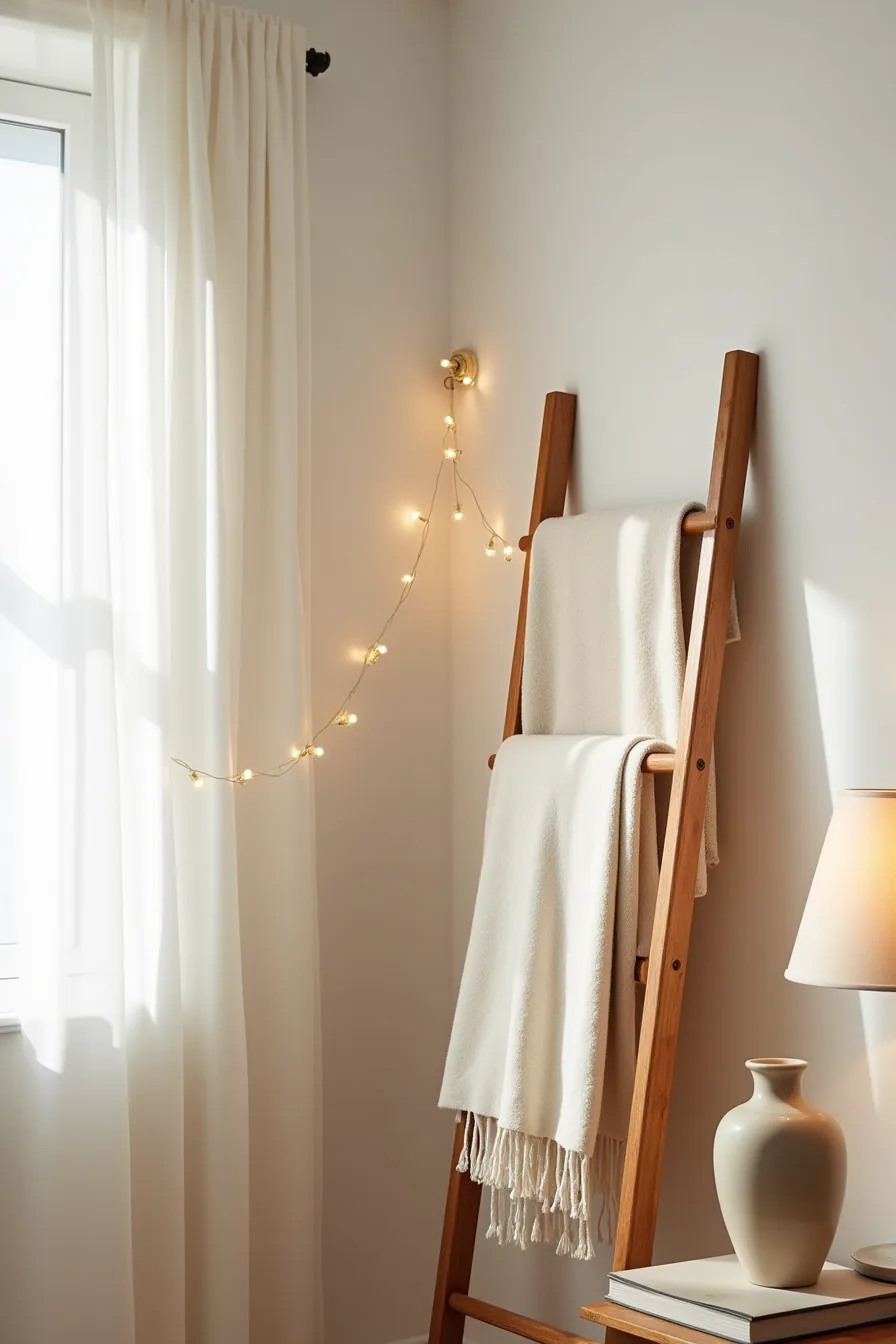
Your path to cozy fall home decor depends on your lease terms, your timeline, and whether you’re furnishing a first apartment or a long-term home. For renters, adhesive hooks rated for 5-10 pounds hold a chunky knit throw blanket and a strand of warm-white string lights without damaging paint, just press them firmly, wait 30 minutes before hanging, and peel them off slowly come spring. This full setup costs $20-$40 and takes under an hour.
A thrifted wooden ladder, typically $30-$60 at flea markets, offers a medium-commitment routef you own your walls. Lean it against a wall, drape a premium wool blanket over one rung, and place a high-quality ceramic vessel on the floor below it to anchor the composition. The ladder needs 18-24 inches of floor space, so it suits bedrooms or living room corners rather than narrow hallways.
Splurge on heirloom-quality pieces you’ll keep for decades: a handwoven wool blanket ($150-$300) designed to last 15-20 years with proper care, and a ceramic vessel ($80-$120) that works year-round as a vase, utensil holder, or standalone sculpture. The trade-off: upfront cost versus decades of seasonal reuse, you’ll never rebuy these items, which makes them cheaper per use than disposable decor within three autumns. The biggest Cozy Fall Home Decor mistakes to avoid here: buying cheap knit throws that pill after two washes, elevating aesthetic over function by placing ladders near high-traffic doorways, and mixing eras so aggressively that your room looks like a storage unit rather than a curated vignette.
Your Decision Checklist
Before you buy anything, match each candidate piece against these five filters: Does it fit the room’s actual traffic flow? Can you clean it in under ten minutes? Will it still look intentional by January?
Does it suit your space’s square footage, not just your Pinterest board? And does the cost per month of enjoyment justify the price?
Start with one anchor piece, a throw, a rug, or a lighting change, and live with it for a week. If it earns its place, build outward from there. That single test will tell you more than any shopping spree ever will.
Frequently Asked Questions
How do I make cozy fall home decor work in a small apartment without overwhelming the space?
Limit yourself to three focal points, one surface, one wall, one soft furnishing. Choose warm-toned textiles and small ceramic accents under 12 inches tall. Avoid oversized throws or large pumpkins that crowd walkways.
What’s the difference between cozy fall home decor and autumn decor that looks cluttered?
Cozy relies on layered textures and muted, repeated colors, think chunky knits, matte orange, deep brown. Cluttered happens when you mix too many patterns, bright neons, or novelty items. Edit ruthlessly: one texture per surface, not three.
Can I use cozy fall home decor in a rented space without losing my security deposit?
Yes. Use removable adhesive hooks for wreaths, tension rods for curtains, and floor cushions instead of wall-mounted seating. Avoid candles on painted walls, never nail into plaster, and store original hardware. Photograph everything before installation.
How long should cozy fall home decor stay up, and when should I transition to winter or spring styling?
Keep it from late September through Thanksgiving weekend. After that, swap orange for burgundy and pine greens for winter. By mid-January, remove all seasonal items, leave only neutral textures like wool and linen that work year-round.