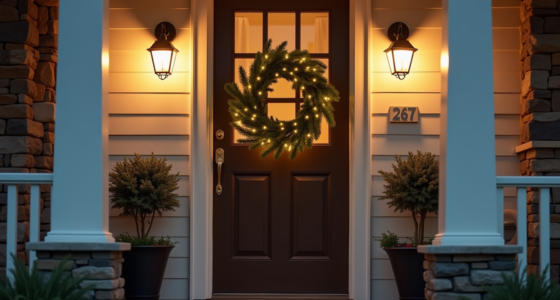

A Christmas lantern is one of the few decorations that can anchor a mantel, illuminate a dark corner, or transform a front porch, but choosing the wrong scale or placement turns it from a focal point into a clutter source. The fix is matching the lantern’s size and finish to its job, not its price tag. Below are six distinct approaches, each with the exact proportions, materials, and upkeep required to pull it off, plus a decision checklist to close.
Key takeaways
- Scale dictates impact: cluster three to five lanterns of staggered heights (12–24 inches) at your entryway for a cohesive focal point, but never exceed 60% of your table or mantel width.
- Hang with intent: only suspend lanterns from ceilings or covered beams using a rated hook and chain rated for at least double the lantern’s weight, leaving 7+ feet of clearance below for safe walkways.
- Budget smartly: achieve a high-end look for under $50 by mixing thrifted metal lanterns with LED pillar candles and faux greenery, while a $150+ investment in weatherproof, powder-coated steel suits long-term outdoor use.
- Avoid the three placement traps: never block a doorway or high-traffic path, keep lanterns at least 12 inches from heat sources like fireplaces, and skip glass-sided designs in wind-prone outdoor spots unless they’re weighted with sand or pebbles.
Entryway Lantern Clusters for First Impressions
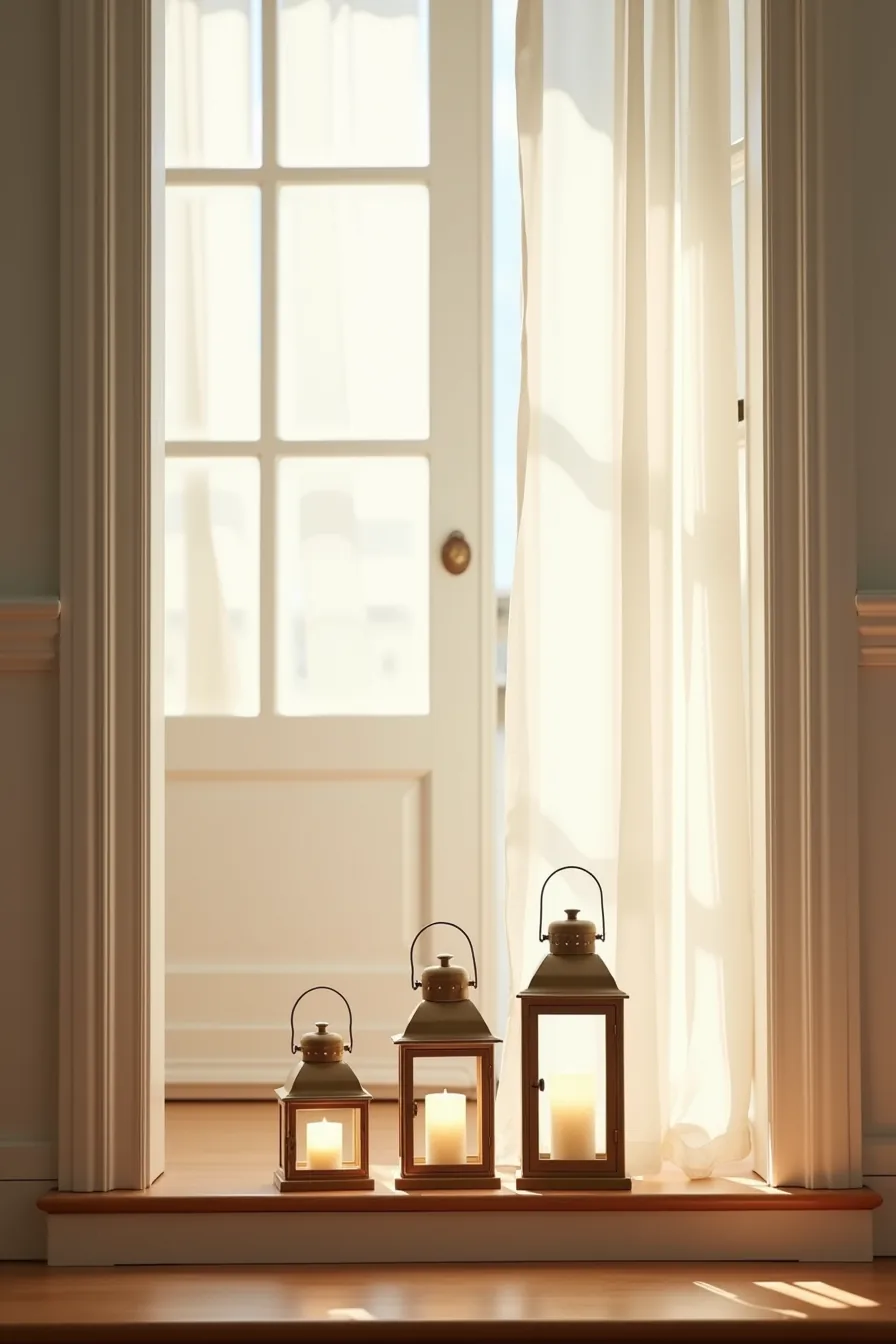
Grouping three lanterns of graduated heights on your porch step creates a focal point that draws the eye upward without demanding extra floor space. The tall metal lantern anchors the left side, the medium ceramic lantern sits centered, and the small wooden lantern balances the right, each material catches porch light differently, which gives the cluster depth from morning to dusk. This arrangement works best for covered entryways or porches with at least three feet of clearance from the door swing, so guests can still enter comfortably.
The varying heights, typically ranging from 12 to 24 inches, prevent the cluster from reading as a uniform row, which would look more like a display shelf than a deliberate composition. Choose this setup if your entry has a wide step or stoop (36 inches or more) and you want a seasonal touch that requires zero drilling or permanent fixtures. For renters, place the lanterns on a weatherproof tray or mat to protect the surface underneath from moisture rings, and swap in LED candles to avoid open flames near traffic paths.
Clean metal lanterns every two weeks during the season to prevent rust spots from snow or rain splatter.
Mantelpiece Lantern Arrangements by Room Size
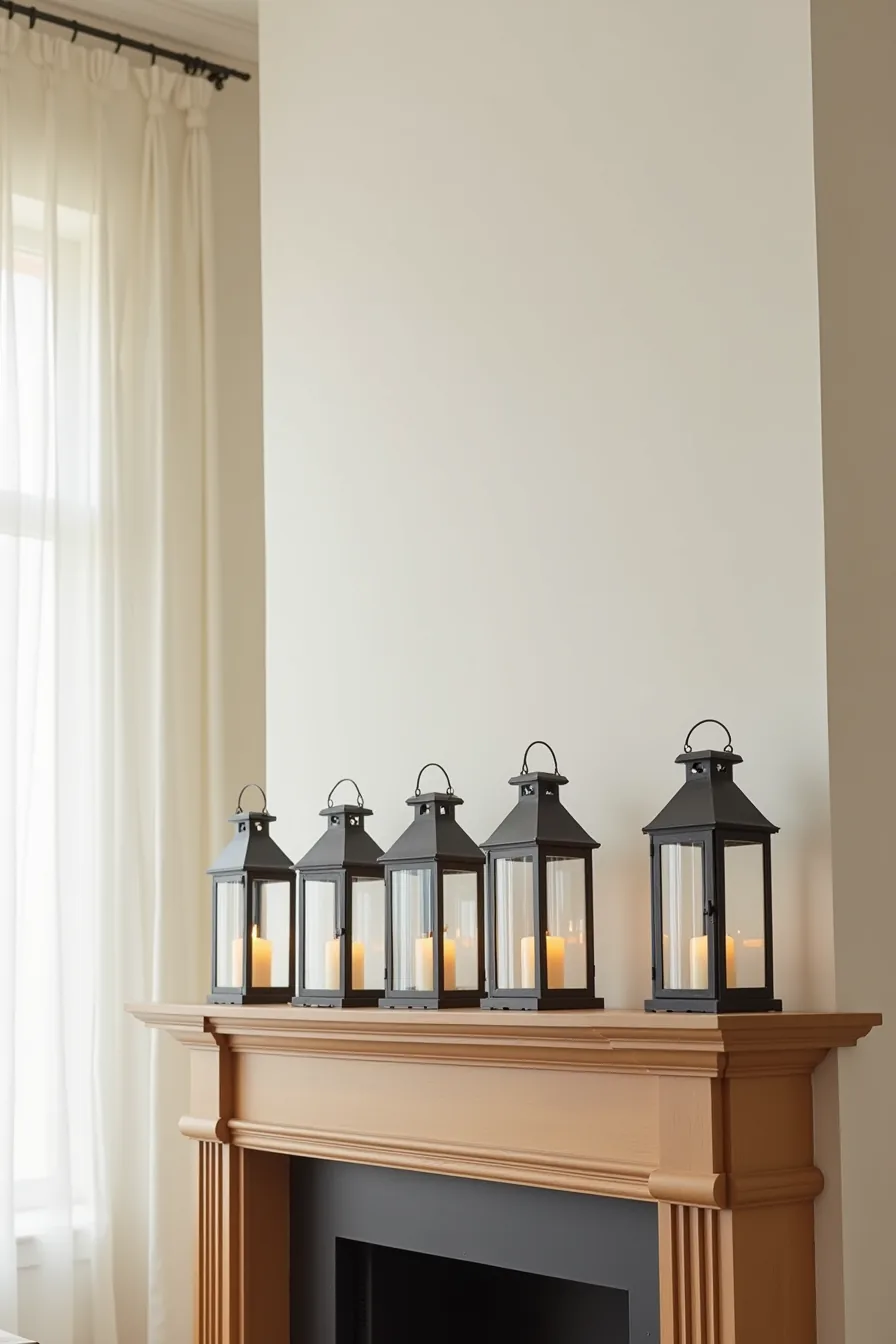
A mantel’s width dictates your lantern count more than any other factor. For a standard 48- to 54-inch mantel in a small apartment, limit yourself to three lanterns spaced 6 to 8 inches apart from their closest edges, this leaves enough breathing room on each side so the arrangement doesn’t spill visually into adjacent wall art or sconces. The fireplace mantel with five lanterns spaced evenly across its length works best on a mantel of 72 inches or wider, where the alternating clear glass and matte black metal units create rhythm without crowding.
For large living rooms, push the spacing to 10 to 12 inches between lanterns and let the end pieces sit 2 to 3 inches from the mantel’s edge. Match the lantern material to your fireplace surround: matte black metal suits dark stone or painted brick, while clear glass reads lighter against white or marble tile. For Practical Christmas Lantern Decor Ideas planning tips, measure your mantel depth before buying, most designs range from 5 to 8 inches deep, and anything wider will overhang and interfere with the hearth below.
Battery-operated candles with timer functions eliminate cord clutter and reset themselves nightly, which matters more than you’d expect when the mantel sits at eye level from the sofa.
Hanging Lanterns for Ceilings and Covered Spaces
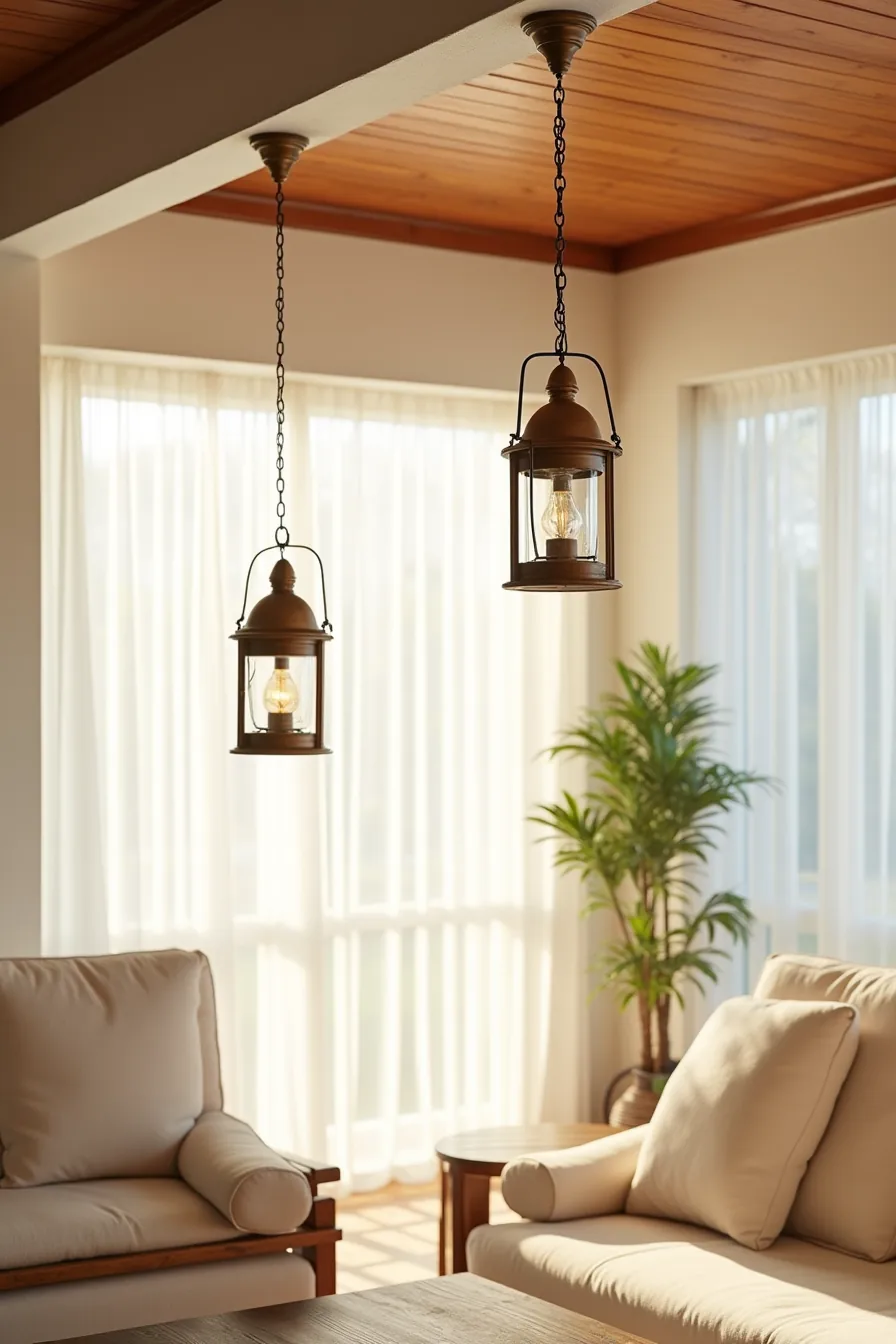
Suspending lanterns from a patio beam transforms dead overhead air into a focal point, but the hardware matters more than the ornament. For the two-lantern setup you see here, use a rated ceiling hook rated for at least 15 pounds per fixture, most metal lanterns weigh 3 to 7 pounds empty, so this leaves ample margin for candles and any wind sway. Attach the chains to a closed ring or eye bolt, never directly to a decorative loop, which is often spot-welded and can fail under load.
Hang the two lanterns at different heights, with roughly 12 to 18 inches of vertical separation, to create visual interest without making the lower unit a head hazard. Keep the bottom of the lowest lantern at least 7 feet above the floor if people walk beneath it. On a covered patio, use chains rated for outdoor use (stainless steel or coated) and check the beam attachment point annually for rust or loosening.
Indoors, a single lantern hung in a stairwell or above a kitchen island works similarly, just anchor into a joist, not drywall alone, and use a swag hook kit if you lack direct beam access.
Lantern Centerpieces for Tables and Sideboards
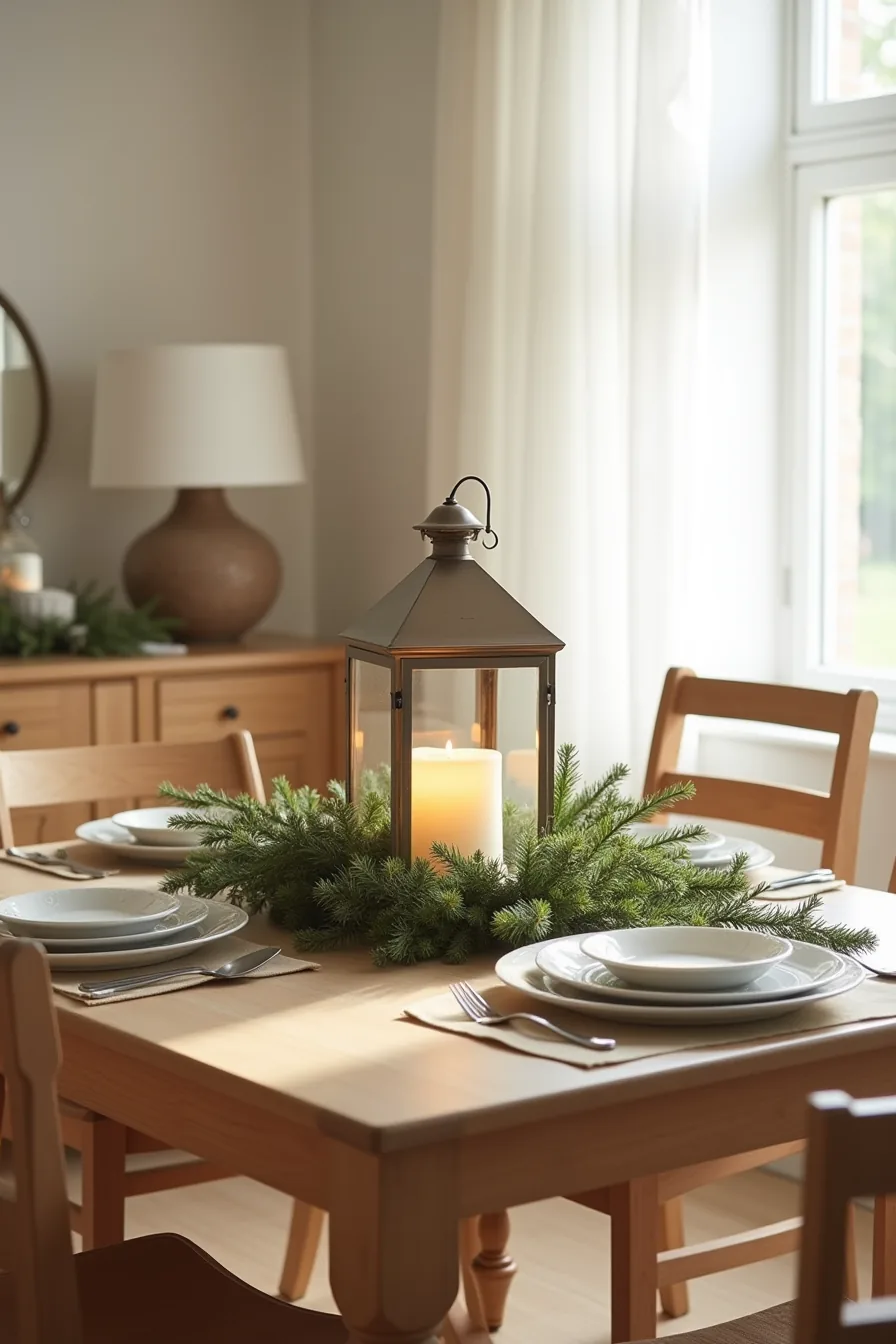
A single large lantern centered on a rectangular dining table reads as deliberate rather than decorated, which is why this arrangement works for formal dining rooms and open-plan kitchens alike. For a table that seats six to eight, typically 72 to 96 inches long, choose a lantern whose width lands between one-third and one-half of the table’s width. A lantern that spans 12 to 18 inches across leaves room for place settings while still anchoring the composition.
The evergreen branches tucked loosely around the base do double duty: they hide the lantern’s flat bottom and soften the transition from metal to wood. Use fresh-cut fir or pine, which holds its needles for 5 to 7 days indoors, and expect to replace it if you run the table for the entire season. The battery candles inside are the practical choice here, flame candles in a centerpiece with dry greenery create a fire risk that no aesthetic justifies.
Position the lantern so it sits within 2 to 3 inches of the table’s center point, and keep the arrangement below eye level for seated guests, roughly 12 to 14 inches tall, so conversation flows unimpeded across the table.
Budget, Rental, and Investment Routes
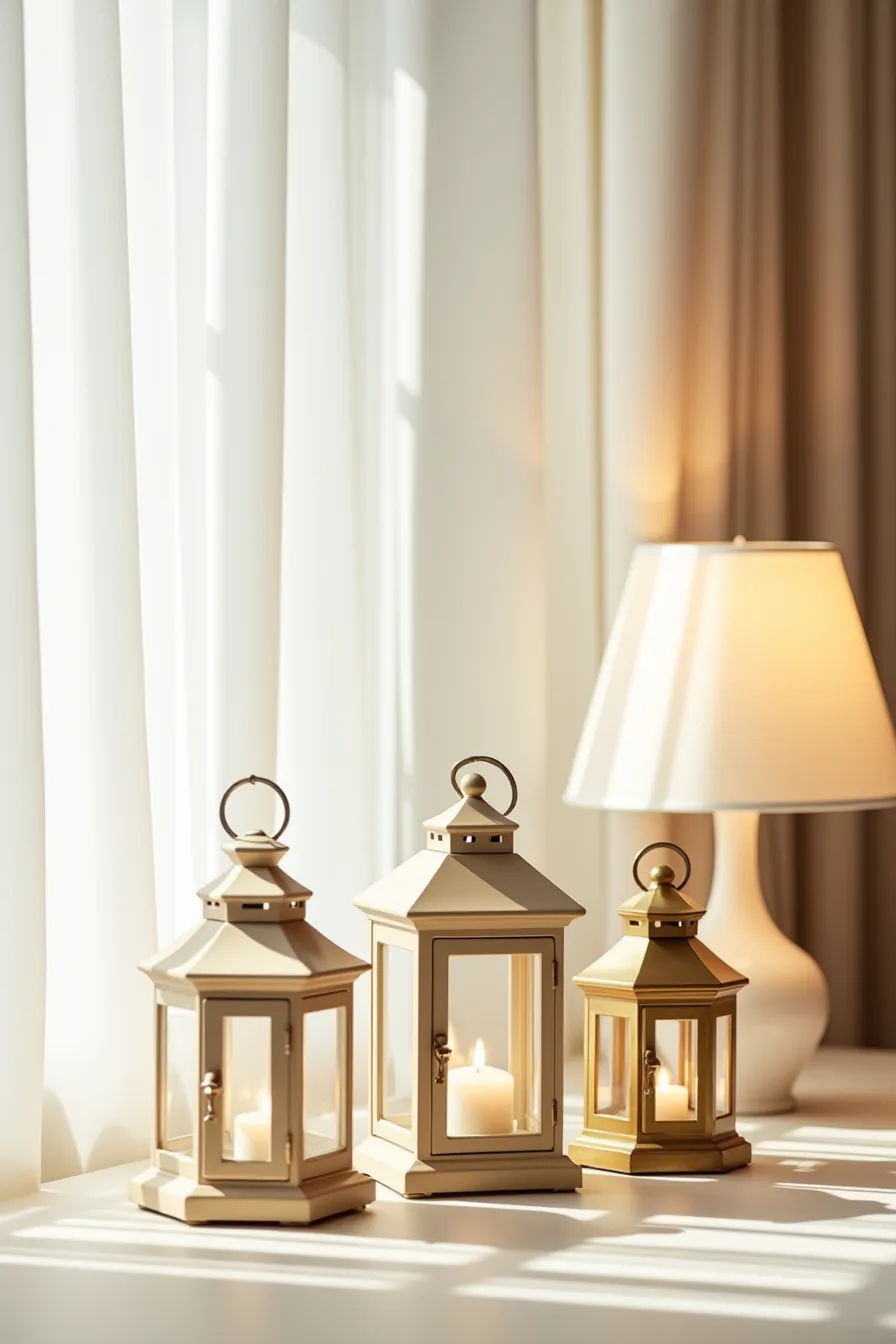
Your spending tier should follow how long the lantern will stay out and how much abuse it will take. The plastic lantern with LED light runs $15 to $30 and survives damp porches, curious pets, and clumsy guests without rusting or shattering. It reads as festive from across the room, but the molded seams and glossy finish look cheap up close, fine for a playroom, mudroom, or covered entry you pass quickly.
The paper lantern in the middle costs $8 to $20 and suits renters because it hangs from a single adhesive hook or rests on a shelf with zero wall damage. Its translucency throws the softest, warmest glow of the three, but paper tears in humidity and crushes easily in storage, so expect to replace it after one season.
The brass lantern with real candle is the investment piece: $60 to $150, weighty enough to anchor a hearth, and built to outlast a decade of Christmases if you wipe it down with a dry cloth monthly to prevent tarnish. Flame candles inside require you to blow them out before leaving the room, which makes this the right choice for adults-only spaces, not busy hallways where it might go unattended.
Common Placement Mistakes and How to Avoid Them
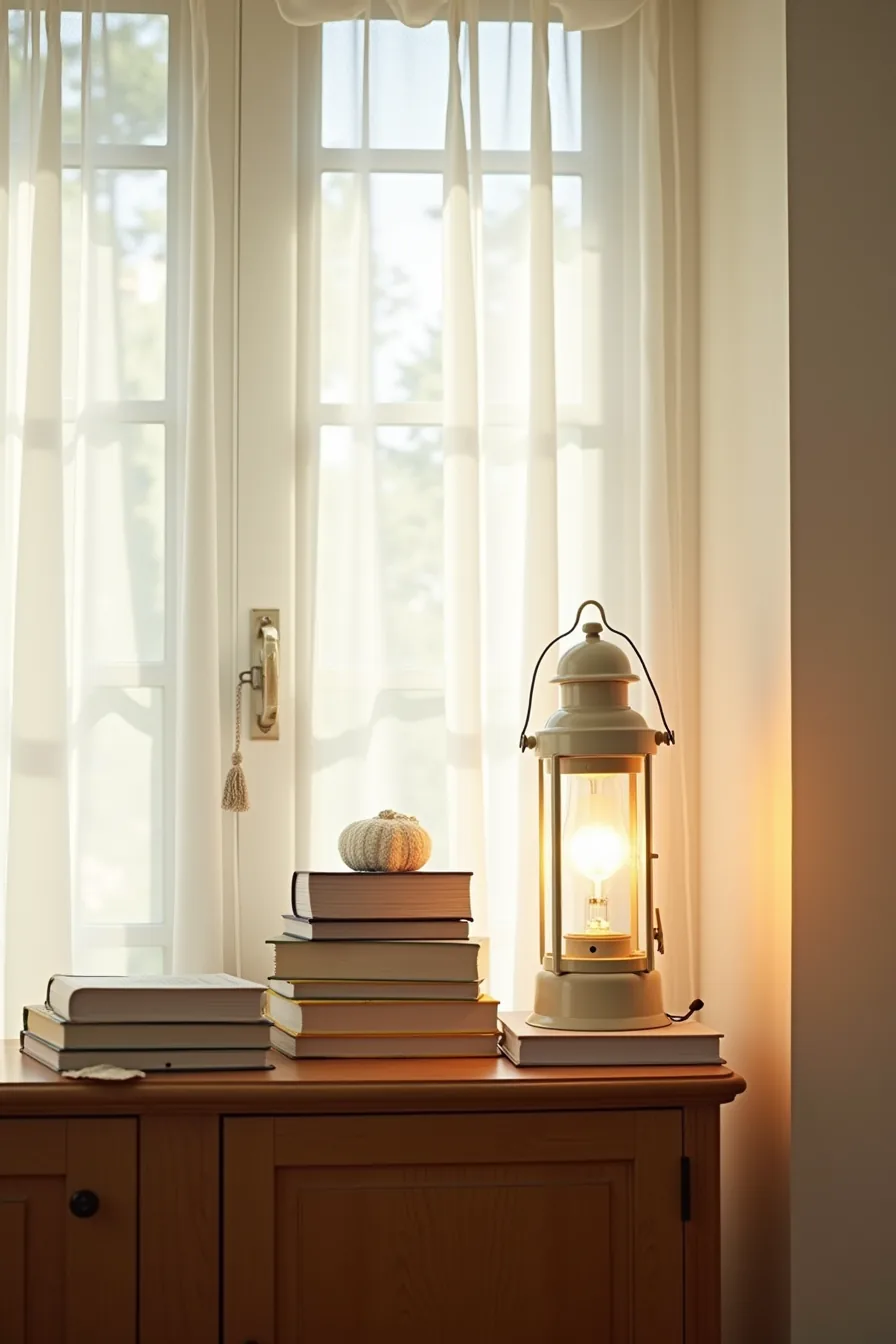
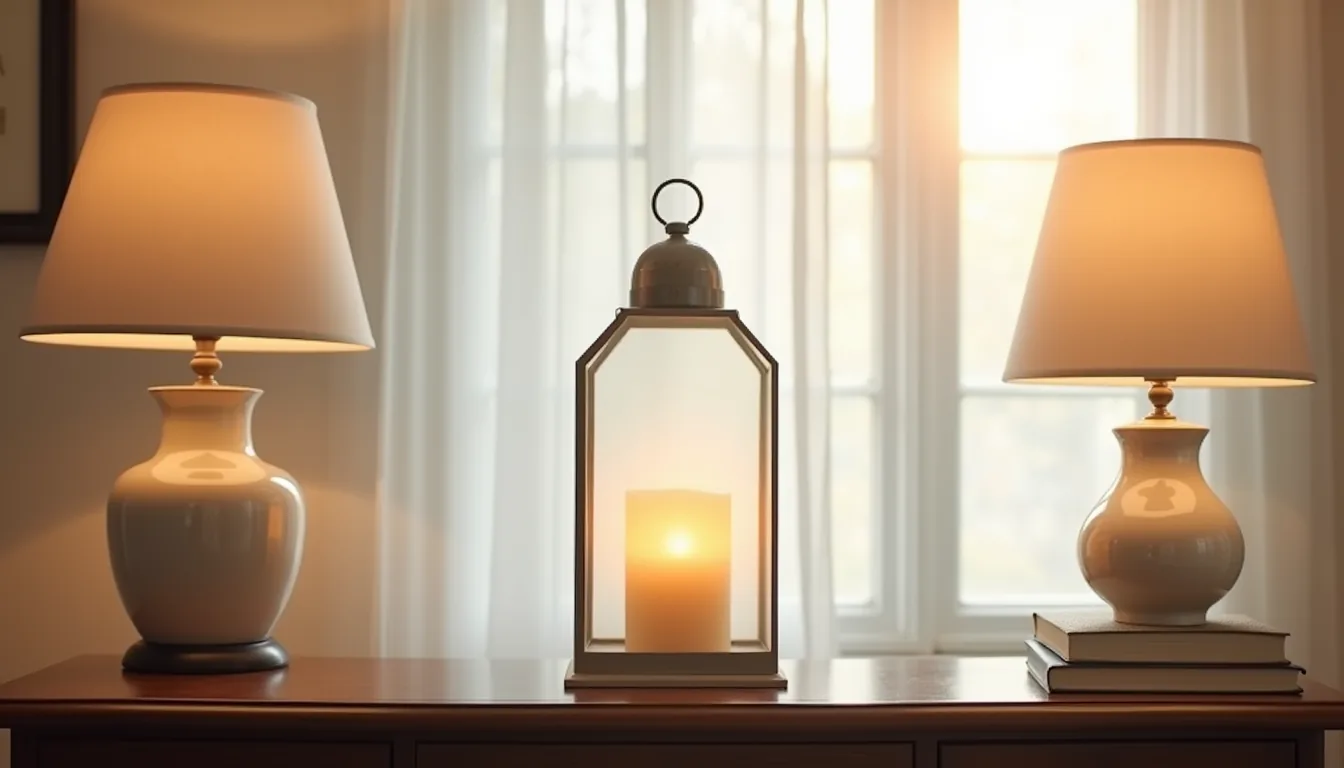
The most frequent Christmas lantern decor ideas mistakes to avoid start with fire safety. A sideboard crowded with a lantern, stacked books, and dried greenery places the flame within inches of curtain fabric that can sway into contact with the glass. Keep at least 12 inches of clear space between any lit lantern and flammable materials like drapes, wrapping paper, or pine garlands.
Scale mismatches cause the second most common error: a 6-inch lantern lost on a buffet table, or a 30-inch floor lantern overwhelming a narrow console. Measure your surface width and choose a lantern that occupies one-third to one-half of it, leaving breathing room around the base.
Clutter patterns emerge when you treat the lantern as one more object rather than a focal point. Limit the sideboard arrangement to the lantern, one low-texture element like a wooden bowl, and one vertical accent, anything more creates visual noise and increases the chance of knocking the lantern over during daily use. For maintenance, place a felt pad under brass lanterns to prevent scratching furniture, and check weekly for dust buildup on glass panels that dulls the glow considerably.
Where to Start
Pick one lantern, not six. Choose the largest size your surface allows, a 12-16 inch lantern on a console or floor beats three tiny ones scattered on a shelf. Match the finish to your existing hardware: black iron for industrial, brushed brass for traditional, matte white for modern.
If you rent, skip the drill and use command hooks rated for 10+ pounds or a tension rod inside a window frame.. Your first purchase? A battery-operated LED pillar candle with a timer, no cords, no melted wax, no fire risk near fabric or greenery.
Set the timer for 6 hours, and you never touch it again. That single decision solves 90% of the maintenance problem before it starts.
Frequently Asked Questions
What size lantern works best for a small apartment living room?
Choose lanterns between 6 and 10 inches tall for side tables or shelves. Anything larger overwhelms compact spaces. Group two or three smaller ones at varying heights for visual balance without crowding.
Can I use real candles in decorative lanterns, or should I use LED lights?
Real candles work if you stay present and keep them away from curtains or low ceilings. LED lights are safer for unattended displays, especially on mantels or near pets. Use flickering LED teardrops for realistic ambiance.
How do I hang lanterns safely from a ceiling without damaging drywall?
Use a lightweight ceiling hook rated for at least 10 pounds, screwed into a stud or using a drywall anchor. Hang lanterns on a chain or ribbon, keeping them at least 12 inches below the ceiling. Never hang glass directly from a nail.
What’s the difference between battery-operated and plug-in lanterns for Christmas decor?
Battery-operated lanterns offer cord-free placement anywhere, shelves, windowsills, or tabletops, but require periodic battery changes. Plug-in versions give constant light and no battery hassle, yet need nearby outlets and visible cords. Choose battery for flexibility, plug-in for long-term displays.