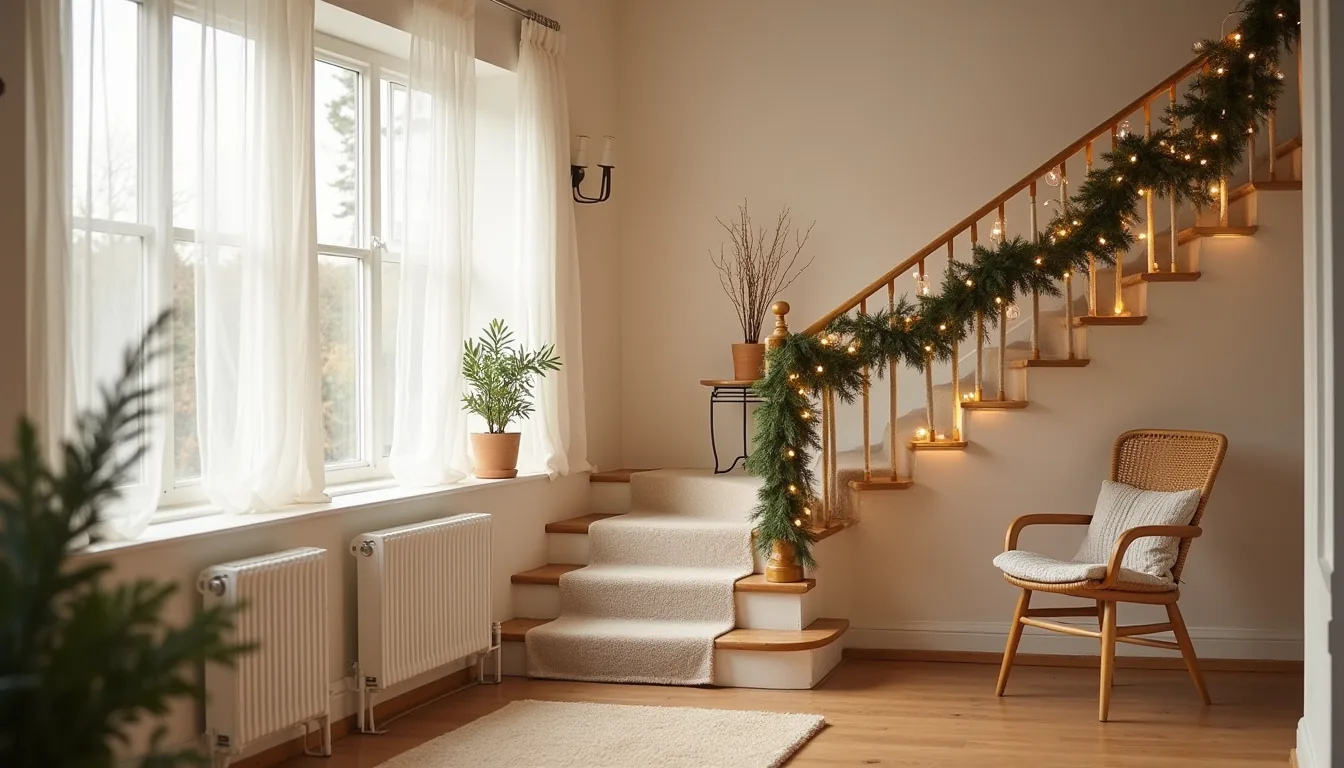
Decorating your staircase for Christmas transforms one of the most heavily trafficked areas of your home into a focal point, but the wrong approach can clutter a narrow passage or create a tripping hazard. The key is matching your decor to your stairwell’s actual dimensions and your household’s daily flow. You need a plan that balances visual impact with safety, maintenance, and budget, here are six distinct strategies that work across different stair types, from tight townhouse steps to grand entryways.
Key takeaways
Garland wraps deliver the strongest visual impact when you secure them every 12–18 inches with zip ties or wire, not just at the top and bottom, to prevent sagging on high-traffic staircases. Stair tread runners work best on open risers or carpeted stairs, where adhesive-backed stair clips hold them firmly without damaging the wood, but expect to re-tighten them weekly during the holiday season. Hanging installations like swags or suspended ornaments require a ceiling hook rated for at least 10 pounds per swag, and you should keep the lowest point at least 7 feet above the steps to avoid brushing heads. Renter-friendly routes rely on tension rods, command hooks, and magnetic clips, which remove cleanly but may not support heavy garlands, stick to lightweight faux pine and paper ornaments under 2 pounds total.
Garland Wraps: The Foundational Approach
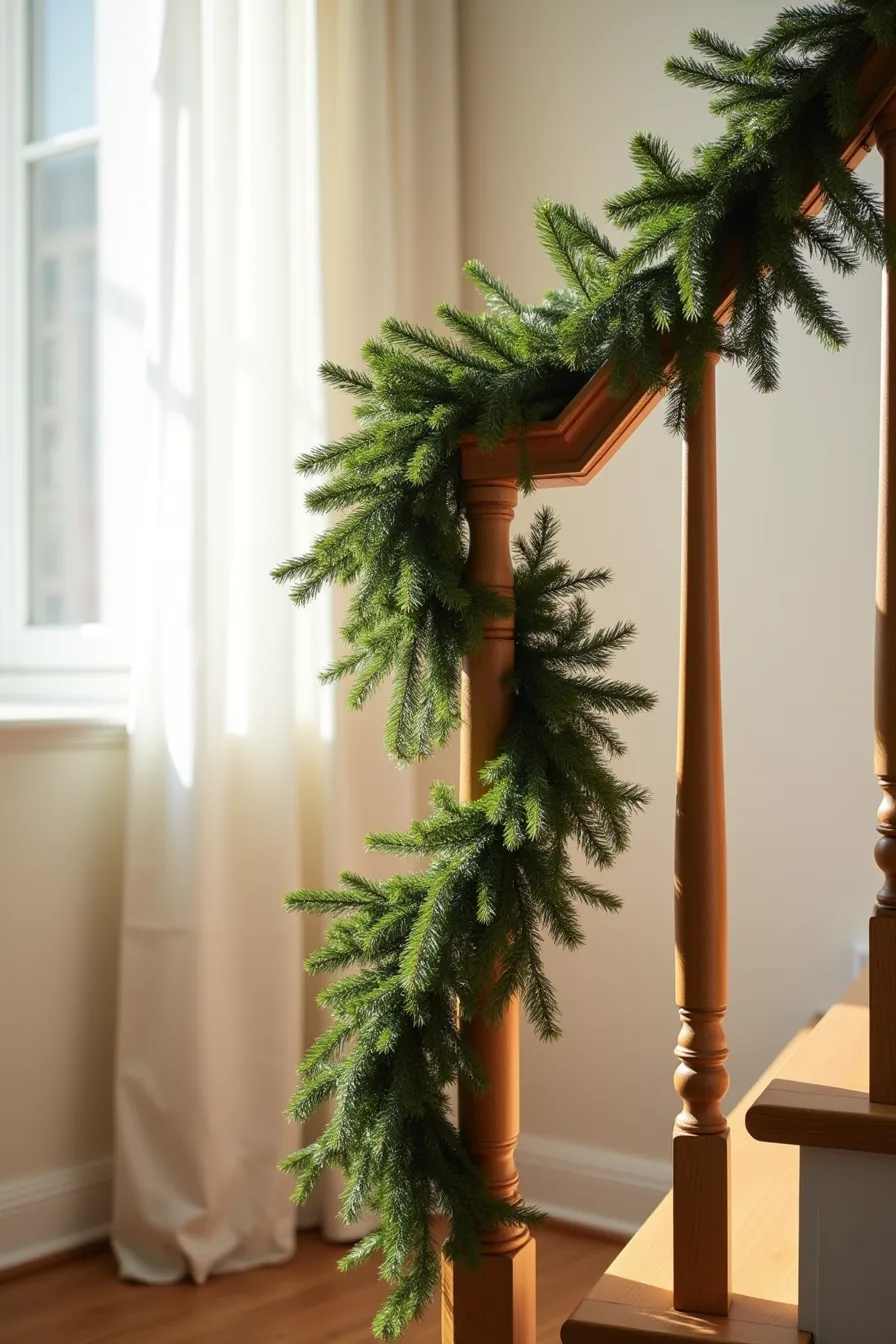
If you want the biggest transformation for the least structural commitment, a garland wrap is your starting point. This method works by spiraling evergreen garland tightly around a wooden railing, securing it at intervals with floral wire, and letting short lengths drape naturally between balusters. The technique creates a continuous ribbon of green that defines the staircase without requiring hooks, nails, or permanent fixtures.
This approach suits medium-to-large staircases with exposed railings, if you’ve drywall alongside your stairs or a glass balustrade system, you’ll need a different plan. Expect to use roughly 10-15 feet of garland per 6 feet of railing, depending on how densely you wrap. Choose fresh evergreen for a 3-4 week display with occasional misting, or faux garland if you want to store and reuse it for a decade.
The choke point is installation time: a single flight takes 60-90 minutes, and you’ll need floral wire snips on hand for every attachment point.
Stair Tread Runners and Risers: Floor-Level Styling
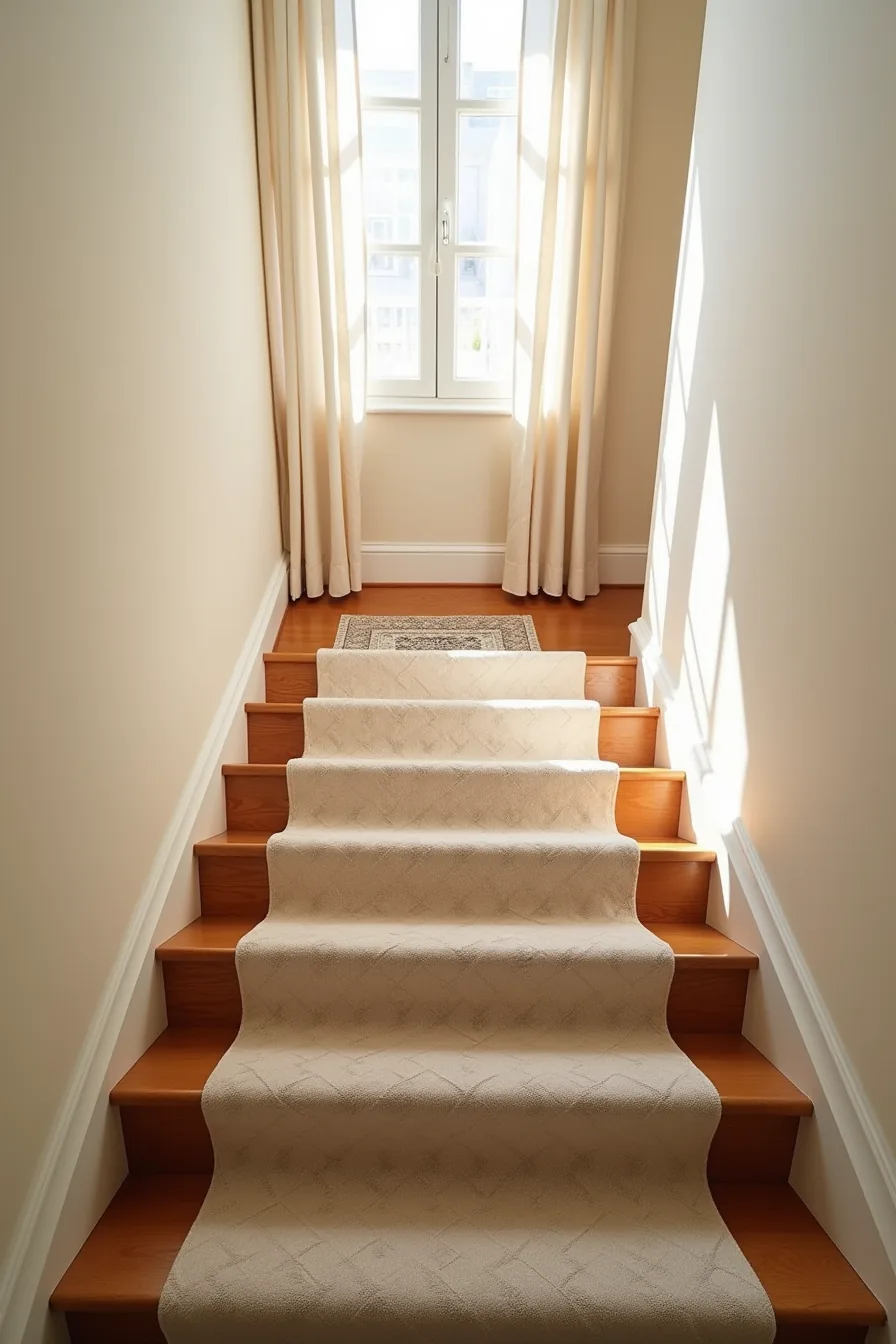
Skip the railing entirely and dress the steps themselves. A patterned stair runner, anchored with professional-grade carpet tape or rod holders, adds grip and hides wear on high-traffic wood. This approach works best for open staircases without risers, where the runner becomes the visual anchor.
For a bolder, budget-friendly twist, apply adhesive-backed vinyl decals or stenciled paint to the risers only. This technique suits homes with existing, well-maintained treads you don’t want to cover. The contrast between a dark tread and a light, patterned riser creates depth without adding bulk.
Measure your stair width and add 4 inches for overhang on each side before ordering. For a cohesive look, match the runner’s primary color to your wall trim, and use a contrasting border to define the edges. Vacuum weekly and spot-clean spills immediately to prevent staining; expect to replace a high-traffic runner every 3-5 years depending on material quality.
Hanging Installations: Swags, Ribbons, and Suspended Ornaments
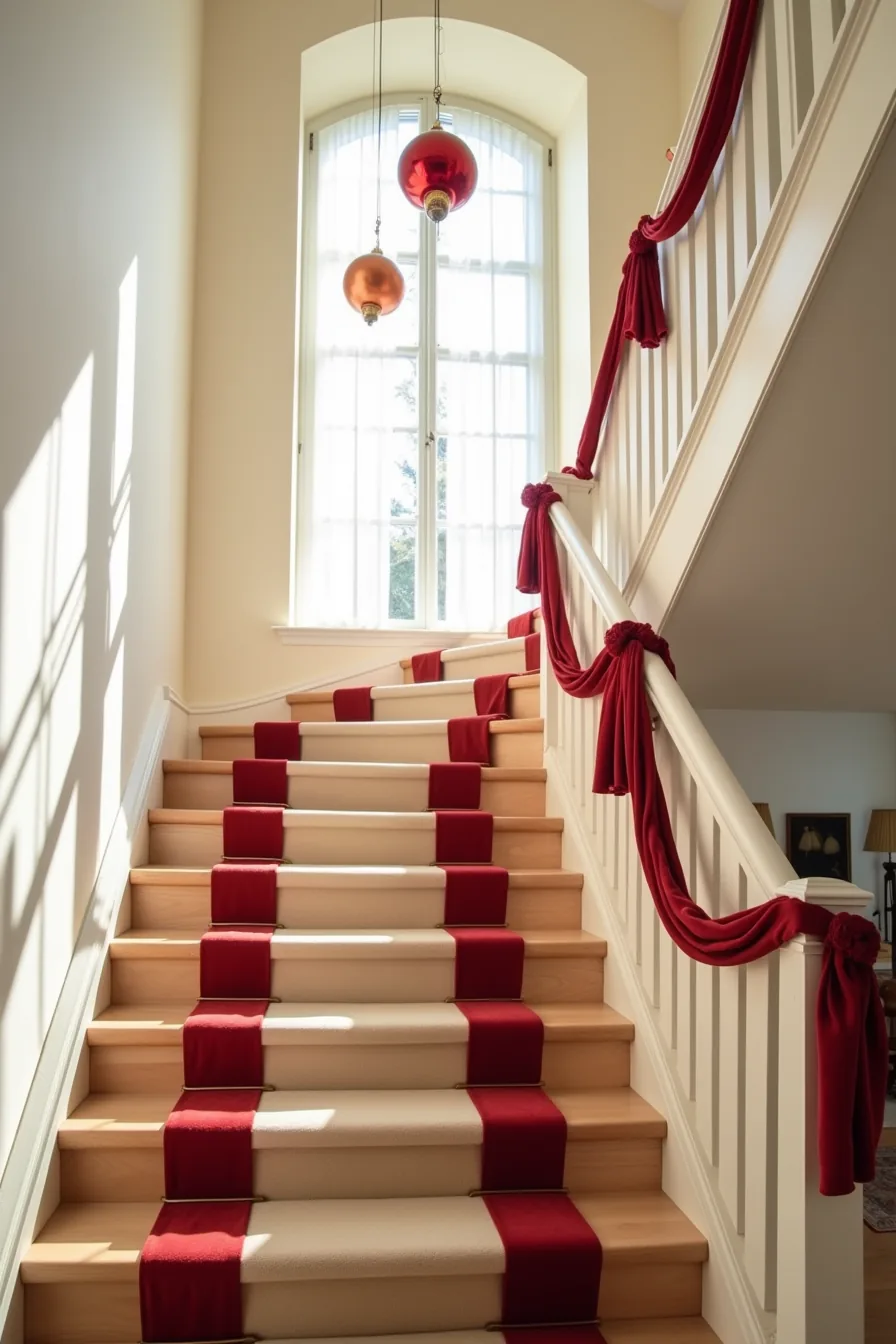
The most dramatic stair Christmas decor ideas mistakes to avoid often involve overhead work, and the image of red velvet ribbon swags draped between stair runs captures the payoff done right. You’ll need two anchor points per swag: a self-drilling hook screwed into the wall above the handrail, and a second at the opposite run’s baseboard or newel post. For the fishing line suspending large ornaments, cap each strand at 2-3 pounds total weight, anything heavier risks the hook pulling from drywall, so use a stud finder and toggle bolts for anchors above 5 pounds.
Keep every hanging element at least 6 feet above the stair tread’s surface to clear headroom on a standard 8-foot ceiling; for taller stairwells, adjust proportionally but never let a swag dip below 5 feet 8 inches. Velvet ribbon holds its shape without sagging, but polyester blends stretch overnight, test a 24-inch length for 48 hours before committing. Replace fishing line annually, as UV exposure weakens it within a single season, and untie ornaments before storing to avoid crimping the line.
This setup suits open, two-story foyers where floor-level decor disappears; skip it in narrow, low-ceiling hallways where the swags will read as clutter rather than grandeur.
Lighting Strategies: Fairy Lights, Rope Lights, and Spotlights
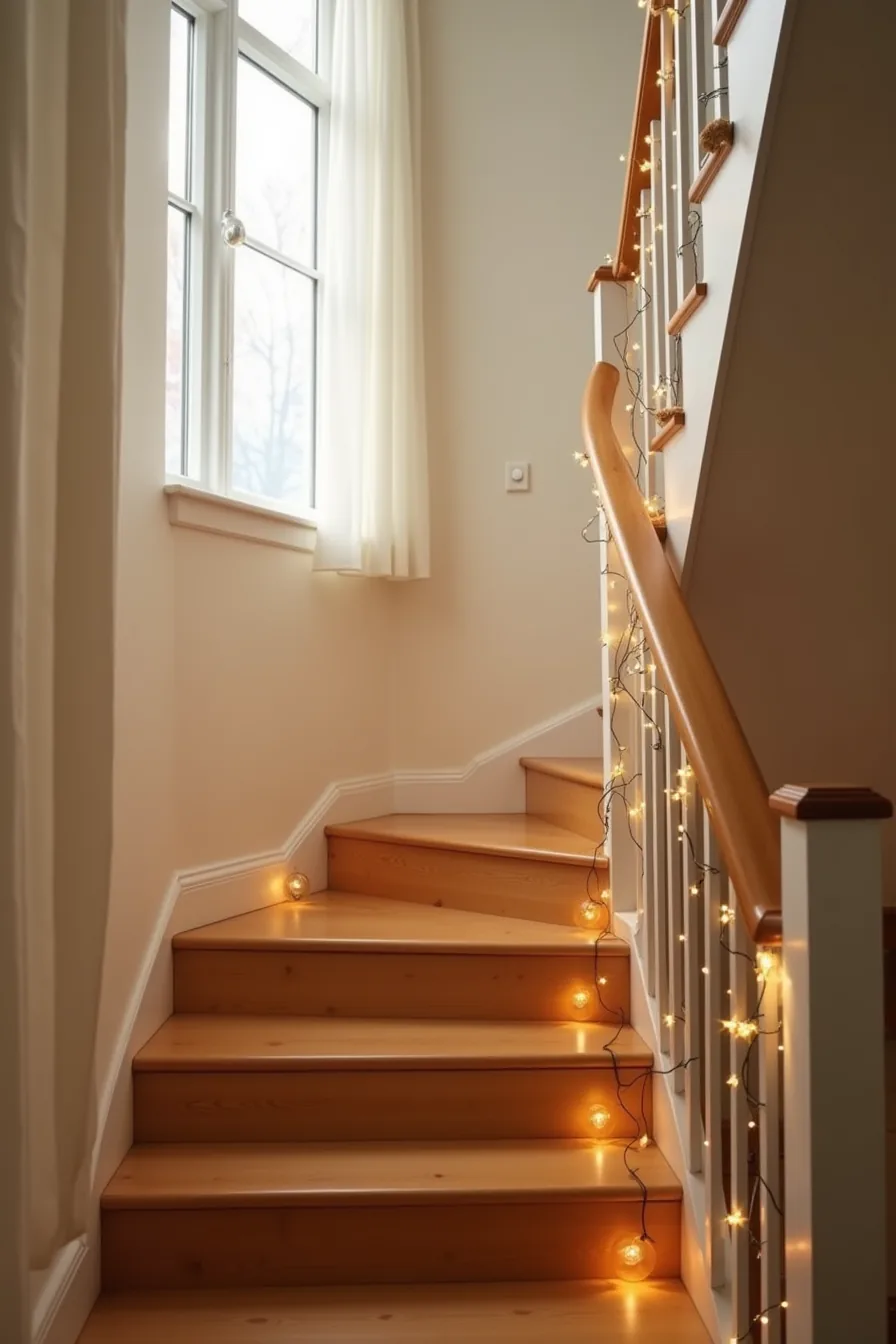
Warm fairy lights woven along the railing deliver ambient glow without washing out your other decorations, but the electrical cord dictates placement before aesthetics do. Run the cord alongside the handrail’s underside, securing it every 12-18 inches with clear zip ties, never on stair treads where foot traffic will crush it. The rope lights tracing each tread edge create a functional night-light path, but keep them 2-3 inches back from the nosing to prevent contact with heels and pet claws.
Plug both into a single surge-protected strip mounted at the staircase base; a 50-foot indoor-rated extension cord reaches most two-story landings without daisy-chaining. Brightness matters more than color temperature: stick below 300 lumens per strand for a cozy effect, and test the setup at night before adding ornaments, because rope lights reflect off glossy treads and can cast strobe-like shadows on open risers. Avoid incandescent strands entirely, LEDs run cool enough for overnight use, while their older counterparts generate heat that warps plastic clips on the railing within three weeks.
Replace any cord with visible fraying immediately, and unplug the entire system before adjusting decorations mid-season.
Renter-Friendly and Removable Solutions
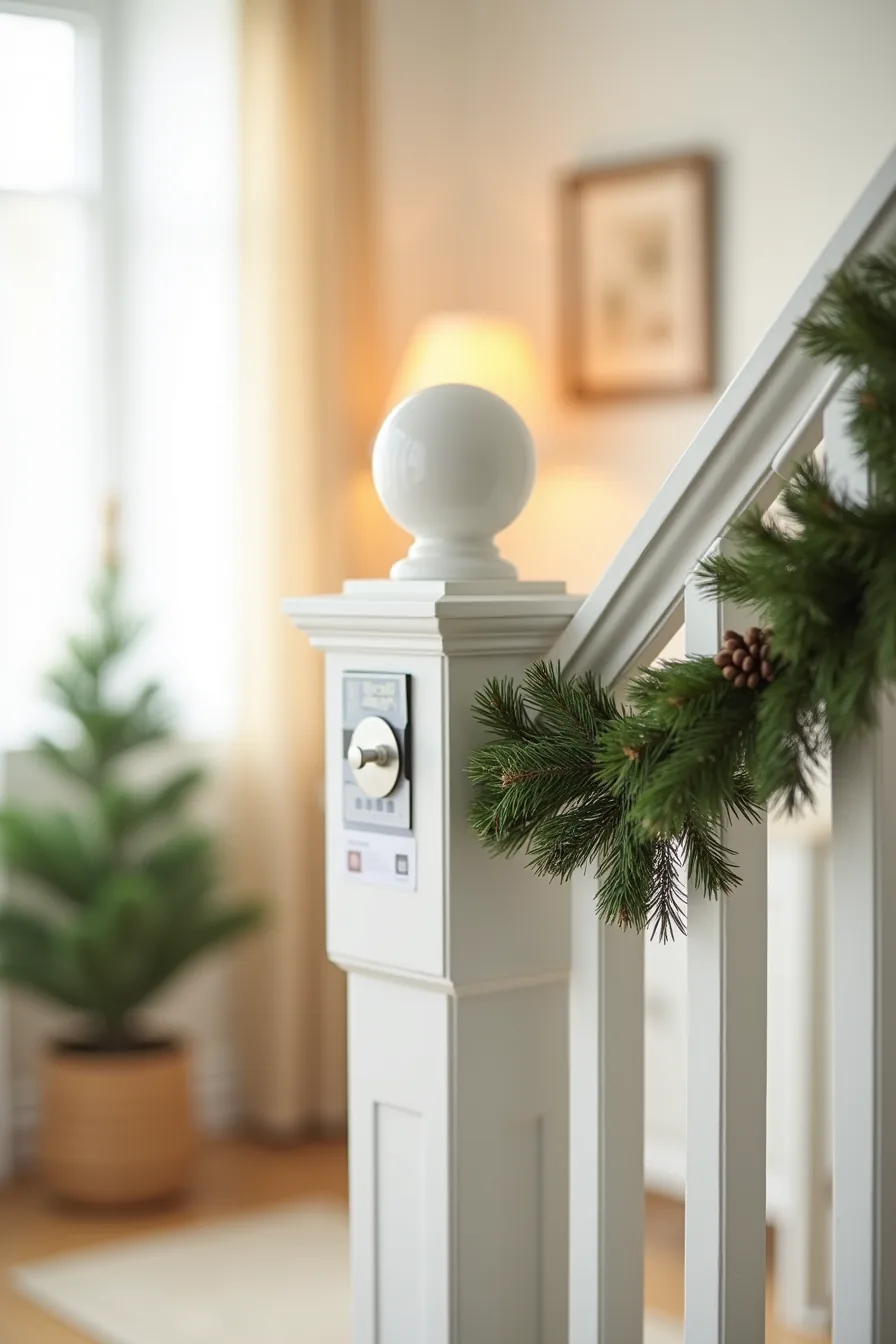
The command strip is your best friend here. Use the velcro-style strips rated for 5–10 pounds to secure a lightweight garland along the banister rail, placing one strip every 18–24 inches. For the stair risers, opt for removable adhesive hooks, the clear plastic kind that release with a downward tab, to hang small wreaths or ornament clusters without touching the paint.
Avoid suction cups on textured walls; they fail within hours. Magnetic hooks work beautifully on metal spindles or a steel banister bracket, and they hold up to 2 pounds each, perfect for a small eucalyptus swag. Budget-wise, this route costs $15–$30 total: a 6-foot garland, a box of 12 adhesive hooks, and a pack of command strips.
The trade-off is limited weight capacity, so skip heavy lanterns or thick pine rope. For a two-story staircase, expect installation to take 45 minutes, slightly longer if you need to wipe each spindle with alcohol wipes first for better adhesion. One caveat: adhesive hooks can leave a faint residue on matte paint; test one on an inconspicuous spot behind a newel post before committing.
If you’re in a strict no-drill apartment, this system comes down clean in under ten minutes and leaves zero trace, just pull the tab straight down, not outward, to avoid tearing the paint. For that reason, it’s the safest bet for security deposits and landlords who walk through biannually.
Scaling Stair Christmas Decor Ideas Across Room Sizes
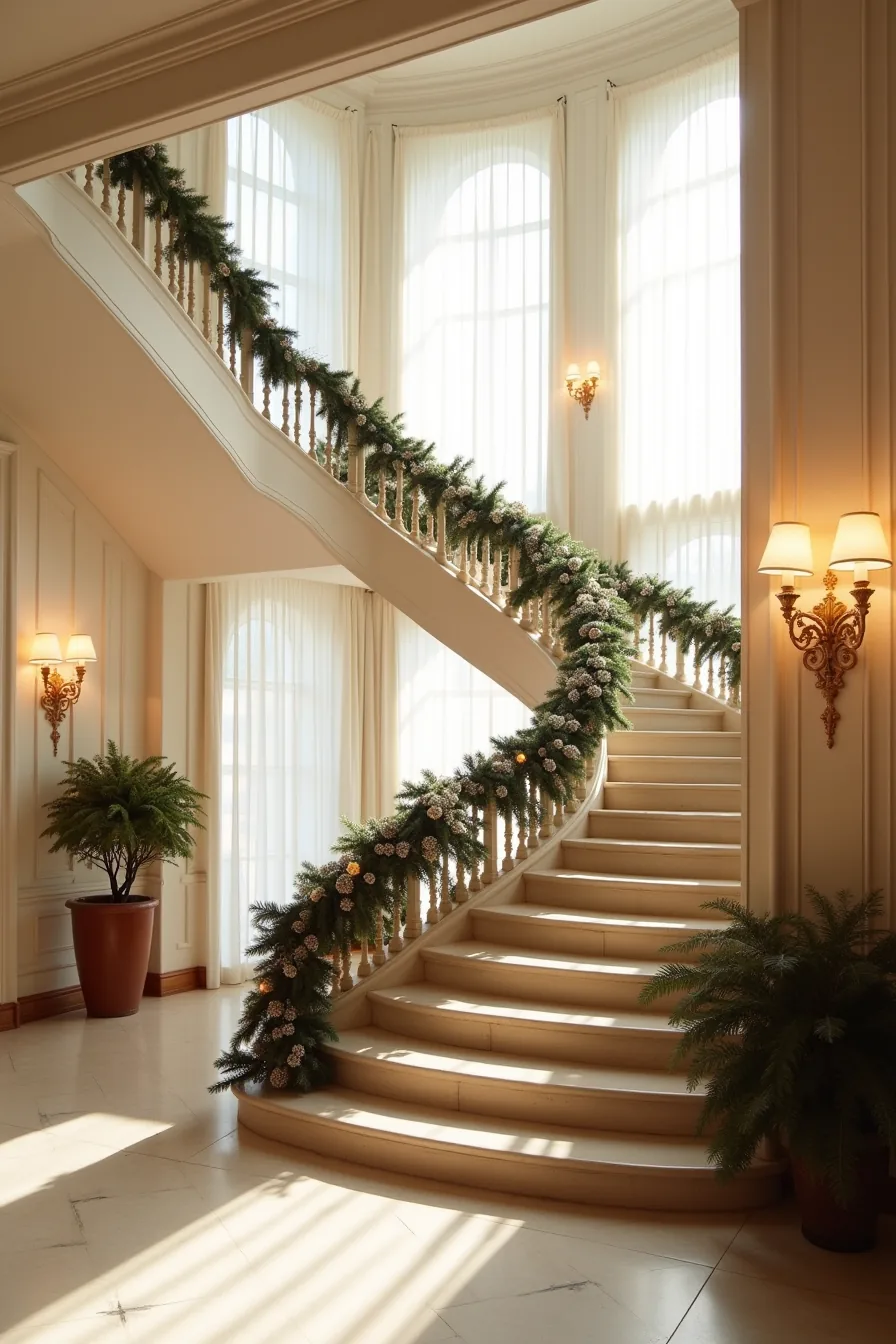
Your staircase’s footprint dictates decoration density, not your budget. In a narrow apartment stairwell with a single 36-inch-wide flight, commit to one material, say, a slim eucalyptus garland, and skip the runner to keep the path visually open; color saturation should stay low with two accent tones max, or the walls will close in. A standard residential staircase with a landing and 42–48-inch treads can handle a fuller pine garland wired to the railing plus a stair runner, but keep layering to two elements per flight to avoid visual clutter.
For a grand multi-story entry with three visible flights, the rule of threes applies: pair layered garlands on the railing with a runner that carries the same palette up each flight, then add lighting strung along the banister to unify the vertical space. Decoration density should double with each additional flight, but material weight must climb too, lighter faux garlands look sparse across wide, tall spans, so invest in thicker, heavier-grade pine or cedar rope that holds its silhouette. On the budget vs. Splurge Stair Christmas Decor Ideas spectrum, a grand staircase demands the splurge: cheap garlands sag visibly across long, open railing runs, and the runner’s wear-and-tear on high-traffic steps justifies a mid-tier, stain-resistant option around $4–$6 per linear foot.
The trade-off? Installation time triples on a multi-flight setup, budget three hours versus 45 minutes for a single story, and you’ll need a ladder rated for the ceiling height to reach upper banister curves safely.
Your First Move
You now have six distinct approaches, each with different cost, effort, and visual payoff. Before buying anything, measure your stair tread depth and banister height, most standard staircases run 7-9 inches deep per step and banisters sit 34-38 inches above the tread nose. This determines whether you can use heavy garlands or need lightweight clips.
Pick one focal point: the handrail, the newel post, or the stair edges. Commit to that single element for your first year, then expand.
Start tonight by clearing the stairs completely. Remove every stray shoe, toy, and mail pile. A clean staircase makes even a simple garland look intentional, and it gives you accurate measurements for your shopping list tomorrow.
Frequently Asked Questions
How do you safely decorate stairs without blocking the treads or creating a fire hazard?
Keep all decor above handrail height or on the banister, never on treads. Use battery-operated LED lights instead of plug-in cords, and secure garland with zip ties so nothing dangles into the walking path.
What’s the difference between budget garland and premium garland for stair decoration, and is the cost difference worth it?
Budget garland (under $1 per foot) uses thin plastic tips and tangles easily. Premium options ($3–$6 per foot) feature dense, realistic foliage and wired stems that hold shape. For high-traffic staircases, premium lasts several seasons, worth it.
Can you use the same stair Christmas decor ideas in a rental apartment, and what materials won’t damage walls or railings?
Yes, use command hooks rated for 5–10 pounds, tension rods between newel posts, and removable adhesive cable clips. Avoid nails, screws, or sticky tape on painted surfaces. Velcro straps around railings work without residue.
How much garland or lighting do you need for a standard 12-step staircase, and what’s the typical cost range?
For a 12-step staircase with one handrail, you need 18–25 feet of garland (allowing for draping) and 20–30 feet of LED lights. Expect $30–$80 for budget options, or $100–$200 for premium materials.