
Your utility closet is the one room in your home where function must beat style, but with the right utility closet organization ideas, it can deliver both without sacrificing an inch of floor space. The key is matching each solution to your specific wall depth, door swing, and daily habits, not copying a photo. Below, you’ll find six distinct approaches, from a $30 tension-rod overhaul to a built-in cabinet system, each with the exact measurements, maintenance demands, and trade-offs you need to decide in under five minutes.
Key takeaways
- Match storage to depth: Wall-mounted shelving works best in closets 12–18 inches deep, while rolling carts suit wider spaces where you can clear a 24-inch path for access.
- Prioritize door-back caddies for lightweight items like cleaning sprays and dusters, but never exceed the door’s rated weight, typically 10–20 pounds, to avoid hinge strain.
- Use labeled bins with clear fronts to cut retrieval time in half for small supplies, and opt for drawer dividers only when your shelving is at least 16 inches deep to avoid wasted vertical space.
- Choose pegboards for rental flexibility since they require only a few screw holes and are easily patched, whereas built-in cabinetry suits permanent homeowners willing to invest $500–$2,000 for a custom fit.
Wall-Mounted Shelving for Vertical Storage
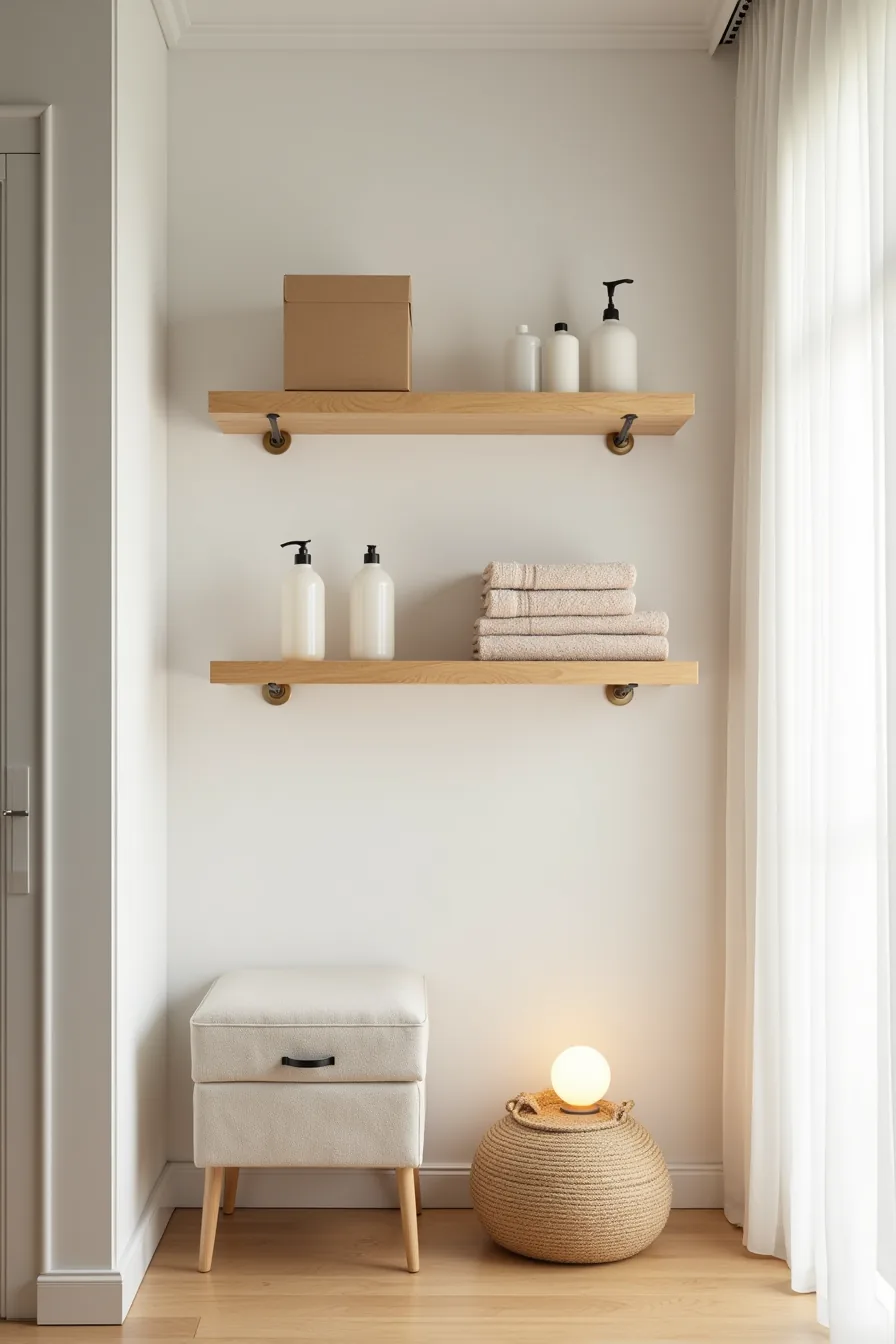
Wall-mounted shelving transforms dead air above your washer or along a narrow closet wall into primary storage, and it’s the single highest-impact change you can make in most utility closets. The setup here uses three floating wooden shelves at staggered heights, which works because the varying gaps let you slide a tall cleaning bottle on the lower tier while stacking towels and cardboard boxes on the upper ones without wasted headroom. For sizing, choose shelves 24–36 inches wide if your closet runs 30–48 inches across; anything longer starts to bow under the weight of full cleaning bottles unless you add a third bracket.
Standard floating shelves hold 20–40 pounds per shelf when anchored into studs, so reserve them for light-to-midweight items like paper goods and folded linens, not full jugs of detergent. Renters should use a tension-mounted or adhesive bracket system rated for 15–25 pounds to avoid patching holes, though you’ll sacrifice some load capacity. Owners planning to stay put should anchor into studs with a 1.5-inch-thick solid wood shelf, which handles daily use without sagging.
This is among the best utility closet organization ideas examples for narrow spaces because it costs roughly $40–$90 per shelf setup and clears floor area for a hamper or mop bucket. For practical utility closet organization ideas planning tips, measure your tallest intended item first and set the lowest shelf 12–18 inches above the floor so you aren’t crouching for daily-use supplies.
Door-Back Storage and Slim Caddies
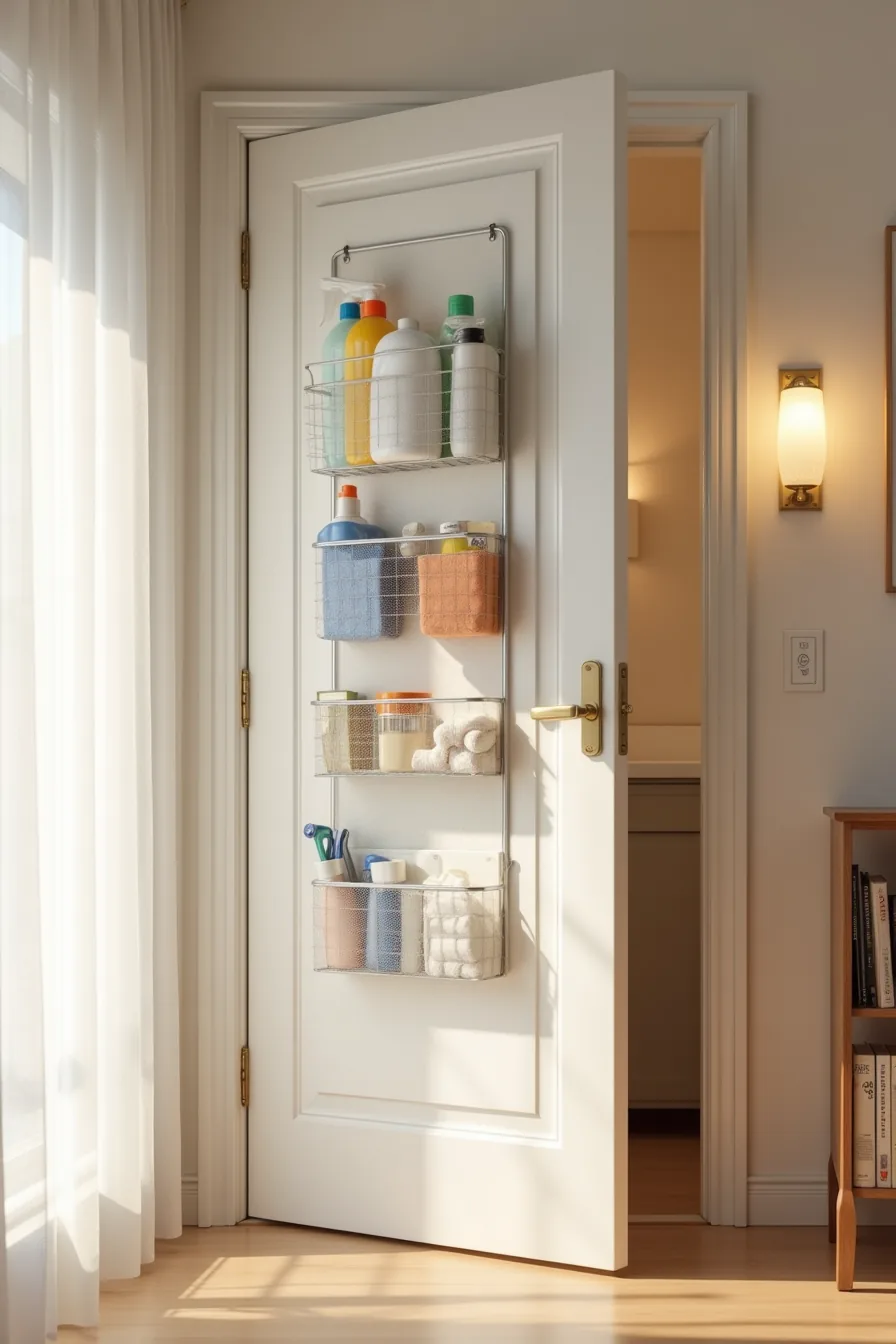
The interior face of your closet door is prime real estate that most layouts leave untouched, and a standard over-the-door organizer turns that vertical surface into the most convenient drop zone for daily-use items. A clear-pocket organizer rated for 10–15 pounds lets you pair each spray bottle with its own slot so you grab a cleaner and a cloth in one motion without touching the shelves. For deeper bottles or bulky tools, choose pockets sized 4–6 inches deep; anything shallower will bulge and pop the hooks off the door frame.
Two adhesive-mounted caddies on the side wall below capture the overflow that misses the door pockets, keeping small tools and folded cloths within arm’s reach of the opening. These stick-on units hold roughly 2–5 pounds each and work best on smooth painted drywall or tile, but they’ll fail on textured surfaces or in humid laundry rooms, test the adhesive for 24 hours before loading.
This utility closet organization ideas route suits small spaces where floor and shelf footage are scarce, and it costs $15–$45 depending on pocket count and mounting quality. Measure your door’s clearance first: a fully loaded organizer adds 3–5 inches of depth, which can block adjacent fixtures if the door swings into a tight hallway. Use the lowest pockets for heavy bottles and the top rows for cloths, the weight distribution keeps the hooks firmly seated on the door edge.
Labeled Bins and Drawer Dividers
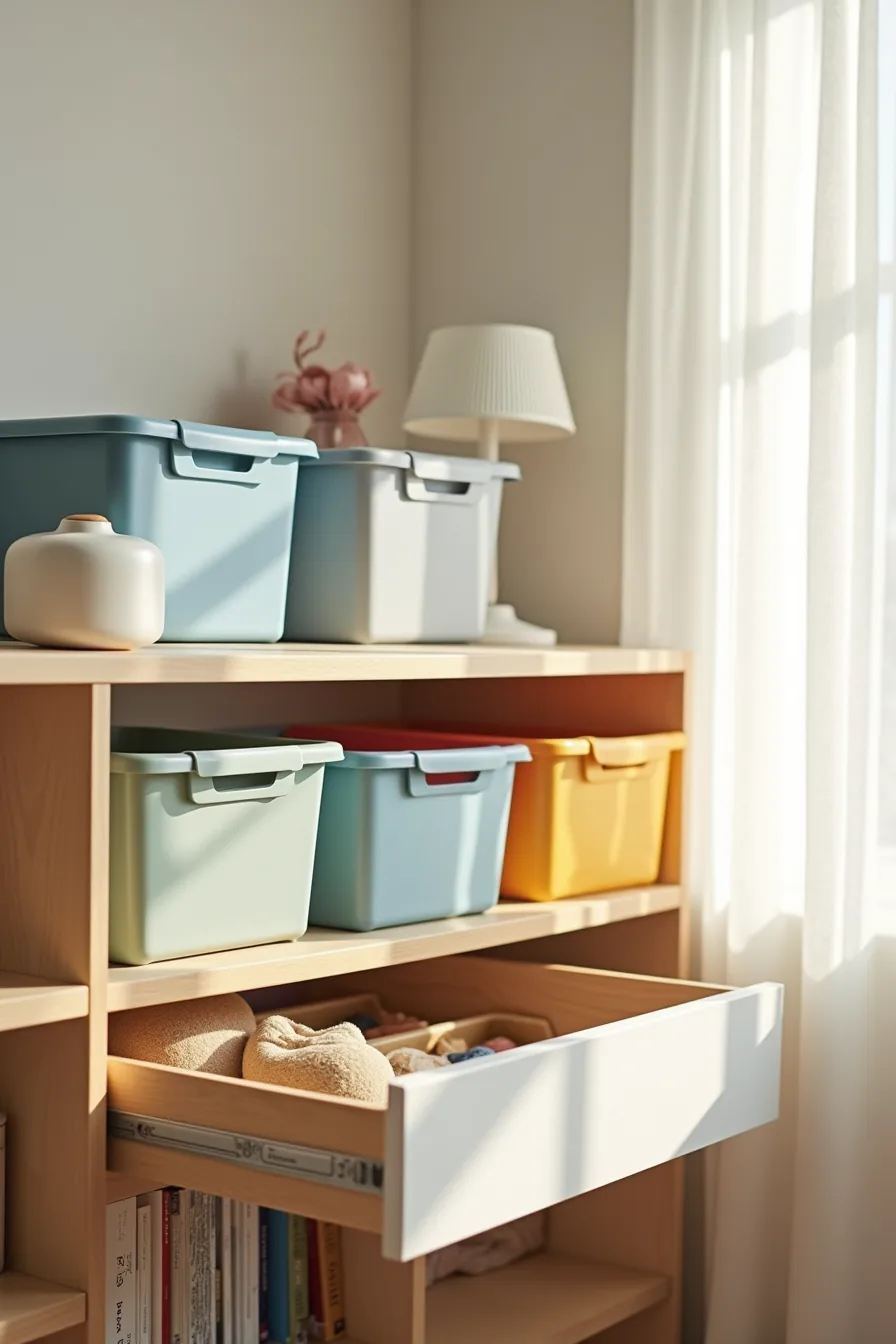
Grouping supplies into clear or opaque bins turns a jumbled shelf into a system you can restock without unloading everything. The five colored bins in this setup, blue for cleaning chemicals, red for sponges and brushes, green for recyclable bags, yellow for lightbulbs and batteries, gray for tape and adhesives, create a visual code that works even if you skip the labels entirely. Opaque plastic hides the visual chaos, but you lose the ability to spot empty packages at a glance, so commit to labeling every front panel with a permanent marker or a $10–$20 label maker.
The fabric drawer dividers beside the bins suit small tools, drill bits, and spare hooks that otherwise roll into one unusable pile. These dividers are flexible, so they adapt to irregular drawer widths, but they offer no structural rigidity, stack them only in shallow drawers 2–4 inches deep, or the fabric walls will fold and spill your contents. Cost runs $1–$4 per divider, and the bins themselves range $3–$12 each depending on whether you choose standard or heavy-duty plastic.
This utility closet organization ideas route fits renters and anyone who wants a reversible system, since nothing here requires drilling or permanent mounting. The maintenance burden is real: a bin system only stays organized if you return items to their color-coded home, and unlabeled bins degrade into mixed chaos within weeks. One of the most common utility closet organization ideas mistakes to avoid is buying bins before measuring shelf depth, a bin that’s 12 inches deep will hang off a 10-inch shelf and waste vertical space.
Budget $25–$60 for a complete bin-plus-divider setup for a typical 24-inch-wide closet, and re-evaluate your categories every six months as your supply mix shifts.
Rolling Carts and Mobile Solutions
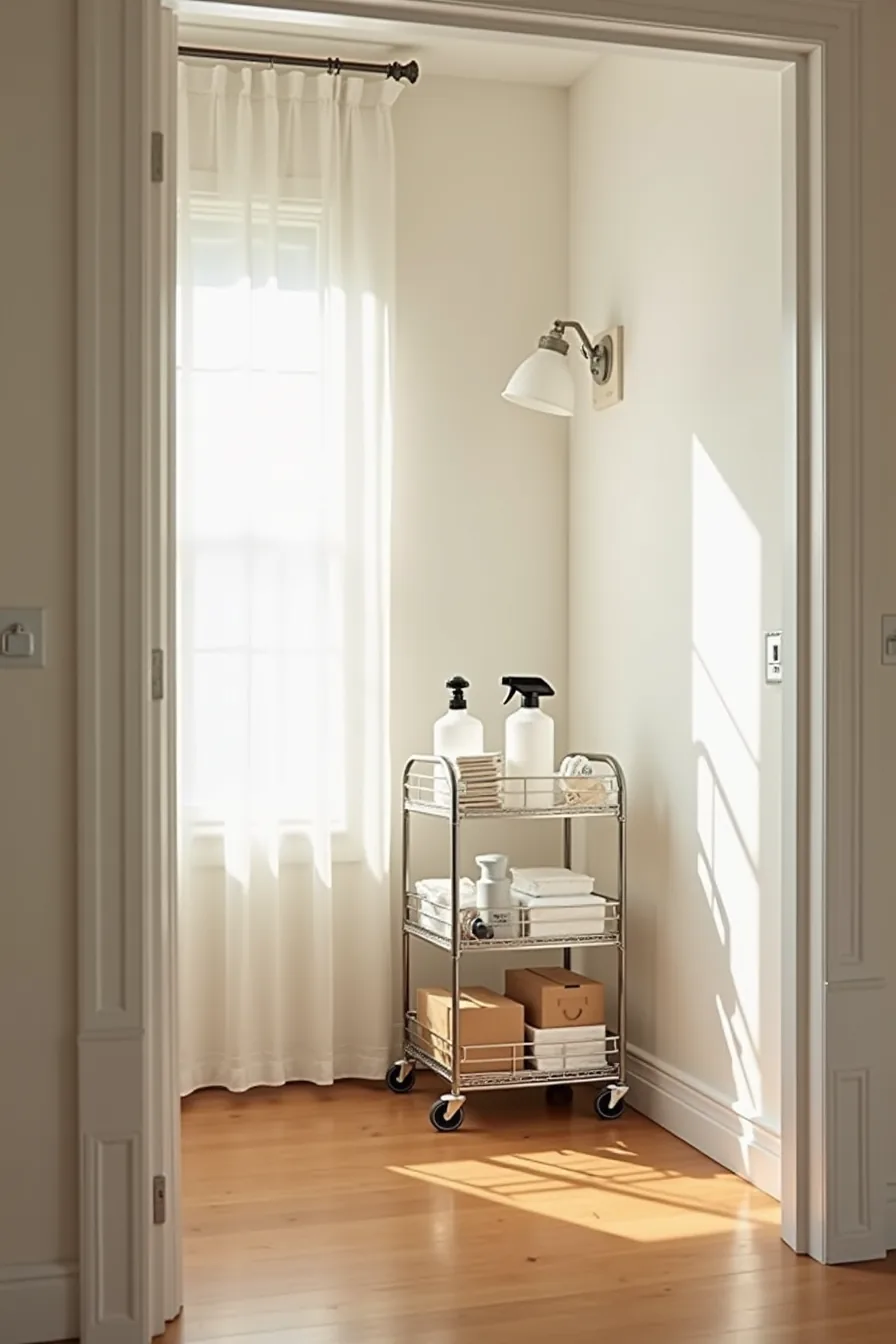
A three-tier metal rolling cart parked in a closet corner gives you the rare ability to move your supplies to the mess instead of carrying them one bottle at a time. The cleaning bottles, rags, and boxed items on each shelf stay within arm’s reach, and when you need to scrub a bathroom or tackle a hallway spill, the whole unit rolls with you and tucks back when done.
Mobility only earns its keep if your cart’s weight capacity matches your load, most three-tier metal units handle 50–100 pounds distributed across shelves, so keep heavy jugs on the bottom tier to lower the center of gravity and prevent tipping. The footprint trade-off is real: a standard 15–18-inch-wide cart consumes floor space that shelf systems don’t, so this utility closet organization ideas route suits medium and large closets with at least 24 inches of open floor. Locking casters matter, without them, the cart drifts every time you reach for a rag, and the cheap plastic wheels on $30–$50 carts tend to seize within a year; budget $10–$20 more for rubber casters that roll smoothly on tile and concrete.
Pegboard and Hook Systems
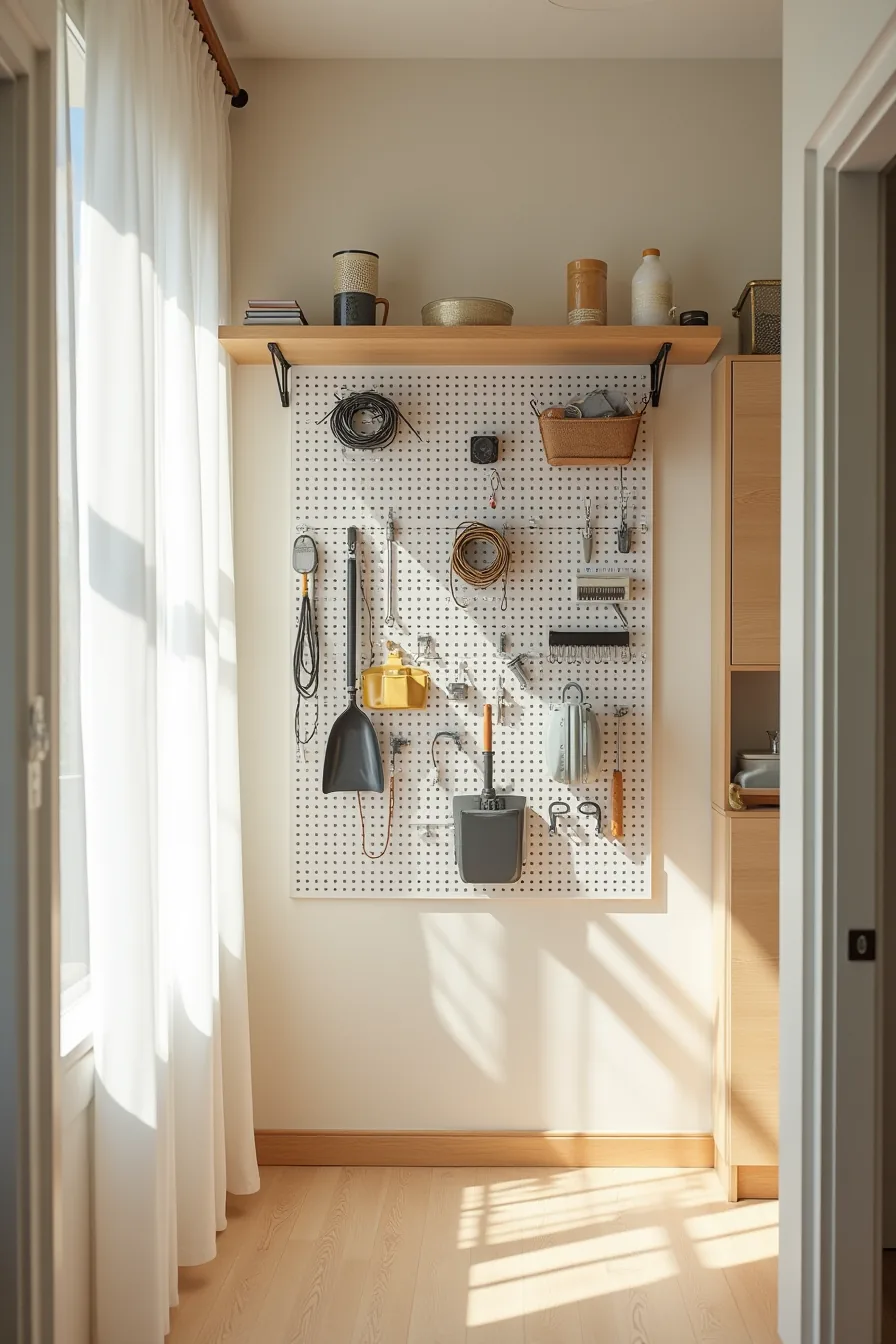
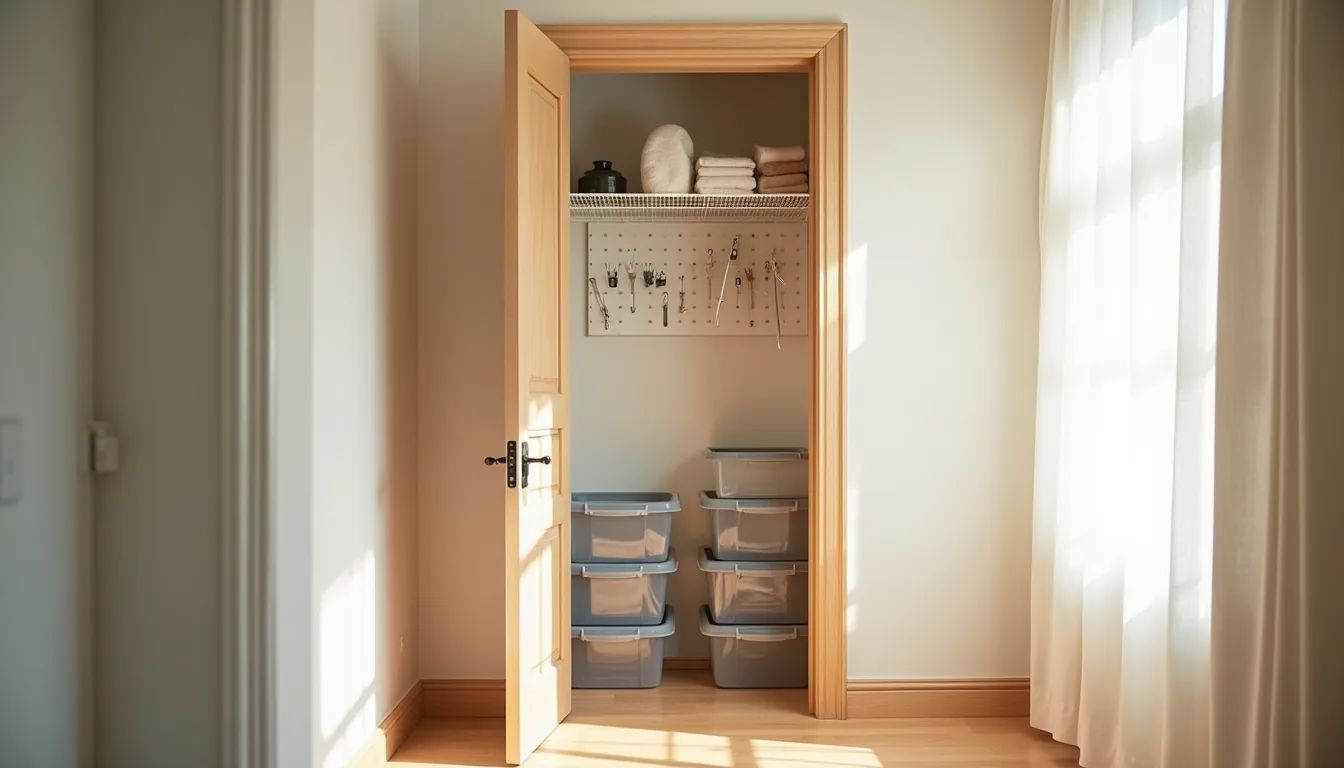
A full pegboard wall turns blank vertical space into a customizable grid that adapts as your inventory changes. The setup uses a 4×2-foot tempered hardboard panel mounted on furring strips, with metal hooks, hanging baskets, and clips holding coiled cords, hanging tools, small containers, and a dustpan. Unlike the rolling cart’s floor footprint, this system keeps everything off the ground entirely, which suits narrow closets where width is scarce.
Installation requires a stud finder, drill, and about 45 minutes, mount the panel with 1-inch furring strips to create an air gap that lets hooks seat fully. The trade-off: you must plan hook placement deliberately or the wall becomes visual noise; group cords on one section, tools on another, and baskets for small containers on the top row. For a budget route, a single 2×4-foot panel, hooks, and baskets run $30–$60 total, while a full-wall system with premium coated hooks and modular bins lands closer to $150–$250.
This approach works best for renters if you patch and repaint before moving out, otherwise, choose the large-space splurge and dedicate an entire wall to it.
Built-In Cabinetry and Permanent Fixtures
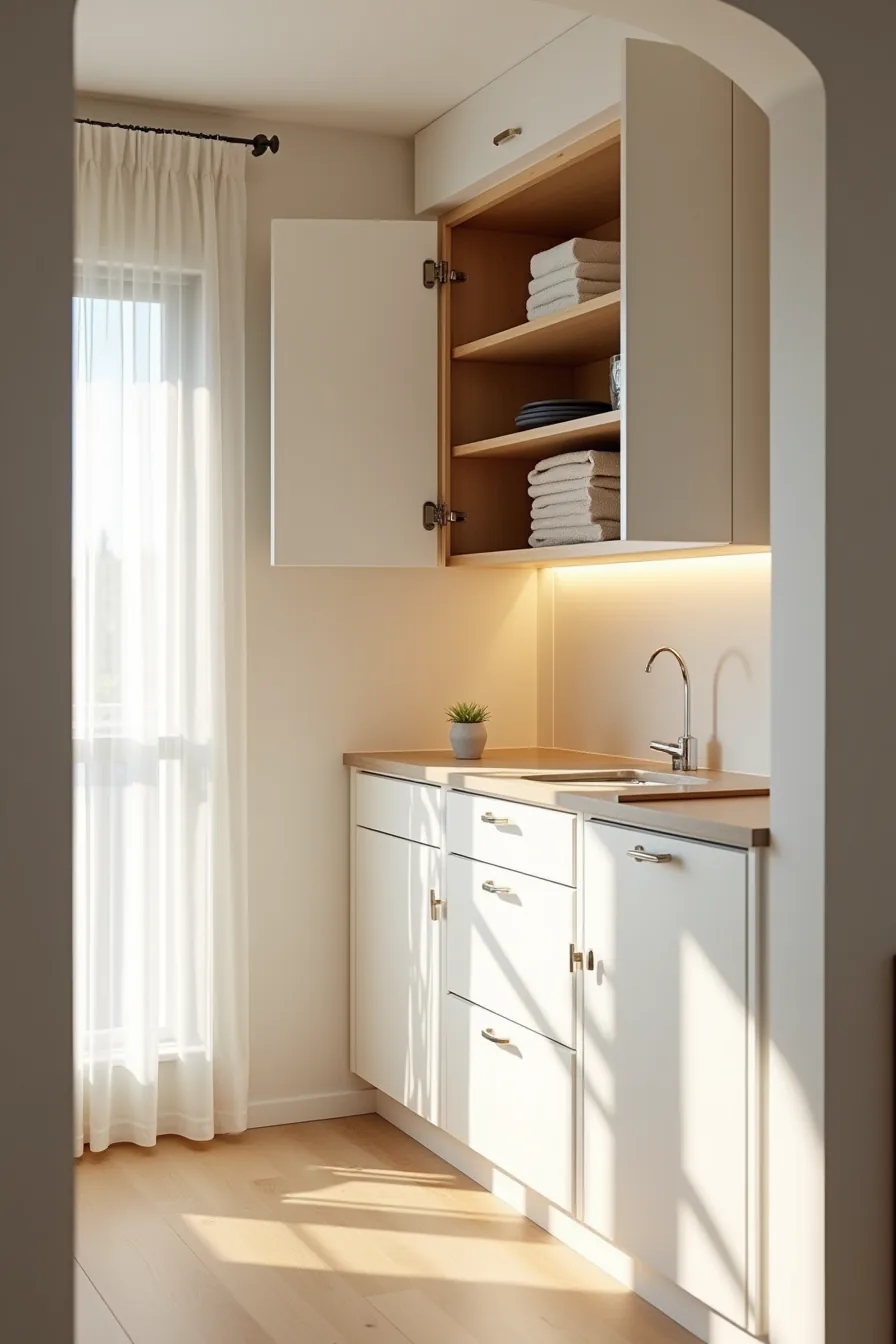
Custom built-in cabinets represent the longest-term investment in utility closet organization ideas, trading flexibility for a finished, furniture-grade appearance. The configuration pictured uses upper cabinets with closed doors, lower drawers with pull handles, and a solid countertop surface; open the upper doors and you reveal interior shelving sized for bulky items like paper towel rolls and cleaning concentrate refills. Because the casework is scribed to your exact wall dimensions, you gain storage that reaches the ceiling and fills corner gaps that freestanding units leave wasted.
This route suits homeowners who plan to stay put for five-plus years and want the closet to feel like an extension of the kitchen rather than a forgotten afterthought. Semi-custom options from cabinet manufacturers typically run $1,500–$3,500 installed for a standard 4×6-foot closet, while fully custom millwork climbs past $5,000. Expect a two-to-four-week lead time for fabrication plus one to two days for install, which requires a licensed carpenter if you need electrical outlets relocated for a charging station or ironing center.
The resale payoff is real but modest, real estate appraisers generally treat built-in closet cabinetry as a minor upgrade, not a value driver, so justify the cost on daily usability rather than return on investment.
Your decision checklist
Before buying a single bin, measure your closet’s depth, width, and usable height floor-to-shelf. Choose one zone to fix first, the floor or the top shelf, and match the storage style to how often you access those items. For rentals, stick to tension rods and adhesive hooks; for owned homes, invest in adjustable shelving that grows with your needs.
Start with the budget route: clear stackable bins (roughly 6–10 gallons each) labeled on two sidescarriers at most hardware stores run $15–$40. Clear the floor, sort everything into three piles, keep, relocate, toss, and install the first shelf before the week ends.
Frequently Asked Questions
What is the difference between utility closet organization and a linen closet organization?
Utility closet organization prioritizes function, storing cleaning supplies, tools, and equipment, while linen closet organization focuses on soft goods like towels and bedding. Utility setups favor heavy-duty shelving and hooks; linen closets use adjustable shelves for folded stacks.
Can I organize a utility closet in a rental apartment without damaging walls?
Yes. Use freestanding shelving units, tension rods, and over-door racks. Adhesive hooks rated for 5–10 pounds work on smooth surfaces.
Avoid drilling or permanent anchors to keep your deposit intact.
How do I prevent a utility closet from becoming disorganized again after organizing it?
Designate a home for every item and label zones, cleaning, tools, bulk supplies. Schedule a 10-minute reset weekly and re-evaluate quarterly. Limit new purchases to what fits within your allocated zones to stop overflow.
What is the typical depth and width of a standard utility closet, and how does that affect storage choices?
Most utility closets run 24–36 inches deep and 24–48 inches wide. Narrower spaces suit vertical shelving and door-mounted organizers; wider closets allow for freestanding units or stacked bins. Measure before buying to avoid oversized, space-wasting pieces.