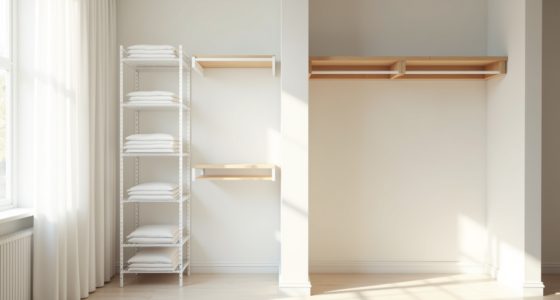

Wire closet organization ideas aren’t a single look, they’re a modular system of coated steel shelves, rods, and baskets that you can adapt to everything from a cramped rental hallway to a walk-in master suite. The key is understanding how each component behaves under load, in tight corners, and against your wall type. Below, you’ll find six distinct configurations, each with clear trade-offs on cost, installation effort, and long-term durability, so you can match the system to your actual storage habits rather than a generic Pinterest aesthetic.
Key takeaways
- Wire shelving holds roughly 40-60 pounds per linear foot, so anchor tall units to the wall and keep heavy bins on lower tiers.
- Tiered rods double hanging capacity, but reserve the upper rod for off-season items and use a pull-down mechanism if you’re under 5’4″.
- Corner carousels turn dead corner space into usable storage, yet require a 24-30 inch clearance circle to rotate fully without snagging clothes.
- Modular wire systems cost 30-50% less than custom built-ins, and you can reconfigure shelf heights in under 10 minutes with a rubber mallet, ideal for renters who need to restore the original layout.
Vertical Shelving with Labeled Bins
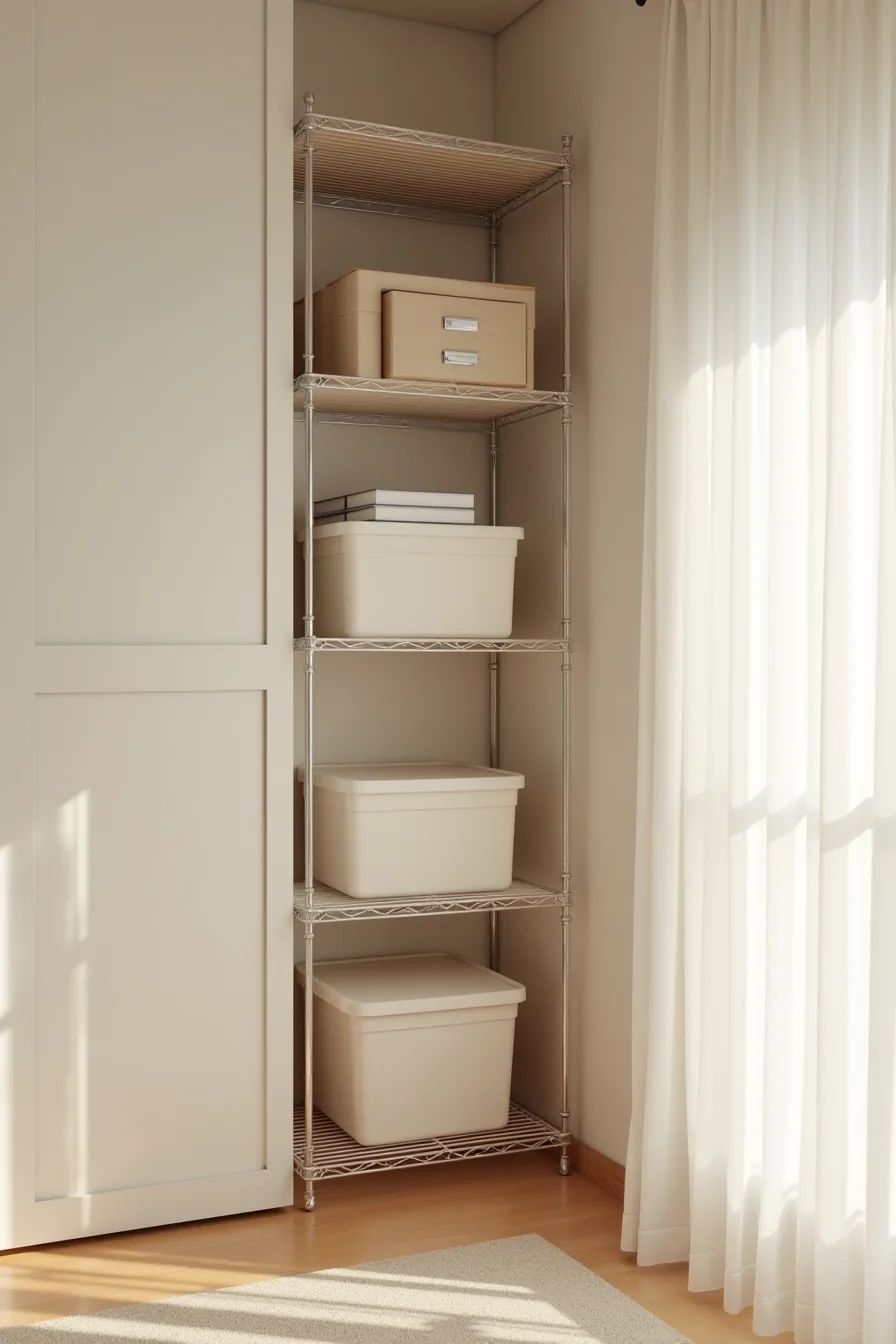
For small closets, the key is to abandon horizontal expansion and exploit unused wall height. A four-shelf wire shelving unit running from floor to ceiling transforms dead air into roughly 12-16 cubic feet of usable storage, depending on your unit’s width. The open wire construction keeps sightlines clear, making the space feel larger than a solid wood alternative would.
Opaque storage boxes in neutral tones create a uniform, calm visual rhythm that masks clutter. Standard 13-gallon bins fit most 16-18-inch-deep wire shelves, but measure your unit’s depth before buying, boxes that overhang by more than an inch will snag on clothing as you reach past them. This setup suits renters and budget shoppers since wire shelving units start around $30-60 per bay and require no permanent wall attachment if you choose freestanding models.
Label each bin’s front with a chalk label or adhesive tag, and you’ll locate winter scarves or spare bedding in under ten seconds instead of digging through piles.
Tiered Hanging Rod Systems
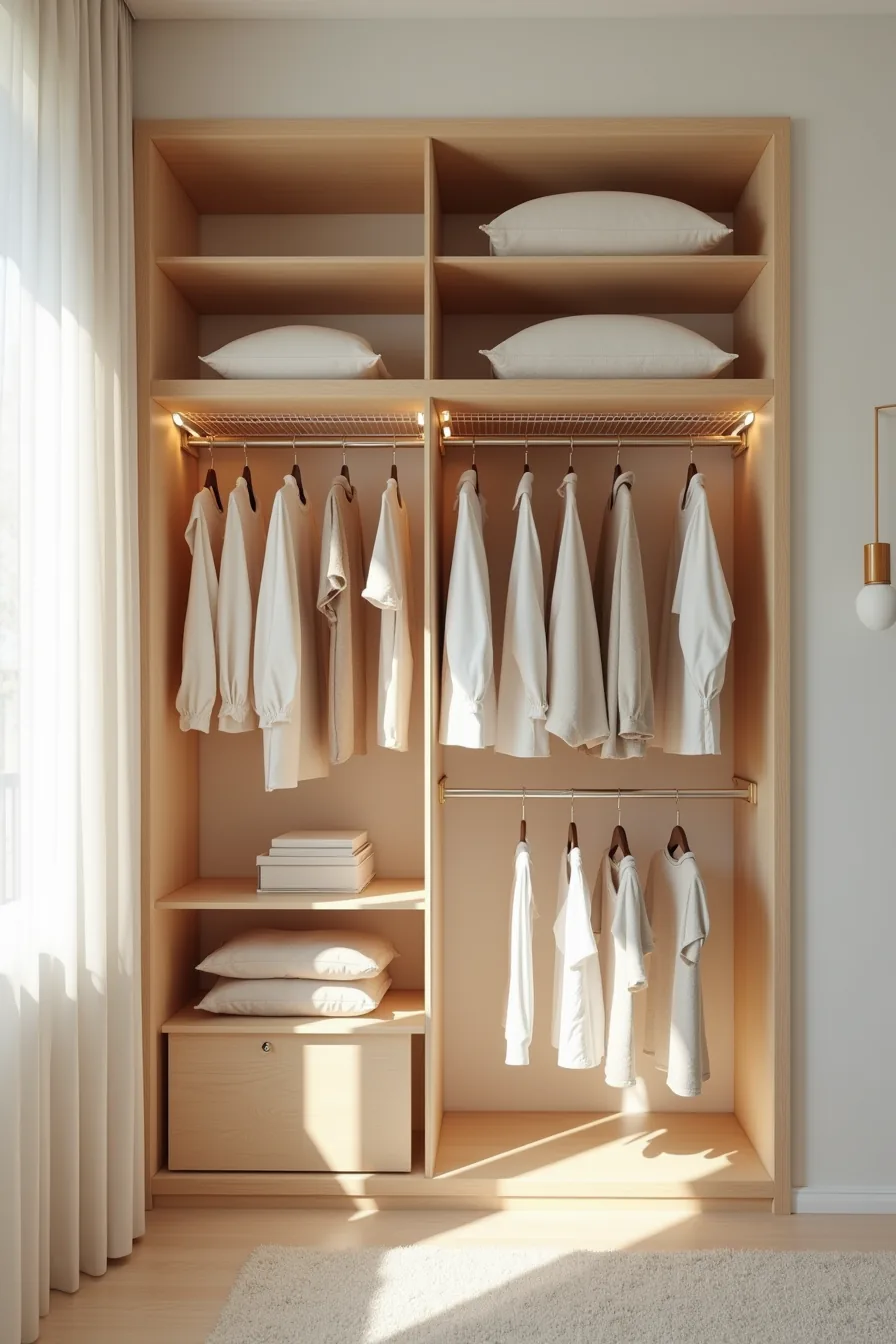
Tiered rods are the highest-density hanging solution you can install, effectively tripling linear hanging space without expanding the closet’s footprint. A three-level system uses roughly 18 inches of vertical space per rod tier: mount the top rod at 72-80 inches, the middle at 52-58 inches, and the bottom at 28-34 inches from the floor. Spacing matters more than height, leave at least 10-12 inches between each rod and the next so garments don’t brush against the level below.
The image’s color-gradient arrangement works because it separates the rod tiers by garment length: long coats and dresses go on the middle rod, folded shirts on the top tier, and pants or skirts on the bottom, where you can pair each rod with wire shelving above to hold folded knitwear. Measuring your closet’s depth first: rods should sit 12-14 inches from the back wall, leaving enough room for hangers to swing without scraping shelving. This setup suits medium-to-large walk-ins where you need quick visual scanning, though a single double-rod system (one rod over another) fits compact reach-ins just as well.
Expect to pay $40-80 per rod, including mounting hardware, but skip installation if you can’t drill into your walls, tension-mounted rods hold light items but will sag under two full racks of winter coats.
Wire Basket Drawer Inserts
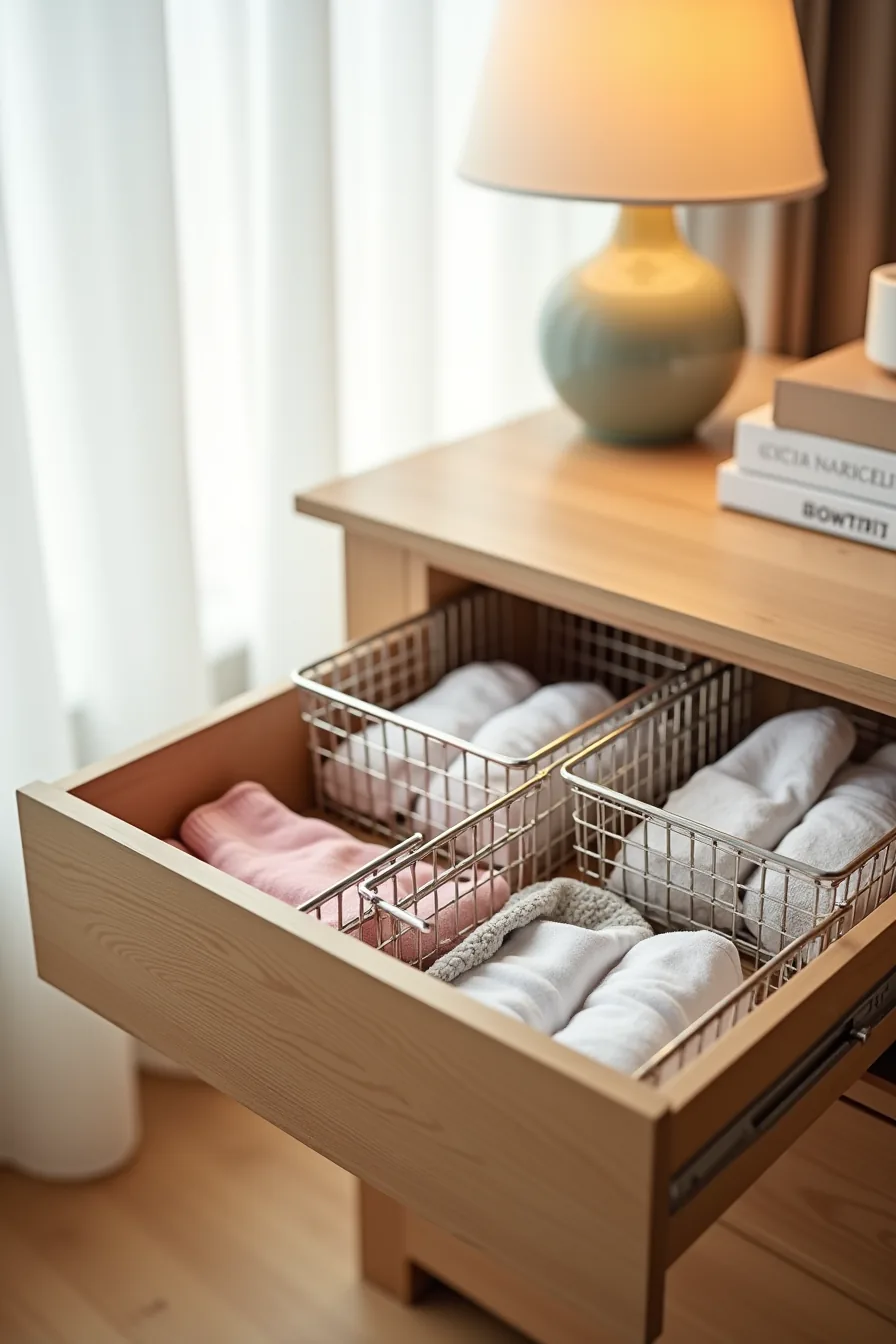
Wire baskets inside drawers solve the “black hole” problem where socks and undergarments migrate into an unsearchable pile. The setup in question uses three shallow baskets, each roughly 10-12 inches long and 4-5 inches deep, sitting flush inside a standard wooden dresser drawer, with socks in one, undergarments in another, and accessories in the third. Because the wire mesh is open, you see every item at a glance without rummaging, which is the core advantage over solid plastic dividers.
Measure your drawer’s interior width and depth before buying; baskets sized to fit with 1-2 inches of slack on each side prevent binding when the drawer slides. This is the most renter-friendly wire closet organization idea you can adopt, nothing is mounted, drilled, or permanently altered, so you can lift the baskets out and move them to a new dresser or closet shelf in under a minute. Expect to spend $15-30 for a set of three, and note that loose-knit items like thin scarves can snag on the mesh; fold those instead of stuffing them.
One of the most common wire closet organization ideas mistakes to avoid is buying baskets too deep for your drawer, which reduces usable vertical space and makes items near the bottom unreachable.
Corner Carousel and Rotating Shelves
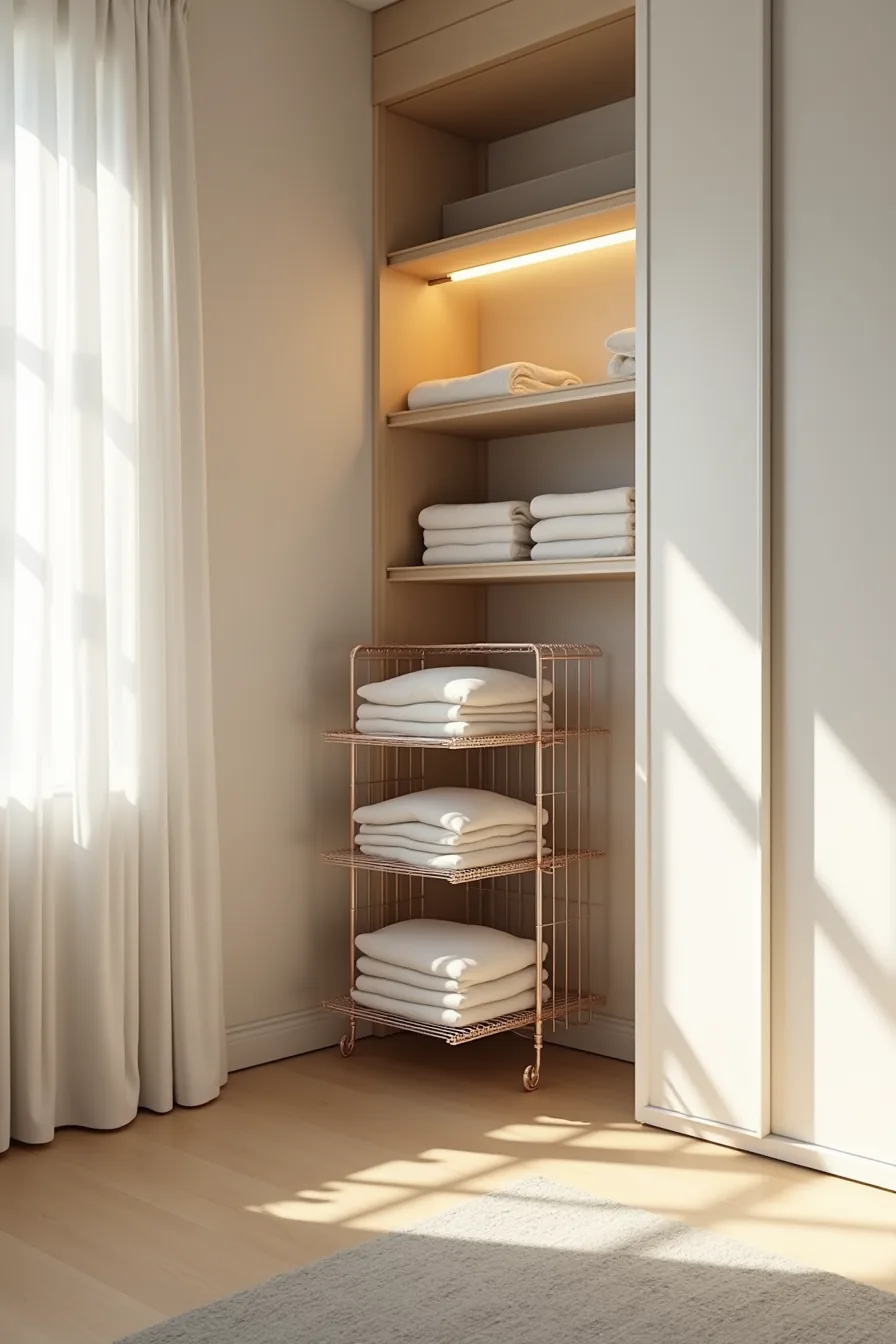
A rotating wire carousel transforms a dead corner into pull-free access, eliminating the deep-reach problem that plagues fixed shelving in L-shaped closets. The unit pictured uses three open wire tiers, each roughly 24-30 inches in diameter, mounted on a center pole that spins a full 360 degrees. Folded garments sit on each tier within arm’s reach, so you rotate the carousel instead of kneeling and contorting to retrieve items tucked against the back wall.
This wire closet organization idea suits medium-to-large walk-in closets where corner space would otherwise sit unused, and it works best for daily-wear folded items, sweaters, jeans, and tees, rather than hanging clothing. Expect to pay $80-150 for a freestanding unit, which requires no drilling and can be relocated, making it a viable middle ground between renter-friendly baskets and permanent built-ins. The trade-off is footprint: the carousel needs roughly 3 feet of clearance on the access side, and it stores less per square foot than floor-to-ceiling shelving, so reserve it for corners you can’t otherwise reach.
Wall-Mounted Wire Pegboard Walls
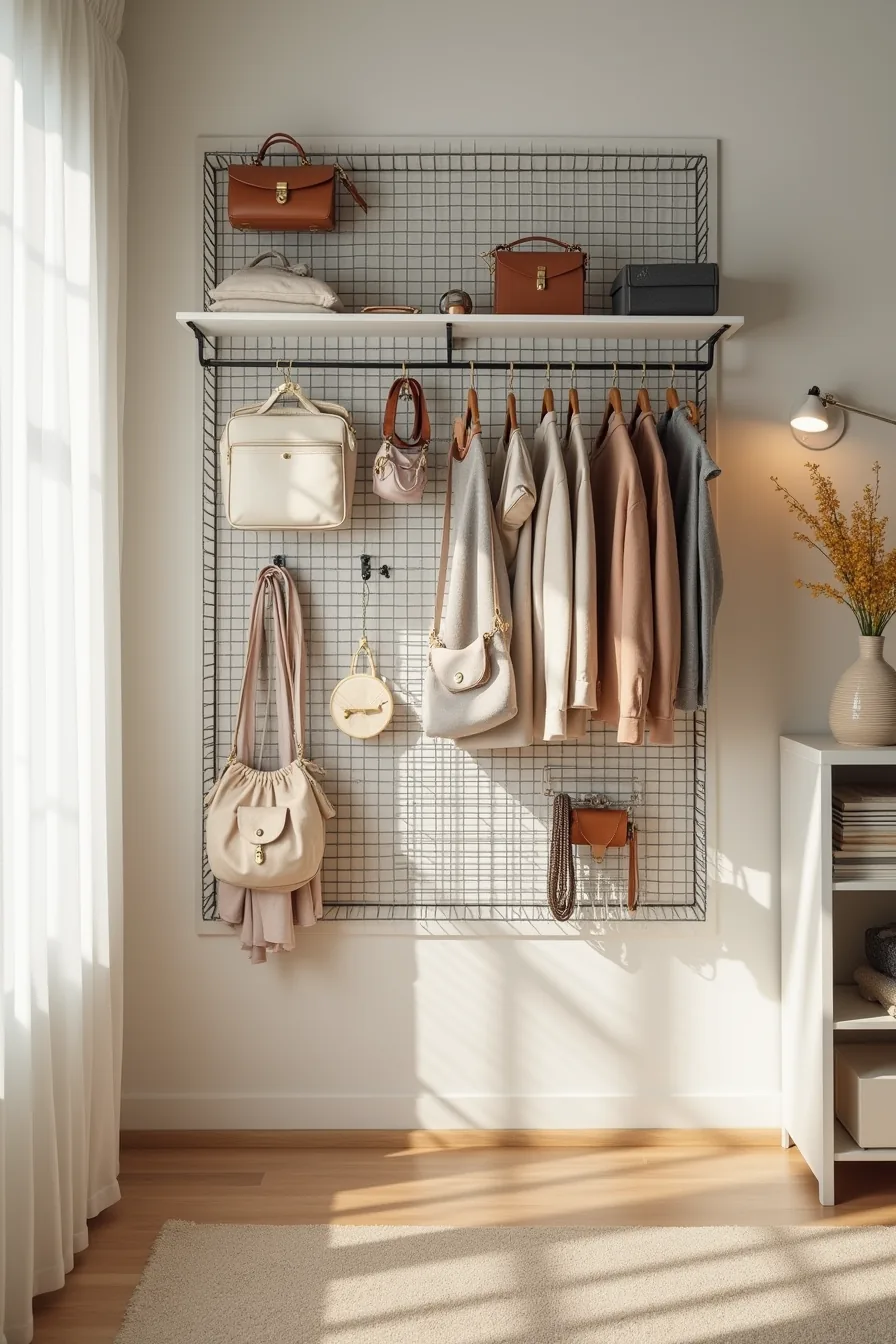
A full wall of wire pegboard turns vertical surface into adaptive storage, and the system’s strength is reconfiguration speed, move a hook, slide a basket, and your layout changes in seconds without tools. The setup uses sheets of galvanized wire pegboard mounted to furring strips, with the entire surface fitted with wire hooks of varying lengths, wire baskets, and accessory hangers holding bags, belts, and small items. Freestanding pegboard panels or wall-mounted grids give you the same flexibility without permanent alteration.
This wire closet organization idea suits renters and frequent reorganizers because the pegboard itself mounts with a few screws into studs, and the panels can be removed and patched with minimal repair. It excels in small closets where floor space is scarce, since everything hangs flush against the wall and clears the floor for shoes or a rolling cart. The cost range is genuinely budget vs. Splurge wire closet organization ideas: a single 2×4-foot panel with starter hooks runs $20-40, while a full wall with mixed accessories lands closer to $150-250.
Maintenance is straightforward, wipe the galvanized surface with a damp cloth quarterly, and check hook tension annually, as heavy bags can gradually widen the peg holes.
Modular Wire Shelving with Adjustable Heights
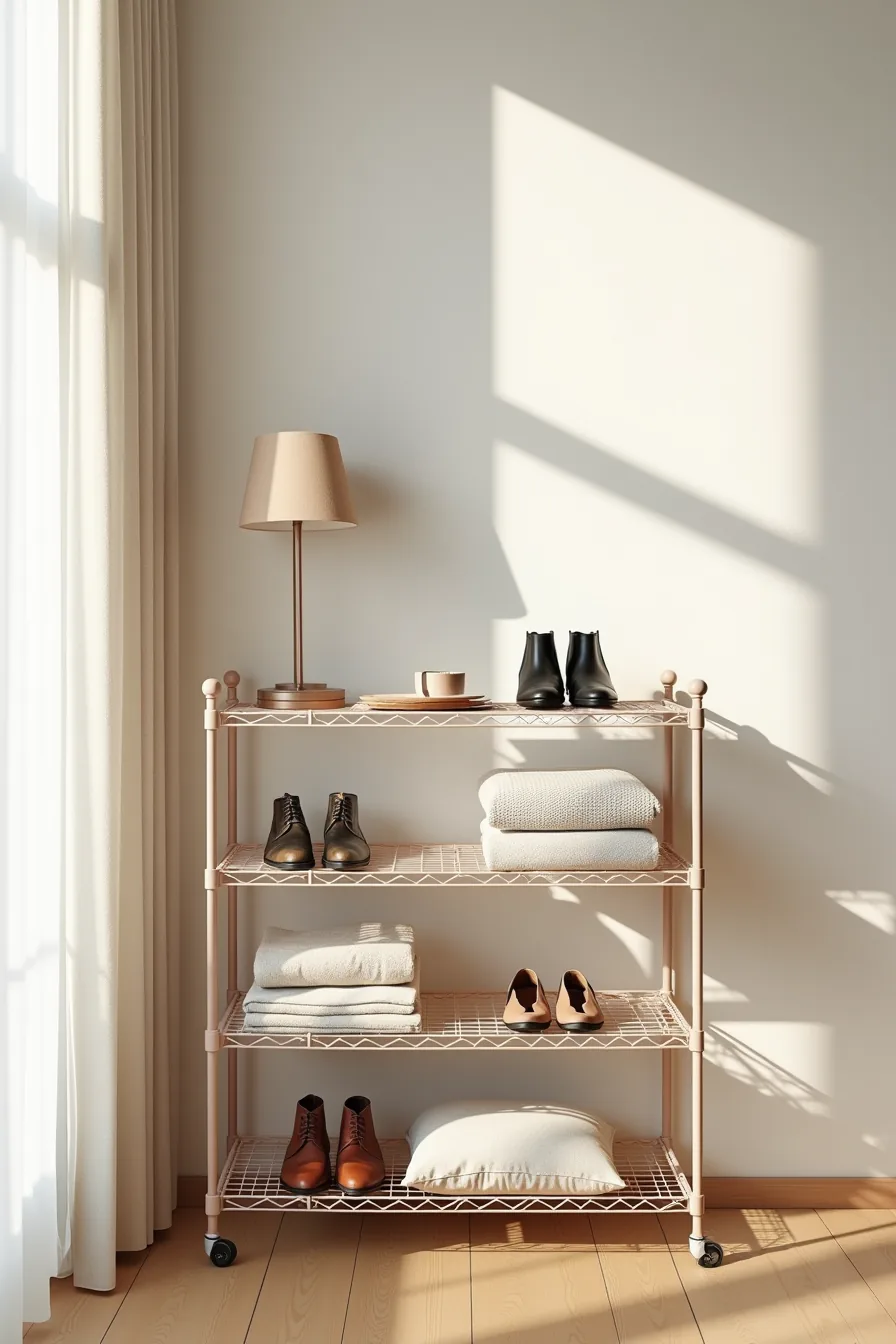
This freestanding unit uses five shelves on a single metal frame, each resting on clips that slot into vertical tracks. You reposition a shelf by lifting it clear, moving the clips, and setting it back down, a two-minute job that requires no tools. The visible setup spaces shelves at roughly 6, 10, 14, and 20 inches apart, which accommodates low-profile shoe rows, stacked folded textiles, and taller boots or bins without wasted vertical gaps.
The system suits medium-to-large closets where you need to shift between seasonal storage, since you can compress shelf spacing for t-shirts in summer and expand it for bulky sweaters in winter. Budget wire shelving with particleboard or vinyl-coated shelves runs $80-150 for a five-shelf unit, while premium versions with solid steel construction and reinforced clips cost $200-400. The trade-off is stability: budget units flex under uneven loads, so distribute weight evenly across each shelf and anchor the frame to a wall if you load it above 50 pounds.
Wipe shelves monthly with a damp cloth, and check clip tension every six months, loose clips cause shelves to tilt and dump contents.
Where to Start
You don’t need to overhaul everything at once. Begin with one shelf or one quadrant, the section that frustrates you most when you reach for something. Measure that space before buying anything; wire shelving requires precise vertical clearance for bins and baskets to slide freely.
Choose your route first: renters should stick with freestanding wire racks and adhesive hooks (no wall damage), while homeowners can invest in custom-track systems that follow wall contours. A mid-range option, modular stackable units, works for both and costs roughly $80–$200 per bay.
Take your measurements and one photo of the problem area to a home organization retailer this week. A store associate can match components to your exact dimensions, and you’ll leave with a parts list rather than guesswork.
Frequently Asked Questions
How do I know if wire shelving will support the weight of my items?
Check the manufacturer’s load rating per shelf, most residential wire shelving supports 50–150 pounds per linear foot. Heavier items like books or bins belong on lower shelves, where brackets attach directly to wall studs.
Can I install wire closet organization without damaging rental walls?
Yes, use freestanding wire units or tension-mounted poles that lean against walls without screws. Alternatively, choose adhesive-backed wire hooks for lightweight items, they hold up to 5 pounds and peel off cleanly, though they may leave residue on textured paint.
What’s the difference between chrome, white, and black wire shelving finishes?
Chrome is shiny, moisture-resistant, and suits laundry or utility closets. White blends into light interiors but shows dust. Black reads modern and hides scuffs, yet it can absorb heat and feel visually heavier in small spaces.
All three share similar weight capacities.
How do I prevent items from falling through wire shelf gaps?
Add a solid liner, vinyl shelf mats or thin plywood cut to size, over the wire grid. For small items like socks or accessories, use fabric bins or canvas baskets with flat bases that sit flush across the gaps. This also protects delicate fabrics from wire marks.