A reach-in closet’s standard 12-inch-deep shelf usually ends up as a dumping ground for folded items you never see again, but the right organization system turns that dead space into the most functional zone in the room. The key is matching the fix to your shelf depth, your wardrobe mix, and whether you rent or own, because a permanent wooden build-out makes no sense in a leased apartment. Below are six distinct approaches, each with its own materials, effort level, and trade-offs, so you can pick the one that solves your actual problem rather than just looking tidy in a photo.
Key takeaways
- Vertical bin stacking nearly doubles usable shelf space in small closets by using uniform, stackable bins with reinforced corners, but measure your shelf height first to avoid blocks that topple.
- Tiered shelf dividers suit medium closets best because they separate folded stacks by category without adding bulk, though they require 12–18 inches of shelf depth to work properly.
- Open basket systems are the renter-friendly route, wire or fabric baskets on freestanding racks need no drilling, but they collect dust, so budget 10 minutes weekly for wiping.
- Modular shelving cubes offer long-term flexibility by letting you reconfigure units as needs change, but they cost more upfront (typically $100–$300 per 4-cube setup) and demand sturdy wall anchoring for safety.
Vertical Bin Stacking for Small Spaces
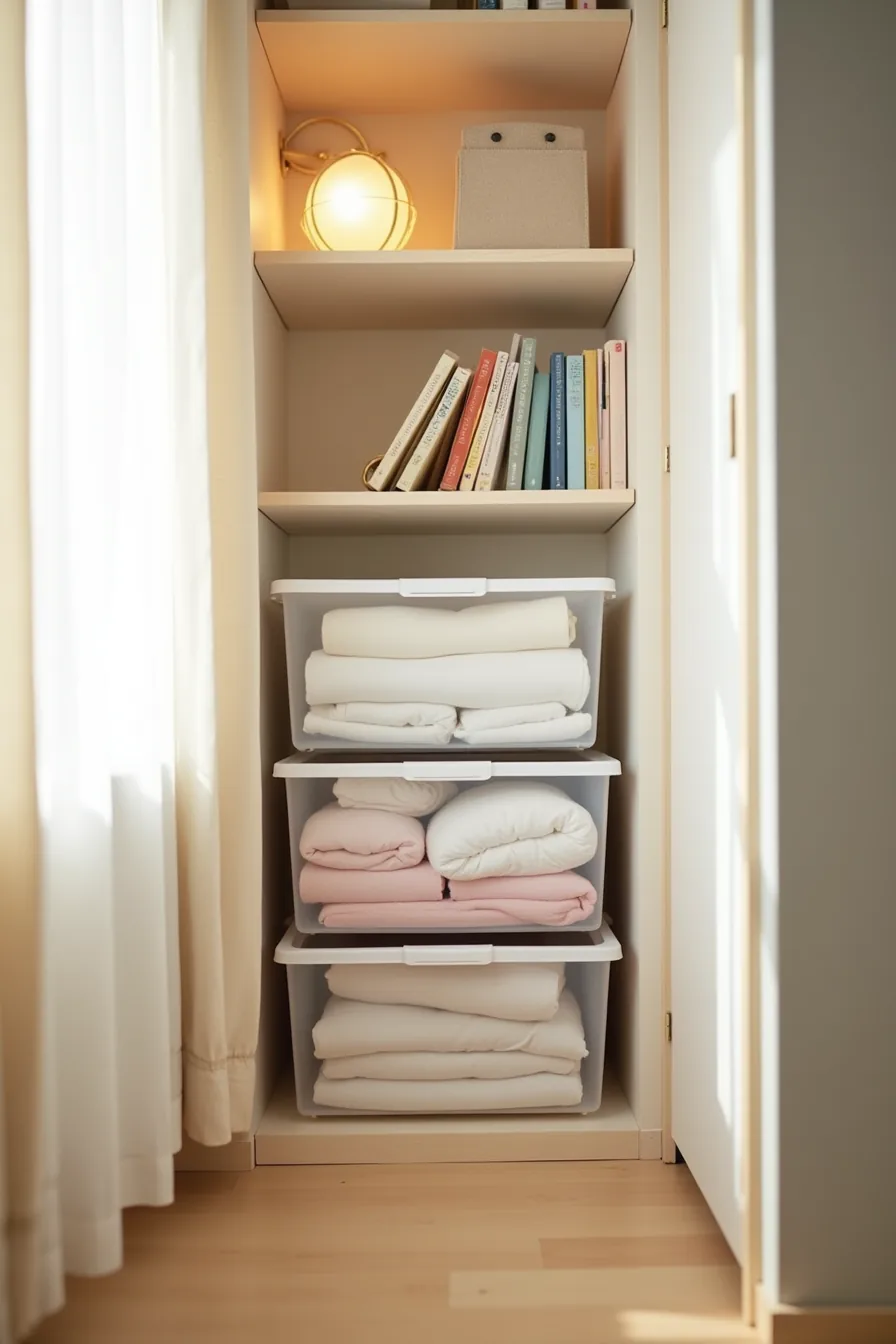
When your closet is narrow but tall, vertical bin stacking turns unused airspace into prime real estate. This approach works best for closets under 60 inches wide, where horizontal shelving forces you to sacrifice depth for access. The three transparent plastic bins in this corner setup are graduated in size, the largest at the base, smallest on top, which keeps the stack stable and lets you see exactly what’s inside each layer without pulling everything down.
The folded fabrics inside are visible through the clear sides, so you can identify a sweater or a stack of jeans at a glance.
Why it works: transparency eliminates the “dig-and-forget” problem. You see the contents, so you rotate items more often and avoid buying duplicates of things you already own. The graduated sizing also creates a natural visual taper, which makes a narrow corner feel intentional rather than crammed.
This route suits renters and budget shoppers alike. Clear bins typically run $8–$25 each depending on size, and they require no drilling or permanent mounting, just clean, dry shelves. The trade-off is accessibility: the bin at the bottom demands a full squat and a two-handed pull, so reserve the lower levels for off-season items or things you use weekly but not daily.
Label the front of each bin with a handwritten tag or a label maker; in a 20-inch-deep shelf, a small label on the lid is useless once stacked. Aim for stacks no taller than four bins, beyond that, the top bin becomes unreachable for most adults without a step stool, and the risk of toppling increases.
Tiered Shelf Dividers and Shelf Risers
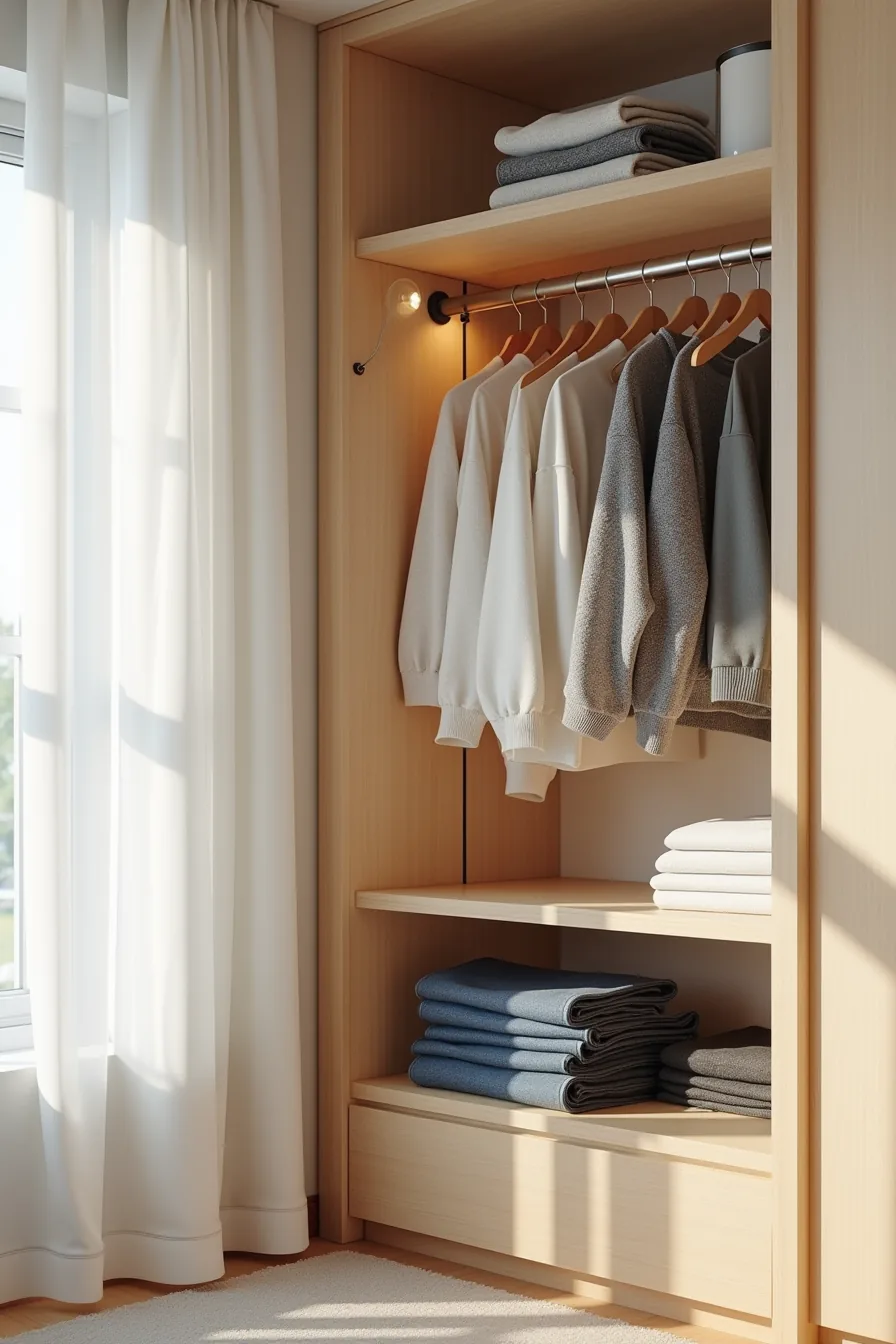
A single 12-inch-deep shelf becomes two usable storage levels with adjustable metal risers, and this side-view setup shows exactly why the system outperforms simple stacking. The stepped configuration places folded sweaters on the upper tier while stacked jeans sit below, each pair aligned spine-out so you can pull one without collapsing the pile. Vertical dividers between the stacks act as physical boundaries, preventing the “one-sweater slide” that undoes neatly folded rows within days.
Why it works: stepped levels create visual separation without adding cabinetry, and the risers double the usable surface area of a standard shelf. This suits medium closets (60–100 inches wide) where you’ve depth but not height for double-stacking. Metal risers cost $10–$30 per pair and adjust to fit shelves between 10 and 18 inches deep, measure your shelf depth first, because a riser too wide for the shelf will cantilever and tip.
The trade-off is reduced vertical clearance: you lose roughly 4–6 inches of headroom per tier, so reserve this for items under 5 inches tall when folded. For the best closet shelf organization ideas examples, pair risers with dividers only on shelves you access at eye level; lower shelves benefit more from the bin stacking covered earlier, since stepped tiers there require uncomfortable stooping.
Open Basket and Tray Organization
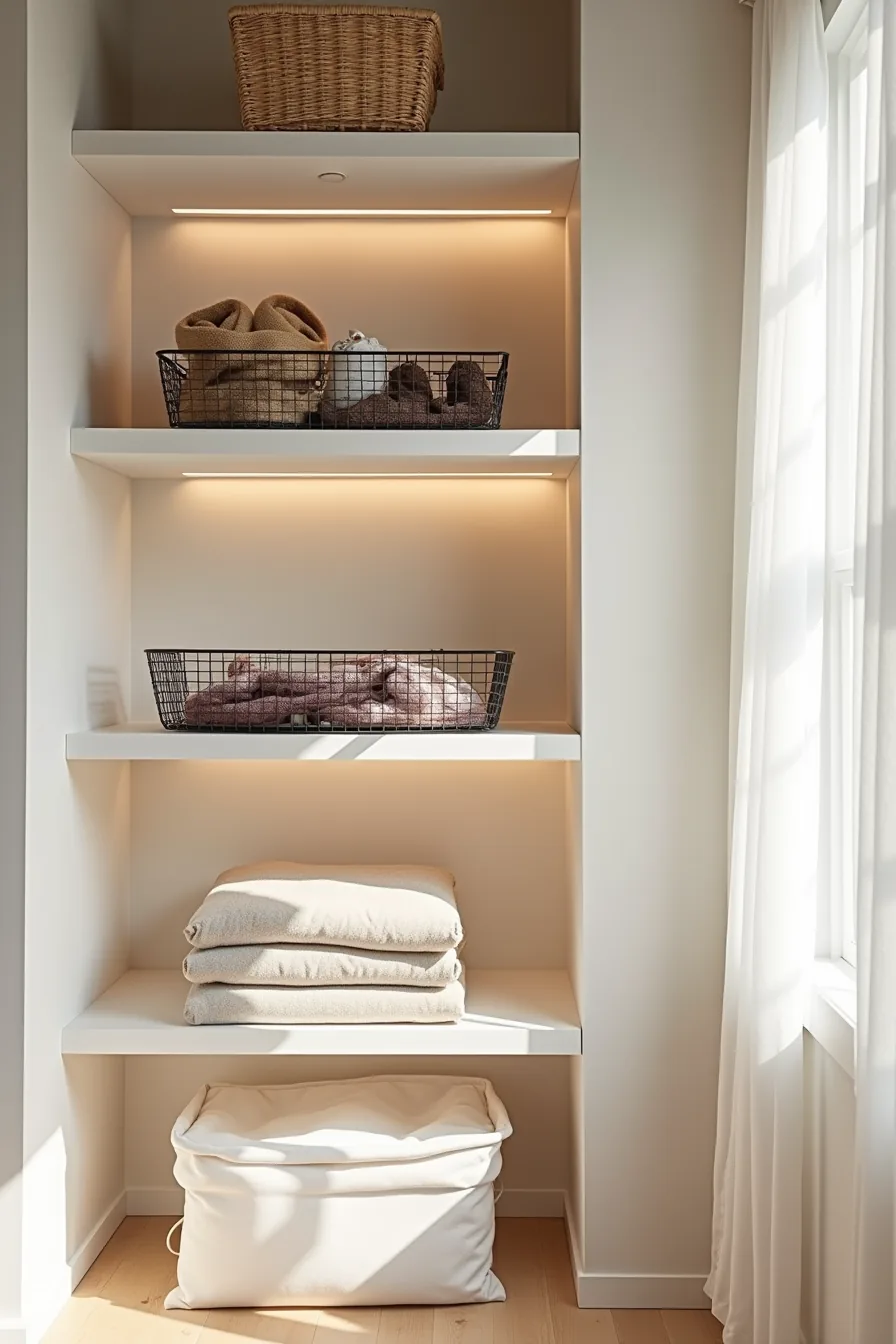
Three shelves, each with a different container type, create a quick-access system that works because the contents stay visible. The top shelf holds a woven basket with rolled scarves standing upright, rolling instead of folding means you can see every color at a glance, and the basket’s open top lets you grab one without disturbing the rest. A wire mesh tray on the middle shelf catches everyday accessories like belts and sunglasses, the open grid allowing dust to pass through rather than settle on your items.
Material durability matters here: woven baskets last 3–5 years with regular use but fray faster in humid climates, while powder-coated wire trays resist rust and wipe clean with a damp cloth in seconds. Linen bins on the bottom shelf suit heavier folded blankets, though the fabric collects dust visibly within two to three weeks and needs vacuuming or machine washing. The visual consistency requirement is real, mixing more than two container materials per closet reads as clutter, so stick to one neutral palette (natural wovens, black wire, or white linen) across all shelves.
These Practical Closet Shelf Organization Ideas planning tips work best in closets 40–80 inches wide where you access shelves daily, and the open format eliminates the lid-lifting step that makes closed bins feel like work.
Modular Shelving Systems for Flexibility
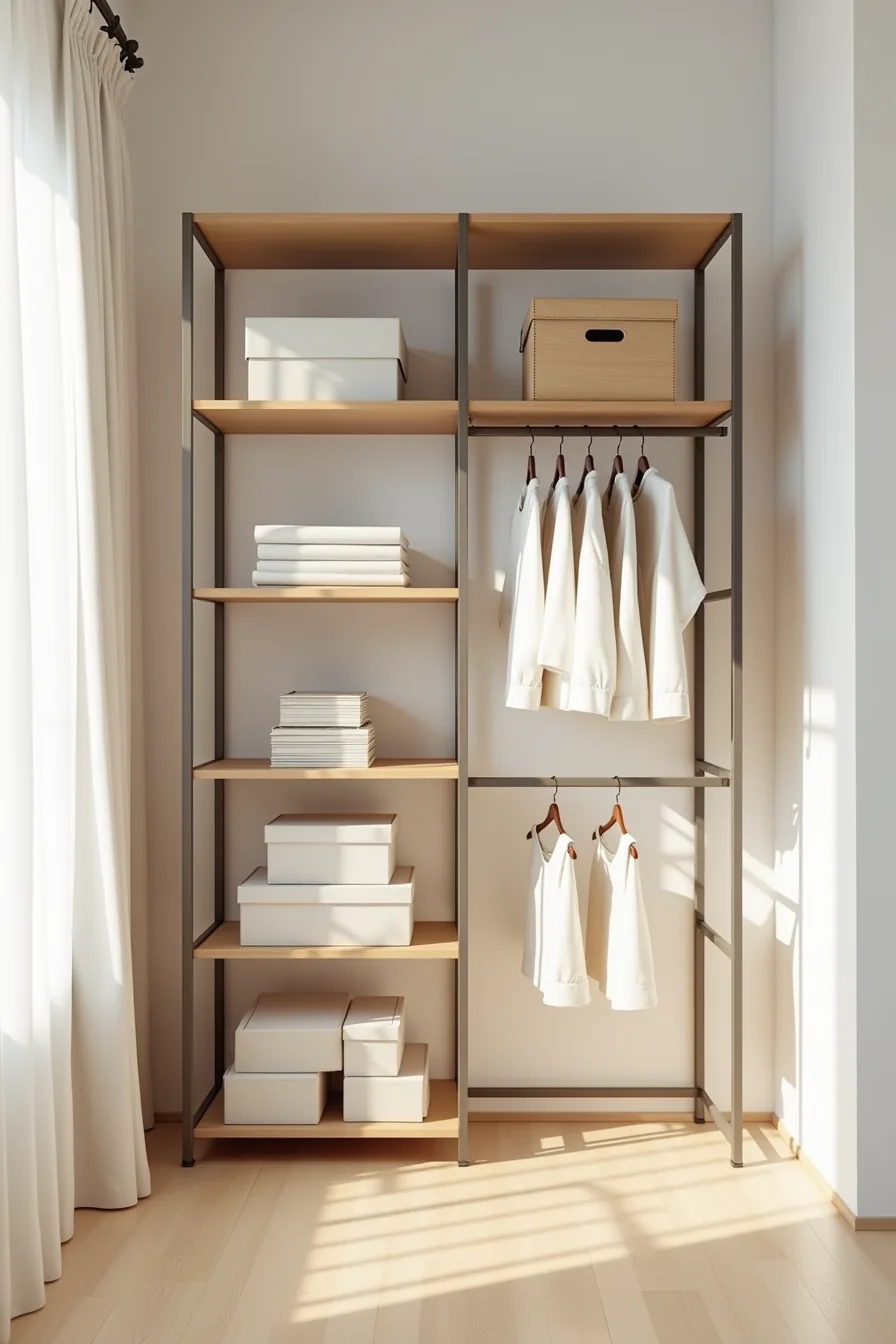
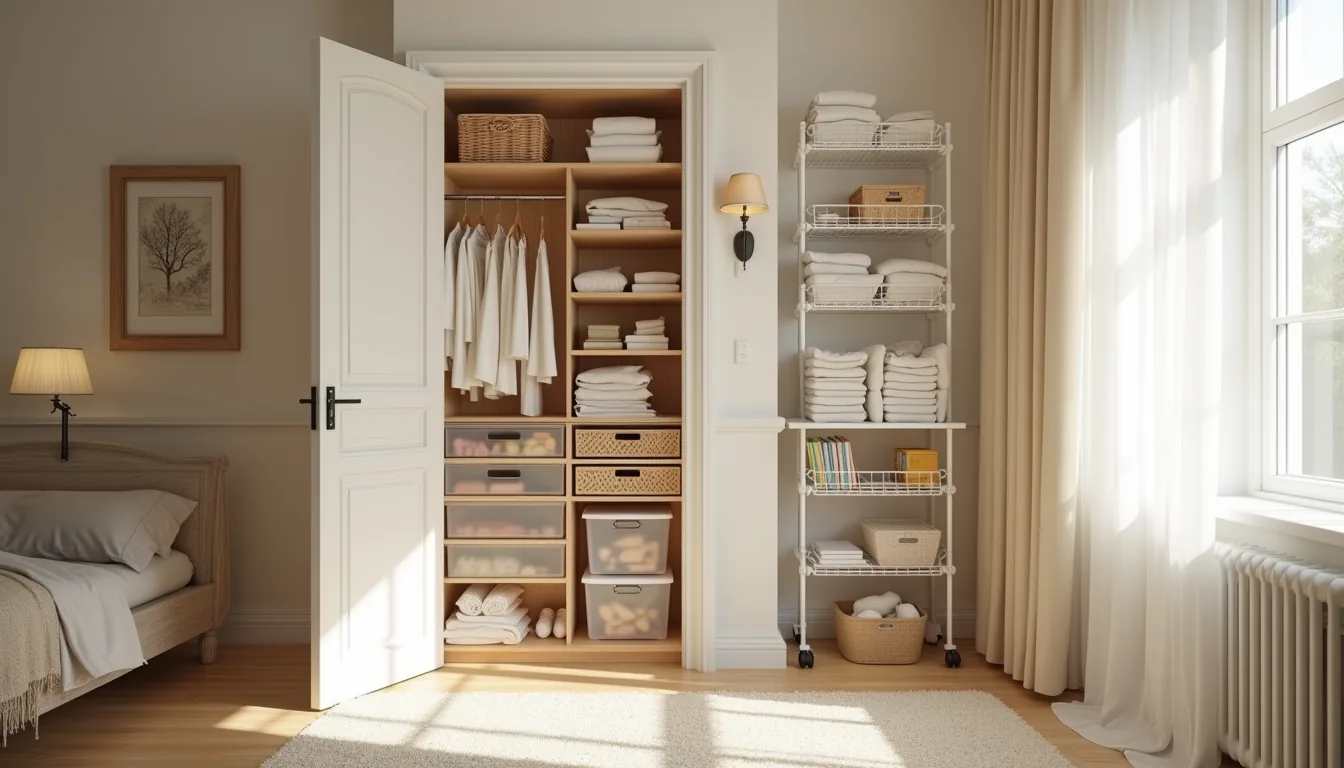
A freestanding modular unit with adjustable shelf pegs gives you a storage system that changes as your wardrobe does. The metal-framed setup pictured here shows the core idea: shelves set at different heights, with one level holding stacked storage boxes, another supporting a hanging garment rail, and a third left open for taller items like boots or a hamper. Because you move the pegs rather than the whole unit, reconfiguring takes about ten minutes per shelf and requires no tools beyond a rubber mallet.
This route suits renters because it damages no walls, the unit stands on its own and walks with you to your next apartment. It also fits anyone whose storage needs shift seasonally, since you can drop a shelf to make room for bulky winter coats in November and raise it back in March. Expect to pay 30–50% more upfront than a basic wire shelving kit, but the long-term value holds: a powder-coated steel frame like this one typically lasts 10–15 years, while a cheap particleboard alternative starts sagging within two.
Look for units with a weight rating of at least 250 pounds per shelf, and check that the hanging rail sits at least 14 inches below the shelf above it so hangers clear the frame.
Drawer Inserts and Shelf Compartmentalization
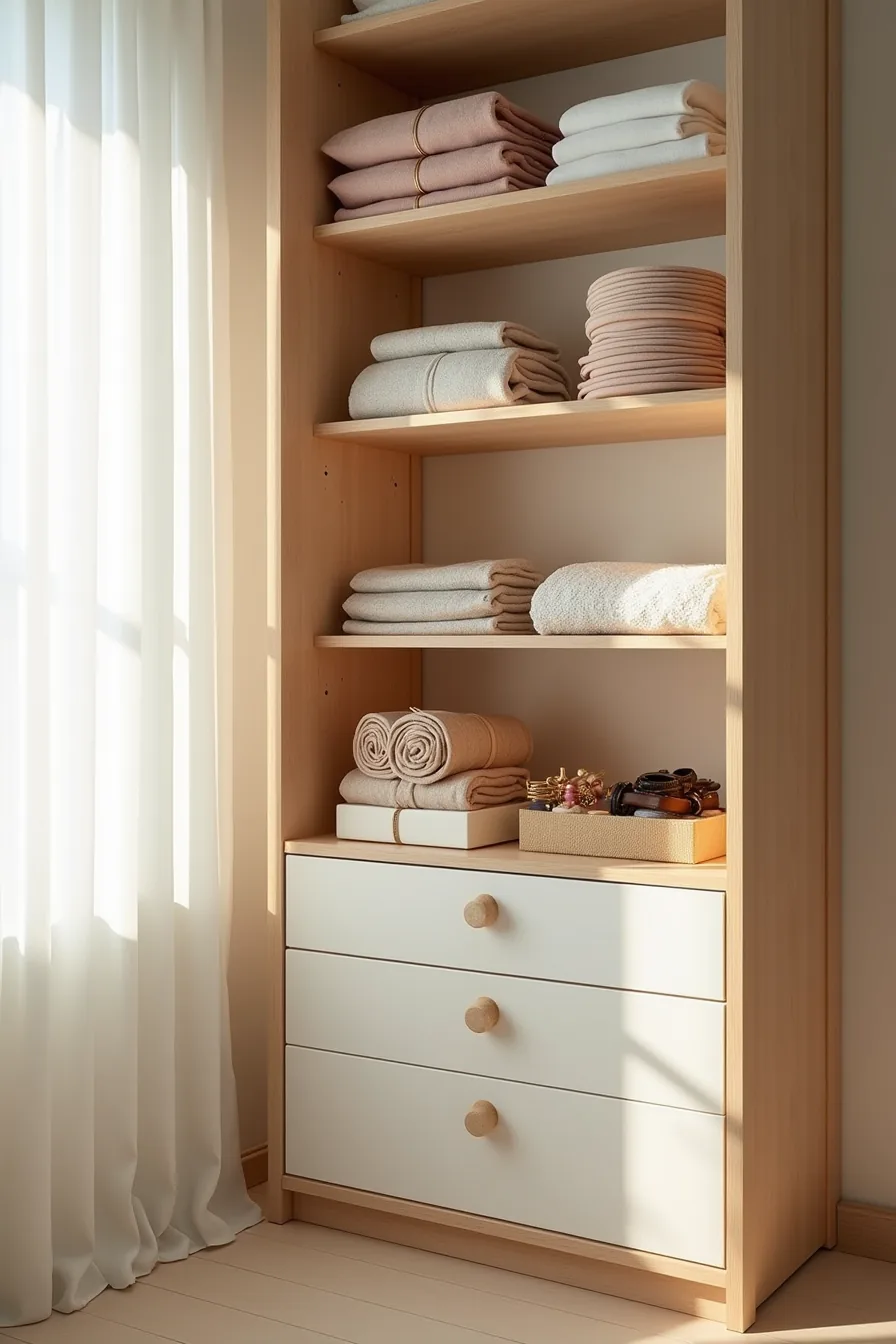
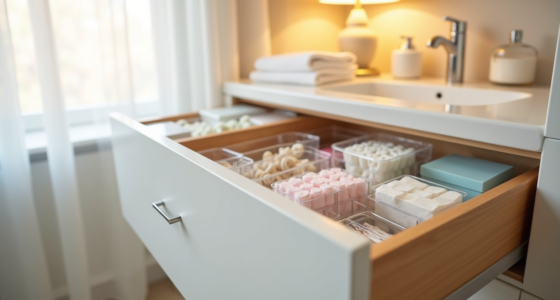
A single 12-inch-deep shelf becomes six discrete zones when you drop in a combination of narrow wooden dividers and small drawer organizers. Your socks stack vertically in one slot, coiled belts rest in another, and scarves fold into a third, with jewelry and undergarments each claiming their own box. The dividers hold everything in place even when you pull out a single item, so you never have to re-stack a jumbled tower to retrieve one sock.
This setup works best for standard reach-in closets with shelf depths between 11 and 14 inches, and it suits anyone who folds rather than hangs their basics. You need about 30 minutes and a tape measure to plan the layout, plus roughly 20–40 dollars in bamboo or acrylic organizers. Because the components sit independently on the shelf, you can lift them out for cleaning or rearrange them when your accessory mix changes, and since nothing is glued or screwed, it’s fully renter-friendly.
Stick with dividers that fit flush against your shelf walls; a gap wider than half an inch lets items slip between zones and defeats the purpose.
Common Mistakes and Maintenance Habits
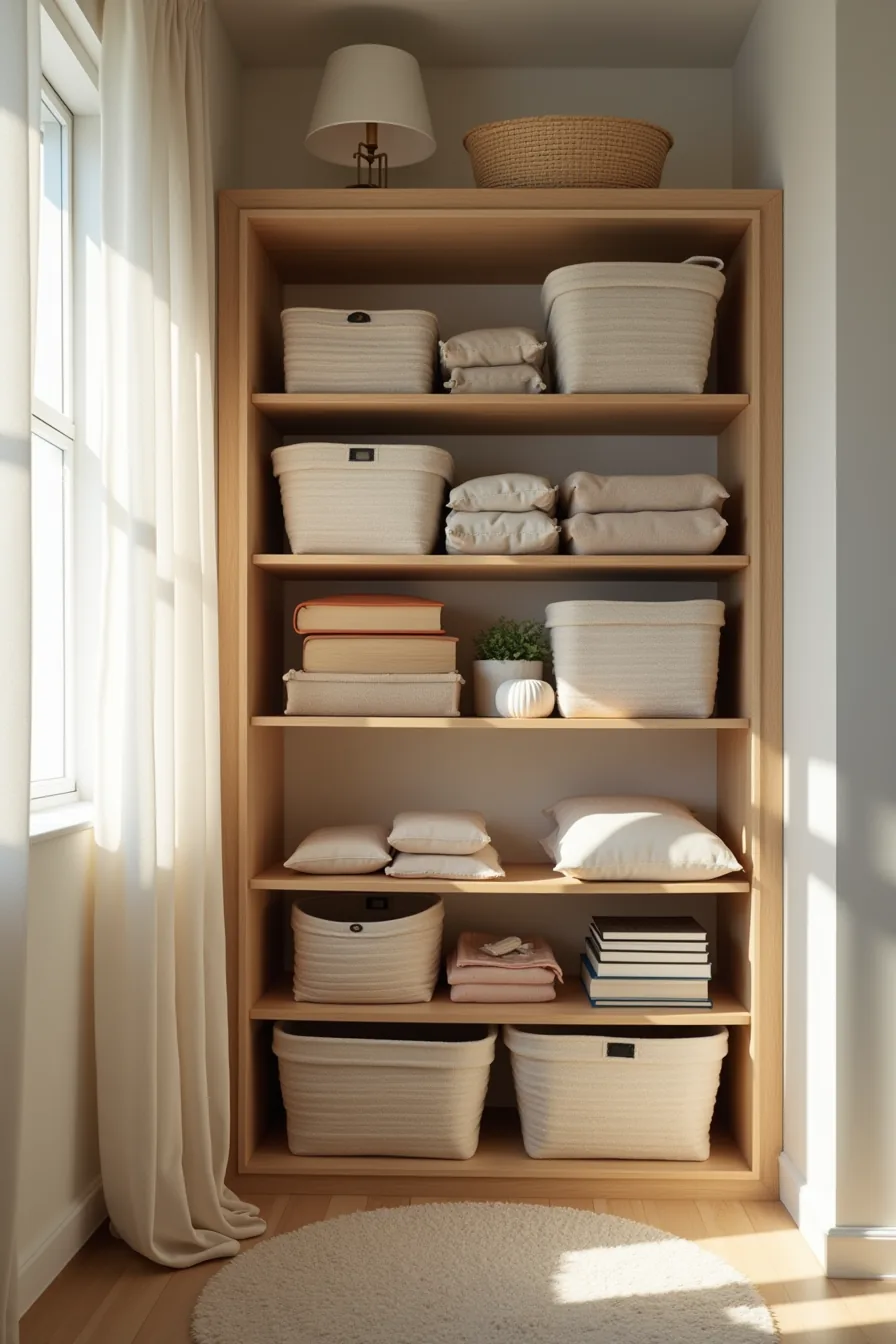
The shelf directly in front of you fails in four predictable ways, and each has a simple correction. Overloaded bins stacked beyond the shelf lip invite spilling items every time you pull one out, so cap your stack heights at the shelf’s front edge, if you can’t see the shelf’s face, you’ve exceeded safe capacity. Poor labeling compounds the problem: when loose items scatter across the shelf because you can’t identify a bin’s contents at a glance, you tear through everything to find one garment.
Apply a single label to the front of each container, and you eliminate the rummaging that causes the mess in the first place.
Dust accumulation on top surfaces signals inadequate ventilation, which traps moisture and accelerates mildew on folded fabrics. Wipe all shelves monthly with a dry microfiber cloth, and keep at least two inches of clearance between the top bin and the ceiling or the shelf above. Seasonal neglect is the final failure, rotate out-of-season clothing to a storage tote elsewhere, and you free up the cramped shelving that forces you to stack items beyond safe limits.
A 15-minute monthly sweep and a twice-yearly rotation prevent every mistake in this section from recurring.
Where to Start
Pick your messiest shelf and clear it completely before choosing any system. That single act reveals your actual storage needs, stacked sweaters, folded linens, or everyday bags, and prevents you from buying containers that don’t fit your habits.
Measure the shelf depth and height first. Most adjustable systems run 12-24 inches deep, so confirm your space before purchasing bins or dividers.
Your next step: empty one shelf today, measure it, and photograph it. Use that image to match against the six ideas above, and order only what that one shelf requires.
Frequently Asked Questions
How do I know if my closet shelves can handle the weight of bins and organized items?
Press down firmly on the shelf’s center; if it flexes or creaks, reinforce it with brackets or L-braces. Standard particleboard shelves typically support 20–30 pounds per foot, while solid wood handles 40–50 pounds.
What’s the best way to organize closet shelves for seasonal clothing rotation?
Use the top shelf for out-of-season items in labeled, clear bins, and keep current-season clothing at eye level. Rotate twice a year, spring and fall, swapping bin positions to match the upcoming season.
Should I use open baskets or closed bins for closet shelf organization?
Choose open baskets for daily-use items like sweaters or jeans, where visibility prevents rummaging. Use closed bins for off-season gear, linens, or items you want protected from dust and visual clutter.
How often should I reorganize my closet shelves to maintain the system?
Reorganize seasonally, four times a year, when you rotate clothing. Additionally, do a quick 10-minute tidy-up monthly to return misplaced items and reassess what you actually use.