You open the closet door to a heap of mismatched shoes, a crumpled avalanche of t-shirts, and three lost puzzle pieces, and the real challenge isn’t the mess, it’s that most kids small closet organization ideas assume you’ve a walk-in you don’t actually own. The fix isn’t more shelving or a second rod; it’s matching the system to the actual cubic footage you’ve, the child’s age, and how much you’re willing to maintain. Below are six distinct approaches, from a $20 tension-rod hack to a built-in investment, each with the exact trade-offs, dimensions, and upkeep required to make them stick.
Key takeaways
- Measure twice, then double-hang: two rods at 42-48 inches and 28-32 inches from the floor give you 50% more linear hanging space without extra depth.
- Labeled bins work only when bins are 10-12 inches deep and placed on shelves your child can actually reach, otherwise, you’ll be the one retrieving everything.
- Over-the-door organizers add 12-16 pockets for shoes and accessories, but they need a solid-core door or reinforced hooks to avoid sagging and door damage.
- Budget vs. Custom trade-off: DIY wire shelving runs roughly $50-$150 and takes an afternoon, while a custom system costs $500-$2,000 but adds built-in drawers and adjustable rods that grow with your child.
Vertical Shelving with Labeled Bins
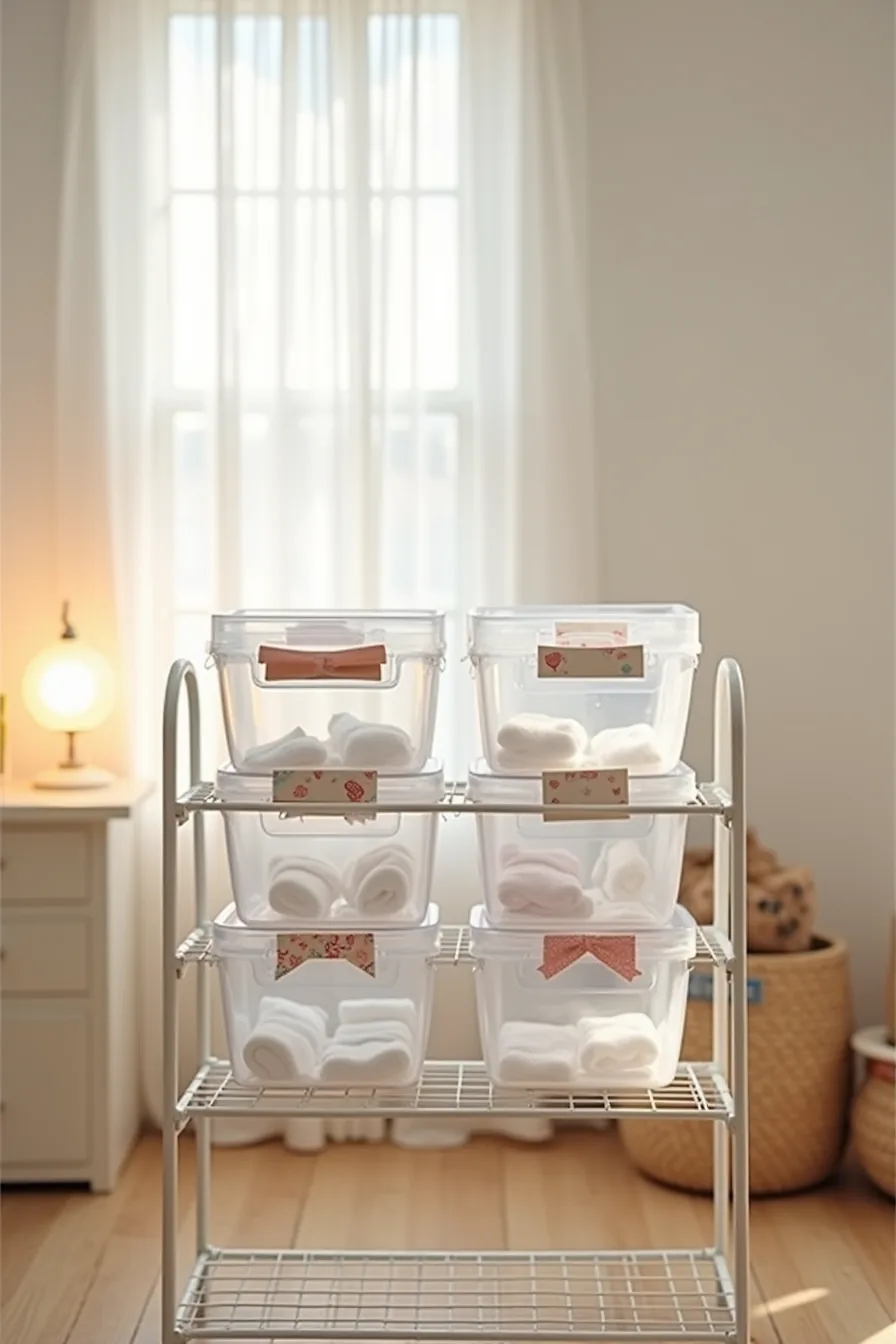
This configuration puts clear, transparent bins on white wire shelving in two tidy rows. You see rolled socks in one container, hair accessories in another, and small toys in a third, each item type gets its own visual home. The transparency is the functional core: children ages 4–12 can identify contents instantly, which cuts down the “where is it?” hunt during morning routines.
The setup works because vertical stacking converts unused upper airspace into prime storage real estate. It suits a child who has more small items than hanging clothes, such as a preschooler with few garments on rods but dozens of accessories and toys. Expect to pay roughly $30–$60 for four to six bins and a wire shelving unit from a big-box retailer.
Use 8–10 quart bins for socks and accessories; reserve larger 15–20 quart containers for bulkier toys. Secure the shelving to the wall stud if the unit exceeds four feet in height, a loaded shelf becomes a tipping hazard for climbers. Labels should sit at the child’s eye level, not yours, and use a mix of words and icons so a non-reading four-year-old can decode the system.
Double-Hanging Rods for Mixed-Length Clothing
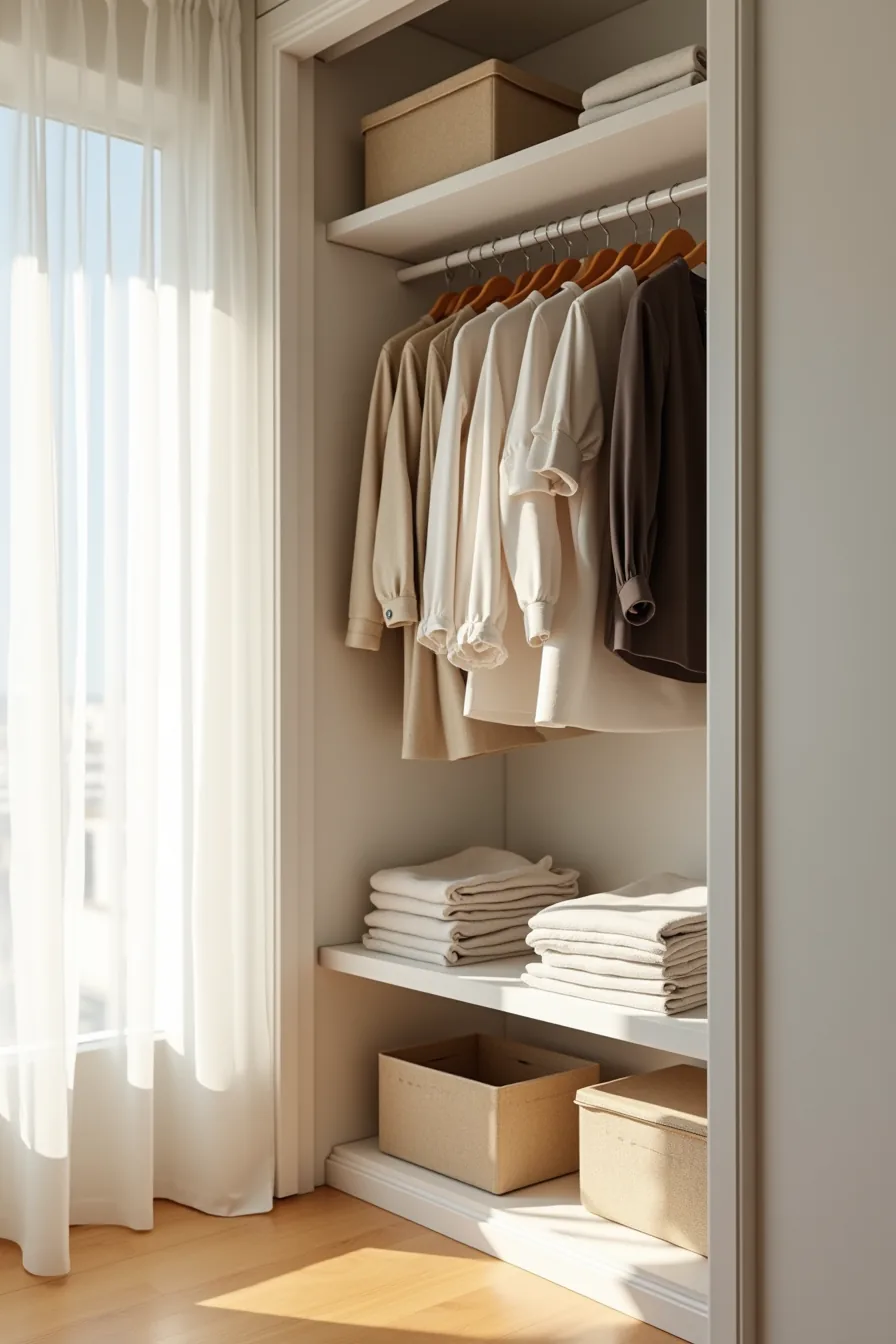
A second rod installed 30–36 inches below the primary one splits the vertical space into two usable zones: the upper rod holds full-length dresses and jackets, while the lower rod takes shorter pieces like shirts and folded pants on wooden hangers. This arrangement effectively doubles hanging capacity in a closet that’s at least 48 inches deep, without adding any floor footprint.
The system suits a child transitioning from toddler to school age whose wardrobe mixes long and short garments, think a kindergartner with both dresses and daily playwear. Installation requires a basic closet rod kit with brackets screwed into wall studs; expect a 30–45 minute DIY job and roughly $15–$25 in parts if you skip the contractor. The trade-off: you sacrifice the lowest shelf or floor space for out-of-season bins, and children under five may struggle to reach the lower rod if it sits below 24 inches from the floor.
Keep the upper rod for items worn less often, dress-up clothes, holiday outfits, so the daily-rotation pieces stay at arm’s height. This is a practical kids small closet organization idea for renters, as it uses only screw holes that are easy to patch when you move out.
Over-the-Door Organizers and Hooks
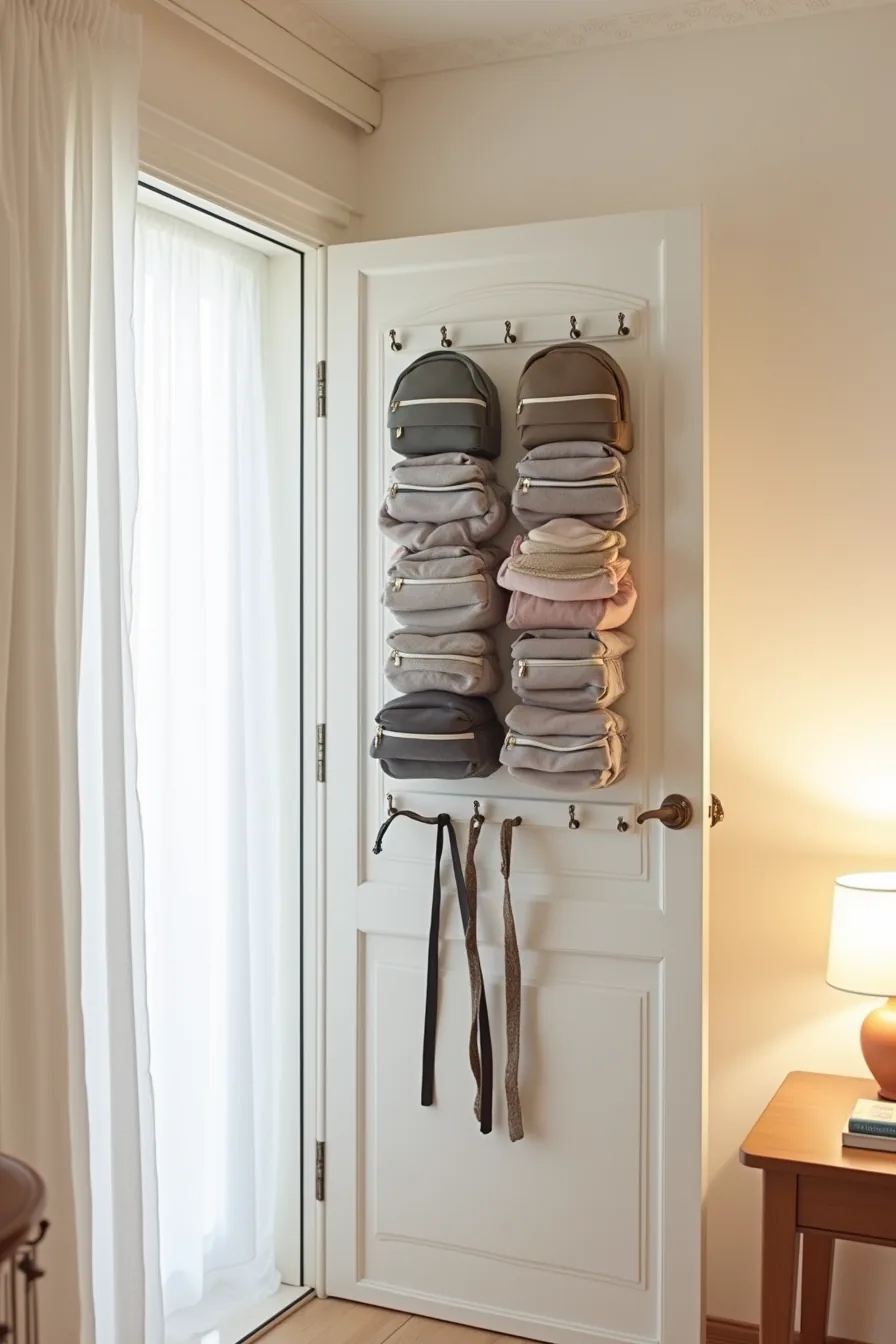
The clear-pocket over-the-door organizer transforms the back of the closet door into a vertical storage wall, holding folded sweaters, accessories, and small toys without touching existing shelving or rods. Each pocket supports roughly 5–10 pounds, making it ideal for lightweight items, socks, hair accessories, art supplies, while heavier backpacks or belts belong on metal hooks screwed into the door frame, which handle 10–20 pounds per hook with proper stud anchoring.
This setup suits a renter or anyone avoiding permanent modifications, since the organizer drapes over the door with zero hardware and the frame hooks leave only small screw holes that patch in minutes. Choose a clear-pocket version to let your child see contents at a glance, reducing the “where is it?” rummaging that leads to messy piles. One limitation: overloading pockets distorts the door’s swing and can scrape the frame, so cap daily-use items at three per pocket and reserve the lower rows for shoes or bulky jackets your child can reach independently.
For long-term durability, pick a fabric-backed organizer with reinforced stitching, the cheap plastic versions tear at the grommets within six months of daily tugging.
Drawer Dividers and Tiered Shelving
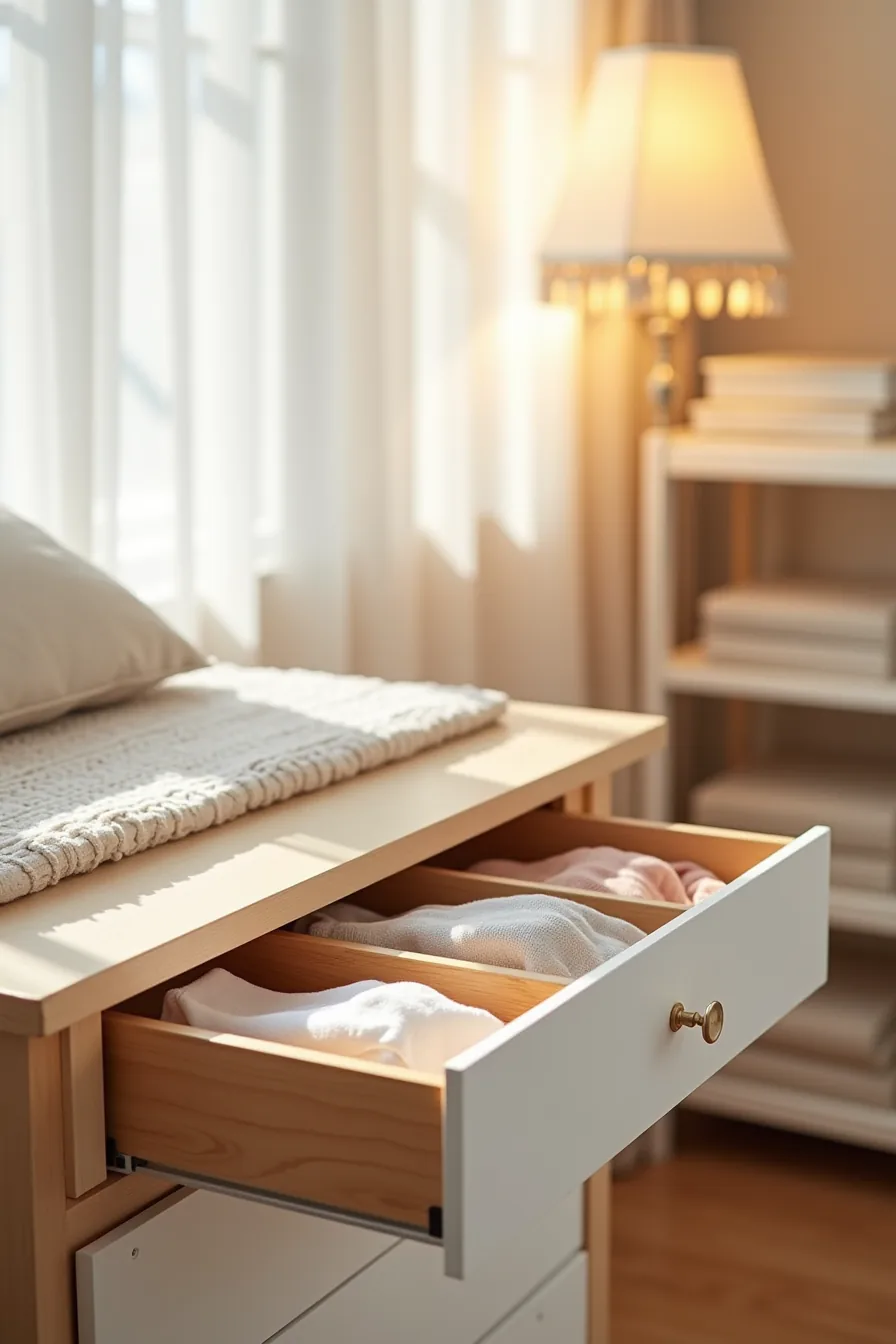
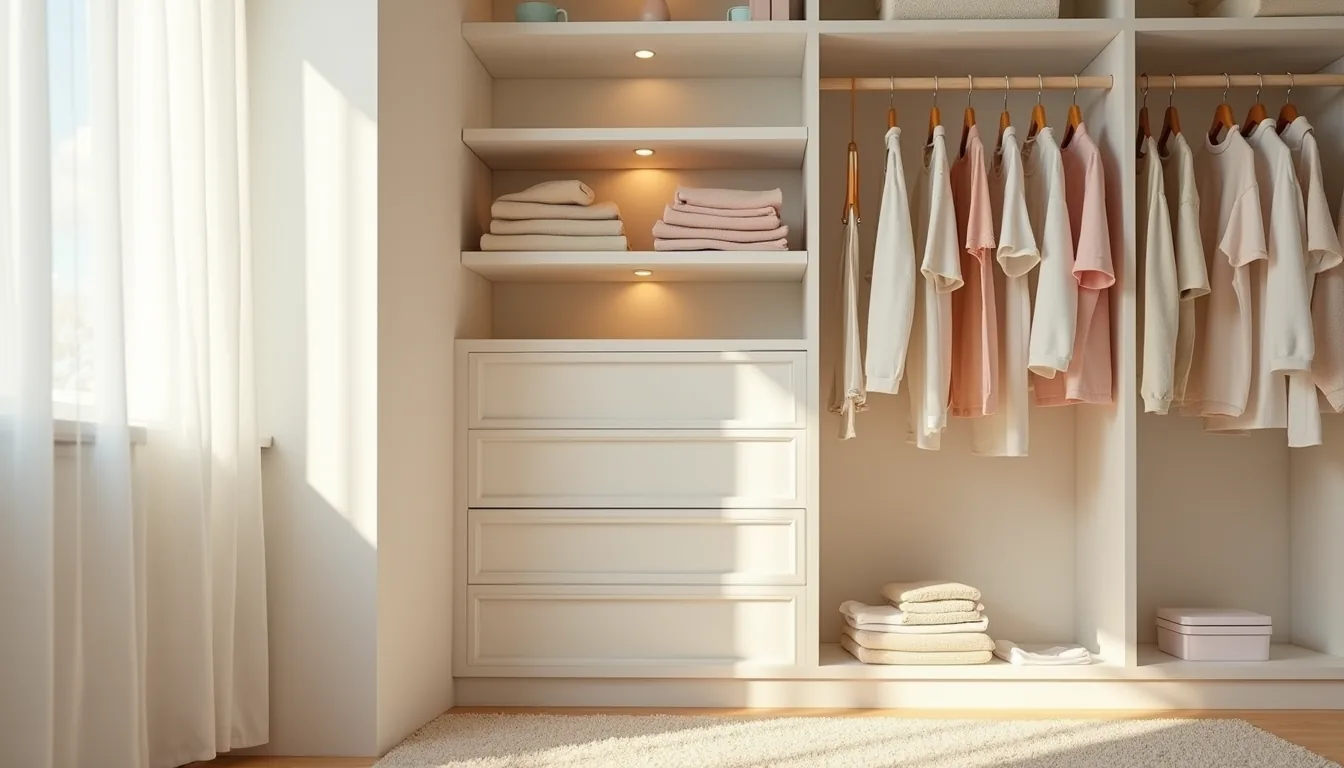
A shallow drawer with five wooden dividers turns a jumble of small clothing into distinct zones: paired socks in one compartment, undergarments in another, hair clips in a third. Dividers work because they create visible boundaries that match a child’s developing sorting instinct, most kids can maintain a system they can see and reach within one arm’s length. Install dividers that are 3–4 inches tall for drawers under 6 inches deep; anything taller makes items at the bottom hard to grasp.
The tiered shelf riser behind the drawer doubles vertical storage on a single shelf, letting you display folded pajamas or favorite tees on the upper level while keeping hats and bulky items below. This approach suits small closets where every inch of horizontal surface is precious, and it costs under $30 for a pack of dividers plus a riser. Skip adhesive dividers if your drawers are laminate, they peel within months, and choose spring-tension or wooden friction-fit versions instead.
For a renter, risers require no hardware and pack flat for the next move, while homeowners can screw in fixed wooden dividers for a permanent solution that survives years of rough handling. Clean the compartments monthly by wiping with a damp cloth; crumbs from snack-stashing kids collect in corners fast.
Rotating Seasonal Rotation System
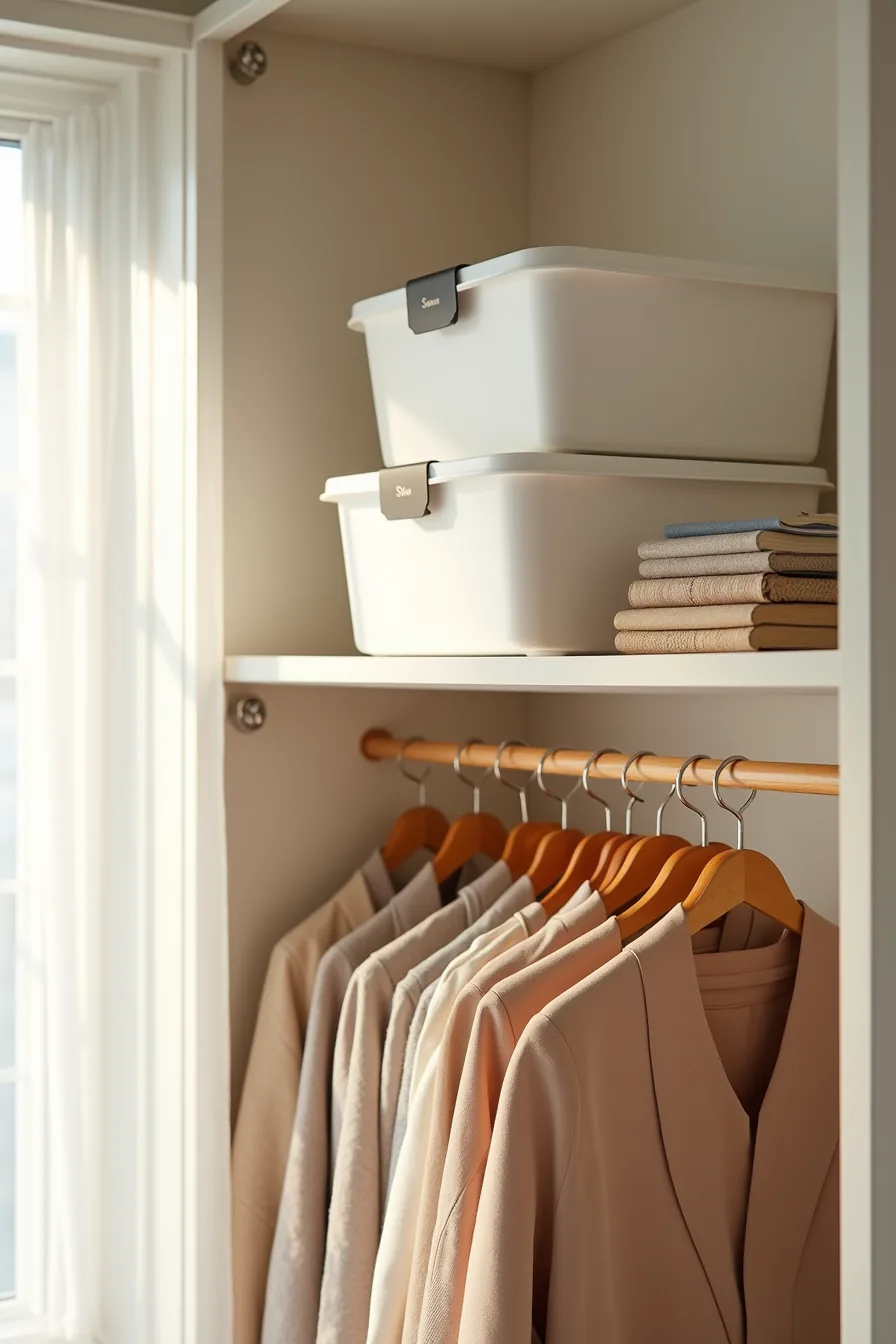
Three large plastic storage bins labeled by season sit on the upper shelf, each holding out-of-season clothing that would otherwise crowd the active zone below. The lower shelf keeps only current-season pieces on wooden hangers, about ten to twelve outfits for a typical preschooler, so your child sees exactly what’s wearable each morning. This system works because it cuts the active closet volume by roughly half, which makes selection faster for you and teaches your child that clothes have a designated home cycle.
Swap the bins four times a year, ideally on the first weekend of each season. Stack them horizontally so the labeled side faces out; vertical stacking hides labels and forces you to unstack everything to read them. Choose bins that are 18–24 inches wide and 12–16 inches deep, anything larger becomes too heavy for most kids to handle safely, and you want your child to participate in the rotation.
This approach suits small closets with high shelves, and it costs under $40 for three bins. Store the off-season bin you aren’t using in a hall cupboard or under a bed; keeping all three in the closet defeats the purpose of reducing active volume.
Custom Closet Systems vs. DIY Assembly
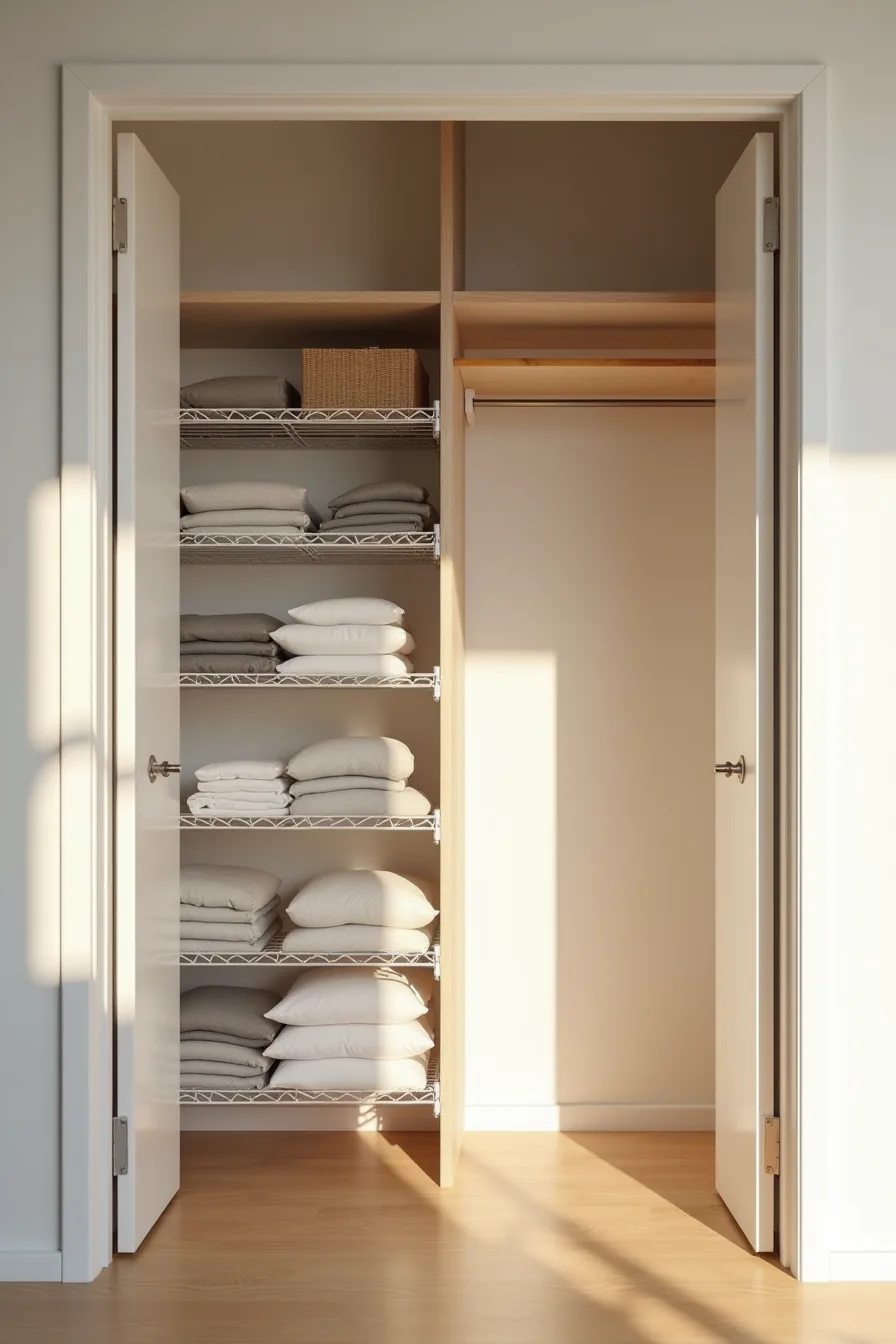
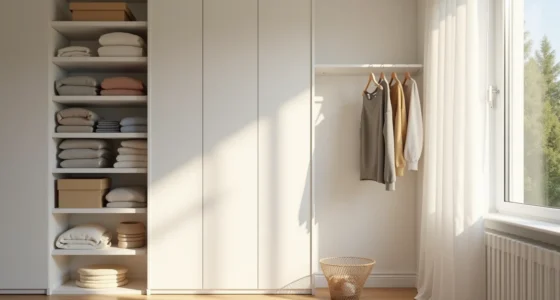
Modular wire shelving, with its metal brackets and adjustable shelves, typically runs $150–$400 for a standard 4-foot reach-in closet. The wooden shelf with a single rod costs $50–$120 in materials, but you must cut, paint, and mount everything yourself, a weekend project that demands a level, a stud finder, and basic carpentry confidence. Wire systems install in under two hours with a screwdriver, and you can reposition shelves as your child grows from folded onesies to hanging school uniforms.
Wire shelving suits parents who want durability without permanence; the brackets anchor into studs but leave minimal wall damage when removed. The DIY route wins for renters because a single rod and shelf require only two wall mounts, and mismatched storage containers can be swapped or relocated freely. Budget buyers should note that wire holds roughly 30–40 pounds per shelf versus 75+ for solid wood, so heavy book bins stay on the floor.
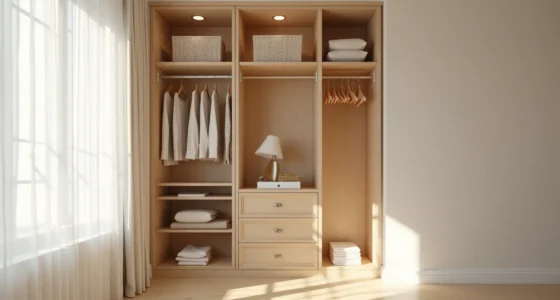
For long-term value, invest in a wood-based system with a double rod, it adapts through age ten, while wire often needs replacement brackets by then.
Your first 30 minutes
Start with the single most-used zone: the floor-to-waist shelf where daily outfits land. Clear it, measure it, and install one hanging rod at your child’s shoulder height. That one change resolves 80% of morning friction.
Before buying anything, photograph the closet and sketch rough dimensions. Compare your measurements against the product ranges in this guide, most modular systems fit 24–36 inch-wide spaces without custom cutting.
Your concrete next step: Grab a tape measure and note the rod height, shelf depth, and floor footprint right now. Bring those numbers to your shopping session tomorrow, and every purchase you make will fit the first time.
Frequently Asked Questions
Question
How do you organize a small closet for multiple children sharing one space?
Answer
Assign each child a distinct color-coded zone, using stackable bins and labeled shelves. Use vertical space with double hanging rods, upper rod for longer items, lower for shirts and pants. Rotate seasonal clothes to keep only current sizes accessible.
Question
What’s the best way to organize a toddler’s closet versus a school-age child’s closet?
Answer
For toddlers, use low, open bins and baskets at floor level so they can self-select items without help. For school-age kids, add labeled drawers and a lower hanging rod for independent dressing, reserving upper shelves for out-of-season storage.
Question
Can you use kids small closet organization ideas in a closet smaller than 3 feet wide?
Answer
Yes, but prioritize a single hanging rod and slim, stackable bins over bulky dressers. Use over-door hooks and shelf risers to maximize vertical space. Avoid double rods in narrow closets, they reduce usable depth and make access awkward.
Question
How often should you reorganize a child’s closet, and what triggers a reshuffle?
Answer
Reorganize seasonally, roughly every 3–4 months, and whenever your child outgrows a clothing size or changes routines. Also reshuffle after birthdays or holidays when new items arrive, or if your child starts struggling to find things independently.