
Minimalist closet organization ideas aren’t about owning fewer clothes, they’re about engineering a system where every item you keep has a fixed, visible place, and that distinction decides whether your space feels calm or chaotic. You can achieve this with a $40 tension-rod setup or a $2,000 custom build, but the principles, clear sightlines, breathing room between hangers, and zero floor clutter, remain identical. The real work is choosing the interpretation that matches your space, budget, and tolerance for maintenance, so let’s break down six proven approaches and exactly what each demands from you.
Key takeaways
- Capsule wardrobes slash decision fatigue by limiting hanging items to roughly 30–40 pieces, which suits anyone with a dedicated reach-in closet and a weekly rotation.
- Single-rail systems free up floor space and work best in closets under 6 feet wide, but you’ll need to pair them with a shelf above for folded knitwear or shoes.
- Color-blocked hanging saves you 10–15 minutes each morning, provided you sort by hue and keep each color group to a contiguous rail section rather than scattering pieces.
- Renter-friendly modular systems like tension rods and freestanding cubes cost under $150, install in under an hour, and leave zero wall damage when you move.
The Capsule Wardrobe Method: Fewer Items, Strategic Placement
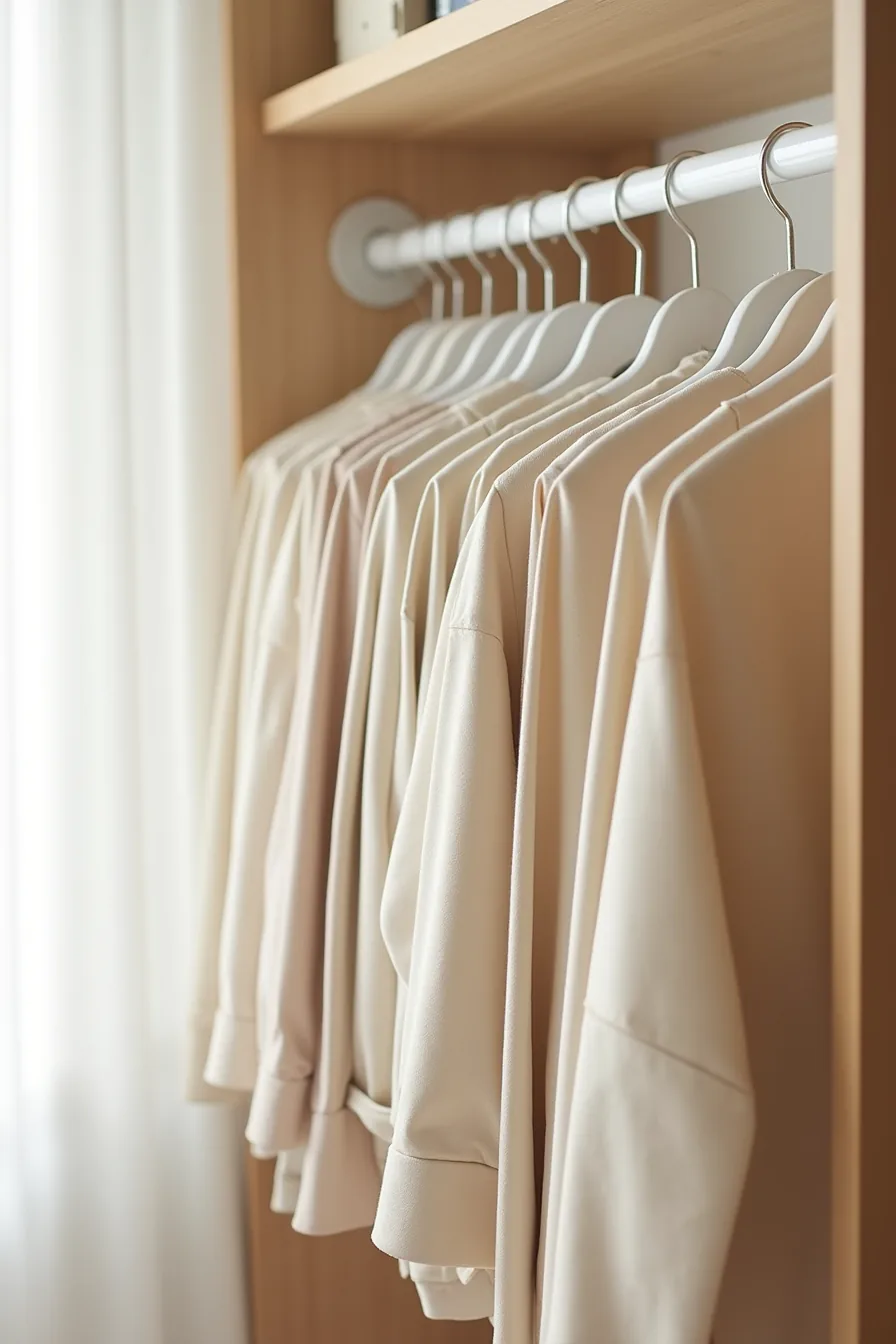
The capsule method is the purest expression of Minimalist Closet Organization Ideas. By limiting your wardrobe to 30–50 core pieces, you eliminate the need for complex systems entirely. The image in this section shows exactly how it functions: about 20 matching white hangers, spaced evenly apart, each carrying a single neutral garment.
That visible wall space between items is the design; it creates breathing room that makes selection effortless.
This works because the system is the reduction itself, no elaborate hardware compensates for clutter. It suits anyone who wears a uniform-like palette daily, especially professionals or parents who value speed over variety. To reproduce it, you need roughly 3–4 feet of clear rod space for 20 pieces, and you must commit to a seasonal rotation.
The hangers cost roughly $15–25 for a set of 20, making this one of the Best Minimalist Closet Organization Ideas examples on a budget.
Single-Rail Systems for Small and Medium Spaces
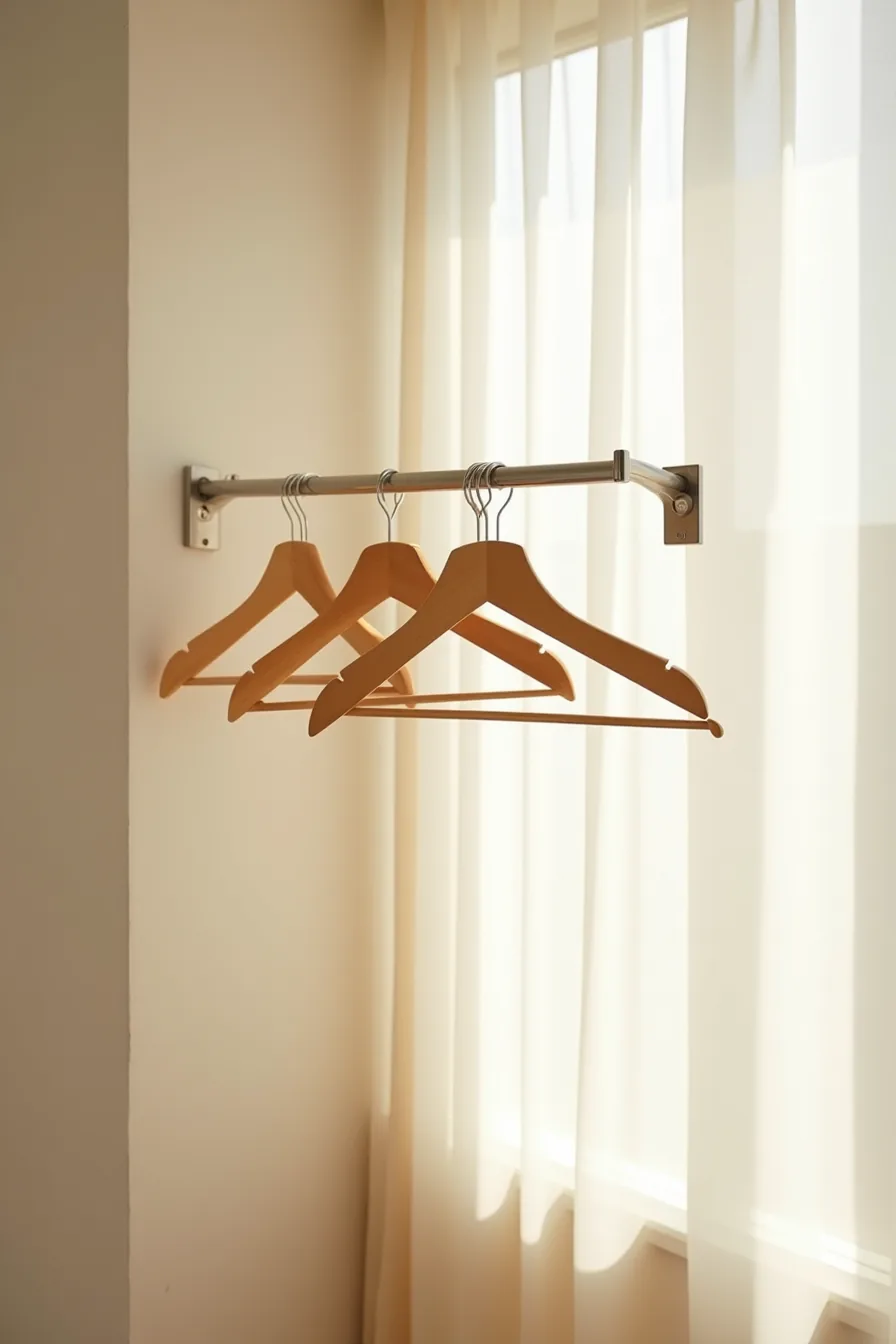
A single tension rod mounted between two walls at shoulder height is the most direct answer for compact closets. The setup relies on the rod’s bracket hardware gripping the walls firmly, so you get a full hanging zone without drilling a single hole. Five identical slim hangers with minimal spacing prove the rule: you only need room for what you wear this week, not everything you own.
This approach works because it forces a daily edit. With one rail, you can’t hoard out-of-season coats or rarely worn occasion pieces; the physical limit does the decluttering for you. It suits renters who can’t alter walls, studio dwellers with shallow reach-in closets, or anyone transitioning to a smaller wardrobe gradually.
Installation takes under ten minutes: measure the gap, twist the rod to length, and test the tension by hanging a few heavier items to ensure the bracket hardware holds without slipping. For a small closet, keep the rail under four feet wide; for a medium space, extend it to six feet and pair it with a single shelf above for folded knitwear. This is one of the most Practical Minimalist Closet Organization Ideas planning tips because the cost stays between $20 and $40, and you can dismantle everything in seconds when you move.
Shelf-Based Storage Without Drawers
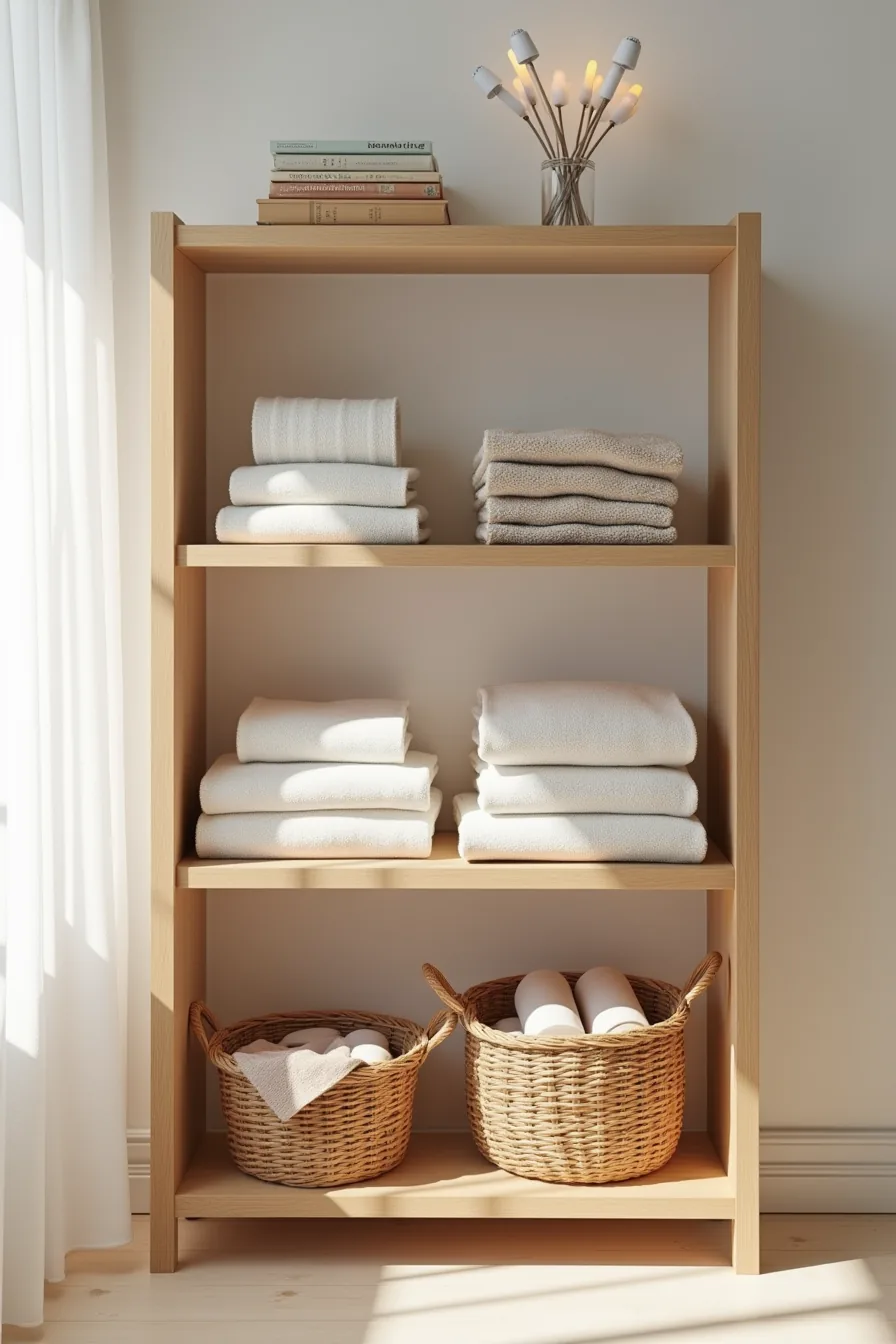
Open shelving replaces the drawer’s hidden chaos with a visual inventory. Three wooden shelves, each roughly 30 inches wide and 12 inches deep, hold folded sweaters in separate stacks and trousers folded lengthwise into tidy piles. Two woven baskets on the bottom shelf collect rolled belts, scarves, or gym gear you don’t need to see daily.
This system works because it converts storage into a display that demands tidiness. You can’t shove a wrinkled heap behind a drawer front, so the fold-and-stack method becomes a daily habit rather than an occasional purge. It suits visual organizers who forget what they own when items are out of sight, and it costs $60–$120 for shelving brackets and pine boards.
Keep stacks under eight inches high to prevent toppling, and leave a two-inch gap between piles for easy grip. Dust settles on exposed fabrics, so expect to wipe shelves weekly, a trade-off for the clarity of seeing every piece at a glance.
Color-Blocked Hanging: Visual Simplicity and Quick Selection
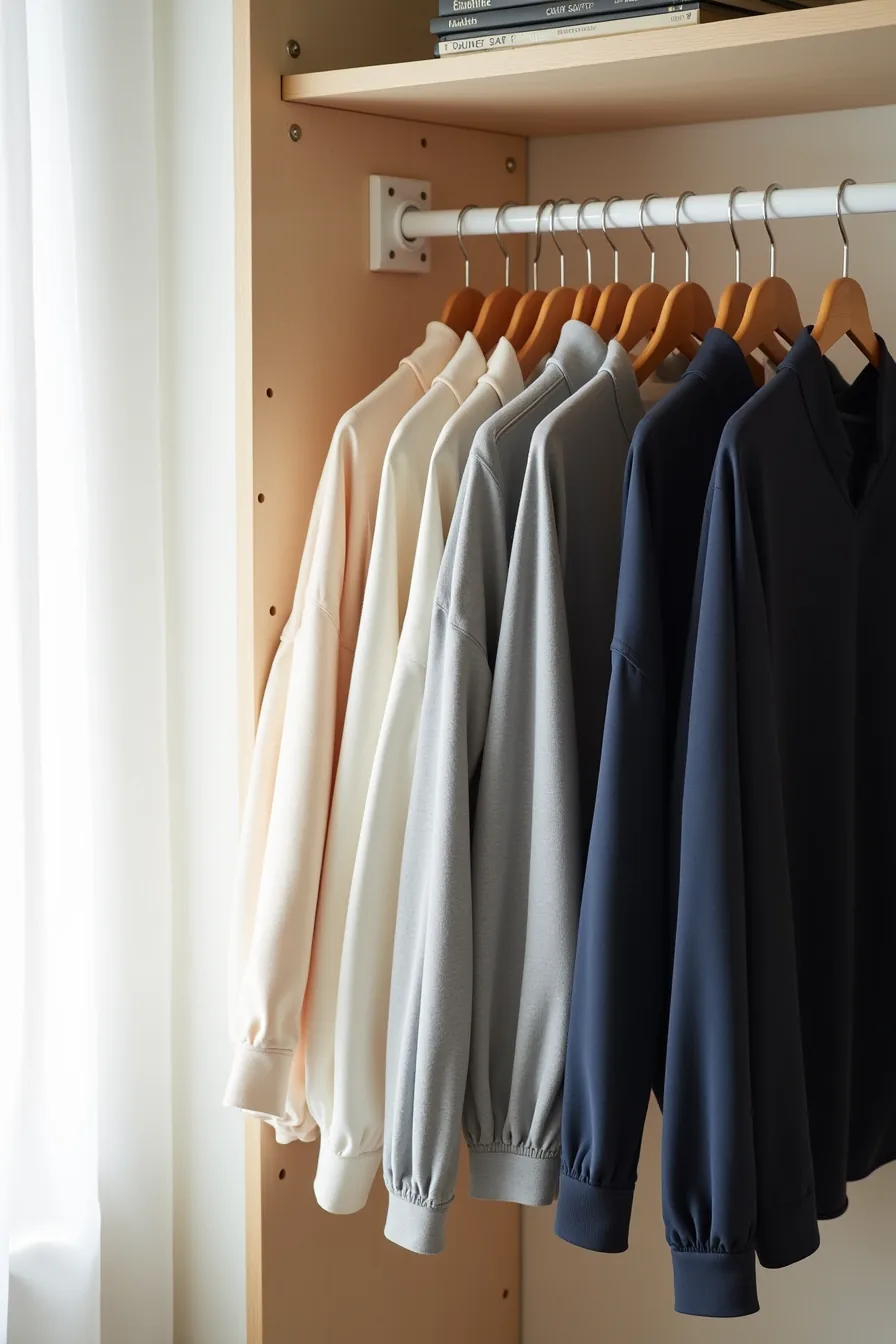
Organizing hanging garments by color family, whites and creams on the left, grays in the center, navy and black on the right, turns your closet rod into a decision-making tool. You scan for “work shirts” and your eye lands on the gray section instantly, shaving seconds off every morning search. The gradient also reveals gaps: when the navy block thins, you know precisely what you wear most and what deserves replacement.
This arrangement works because color creates a spatial map your brain processes faster than text labels or fabric memory. It suits anyone who owns more than 30 hanging items and struggles with impulse repeats of the same five outfits. Matching wooden hangers matter here, uniform 17–19 millimeter rods create continuous lines between color blocks, while mismatched plastic breaks the visual rhythm and reintroduces noise.
Group within each color family by sleeve length or formality to preserve the clean look without sacrificing utility. Budget route: keep your existing hangers and simply re-sort by color today, zero cost, immediate effect. Maintenance requires one pass every time you return laundry, plus a seasonal re-sort when your palette shifts.
Renter-Friendly Modular Systems: No Permanent Installation
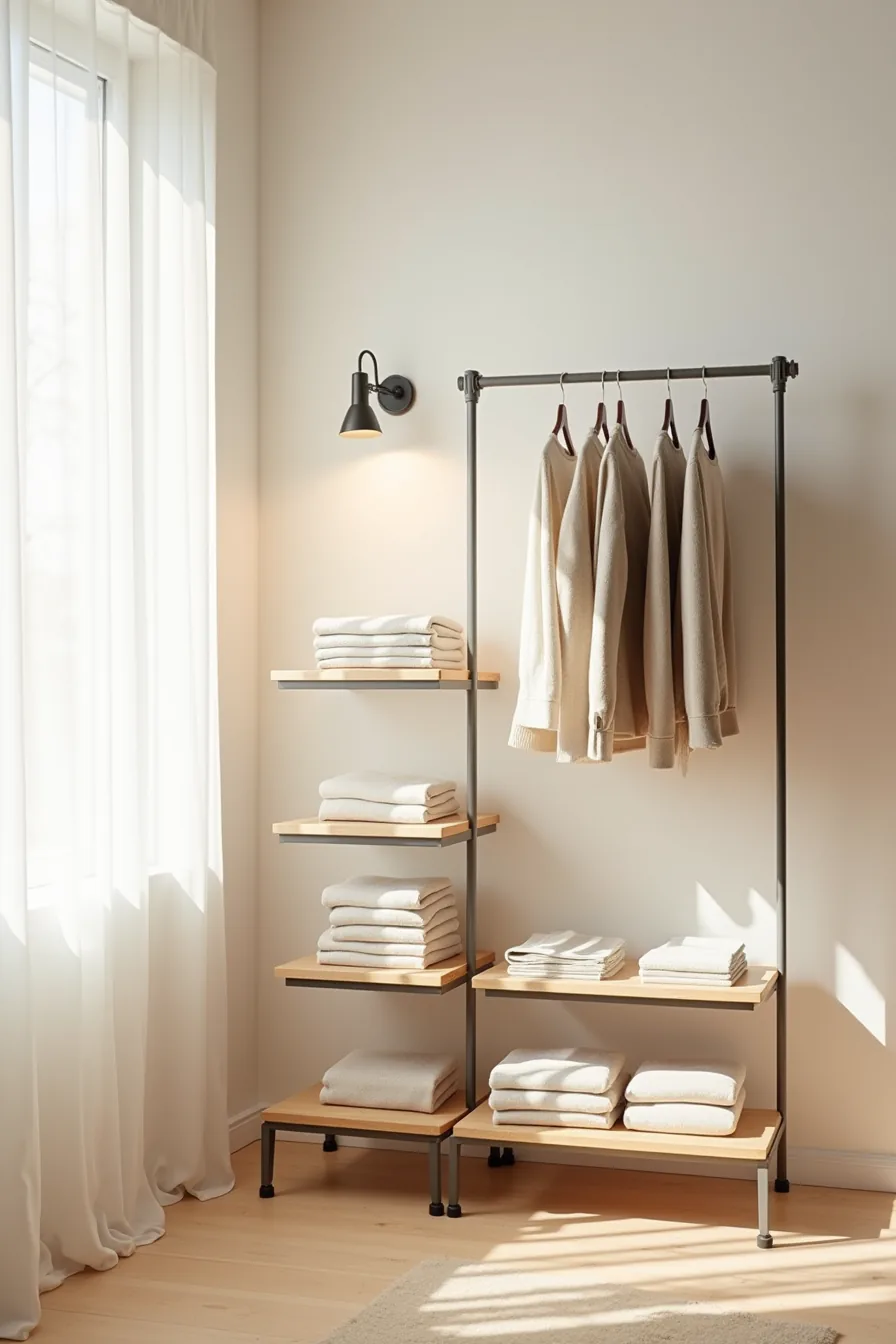
A freestanding metal rack with four shelves delivers the full minimalist wardrobe, folded basics on the lower tiers, hanging garments overhead, without a single hole in your wall. This configuration suits renters, dorm dwellers, or anyone who moves every few years, because the entire system breaks down into components that fit through a standard doorway and reassemble in under an hour. You position it against a blank wall where a built-in would go, and the open frame keeps the space feeling airy rather than boxed in.
The trade-off is dust exposure and reduced hanging capacity compared to a rod-and-shelf built-in. Budget vs. Splurge Minimalist Closet Organization Ideas part ways here: a basic steel rack with four shelves runs $40–$80, while powder-coated versions with reinforced joints cost roughly triple and hold heavier winter coats without swaying. Measured against a security deposit, the budget route wins for most short-term rentals.
Pair it with fabric bins on the lower shelves to conceal underwear and accessories, and wipe the frame monthly, metal collects a visible film in about two weeks in most bedrooms. This system suits capsule wardrobes under 50 items; beyond that count, you’ll need a second unit or a different approach entirely.
Long-Term Investment: Built-In Shelving and Custom Dividers
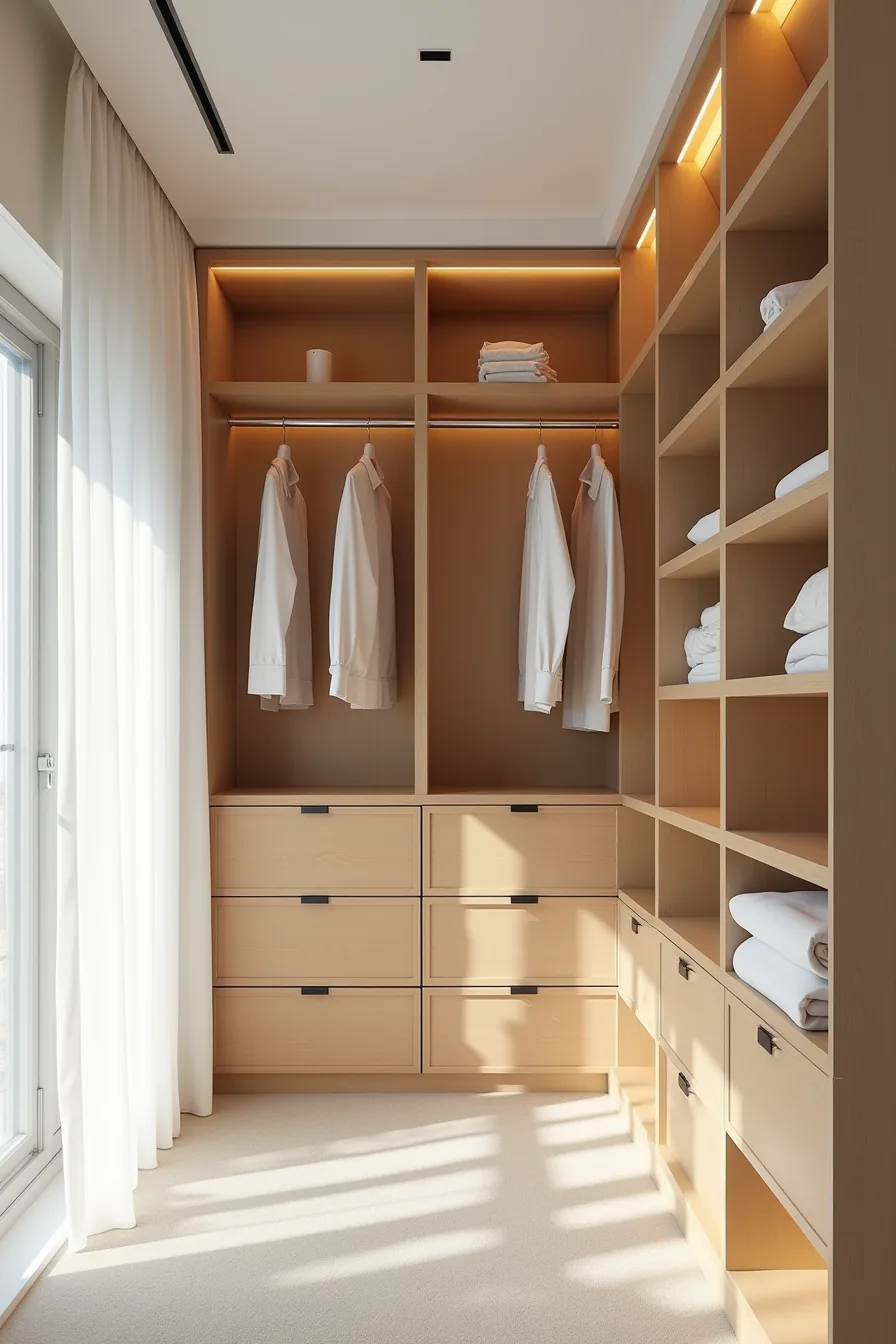
When you own your home and plan to stay put for at least five years, a floor-to-ceiling built-in system becomes the most cost-effective minimalist closet organization approach you can choose. The fixed wooden shelving eliminates the gaps and wasted vertical inches that plague freestanding units, while metal dividers keep folded stacks from toppling into one another, each section holds roughly 10–12 folded sweaters or 15–20 tees without shifting. Custom brackets on the hanging rod let you drop it to double-stack shirts or raise it for long coats, adapting the same footprint to seasonal changes.
Integrated lighting along the top edge solves the visibility problem that plagues deep closets, so you actually see the 30% of your wardrobe you would otherwise forget. Budget realistically: a professional built-in for a standard 6-foot reach-in runs $1,500–$4,000 depending on wood grade and hardware, with a 2–3 day install. The payoff is near-zero maintenance, wipe the shelves twice a year, and the system outlasts your mortgage.
This route suits wardrobes over 50 items where modular racks would require multiple units and still leave dust-prone gaps. When planning, avoid the Minimalist Closet Organization Ideas mistakes to avoid: over-specifying shelf depth beyond 16 inches (you’ll lose items in the back) and skipping a shoe shelf with a lip, which lets footwear slide off the edge.
Your First Move
Start with the category that causes the most friction. If you can’t find a shirt for five minutes each morning, begin with a single drawer, not the entire closet. Empty it, sort into keep, donate, and relocate piles, then apply the storage method that matches your space and budget.
For most people, the highest-impact first step is clearing the floor. Install a single shelf and a simple rod if you’ve none, then move shoes into boxes or a tray. That one change delivers immediate visual calm.
Commit to one 30-minute session this week. Choose the budget route, wire shelves and canvas bins, unless you own the home and plan to stay five-plus years. Then book the carpenter for custom built-ins.
That concrete appointment turns intention into action.
Frequently Asked Questions
How many clothes should I own for a minimalist closet?
Aim for 30–40 core pieces per season, including outerwear, shoes, and accessories. This range keeps your wardrobe functional without overwhelming your space or daily decision-making.
Can minimalist closet organization work in a small bedroom?
Yes. Use vertical space with shelf risers and slim velvet hangers to maximize a 24–30 inch deep reach-in closet. Keep only current-season items accessible and store off-season pieces elsewhere.
What’s the difference between minimalist organization and just having fewer clothes?
Organization is the system, grouping by category, using uniform hangers, and maintaining clear zones. Fewer clothes is the quantity. You need both: a system fails without editing, and editing alone leaves clutter if there’s no structure.
Do I need to buy special organizers for a minimalist closet?
No. A minimalist system works with what you’ve: matching hangers, clear bins, and open shelving. Invest only in two or three quality items, like a shoe rack or drawer dividers, if they solve a specific problem.