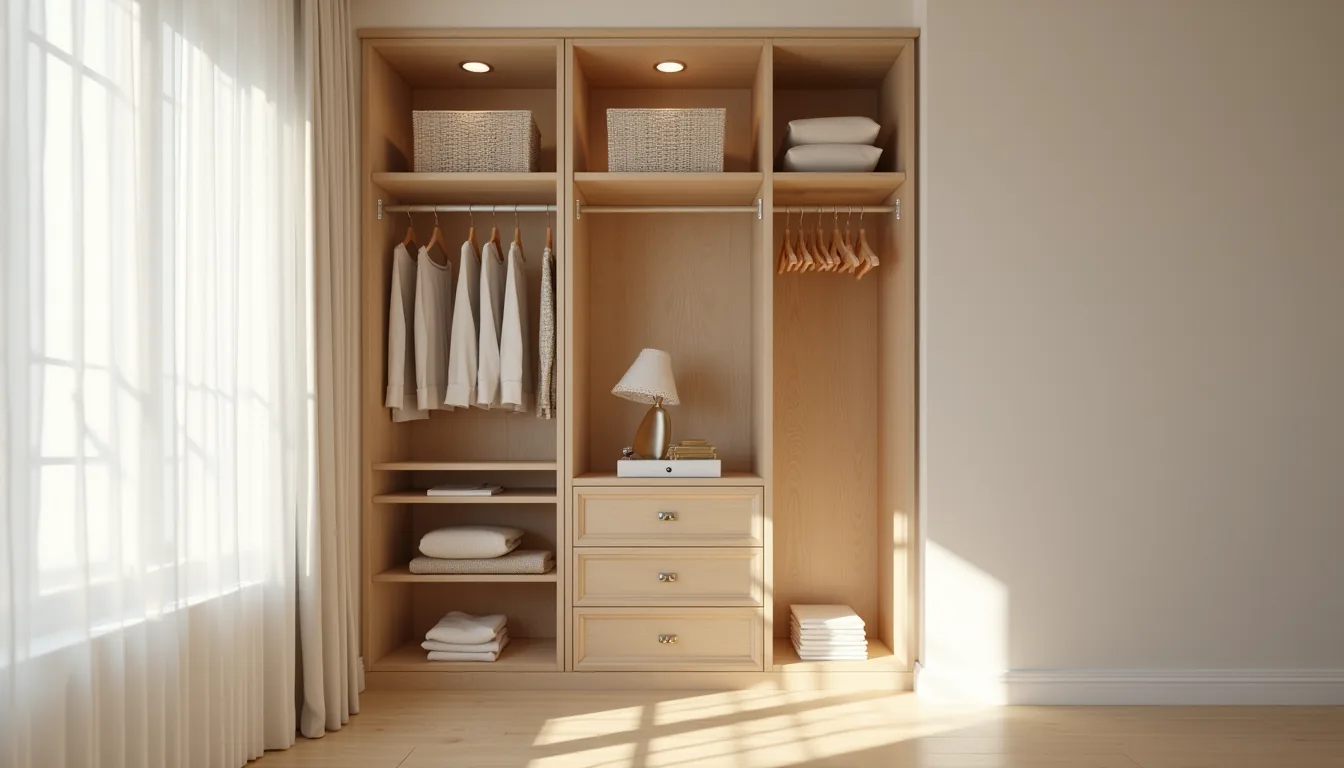
A closet that runs 24 inches or deeper from the back wall to the door frame is a deep closet, and the extra foot beyond the standard 20–23 inches is either your biggest storage asset or the reason you own three orphaned shoeboxes. The difference comes down to how you divide that depth, not how much you cram into it. The six layouts ahead turn that dead zone into pull-out racks, vertical shoe banks, and drawer stacks, each matched to a specific room size, budget, and renter constraint.
Key takeaways
- Double-rod systems effectively double hanging capacity but require at least 30 inches of vertical clearance per rod to avoid crumpled hems.
- Tiered shelving converts deep recesses into usable space when you install fixed shelves 14–18 inches apart, leaving front sections for frequently worn items.
- Pull-out drawers on full-extension slides solve back-wall access only if drawers are rated for 75–100 pound loads; standard “soft-close” slides often fail under heavy storage.
- Zone layout fails unless you stick to a single-season rule: store off-season gear on top shelves or the back row, and keep your current-season rotation within arm’s reach (roughly the front 18 inches).
Double-Rod Systems for Maximum Hanging Space
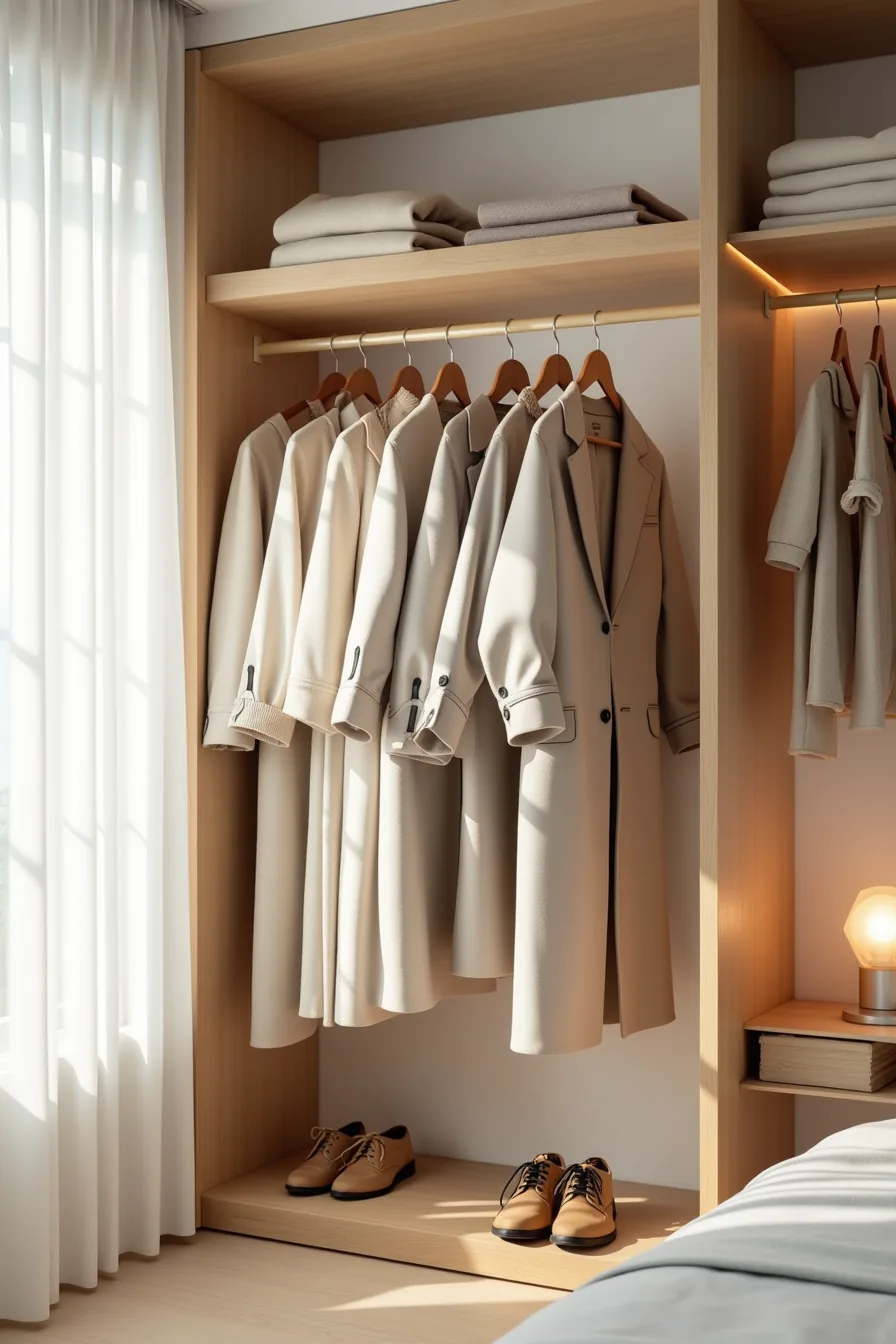
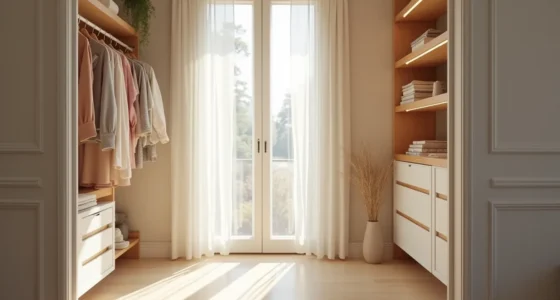
A second rod mounted at mid-height is the most direct answer to the vertical waste that plagues deep closets. Position the upper rod at roughly 72–80 inches from the floor for long items, and the lower rod at 40–48 inches for shirts, folded pants, and jackets. This setup pairs long coats and dresses overhead with a densely packed lower row, effectively doubling your hanging capacity without adding a single inch of footprint.
This configuration works best when your closet is at least 24 inches deep and you prioritize everyday wear over seasonal storage. It suits busy professionals or families who need immediate visual access to frequently used garments, rather than collectors of floor-length gowns. For the upper rod, reserve items you rotate weekly; the lower rod handles daily staples like button-downs and trousers.
Reproduction requires two sturdy closet rods, flanges, and a drill, a budget-friendly upgrade under $100 if you DIY. Confirm your closet’s weight rating; standard rods support 30–50 pounds per foot, so avoid overloading the lower rod with heavy sweaters. If you rent, opt for tension-mounted rods that install without hardware, though these cap out around 40 pounds.
Paint the rods matte black or brushed nickel to blend with existing fixtures, and wipe them monthly to prevent rust in humid climates.
Tiered Shelving and Vertical Stacking for Deep Recesses
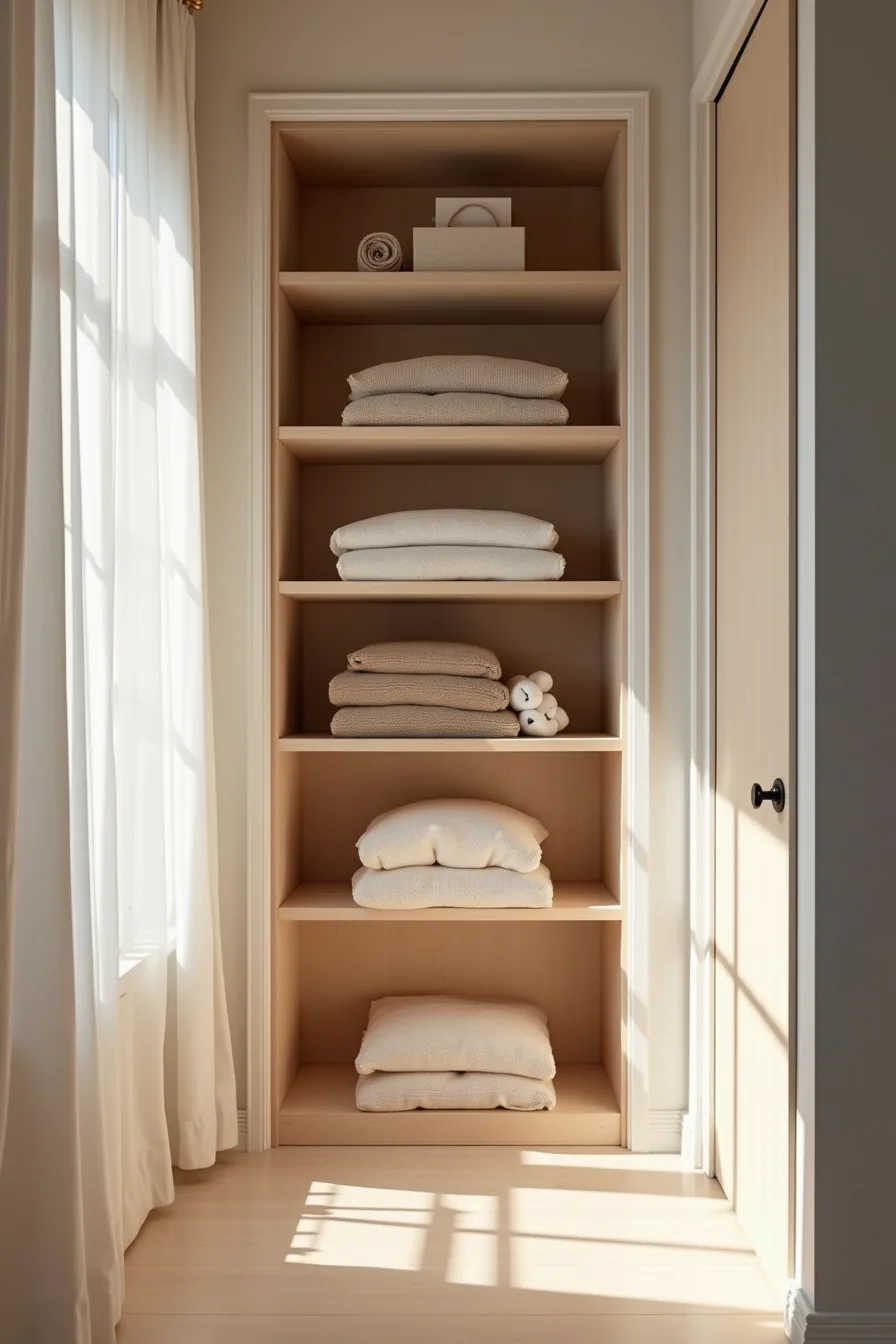
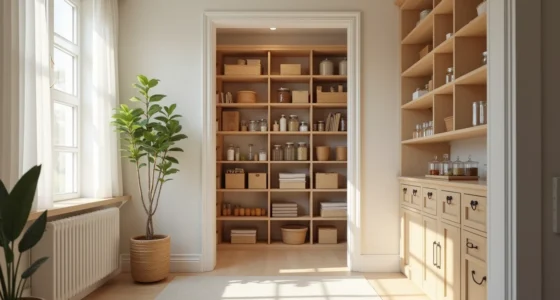
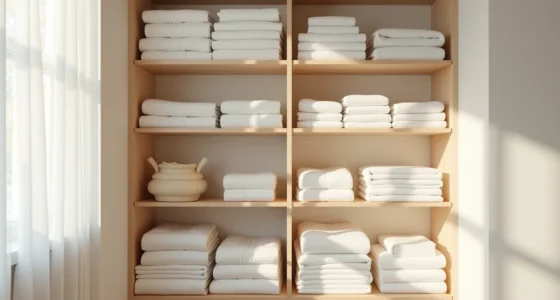
Narrow, floor-to-ceiling shelves beat wide expanses of shelving in deep closets because they convert your rear wall’s depth into visible layers rather than a black hole of stacked clutter. Install five vertical columns, each 12–16 inches deep, to accommodate stacked sweaters, rolled scarves, and storage boxes without requiring you to dig through a second row to reach the back. The tight width means every column is fully accessible from the front, eliminating the classic deep-closet problem of items lost behind other items.
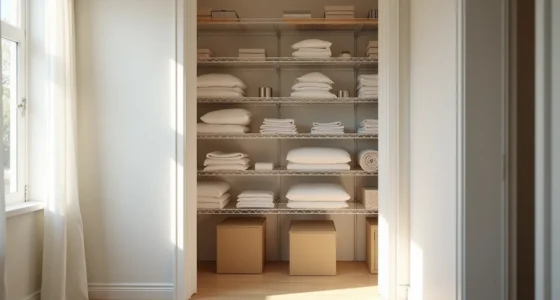
This setup suits households with many folded garments, accessories, or boxed off-season gear, people who value seeing everything at a glance over hanging space. It’s also a strong renter-friendly route: freestanding utility shelving units with adjustable feet achieve the same result without drilling into walls. For load distribution, keep heavier boxes on the bottom two shelves and reserve the top third for lightweight scarves and seasonal linens; particleboard shelves sag permanently under sustained weight, so stick to solid wood or metal if you plan on storing books or shoes.
Space shelves 10–14 inches apart vertically, enough for a stacked sweater column with room to pull one out without toppling the pile.
Pull-Out Drawers and Sliding Baskets for Back-Wall Access
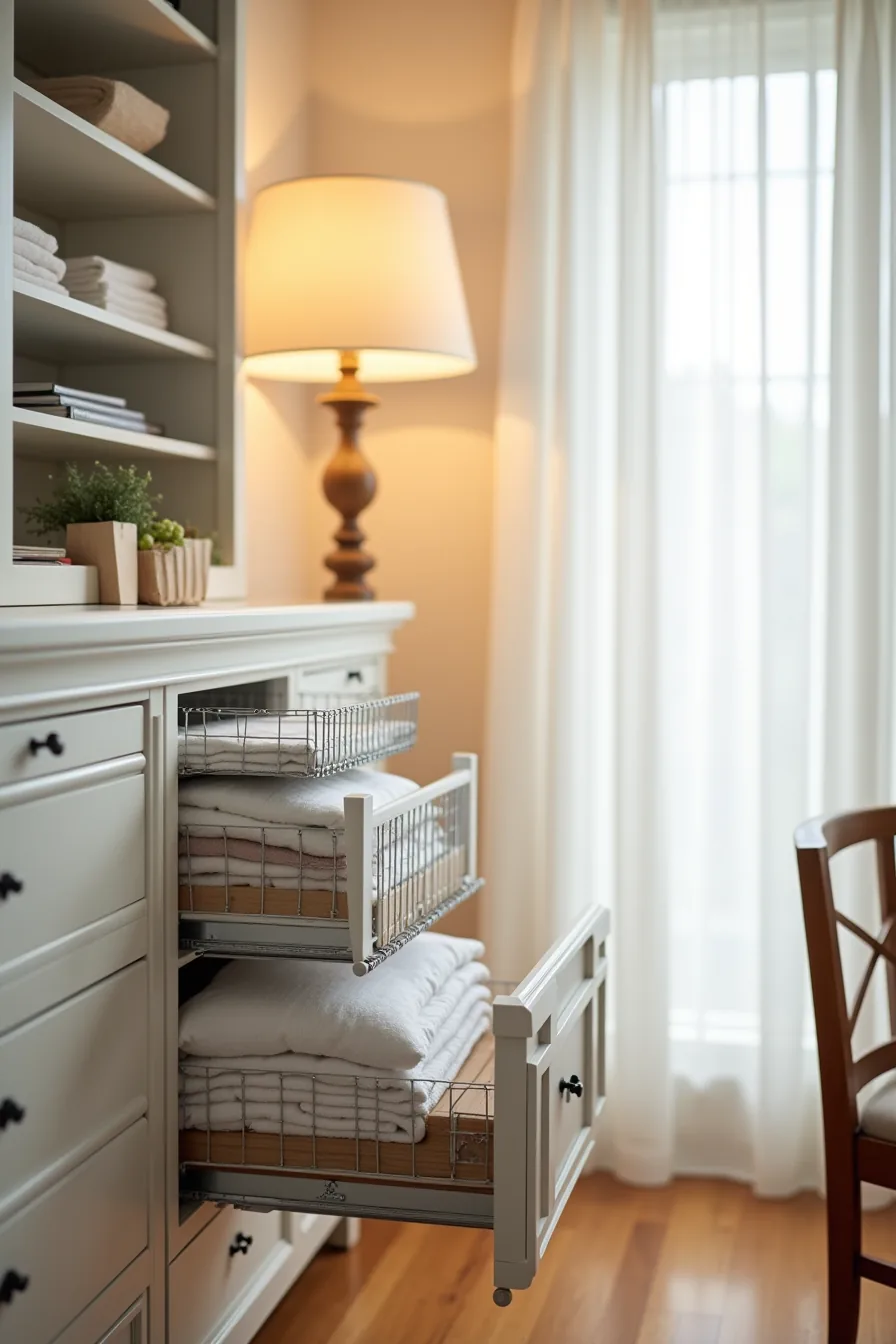
Pull-out units solve the dead-zone problem by turning your closet’s depth into a series of accessible layers. Full-extension slides, which typically pull 24–28 inches forward, let you reach the rear basket without climbing in or kneeling on stacked items. In the setup pictured, three wire baskets on slides reveal folded linens at the front, middle, and back positions simultaneously, proving that even the deepest recess can hold daily-use items rather than forgotten storage.
This approach suits anyone who needs frequent access to bulky folded goods, from bedding sets to off-season knitwear. The trade-off is cost: custom-built drawer systems with soft-close slides run roughly $300–$600 per linear foot, while semi-custom kits from big-box retailers land closer to $150–$250. A budget route uses chrome wire baskets on track kits (about $40–$70 per basket) that attach to a fixed frame, no carpentry required, just a drill and a level.
If you rent, freestanding rolling carts with wire drawers achieve 80% of the functionality without wall anchors. Keep the heaviest baskets at waist height; fully loaded slides rated for 75–100 pounds still struggle when you’re lifting at floor level.
Zone-Based Layout: Separating by Season and Category
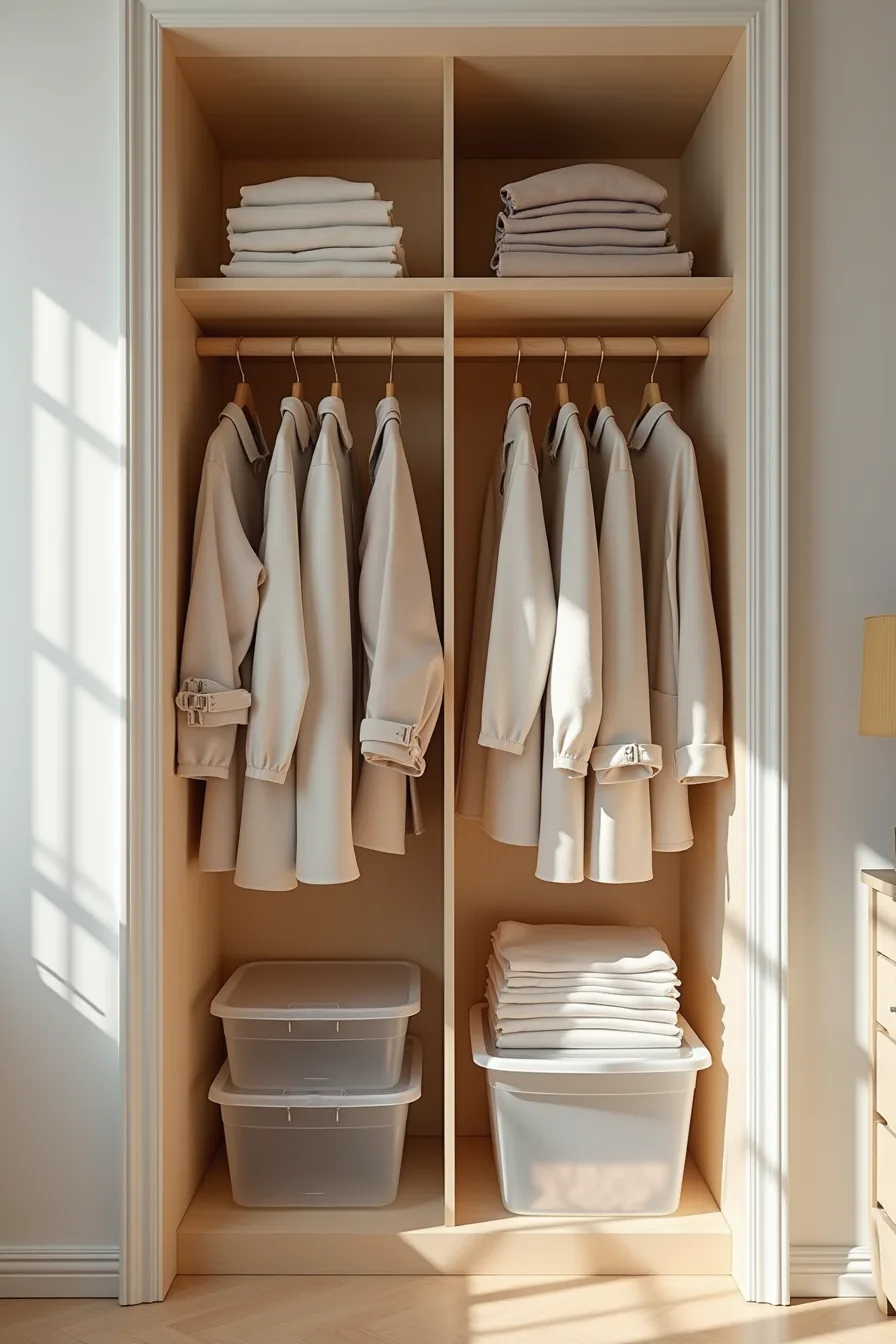
Divide the closet’s depth into three working bands rather than filling it uniformly. The front band holds your daily work clothes on a standard rod, shirts and trousers you reach without taking a step past the doorway. The middle band uses a second, lower rod for seasonal coats, which you access a few times per week rather than daily.
The rear band, the deepest 18–24 inches, stores clear plastic bins on fixed shelves, holding off-season gear you retrieve monthly at most.
This layout works because it matches access frequency to depth: the farther back an item sits, the less often you need it. It suits households that rotate wardrobes seasonally or share a single closet between two people with different dress codes. Measure the rod depths before installing, front rods need roughly 18–20 inches of clear hanging space, while the rear shelving should sit at least 14 inches deep to accommodate standard 66-quart bins.
Label each bin’s face with a 2-inch-wide label maker strip; unlabeled clear bins become opaque clutter within a month. The trade-off is that zone layouts require honest sorting first, if you can’t identify which items belong to each band, the system collapses within weeks.
Lighting and Visibility Upgrades for Depth
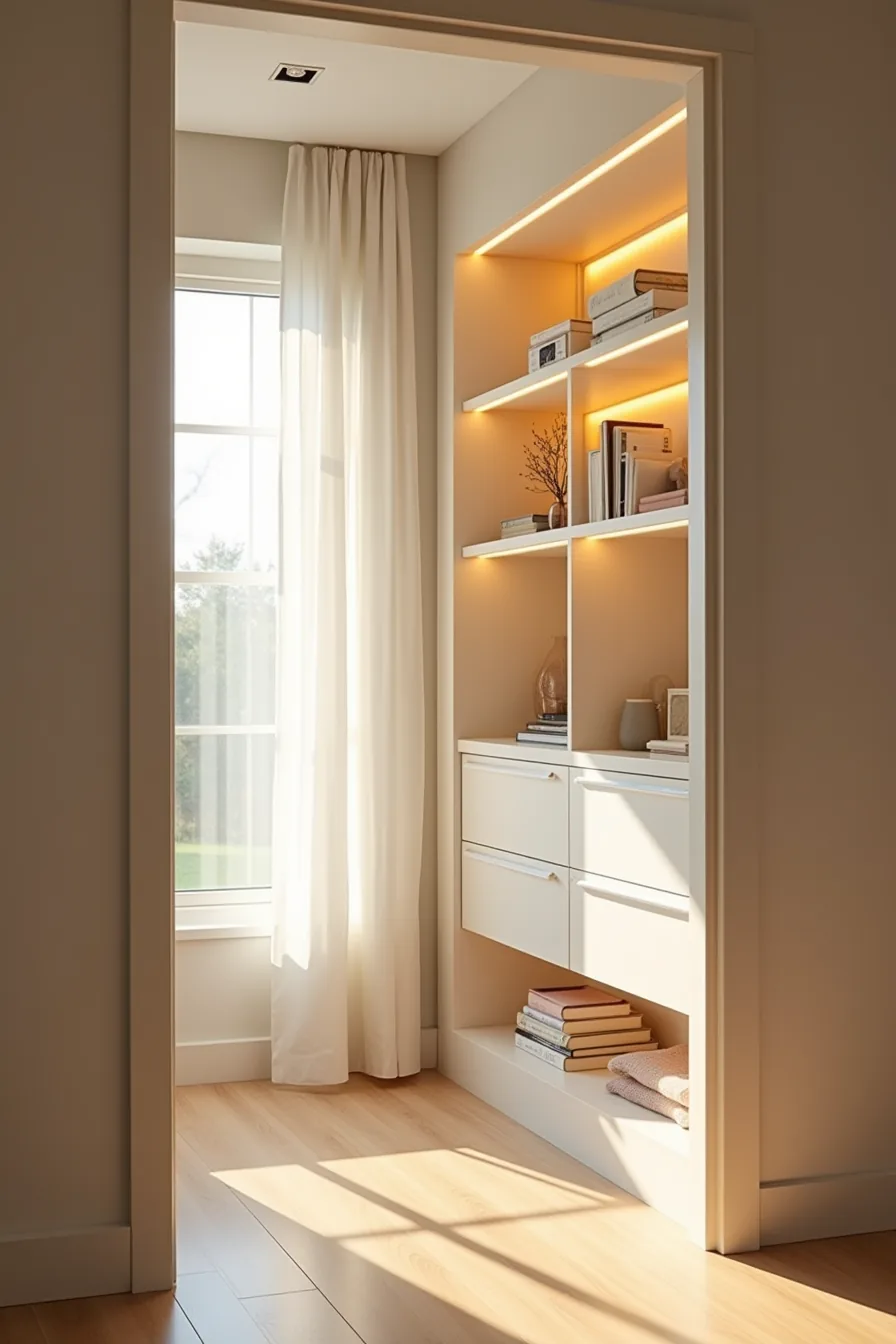
Deep closets fail when the rear 12–18 inches fall into shadow, turning organized bins into guessing games. Three LED strip lights solve this: one mounted under the upper rod, one along the mid-shelf edge, and one at the base of the back wall. This triple placement eliminates the silhouette effect where your own body blocks the single overhead fixture, keeping every hanging shirt and shelf bin face evenly lit.
The back-wall strip matters most, it illuminates the floor and lower shelves where dark corners hide dropped items and mislabeled bins. Budget route: plug-in adhesive strips cost $15–$30 per 16-foot roll and install in under an hour with no wiring. Hardwired fixtures run $150–$400 with electrician labor but give you a wall switch and no visible cords.
Battery-operated puck lights work for renters but require monthly recharging on a 6–8 hour cycle. Color temperature around 3000K reads warm without yellowing fabric tones, and strips rated IP20 or higher handle the occasional humidity from adjacent bathrooms. A motion sensor at the doorway adds $20–$40 and prevents the habit of leaving lights burning all day.
Common Pitfalls and How to Avoid Them
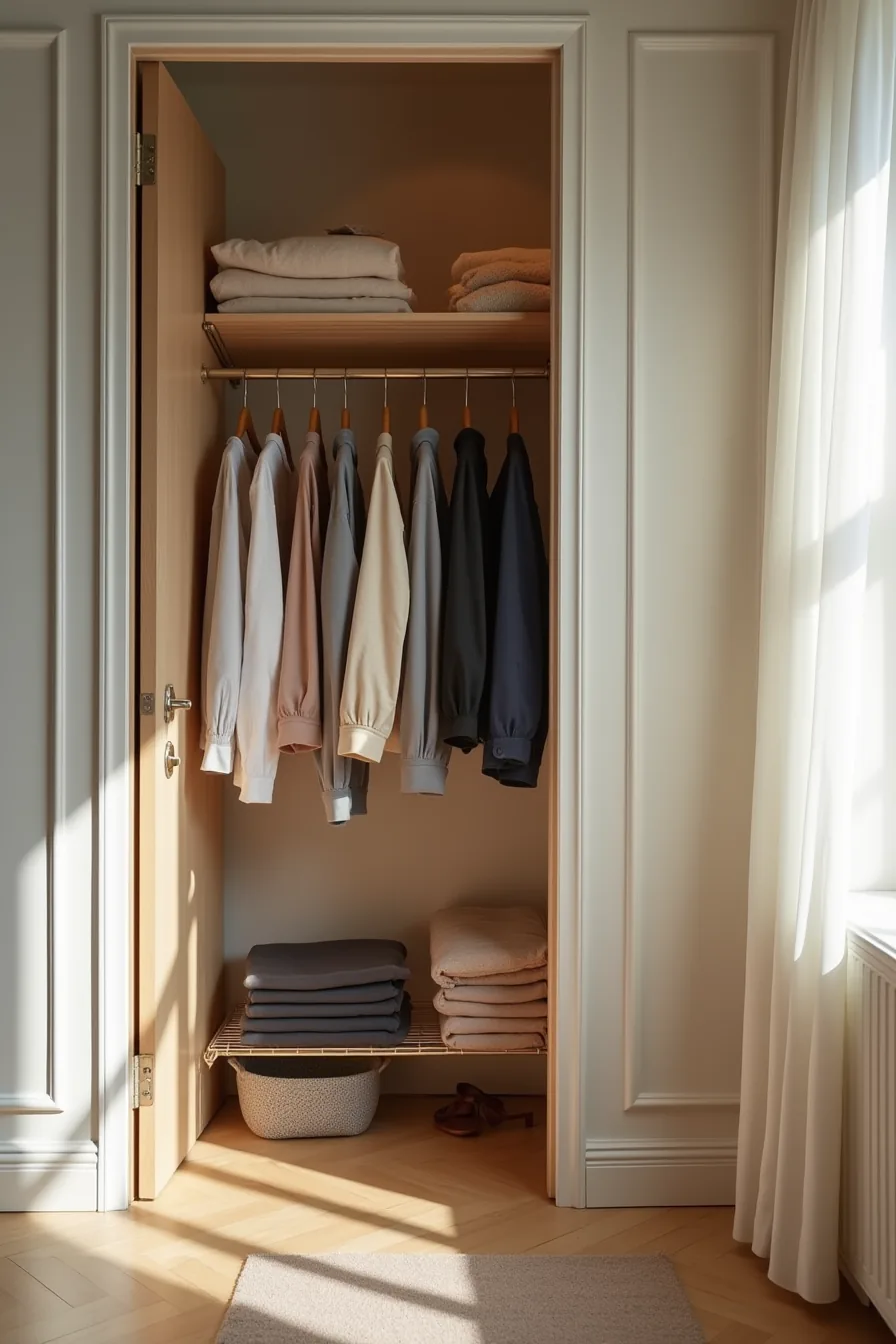
Most deep closets fail from a single overstuffed rod. When you double garments up on one bar, the rear items compress against the back wall, creasing fabrics and making the lower half unreachable. You end up with bunched garments, a dark back wall, and floor clutter piled where you drop things out of frustration, a setup that blocks airflow and invites musty odors.
The fix: split hanging space into two rods (upper at 72–78 inches, lower at 36–42 inches) so every item hangs without touching.
A rod positioned too high wastes the critical zone between knee and shoulder height. That dead band is prime real estate for pull-out drawers or stacked bins. If you can’t reach the upper rod without a step stool, you’ve committed the most common mistake, designing for ceiling height instead of your actual reach.
Measure your own arm span before installing anything. For renters, avoid adhesive hooks that peel drywall paint; use tension rods or freestanding wire units that leave no trace. Over-stuffing any shelf system defeats the purpose, leave 10–15 percent of each shelf empty for air movement and easy retrieval.
The best deep closet organization ideas mistakes to avoid all share one trait: they treat the space as a display wall rather than a functional room.
Where to start
You don’t need to overhaul everything at once. Measure your closet’s depth first, anything over 24 inches qualifies as deep, and that measurement determines whether pull-out racks, double hanging rods, or freestanding shelving will fit without blocking access.
Pick the single pain point that annoys you most: shoes on the floor, folded stacks collapsing, or wasted ceiling height. Solve that one zone this weekend. Your next step: clear the floor, take three photos from different angles, and sketch a rough layout before buying a single storage unit.
Frequently Asked Questions
How deep is a typical closet, and does depth change which organization system works best?
Standard closets run 24–28 inches deep. Deeper closets, 30 inches or more, suit pull-out racks and double hanging rods. Shallower depths work best with single rods and slim shelving.
Can I install a second rod in a rental closet without damaging walls?
Yes, use tension rods or freestanding metal shelving units that lean against the wall. Both require zero drilling and remove cleanly. Avoid adhesive hooks for heavy loads, they can strip paint upon removal.
What’s the difference between custom closet systems and DIY shelving for deep spaces?
Custom systems are built to your exact depth, maximizing every inch, but cost significantly more and require professional installation. DIY shelving uses standard-width boards and brackets, works for most depths, and costs a fraction of the price.
How do I organize a deep closet if I have limited budget but want real results?
Start with two tension rods, one high, one low, to double hanging space for under $30. Add stackable wire shelves for folded items. Prioritize vertical space first; it delivers the biggest impact for the smallest investment.