Bedroom organization fails when you buy storage before you define what actually needs storing, so the first decision isn’t which bin to buy, but which of six distinct systems your room’s size, habits, and lease will tolerate. Each system below targets a different failure point: surface clutter, floor pileups, or inaccessible vertical space. You’ll see which one matches your square footage, your rental restrictions, and your tolerance for maintenance.
The right choice saves you time every morning; the wrong one costs you drawer space you can’t get back.
Key takeaways
- Start with zones, not products: map your bedroom into five functional areas (closet, under-bed, walls, dresser, bedside) before buying a single bin or shelf.
- Vertical closet zones boost capacity by 30-50% using tension rods and hanging organizers, and they cost under $50, perfect for renters since no drilling is required.
- Under-bed containers work best when you measure clearance first (most beds have 6-12 inches) and choose flat, wheeled bins for off-season items you access less than once a month.
- Drawer dividers paired with vertical folding cut dresser chaos by roughly half, but only if you limit each drawer to one category and commit to a 10-minute reset weekly.
Vertical Closet Zones: Maximizing Wall Space Without Renovation
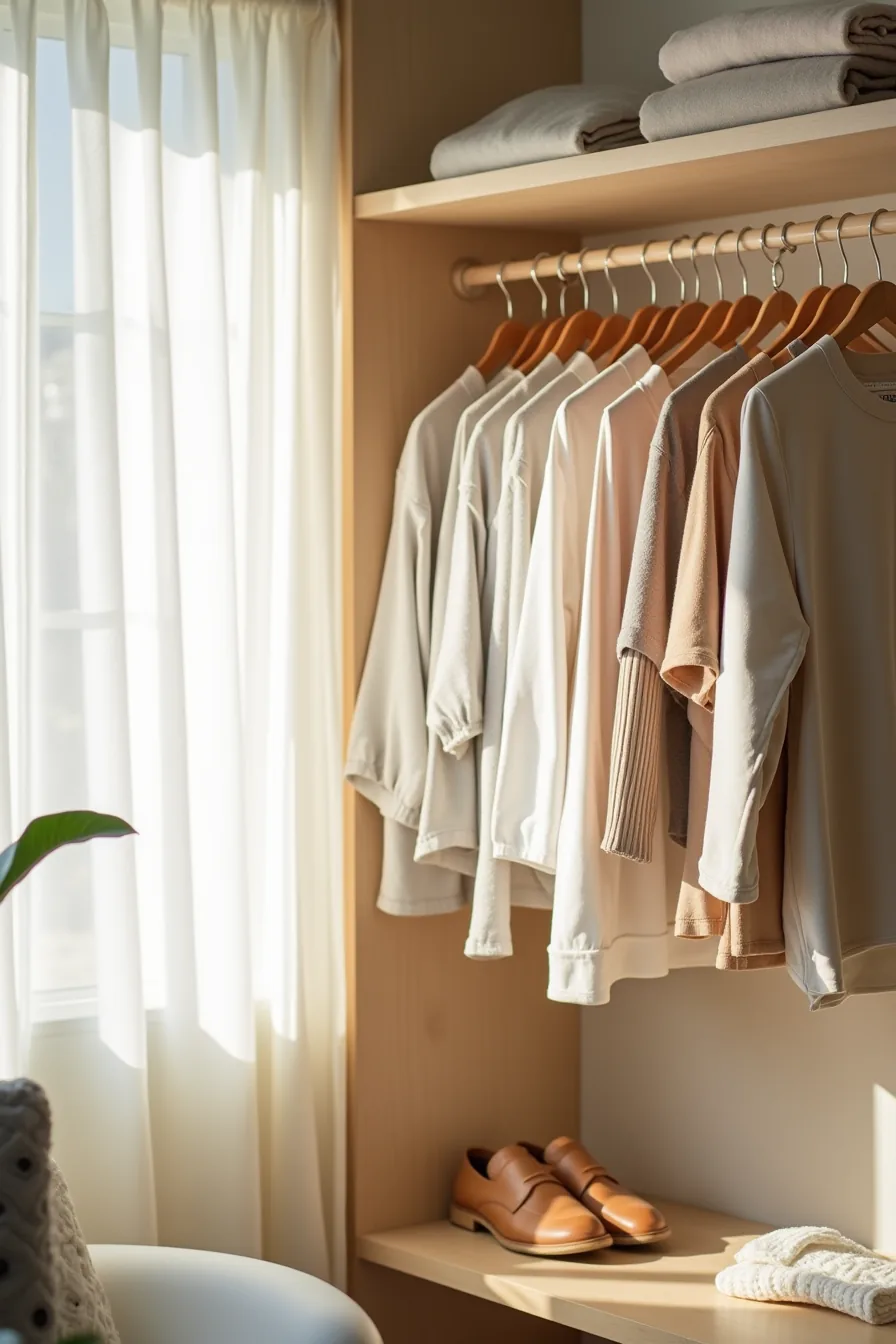
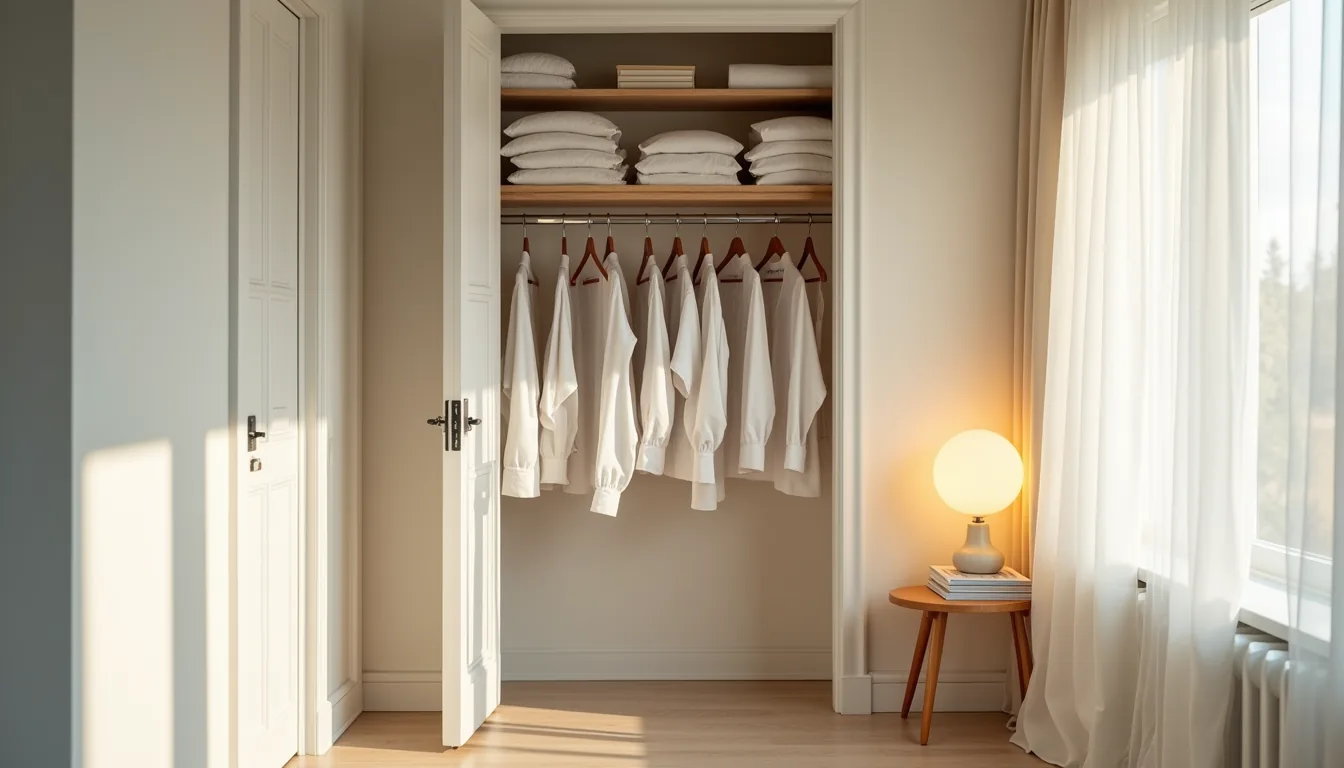
Practical Organization Ideas For The Home Bedroom planning tips often overlook the most accessible storage real estate: the vertical plane inside your closet. This setup uses two hanging rods at different heights to double usable space without touching the walls, making it ideal for renters and small bedrooms where floor space is non-negotiable.
Install the upper rod at chest height for tops and short jackets, the lower rod at waist height for bottoms and folded sweaters. Plastic shelf dividers with metal clips separate each category, preventing that inevitable slide-and-tumble when you pull out one item. You gain roughly 30-40 percent more hanging capacity compared to a single standard rod, and the entire system costs under $50.
This configuration suits wardrobes of 4-6 feet in width; any narrower and you sacrifice access. The trade-off: longer garments like dresses and coats need their own full-height section, so reserve one rod bay for them. To reproduce this, measure your existing rod length, buy a second rod that mounts to the existing hardware, and use clip-on dividers rather than adhesive ones, they hold heavier loads and leave no residue when you move out.
Under-Bed Storage Containers: Hidden Capacity for Off-Season Items
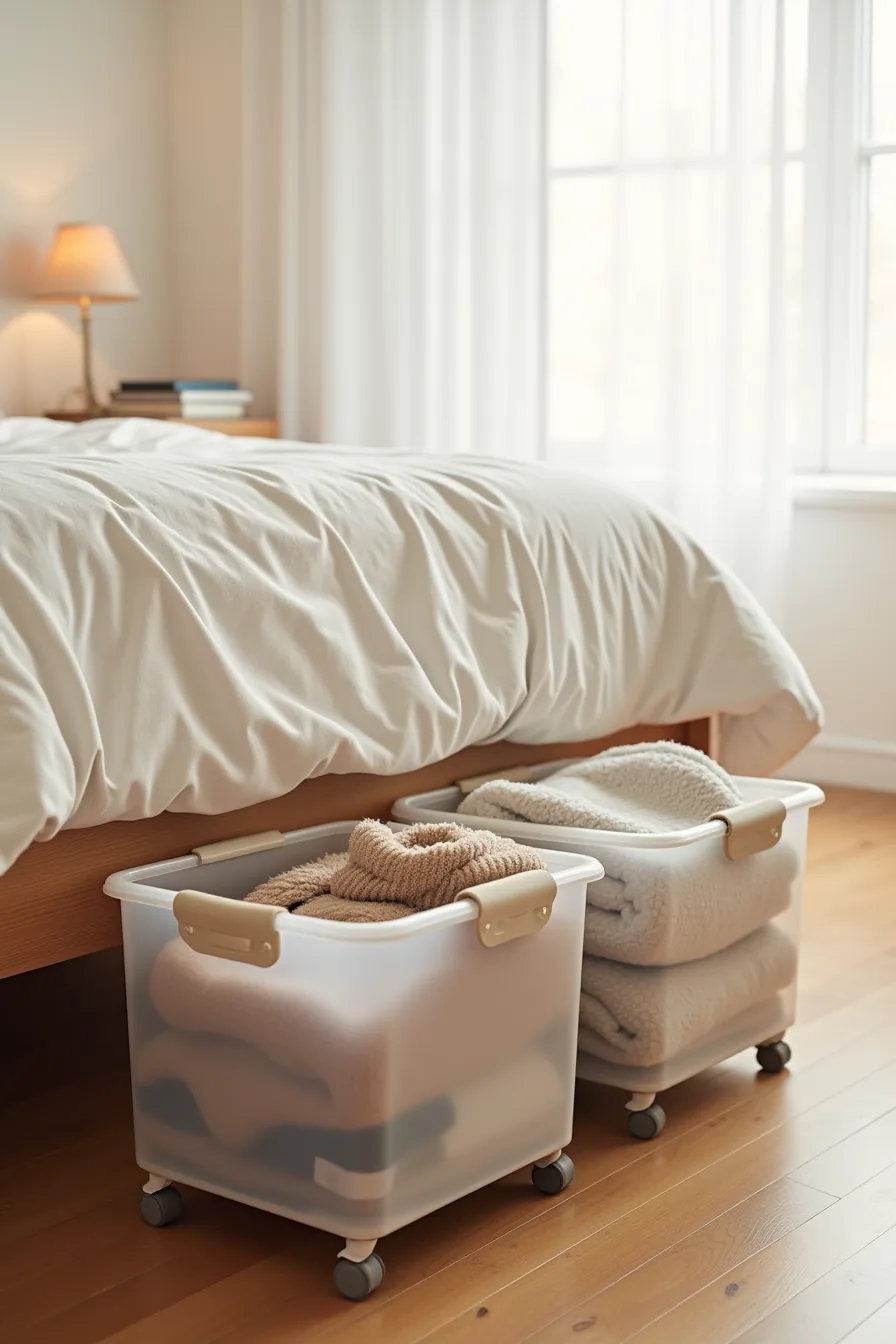
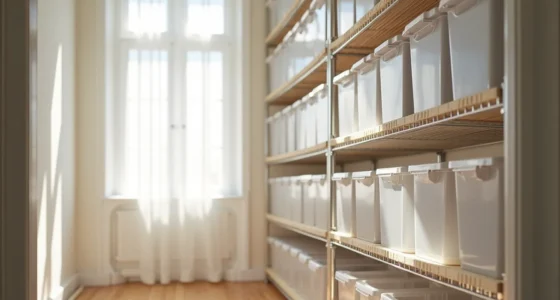
Those rolling plastic containers with handles you see tucked beneath the frame are the workhorse solution for off-season storage. Standard bed clearance runs 8–12 inches, so low-profile containers that slide fully underneath keep the floor visually clear while adding roughly 15–20 cubic feet of capacity across a queen bed. That space holds bulky winter coats, extra bedding, or out-of-season footwear without touching your closet.
Rigid containers with snap-lock lids outperform soft fabric bins here because they stack, resist crushing, and keep dust and moisture out when skirted or box-spring beds trap humidity. Organize by season first, then by frequency of use, place the container holding next-season items closest to the foot of the bed for easier access. Label each lid on the side, not the top, so you can read it while reaching from a kneeling position.
Expect to pay $8–$20 per container; the trade-off is that hard plastic cracks under heavy loads, so avoid overfilling past the lid line. For long-term maintenance, add silica gel packs and vacuum-seal soft items to prevent musty odors. This route suits renters and small bedrooms where vertical storage is scarce, and it requires no drilling or permanent fixtures, just measure your bed’s clearance before buying.
Wall-Mounted Shelving and Pegboards: Display and Access Combined
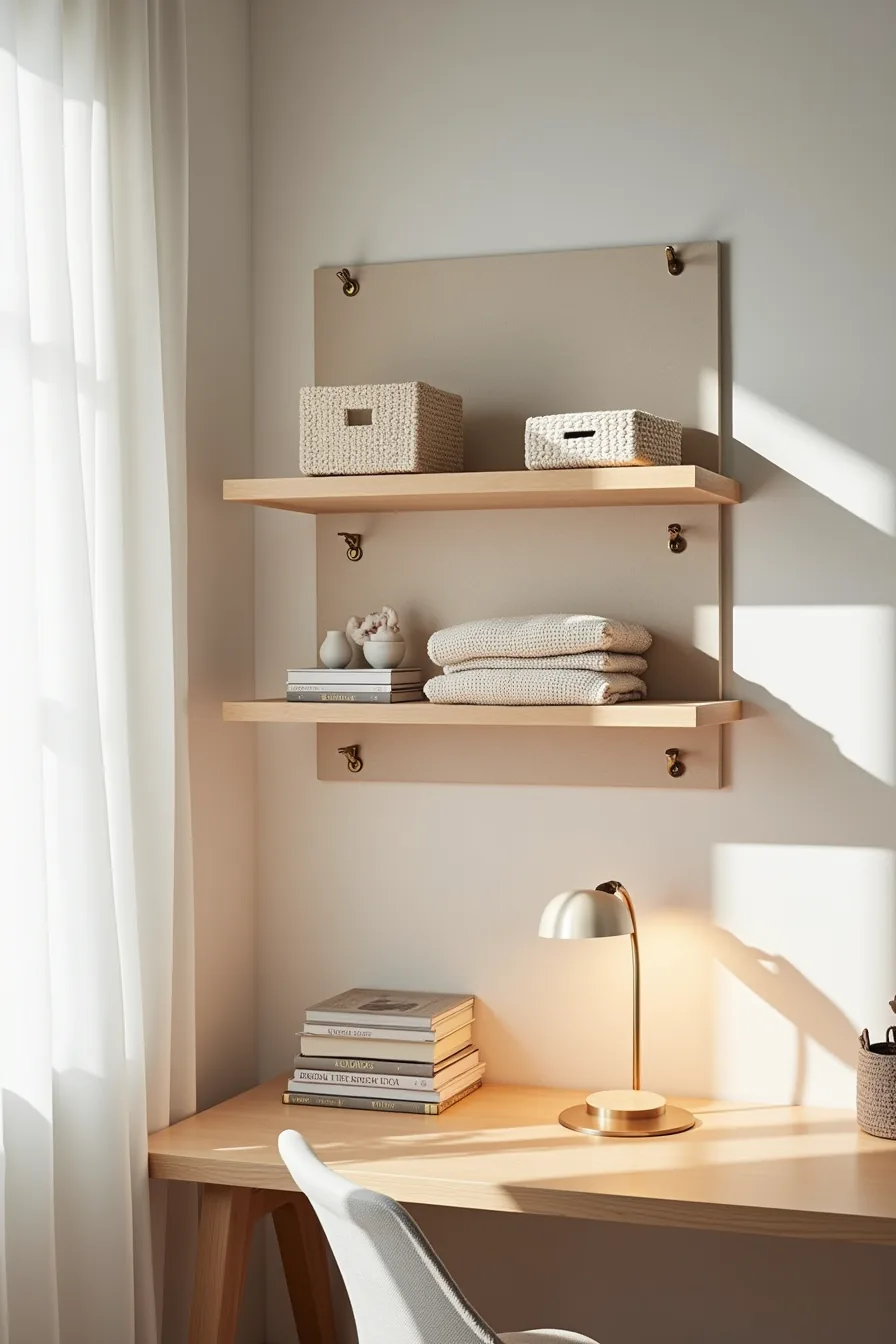
A pegboard wall above a desk or dresser transforms dead vertical space into a flexible grid. The setup that works best pairs a single 24–36 inch pegboard with three floating shelves mounted on metal pegs, which lets you adjust shelf height seasonally without drilling new holes. Metal pegs grip the board’s perforations securely, but they do shift if you bump them, check the fit every few months and tighten or replace loose hardware.
The strength of this system is its adaptability. Folded sweaters and denim stack flat on the shelves, while woven baskets catch smaller accessories like belts, scarves, and jewelry that would otherwise tangle in drawers. Keep the bottom shelf at eye level or lower so frequently used items stay within arm’s reach, and reserve the top row for decorative objects you rarely touch.
You can reproduce this look for $40–$100 in materials, making it the most budget-friendly vertical option here. It suits renters too, since most pegboards mount with two screws per board and leave only small holes to patch. Avoid positioning shelves directly above a chair or bed where items could fall on you, and distribute weight evenly, a single shelf holds roughly 10–15 pounds with standard pegs, so heavy books belong on the desk surface instead.
This approach works best in medium bedrooms where a desk or dresser has empty wall space above it, and it pairs naturally with under-bed containers when you need overflow storage for off-season pieces. For related small-space solutions, see the under-bed storage guide above.
Drawer Dividers and Vertical Folding: Reclaiming Dresser Real Estate
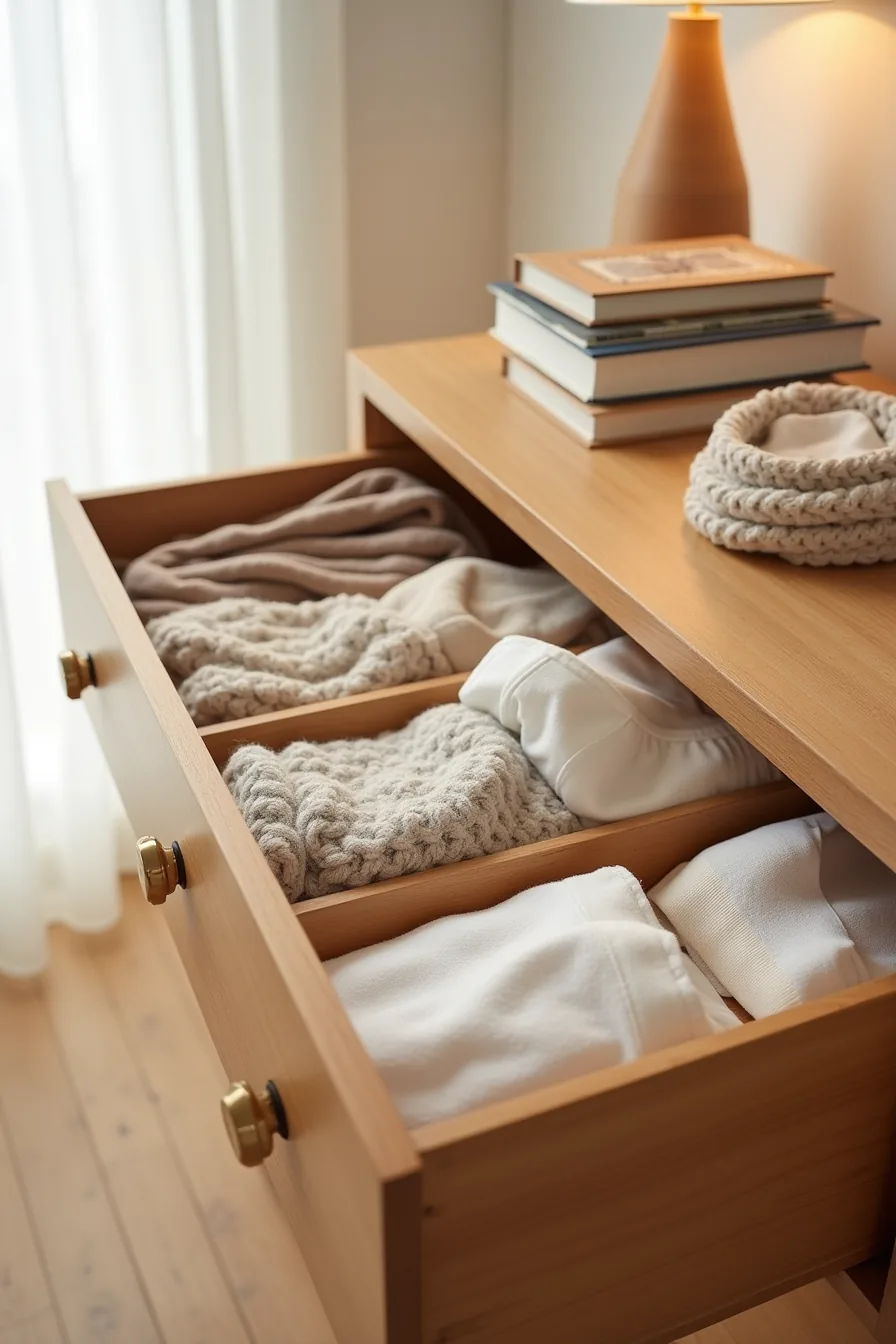
Wooden dividers that create four compartments transform a standard 12–15 inch deep dresser drawer from a jumbled pit into a picking station. The vertical folding method, rolling or stacking items on their sides, means you see every sock, undergarment, and scarf from above without lifting a single piece. Compartment widths of 4–6 inches suit most fold sizes; measure your drawer’s interior before buying drop-in dividers, since fixed-width sets rarely fit perfectly.
This is the lowest-cost route in your bedroom organization journey, and the budget vs. Splurge decision comes down to materials. Bamboo and pine dividers run $15–$30 for a set of four, while acrylic compression versions cost less but slide around on smooth surfaces. Custom-glued wooden inserts are the splurge option, lasting decades if you finish them with polyurethane.
You’ll need to refold after laundry loads that are 3–4 weeks apart, so budget fifteen extra minutes per wash cycle. The system works in any bedroom size, even a cramped large closet arrangement, and pairs well with the pegboard wall setup for accessories, since bulky scarves fold more neatly than they hang.
Built-In Wardrobes and Custom Cabinetry: Long-Term Investment Route
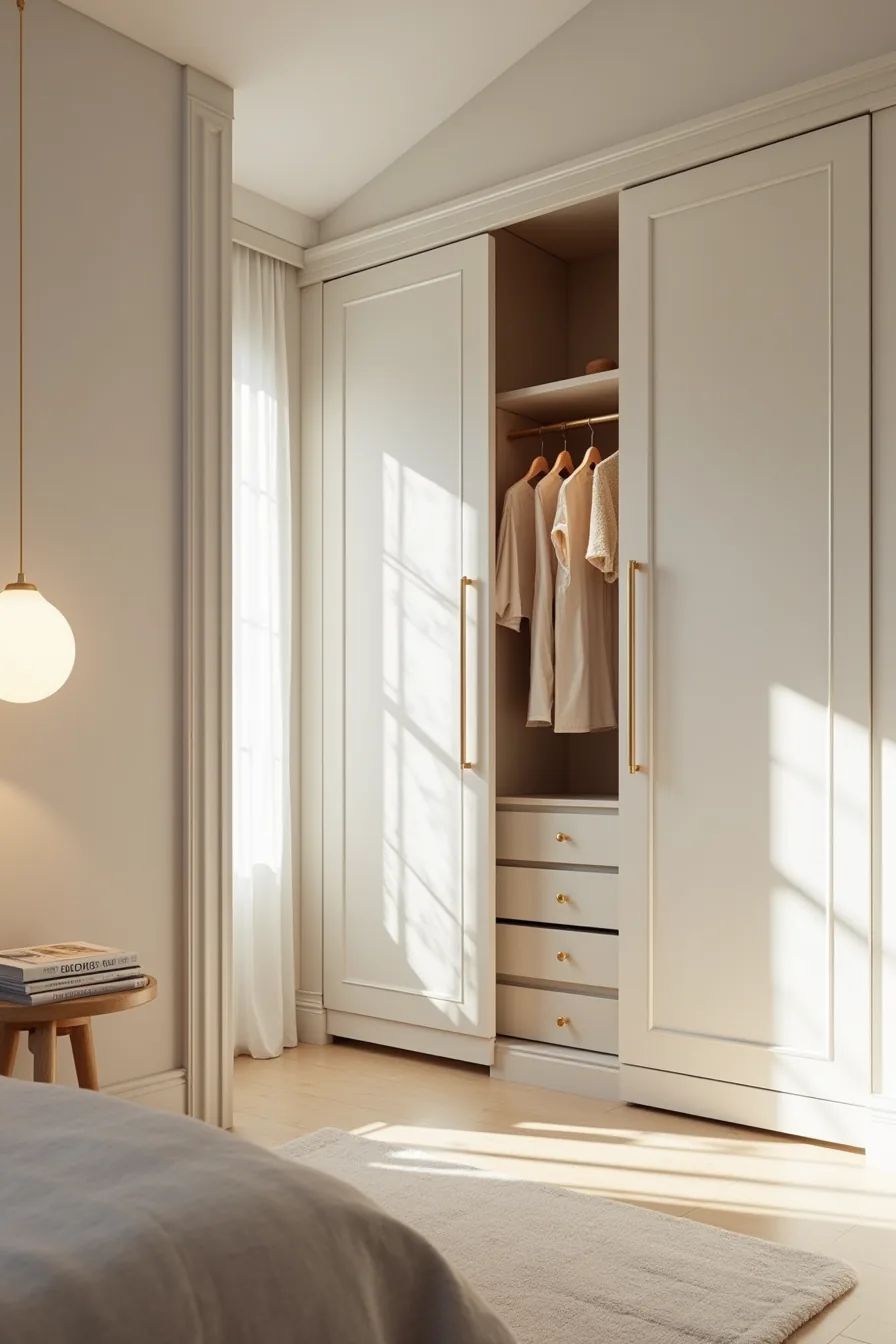
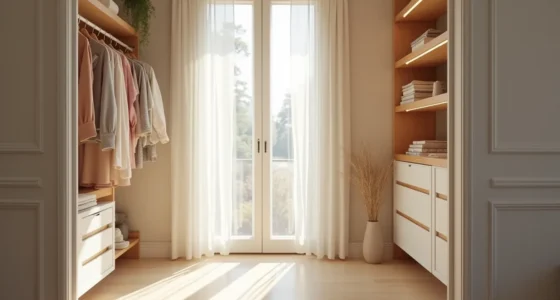
When your bedroom has sloped ceilings, angled walls, or an awkward alcove, off-the-shelf wardrobes waste more space than they save. A fitted system with adjustable shelves, multiple hanging rails, and pull-out drawers turns that dead zone into usable storage, with the cabinet top angled to match the roofline. Expect a six-to-ten-week timeline from measurement to installation, and a price range of roughly $150–$300 per linear foot for painted MDF or birch plywood construction.
That puts a typical 8-foot run at $1,200–$2,400 before hardware and installation labor.
This route suits homeowners who plan to stay put for seven or more years, or anyone whose layout makes freestanding furniture physically impossible. The key advantage is interior customization: you can specify a double-hang section for shirts, a full-height rail for long coats, and drawer stacks at exactly your hip height. The trade-off is permanence, you’re committing to that configuration, so measure your hanging inventory before finalizing shelf positions.
For a narrower bedroom, keep the run to one wall and use sliding doors instead of hinged ones to avoid blocking circulation space. Pair it with the vertical-folding drawer system from the previous section for a complete storage strategy.
Nightstand and Entryway Staging: Reducing Visual Clutter at Key Zones
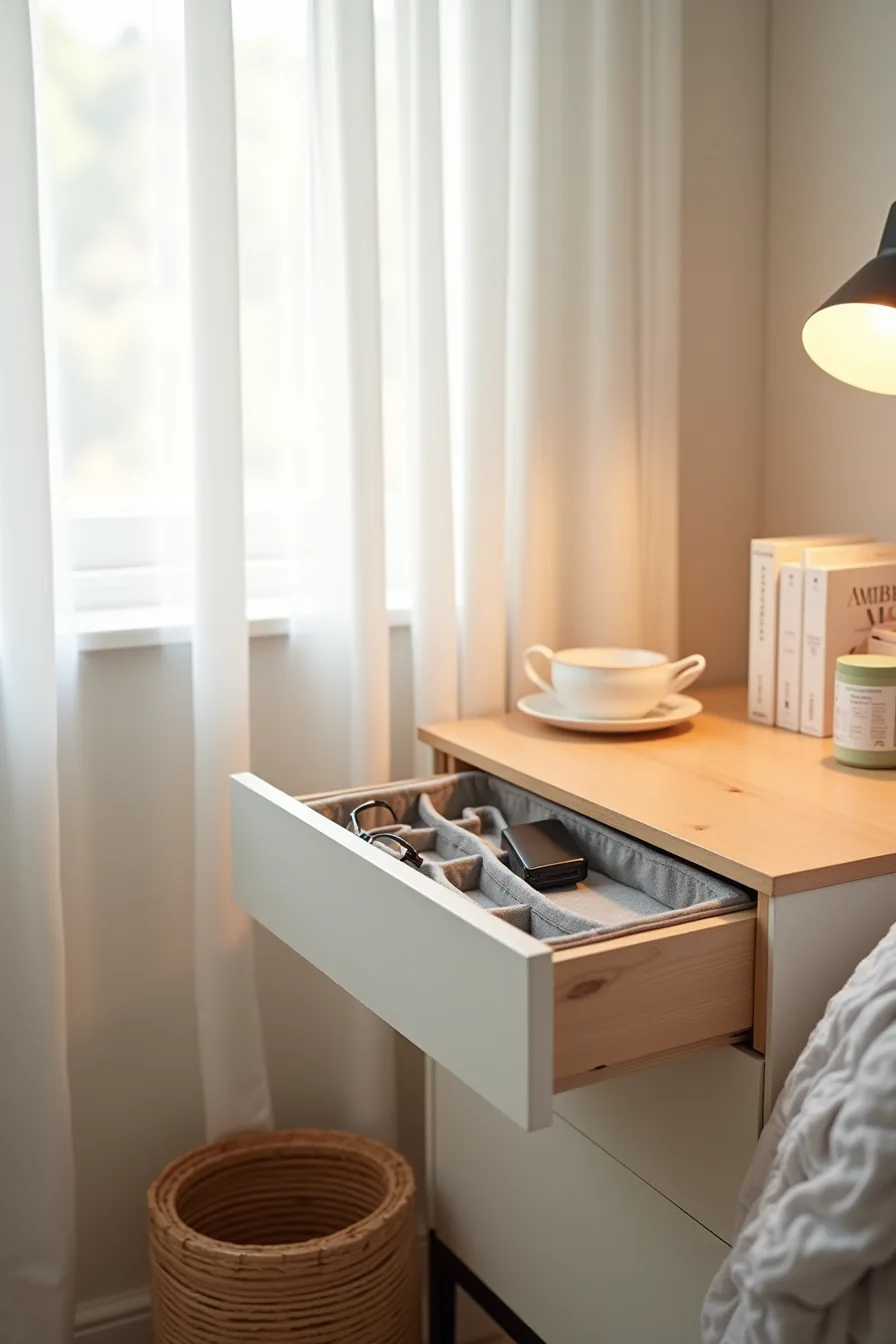
A nightstand with a fabric organizer tray inside the drawer, compartmentalized for eyeglasses and a phone charger, stops the surface from becoming a dumping ground. Keep only a ceramic dish for small jewelry and the reading lamp on top; that single tray is the difference between a surface that works and one that collects. A woven basket tucked beside the nightstand doubles as a catch-all for the evening’s book or a light sweater, keeping the floor line clear.
This staging works best for medium to large bedrooms where the bed sits opposite a doorway or main traffic path. The goal is to create an “entryway” zone, whether that’s the actual door or the foot of the bed, where every item has a designated spot. For small rooms, use a narrow basket (under 12 inches wide) to avoid eating into walkway clearance.
Maintenance is weekly: empty the basket and reset the tray, which takes two minutes, preventing the system from silently becoming a clutter magnet.
Where to start
You don’t need to reorganize the entire bedroom in one weekend. Pick the single zone causing the most daily friction, likely your nightstand or closet floor, and apply one idea from this list to that spot only.
Measure the area first. A 24-inch-deep nightstand can’t hold a 30-inch-deep drawer unit. Match materials to your existing furniture: matte black metal suits industrial beds, while rattan works with warm wood tones.
Commit to one 15-minute maintenance routine per week. Empty surfaces, return stray items to their designated homes, and wipe down the organizing pieces themselves.
Your next step: clear your dresser top completely, photograph it, and choose one system that fits the empty footprint.
Frequently Asked Questions
How do I organize a small bedroom with limited closet space?
Use vertical space with a freestanding wardrobe or shelving unit. Add under-bed storage bins for off-season items. Keep only daily essentials in the closet, and rotate seasonal pieces to a storage ottoman or bench.
What is the best way to store seasonal clothing without taking up bedroom space?
Store off-season clothing in vacuum-sealed bags under the bed or in a hallway closet. Alternatively, use a rolling garment rack in a spare room or garage. This keeps your bedroom closet for current-season items only.
Can renters use organization ideas for the home bedroom without damaging walls?
Yes. Use freestanding shelving, tension rods, and over-door hooks instead of mounted fixtures. Adhesive strips work for lightweight items, but test them first.
Avoid drilling by choosing furniture that stands alone or uses door gaps.
How often should I reorganize my bedroom storage system?
Reorganize seasonally, every three to four months, when swapping clothing and bedding. Do a quick monthly declutter of surfaces and drawers. A full system overhaul is only needed when your storage no longer fits your daily routines or items.