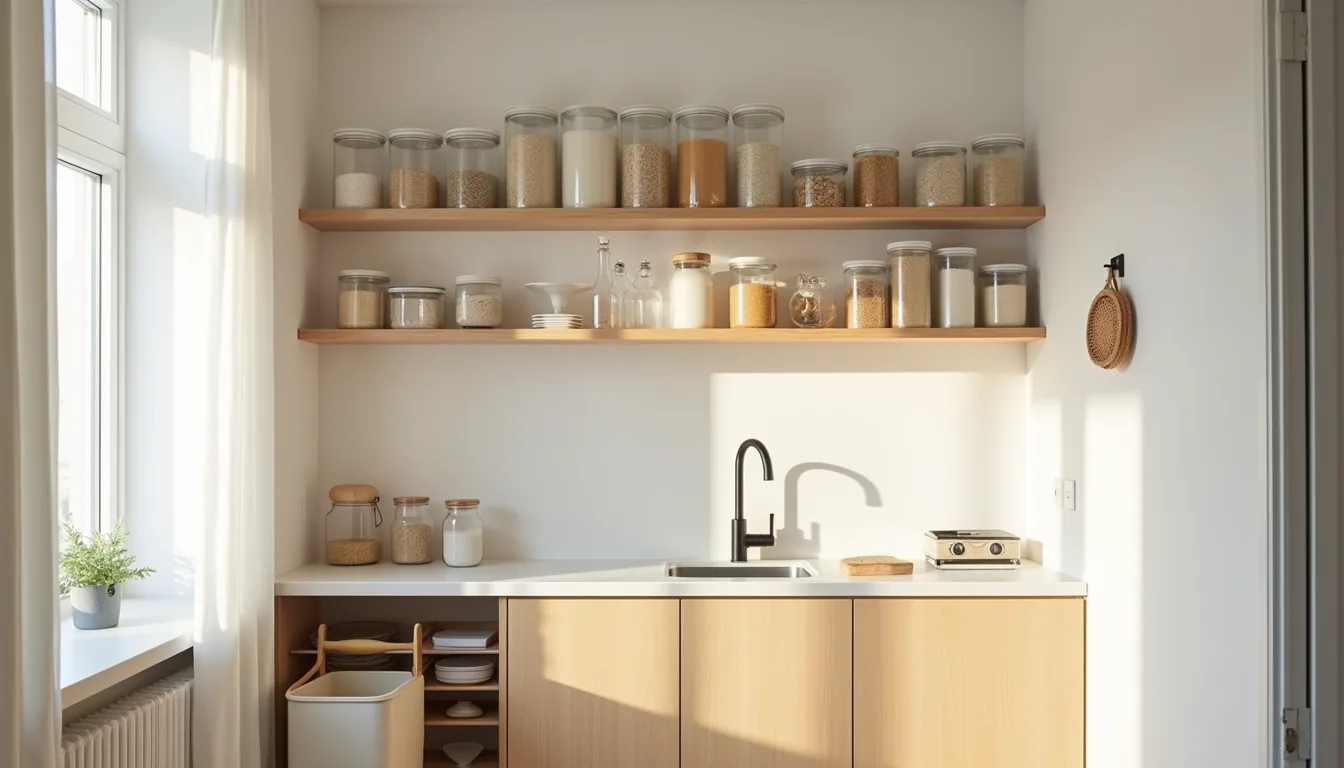

Apartment pantry organization ideas come down to one decision: how much permanence and budget you can commit to your available square footage, whether that’s a 4-foot-wide closet, a reach-in niche, or a full wall of shelving. Your choice between renter-friendly tension rods, modular freestanding frames, or a custom built-in will determine not just the look, but how much you can store per linear foot and how easily you can reverse it when you move. Below, you’ll find six distinct routes, each with its own trade-offs in cost, installation time, and capacity, so you can match a system to your lease, your ceiling height, and your actual grocery habits.
Key takeaways
- Over-the-door racks mount without drilling and suit renters, but verify your door’s weight limit, most hold 25–50 pounds before sagging.
- Tiered risers double vertical storage in shallow cabinets, yet leave 2–3 inches of clearance above cans so lids open freely.
- Clear containers cut food waste by making stock visible, but match lids precisely or you’ll juggle mismatched sets within a month.
- Rolling carts offer 20–30 inches of mobile shelving for narrow gaps, though locking casters are non-negotiable to prevent mid-reach drift.
Over-the-Door Racks and Hooks for Renters
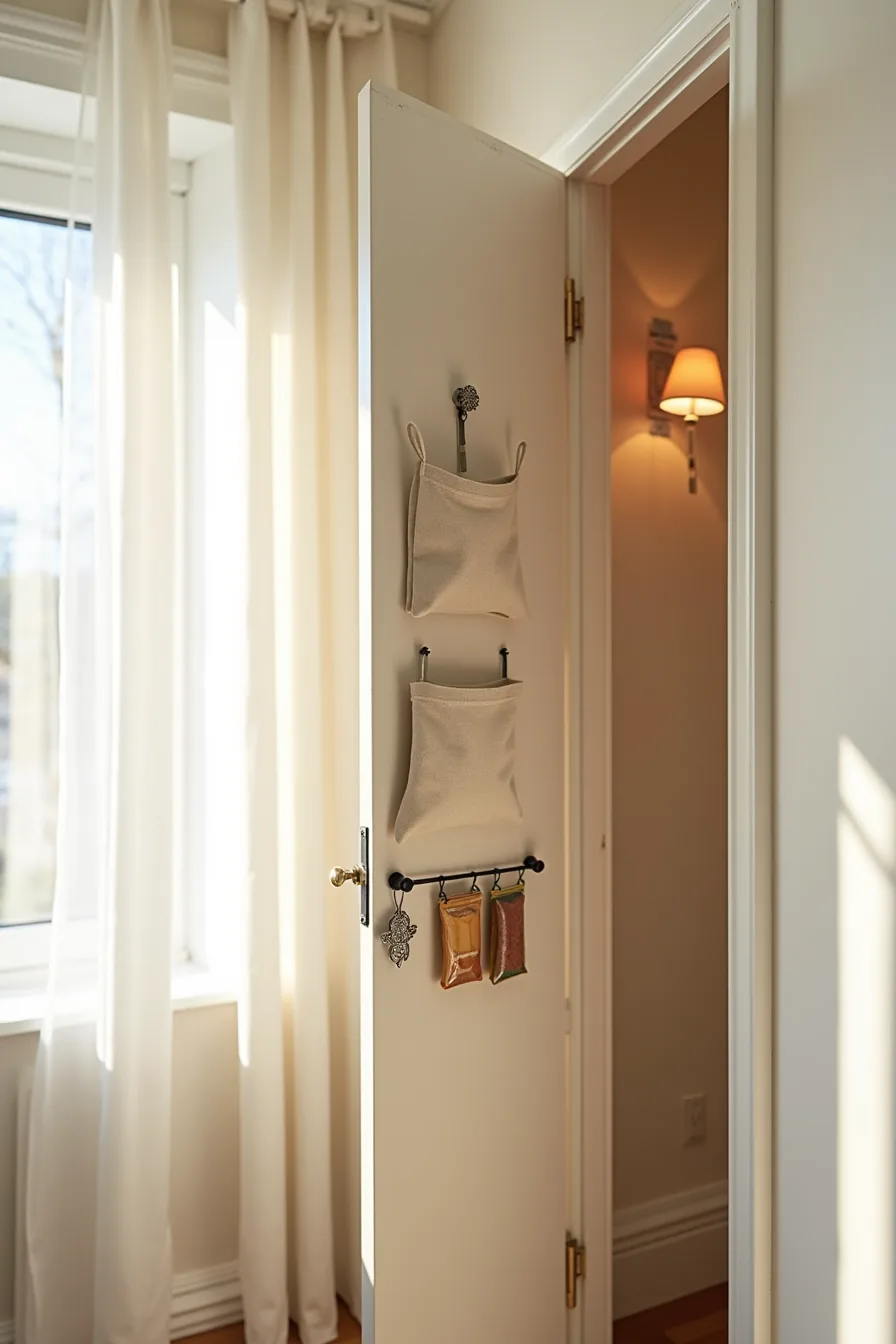
An over-the-door setup converts the back of a standard closet door into vertical storage without a single screw or nail, making it the most landlord-safe option in the Apartment Pantry Organization Ideas playbook. Adhesive hooks rated for 5–10 pounds hold canvas pouches for snacks, root vegetables, or foil and wrap rolls; a tension rod wedged between the door frame and the hook base suspends spice packets in clear sleeves so you can identify blends at a glance. You lose roughly 2–3 inches of door clearance when the door swings open, so this suits galley kitchens or closets where the door can rest at 45 degrees without blocking the path to the stove or refrigerator.
The canvas pouches collapse flat when empty, and the tension rod takes under two minutes to remove, letting you restore the door to its original condition before move-out. Adhesive hooks require a clean, dust-free surface and generally hold best on painted metal or smooth wood; textured or faux-wood doors may need a hook with a larger adhesive pad. This route works best for renters with shallow closets (under 18 inches deep) who need immediate access to frequently used items, but it won’t support canned goods in bulk.
Tiered Shelving and Risers for Small Spaces
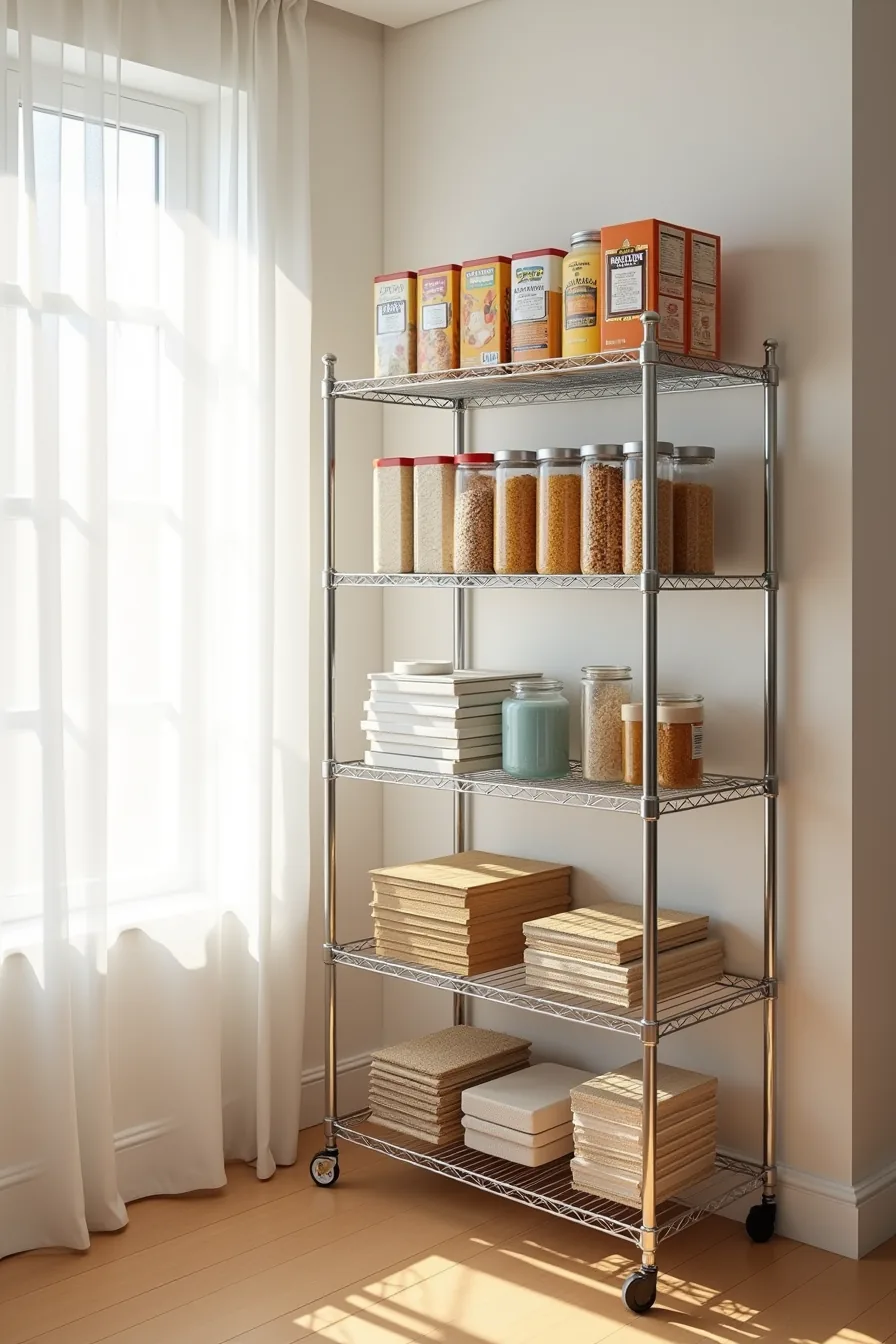
When your pantry closet runs under 24 inches deep, freestanding wire shelving becomes your primary vertical weapon. A unit around 18–24 inches deep and 60–72 inches tall fits most apartment niches and holds roughly 30–50 pounds per shelf when properly anchored. The four-tier metal wire setup against your kitchen wall works because each shelf steps back slightly, letting you see every can and box without rearranging the row in front.
Adding risers to the middle tiers creates two distinct levels: stacked containers and canned goods sit behind, while shorter items like spice jars or snack bags claim the front edge. The top tier keeps cereal boxes upright so they don’t crush lighter items below, and the bottom tier absorbs bulky purchases like paper towel rolls or large bags of flour. Wire construction matters over solid wood, it improves airflow around perishables and keeps dust from settling on hidden surfaces.
Measure your ceiling height before purchasing; most units cap out around 72 inches, but you can gain one extra tier by choosing a 60-inch model and setting a riser on its top shelf. Assembly takes 10–15 minutes with no tools beyond a rubber mallet, and the unit disassembles flat for your next move. This setup suits renters with narrow galley kitchens who need to maximize a shallow closet, but it requires wall anchoring in homes with children or seismic activity, free-standing units tip forward when top shelves are overloaded.
Clear Containers and Labeling Systems

Transparent storage works because it converts your pantry into a visual inventory, you spot the half-empty flour bag at a glance instead of rebuying it. The six-rectangle setup with pasta, rice, flour, sugar, and cereal in separate containers suits households that cook from scratch weekly; the varying heights let you dedicate tall bins to cereal boxes and short ones to sugar without wasting vertical space.
Container sizing follows your consumption rate: buy 4–6 quart bins for staples you use monthly, and 1–2 quart sizes for spices or baking powder you replace seasonally. Masking tape labels hold up for 2–3 months of regular handling; upgrade to a label maker with permanent adhesive if you store oily items like nuts that degrade paper over time. Wash containers every 4–6 weeks, even “airtight” lids trap moisture that accelerates clumping in rice and flour.
This approach suits renters because the bins move freely between shelves, but it requires a weekly 5-minute tidy to keep the system honest. For practical apartment pantry organization ideas, planning tips like grouping bins by meal type instead of alphabetically cut daily retrieval time by half.
Rolling Carts and Mobile Pantry Units
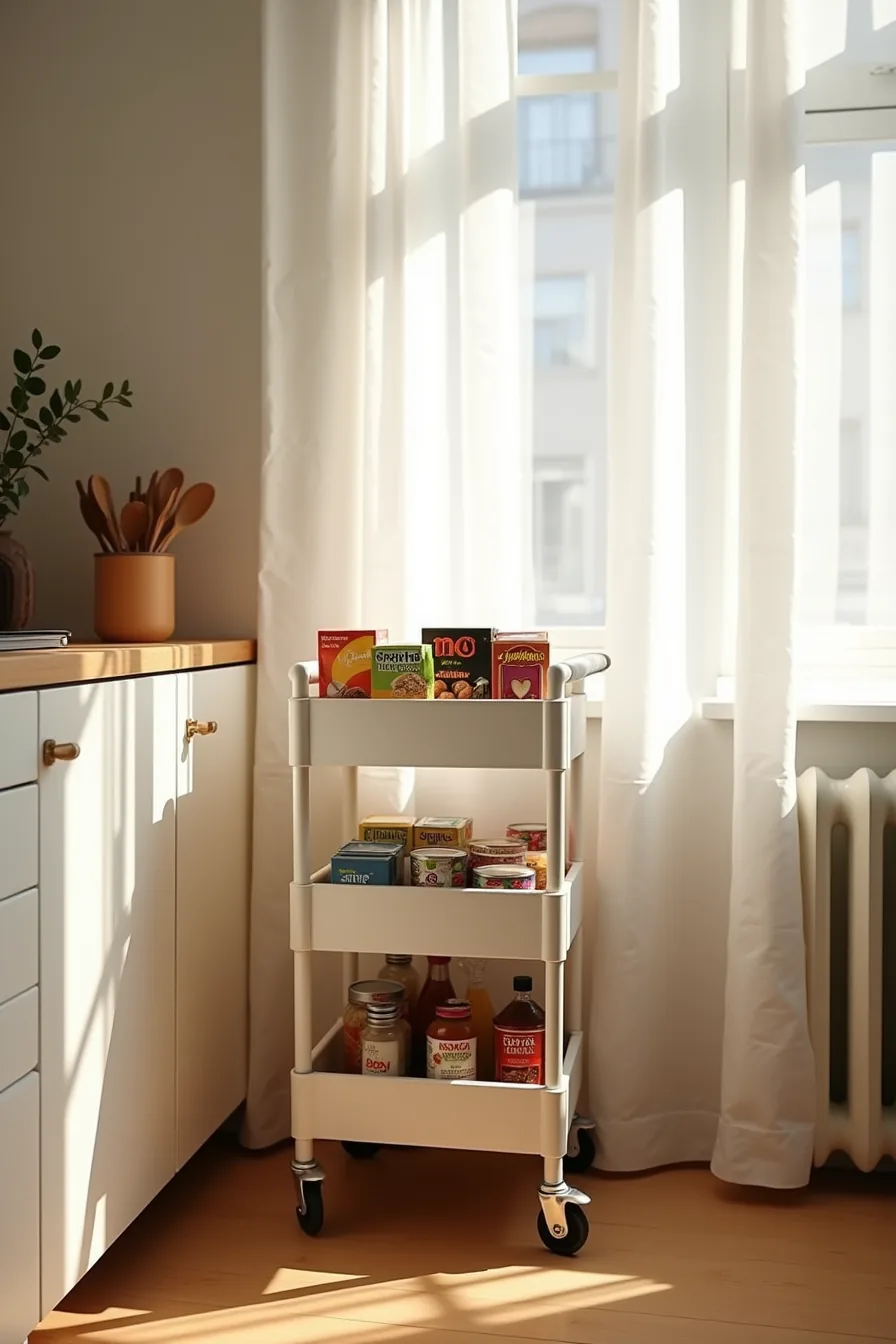
A three-tier rolling cart turns an unused kitchen corner into a pantry that follows you. The setup in view, snack boxes on top, canned goods in the middle, oils and vinegar bottles on the bottom, works because weight distribution matches the cart’s stability: heaviest items stay low, daily grabs stay at waist height. Each tier typically holds 20–40 pounds, and the full cart needs about 18 by 24 inches of floor space.
Locking wheels are non-negotiable in an apartment; engage all four locks before loading or unloading, or the cart drifts when you pull a heavy jar. Look for wheels with a 360-degree swivel for tight corners, and expect rubber casters to protect laminate floors better than hard plastic. For anchoring, secure the cart to the wall with a furniture strap rated for 50+ pounds if you’ve kids or live in a seismic zone, most hardware stores carry kits under $15.
This route suits renters who change layouts often, since the cart moves to a hallway, balcony, or closet when you rearrange, and costs $40–120 for a quality unit. Wipe the tiers monthly to catch crumbs that attract pests, and check the wheel screws for loosening every few months of daily rolling.
For more apartment pantry organization ideas suited to flexible layouts, pairing this cart with zone-based storage in your main cabinets prevents duplicate purchasing between the two systems.
Modular Cabinet Systems for Long-Term Residents
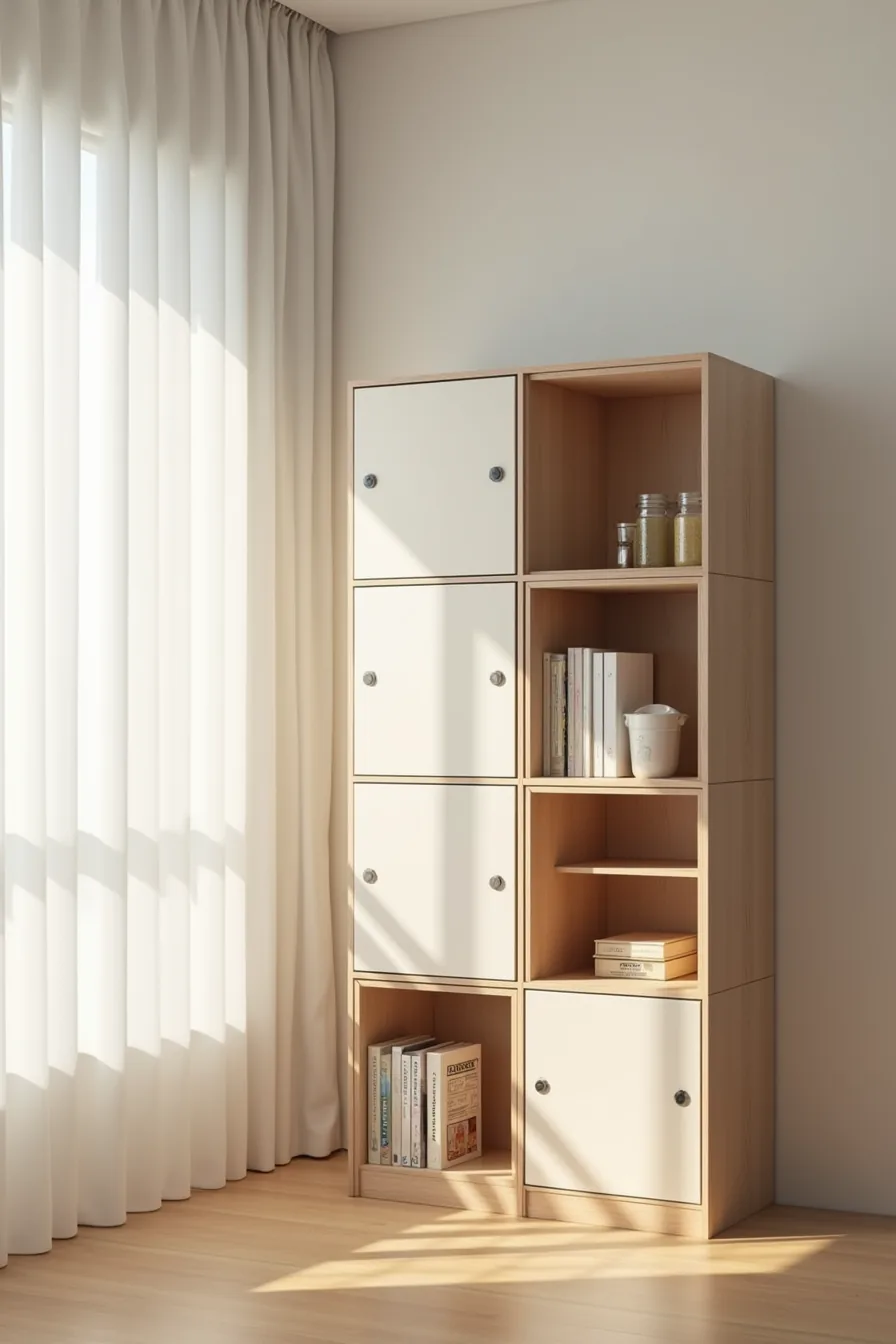
A freestanding modular cabinet system gives you built-in looks without a renovation. The unit in view stacks four separate boxes against your kitchen wall, with sliding doors on the top two and open shelving on the bottom pair. This split matters: closed upper compartments hide infrequently used appliances and bulk paper goods, while the open lower shelves keep daily cooking staples, packaged grains, pasta boxes, storage containers, within a direct line of sight at waist level.
Expect to invest $200–600 depending on box count and material quality, with assembly taking 1–3 hours using only a screwdriver. Solid wood or plywood boxes resist sagging better than particleboard, which warps within a year under heavy can loads. Most systems use cam locks, so you can disassemble and reassemble them in a new apartment without damage, label each box’s hardware bag before you move.
Anchor the stack to the wall with two brackets rated for 75+ pounds, since a fully loaded column can exceed 150 pounds and tip forward during an earthquake or if a child climbs it.
This route suits renters who plan to stay 2+ years but want their deposit back. Wipe sliding-door tracks monthly with a dry cloth; grease them with silicone spray twice a year to keep the panels gliding. For budget vs. Splurge Apartment Pantry Organization Ideas, this sits mid-range, pricier than a rolling cart, cheaper than custom shelving, and reconfigurable when your storage needs shift.
Zone-Based Organization by Food Category
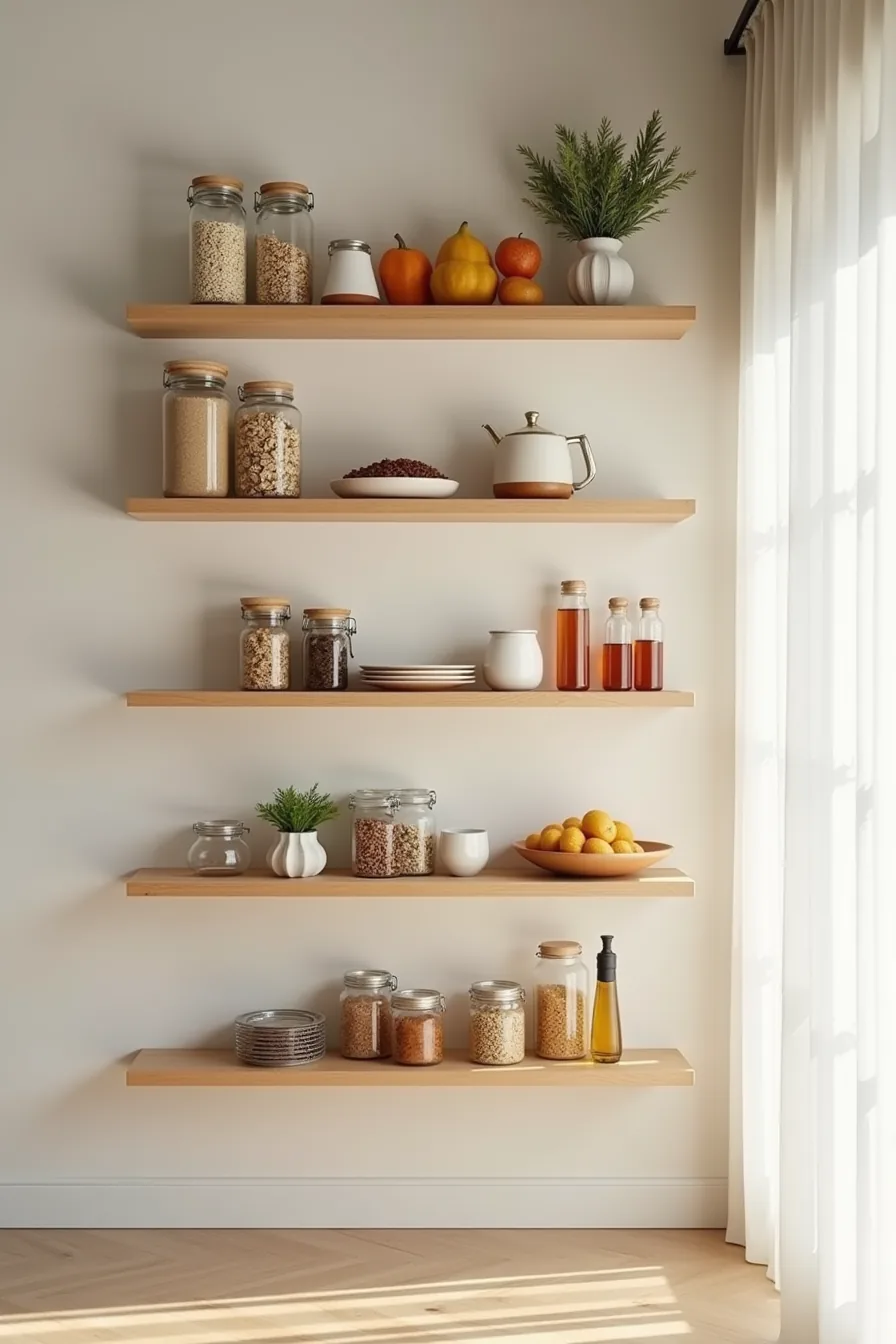
Zone-based organization assigns each shelf a single food family, and the six-shelf open unit opposite your kitchen wall executes this perfectly. From top to bottom: breakfast items like oats and cereal, then baking supplies, then canned vegetables and beans, with snacks and oils anchoring the lower reaches. The logic follows both frequency and weight, you reach for cereal daily but cake flour weekly, and heavy cans belong low to prevent shelf bowing.
This system suits homes with at least 3 linear feet of wall space and a minimum 72-inch ceiling height for the full six-shelf stack. Small apartments in galley kitchens can compress it to four zones by merging baking into breakfast and pairing snacks with oils; large pantries can expand to eight shelves by splitting canned goods into vegetables versus beans and legumes. The critical rule: store oils below eye level to minimize light exposure that accelerates rancidity, and keep snacks at waist height so their rotation stays visible before expiry.
Clear glass jars for oats and cereal make zone boundaries obvious at a glance, saving you 10–15 seconds per retrieval versus hunting through opaque packaging.
Where to Start
Measure your pantry’s usable shelf depth and height before buying anything, most apartment pantries run 12–16 inches deep, which rules out standard 18-inch shelving units. Then, empty one shelf, not the whole closet, and sort items by frequency of use.
Your first purchase should be a single set of matching clear bins for that one shelf. See if the system survives a week of real cooking before scaling it to the rest of the space. If it works, replicate; if not, adjust before spending more.
Frequently Asked Questions
Can you organize a pantry in an apartment without making holes in the walls?
Yes. Use over-door racks, freestanding shelving units, or tension rods between walls. Adhesive hooks work on smooth surfaces but may peel paint.
Choose damage-free options if you rent.
What is the best container size for storing dry goods in a small apartment pantry?
For staples like rice and pasta, use 1-2 quart containers. For snacks and smaller items, 0.5-1 quart works best. Avoid oversized bins that waste vertical space and make items hard to reach.
How do you organize a pantry when you don’t have a dedicated pantry closet?
Convert a hall closet, under-sink cabinet, or a rolling cart. Add stackable shelves or clear bins to maximize depth. Keep frequently used items at eye level and store overflow in labeled baskets.
What apartment pantry organization mistakes waste the most space?
Leaving empty vertical gaps, using mismatched containers, and storing bulky packaging. Also, placing rarely used items at front. Measure your shelves first and group by frequency of use to reclaim space.