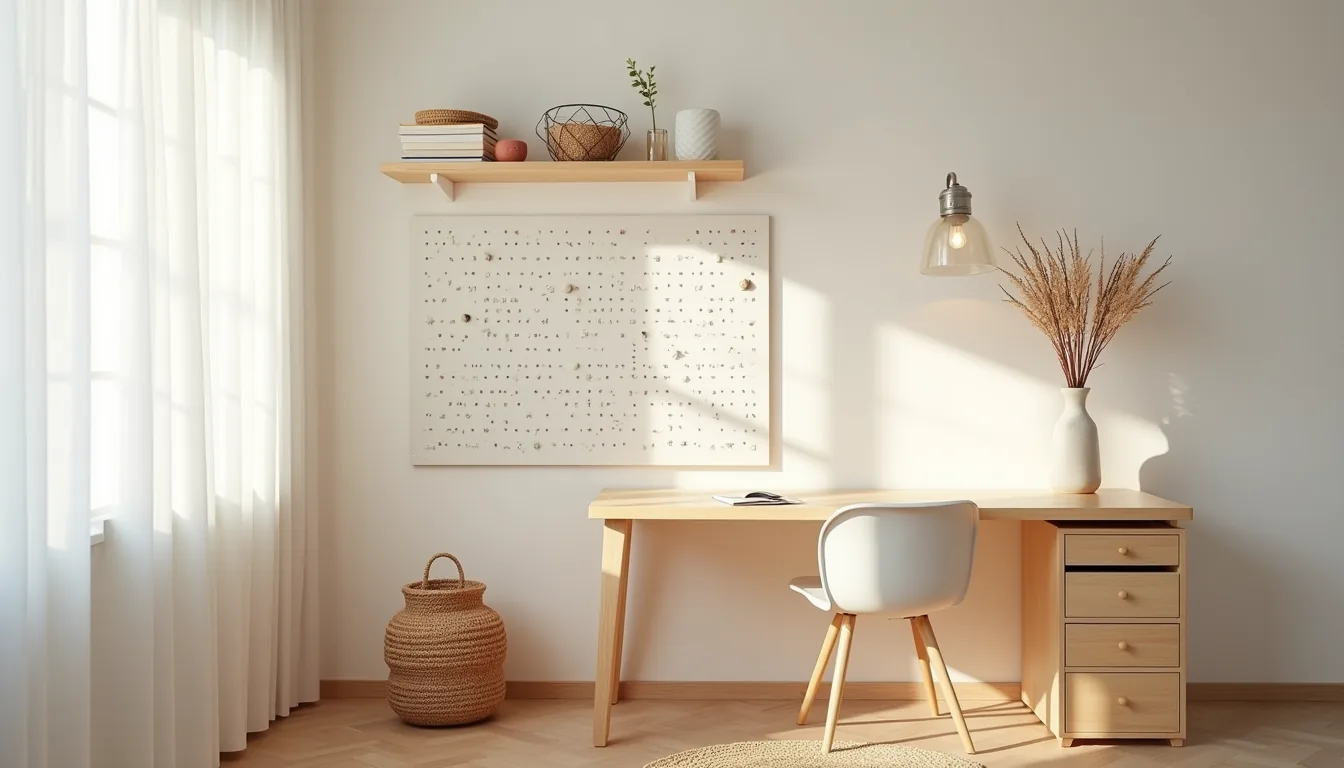

The clutter in a small home isn’t a space problem, it’s a placement problem, and solving it starts with choosing organization methods that match your layout, budget, and lease agreement. You don’t need to shrink your belongings; you need to reposition them with intent. The six strategies ahead range from a $15 tension-rod fix to a permanent built-in upgrade, each paired with the exact room, user type, and maintenance load it suits.
Pick the one that aligns with your walls, your habits, and your landlord’s rules.
Key takeaways
- Start with vertical storage to reclaim floor space; wall-mounted shelves, pegboards, and hanging rails typically double usable capacity in rooms under 100 square feet, but require drywall anchors for loads over 15 pounds per bracket.
- Choose multi-functional furniture like a storage ottoman or a murphy desk only when the piece’s primary use matches your daily routine, otherwise, the extra mechanism adds cost and maintenance without saving time.
- Apply zone-based organizing by using rugs, lighting, or low bookcases to split one room into distinct work, rest, and dining areas; this works best in open-plan studios over 200 square feet where clear sightlines prevent visual clutter.
- Install hidden storage on the back of doors and under existing surfaces, over-door racks hold up to 50 pounds of linens or shoes, while under-bed bins suit off-season clothing, but always measure clearance (at least 4 inches for bins) to avoid blocking vents or swing paths.
Vertical Storage: Maximizing Wall Space Instead of Floor Area
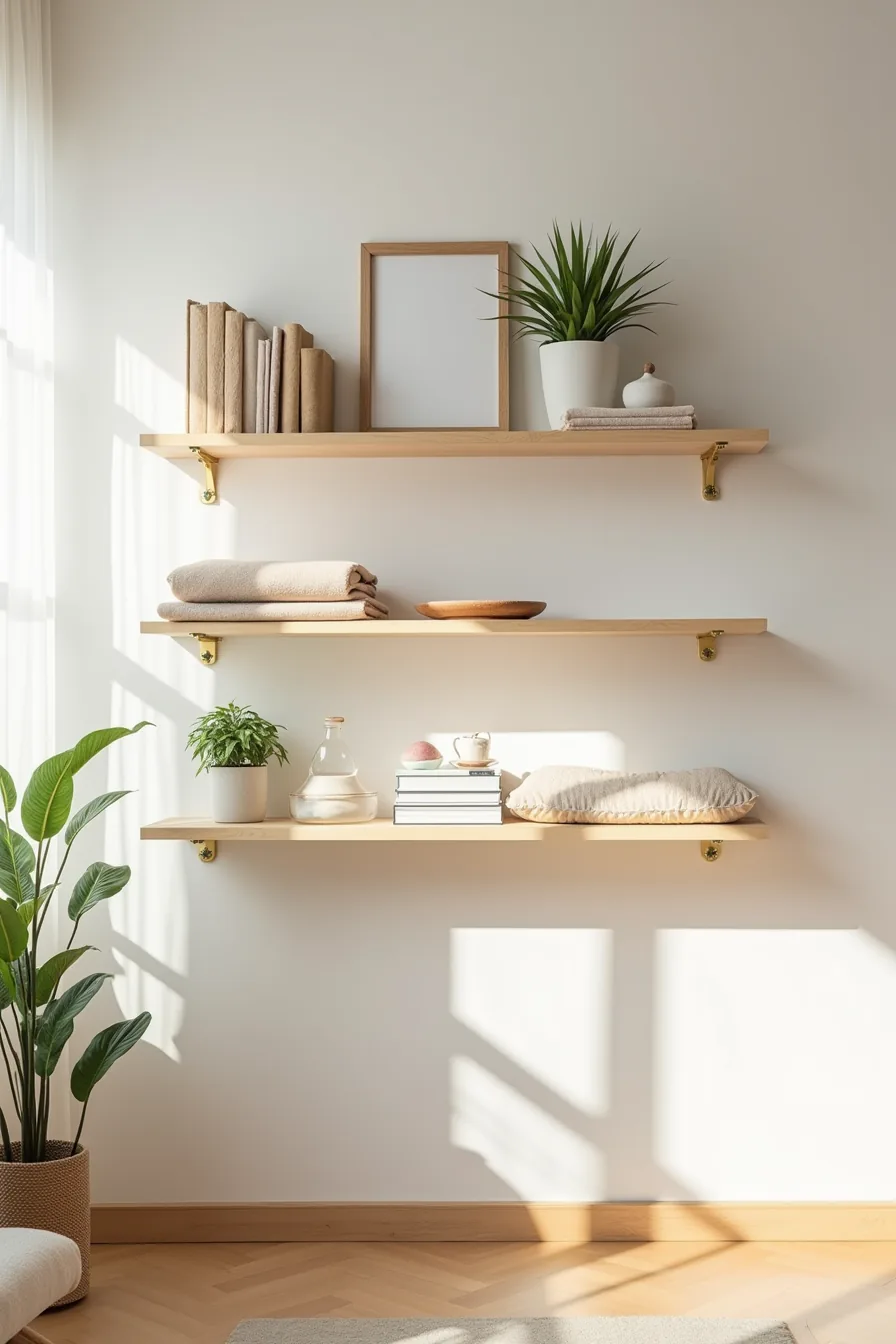
Wall-mounted systems convert dead vertical space into functional square footage, which is the fastest way to free up floor area in a compact room. Consider a living room wall fitted with three staggered wooden shelves holding folded textiles, potted plants, and framed objects. Staggering the shelves at different heights breaks up the visual line and lets you stack taller items beneath shorter ones, maximizing usable depth without feeling crowded.
This approach suits renters and minimalists equally, but your choice of hardware determines the trade-off. For a renter-friendly route, use heavy-duty adhesive strips rated for 10–20 pounds per shelf; they leave no holes but require a perfectly clean, dry surface and 24 hours of setting time before loading. If you own the space or plan to stay long-term, invest in wall studs and metal bracket systems, which typically support 30–50 pounds per shelf and cost roughly $40–$80 per linear foot installed.
The maintenance difference matters: exposed shelves collect dust weekly, so choose open textiles and sealed planters that can be wiped down quickly. Keep shelf depth between 8 and 12 inches, deep enough for folded items but shallow enough to avoid protruding into walkways.
Multi-Functional Furniture: Pieces That Serve Two Purposes
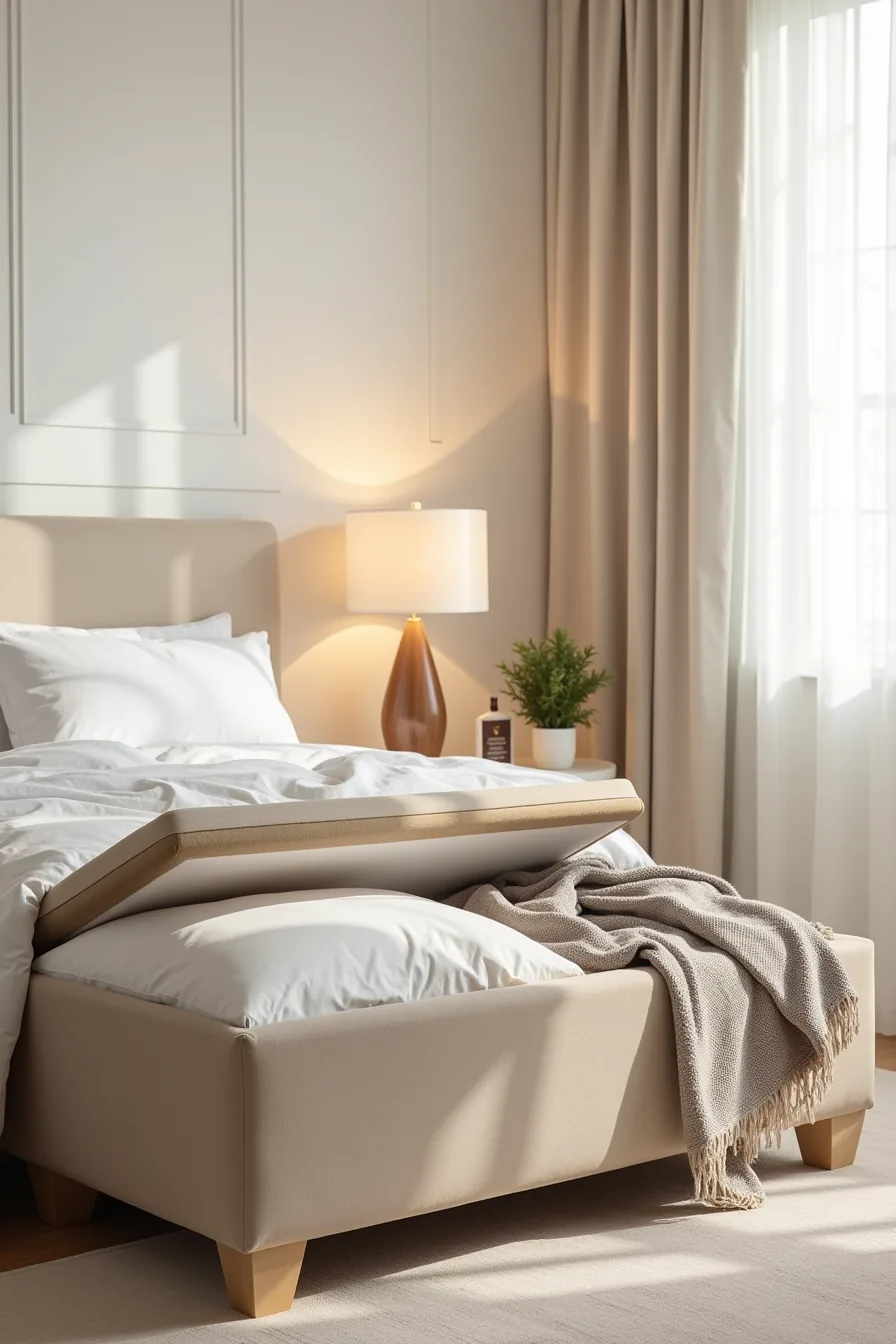
A low upholstered ottoman with a hinged top delivers seating, a footrest, and a concealed bin in roughly the same floor footprint as a single armchair, typically 30–40 inches wide and 18–20 inches tall. Lift the lid to store throw blankets, out-of-season shoes, or board games you reach for weekly, not items you need daily, since digging through a bin takes more effort than opening a drawer. The folded throw blanket draped over its edge doubles as a soft landing surface and hides the seam of the lid, keeping the piece looking intentional rather than utilitarian.
This setup suits a bedroom corner or a compact living room where you need overflow seating for two guests but lack room for permanent chairs. Pair it with a slim side table that leaves a 16–20 inch gap for circulation. For budget planners, target ottomans with a solid wood frame and fabric upholstery in the $150–$300 range; skip models with particleboard bases, which sag under repeated lid use.
Velvet and linen show wear faster than performance polyester, so choose the latter if the ottoman will double as a landing spot for mail or groceries.
Zone-Based Organizing: Dividing One Room Into Functional Areas
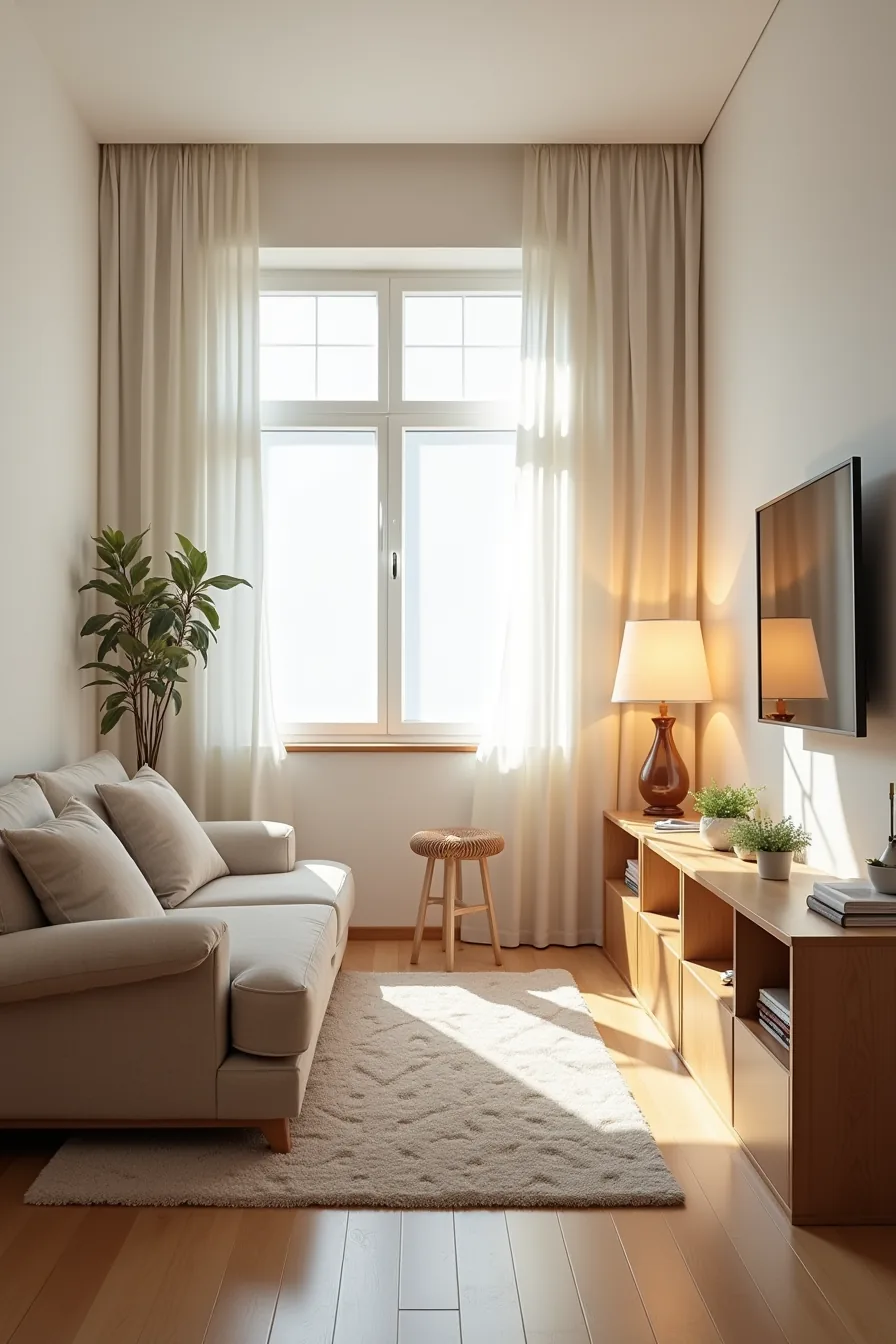
Zone-based organizing assigns a dedicated purpose to each corner of a single room, using furniture and flooring rather than walls to create boundaries. A low bookcase positioned perpendicular to the wall works as a room divider while keeping sightlines open, the top should stay at or below eye level when you’re seated, typically 36–42 inches tall, so the space feels larger than it’s.
In a studio apartment layout, place the bookcase with its back to the seating area and its open shelves facing the work desk. This gives the desk zone accessible storage for books and supplies while the solid back panel visually shields the workspace from the couch. Define the seating zone beneath with a patterned area rug that extends at least 6–8 inches beyond the front legs of the sofa, anchoring the furniture to its corner.
Keep the path between zones at least 24–28 inches wide.
This approach suits renters who can’t install permanent partitions. It fails when the divider blocks natural light from a window or forces you to walk around it to reach the door, always test the traffic flow before committing to a placement. A solid wood bookcase costs $200–$500; a low, open-backed shelving unit runs $80–$150 but offers less visual separation.
Hidden Storage Behind Doors and Under Surfaces
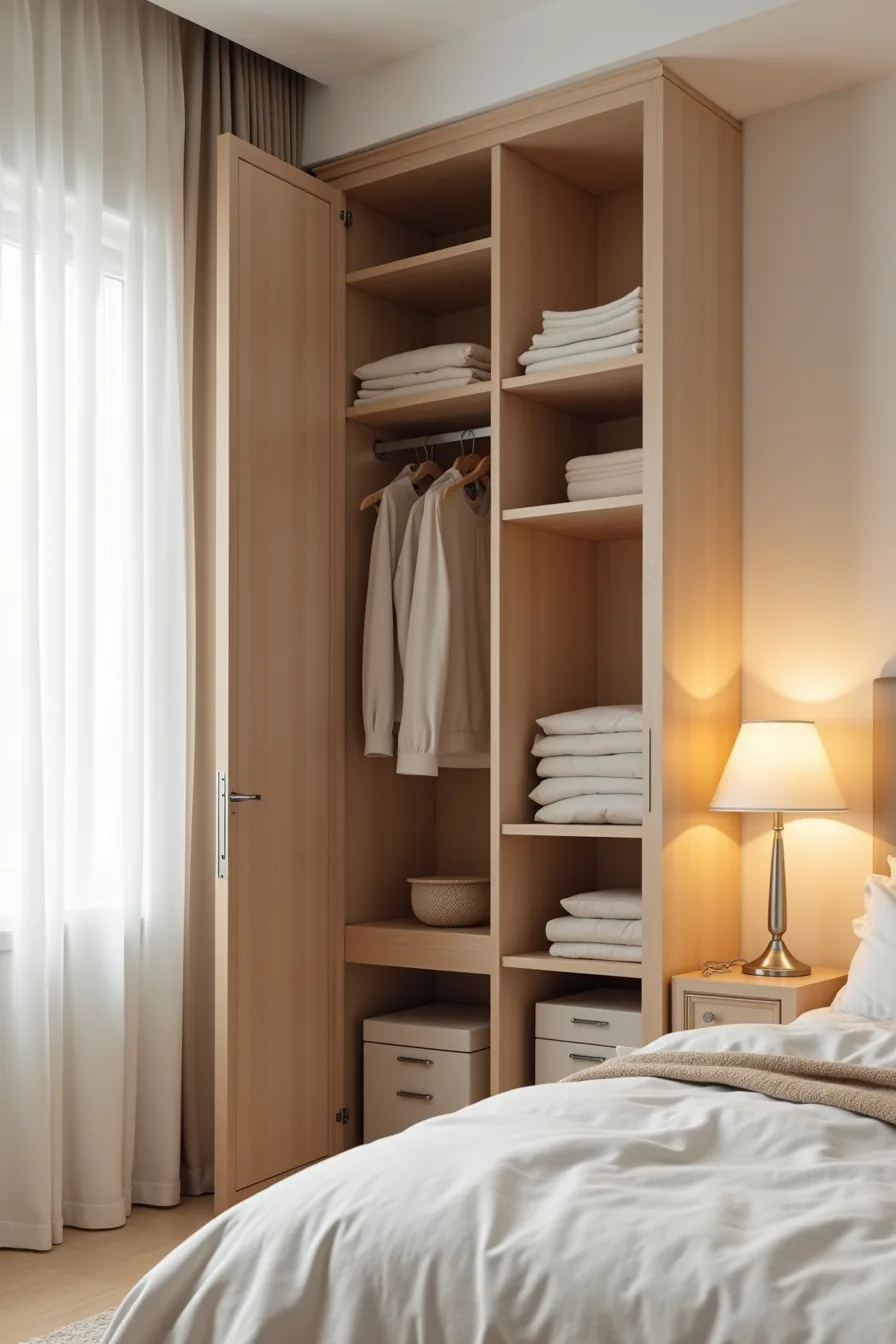
The back of a closet door is prime real estate that most homes leave empty. Mount an over-the-door organizer with clear, shallow pockets, 2–4 inches deep, for shoes, scarves, or cleaning supplies. You gain roughly 12–18 inches of usable width without touching floor space.
The trade-off: the door needs 3–4 inches of clearance to swing fully, and heavy items will strain the hooks over time, so keep the total load under 15–20 pounds.
Under the bed, flat, wheeled containers with lids maximize the largest dead zone in any bedroom. Look for bins 6–8 inches tall that slide freely on casters; anything taller makes dusting and retrieval awkward. Store off-season clothing, extra bedding, or documents you access less than once a month.
Vacuum-seal bags cut bulky items’ volume by half but require re-rolling each season, skip them if you dislike that chore.
A bed frame with built-in drawers or a lift-up base adds 20–40 cubic feet of storage, but it costs $400–$1,200 and makes the bed heavier to move. For renters, freestanding containers are the safer route: they cost $15–$40 each, leave no wall damage, and move with you. Check containers quarterly for moisture or pests, especially in basements or humid climates.
Color and Container Systems: Making Organization Visible and Sustainable
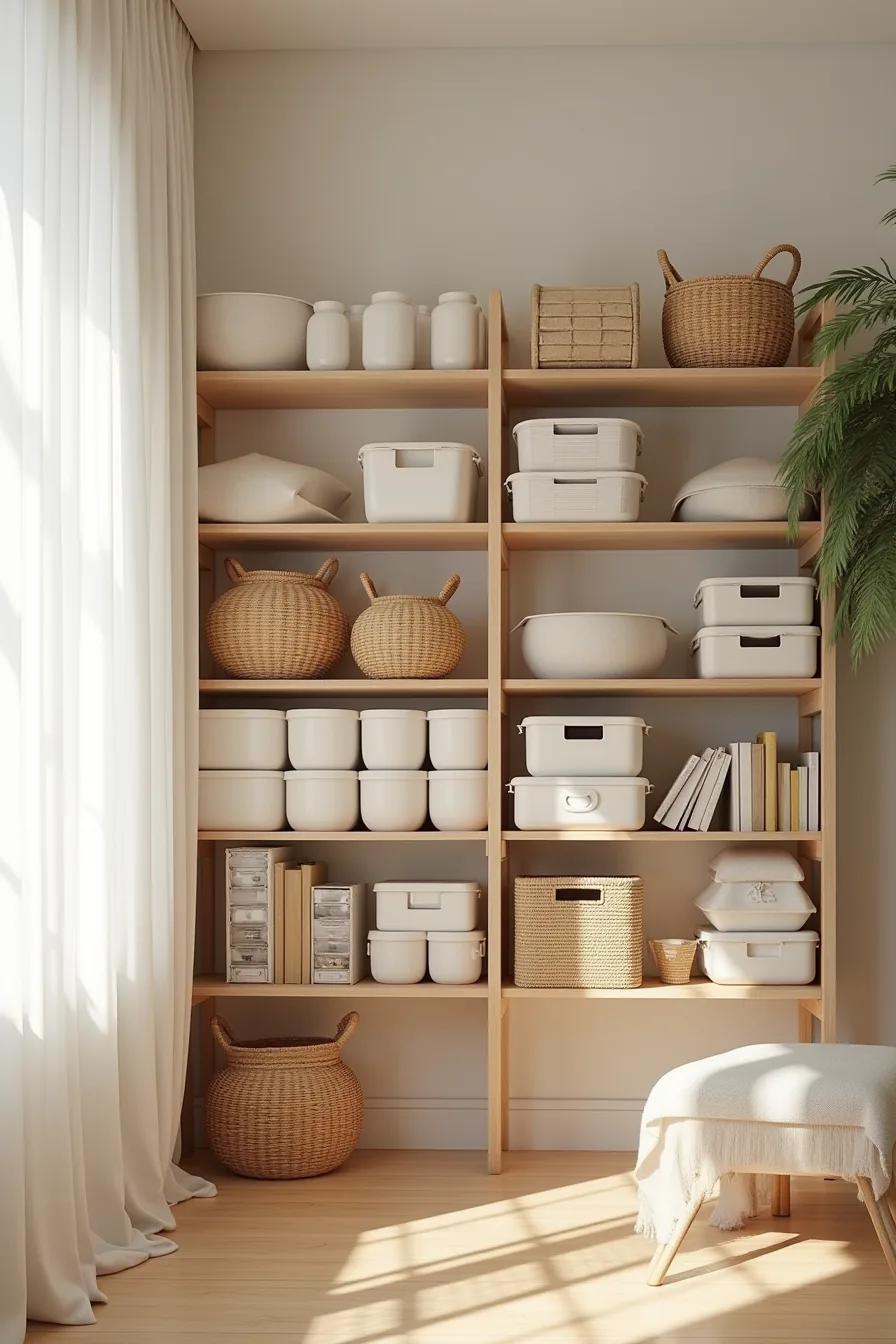
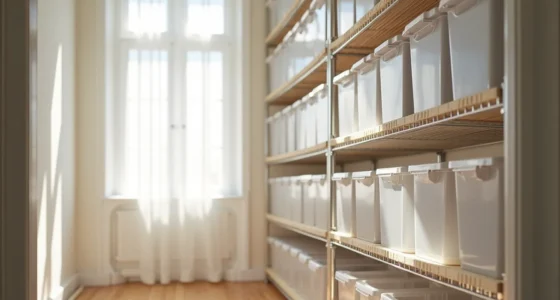
A unified container system works because it removes daily decision-making. When every bin, basket, and box follows the same visual logic, you stop hunting for items and start returning them to the same place automatically. The setup pictured here, woven baskets on upper shelves, stacked plastic bins below, and clear containers in between, covers three storage tiers: display, bulk, and visibility.
Match containers to their contents’ retrieval frequency. Clear containers suit items you grab weekly, since seeing the contents eliminates label-reading. Muted plastic bins work for monthly-access gear, while woven baskets hide daily clutter while still looking intentional.
Use a three-tier color palette: one neutral for baskets, one muted tone for bins, and one accent color for labels. This prevents the rainbow chaos that undermines the system.
Labels matter more than the containers themselves. Print them at 14-point font or larger, and position them at eye level on the container’s front face. Budget route: $10–$30 of cardboard magazine files and adhesive labels replicate 80% of the effect.
Long-term route: custom cabinetry with integrated bins runs $2,000–$6,000 but eliminates visible containers entirely. The maintenance cost is real, re-label whenever contents change, and wipe bins quarterly to prevent dust buildup from making the system feel neglected.
Reducing Entry Points: Decluttering Before Organizing
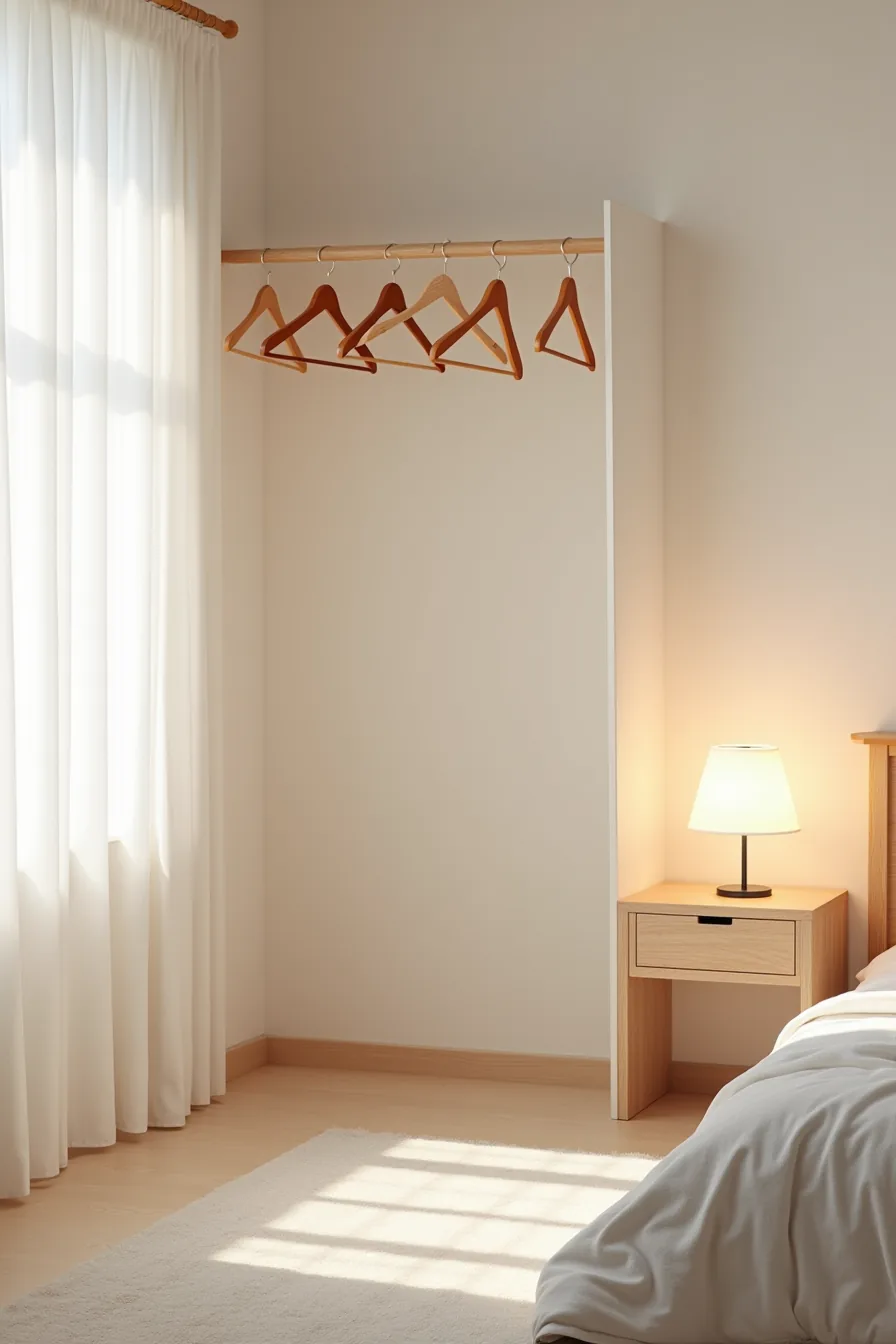
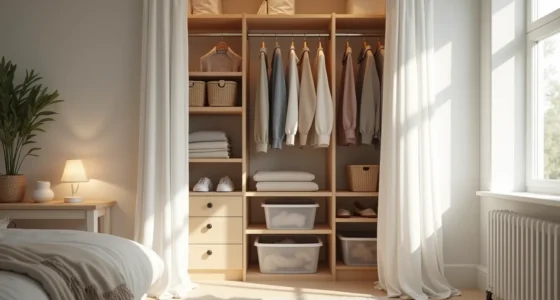
Organizing a small space without first removing excess is the most common Small Home Organization Ideas mistake to avoid, you simply end up storing items you don’t use, which crowds the systems you install. The room pictured here shows the target state: a single nightstand holding only a lamp, a closet rod with five hangers, and bare floor space. That emptiness isn’t the goal itself; it’s the result of enforcing a strict entry threshold for everything that comes back into the room.
Apply the one-touch rule to every category: if you can’t identify an item’s purpose or its last use date within five seconds, it leaves. For clothing, work in reverse, pull everything off the rod, return only pieces worn in the past three months, and cap the rod at ten items per season. Budget route: use cardboard boxes as temporary “maybe” bins for 30 days, then donate unopened ones.
Splurge route: hire a professional organizer for $60–$120 per hour to force accountability in a single session. To prevent re-accumulation, designate one drawer or bin as the “incoming zone” where new purchases sit for 72 hours before earning a permanent spot.
Your Decision Checklist
Before you buy another basket or bin, run your plan through these five filters. Does it free up a surface you actually use? Can you reach everything without a step stool?
Will it survive weekly cleaning without special treatment? Does it match how you live, not how you wish you lived? And can you reverse it if you rent?
If an idea fails even one check, skip it. The cheapest fix that works beats the beautiful system you abandon.
Start tonight by timing how you use your most cluttered counter or table for 48 hours. That log tells you exactly what needs a home.
Frequently Asked Questions
What is the difference between small home organization and decluttering?
Decluttering removes items you don’t use or need. Organization creates a permanent home for what remains. You organize after you declutter, not before, otherwise, you’re just arranging clutter into neater piles.
Can I use small home organization ideas in a medium-sized apartment?
Yes, and you should. The principles, vertical storage, multi-functional furniture, and zone-based sorting, scale up without looking sparse. In a medium space, you can afford larger versions, like a full bookshelf instead of a narrow ladder shelf, without sacrificing proportion.
How do I organize a small home without buying new furniture?
Repurpose what you own: use tension rods inside cabinets for extra shelving, hang a shoe organizer on a closet door for toiletries, and add hooks to the back of doors for bags and coats. Magnetic strips hold knives or spice jars on walls. These cost under $30 total and require no assembly.
What mistakes do people make when organizing small spaces?
The top three: buying storage containers before measuring drawers and shelves, storing items where you use them rather than where you’ve space, and over-filling vertical storage so items become unreachable. Also, matching container sets often waste space, mix sizes to fit actual contents, not aesthetics.