
Wire pantry organization ideas boil down to a single decision: how much structure you want to bolt, stick, or stack onto the shelves you already have, and that choice determines everything from your budget to your lease agreement. You can spend under $30 with tension rods and adhesive clips, or commit to a welded steel framework that outlasts your cabinets. The catch is that each approach demands different measurements, tools, and maintenance, so before you buy anything, you need to match the system to your shelf depth, your wall material, and your tolerance for drilling.
Key takeaways
Wire shelf liners solve the grip problem instantly, but choose non-slip PVC or rubber mats with raised ridges, flat vinyl lets cans slide sideways on smooth wire. Tiered wire risers double your usable shelf height, but measure the vertical clearance between shelves first; most standard pantry gaps run 10–14 inches, so risers taller than 8 inches will block upper access. Modular wire baskets work best in corners or under low shelves, but confirm the basket’s width fits your existing wire spacing, typical pantry wire racks have 1-inch gaps, and thin baskets will tip if the frame doesn’t align. Custom wire shelving frames justify their higher cost only if you’ve a walk-in pantry over 8 feet tall; for standard 12-inch-deep shelves, budget-grade adjustable wire units from hardware stores deliver the same function at a fraction of the price.
Wire Shelf Liners and Mats for Instant Grip

The quickest way to fix a sliding can problem is a wire shelf liner. A beige adhesive liner pressed onto the wire surface gives canned vegetables and glass jars a flat, stable base, so labels face forward and nothing tips when you reach past it. The adhesive backing keeps the liner from curling at the edges, which is the main failure of cheaper non-slip mats.
This interpretation of wire pantry organization ideas suits renters because most liners peel off cleanly with no residue, and the installation takes under five minutes per shelf. You only need scissors, a measuring tape, and a clean, dry surface. The trade-off: adhesive liners lose grip once they accumulate dust, so wipe them monthly with a damp cloth and let them dry fully before restocking.
For glass jars that sweat from refrigeration, choose a perforated liner so trapped moisture can evaporate rather than pool under the seal.
Tiered Wire Risers and Shelf Dividers

Tiered risers stack a second level directly onto your existing wire shelf, converting dead vertical airspace into usable storage. The setup pictured pairs two metal risers on a single shelf: cereal boxes stand upright on the lower level, while smaller snack boxes sit on the raised tier behind them, giving both rows a clear line of sight and a grab point that doesn’t disturb the other.
This layout works best for deep pantries where items naturally get buried at the back. Standard risers span 12–16 inches deep and lift the rear tier 4–6 inches, which clears most cereal and snack boxes without blocking the shelf above. Pair the risers with a wire shelf divider running front-to-back to keep the two columns from merging into one messy pile.
Suits medium to large pantries with at least 18 inches of clearance between shelves. The cost runs $10–$25 per riser, and the open wire construction lets air circulate so boxed goods stay dry. Wipe the riser feet occasionally, they trap crumbs against the shelf surface.
Modular Wire Basket Systems for Small Spaces
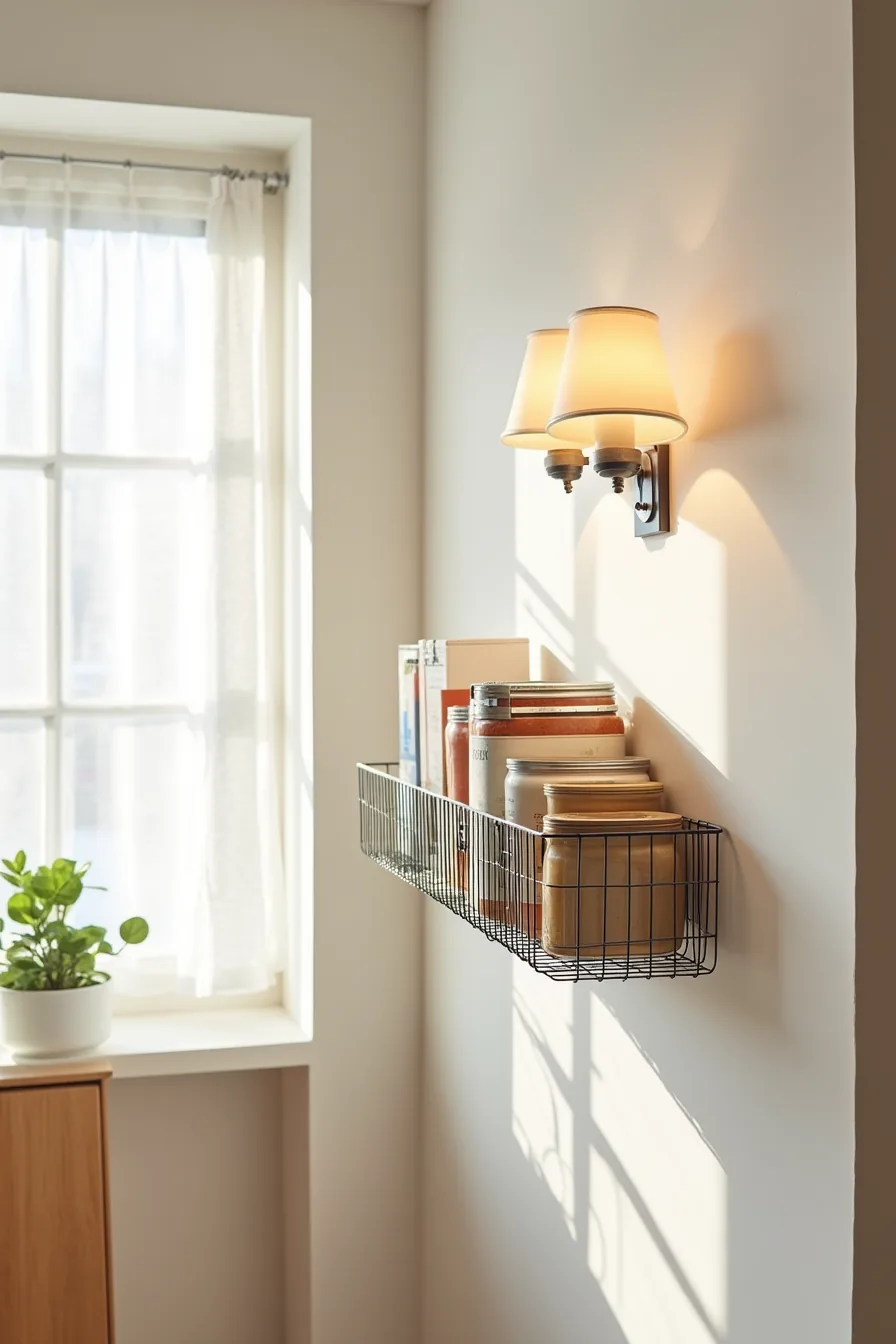
A narrow wall-mounted wire shelf with three stackable wire baskets of decreasing size turns a sliver of vertical wall into a working pantry. The baskets slide out on their wire runners, so you can pull the middle one forward and grab a can without shifting the ones above or below.
The decreasing basket sizes are the key detail: smaller baskets on top hold lightweight items like spice packets or tea boxes, while the larger lower basket takes heavier jars and cans. This keeps the center of gravity low and prevents the stack from tipping when you pull a basket out. Wall-mounted shelves with 10–14 inch depth fit most apartment pantry walls and require only basic drilling, no permanent cabinetry.
Works best in galley kitchens or narrow utility spaces where floor-mounted shelving would block circulation. Be realistic about weight: wire baskets handle 15–25 pounds each, but check the wall anchor rating before loading heavy cans. The open wire construction means crumbs fall through, so slide each basket out and wipe the shelf surface every few weeks.
This is a renter-friendly route, but you’ll still need to patch the anchor holes when you move.
Custom Wire Shelving Frames for Large Pantries
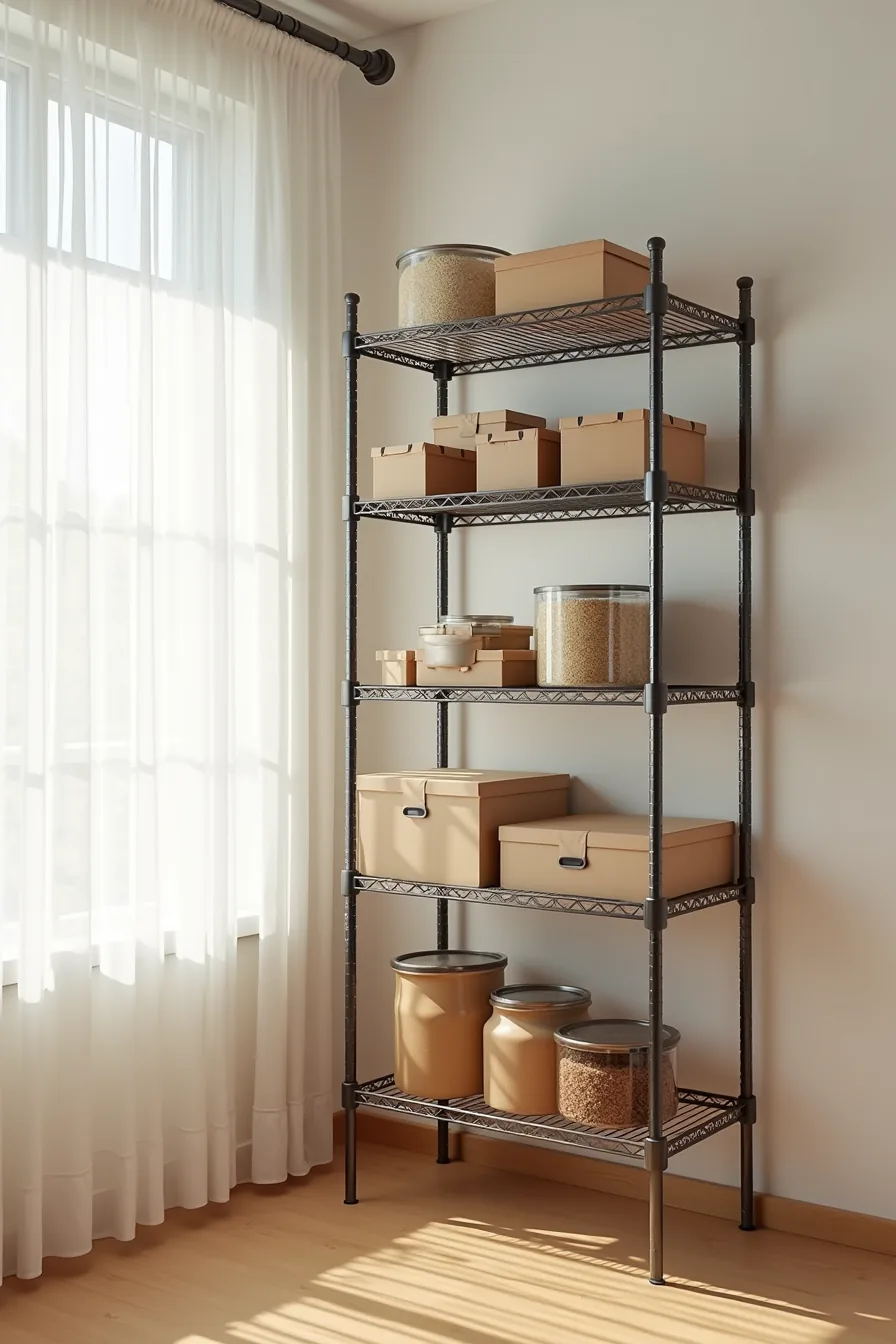
For a walk-in pantry with ceiling clearance of 8 feet or more, a freestanding five-tier wire shelving unit becomes the backbone of the room. The frame in this setup reaches near the ceiling, using the full vertical height while leaving the floor clear for a step stool or rolling cart. Diagonal bracing on the frame prevents lateral sway, which matters when you load the top shelves with boxes of cereal or paper goods that create uneven weight distribution.
Each shelf in this configuration typically spans 36–48 inches wide and carries 75–125 pounds when the posts are properly anchored. The key is anchoring the frame to the wall studs at the top and bottom, even a “freestanding” unit needs two fixed points to stay stable when you pull a heavy container forward. Place the densest items, cans, glass jars, on the lower two shelves, and reserve the upper tiers for lightweight boxes and empty containers that you rotate seasonally.
The open wire deck lets air circulate around dry goods, which reduces moisture buildup in humid climates. Expect to wipe the shelves monthly; dust and food particles settle on the crossbars, and a long-handled brush reaches the back without moving every box. This route suits homeowners with permanent pantry space, since the anchoring hardware leaves holes that require patching when you remove it.
If your ceiling is under 7 feet, skip this approach and opt for wall-mounted tiers instead, the wasted vertical gap above the unit is simply dead storage.
Wire Drawer Dividers and In-Shelf Organization
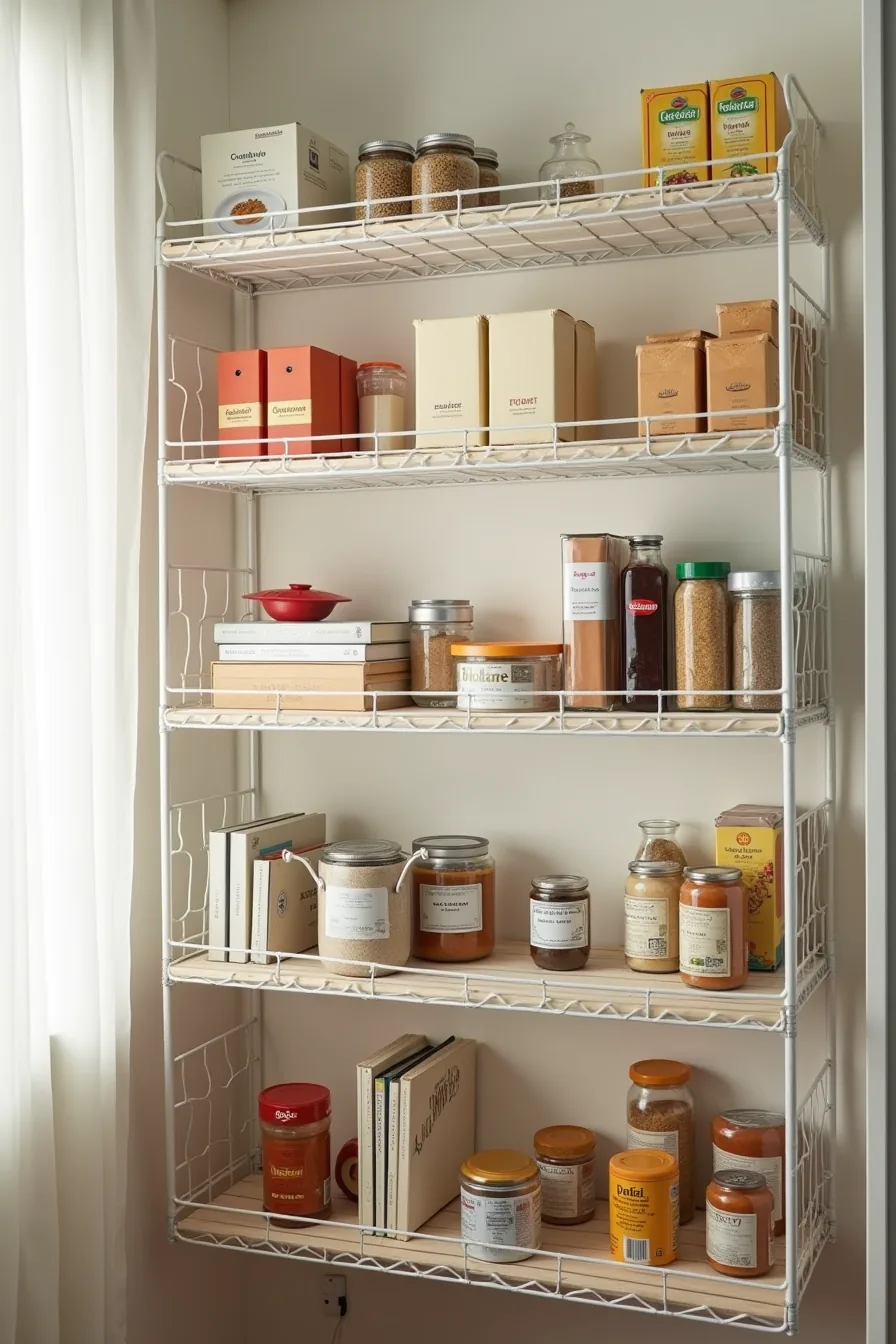
Compartmentalizing an existing wire shelf costs under $40 and takes about ten minutes per tier. You’ll need three metal dividers, the spring-loaded type that pinch between the wire deck and the shelf lip above, to create four distinct zones on a standard 30-inch shelf. The dividers do more than separate categories; they stop tall pasta boxes from slumping sideways into the spice section and keep cylindrical cans from rolling into the baking supplies when you pull the front row.
Set your zones by frequency of use, not by label aesthetics. The section nearest the door holds daily pasta boxes, the next holds baking supplies, then spice containers, then canned soups. This sequence matches the order you grab items during meal prep, which shortens a typical inventory check from a 30-second scan to a 5-second glance.
To reproduce this, measure the depth of your wire shelf first, dividers require a snug fit between the horizontal wires, and most clip onto ½-inch to ¾-inch spacing. Use a label maker to mark each divider’s front edge, not the shelf itself, so you can reposition zones when your cooking habits shift. Wipe the dividers quarterly; dust collects where the metal clips meet the wire grid.
Budget, Rental, and Investment Trade-Offs

The three price points on your counter, an adhesive liner roll, a single wire riser, and an unassembled freestanding unit, represent the full spectrum of wire pantry organization ideas. The liner roll costs under $15 and fails within a year, but it protects shelf wire from rust when you store damp cleaning supplies. Buy it if you rent and can’t modify the existing shelving; installation takes five minutes and peels off without residue.
A wire riser, typically $20–$35, doubles your usable shelf height without any mounting. It works in rentals because it sits freestanding, and it suits renters who want visible gains without a security deposit dispute. The freestanding unit, priced from $80 to $150, is the long-term investment.
It demands floor space but adds permanent, heavy-duty storage that survives multiple moves. Match the route to your timeline: under one year, buy the liner; one to three years, add a riser; beyond that, invest in the freestanding frame.
Your next step: Measure, then match
Start by measuring your pantry’s depth, width, and ceiling height. Compare those numbers against the six approaches above, you’ll instantly eliminate half the options.
Match the solution to your actual usage: daily staples need open wire baskets at eye level, while bulk items belong on sturdy lower racks. Renter? Lead with tension rods and adhesive hooks.
Homeowner? Invest in modular wire shelving you can expand later.
Your one concrete action today: measure one shelf, then order a single wire basket that fits it. Test the system for a week before scaling up.
Frequently Asked Questions
Can wire pantry organization ideas work in a rental apartment without damaging walls?
Yes. Use freestanding wire shelving units or tension-mounted racks that lean against walls. Avoid screwed brackets or adhesive strips that peel paint.
Check your lease for wall-mount restrictions before installing anything.
What weight can standard wire shelves hold before sagging or tipping?
Typical residential wire shelves hold 30–50 pounds per linear foot when properly anchored into studs. Freestanding units handle less, around 20–30 pounds per shelf. Anchor top-heavy units to walls to prevent tipping, especially with canned goods.
How do I prevent small items from falling through wire shelf gaps?
Place sheet pans, cutting boards, or plastic tray liners beneath small jars and spice containers. Use wire baskets with tight mesh for loose items like packets. Alternatively, store small goods in labeled bins with solid bases that sit flush on the wire grid.
Are wire pantry systems better than solid shelves for air circulation and moisture control?
Yes, for airflow. Open wire allows air to move around produce and dry goods, reducing mold and condensation. However, solid shelves are better for containing spills and dust.
Pair wire shelves with ventilated produce bins and wipe them weekly to avoid rust.