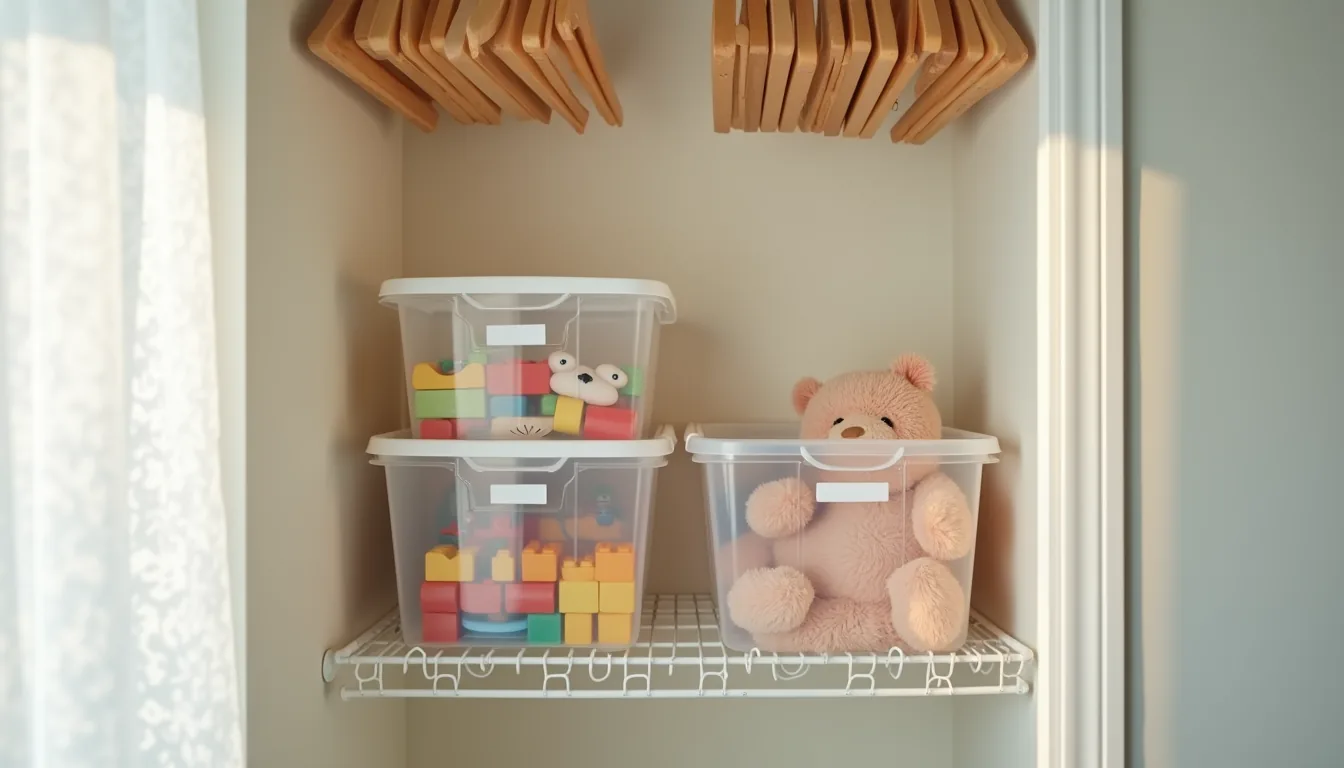

Your toy closet organization ideas will fail unless you first match the storage system to your room’s dimensions, your child’s age, and your lease terms, here’s how to pick the right one. A system that works for a toddler in a rental apartment differs completely from one suited to a school-aged child in a dedicated playroom. Below, six distinct approaches, from a $40 shelf-and-bin setup to a built-in cabinetry investment, show you exactly what each requires, who it fits, and where it breaks down.
Key takeaways
- Clear bin stacking works best for small closets because it maximizes vertical space while letting you identify contents in under five seconds per bin.
- Open shelving with category zones suits medium-sized rooms and requires you to label each shelf at eye level to keep the system functional for children aged 3–7.
- Rolling drawer units are the renter-friendly route for deep closets, offering 30–50% more accessible storage than fixed shelves without any wall mounting.
- A hybrid rotation system pairs a small active shelf with off-site storage bins, cutting toy clutter by roughly half and requiring a monthly 20-minute swap routine.
Clear Bin Stacking for Quick Visibility
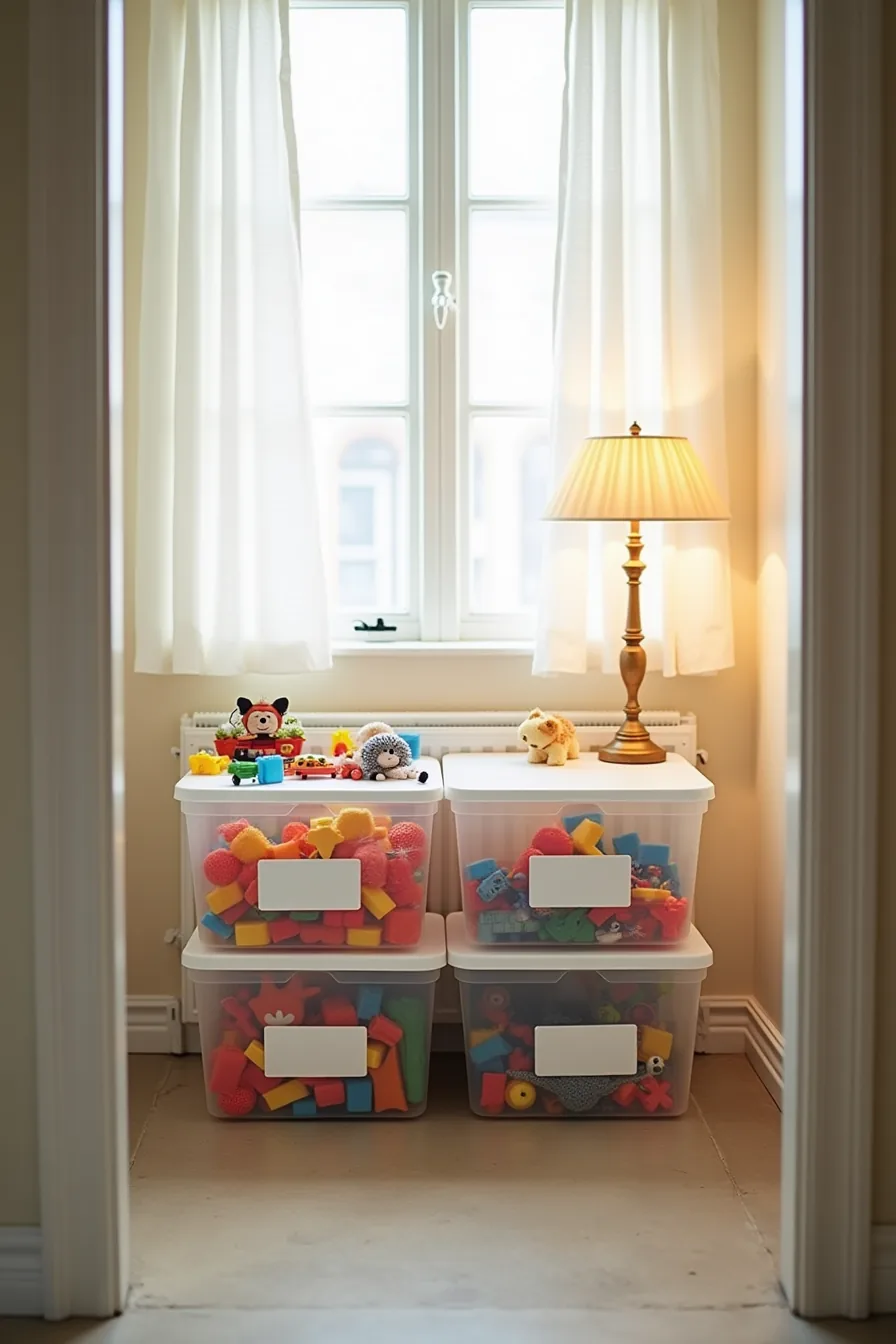
Transparent plastic bins arranged in a 2×2 grid on the closet floor deliver the fastest toy retrieval system you can build. The layout works because every category, colored blocks, toy vehicles, action figures, and plush toys, remains visible without opening a single lid or pulling out a drawer. White label stickers on each bin front reinforce the system for children who can read, and the color-coding inside acts as a visual cue for pre-readers.
This approach suits small to medium closets where floor space is at a premium and the user prioritizes speed over aesthetics. You can stack bins two high safely, but keep heavier items like blocks on the bottom tier to prevent crushing lighter plush toys. Budget-friendly bins typically cost $5–$15 each, making this the most economical route among Toy Closet Organization Ideas.
Expect to wipe down the plastic monthly with a damp cloth, as fingerprints and dust accumulate quickly on clear surfaces. For a slightly higher spend, choose bins with reinforced rims that withstand frequent pulling without cracking.
Open Shelving with Category Zones
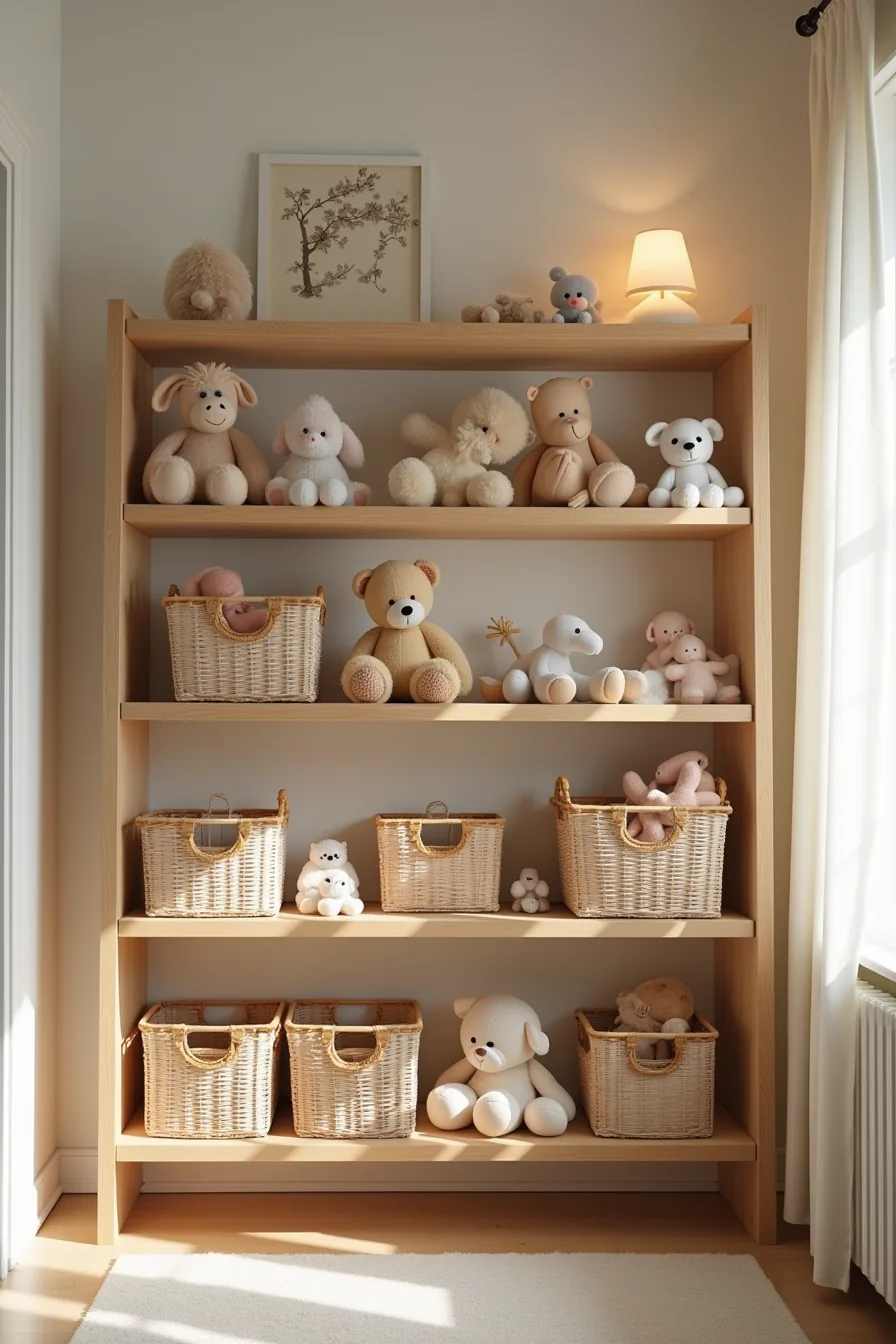
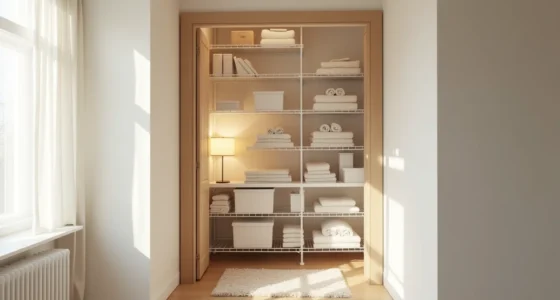
A five-shelf wooden bookcase reaching roughly 72 inches high transforms a medium closet into a browsable toy library when each shelf claims a single category. Woven baskets hold loose pieces for building sets and puzzle collections, while wooden dividers segment longer shelves into dedicated zones for dolls with accessories, vehicles, and plush toys. The system works because children see the boundaries of each category instantly, making tidy-up a matching exercise rather than a sorting puzzle.
This route suits medium closets where you need vertical storage but want flexibility to rearrange as play interests shift. The shelving unit itself is freestanding, so you simply move it out when you leave, no wall anchors or permanent fixtures required. Woven baskets run $8–$20 each depending on size, and wooden dividers cost roughly $10–$25 per pack, making this a mid-range option among Practical Toy Closet Organization Ideas planning tips.
Expect to dust shelves biweekly and spot-clean baskets with a vacuum brush attachment, as woven fibers trap hair and crumbs. For pre-readers, attach a small picture label to each basket rim to reinforce the category without relying on text.
Vertical Wall Pegboard Systems
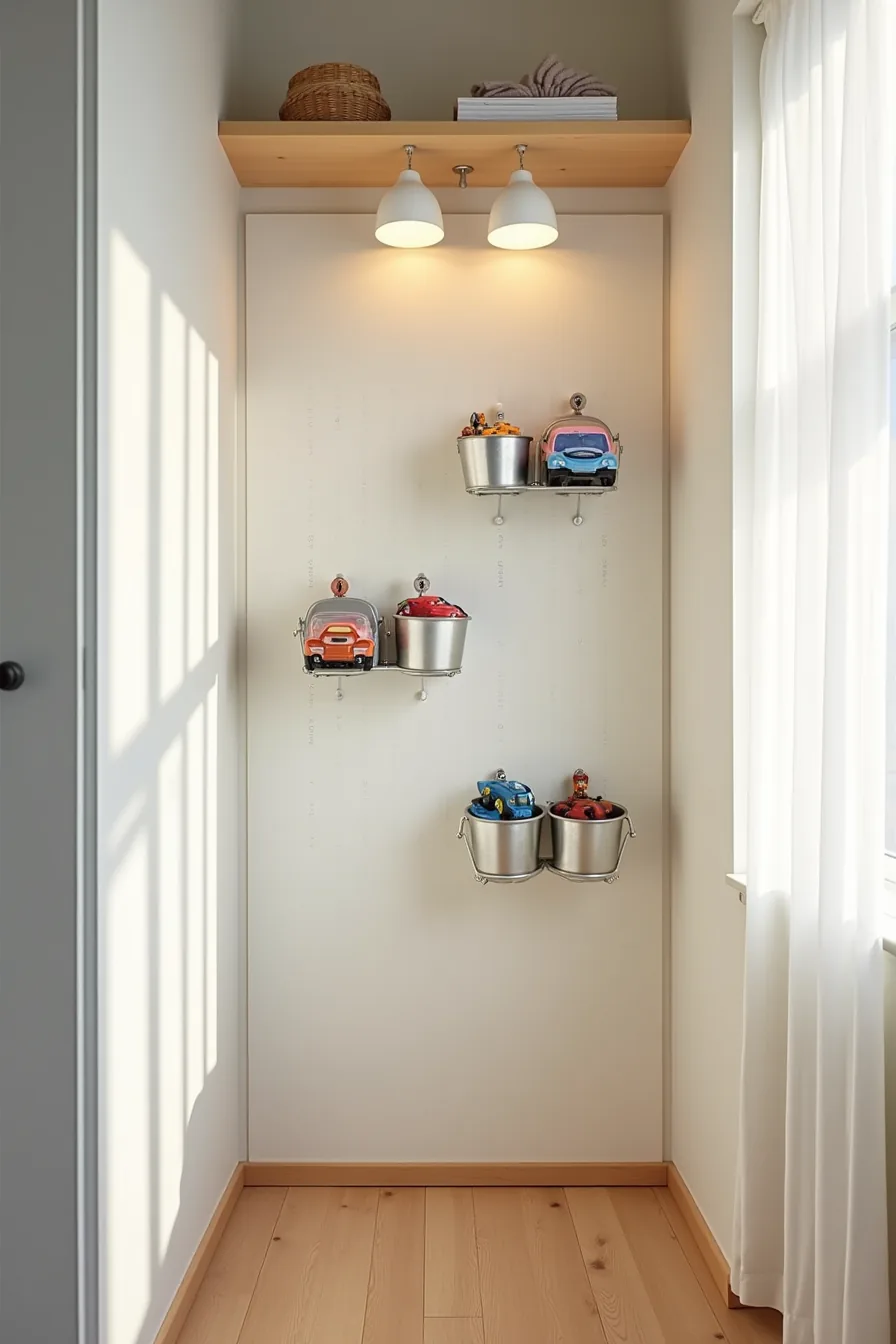
A white pegboard reaching from floor to roughly 84 inches turns a narrow closet’s back wall into vertical storage that leaves the floor almost entirely clear. Metal hooks hold small bins containing toy cars, action figures, and craft supplies at staggered heights, so each hook-and-bin pair claims its own zone without requiring shelf depth. The pegboard itself mounts on standoff screws that create a small air gap, which prevents toys from pinching against the wall and keeps the board from warping in humid climates.
This system suits narrow closets, anything under 24 inches deep, where freestanding shelving would block access to the back corners. It’s also a strong renter-friendly choice because pegboard panels are lightweight and removable, leaving only small screw holes behind. A standard 32-inch by 48-inch panel with a full hook and bin set runs $60–$120, with replacement hooks costing $1–$3 each.
For pre-readers, place the most-used categories at eye level (roughly 30–40 inches from the floor) and keep craft supplies above adult shoulder height to prevent accidental spills. You’ll need a drill and wall anchors for installation, and you should wipe down metal bins monthly to prevent rust from damp toy hands.
Rolling Drawer Units for Deep Closets
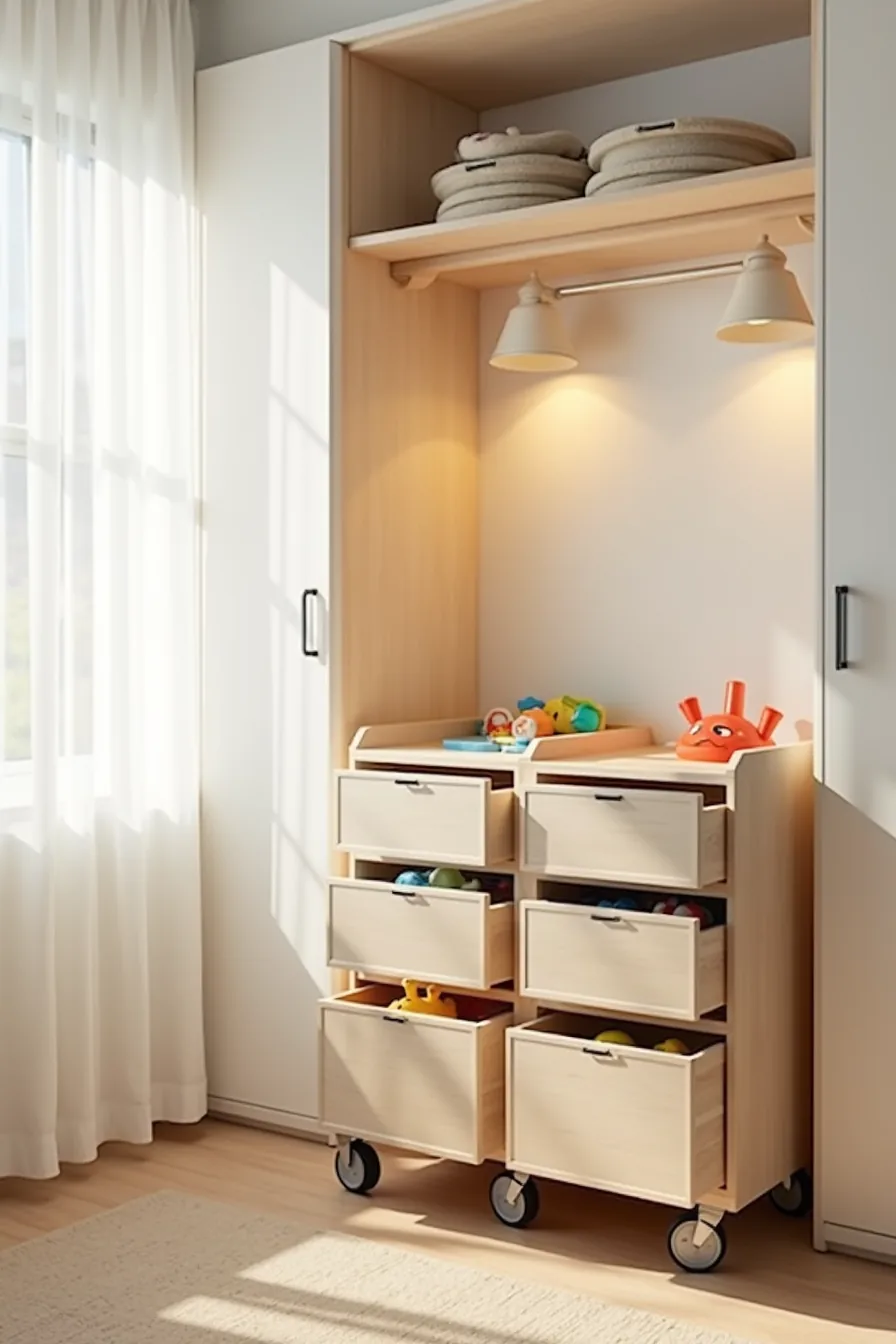
When your closet runs 36 inches or deeper, rolling drawer units turn wasted floor space into a pull-out toy library. Two low-profile carts on locking casters, each with four pull-out drawers, slide effortlessly under a hanging rod while leaving the rod usable for dress-up clothes or out-of-season outerwear. You gain roughly 8–10 cubic feet of storage per cart without surrendering any vertical access.
This setup favors large closets where you rotate toys frequently, since you can swap entire drawers between the playroom and the closet in under a minute. Locking casters matter on any hard floor, they prevent the cart from rolling mid-pull. Expect to pay $80–$150 per cart; polypropylene drawers hold up to 15–20 pounds each, though overloading causes drawers to sag and stick.
You do sacrifice a lower rod for hanging clothes, so pair these units with an upper rod only. Wipe drawer edges monthly with a damp cloth, as the plastic tracks collect fine dust that gradually makes the drawers less smooth.
Built-In Shelving and Custom Dividers
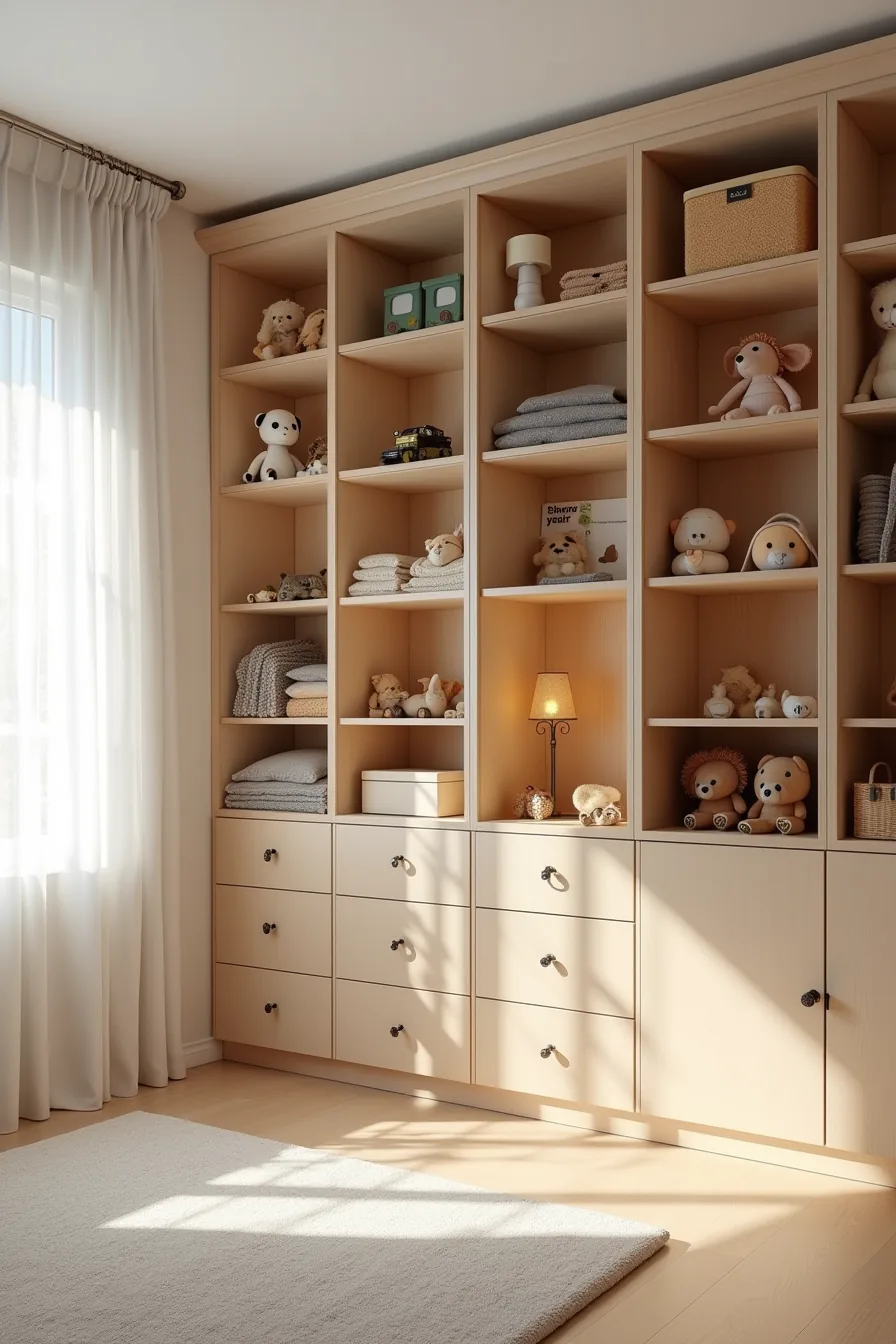
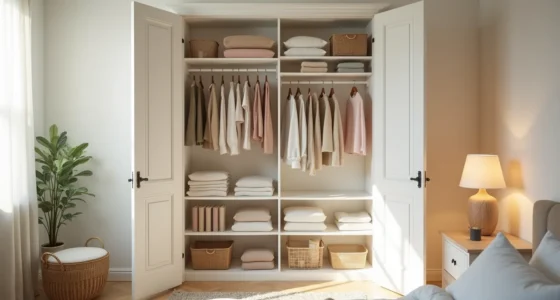
Built-in shelving represents the permanent end of the spectrum, a fitted, floor-to-ceiling system designed for homeowners who plan to stay five years or more. In a typical 48-to-60-inch-wide closet, the payoff is density: adjustable shelves paired with custom wooden compartments keep building systems, vehicles, dolls, and games in distinct zones, so cleanup becomes a matter of sorting rather than searching.
This route suits families who want zero visible clutter and are willing to commit to a measured installation. The key advantage is proportion, shelving built to your closet’s exact depth (usually 12–16 inches) eliminates the dead space that freestanding units leave behind. Budget versus splurge toy closet organization ideas hinge here: a basic melamine system from a big-box store runs $300–$600 for a standard reach-in, while a custom carpenter builds hardwood dividers and finished trim for $1,500–$3,500 depending on labor rates.
Plan shelf spacing around your largest toy, typically a 14-inch clearance for bulky vehicles or board games. Adjustable shelf pins let you reconfigure as children age, but the fixed wooden compartments are permanent, so size them for the biggest category you own now. Maintenance is minimal: wipe shelves biannually with a wood-safe cleaner, and check wall anchors annually.
You take on higher upfront cost and lose portability, but you gain a system that needs zero assembly or re-buying for the life of the house.
Hybrid Rotation System with Off-Site Storage
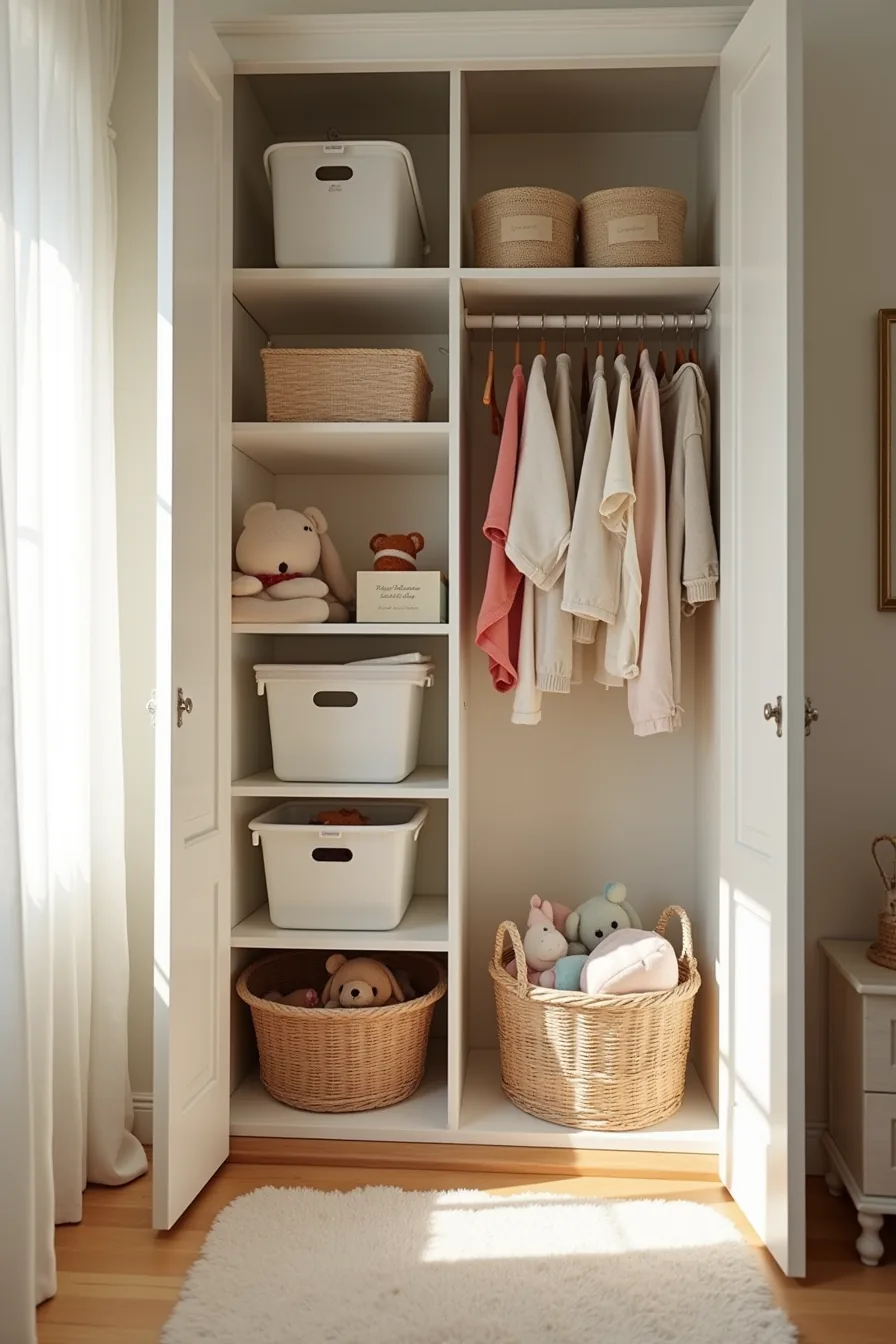
A rotation system splits your toy collection into two tiers: active inventory that stays in the closet, and backup inventory that lives elsewhere. In a standard reach-in, reserve the lower two shelves for open baskets holding current favorites, this keeps the 20–30% of toys your child uses daily within grabbing distance. Upper shelves and any hanging rod space hold sealed plastic bins, each labeled by season, age stage, or holiday themes with a date range so you know what to swap in next.
This model serves families with limited floor space or children who overwhelm easily. Cost is the lowest among any route: a dozen open baskets at $5–$15 each and twenty stacked 27-to-45-quart sealed bins at $8–$20 each. Off-site storage can be a basement shelf, garage rack, or spare closet ledge, so you never pay rent for a unit.
What kills this system is forgetting your swap schedule, set a calendar reminder every 6–8 weeks to rotate, and clear declutter session before each swap. Sealed bins keep dust and pests away during storage, but inspect toys for wear before they return, and wipe the closet base monthly since baskets never trap dirt like solid doors do. Avoid the mistake of storing fewer than three bins of rotatable toys; beyond that, the effort outweighs the variety.
Air circulation stays adequate when you leave a 2-inch gap above each bin’s label for breathing room. This is the best short-term plan for toys that change seasonally, water toys in summer, board games in winter, or for young children whose interests shift quarterly.
Where to Start
Start with the door. Measure the closet’s full depth, width, and ceiling height before buying a single bin, most reach-in closets run 24–30 inches deep, while ceiling height varies wildly. Then clear everything out and sort by how your child plays, not by toy type.
Your first purchase should be a label maker or a pack of chalk labels. Attach them to whatever containers you already own before spending on new systems. This one step costs under $15 and instantly shows you where friction lives.
Within one week, you’ll know which zones actually hold. Adjust before you invest in custom shelving or permanent fixtures.
Frequently Asked Questions
How do I organize a toy closet in a rental without damaging walls?
Use freestanding shelving units or stackable plastic bins instead of mounted systems. Place heavy items on the floor and anchor tall units to the wall with tension rods, no screws needed. Command hooks work for lightweight baskets.
What’s the best way to organize toys by age group in a shared closet?
Assign the lowest, most accessible shelves to the youngest child and higher shelves to older kids. Label each bin with a photo for pre-readers and a word label for older ones. Rotate seasonal or developmental toys quarterly to keep the system relevant.
How often should I reorganize or purge toys from the closet?
Purge every three months, ideally before birthdays or holidays. Remove broken items, pieces from incomplete sets, and toys your child has ignored for six weeks. Reorganize bins by category only after purging, or you’ll just rearrange clutter.
Can toy closet organization systems work in a closet smaller than 3 feet wide?
Yes, but skip deep shelving. Use narrow, stackable bins (10–12 inches deep) and vertical tension rods for hanging pouches. Mount a slim over-the-door organizer on the inside face.
Keep only the top three toy categories in that space; rotate the rest elsewhere.