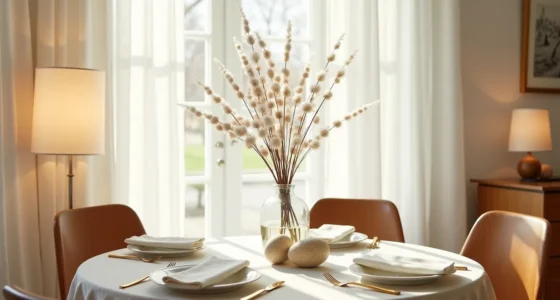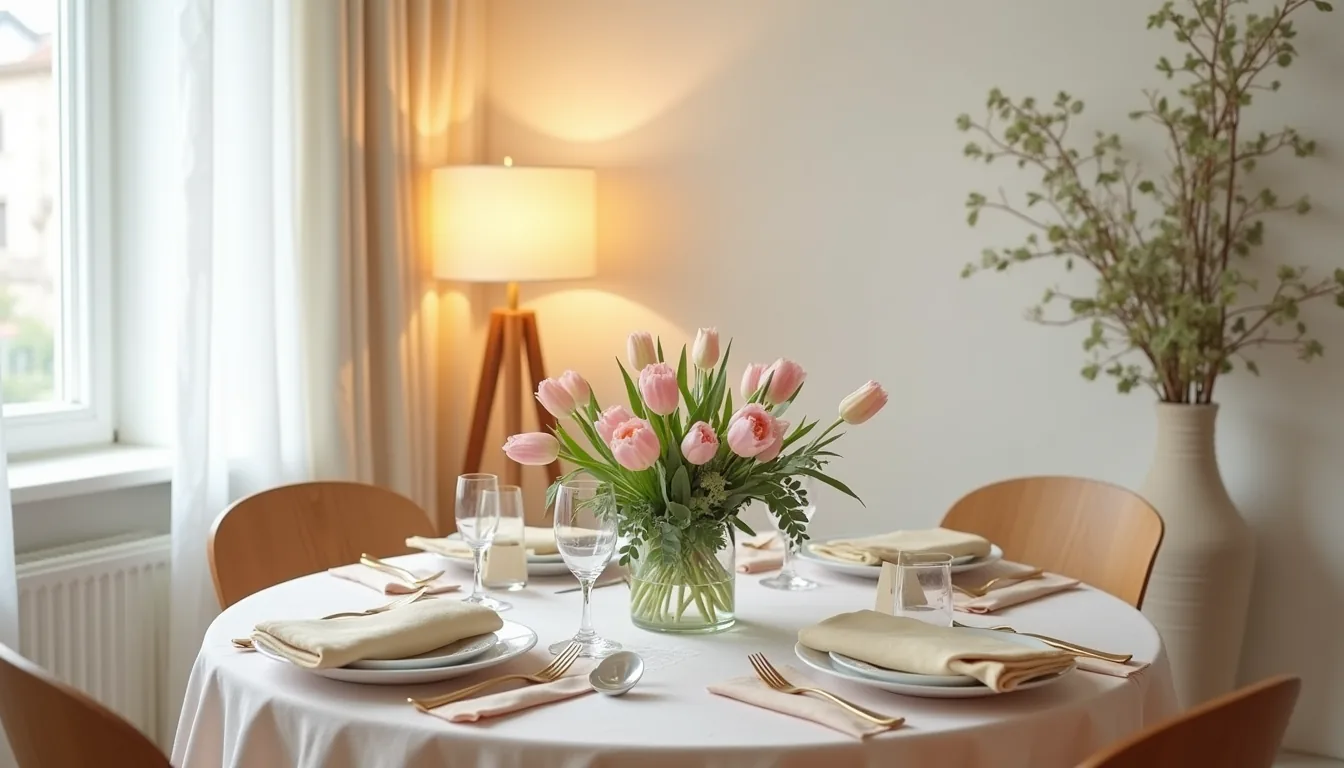

Easter dining table decor doesn’t require a single prescribed look, it spans rustic, modern, playful, and formal interpretations, and your choice should hinge on your space, your entertaining style, and your willingness to maintain the pieces. The practical range is wide: a single ceramic bunny on a linen runner works as much as a full tablescape of layered chargers, dyed eggs, and taper candles. What separates a successful setup from a cluttered one is scale, your table’s length and your guest count dictate how much you can place without blocking serving dishes or conversation sightlines.
Below, six distinct approaches break down the cost, upkeep, and spatial fit of each, so you can match an idea to your actual dining room rather than a Pinterest fantasy.
Key takeaways
- Scale dictates success: On a 6-foot table, keep the centerpiece under 12 inches tall so guests can see across; on an 8-foot table, you can safely go to 18 inches.
- Renter-friendly anchoring: Use a large wooden cutting board or mirrored tray as your base instead of a permanent tablecloth, letting you swap in floral and egg decor without damaging the surface.
- Budget garlands outperform cheap florals: A $10 roll of cardstock cut into egg shapes lasts for multiple Easters and stores flat, whereas cut flowers wilt within 5–7 days and need replacement.
- Layer textures before color: Start with a linen runner, then add ceramic egg cups, and only finish with pastel napkins, this prevents the table from looking cluttered and keeps maintenance to a simple wipe-down.
Pastel Centerpiece with Fresh Florals and Greenery
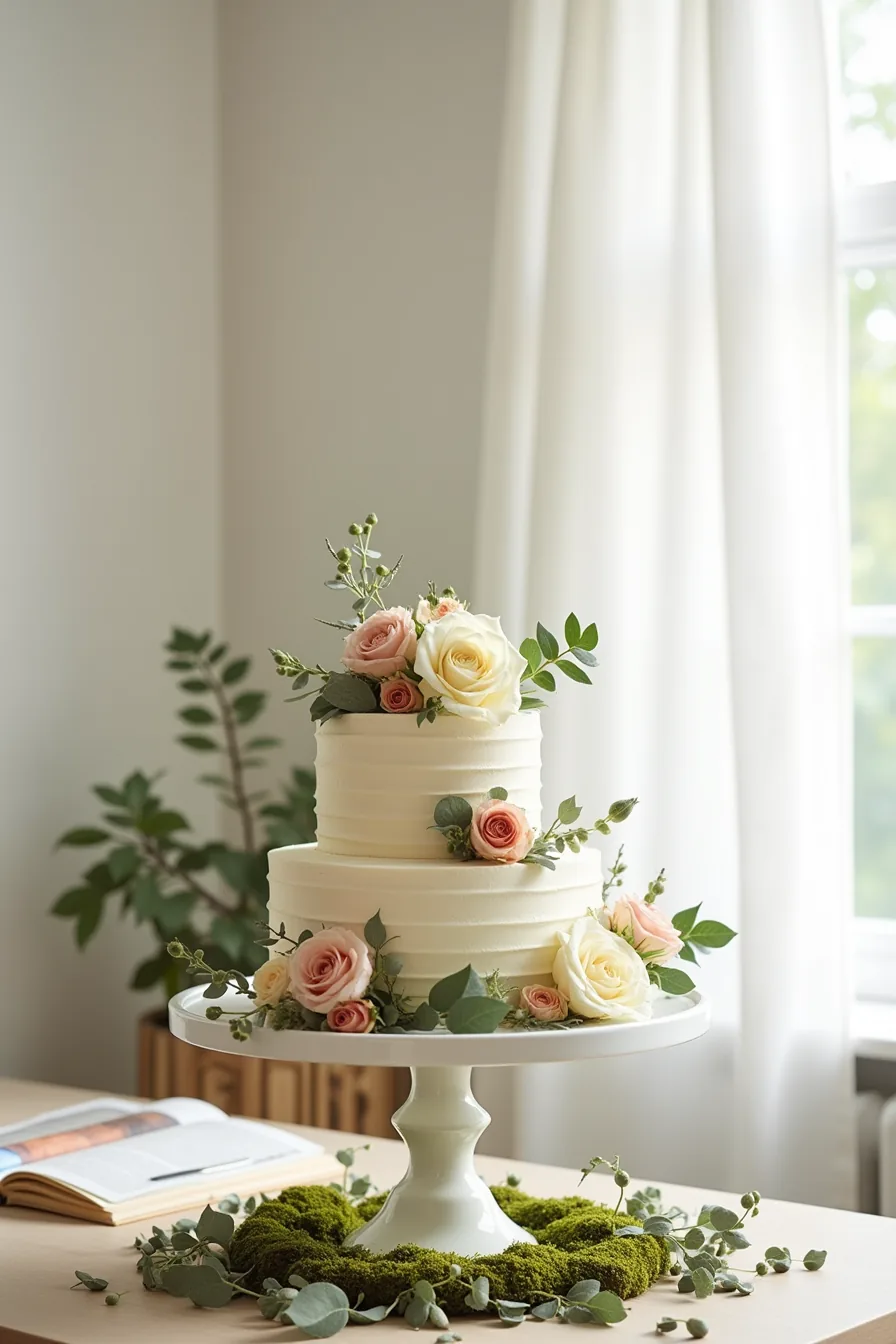
A three-tiered cake stand is the backbone of this arrangement, giving you instant height and structure without a single vase. On the tiers, cluster cream and blush roses with white ranunculus, letting the smaller blooms fill gaps between the larger heads. Trail eucalyptus sprigs over the plate edges to soften the hard lines and pull the eye downward, then scatter moss and small stones around the base to anchor the piece to your table’s surface.
This setup suits medium to large tables, roughly 6 feet or longer, because the footprint of the stand itself is about 10 to 12 inches wide, and the trailing greenery needs breathing room. Expect to spend $45 to $75 on fresh flowers at a local market in early spring, or roughly half that if you substitute carnations for roses. Budget for a 30-minute assembly the morning of your meal, and note that the eucalyptus will wilt fastest; remove it before the flowers if you plan to reuse the stand for multiple days.
Minimalist Tablescape with Geometric Place Settings
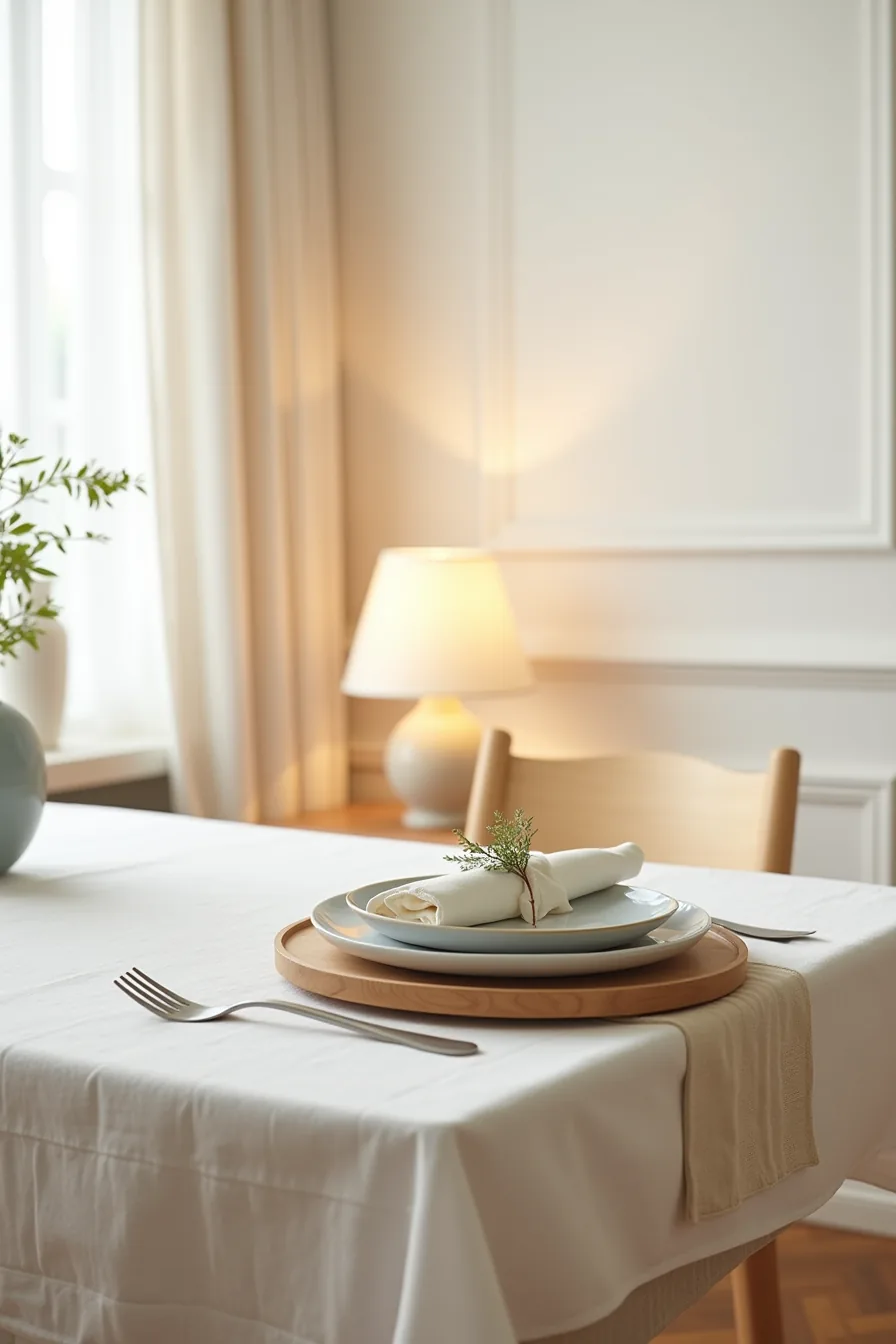
Layer a cream linen runner over a soft gray tablecloth, letting the edges hang unevenly for an intentionally relaxed feel. Set a wooden charger beneath a geometric ceramic plate at each seat, then fold your napkin into a simple rectangle and tuck a single tulip or ranunculus stem under the fold, no vase required.
This look works best on small to medium tables (4 to 6 feet) because each place setting needs only about 18 inches of width, and the flat profile keeps sightlines clear across the table. Everything is removable and leaves zero trace, making it ideal for renters or anyone who prefers to change decor seasonally. Expect to spend $30 to $60 for a full set of linens and chargers from a home goods store, or borrow chargers from a friend to drop that closer to $15.
Cleanup takes under five minutes: strip the linens, wash on delicate, and store the chargers stacked flat. For Practical Easter Dining Table Decor planning tips, keep the palette to two neutrals plus one accent color, anything more reads busy at this scale.
Vintage Egg and Nest Styling for Smaller Tables
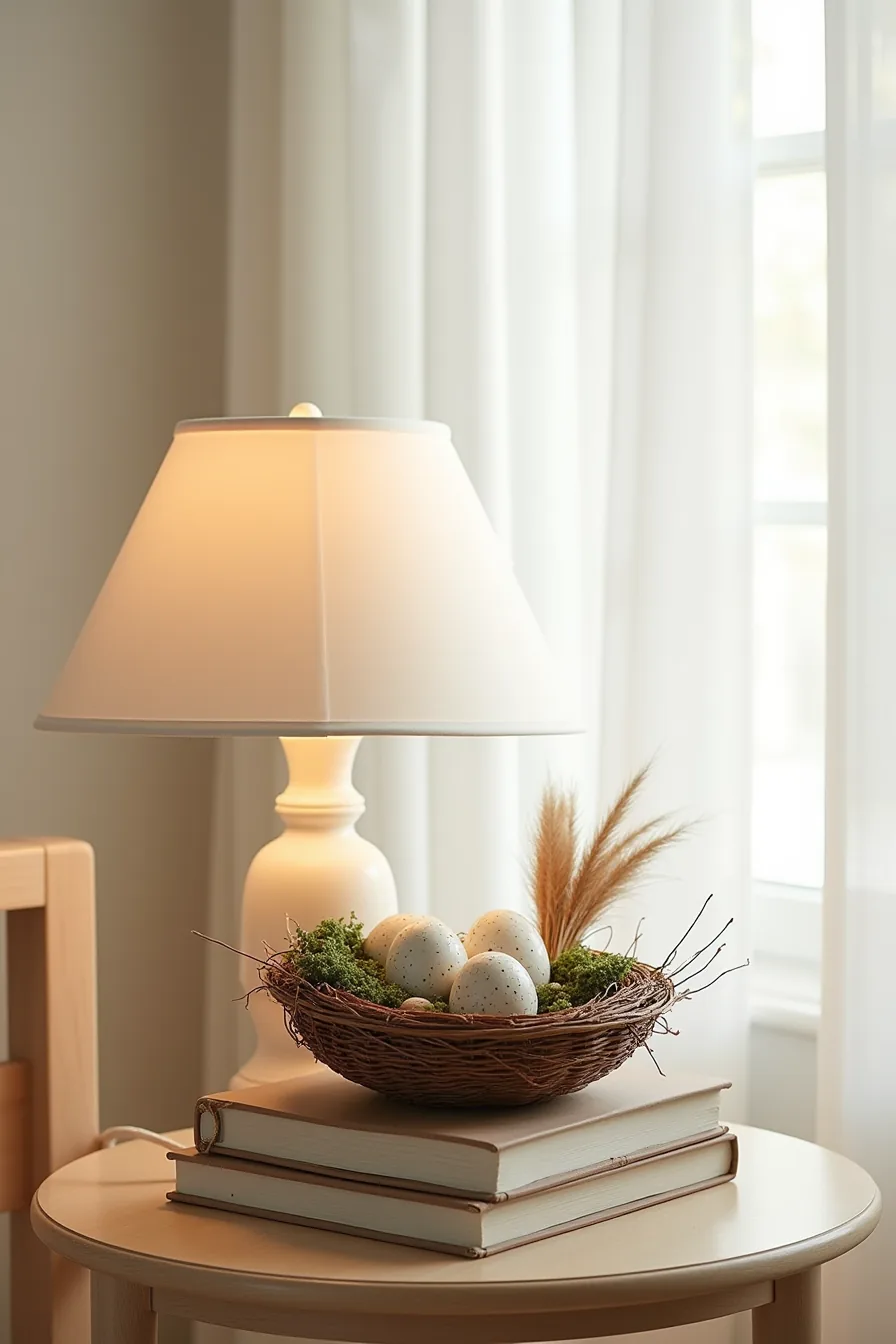
A woven nest filled with speckled ceramic eggs works best at the center of a 30- to 36-inch round table, or as a sideboard accent for a 6-foot rectangular table. Anchor the nest on a stack of two or three moss clumps to raise it slightly, then tuck dried grasses around the rim at irregular angles to soften the silhouette. Add two or three faux birds perched on the tabletop itself, not inside the nest, to keep the arrangement from looking crowded in a compact footprint.
The shallow, low profile, roughly 4 to 6 inches tall, keeps sightlines open across the table, so guests can still converse without leaning around a towering centerpiece. This style suits casual dining rooms, breakfast nooks, or kitchens with limited surface space where a full tablescape would overwhelm. Sourcing is straightforward: craft stores carry woven nests and ceramic eggs year-round, and dried grass bundles run $8 to $15.
Dust the moss with a dry paintbrush before each use, and store the eggs in a lidded bin to prevent chipping; expect the moss to last one to two seasons before replacement.
Budget-Conscious Paper and Cardstock Garlands

You can build a complete Easter table setup for under $25 by cutting your own garland from cardstock. This approach works best in dining rooms where you want color at eye level rather than competing with a centerpiece, the draping shapes frame the table without occupying its surface.
Cut bunnies, eggs, and tulips from pastel cardstock using a craft knife or scissors, then thread them onto cotton string with a needle, spacing pieces 3 to 4 inches apart. A 6-foot table needs roughly 8 feet of garland, which takes 45 to 60 minutes to cut and assemble. Drape it across the table edge so it hangs 8 to 12 inches down, low enough to read clearly, high enough to clear guests’ knees when they sit.
The paper shapes hold up for one season if stored flat in a manila envelope, and you can swap colors yearly for near-zero cost. This is the practical budget vs. Splurge Easter Dining Table Decor choice: the total investment is about $12 to $18 for cardstock and string, versus $50 or more for a comparable ceramic garland. Skip this option if you’ve toddlers who pull at hanging objects, the string will snap under repeated tugging.
Investment-Level Ceramic and Linen Layering
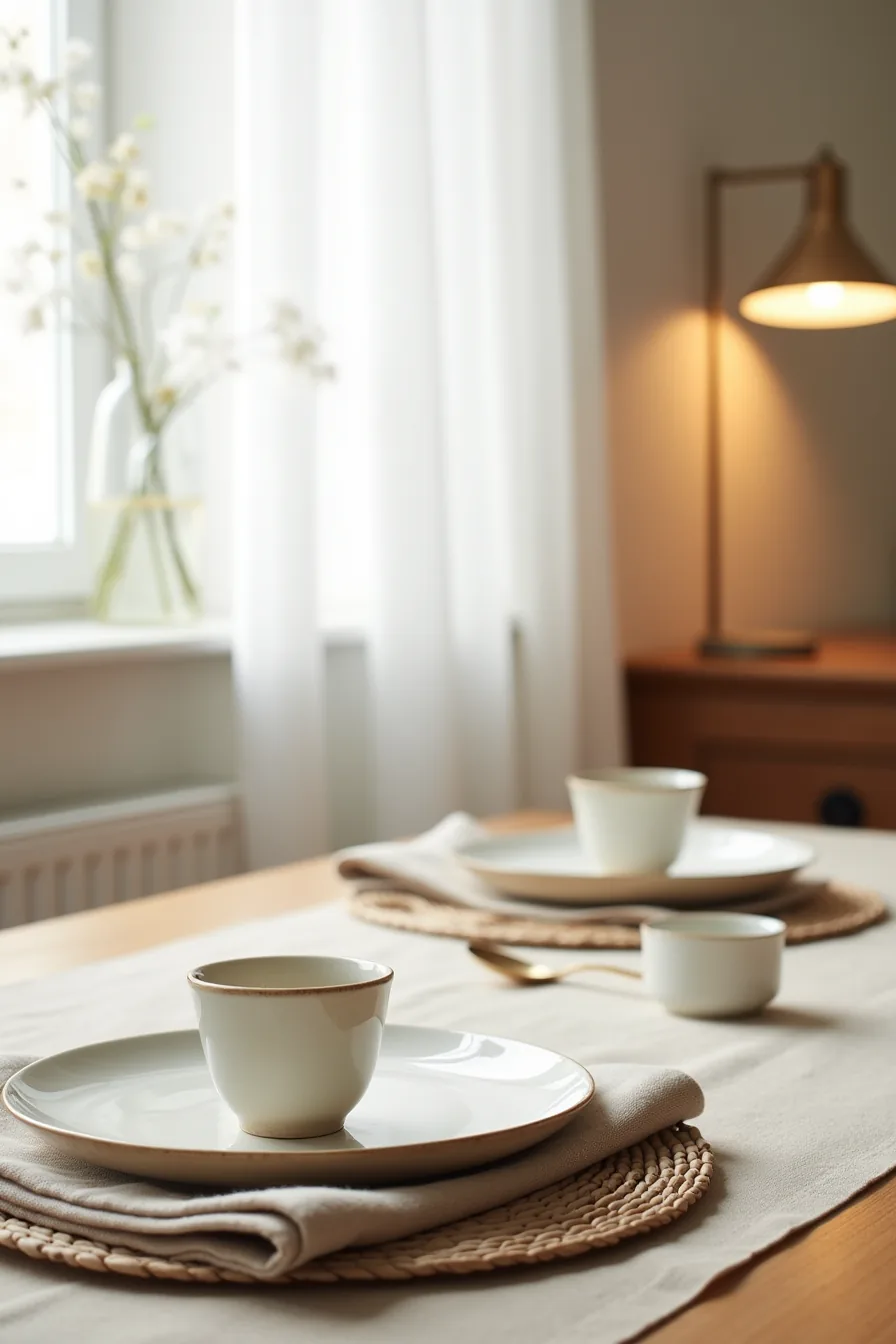
If you want a table that improves with age, invest in pieces that survive trends: a handmade ceramic plate with subtle glaze, a heavyweight linen napkin in a natural tone, a ceramic egg cup, a vintage-style serving spoon, and a quality cotton runner. These five items form the core of a reusable Easter table that costs $180 to $300 upfront but eliminates annual replacements.
The ceramic plate’s irregular glaze hides the minor scratches that porcelain shows after years of use, while the linen napkin, unlike cotton, softens rather than thins with each wash. The runner protects your table surface and anchors the place setting visually, so you can keep the centerpiece minimal without the table feeling unfinished.
This approach suits a medium dining table (6 to 8 feet) where you host regularly and want Easter to feel substantial, not seasonal. Care requires commitment: hand-wash the ceramics, machine-wash linens on gentle with cold water, and iron the napkins while slightly damp to avoid creases. Expect the runner to fade subtly after 20-plus washes, a natural patina that reads as intentional.
If you rent, skip this route; the investment makes sense only when you control the space for five or more years.
Common Mistakes and How to Avoid Them
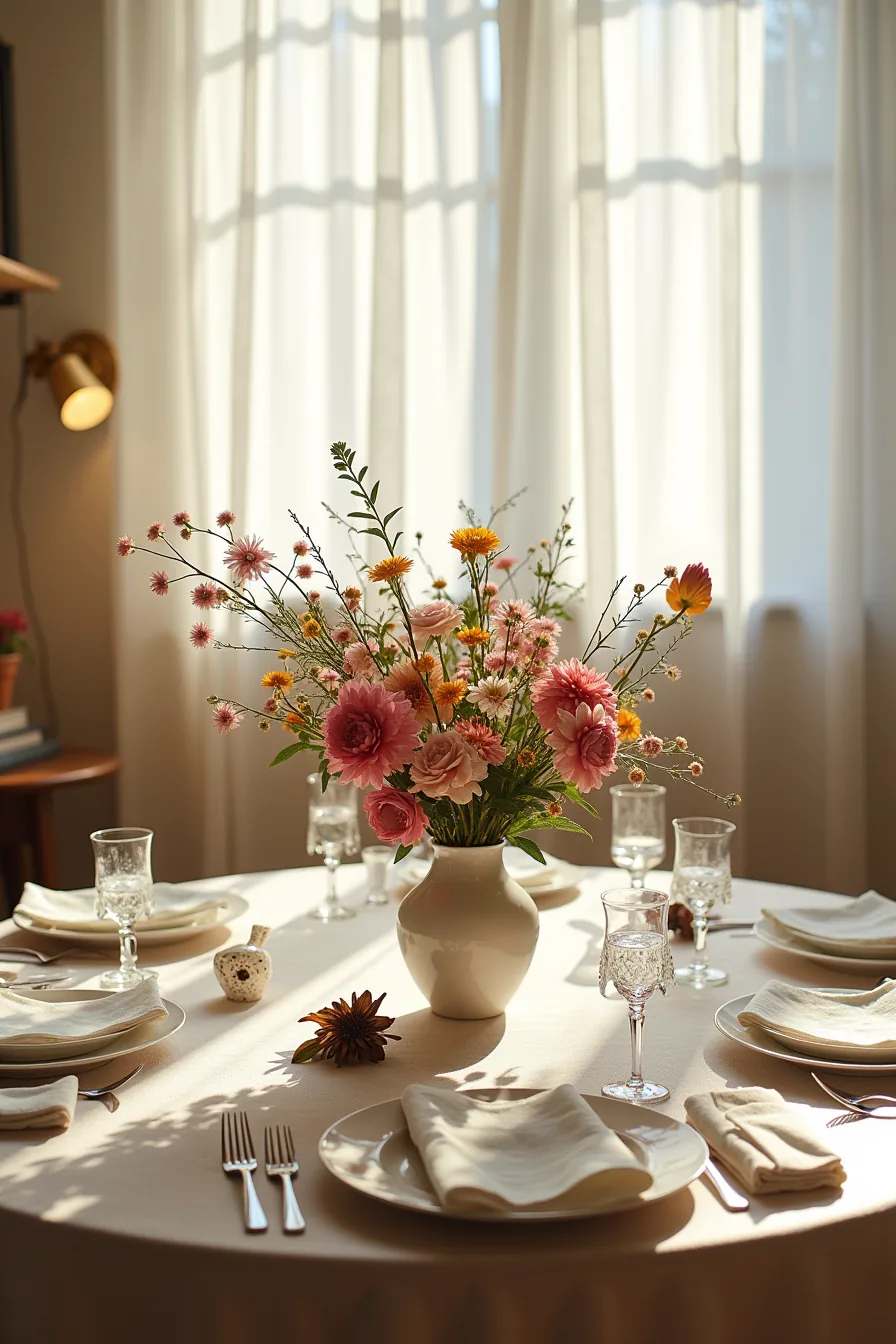
The most frequent Easter Dining Table Decor mistakes to avoid cluster around scale and sightlines. An overcrowded centerpiece, think a massive vase stuffed with blossoms flanked by three candlesticks and a stack of decorative eggs, blocks guests from seeing each other and forces them to lean sideways to converse. When you place an oversized vase with only tiny stems inside, the proportion fails twice: the vessel dominates the table while the flowers read as an afterthought.
Keep any centerpiece below eye level (roughly 10–12 inches tall) and leave at least 6 inches of clear tabletop on each side for plates and glasses.
Wilting stems in water signal neglect, not romance; trim tulips or daffodils every other day and change the water to extend their life from 3 days to a week. Crushed napkins happen when you stack them under heavy charger plates, instead, fold them upright in a glass or lay them flat beside the fork. Material durability also matters: avoid paper linens if you’re serving gravy or red wine, and skip plastic eggs on a polished wood surface where they slide into laps.
If your table seats more than six, skip the single long runner; two smaller mats placed at intervals prevent fabric bunching and protect the surface where spills actually occur.
Where to start
You don’t need a full tablescape to get the effect. Pick one anchor piece, a runner, a centerpiece bowl, or a set of napkins, and build around it. Measure your table length first; a runner should hang 6–10 inches off each end, and a centerpiece should leave at least 12 inches of clear space per place setting.
Start with what you already own. A white tablecloth plus fresh tulips and dyed eggs in a plain ceramic bowl reads as Easter without a single themed purchase. If you’re renting, skip the tablecloth and use a washable runner you can store flat.
Your next step: set your table tonight with one existing item and one new element. That’s it.
Frequently Asked Questions
What’s the difference between Easter dining table decor for a small apartment versus a large dining room?
In a small apartment, scale down to a single centerpiece under 12 inches tall and use wall-mounted or shelf decor to save table space. Large dining rooms can support layered runners, multiple arrangements, and taller pieces up to 18 inches.
How far in advance should I source Easter dining table decor items?
Order non-perishable items like linens, ceramics, and faux florals 3-4 weeks before Easter Sunday. Fresh flowers and real eggs should be purchased no more than 3 days ahead to stay fresh.
Can I reuse Easter dining table decor pieces year to year, and what materials hold up best?
Yes, reuse pieces indefinitely if you choose ceramic, glass, brass, linen, or silk. Fabric napkins and wood trays last decades with gentle washing. Avoid paper, unreinforced plastic, and fresh greenery for year-to-year repeat use.
What’s a realistic budget range for Easter dining table decor if I’m starting from scratch?
Expect to spend $40-$80 for a modest table with a runner, napkins, and faux eggs. A curated collection with linens, porcelain bunnies, and a centerpiece runs $120-$200. Premium stoneware or custom pieces push $300+.