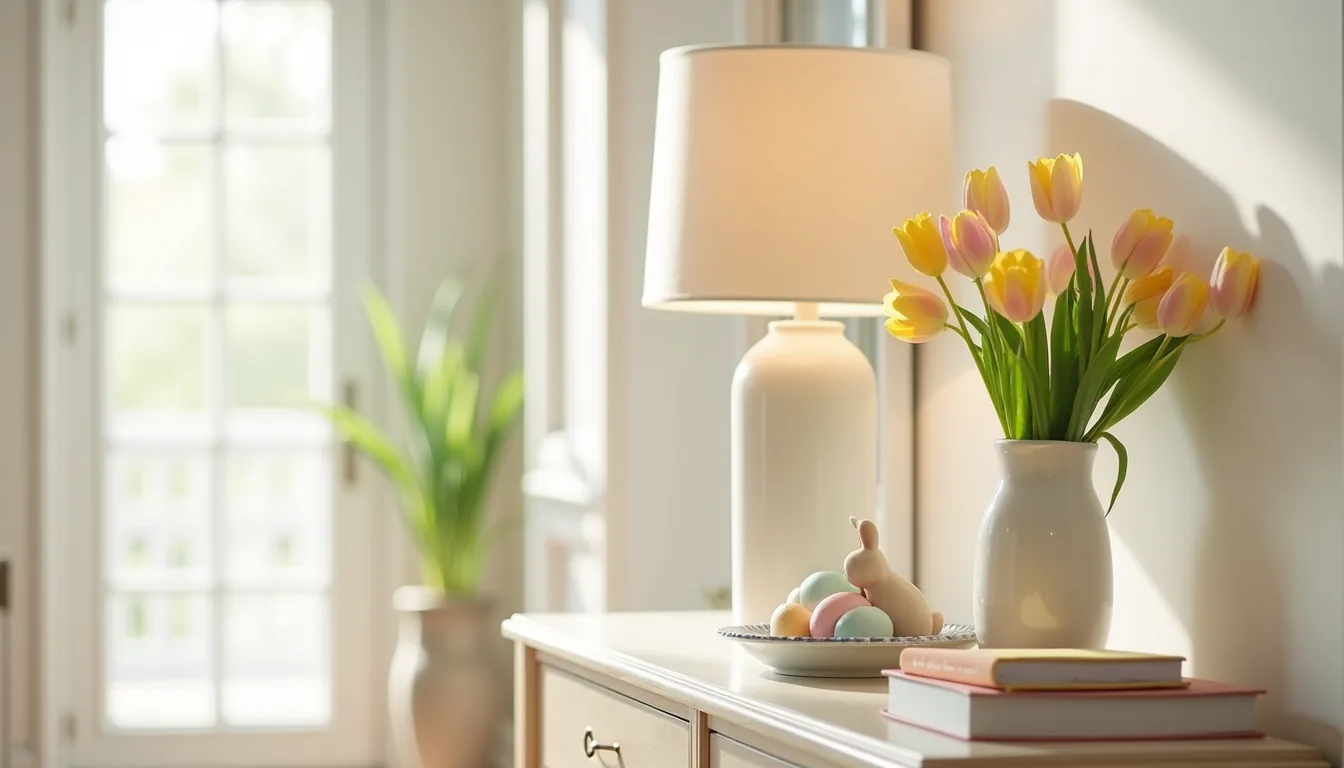

Your entryway table is the first surface guests see and the last one you pass on the way out, so Easter entryway table decor should balance a seasonal statement with everyday function rather than stacking up fragile bunnies that topple when you grab your keys. The trick is to treat the space as a working zone, not a display shelf, which means choosing pieces that survive a slammed door and a dropped mail pile. The six setups below range from a 15-minute refresh with items you already own to a permanent fixture with storage built in, each sized for a specific table width and traffic flow.
You’ll learn exactly what to measure, which materials hold up to daily contact, and where to skip the decor entirely for safety.
Key takeaways
- Scale dictates success: A 36-inch console needs decor under 24 inches tall, while a 60-inch table allows a 30-inch centerpiece without overwhelming the space.
- Renter-safe adhesion: Use Command strips rated for 4 pounds or less on painted walls, and always test a 1-inch patch underneath the table leg before committing.
- Budget sequencing: Spend on a durable ceramic vase ($20–$40) and save on faux florals ($5–$15), since pastel stems fade and get replaced seasonally.
- Ventilation matters: Keep decor at least 6 inches clear of baseboard heaters and 12 inches from return vents to avoid fire hazards and airflow blockage.
The Pastel Centerpiece Route: Soft Colors and Fresh Florals
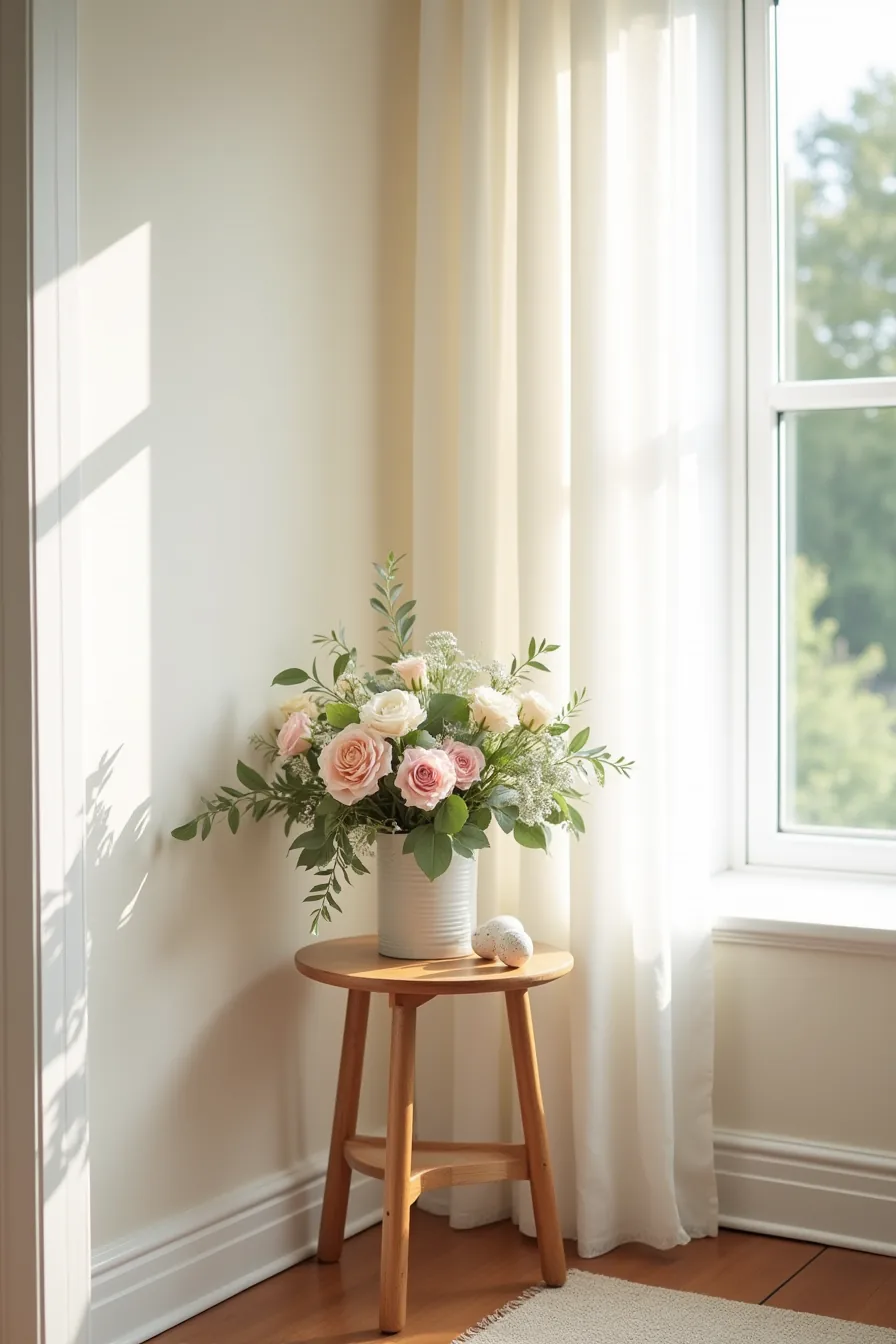
For small to medium entries, a single low arrangement delivers the seasonal shift without demanding floor space or blocking your path. A 24-30 inch round side table in a corner entry is the ideal staging point; position the arrangement at the table’s center so it clears the edge by at least 4-6 inches on all sides.
Build your centerpiece around ranunculus and garden roses in soft pink, cream, and sage tones, with eucalyptus greenery trailing slightly over the container’s rim. Low and wide beats tall and narrow here, keep the total height under 18 inches so sightlines stay open when you walk through the door. Tuck 3-5 speckled ceramic eggs around the base of the vessel; they anchor the florals to the Easter theme without adding visual noise.
This route suits anyone who already maintains fresh flowers or is willing to replace them weekly. Expect to refresh the water every 2-3 days and swap wilted stems within a week. The ceramic eggs are a reusable investment that carries into future seasons; the flowers are the only recurring cost, typically running $25-$40 per week from a florist or grocery store.
Minimalist Approach: One Statement Piece and Breathing Room
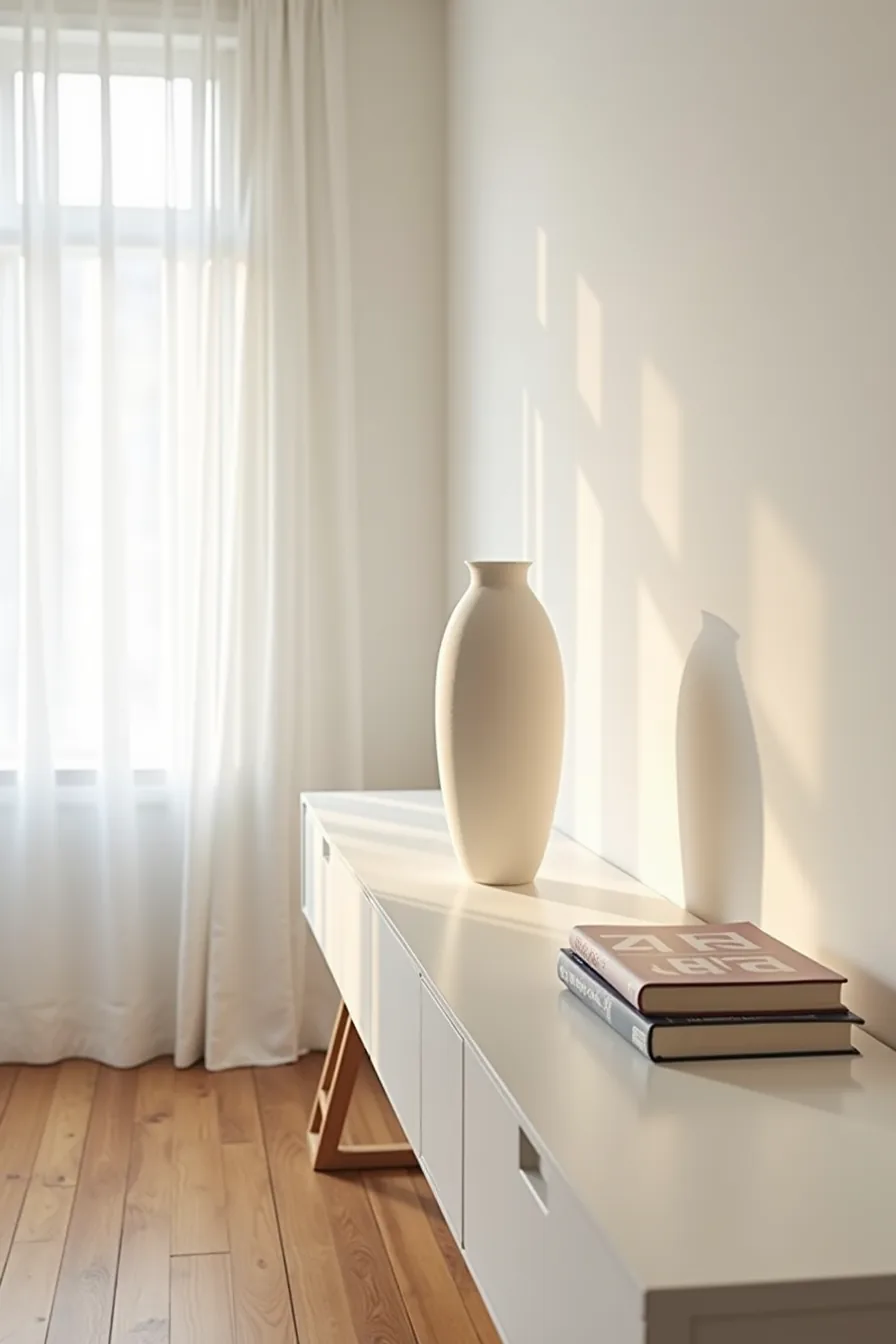
A wide console table, typically 48-60 inches, carries a single tall sculptural ceramic vase in matte white, positioned off-center at roughly the one-third mark. Two-thirds of the surface stays deliberately empty. This negative space is the design; it creates a visual pause that reads as intentional calm rather than incompleteness.
This route suits modern, industrial, or Scandinavian interiors where clutter reads as noise. Renters benefit most: one piece means one item to pack, and a freestanding console avoids wall anchors. The vase itself runs $60-$150 depending on the maker; it functions year-round, so the Easter connection comes through its egg-like silhouette rather than overt theming.
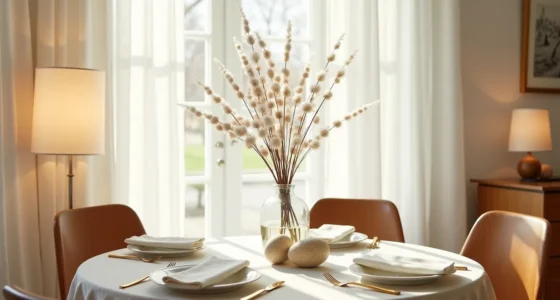
Keep the vase’s height between 20-30 inches so it clears eye level without dominating the room. Dust the ceramic weekly with a dry microfiber cloth; skip water and cleaners, which can streak matte finishes. Pair it with a neutral runner or a single sprig of fresh pussy willow in the vase if you want a seasonal nod without compromising the restraint.
For practical Easter entryway table decor planning tips, this approach proves that one well-chosen object outperforms a crowded tableau in tight spaces, especially where you need to drop keys and mail without handling around decor.
Layered Tablescape: Mixing Heights, Textures, and Seasonal Accents
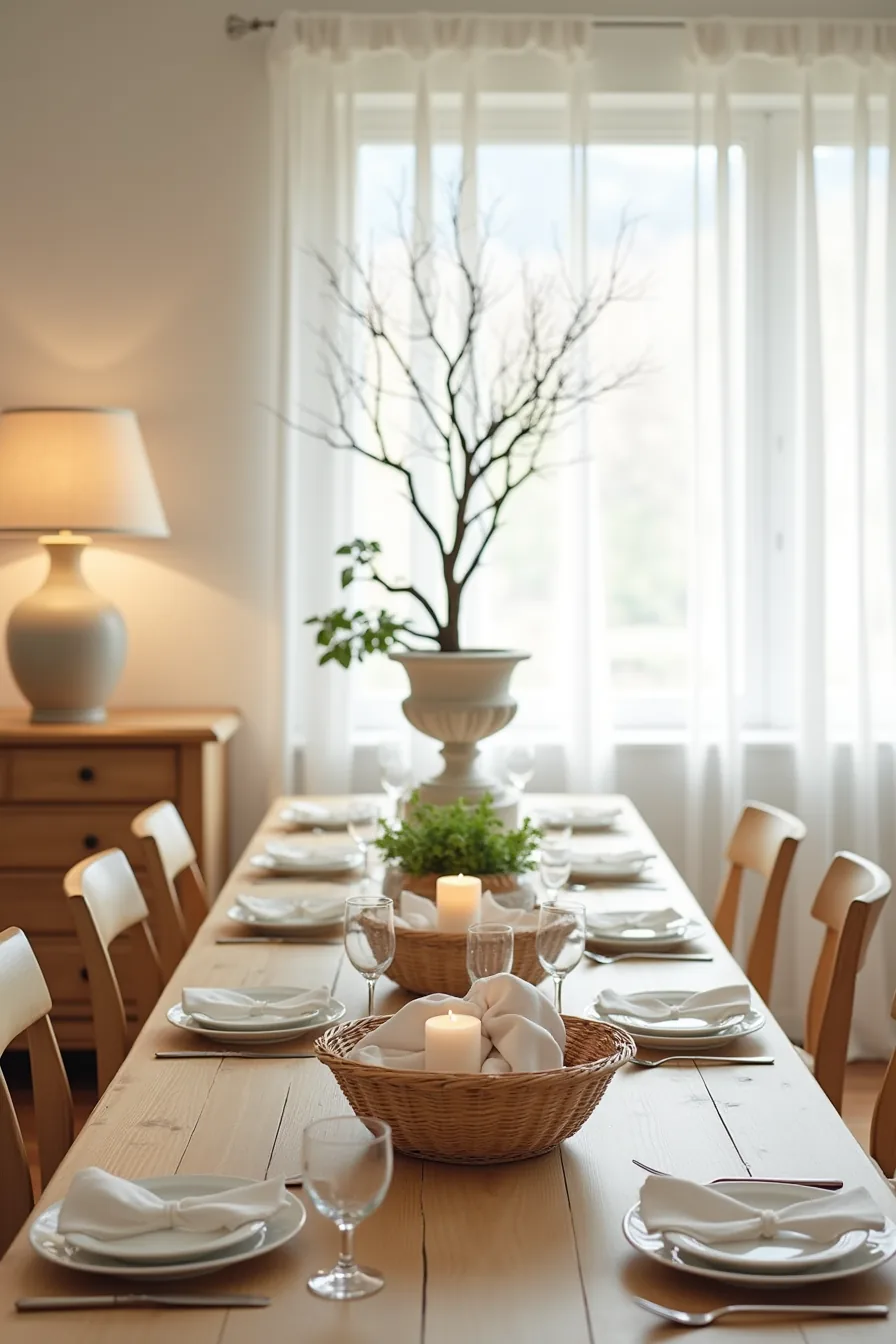
When your entryway table runs 60-72 inches, flat styling reads as sparse. The solution is a tiered arrangement that guides the eye backward: place a tall branch in an urn at the back, a medium potted hyacinth at center, and a low woven basket holding folded linens at the front. Candles and place cards fill the gaps between these layers, creating a dense but organized composition that invites closer inspection.
This setup suits traditional, farmhouse, or eclectic homes where visual storytelling matters more than negative space. You’ll need a minimum depth of 10-12 inches to avoid crowding the surface, measure your table’s depth before committing to the urn and basket. The branch should reach 30-36 inches tall; anything shorter collapses the vertical line, while anything taller forces guests to duck when entering.
Budget-wise, this is the most flexible route: a branch costs $5-15 from a florist or your own yard, the hyacinth runs $8-12 potted, and the basket and linens are reusable across seasons. Maintenance is the real trade-off. The branch sheds needles or petals within 7-10 days, and the hyacinth needs watering every other day.
Replace the branch with dried pussy willow or faux forsythia if you want the same silhouette without the weekly cleanup, just dust the urn monthly with a soft brush.
Renter-Friendly Swaps: Temporary Decor That Leaves No Trace
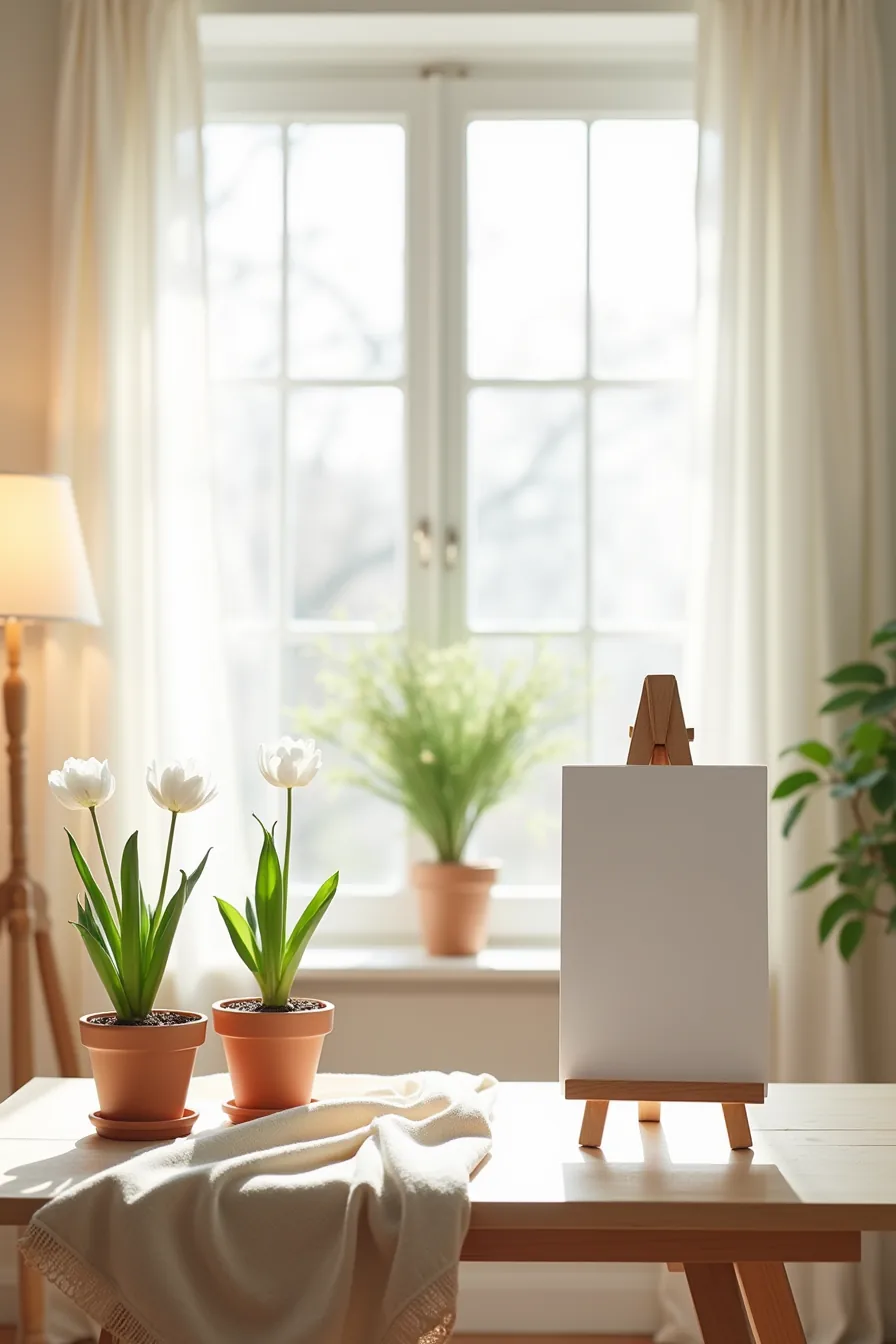
The entryway table dressed with three potted spring bulbs in plain terra-cotta pots proves you need none of the permanent fixtures, no hooks, nails, or wall anchors. Set the pots directly on the surface or atop a stack of books; the clay absorbs water rings, so use a saucer or a folded cloth underneath if you water in place. A fabric table runner draped, not pinned, over the table’s edge anchors the arrangement without adhesive, and it folds away in minutes when your lease inspection looms.
A standing wooden easel holding a paper banner completes the look with zero wall contact. Choose an easel with rubber feet to avoid scuffing wood or tile floors, and keep the banner light enough that the easel doesn’t tip, cardstock or lightweight paper under 2 pounds works best. This setup suits renters, dorm residents, or anyone who changes decor seasonally; the total cost lands between $25-40 for new materials, and the pots and runner carry into summer with different stems.
The trade-off is height: the easel gives you 48-60 inches of vertical interest, but it consumes roughly 18 inches of floor space in front of the table, so measure your walkway clearance before committing.
Budget vs. Investment Trade-offs: Where to Spend and Where to Save
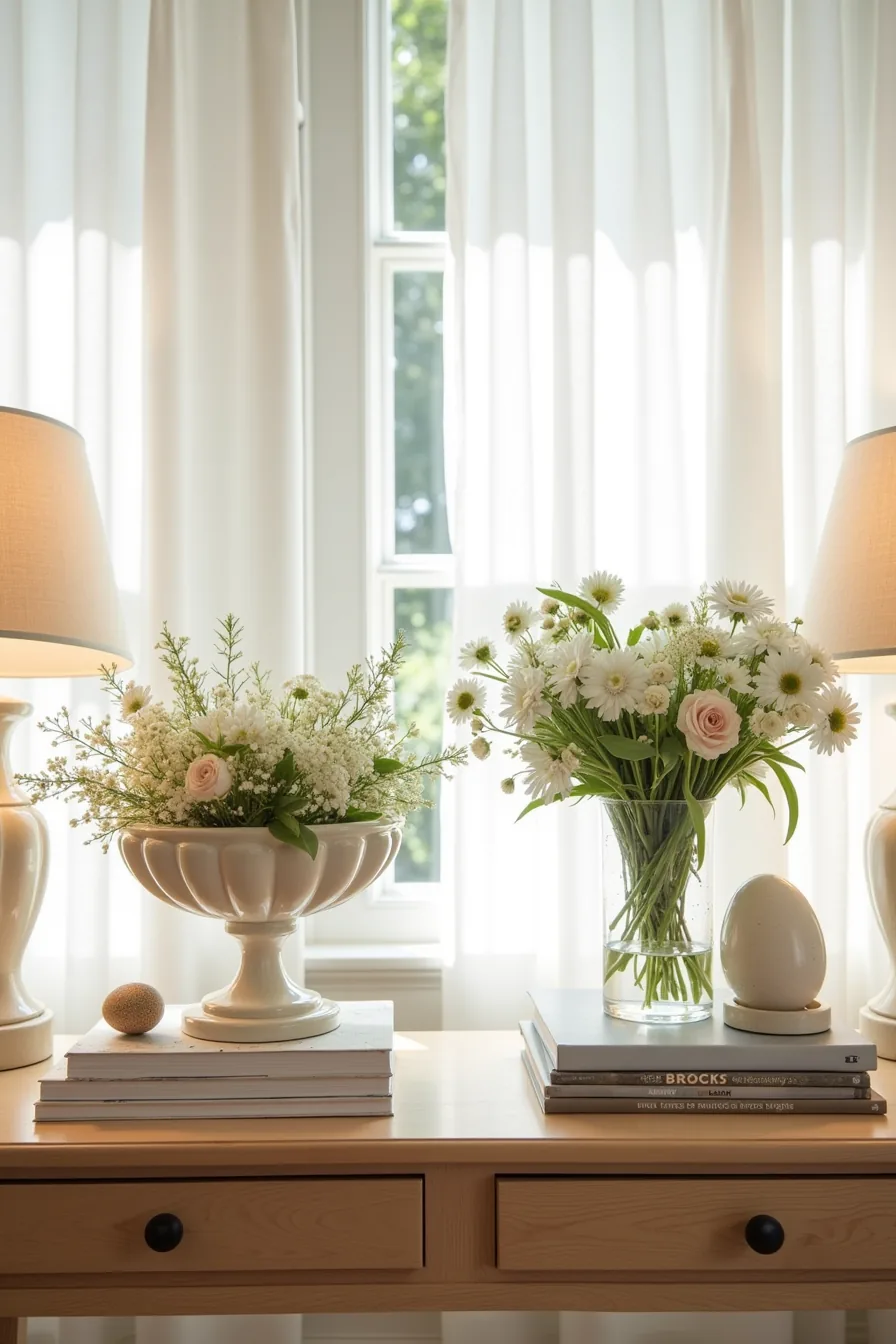
Split your table evenly and you’ll see the return per dollar immediately. On the investment side, one heirloom ceramic compote anchors the arrangement for decades, expect to pay $60-120 for a piece you’ll pass down, and it works year-round with seasonal stems swapped in. That’s the only piece worth splurging on; it delivers visual weight that budget items simply can’t replicate.
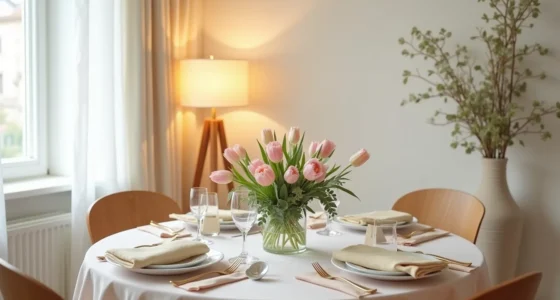
The savings side relies on items that cost under $15 total: grocery-store tulips in a plain glass vase, craft eggs, and dollar-store greenery. These look intentional when clustered, but they degrade within 7-10 days, so budget roughly $5-8 per refresh. The trade-off is time versus money, you’ll replace flowers weekly, while the compote requires zero maintenance beyond an occasional wipe.
Most homeowners find the sweet spot at a 70/30 split: three budget pieces to every one investment piece. Reserve splurges for ceramics and metalwork that withstand years of handling; save on anything organic, disposable, or trend-driven, since Easter palettes shift annually and last season’s pastels look dated quickly.
Common Mistakes and How to Avoid Them
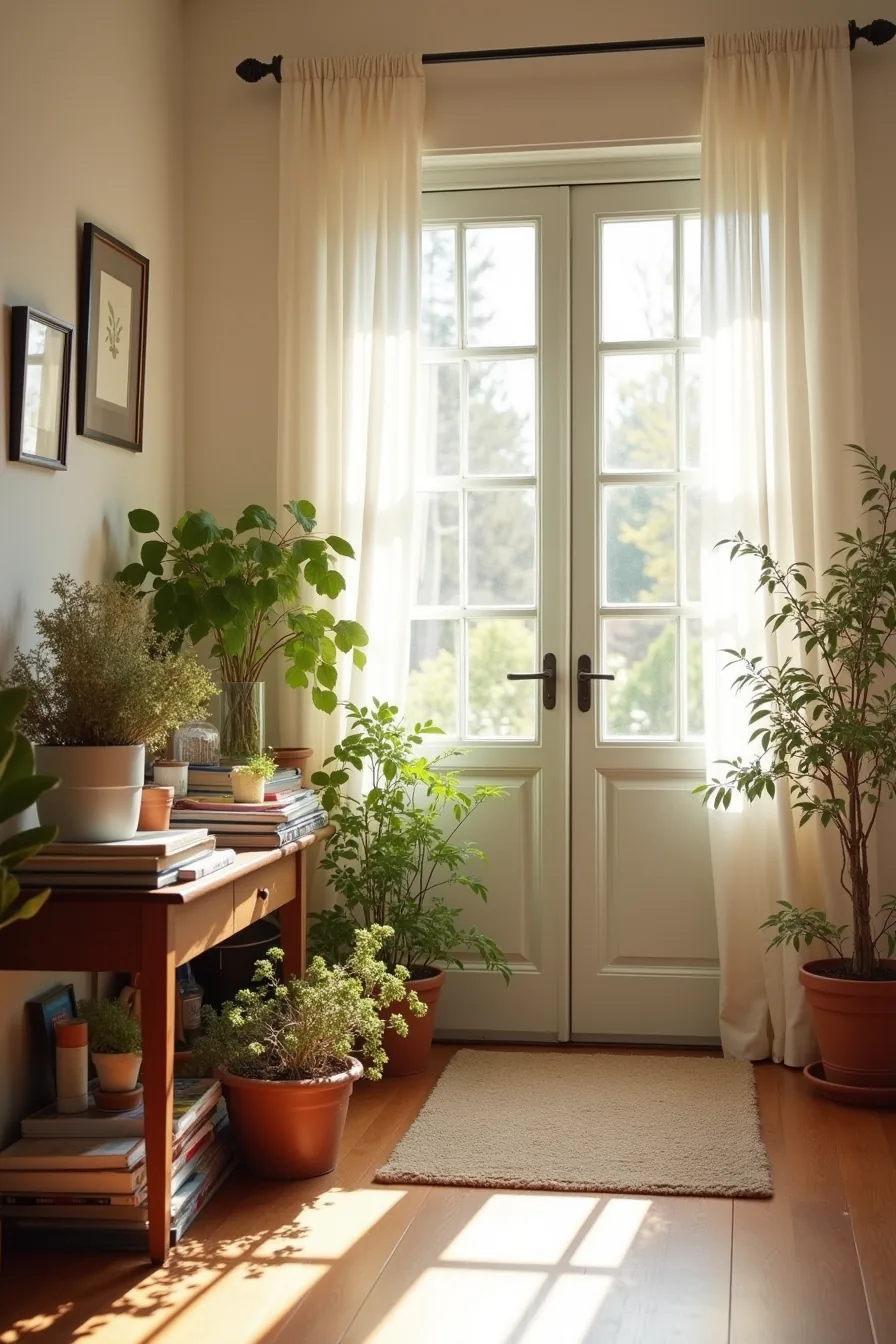
The most frequent failure in Easter entryway table decor is overcrowding. When you stack mismatched containers, tangled greenery, and drooping flowers edge-to-edge, the table stops being a welcome gesture and becomes a visual roadblock. A crowded composition also forces items past the table’s front edge, which narrows your walkway by several inches, a real problem in a passage you use daily with grocery bags or kids in tow.
Color clashing sneaks in when you mix warm pastels with saturated tones or add too many metallic finishes. Restrict your palette to two hues maximum, say, soft yellow and white, then use texture, not color, to create interest. A few oversized elements beat a dozen small ones: one substantial ceramic urn flanked by two short candleholders occupies the same footprint as five mismatched vases, but reads as intentional rather than chaotic.
Scale errors compound the problem. A table that’s 36-42 inches wide calls for a centerpiece no taller than 18-24 inches; anything higher blocks sightlines into the living room and forces visitors to duck around it. Drooping flowers signal neglect within 48 hours, so budget ten minutes every other day to remove wilted stems and refresh water.
If you can’t commit to that maintenance, switch to quality faux stems, they pass inspection from arm’s length and eliminate the decay factor entirely.
Where to start
Start with your table’s actual surface area. Measure the depth and width first; you need at least 6–8 inches of clear space at the front edge for daily items like keys and mail. Choose one anchor piece, a tall vase, a tiered stand, or a single large bowl, and build everything else around it in odd numbers (three or five items total).
Commit to a 10-minute styling session tonight. Pull three existing objects from other rooms, add one seasonal element, and step back to check sightlines from the doorway. That single assessment tells you whether your arrangement works before you spend a dollar on new decor.
Frequently Asked Questions
How much table space do you actually need for Easter entryway table decor?
A console or sideboard 30–48 inches wide gives you room for a runner, a central arrangement, and two flanking accents. Smaller 24-inch surfaces work if you limit yourself to one tall piece and one low filler.
Can you reuse Easter entryway table decor pieces year to year, or do they look dated?
Yes, if you invest in neutral bases, wooden eggs, ceramic bunnies, galvanized buckets, and swap only seasonal accents like fresh greenery or pastel ribbon. Trendy plastic or neon pieces will look dated within two seasons.
What’s the best way to secure tall items on an Easter entryway table so they don’t tip?
Use museum putty or adhesive pads on the base’s underside for solid surfaces. For vases or branches, fill the container with pebbles or sand before adding stems, this adds 1–2 pounds of stable weight without visible hardware.
How long should Easter entryway table decor stay up before it looks stale?
Two to three weeks, start one week before Easter Sunday and remove by the Tuesday after. Fresh flowers or real eggs should come down within five days, while faux decor can stretch the full three weeks without looking tired.