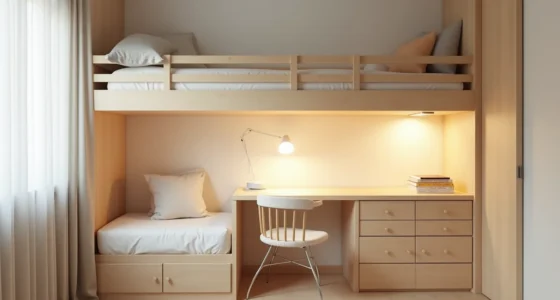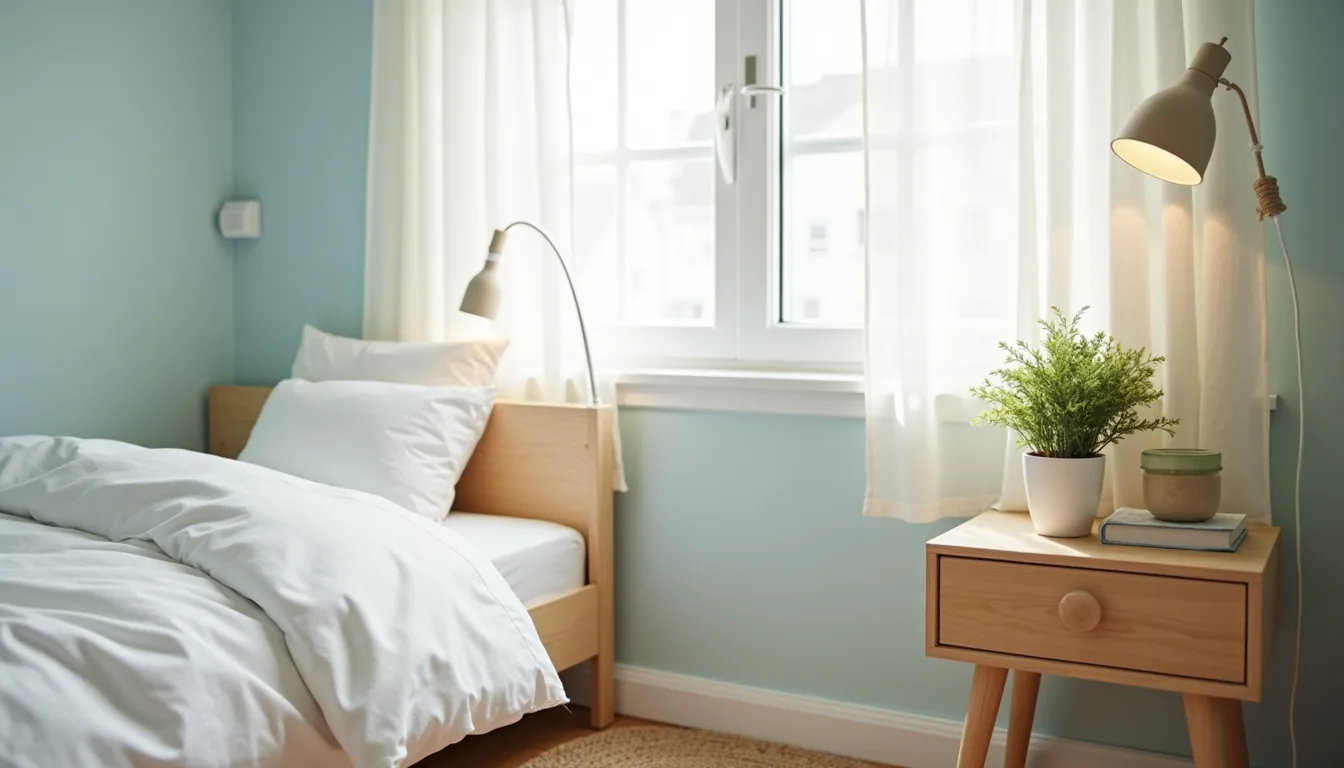

Blue college dorm room ideas go far beyond buying a navy comforter set, and the six approaches below show you how to make blue work with your room’s actual size, your budget, and your lease terms. You’ll get one budget route, one renter-friendly option, and one long-term investment strategy, each matched to a specific room layout. The choices range from peel-and-stick wallpaper to modular storage, so you can find the version that fits your square footage without guessing at scale or sacrificing access to outlets and windows.
Key takeaways
Use paint samples first: Test 3-4 blue swatches on your actual dorm wall for 48 hours, fluorescent lighting shifts navy toward gray and periwinkle toward purple, so judge colors under both daylight and your room’s lamps. Anchor with one dark element: A navy accent wall or cobalt headboard grounds a small space better than scattering blue accents, but keep it to a single surface under 12 feet wide to avoid visually shrinking a 10×12 room. Layer blues by texture, not just shade: Pair a denim-toned rug with a chambray throw and a velvet pillow, mixing cotton, wool, and synthetic fibers adds depth without clashing, and machine-washable materials cut down on dorm laundry trips. Spend on the bed, save on the walls: A $60-80 solid cobalt headboard cover or removable peel-and-stick navy panel delivers the same impact as paint but leaves no deposit deductions, while budget-friendly blue textiles under $30 each can be swapped out yearly.
Coastal Minimal: Light Blue Walls with Natural Textures
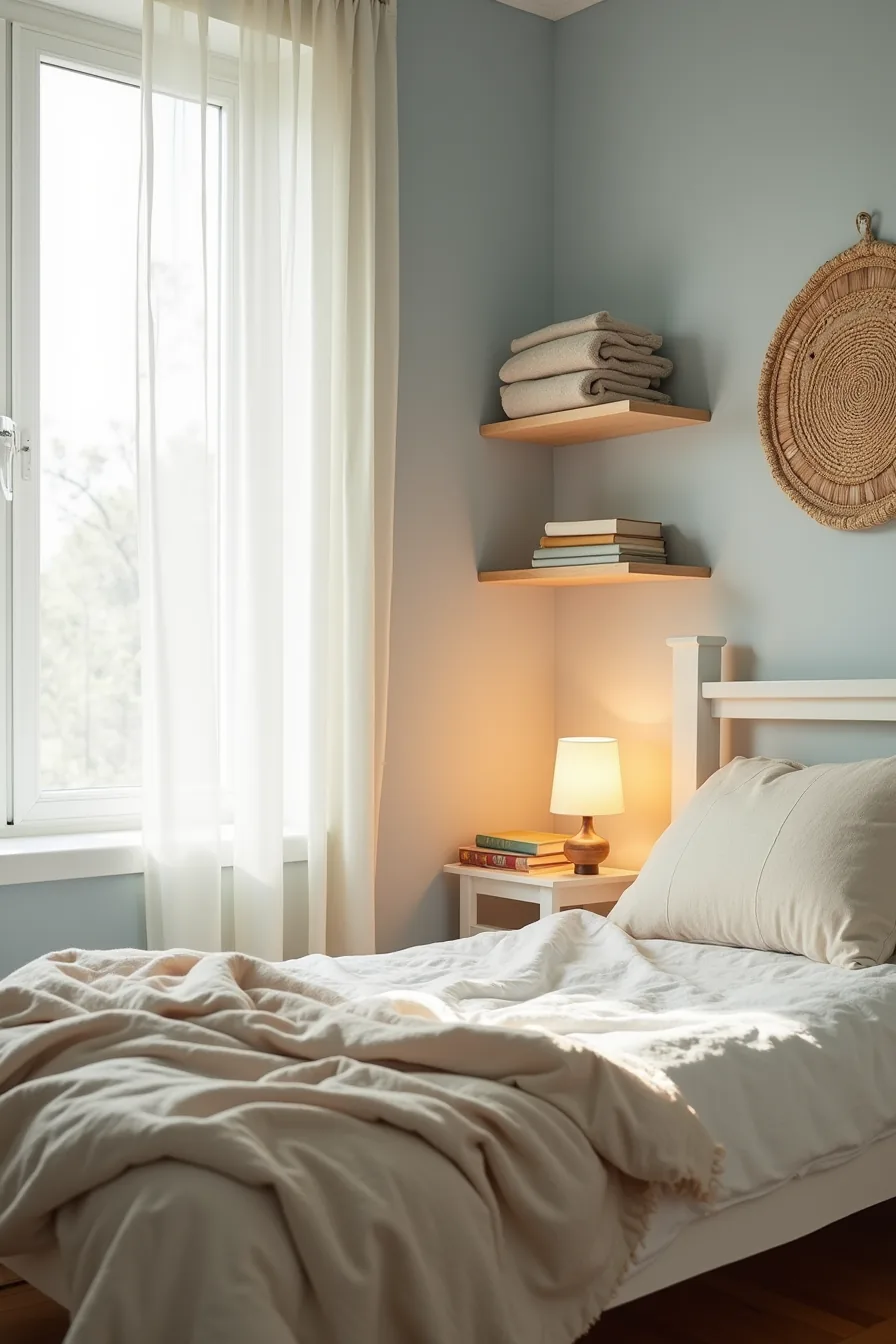
This look suits you if you want a calm, airy room that feels larger than its actual footprint, particularly effective in standard dorms running 80–150 square feet. The soft blue-gray walls recede visually, which pushes the boundaries of a cramped space outward. Pair them with a white wooden bed frame; the contrast keeps the palette crisp without adding visual weight.
A natural linen duvet introduces breathable texture that resists the warmth of shared heating systems, while a woven wall hanging breaks up flat surfaces and adds acoustic absorption. Wooden shelves holding folded cream linens serve double duty: they display your textile stash and keep it off the floor, freeing up valuable square footage. This room is renter-friendly at its core, since you can achieve the wall color with either a landlord-approved paint or high-quality peel-and-stick wallpaper that removes cleanly within a semester.
Budget-wise, prioritize the duvet and shelves, they carry the aesthetic, and source the bed frame secondhand.
Navy Accent Wall with Warm Metallics
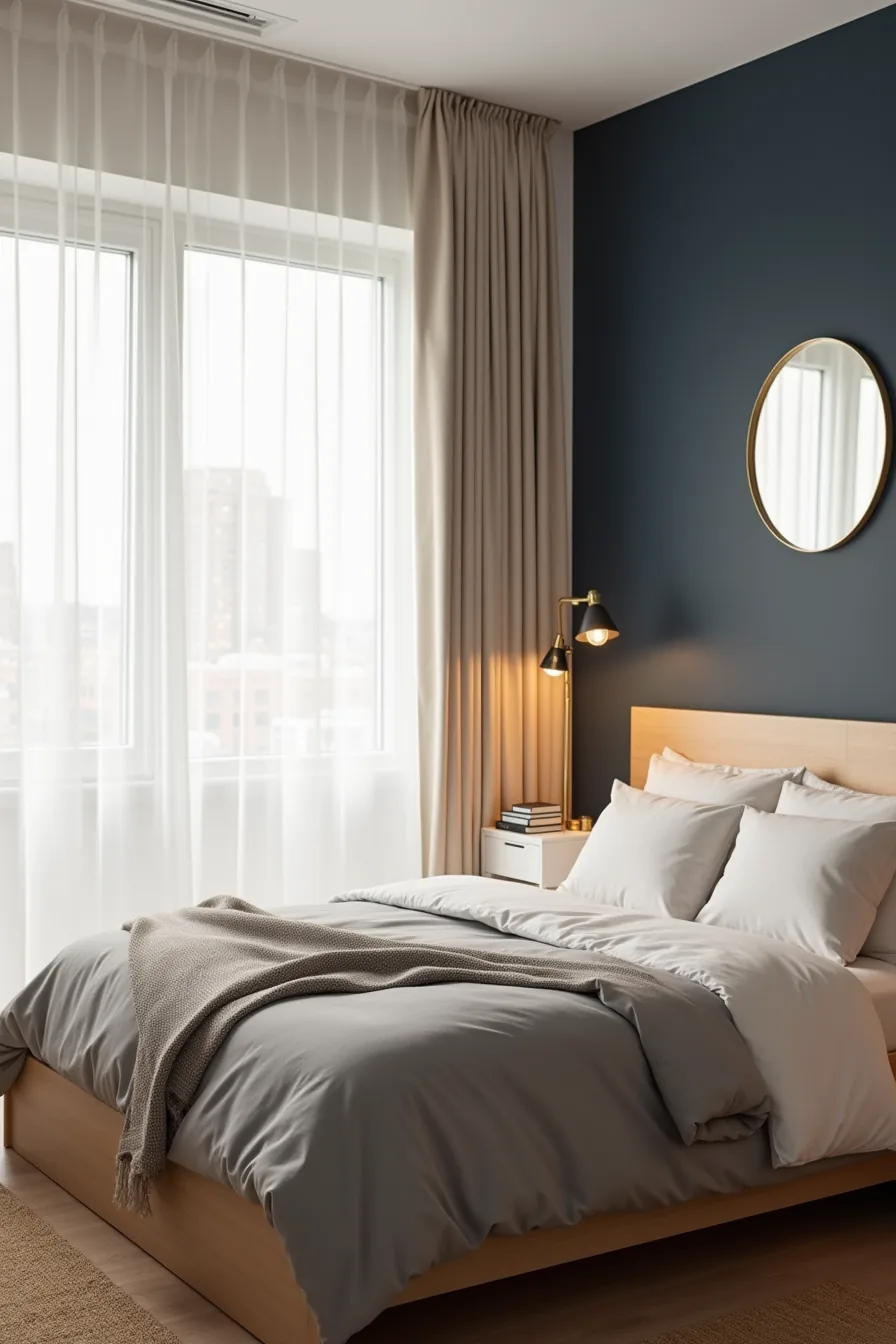
A single deep navy wall transforms a standard dorm into a space with architectural presence, but it demands square footage to breathe. This approach suits medium to large rooms (roughly 120–200 square feet) where the dark surface won’t swallow natural light or make the space feel like a cave. The navy wall behind your bed anchors the room visually, while the gold-framed mirror opposite the window bounces daylight back across the room, a critical trick for keeping the dark wall from dimming the entire space.
The brass desk lamp introduces a warm metallic glow that contrasts the cool blue, and the neutral gray bedding prevents the palette from tipping into nautical cliché. A warm-toned area rug underfoot bridges the cool wall and the brass accents, creating a cohesive temperature balance.
This is a renter-friendly route if you use removable wallpaper rated for dorm walls, expect 2–3 hours for installation and clean removal with a hairdryer and gentle pulling. The white side table keeps the bedside area visually light, and the metallics do the heavy lifting: brass and gold read as intentional even when sourced from thrift stores. Budget roughly $60–$120 for the wallpaper, and prioritize the mirror and lamp as your investment pieces since they carry the entire look.
Cobalt Statement Headboard on a Budget
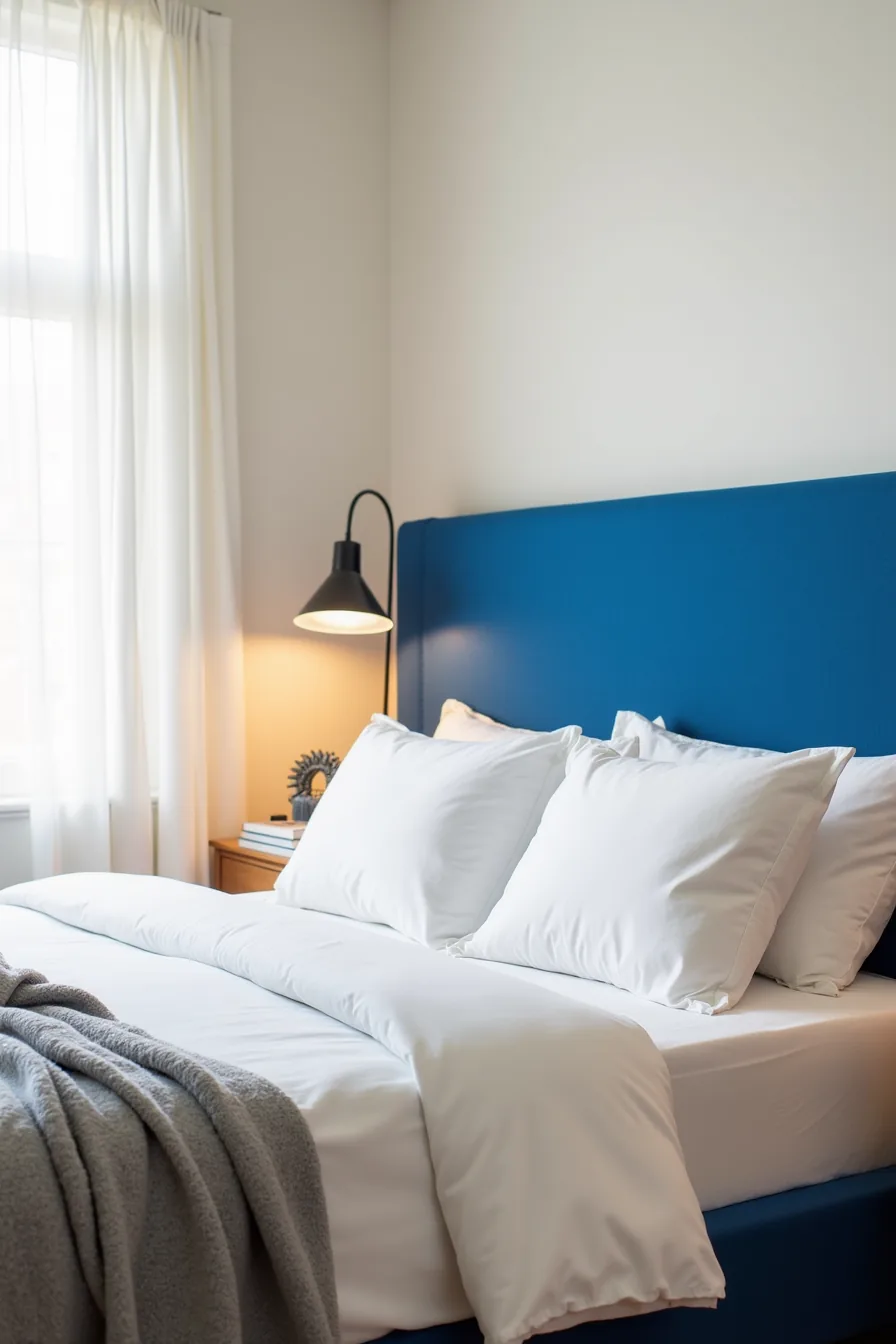
A cobalt upholstered headboard gives you the visual weight of a navy accent wall without sacrificing a single square foot of floor space. That distinction matters in rooms under 120 square feet, where a dark painted wall can compress the room and a bulky headboard can block your only outlet or window access. This project requires a 3/4-inch plywood board cut to your bed width (twin headboards typically run 38–42 inches), 2-inch foam, quilt batting, and roughly 2.5 yards of cobalt fabric, expect 4–6 hours of work and $80–$120 total.
The white pillows and gray throw blanket shown here prevent the cobalt from overwhelming the bed, while the side table and lamp keep the headboard as the single focal point. This suits renters who can’t paint and students who want a bold look they can disassemble and move. Fasten the fabric with a staple gun, then attach the board to your bed frame with heavy-duty zip ties, no wall damage, and the whole unit breaks down in minutes at move-out.
For a faster alternative, adhesive cork tiles wrapped in cobalt fabric take under an hour but feel less finished up close. This represents the budget route within broader Blue College Dorm Room Ideas: one dramatic piece, zero permanent changes.
Layered Blue Textiles: Rugs, Throws, and Bedding
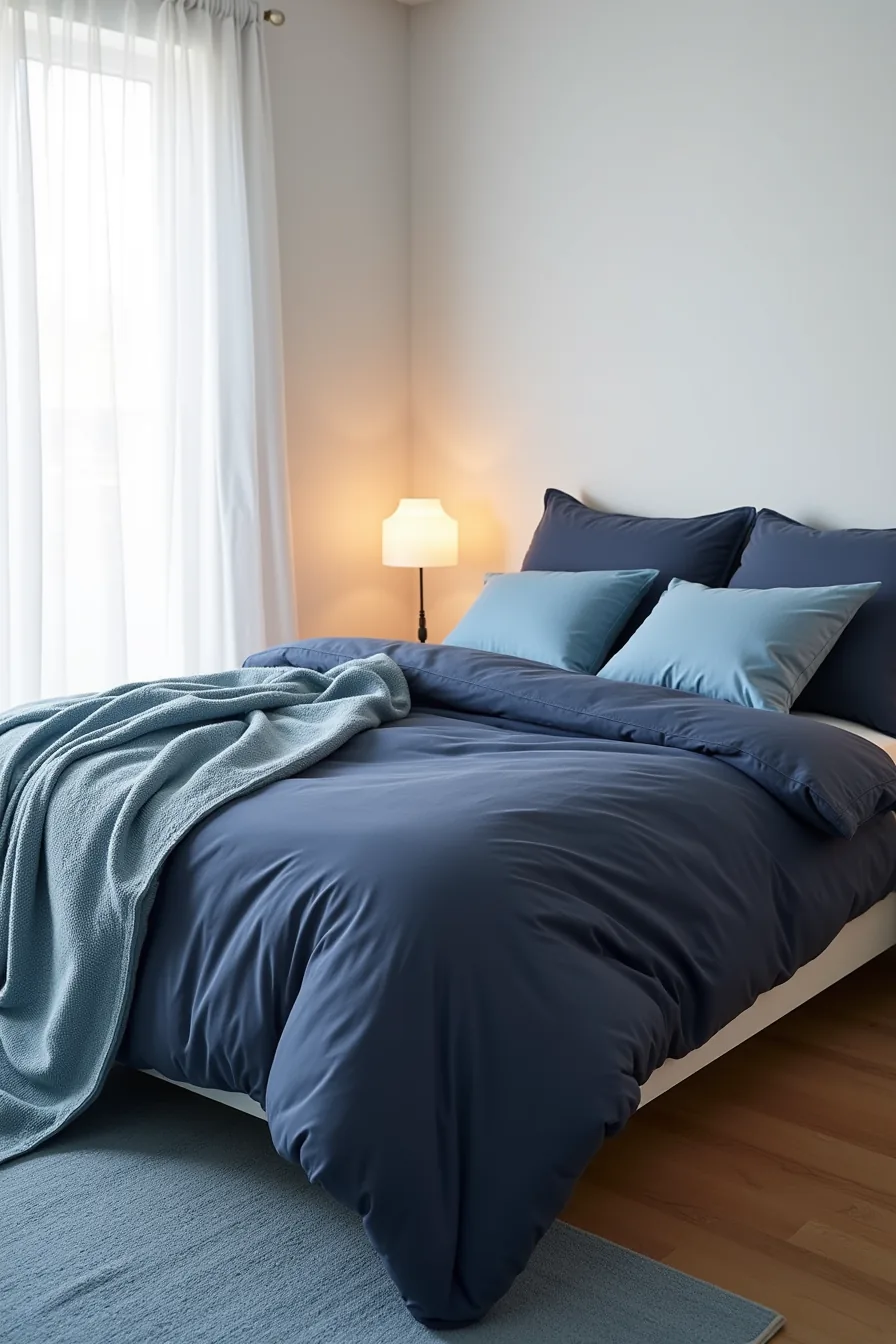
Layering three distinct blue tones through soft furnishings creates depth that a single painted accent wall can’t match, and it reverses completely in twenty minutes. The navy duvet anchors the bed visually, while the light blue throw blanket folded at the foot and the medium blue area rug beneath the bed build a tonal gradient from dark to light as your eye moves downward. Patterned throw pillows introduce texture without competing with the white bed frame, which keeps the palette from feeling heavy.
Color pairing works best when you restrict yourself to one family, navy, medium blue, and powder blue sit together harmoniously because they share the same undertone. Mixing in a warm gray or cream neutral prevents the look from becoming monotonous, but skip pure white rugs near dorm entry paths, as they show wear within weeks. A medium-pile rug with a low-profile backing (most standard dorm-area rugs run 5×7 to 6×9 feet) handles daily foot traffic and vacuums cleanly without snagging.
Machine-washable duvet covers in cotton or microfiber cost $30–$60 and survive repeated laundry cycles, whereas dry-clean-only fabrics become a financial trap by mid-semester. This is the renter-friendly route: everything folds flat into a suitcase, leaves zero wall damage, and adapts to any future room regardless of size.
Periwinkle and Warm Wood: Long-Term Investment Setup
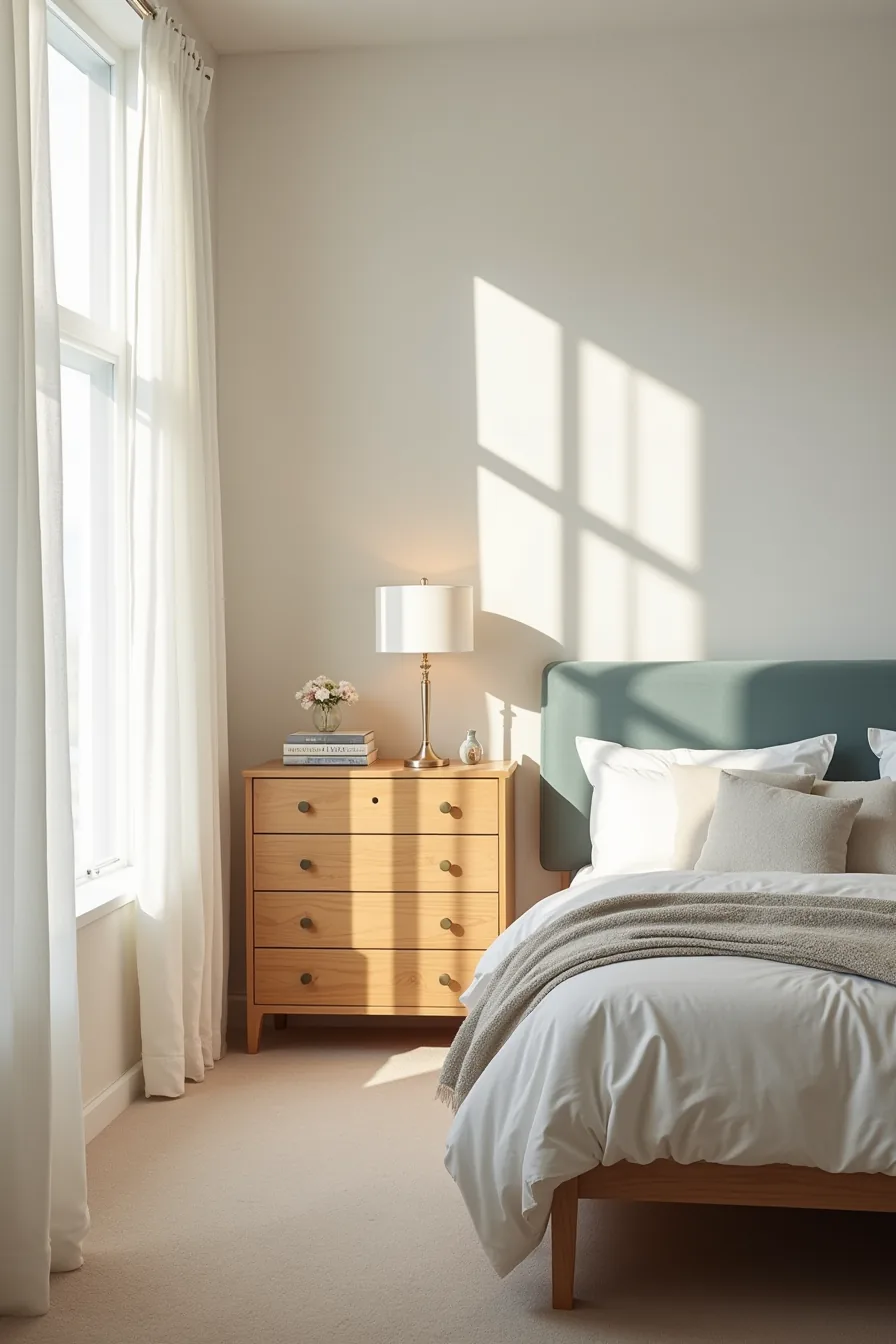
The periwinkle upholstered headboard and honey-toned wood bed frame anchor a room that survives the move into your first apartment intact. Periwinkle, a blue with a visible violet undertone, reads softer than navy and pairs naturally with warm woods, which bring out its muted lavender side instead of letting it drift toward gray. This is the long-term investment route, where you spend $400–$900 on a solid wood bed frame and matching dresser that outlast four years of dorm moves and still hold resale value.
Source the warm honey-toned wood pieces first, then match the periwinkle wall and coordinating bedding to them, not the reverse. Wood tones vary dramatically across manufacturers, so bring a wood sample to the paint store when selecting your wall color. The upholstered headboard needs a fabric that resists pilling, check for a high rub count (most contract-grade fabrics exceed 15,000 double rubs) if you plan to sit against it daily.
The wooden nightstand with drawer replaces three plastic storage bins and hides chargers, notebooks, and tech clutter behind a single clean face.
This setup suits medium-to-large rooms (most singles run 120–180 square feet) where a full bed frame with a headboard won’t crowd the layout. In tighter spaces, swap the headboard for a wall-mounted periwinkle fabric panel and keep the wood frame and dresser as your anchor pieces. Periwinkle walls in a matte finish read as muted and sophisticated but show scuffs from backpacks and chair backs, budget for a small quart of touch-up paint at the start of each term.
If your dorm forbids painting, substitute a periwinkle duvet and curtains while keeping the wood furniture as the permanent foundation.
Mistakes to Avoid When Planning Blue Dorm Rooms
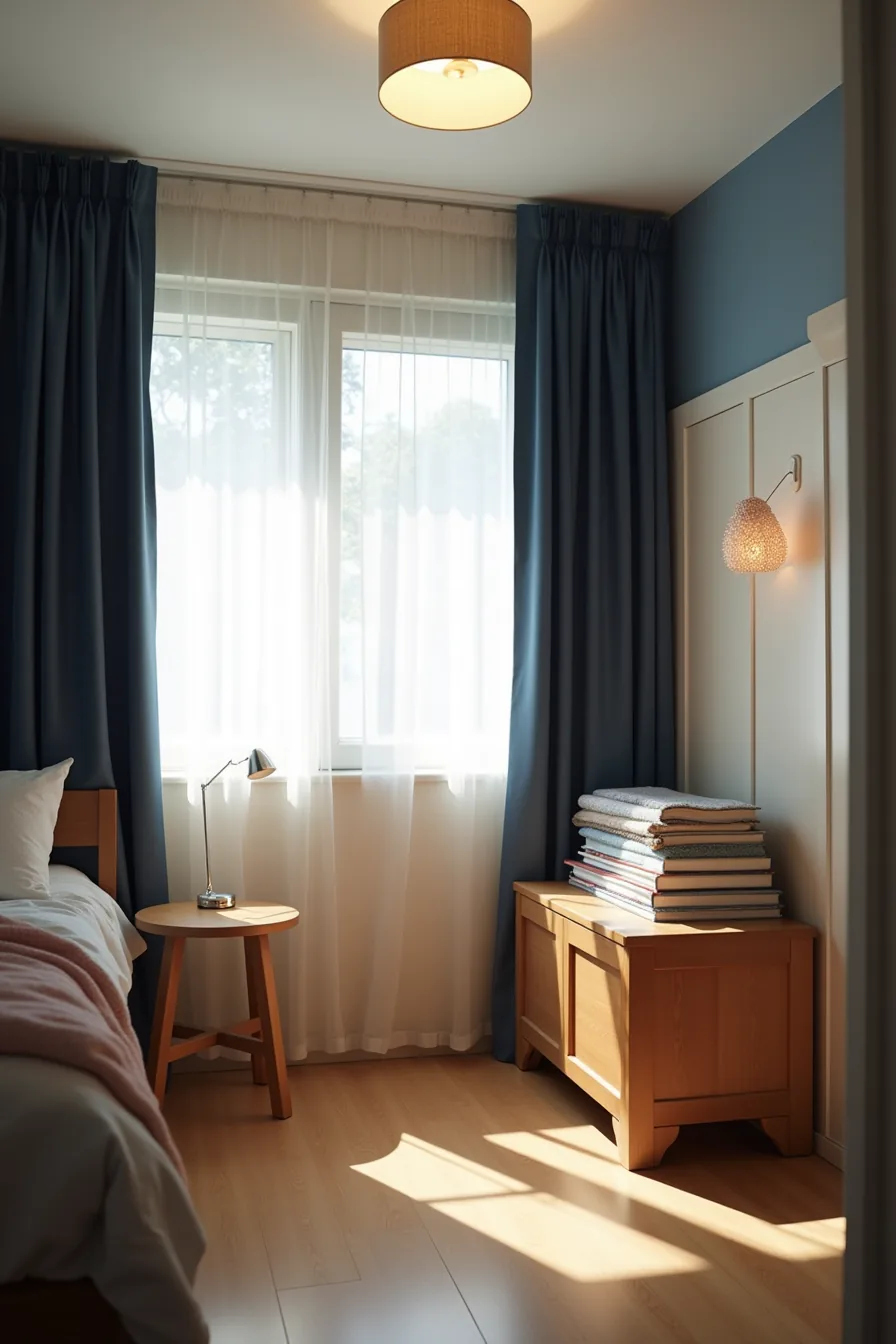
Oversaturated dark blue walls are the fastest way to shrink a 120-square-foot room into a cave. Deep navy absorbs light rather than reflecting it, so a single overhead bulb leaves corners in shadow and makes the space feel half its actual size. If you want a bold blue, restrict it to one accent wall behind your desk and keep the other three in a light gray or warm white.
Heavy navy curtains that block the window create a double problem: they cut natural light and trap heat against the glass, which can raise surface temperatures by several degrees in a south-facing room. Use a light-filtering blue roller shade instead, and keep the rod mounted within four inches of the ceiling to preserve the illusion of height. Stacked textiles piled against the baseboard vent will redirect your room’s airflow and cause the HVAC system to cycle longer, keep at least six inches of clearance around every vent opening.
Furniture pushed against the door swing path is a safety hazard and a daily frustration. Measure your door’s arc before placing a dresser or chair, and leave a minimum of 30 inches of clear floor space for the door to open fully. A dim single overhead light flattens blue tones into a muddy gray; add a floor lamp with a warm 2700K bulb to keep the color true after sunset.
Your decision checklist
Before you buy anything, measure your room and identify your dominant light source. North-facing rooms wash out cool blues, choose warmer navy tones; south-facing rooms handle vivid cobalt well. Match the blue intensity to your wall space: pale powder suits small rooms, deep navy adds drama to large ones, medium blues work almost everywhere.
Count your surfaces, if you’ve more than three hard surfaces, switch to fabric storage that softens sound. Start with your bedding, since it covers the largest visible area, then layer in one accent chair or rug before any wall decor. That one purchase tells you instantly whether the shade feels right.
Frequently Asked Questions
What shade of blue works best in a small dorm room?
Choose a light or medium blue with gray undertones, like slate or dusty periwinkle. These reflect light rather than absorbing it, making the room feel larger. Save navy for accents only.
Can I use blue college dorm room ideas in a rental without painting?
Yes. Use removable peel-and-stick wallpaper on one accent wall, blue area rugs, bedding, and adhesive hooks. Skip anything that requires drilling or permanent adhesive that could damage walls.
How do I prevent a blue room from feeling cold or depressing?
Pair blue with warm wood tones, brass or gold hardware, and cream-colored textiles. Add warm white string lights and a soft yellow or terracotta throw pillow. These elements introduce warmth without competing with the blue.
What’s the best way to mix different shades of blue without clashing?
Anchor the room with one dominant shade, then add one lighter and one darker blue at 20 percent each. Keep undertones consistent, all cool or all warm. Use neutral white or gray between them to let each shade breathe.