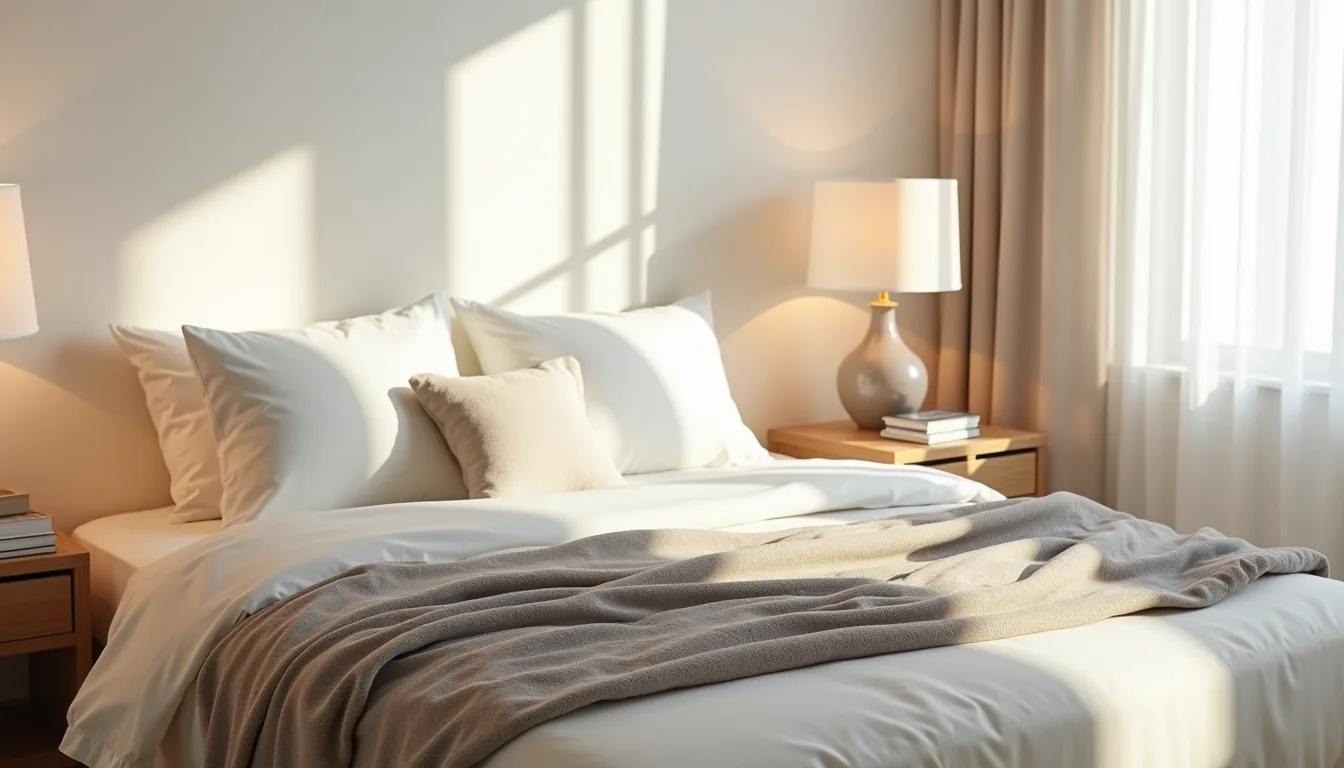

A quiet luxury bedroom isn’t a style so much as a discipline: it strips away visible branding and decorative noise in favor of materials that feel substantial, colors that lower your heart rate, and furniture placed with enough clearance to make the room work as hard as it looks. At its core, it’s the difference between a room that photographs well and one that functions well at 6:30 AM. The six interpretations that follow range from a $300 renter-friendly refresh to a permanent architectural investment, each with the specific dimensions, material weights, and daily-use trade-offs you need to decide which version fits your space, and your habits.
Key takeaways
- Quiet luxury bedrooms prioritize texture and proportion over ornament, so swap glossy metallics for matte brass or unlacquered hardware to avoid visual noise.
- Layer two to three warm neutrals, like oatmeal linen, taupe wool, and cream cotton, in different weaves to create depth without adding a single decorative object.
- A hotel-style bed needs a 12- to 18-inch drop on your duvet and shams that sit at a 45-degree angle; this symmetry alone reads as expensive.
- Budget upgrades cap at replacing your lamp shades with pleated linen and swapping your throw pillows for one oversized 24-inch square in a solid, nubby fabric, both under $50 total.
Soft Luxury vs. Flashy Luxury: Why Restraint Works
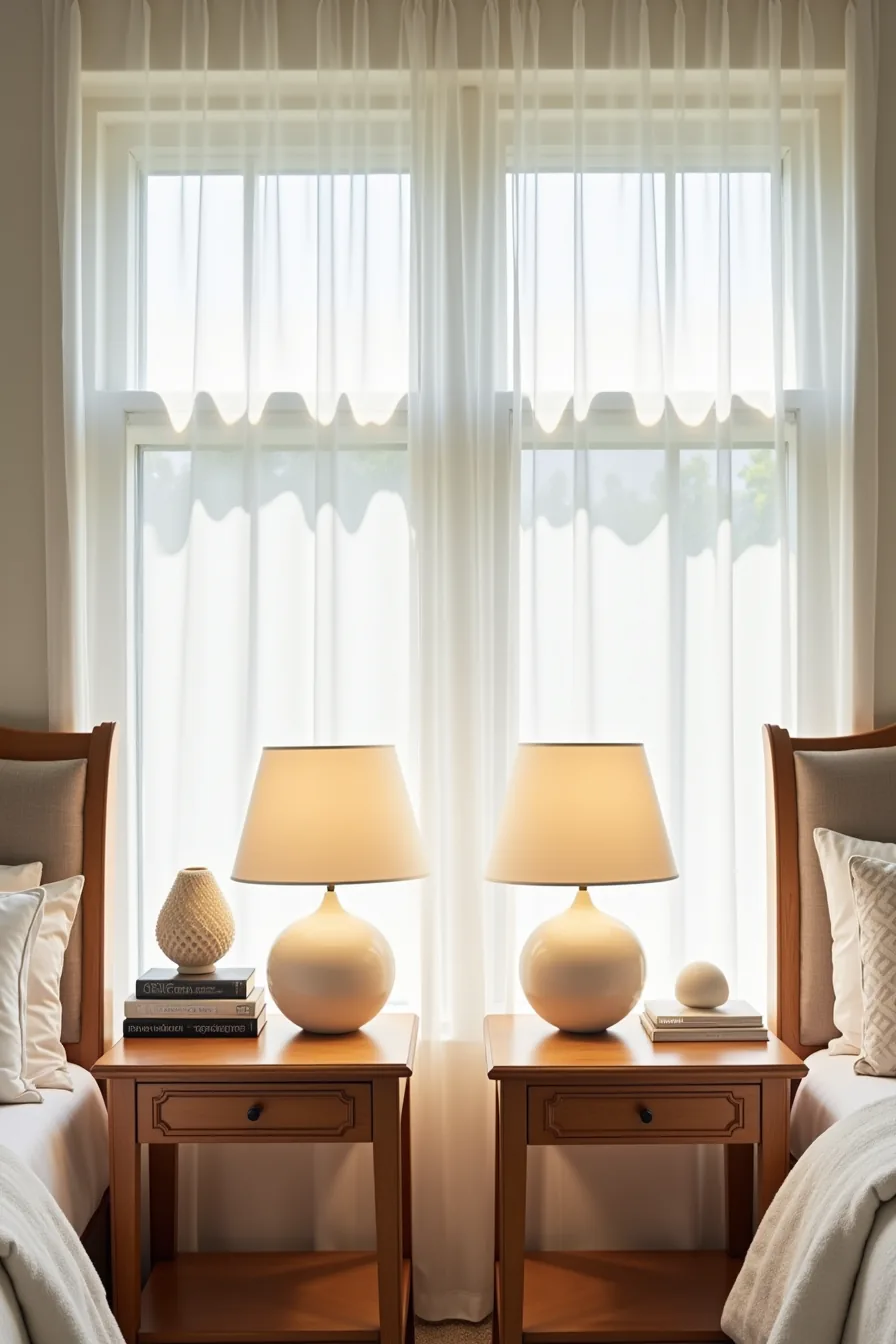
The difference comes down to visual noise versus visual calm. On one nightstand, stacked books and a patterned throw pillow compete for your attention, demanding engagement every time you walk past. On the other, a single book, one white stone, and a solid linen pillow create a composition that reads as intentional rather than assembled.
Restraint works because it gives your eye a place to land. When you reduce the number of objects, each one gains weight, that white stone becomes a sculptural anchor instead of another item to dust. This approach suits anyone who wants a room that feels settled rather than staged, and it requires only that you edit what you already own.
The trade-off is simple: you lose the visual interest of layering but gain a sense of order that makes the space feel larger and easier to maintain. Choose this route if you prefer rooms that feel finished the moment you walk in, not ones that require constant rearrangement to stay convincing.
Warm Neutral Layering for Depth Without Clutter
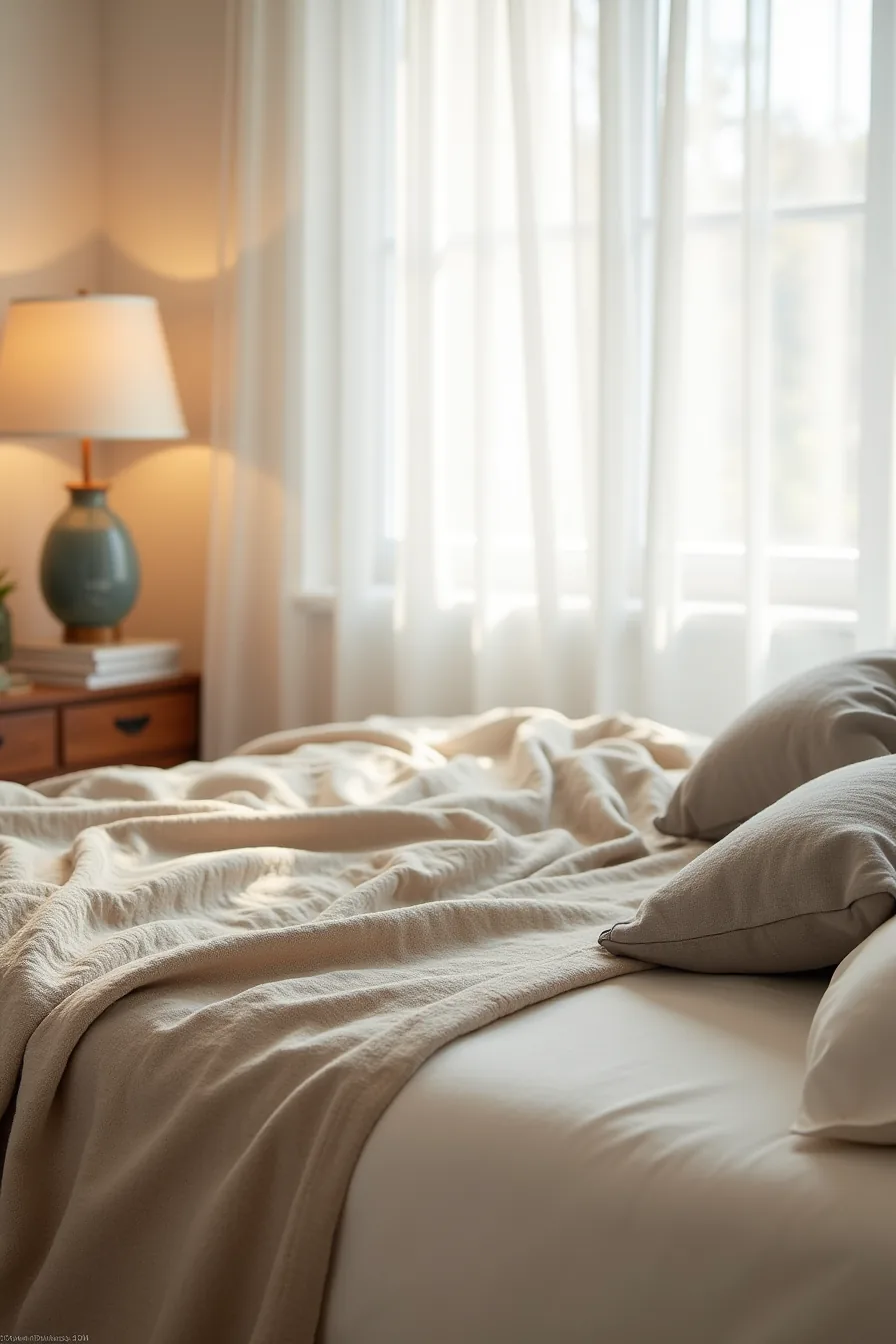
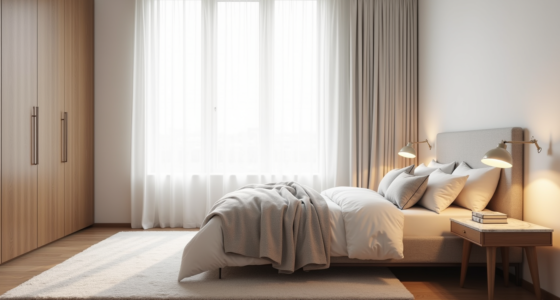
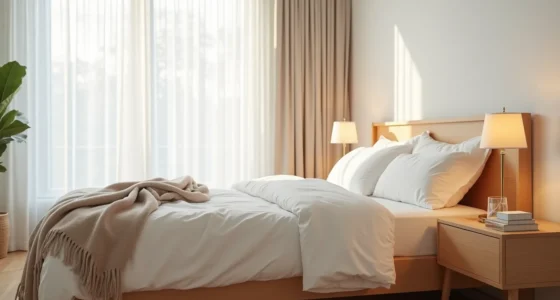
Warm neutral layering builds depth through tonal shifts, not pattern. A cream fitted sheet against a taupe duvet reads differently than either does on its own; the greige throw blanket introduces a third temperature, while the warm gray knit cushion adds texture weight. The natural linen pillowcase finishes the stack with a matte, slightly irregular surface that catches light softly.
The trick is distinction without contrast. Choose shades within one to two steps of each other on a warm scale, so the eye registers change but never a jump. You need at least three textures, smooth, nubby, and loosely woven, or the effect flattens into monotony.
This setup suits medium and large bedrooms where a single accent wall might feel heavy. It requires no pattern matching and takes roughly ten minutes to arrange correctly: start with the sheet, add the duvet, then layer the blanket and cushion at opposing corners for asymmetry. Linen and knit fabrics will pill over time, so rotate the cushion and pillowcase weekly to distribute wear evenly.
Hotel-Inspired Calm: Applying Professional Restraint
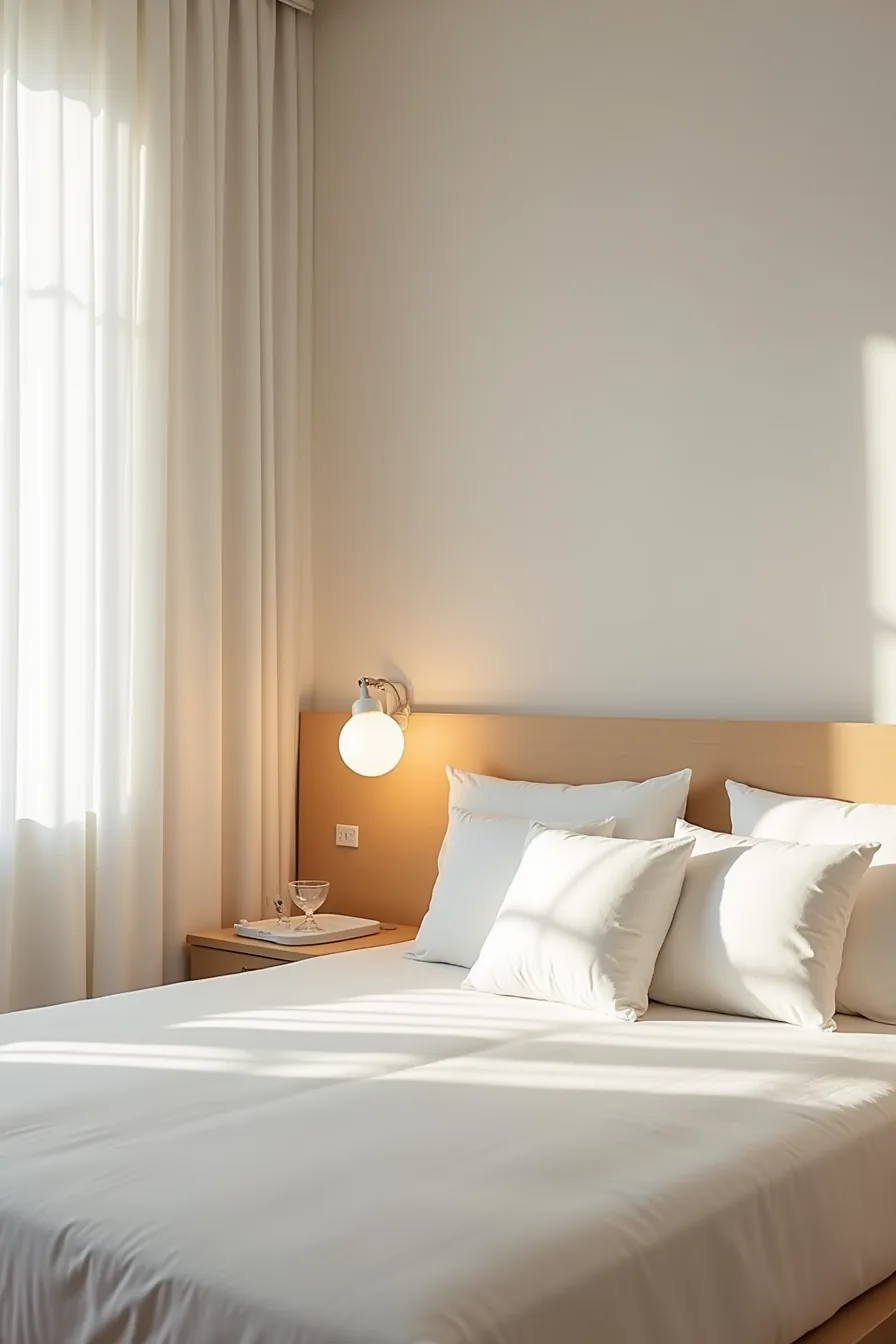
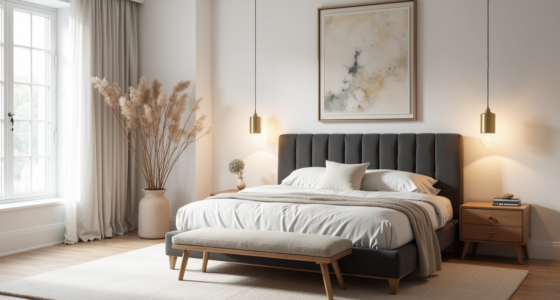
Hotel rooms feel restful because every object earns its place. The hospital-corner tucked sheets create a taut, shadow-free surface that reads as freshly pressed; the two upright euro pillows form a solid, symmetrical backdrop, while the single centered decorative pillow breaks the line without fuss. On the bedside table, a table lamp, a small tray, and a glass of water are the entire composition, nothing else competes for your attention, and the empty wall behind lets the bedding remain the only visual anchor.
This style suits anyone who wants a room that feels serviced rather than styled. Adapt it by limiting the bedside surface to three functional items, angling the lamp shade so light pools downward instead of glaring outward, and keeping the floor clear of storage. The discipline is spatial: leave at least 18-24 inches of open wall around the bed head to preserve the breathing room that makes the minimalism feel deliberate, not sparse.
Quiet Luxury Bedroom Updates on a Realistic Budget
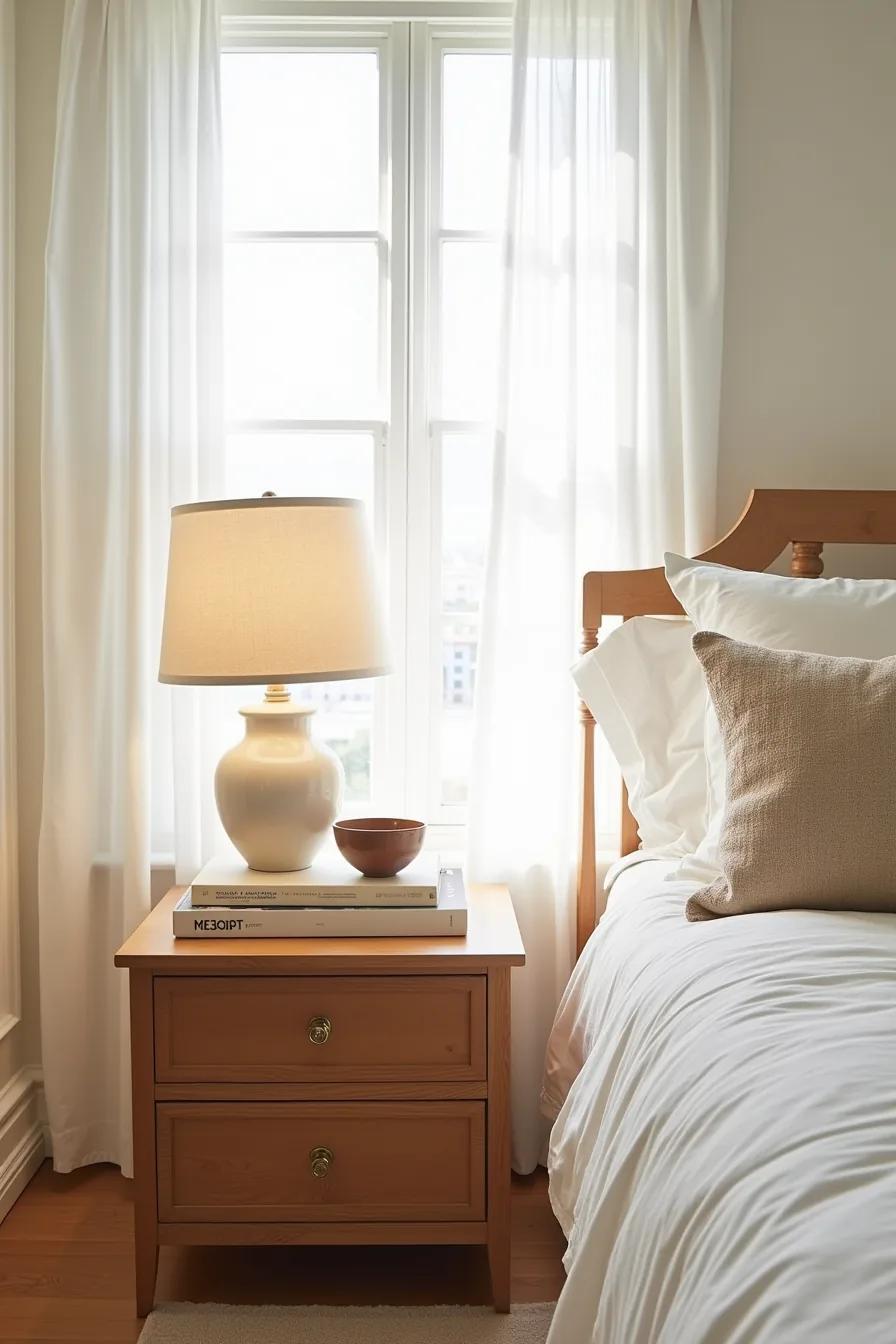
Quiet luxury bedroom updates don’t demand a full renovation, they demand a priority order. Spend first on the surfaces your hands and eyes touch daily: the bedside table and the lamp. A solid wood table with a brass knob drawer costs more upfront but delivers years of service, while a wooden crate styled with an affordable linen lampshade and a thrifted ceramic bowl achieves nearly the same visual calm for a fraction of the price.
The trade-off is longevity versus flexibility. The crate works if you rent or expect to move within two to three years, it’s lightweight, collapsible, and easily repurposed. The solid table suits homeowners or long-term renters who want a piece that will age gracefully without replacement.
Skip spending on the throw pillow initially; a budget option tucked against the wall reads identically to a designer one from across the room. Redirect that savings toward the lampshade, since the quality of light, not the fabric pattern, determines whether the space feels elevated or merely furnished.
Scaling Quiet Luxury Across Room Sizes
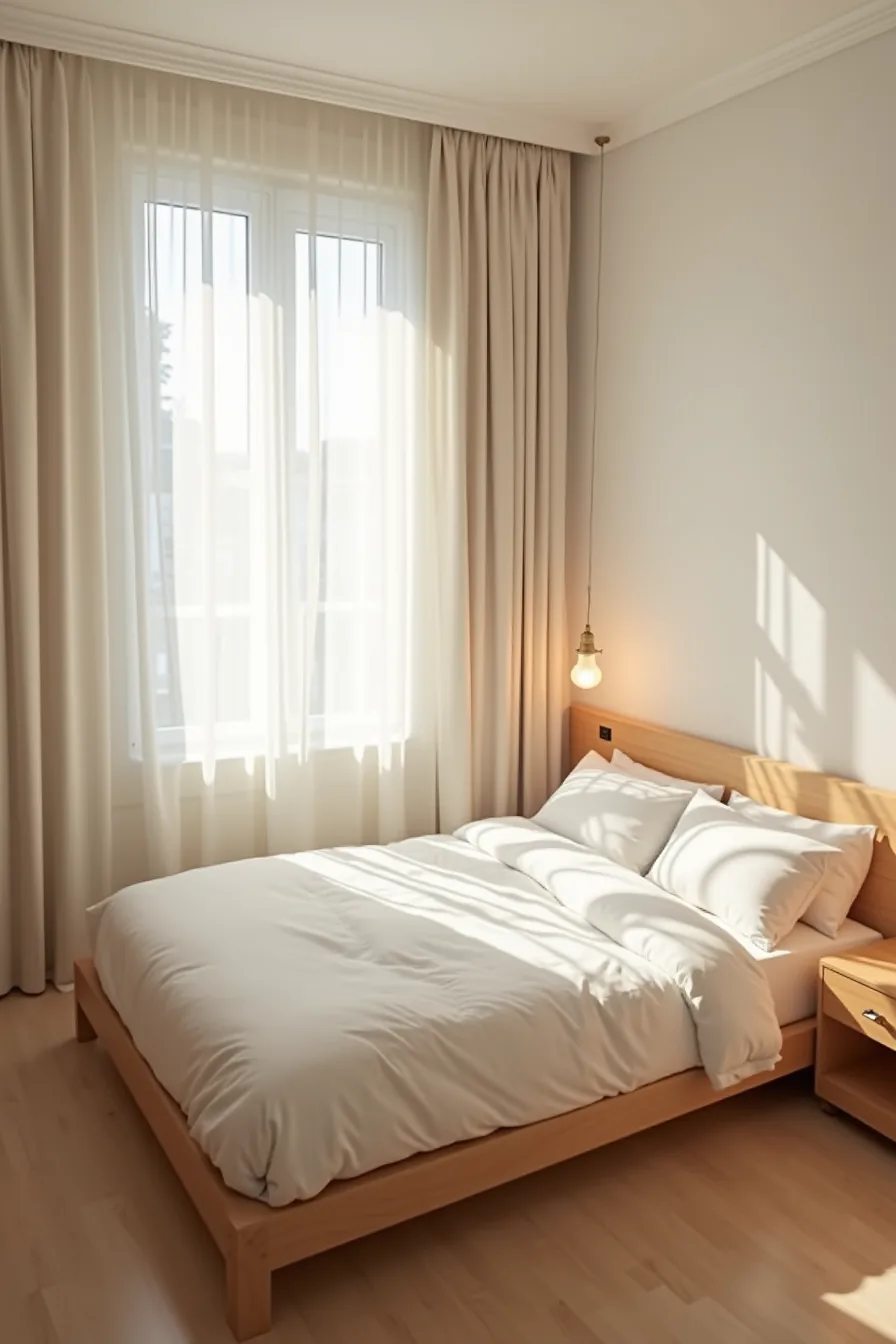
Quiet luxury adapts to your square footage by adjusting the number of pieces, not their quality. In a small bedroom under 100 square feet, the constraint is your asset: one carefully chosen nightstand and a narrow dresser against the wall keep the floor path clear, which makes the room feel larger than its dimensions. Scale down the bed’s visual weight with a low-profile frame and headboard that sits closer to the mattress height, leaving the upper wall bare to draw the eye upward.
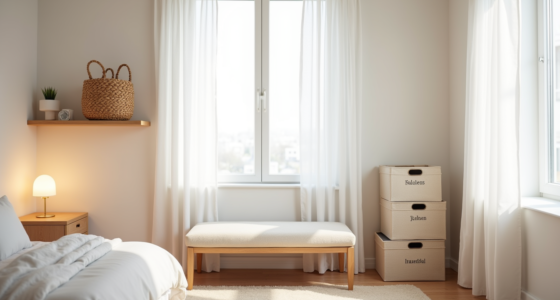
Medium rooms between 100 and 150 square feet allow you to introduce a second nightstand and a bench at the foot of the bed, both functional, neither decorative clutter. For spaces over 150 square feet, resist filling empty corners with accent chairs or ottomans you won’t use daily. Instead, widen the bedside tables to 24–30 inches and add a full-length mirror or a substantial wardrobe piece that anchors the far wall, preserving the negative space that defines the aesthetic.
Proportion matters more than quantity: a single oversized lamp reads calmer in a large room than three smaller ones scattered about.
Materials, Maintenance, and Long-Term Investment

Your fabric choice determines both the tactile experience and the replacement cycle. Cotton is the budget workhorse: machine-washable, breathable, and typically lasting 3–5 years before pilling or fading becomes noticeable, but it lacks the drape that gives a bed a tailored look. Mid-range linen costs roughly 1.5–2 times more per set but improves with washing, softening over a 6–10 year lifespan, choose it if you want texture without the upkeep of delicate fibers.
The premium wool blend draped over the wood surface is the long-game option. It resists stains naturally, regulates temperature year-round, and holds its structure for 10–15 years with proper care. The trade-off is real: dry-clean only, which runs $40–$80 per visit, and a higher upfront cost that only makes sense if you plan to keep the piece for a decade.
When you can’t buy everything at once, prioritize the wool throw and the linen duvet, then add the cotton sheets beneath, layering quality where it touches your skin most often and skimping where it’s hidden.
For wood finishes, the difference between a $300 and $1,200 nightstand isn’t the look, it’s the repairability. Lacquered surfaces scratch visibly and require professional refinishing, while oiled or matte finishes accept at-home touch-ups with sandpaper and a matching oil, extending the piece’s life indefinitely. Test any finish with a coin edge in an inconspicuous spot before committing; if it leaves a mark, budget for a protective tray under every lamp and candle.
Where to start
Begin with the one change that delivers the highest visual return: swap your existing bedding for natural fibers in a single muted tone. This takes one afternoon, costs under $150, and instantly shifts the room’s character.
Before buying anything else, measure your ceiling height and bed footprint. This determines whether you need low-profile furniture or can accommodate taller pieces.
Once the bed feels right, address lighting, dimmable warm sources matter more than any decor object. Then, edit down to three meaningful accessories.
Start tonight by removing one visually loud item from your room. Tomorrow, order fabric swatches before committing to anything larger.
Frequently Asked Questions
What’s the difference between quiet luxury and minimalism in bedroom design?
Minimalism strips away to near-emptiness; quiet luxury layers rich textures, warm neutrals, and curated pieces. You get restraint with warmth, not austerity. Think tailored linen bedding and a sculptural lamp, not bare walls and a floor mattress.
Can you achieve quiet luxury on a tight budget, and if so, where should you spend first?
Yes. Spend your first dollars on bedding, high-thread-count cotton or washed linen transforms the room instantly. Next, upgrade your lighting with a dimmer and a warm-toned table lamp.
Everything else, art, decor, can be thrifted and edited over time.
How do you prevent a quiet luxury bedroom from feeling cold or sterile?
Introduce natural materials with inherent variation: wool throws, oak nightstands, stone lamps. Layer three textures minimum, and ensure your dominant color has a warm undertone. Avoid glossy surfaces and pure white walls; opt for greige or warm ivory instead.
What’s the typical cost to update a bedroom to quiet luxury standards?
A full refresh runs $800–$3,000 depending on room size and sourcing. Budget breakdown: quality bedding ($150–$400), lighting ($100–$300), window treatments ($200–$600), and one statement furniture piece ($300–$1,000). You can start under $500 by prioritizing bedding and lighting only.