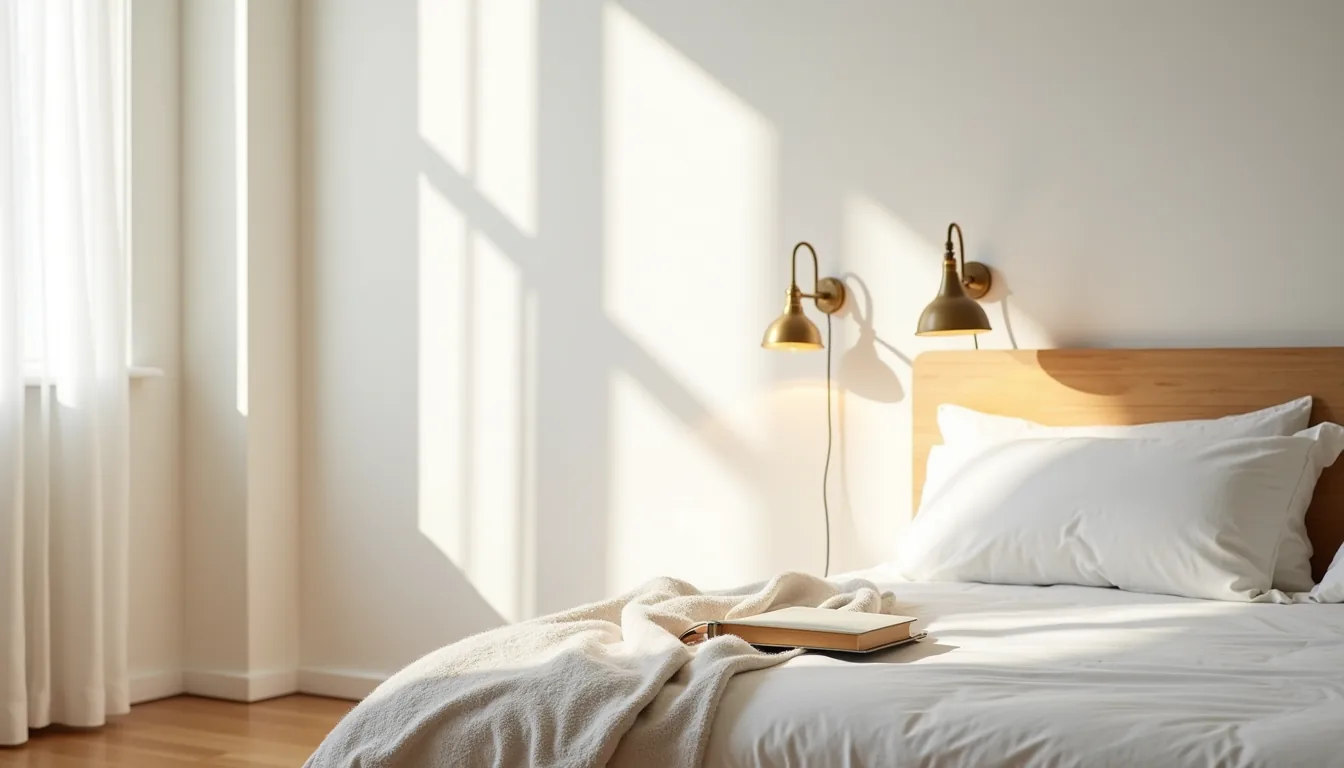
Wall light fixtures solve two problems at once, delivering targeted illumination where overhead lights fall short while pulling a room’s design together at eye level. Whether you need focused task lighting beside a bed, ambient glow in a narrow hallway, or a sculptural accent in a living room, the right fixture transforms both function and mood. The challenge lies in matching the style, scale, and placement to your specific space, and that decision is easier once you understand the six distinct approaches ahead, each with its own trade-offs in cost, installation, and visual impact.
Key takeaways
- Bedside sconces with articulated arms deliver focused reading light while freeing up roughly 12–18 inches of nightstand surface, but hardwired versions require an electrician unless you choose plug-in models.
- Picture lights should sit 6–10 inches above the frame’s top edge and extend at least half its width to avoid casting uneven shadows across the artwork.
- Vertical wall fixtures like linear LED bars or swing-arm lamps brighten narrow hallways and small bathrooms without consuming floor space, though you’ll need to check clearance for doors and walkways.
- Renter-friendly plug-in sconces with cord covers cost $30–$80 per fixture and install in minutes, while hardwired architectural uplights run $150–$400 plus professional labor, so match your route to your lease length and renovation budget.
Bedside Sconces: Task Lighting That Replaces Nightstands
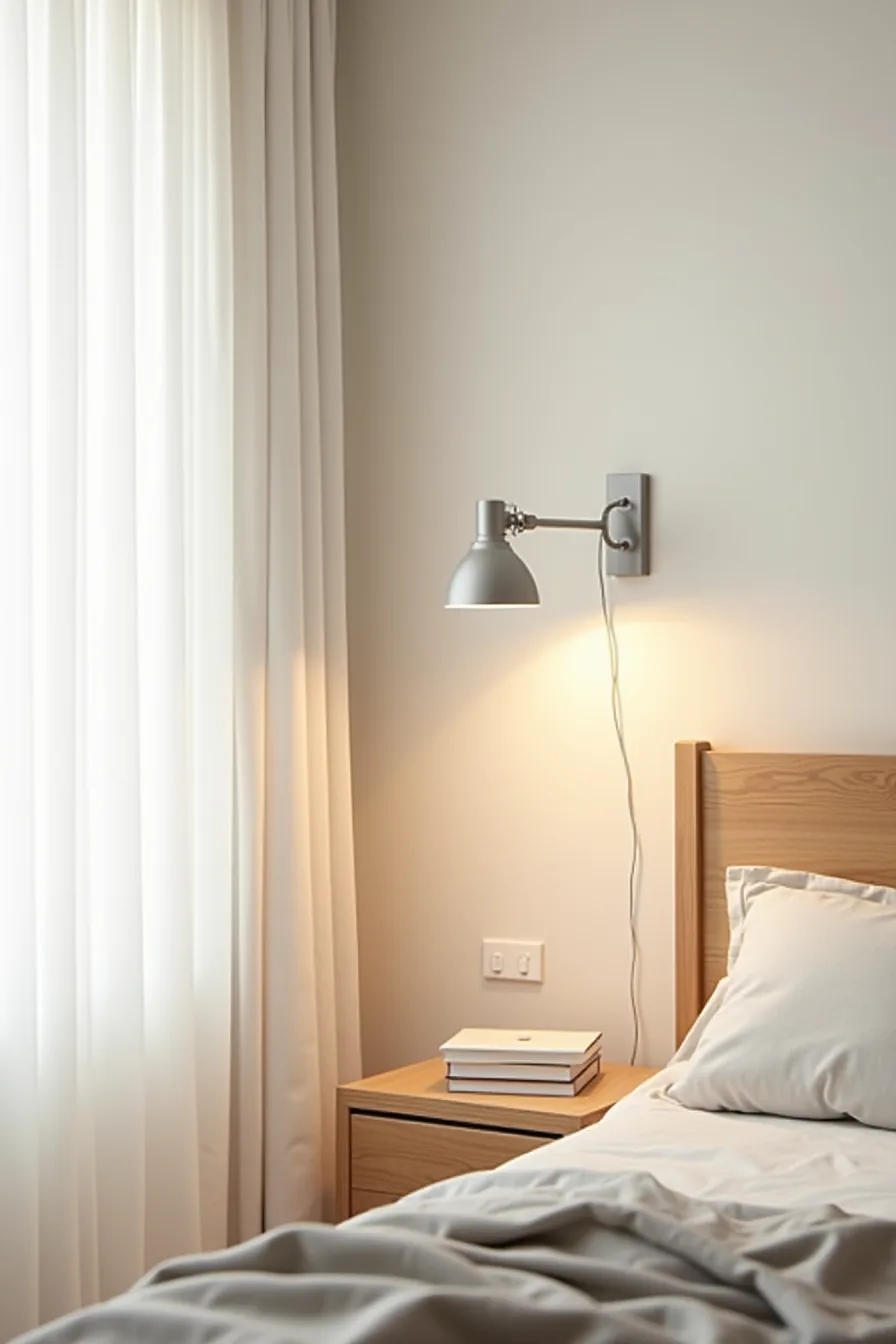
Mounting a swing-arm sconce on the wall beside your bed frees up the surface where a table lamp would sit, giving you room for books, glasses, or nothing at all. The arm extends outward over your pillow, positioning the light exactly where you need it for reading without casting shadows across your partner’s side of the bed.
Install the bracket 28–32 inches above your mattress top, which places the shade at seated eye level for most people. A wall-mounted dimmer switch, like the one visible below the bracket, lets you drop from a bright 800-lumen reading level down to a warm 10% glow for winding down, check that your fixture and bulb are dimmer-compatible before buying.
Choose a swing arm that rotates at both the wall plate and the shade joint; this gives you full control over direction without loosening over time. For renters, opt for a plug-in model with a cord cover that paints to match your wall, or a hardwired version with an integrated on-off toggle if you own your space. Matte black or brushed brass finishes hide fingerprints better than polished chrome, and the wall plate should sit flush against the surface to prevent light leaks and dust accumulation.
Picture Lights and Gallery Walls: Accent Lighting Over Art
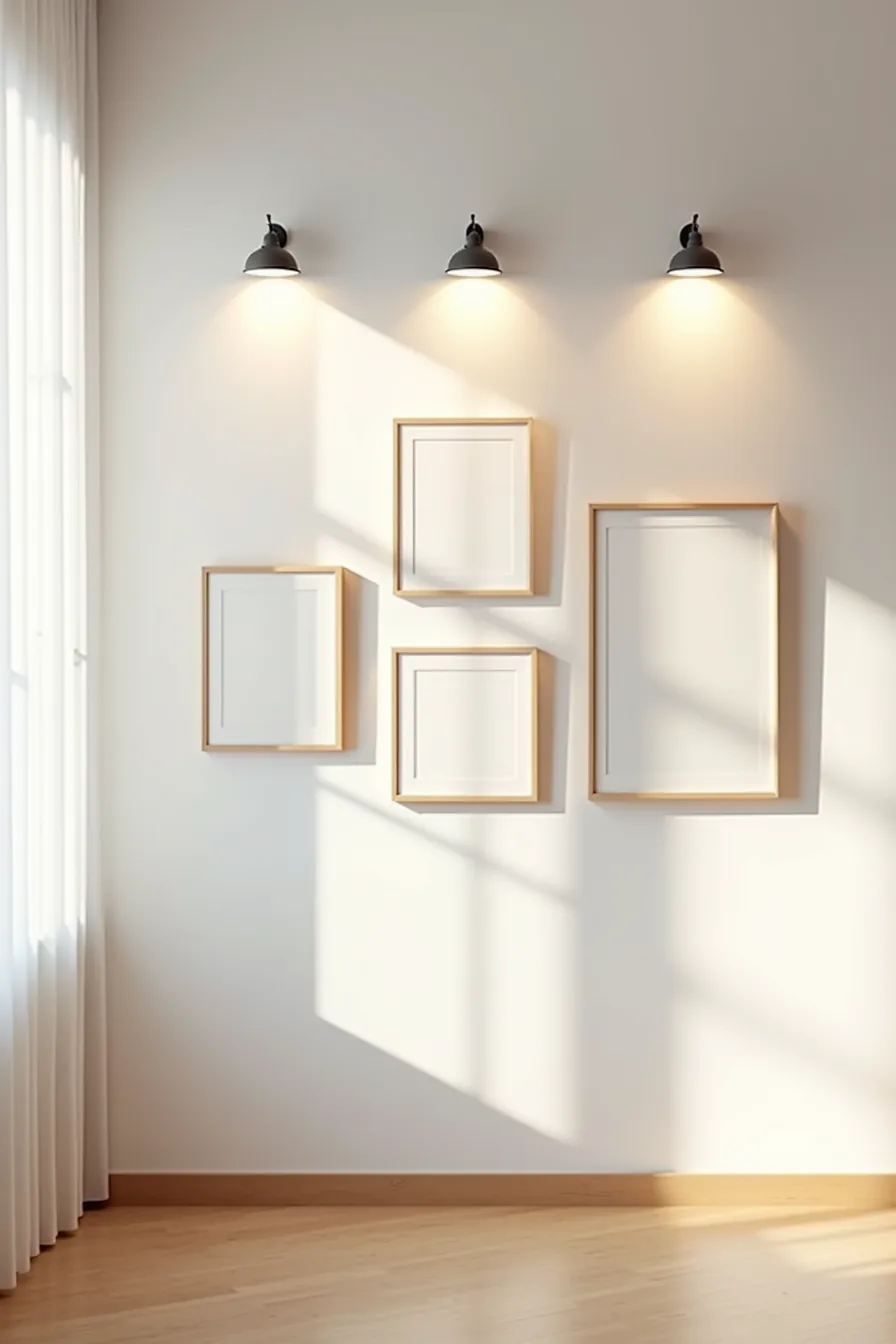
A dedicated picture light above each framed artwork transforms a flat gallery wall into a layered composition, the downward beam draws the eye to the piece while casting soft shadows that add depth to the white wall behind. In the arrangement pictured, five framed works of varying sizes each carry their own small fixture, creating a rhythm of light that feels intentional rather than scattered.
Position the light 6–10 inches above the frame top, with the fixture’s center line aligned to the artwork’s midpoint. A 30–40 degree beam angle suits most pieces up to 36 inches wide; wider art needs a longer fixture or two lights. Choose a 2700–3000K bulb temperature to keep colors true without yellowing the pieces.
Frame shadows appear when the light sits too close to the wall, leave 4–6 inches of clearance behind the fixture housing. For renters, battery-operated or plug-in picture lights with adhesive mounting avoid wall damage, though hardwired versions deliver cleaner, brighter coverage over time.
Decorative vs. Task Lighting: Choosing the Right Balance
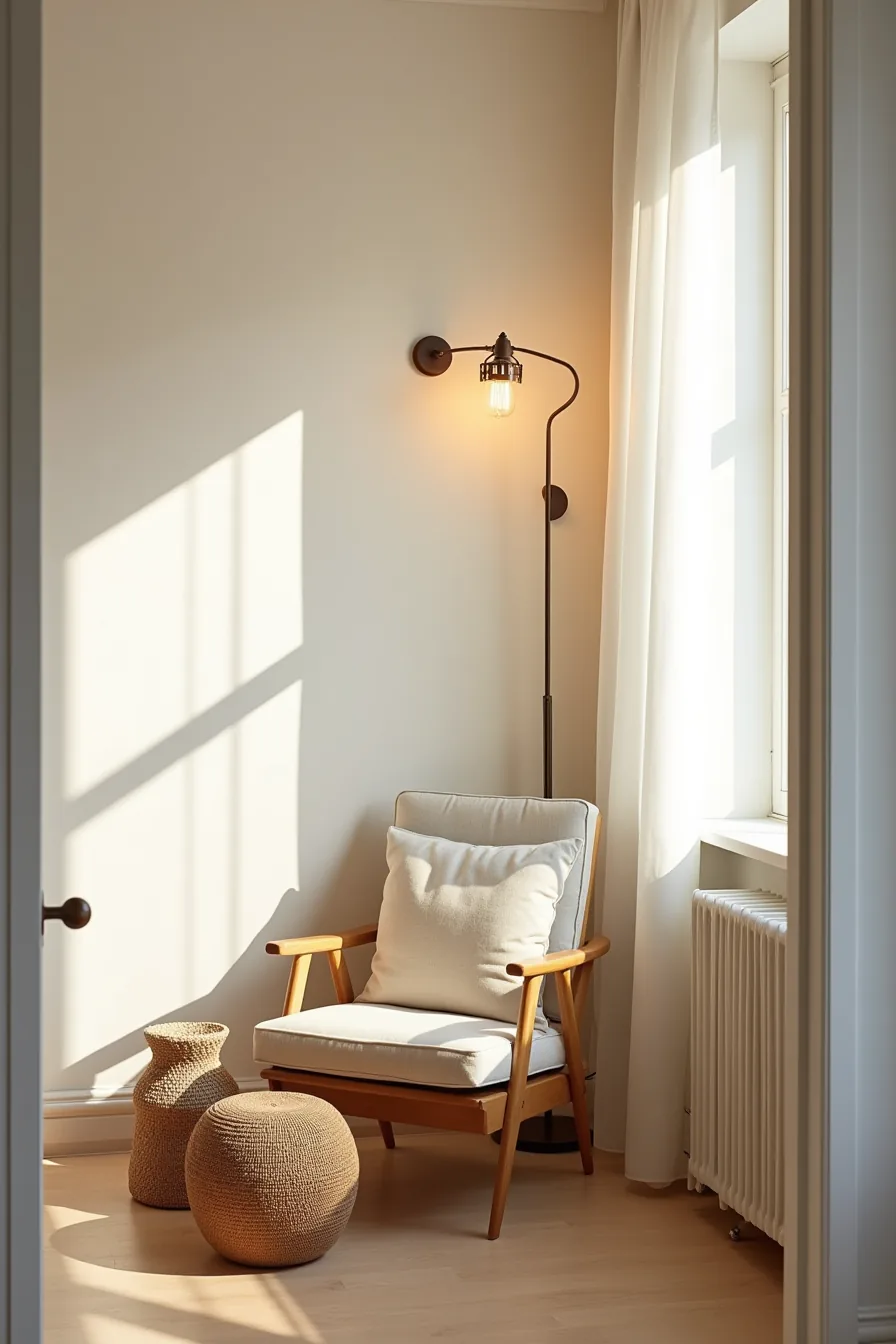
Wall light fixtures serve two distinct roles, and mixing them in one room is the difference between a space that feels complete and one that forces a single overhead fixture to do everything. An uplight sconce mounted high on the wall bounces soft illumination off the ceiling, washing the upper wall in a gentle glow that expands the room’s perceived height. That’s your decorative layer, ambient, indirect, and designed to set a mood rather than help you see a page.
Down at task level, a separate sconce beside a reading chair directs a tight, focused beam exactly where your eyes need it. The contrast matters: a 2700K warm bulb suits ambient light, while a task fixture at 3000–3500K improves reading clarity without harsh glare. Position the task sconce so the shade’s bottom edge sits at eye level when you’re seated, typically 40–48 inches from the floor.
A woven ottoman nearby signals the practical use of that corner: place the fixture on the wall adjacent to the ottoman, not behind the chair, so the light crosses your shoulder rather than casting your shadow onto the book. That two-layer arrangement costs more upfront than a single fixture, but it gives you independent control, dim the uplight for movie nights, keep the task light on for late reading, which most one-fixture solutions can’t replicate.
Small-Space Lighting: Vertical Solutions for Tight Rooms
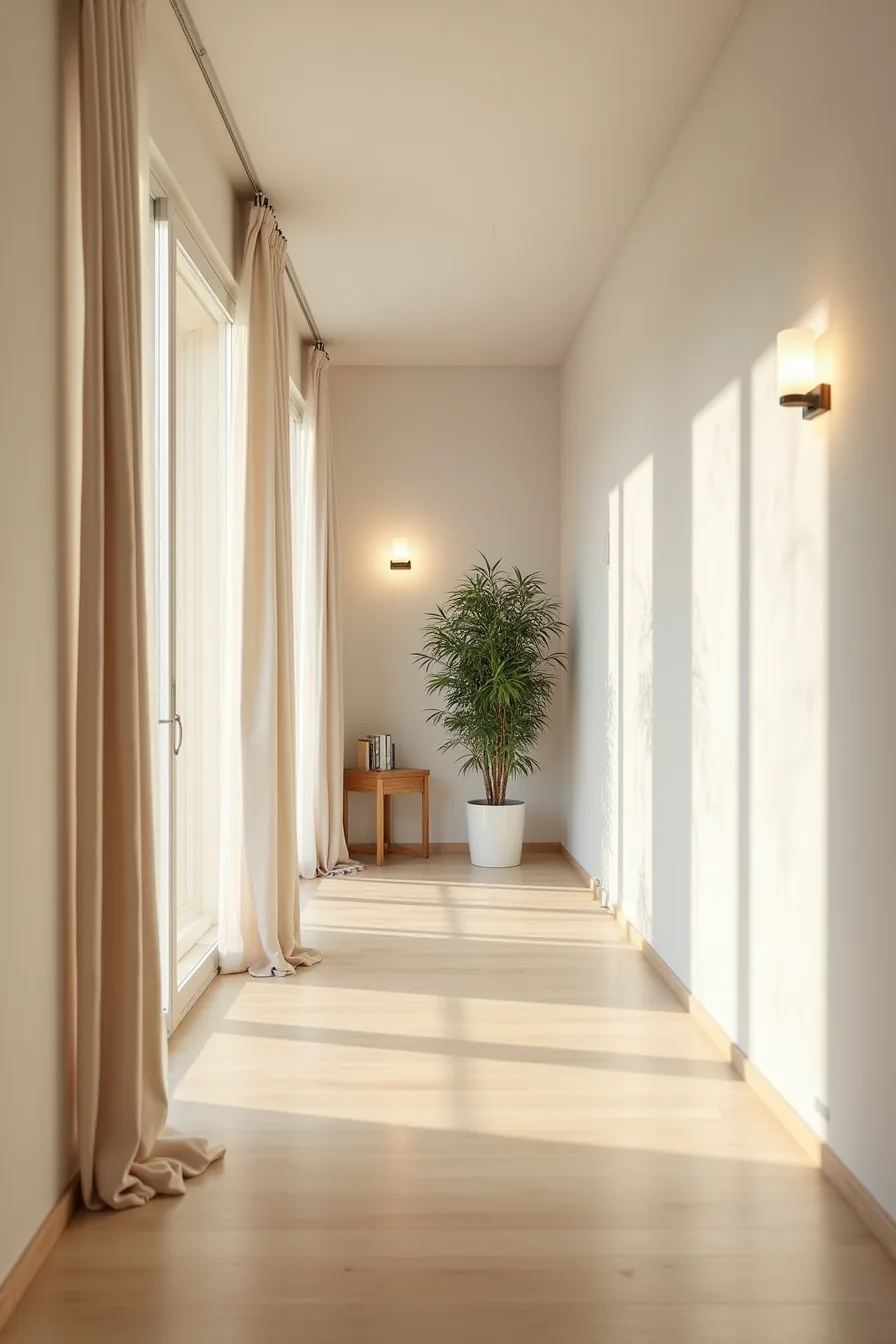
In a narrow hallway, floor space is precious real estate, every square inch is a pathway. Small-space lighting solves this by attaching illumination to the walls themselves, leaving the floor clear for movement. Recessed fixtures, which sit flush within the wall cavity, are the strongest choice here: they add zero protrusion and cast a clean, even wash across the wall surface. Space them evenly down one side, roughly 6 to 8 feet apart for consistent coverage, and aim for a low, warm glow (2700K) that reads as architectural rather than clinical.
The console table against the opposite wall carries the visual weight, while the potted plant in the corner softens the transition between light and shadow. This setup suits a renter-friendly route if recessed fixtures are off-limits: a narrow-profile surface sconce (under 4 inches deep) mounted on a junction box achieves a similar effect without cutting into drywall. For small rooms, prioritize fixtures with a width-to-height ratio under 1:2, tall and slim, so they elongate the wall rather than crowd it.
Maintenance is minimal, but dust does collect in recessed housings; a quick vacuum with a brush attachment every few months keeps the output bright.
Architectural Uplighting and Statement Fixtures
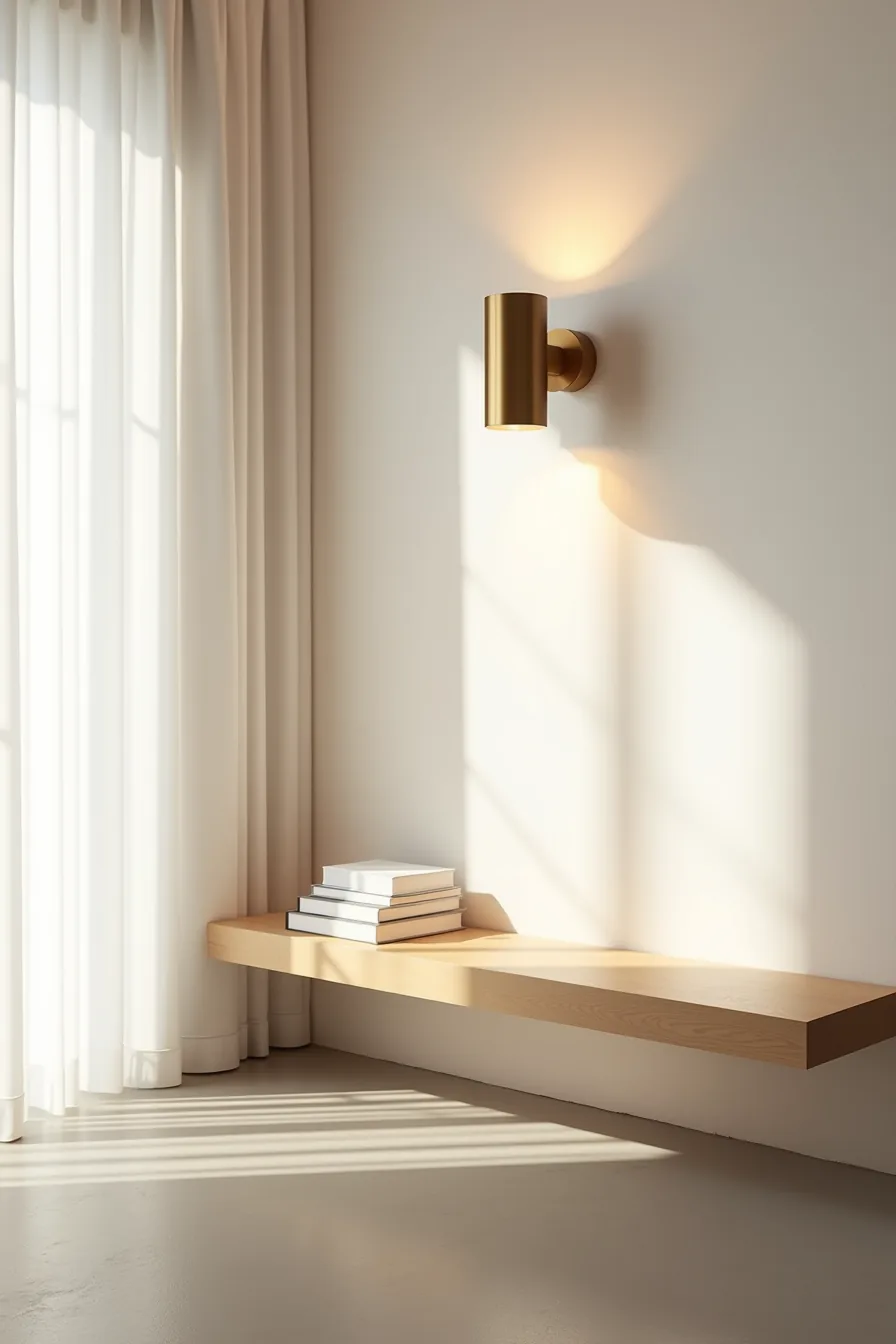
When a wall light becomes the room’s focal point, you’re designing with sculpture, not just illumination. The brass fixture above the low bench achieves this by throwing a geometric shadow pattern upward across the accent wall, the light itself is secondary to the drama it paints. This approach works best in rooms with generous ceiling height (9 feet or more) where the upward throw has room to bloom rather than hitting the ceiling in a harsh, concentrated pool.
A polished concrete floor is essential here because it reflects the lower portion of the light back into the room, preventing the accent wall from becoming a black hole below the fixture. Mount the light 60 to 72 inches from the floor, high enough to clear the bench and seated figures but low enough that the fixture’s body remains within natural sightlines. For a large-scale piece like this, allow at least 18 inches of clear wall space on either side; crowding a sculptural fixture diminishes its presence and creates visual clutter.
Brass develops a patina over time; if you prefer the original finish, plan for a light polish every 6 to 12 months with a non-abrasive brass cleaner. Recessed ceiling cans or floor lamps should handle the room’s general illumination, since this fixture is designed for accent effect, not task lighting.
Budget, Rental, and Investment Routes for Wall Lighting
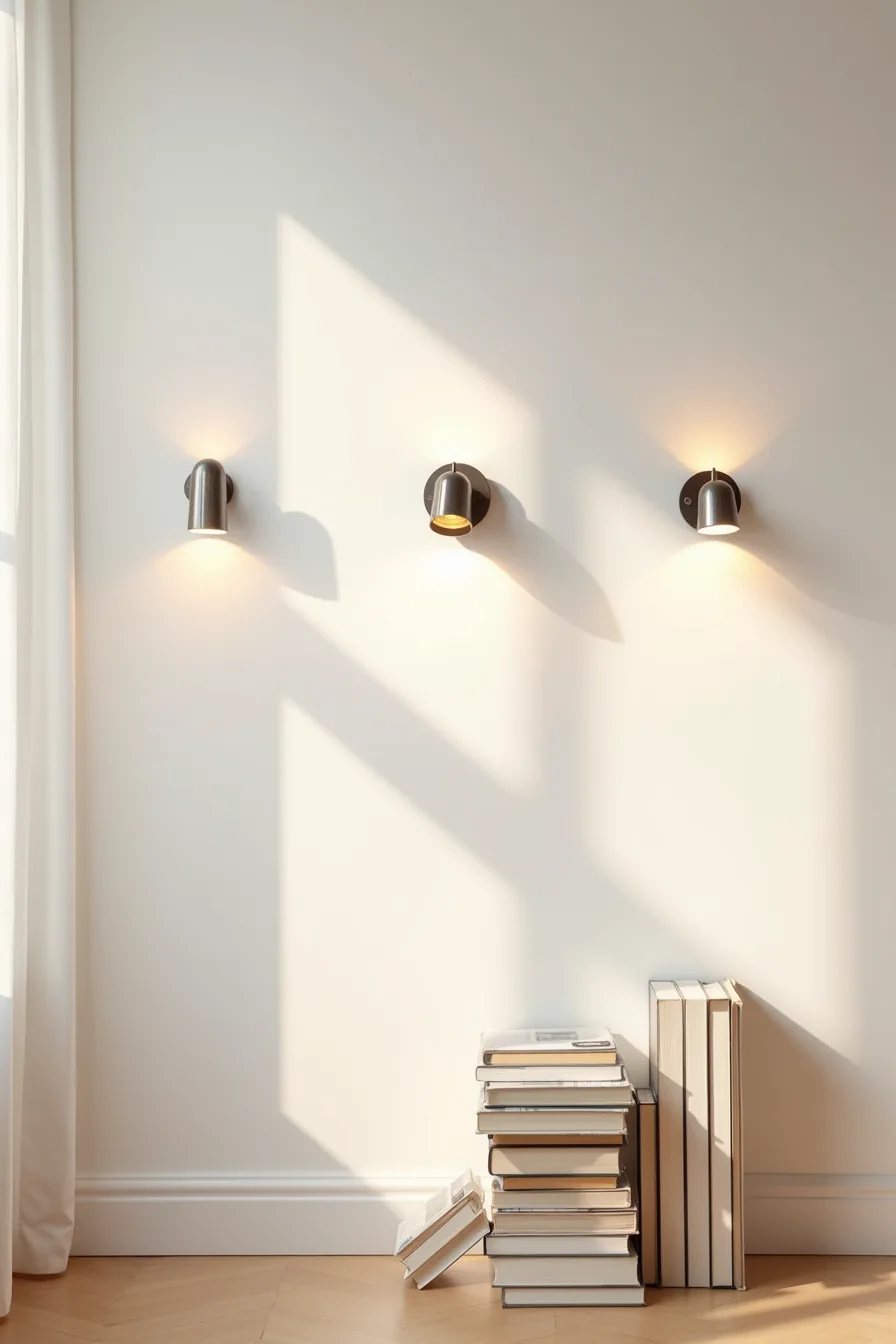
Your budget and living situation should dictate which of the three main wall lighting routes you take. Adhesive battery-powered clip lights, like the small unit on the left, mount without tools or drilling and lift off cleanly with no residue. Expect 200 to 400 hours of light per battery set, and replace batteries every few months, they suit renters, dorm rooms, or anyone who wants zero commitment.
A mid-range hardwired sconce, positioned in the center, typically runs $80 to $250 per fixture plus installation. Mounting brackets anchor directly into wall studs or drywall anchors, and professional electrician costs add roughly $100 to $200 per fixture if you aren’t comfortable wiring them yourself. This route fits homeowners who plan to stay put for at least two to three years and want reliable, everyday illumination.
The designer metal fixture on the right represents the investment tier, expect $400 to $1,200 per piece. These use higher-grade materials like solid brass or hand-finished steel and hold resale value if you move. The real trade-off: better longevity and craftsmanship, but you pay for installation twice if you relocate and need the fixture rewired at your next property.
Where to Start
Match the fixture to the room’s function before its style. A reading nook needs an adjustable swing arm; a hallway wants steady, diffused light; a bathroom requires damp-rated hardware. Measure your wall space and sketch the beam spread, most fixtures throw light 3 to 5 feet from the mounting point.
Start with one room and one fixture. Install it, live with it for a week, and note how the light behaves at dusk and midnight. That single test will tell you more than any catalog photo about brightness, glare, and placement.
Swap in a dimmer switch next, it costs under $50 and transforms most fixtures from harsh to flexible.
Frequently Asked Questions
How high should bedside sconces be mounted above a nightstand?
Mount bedside sconces 28–32 inches above the nightstand surface. This places the light at seated eye level, reducing glare while reading. Adjust slightly higher if you use tall lamps or have a higher bed frame.
Can I install wall light fixtures as a renter without damaging walls?
Yes, use plug-in wall sconces with cord covers that adhere to the wall, no hardwiring required. They mount with removable adhesive strips or small screws you can patch later. Avoid drilling into plaster or textured walls without permission.
What’s the difference between a sconce and a picture light?
A sconce is a general-purpose wall fixture that directs light up, down, or both for ambient or task illumination. A picture light is a narrow, focused fixture mounted above artwork to highlight it specifically. Sconces often have decorative shades; picture lights are slim and angled.
Do wall fixtures need a dedicated circuit, or can they share an existing outlet?
Wall fixtures can share an existing circuit, no dedicated line is required. A standard 15-amp circuit handles most sconces, which draw 5–15 watts per LED bulb. Hardwired fixtures connect to a nearby switch or outlet box, not a new breaker.
For multiple heavy fixtures, consult an electrician.