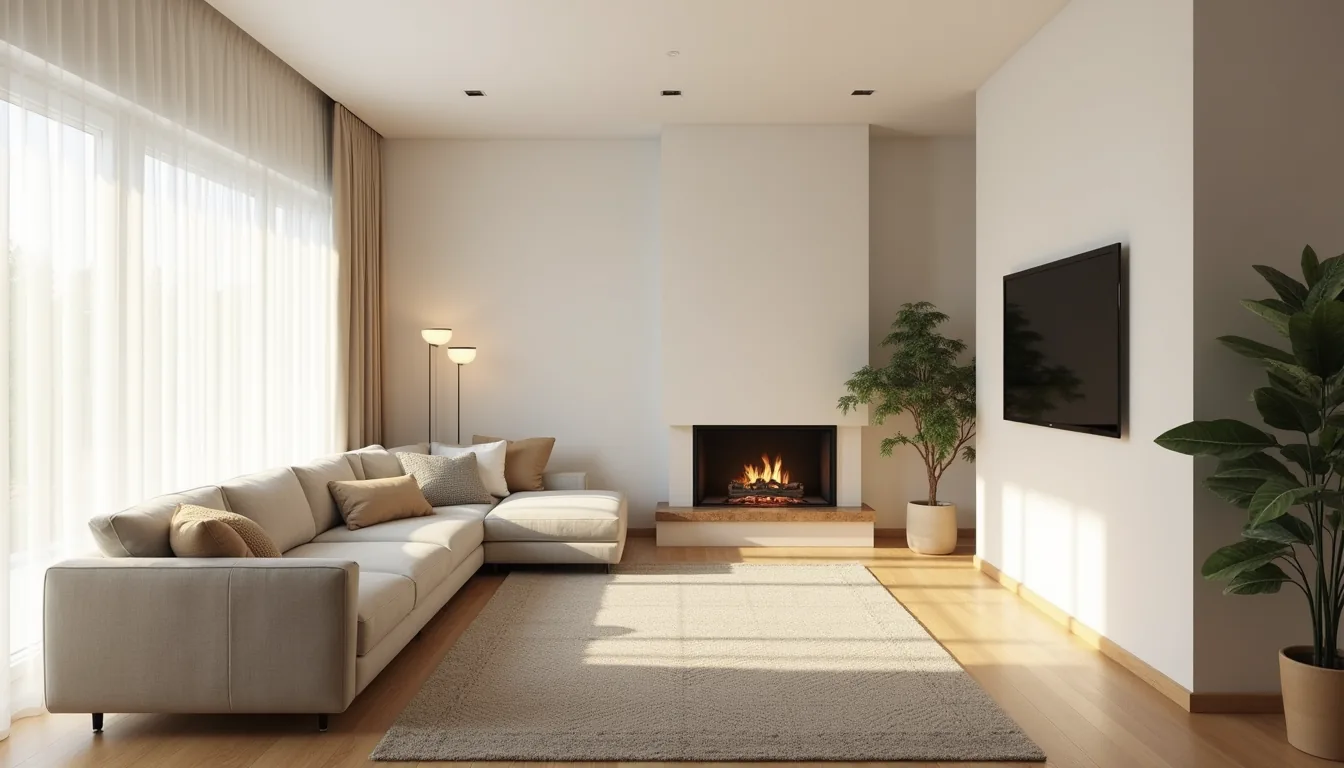
A TV next to fireplace layout works when you treat the two as separate viewing zones rather than competing focal points, and the six setups below give you the exact measurements and trade-offs to decide which one fits your room’s size, traffic flow, and daily habits. You’ll learn the minimum clearances that prevent heat damage, why a 45-degree angle beats a parallel mount in most 12-by-15-foot rooms, and which layout you should reject if you’ve a doorway within 36 inches of the hearth. By the end, you’ll know precisely what to measure before you buy a single bracket or piece of furniture.
Key takeaways
- Measure first: Keep at least 36–48 inches between the TV’s side edge and the fireplace’s opening, and confirm the TV’s center sits at eye level (42–48 inches from the floor) when seated.
- Angle your sofa at 30–45 degrees toward the midpoint between the two focal points in small rooms, ensuring your viewing distance lands within 1.5–2.5 times the TV’s diagonal screen size.
- Balance asymmetry by placing the TV on the taller wall side and adding a tall plant or shelving on the opposite side, so the combined visual weight of both features feels equal from the main entry point.
- Prioritize the TV in large rooms by mounting it on the dominant wall and treating the fireplace as a secondary accent, but verify you retain a clear 3-foot walkway behind seating and that no furniture blocks the hearth’s access for cleaning or maintenance.
Why Competing Focal Points Demand a Strategy
A fireplace and a television both pull your gaze the moment you walk into a room. When they sit on the same wall or within the same sightline, your eyes dart between them, and neither holds its intended role. The result is a space that feels unsettled rather than intentional, no matter how attractive each element is individually.
Consider a room where a straight sofa faces the TV while the fireplace occupies the opposing wall. The seating anchors you to the screen, leaving the fire entirely in your peripheral vision, a wasted heat source and a visual loose end. If you shift the sofa to face the hearth instead, you now crane your neck to watch anything on the television.
That tension is the core failure of arbitrary placement: you haven’t decided which element leads and which supports.
The fix begins with understanding that a TV next to fireplace layout is only viable when you commit to a clear hierarchy. Either the television dominates and the fireplace becomes an ambient backdrop, or the fire remains the centerpiece and the screen integrates discreetly beside it. Before you move any furniture, measure both the viewing distance and the angle from your primary seat to each focal point.
This single measurement determines whether your space demands an angled arrangement, a perpendicular setup, or a deliberate demotion of one feature, and it prevents the mistake of forcing both into the same plane where they compete head-on.
Layout 1: Angled Sofa Facing Both (Small to Medium Rooms)
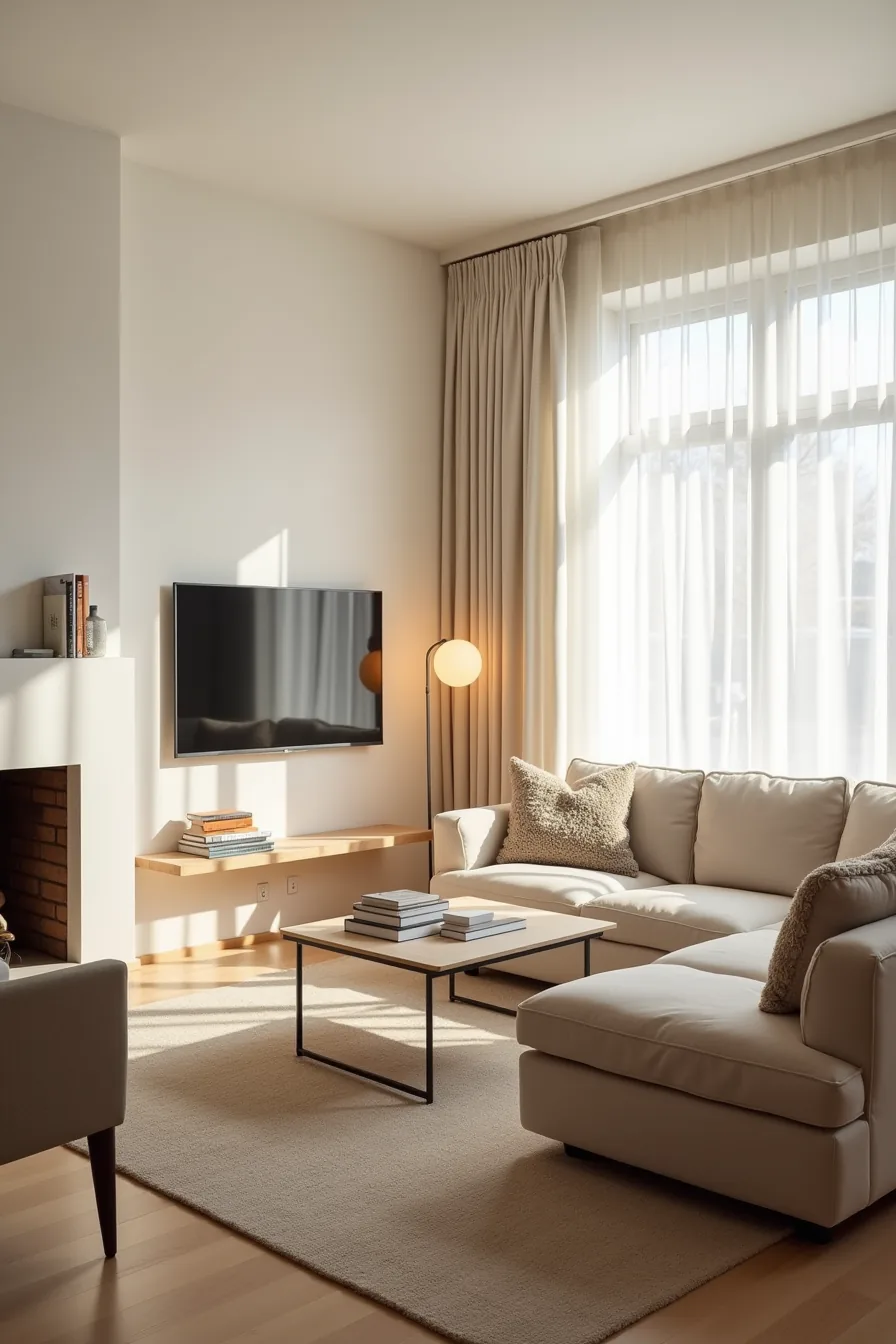
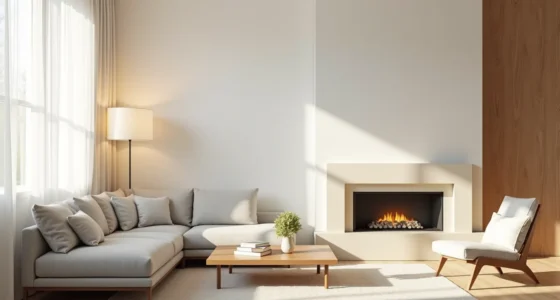
Position the primary seating at a 30–45 degree angle between the two focal points, and you solve the competition problem without surrendering either element. In a room where the fireplace anchors the left wall and the TV occupies the right, a sectional angled at roughly 35 degrees lets you face the screen for movies while turning your head just 30 degrees to enjoy the fire, a natural, comfortable rotation that avoids neck strain.
This layout works best in rooms measuring roughly 12–16 feet across, wide enough to support a sectional without crowding the coffee table. The angled sectional’s short arm faces the fireplace, its long arm extends toward the TV, and a throw blanket draped over the back softens the visual transition between the two zones. You need at least 18 inches of clearance between the sectional and both walls, and the coffee table should sit within 16–18 inches of the seat edge for easy reach.
This arrangement suits casual, media-first households where the fire serves as ambiance during cold evenings rather than the room’s primary destination.
Layout 2: Perpendicular Arrangement with Asymmetrical Wall Balance
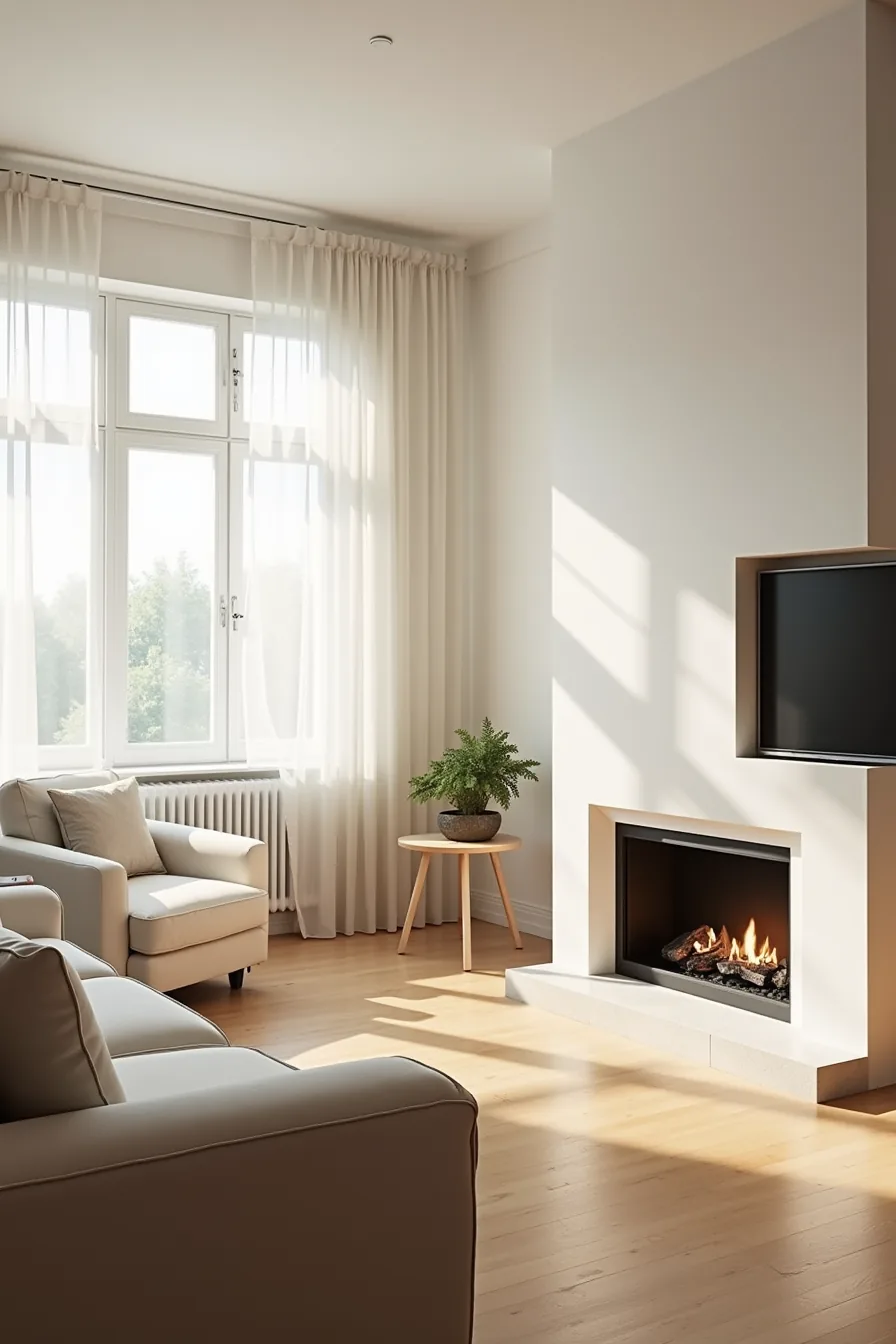
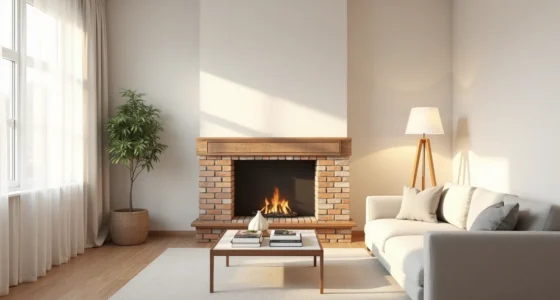
Place the TV on the right wall and the fireplace on the front wall, then run your sofa perpendicular to the television. The seating faces the screen directly while the fire sits in your peripheral vision, roughly 60–90 degrees off to the side, close enough to enjoy the glow without turning your head away from the action.
Asymmetrical wall balance comes from pairing a floating media console under the TV against the fireplace’s full-height stone surround. The side table sits between the sofa and fireplace to bridge the zone, while an accent chair opposite the sofa’s open end anchors the corner and keeps the circulation path clear. You need a minimum of 24–30 inches of walking space behind the sofa if it doubles as a room divider, and the TV wall should be at least 8 feet long to avoid crowding the doorway.
This arrangement suits formal living rooms where the fireplace remains the architectural hero but daily viewing takes priority, expect to spend more on a slim-profile console and wall-mounted TV to keep sightlines unobstructed.
Layout 3: Fireplace as Secondary Feature with TV Dominant
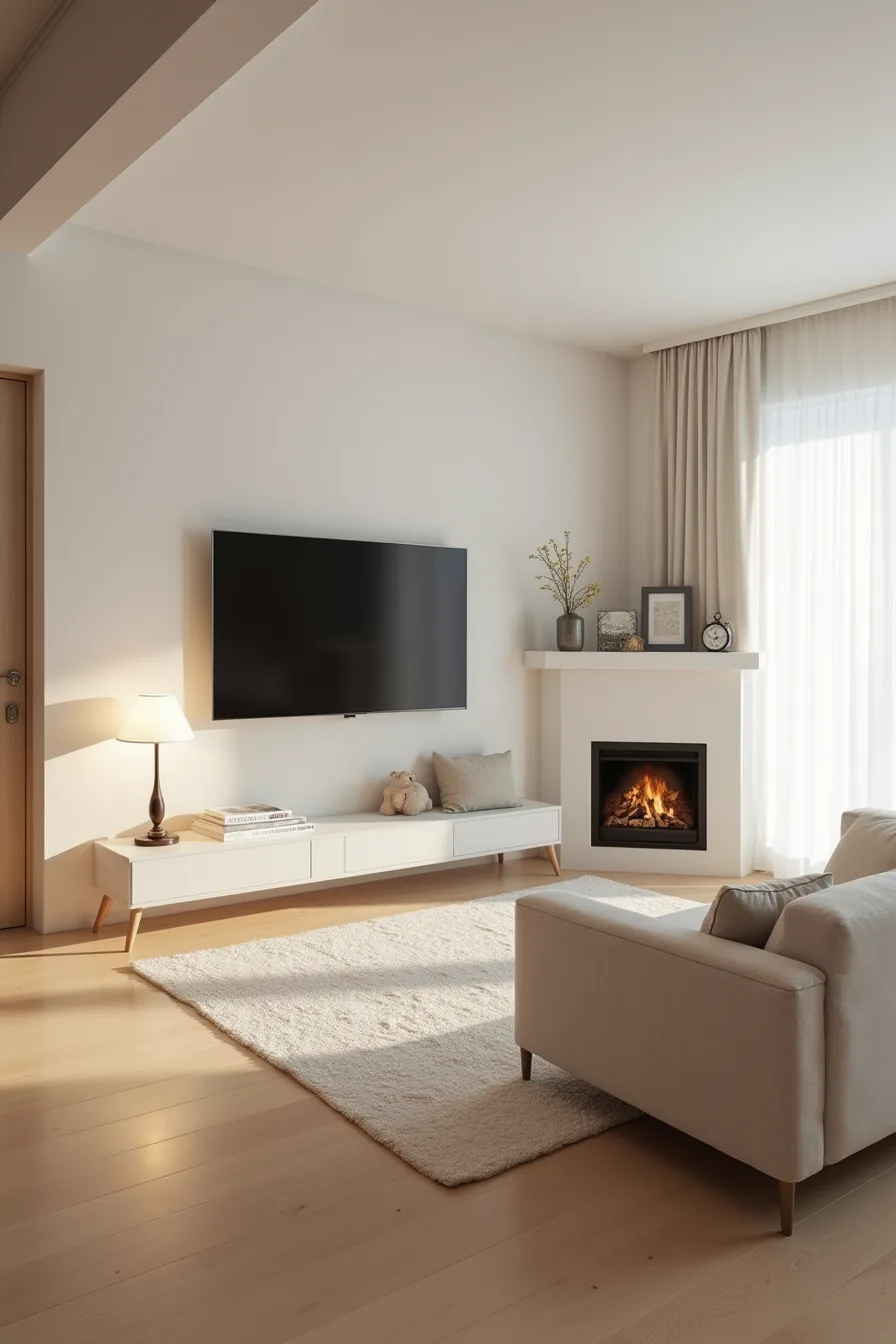
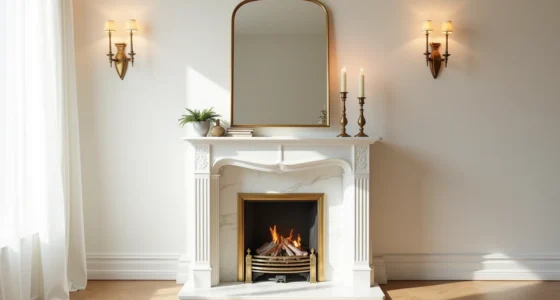
Reverse the hierarchy entirely: mount the large TV on the main wall as the undisputed focal point, then let the fireplace recede into a supporting role on the adjacent wall. In this setup, the fireplace sits lower and off-center, its surround scaled down to a minimal frame or simple painted mantel that visually weighs less than the screen above the media console. The sofa faces the TV directly, and artwork above the fireplace draws the eye only when the screen is off, a deliberate trick to balance the two zones without competing sightlines.
This trade-off suits open-plan rooms or media-first households where binge-watching and gaming outrank cozy fireside reading. You lose the fireplace’s commanding presence, but you gain flexibility: the TV wall needs at least 10–12 feet to accommodate the screen, console, and breathing room, while the fireplace wall only requires a standard 36-inch-wide clearance. Expect to spend more on low-profile fireplace surrounds and recessed TV mounting, both keep the sightline clean from the entry, where the visual hierarchy should read instantly.
If you entertain frequently or value the fire as a conversation anchor, this layout will frustrate you; reserve it for dedicated viewing rooms instead.
Sofa Placement Options and Viewing Distance Checkpoints
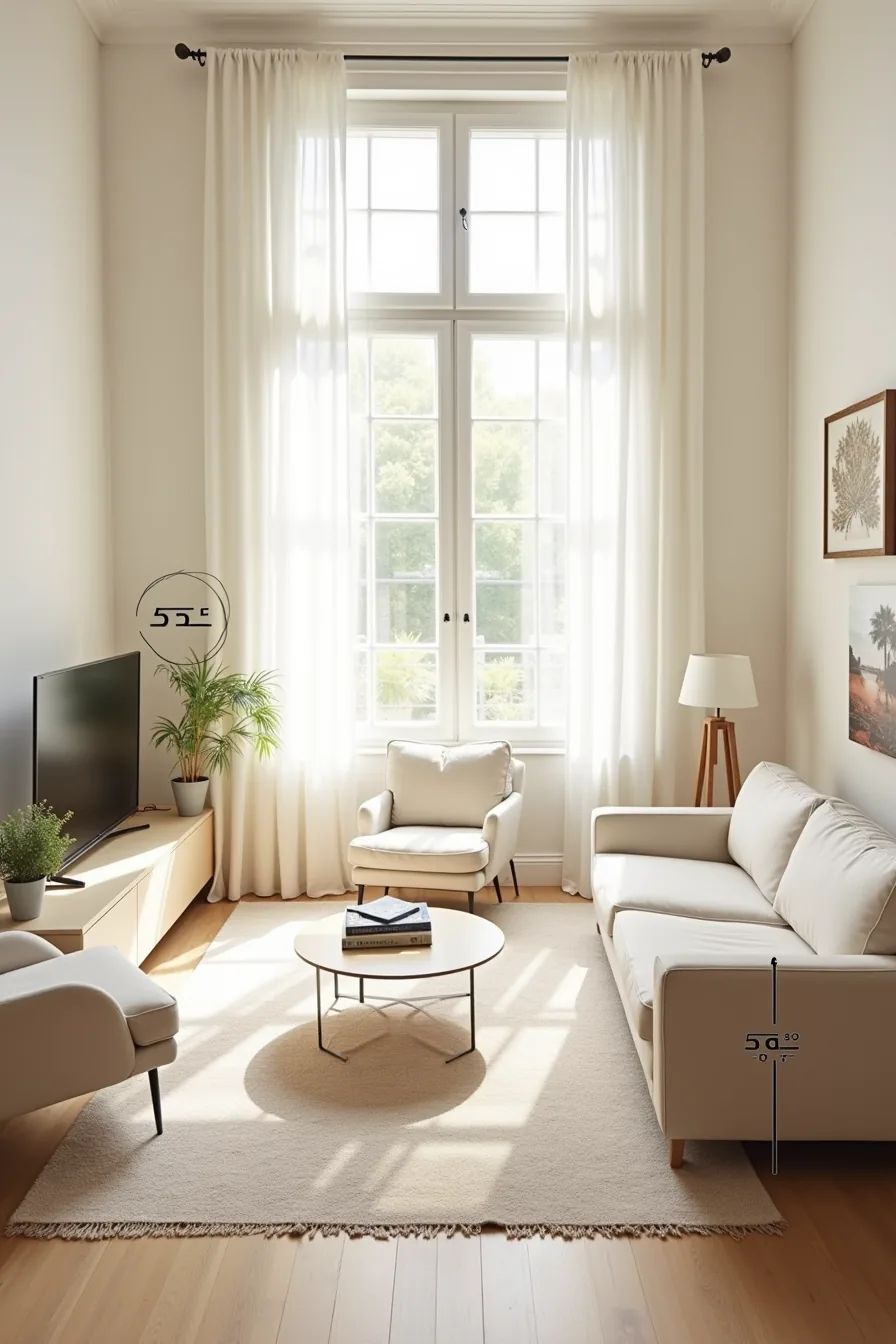
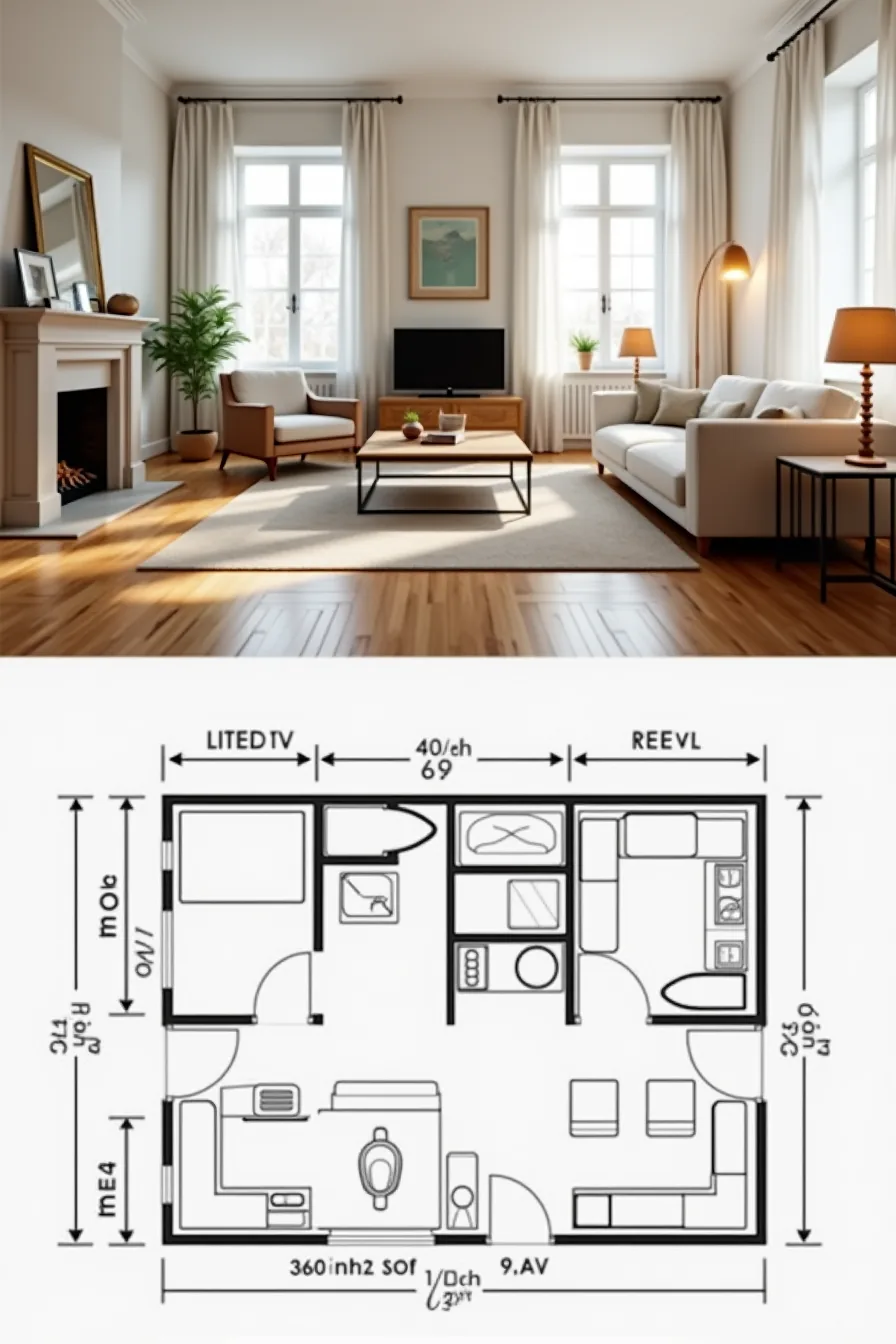
Three seating positions determine how comfortable your TV next to fireplace layout feels, and each demands different measurements. A sofa facing the TV directly requires a viewing distance of 1.5 to 2.5 times the screen’s diagonal, for a typical 55-inch display, that means sitting 7 to 11 feet back. The overhead schematic’s three sofas illustrate the spacing: the direct-facing sofa sits furthest from both heat source and screen, with at least 36 inches of clearance from the fireplace hearth to the nearest cushion edge.
An angled sofa between TV and fireplace splits the difference, needing 5 to 7 feet from the screen and 30 to 40 inches from the firebox opening to prevent heat damage to upholstery. The floating center sofa, positioned perpendicular to both, works best in wider rooms measuring 14 feet or more across, and it keeps every seat within a comfortable 135-degree viewing arc. You measure comfort by sitting at each spot: your eyes should land at the screen’s vertical center without tilting your neck, and you should never feel radiant heat on your face or arms.
Mark these points with painter’s tape before committing to furniture.
Adapting TV Next to Fireplace Layout Across Room Sizes
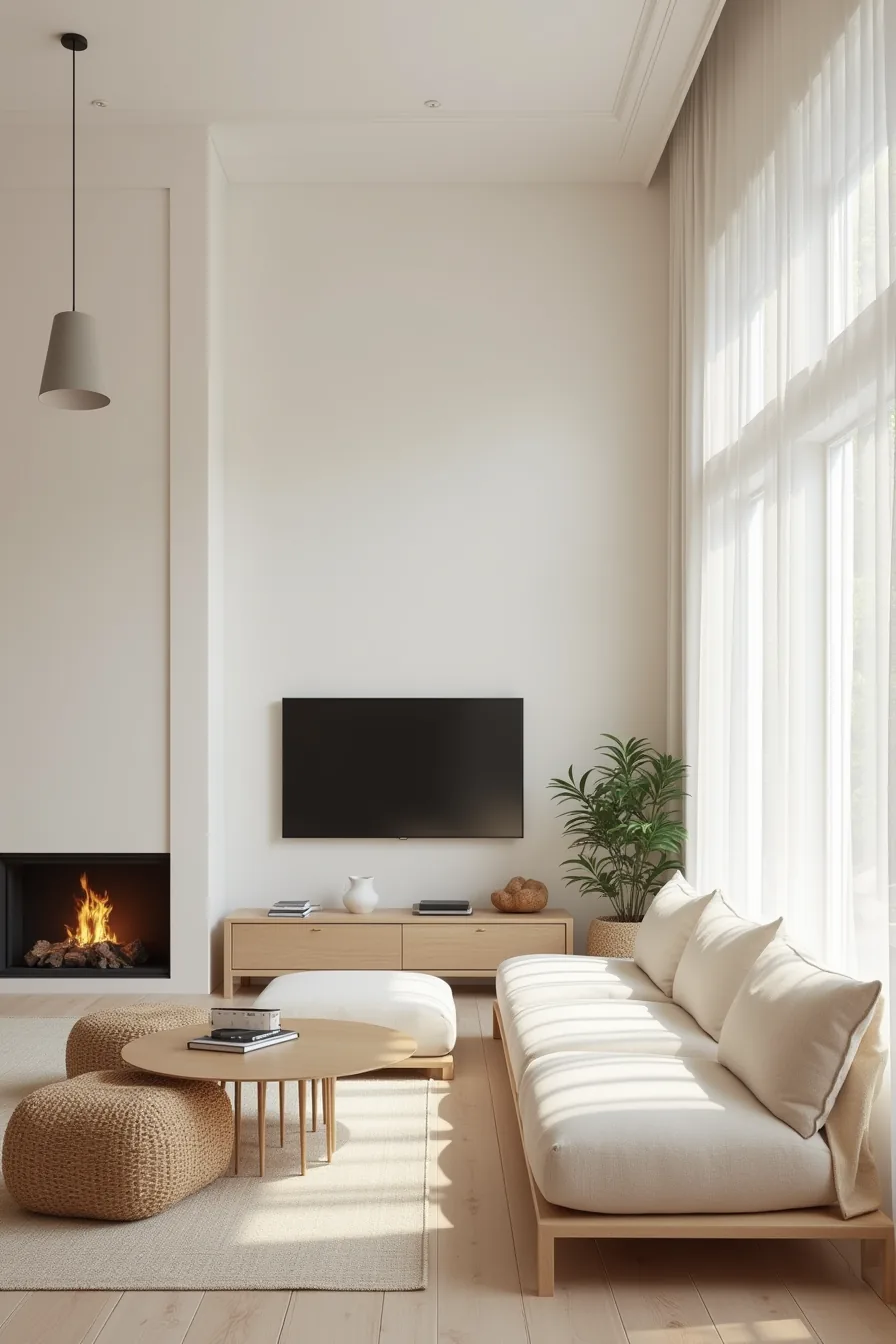
In a small apartment living room under 150 square feet, place the TV on a wall perpendicular to the fireplace rather than beside it. You need a compact sofa no deeper than 34 inches set 4 to 6 feet from the screen, and a 40- to 50-inch TV keeps the viewing angle within 30 degrees off-center; skip a mantel entirely if the hearth protrudes more than 8 inches into the room.
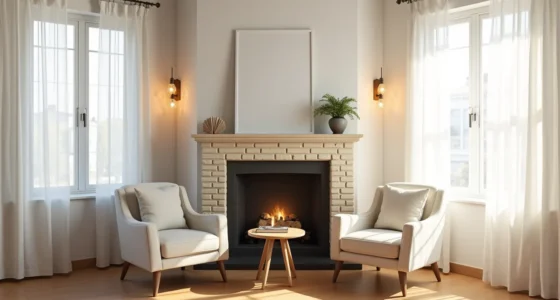
A medium living room between 150 and 250 square feet gives you the flexibility to mount the TV on a swivel bracket beside the fireplace, angled 15 to 20 degrees toward the primary seating. Position a 55- to 65-inch screen at least 18 inches from the firebox opening, and use a console table beneath it that matches the fireplace surround’s depth, typically 14 to 18 inches, to keep the wall plane visually unified.
For an open-plan space exceeding 250 square feet, create a dedicated media zone 8 to 10 feet from the fireplace, with the TV on a full-height media wall and seating arranged in an L-shape perpendicular to both heat source and screen. Separate the zones with a low bookcase or area rug that delineates the walking path, and you can run a 65- to 75-inch display without dominating the room’s proportions.
Where to start
Measure your room before you move anything. Mark the fireplace edges, your seating position, and the nearest outlet on the floor with tape. If you’ve under 36 inches between the fireplace and the nearest wall corner, skip the side placement entirely and consider the mantel mount instead.
Take a photo from your primary seated position, then tape a cardboard cutout of your TV’s dimensions to the wall. Live with it for 24 hours. That single test reveals sightline fatigue, glare, and traffic conflicts better than any rendering.
Measure your room, cut the cardboard, and commit to one layout this weekend.
Frequently Asked Questions
Question
How far should a sofa be from a TV when the fireplace is also in the room?
Answer
For a 55-inch TV, sit 7–10 feet away; for a 65-inch screen, aim for 9–12 feet. Measure from the screen to your eyes, not the wall, and adjust for the fireplace’s projection.
Question
Can you put a TV directly above a fireplace if they’re next to each other?
Answer
Yes, but only if the mantel depth is at least 8 inches and the TV bottom sits 12–18 inches above the firebox. Heat and viewing angle become issues, so tilt the screen down 10–15 degrees.
Question
What’s the minimum distance a sofa needs to be from an active fireplace?
Answer
Keep upholstered furniture at least 36 inches from the firebox opening; 48 inches is safer for gas units. For wood-burning fireplaces, extend that to 60 inches to prevent ember damage and heat exposure.
Question
How do you balance the visual weight of a TV and fireplace on the same wall?
Answer
Anchor the fireplace with a taller, heavier mantel or surround, then mount the TV on a swivel arm. Keep both elements within the same vertical band, center lines no more than 12 inches apart, so the composition reads as one unit.