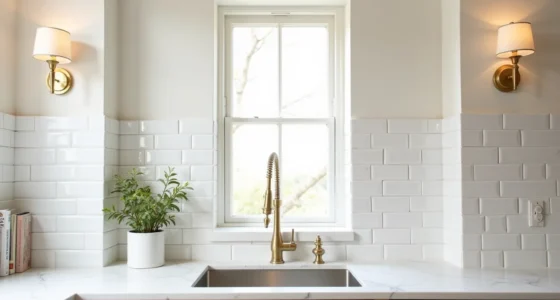

Your kitchen window decor should do more than look pretty, it should earn its place by managing light, privacy, and practicality without crowding your sink or counters. The real challenge is matching the treatment to your window’s size, your cooking habits, and how much maintenance you can tolerate. The six approaches that follow range from a $15 tension rod fix to a built-in shelf investment, each with specific conditions for success.
By the end, you’ll know exactly which one fits your space and why the alternatives would fail.
Key takeaways
- Sill plants work best when you match light exposure first, so measure your window’s sun hours before buying anything.
- For small windows, stick to one 4-6 inch pot or a single trailing vine to avoid blocking the sink or countertop.
- Renter-friendly textiles like tension-rod curtains or clip-on valances cost under $30 and leave zero holes when removed.
- Rotate seasonal accents every 8-12 weeks, swap a ceramic bowl for a glass jar, to refresh the look without touching paint or hardware.
Plants on the Sill: Living Decor That Serves a Purpose
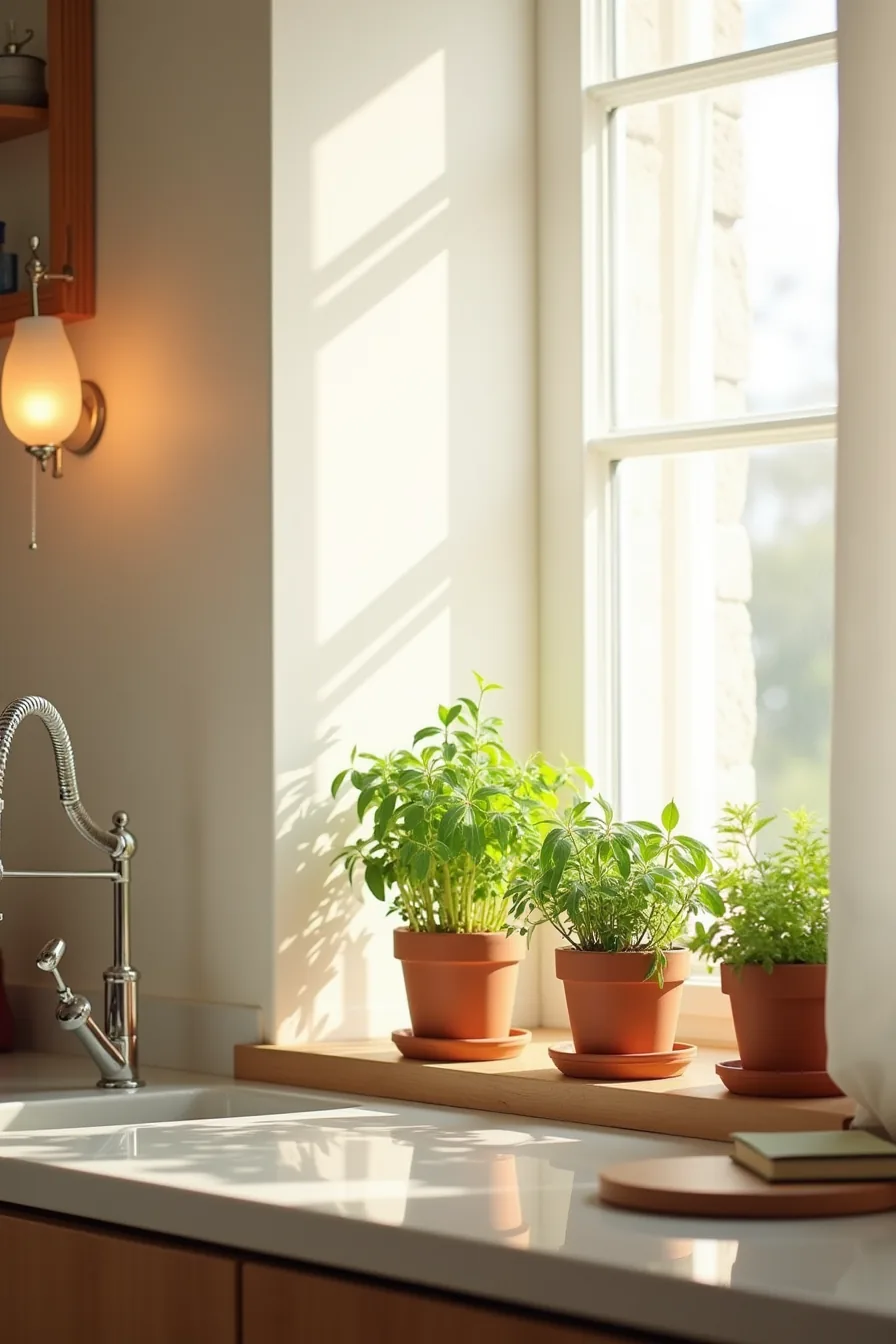
The simplest version of kitchen window decor is also the most functional: a row of herbs on the sill. Three terracotta pots holding basil, rosemary, and thyme sit directly beside the faucet, where water droplets on the leaves confirm they’re minutes from a meal, not a display piece. That proximity is the point, you reach, snip, and return to the pan without losing your cooking rhythm.
This setup suits any kitchen with at least 6–8 inches of sill depth and a window that gets 4–6 hours of indirect light. South-facing windows need a sheer curtain to prevent leaf scorch; north-facing ones demand a grow bulb. Terracotta wicks moisture fast, so expect to water every 2–3 days in summer and weekly in winter.
Choose this route if you cook regularly and want decor that earns its counter space, on a narrow sill, three compact pots is the ceiling before you block the faucet or trap steam against the glass.
Minimal vs Layered Decor: Choosing Your Visual Density
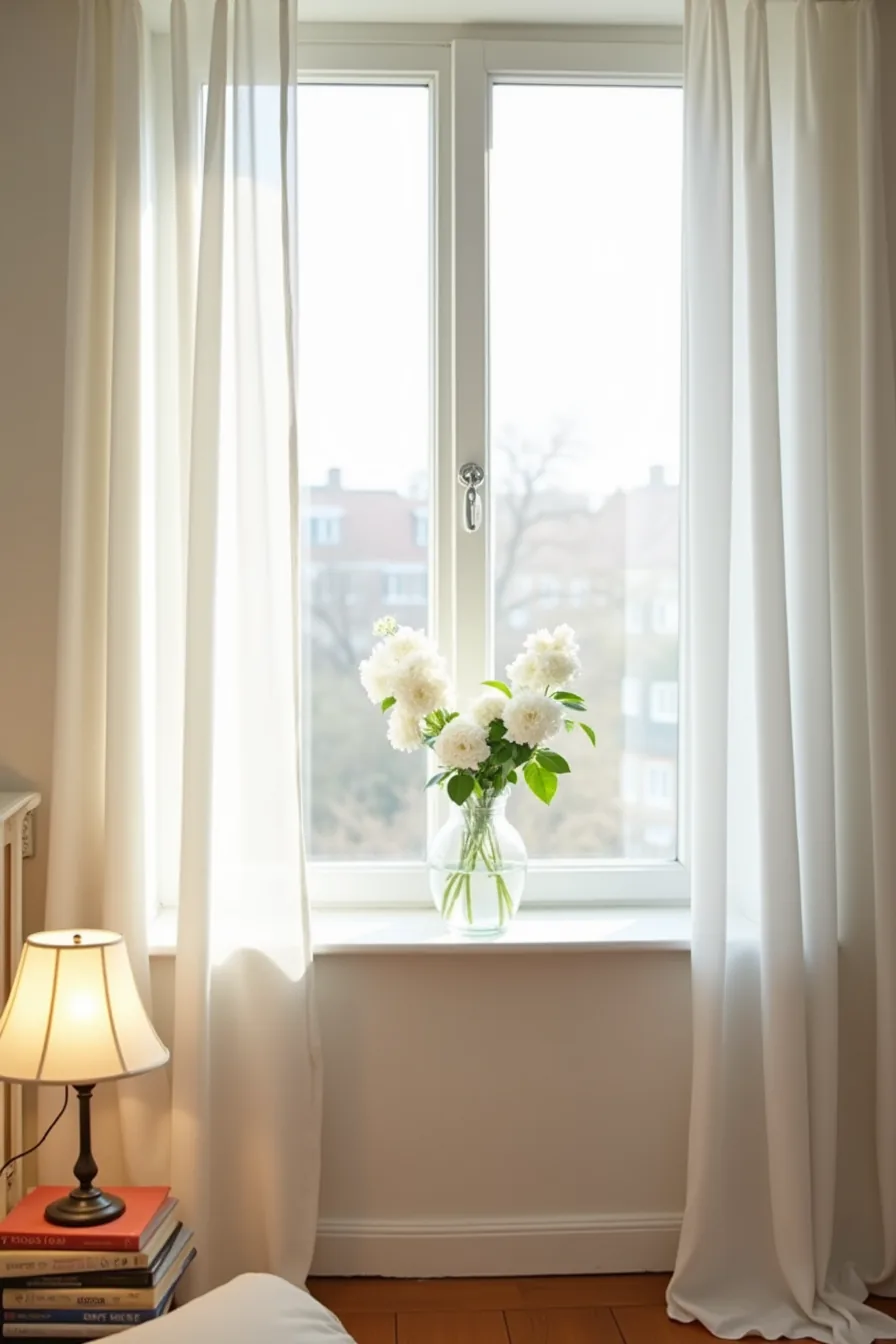
A single clear glass vase with white flowers centered on an empty windowsill is the purest form of minimal kitchen window decor. That lone arrangement, against a bare wall with no competing objects, reads as deliberate restraint rather than neglect. It works best in kitchens with busy countertops, open shelving, or patterned backsplashes, spaces where the window should offer visual silence.
Maintenance is nearly zero: change the water every 2 days, trim stems weekly, and wipe the sill monthly. No dusting of individual objects, no seasonal rotation, nothing to rearrange after cooking splatters reach the glass.
Layered decor, by contrast, stacks two to five elements at varying heights, a small cutting board leaning against the frame, a short stack of cookbooks, a single ceramic pitcher. This suits minimalist kitchens that feel sterile, or anyone who sees the window as a focal point rather than a light source. The trade-off is real: layered displays collect grease film faster, take 10–15 minutes to reset properly, and require you to move everything whenever you open a casement window.
The minimal vs layered decor decision comes down to your tolerance for maintenance and whether your kitchen already provides visual busyness elsewhere.
Textiles and Soft Furnishings: Fabric Solutions for Every Budget

A linen roller shade, like the one in this setting, offers the easiest balance of light control and warmth, raise it fully for bright mornings or lower it halfway to soften harsh afternoon glare. That textured, semi-sheer weave filters sunlight rather than blocking it entirely, which keeps the room bright while reducing glare on countertop workspaces. Budget buyers should expect to pay roughly $30–$60 for a quality roller shade in standard kitchen widths, while investment-grade European flax linen runs $150–$300 per window and delivers tighter, more even pleats that hold their shape for a decade or more.
Renters should skip permanent hardware entirely. Tension rod systems with café curtains or lightweight cotton panels install in minutes, leave no holes, and cost $15–$40 per window. For cleaning, machine-wash cotton every 4–6 weeks; linen requires dry cleaning or gentle hand washing to prevent shrinkage, so factor that recurring cost into your choice.
Steer clear of heavyweight velvet or thick blackout fabrics in this room, they trap cooking odors and grease film, requiring frequent professional cleaning that outweighs their visual appeal.
Seasonal Window Accent Rotation: Refresh Without Renovation

The cheapest way to change your kitchen’s personality is a seasonal window accent swap that touches nothing structural. A cluster of small pumpkins, dried wheat stems, and amber-colored glass votives arranged directly on the sill costs under $25 and takes ten minutes to style, no tools, no holes, no commitment. Group odd numbers (three or five pieces) at varying heights, and keep the arrangement to one-third of the sill’s width so you can still open the window fully.
This approach suits renters and indecisive decorators perfectly. When autumn ends, the entire display collapses into a storage bin in about five minutes. For spring, replace the pumpkins with ceramic eggs or pastel bud vases; for summer, switch to white shells and clear glass.
Stick to a two-color palette per season, warm amber and orange for fall, cool white and green for spring, to avoid visual clutter against busy kitchen backsplashes. Dust the props monthly and wash votives after each season to prevent grease film from dulling the glass.
Shelving and Display: Scaling Decor to Your Window Size
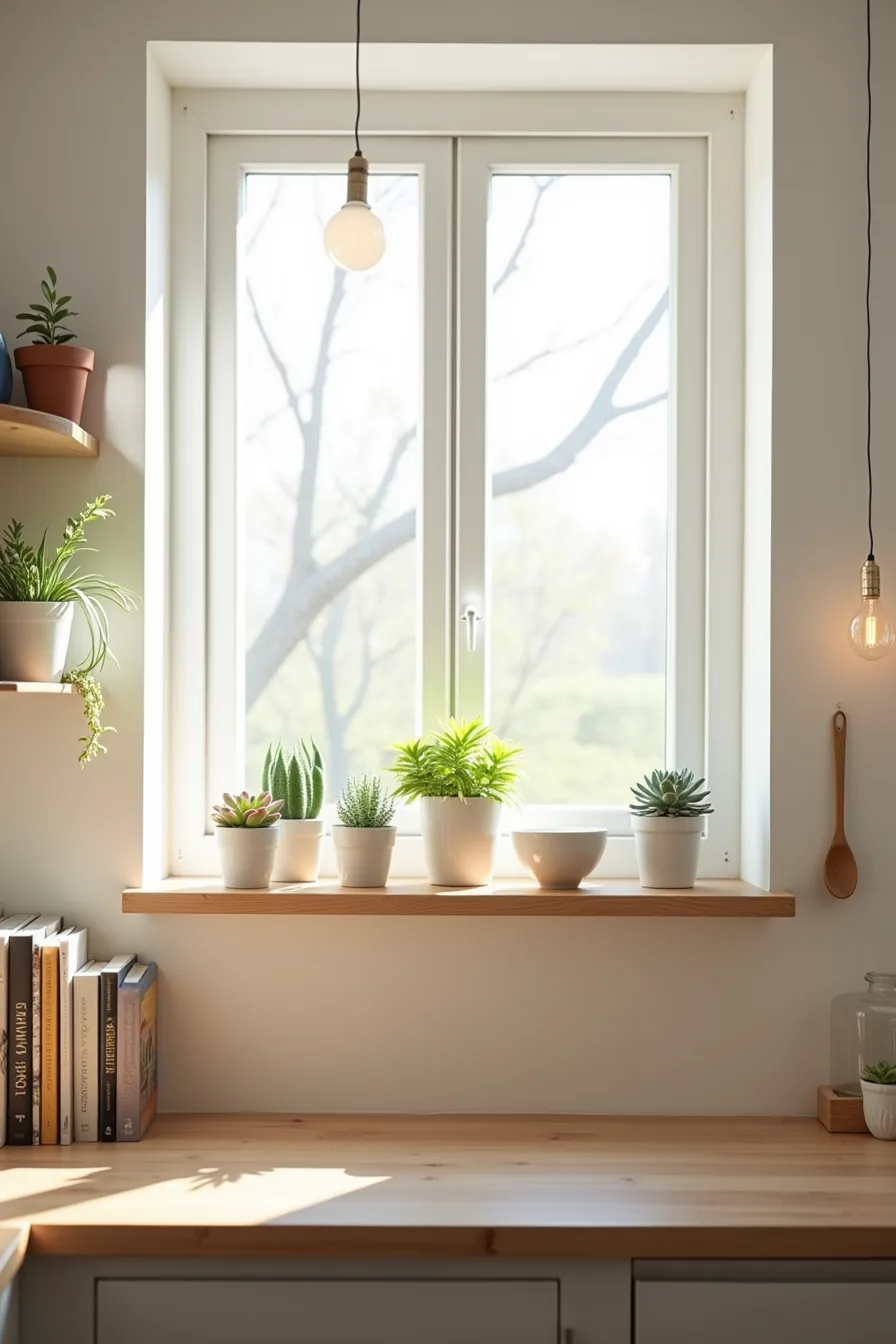
A floating shelf mounted directly below the sill turns dead wall space into a functional staging zone without blocking the window’s operation or natural light. For a typical medium kitchen window (36–48 inches wide), install a 48-inch solid wood shelf 4–6 inches below the sill, anchored into wall studs with hidden brackets rated for at least 30 pounds. That setup comfortably supports a row of small potted succulents, a ceramic bowl for fruit or catch-all storage, and a wooden spoon in a holder, all within arm’s reach while cooking.
Small windows under 30 inches wide suit a narrower 24-inch shelf holding just two or three items; anything longer overwhelms the opening and crowds the surrounding cabinets. Large picture windows over 60 inches wide can take a full-length shelf, but break the display into two distinct clusters rather than one continuous line to avoid a monotonous row. Use the shelf only for items you actually reach for weekly, the bowl and spoon earn their place, while purely decorative pieces create dust-catching clutter you’ll have to move every time you clean the glass.
Match the shelf finish to your existing cabinet hardware or trim, and oil natural wood monthly to prevent steam and cooking grease from dulling the surface.
Refresh Kitchen Window Decor for a Cleaner Look: Maintenance and Reset Routines

A seasonal reset takes 20 minutes and prevents the slow creep of grease film, dust, and forgotten items that turn a styled sill into visual noise. Start by removing every object, don’t sort yet, and wipe the bare windowsill with a microfiber cloth dampened with warm water and a drop of dish soap. Follow with a dry lint-free rag to remove streaks, then clean the glass while you’ve clear access; you won’t need to move items again for another month.
Before you return anything, apply a one-in, one-out rule: anything you haven’t touched since the last reset goes into a box for the garage or a donation bag. Rebuild the display with only the items you use or genuinely see daily, placing your most-used piece closest to your dominant hand. Leave 20–30% of the sill surface empty, this negative space is what makes the arrangement read as intentional rather than accumulated.
A spray bottle of vinegar-water mix stored under the sink makes the next monthly wipe a 90-second task rather than a project.
Your first move
Pick the single constraint that bothers you most, privacy, clutter, or wasted light, and solve that one first. A single change, like swapping a busy valance for a tension rod with café curtains, will alter the room’s feel for roughly $30–60 and under an hour of work.
Measure your window’s width and height before buying anything. Then, commit to one option from the list above that fits your rental agreement, budget, and cleaning tolerance.
Order the hardware tonight, install it this weekend, and live with it for two weeks before deciding if you need a second layer. That one change will tell you exactly what your kitchen still needs.
Frequently Asked Questions
What’s the best way to keep plants on a kitchen window sill alive if I have low light?
Choose low-light tolerant species like pothos, snake plants, or ZZ plants. Rotate pots weekly to prevent leaning, and wipe dust off leaves monthly so they maximize whatever light reaches them.
Can I use kitchen window decor in a rental apartment without damaging the walls?
Yes. Use tension rods inside the window frame for hanging items, command hooks on glass or trim, and freestanding shelves or sills. Avoid adhesive strips on painted walls, they often peel paint when removed.
How often should I refresh or rotate seasonal kitchen window decor?
Swap seasonal accents every 6–8 weeks to align with major holidays and weather shifts. For functional items like herbs or dish towels, refresh monthly or as they wear out to keep the space looking intentional.
What’s the difference between minimal and layered window styling, and which works better for small kitchens?
Minimal styling uses one or two focal pieces, a single plant or a slim shelf, while layered styling combines multiple elements like herbs, glassware, and textiles. For small kitchens, minimal works better because it preserves light and counter space; layered styling suits larger windows with deeper sills.