
Kitchen window treatments are the rare design decision that must balance light control, grease resistance, privacy, and style simultaneously, and the right choice depends less on trends and more on how you actually cook, clean, and live in the space. A busy family kitchen with a frying station needs different fabric and hardware than a sun-drenched breakfast nook used mainly for coffee. The six options ahead range from $15 tension rods to custom shutters, each with specific trade-offs in maintenance, light filtration, and installation effort.
By the end, you’ll know exactly which treatment matches your cooking habits, window size, and budget, without guesswork.
Key takeaways
- Roller shades win in kitchens because you can wipe them down with soapy water in under five minutes, and their slim stack keeps the window sill fully usable.
- Choose café curtains when you want natural light and privacy simultaneously, but expect to wash them monthly, while roller shades only need a damp cloth weekly.
- Frosted films block up to 92% of UV rays and offer daytime privacy without sacrificing light, yet they cost $8–$15 per square foot installed and are permanent once applied.
- Wood shutters are the long-term investment at $200–$500 per window, but they require re-oiling every 12–18 months and a 4-inch clearance to avoid trapping steam from the stove.
Roller Shades for Clean Lines and Easy Cleaning
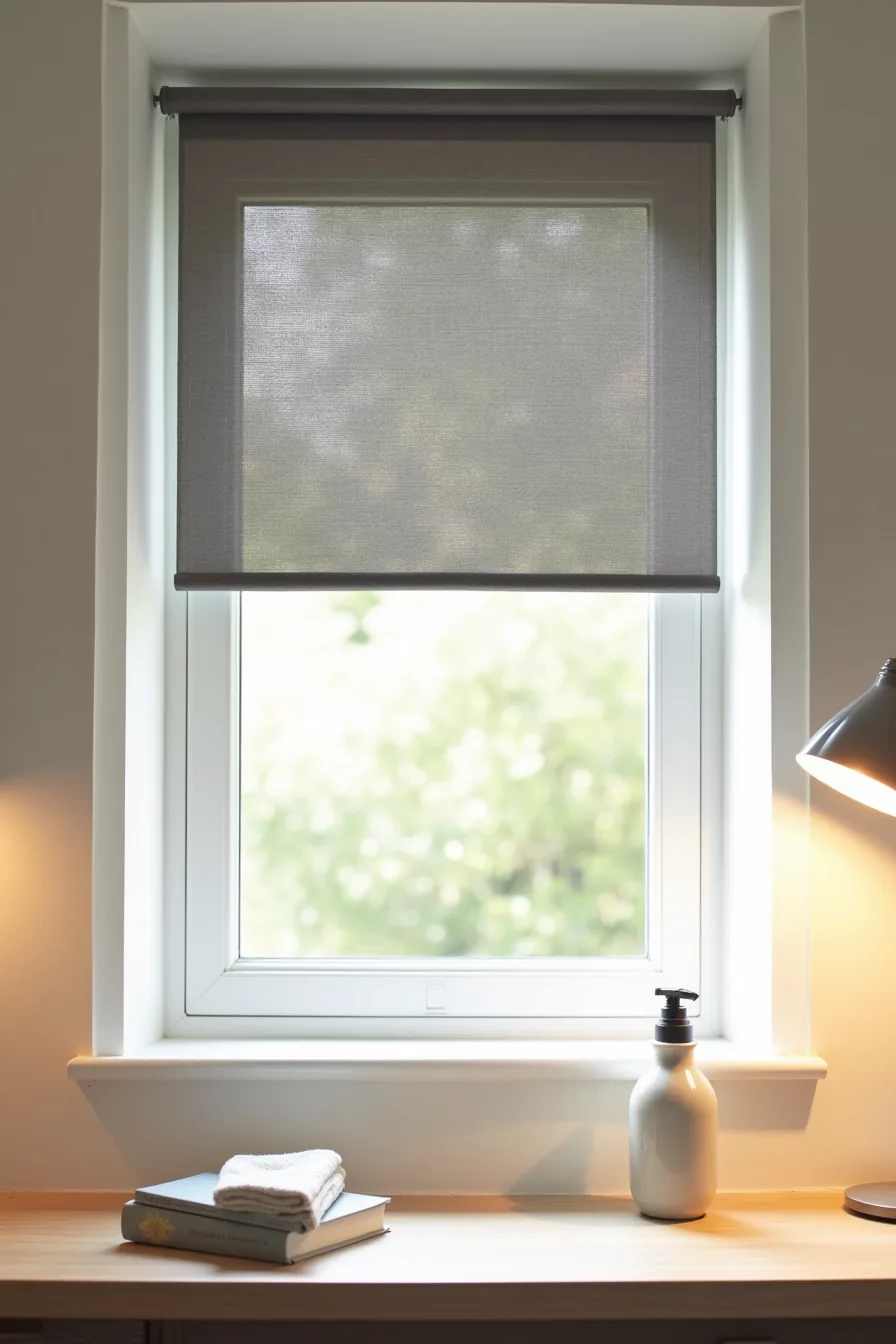
Roller shades earn their place in kitchens because they remove the fuss entirely, no slats to dust, no fabric panels to pull aside, just a single smooth sheet that glides up and down. Against a window frame and sill, a charcoal-gray woven polyester shade at half-lower height gives you filtered morning light while keeping the heat gain in check. The translucent weave softens direct sun without plunging the room into gloom, which suits anyone who cooks early and wants daylight without the glare.
Material choice matters more here than in other rooms. Woven polyester resists moisture and grease better than cotton or linen, and it wipes down with a spray bottle and microfiber cloth, a routine you can complete in under two minutes. For sizing, order the shade width to match the inside frame for a clean inset look; if your window is non-standard (most are, within a 24–48 inch range), measure at three points horizontally and use the narrowest.
Outside mount is your fallback for frames with shallow depth, but add 3–4 inches on each side to block light leakage. Dust the fabric weekly with a dry cloth, and deep-clean yearly with mild soap and water, avoid harsh degreasers, which can degrade the coating.
Shade vs Café Curtain: When to Choose Each
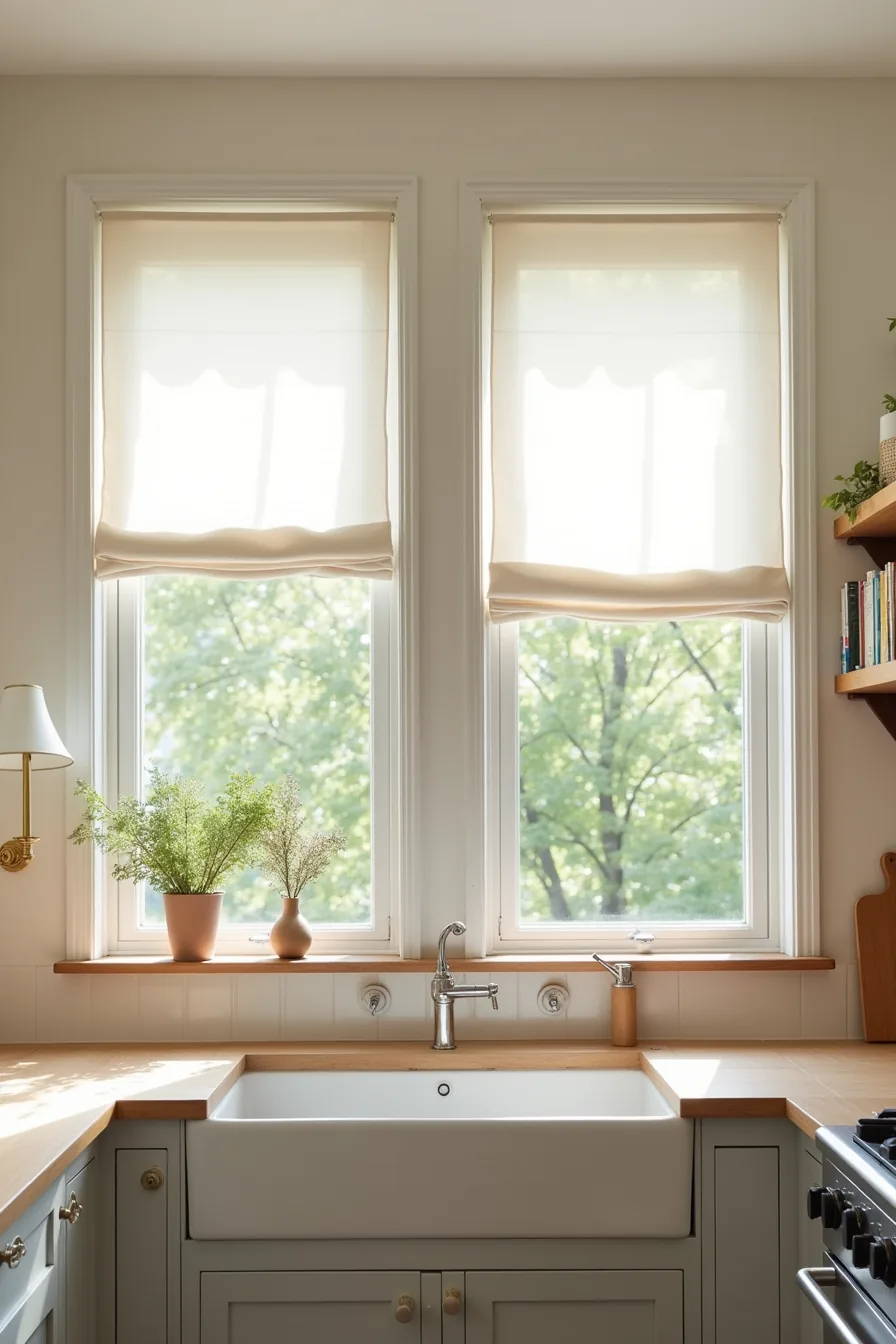
A white roman shade pulled halfway down and a cream linen café curtain hung at mid-height on a brass rod solve different problems, even on adjacent windows over the same countertop. Use a roman shade when you need adjustable light control across the full window height, pull it down for cooking privacy, raise it fully for an unobstructed view of the greenery. Its soft folds soften daylight but block most glare, making it the stronger pick for south-facing exposure.
The café curtain, covers only the lower half by design, so it preserves natural light from above while screening the sightline from the street into your prep zone. That makes it the right choice for galley kitchens with one wall of windows, where full-bottom coverage creates tunnel vision. Installation runs about 15 minutes with a tension rod pressed into the frame, no drilling, no hardware.
For open-plan kitchens, pair a roman shade on cooking-side windows with café curtains on the dining-side ones to vary scale across the room.
Privacy Without Darkness: Frosted and Textured Films
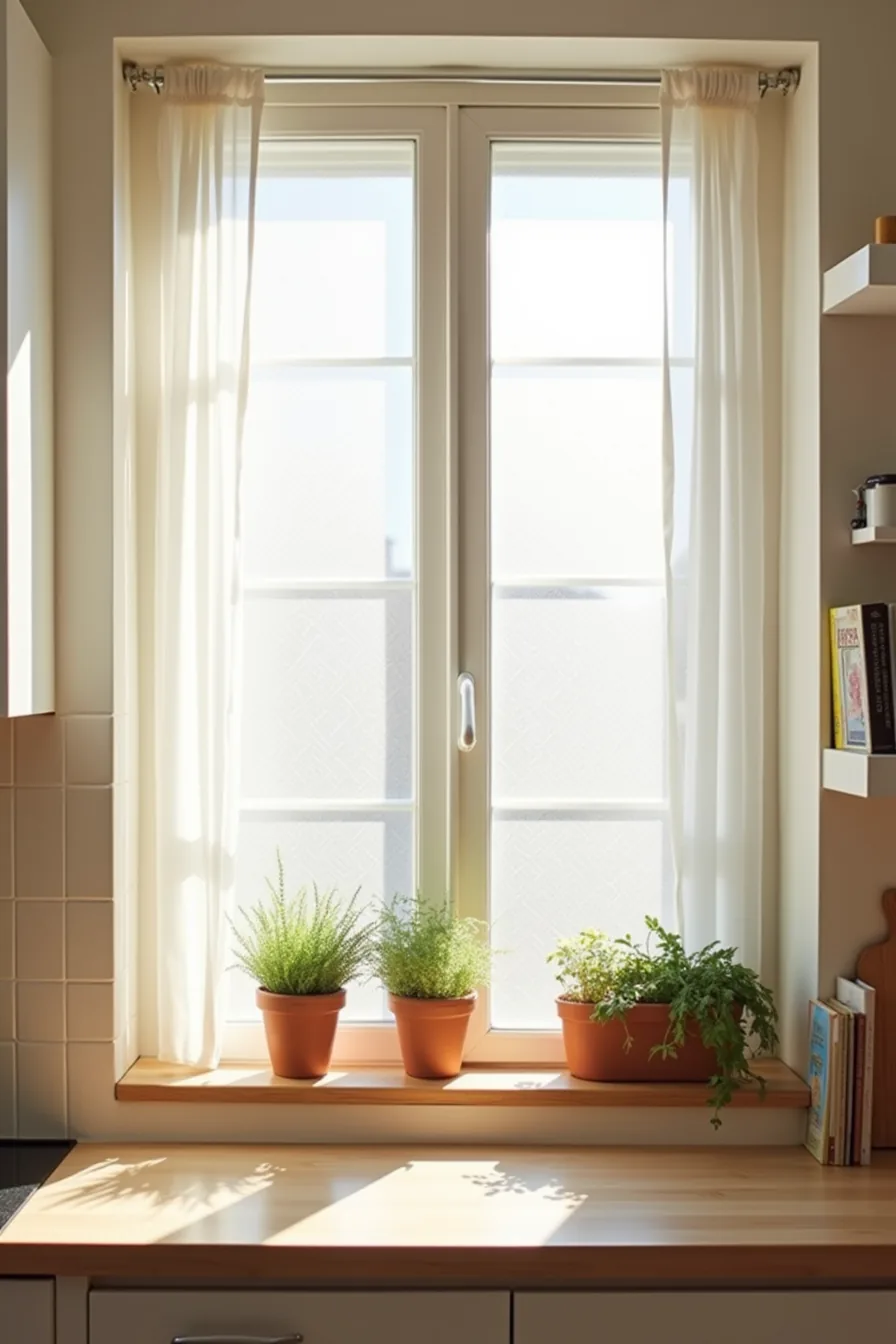
Adhesive window film delivers privacy without darkness by turning clear glass into a light-diffusing screen. Apply it to the lower half of a kitchen window, like the one above a counter with potted herbs and a wooden cutting board, and you block sightlines from outside while keeping the upper glass fully clear for daylight. The subtle geometric texture scatters harsh sun, so your work surface stays glare-free, and the herbs get soft, even light rather than direct scorch.
Application takes roughly 30-45 minutes per standard window: clean the glass, spray with soapy water, position the film, and squeegee out bubbles. Choose removable static-cling versions if you rent, they peel off in minutes without residue. Most quality films tolerate steam and condensation well for 5-7 years, but avoid placing them directly above a stovetop where grease aerosol can settle into the texture and make cleaning harder.
Wood Shutters as a Long-Term Investment
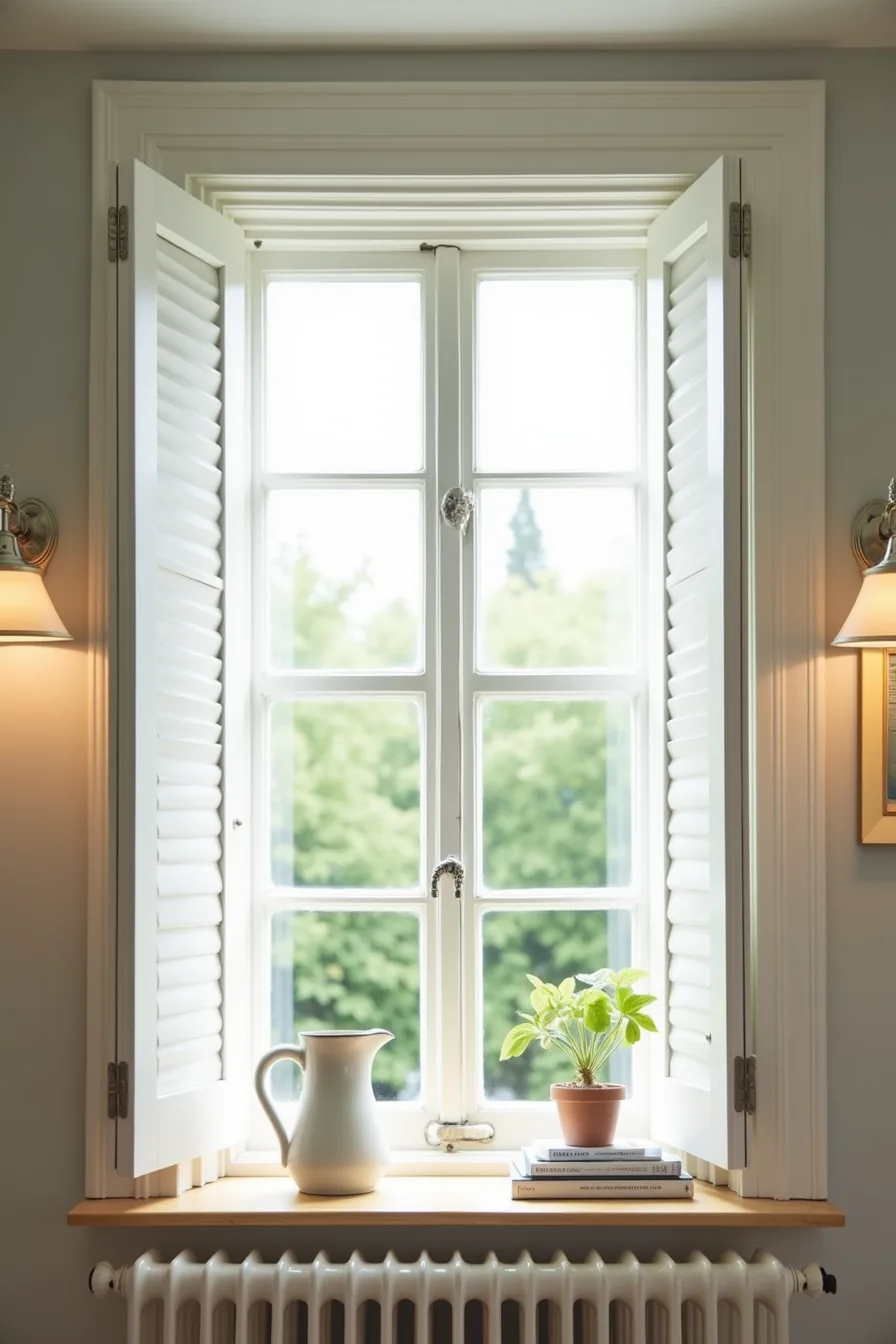
If you want window treatments that outlast every appliance in your kitchen, plantation shutters are the category leader. The white-painted panels framing a garden-facing window, with louvers tilted halfway open, represent the classic configuration: shutters mounted inside the frame (or on a flush frame) that swing open fully or adjust to filter light. That half-open louver angle is the sweet spot, it deflects direct sun while still letting you see the garden and ventilate the room.
Expect to pay a meaningful premium: most interior-grade pine or basswood shutters run $200–$350 per square foot installed, with PVC or composite versions landing slightly higher. You’re buying 15–20 years of service, so the math favors shutters if you plan to stay put. The louver slats collect grease dust in any kitchen, so budget 15 minutes monthly with a microfiber cloth, and avoid spraying cleaners directly on the hinges, which can corrode over a decade of steam exposure.
A ceramic pitcher and small potted plant on the sill read naturally with shutters, but leave at least 4 inches of clearance so the panels can swing without knocking them over.
Easy-Care Materials for High-Traffic Kitchens
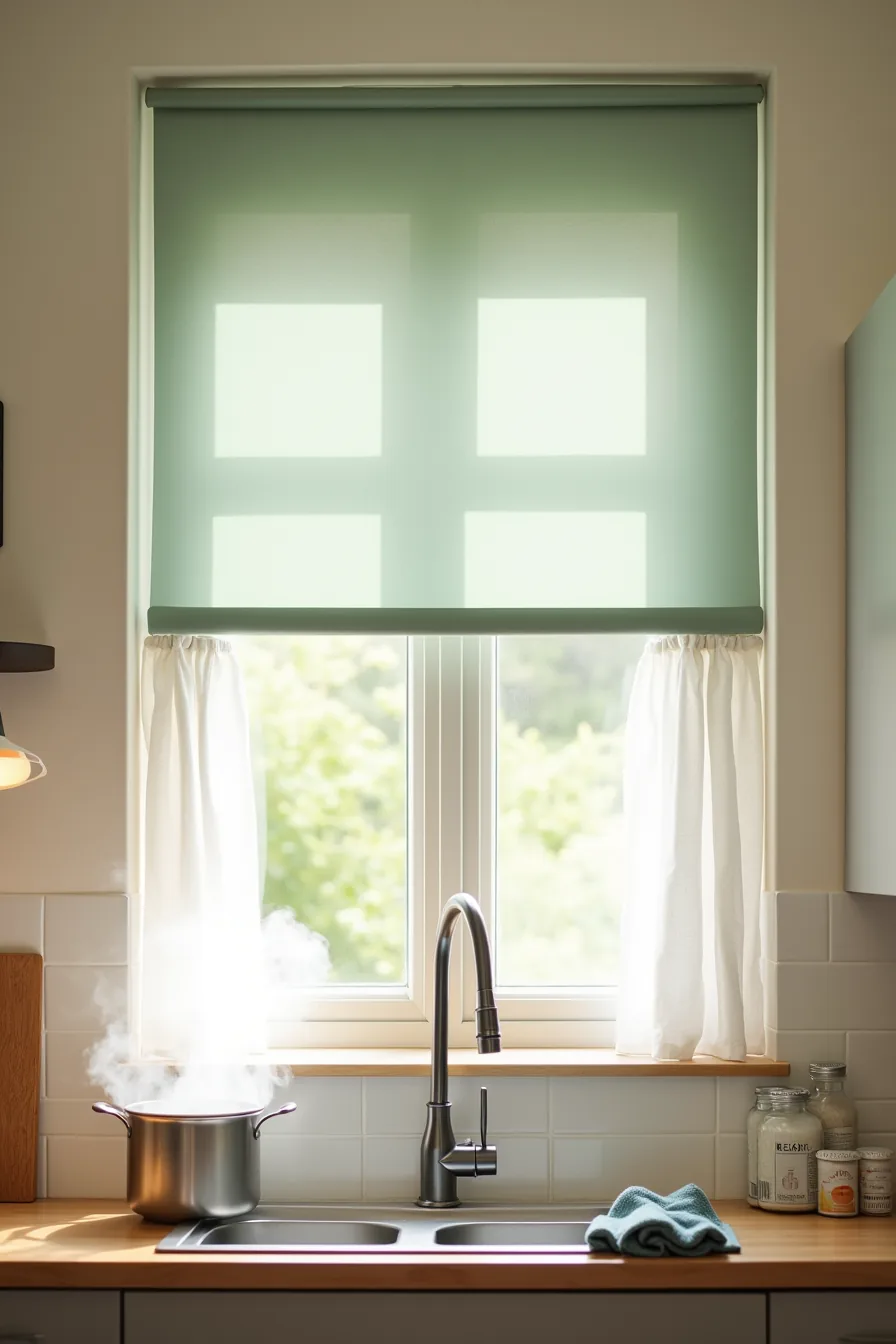
A polyester-blend roller shade in sage green, raised fully to clear the window, endures cooking conditions that would ruin natural fibers. The weave is tight enough to repel steam, and the non-porous surface means grease splatter wipes off with a single pass of a damp cloth, no laundering, no re-ironing, no fabric softener buildup. When the shade sits above a steaming pot and a countertop with a damp cloth draped over the edge, it stays smooth and static-free because polyester doesn’t absorb moisture or swell with humidity.
For the cook who boils pasta three times a week, this is the lowest-maintenance fabric option available. You’ll still want to wipe the shade down monthly with warm water and a drop of dish soap, but the material forgives neglect that would permanently stain linen or cotton. A raised roller shade also clears the sill completely, so you can keep a cutting board or drying rack in front of the window without lifting the blind every time you reach for a utensil.
Kitchen Window Treatments for a Quick Seasonal Refresh
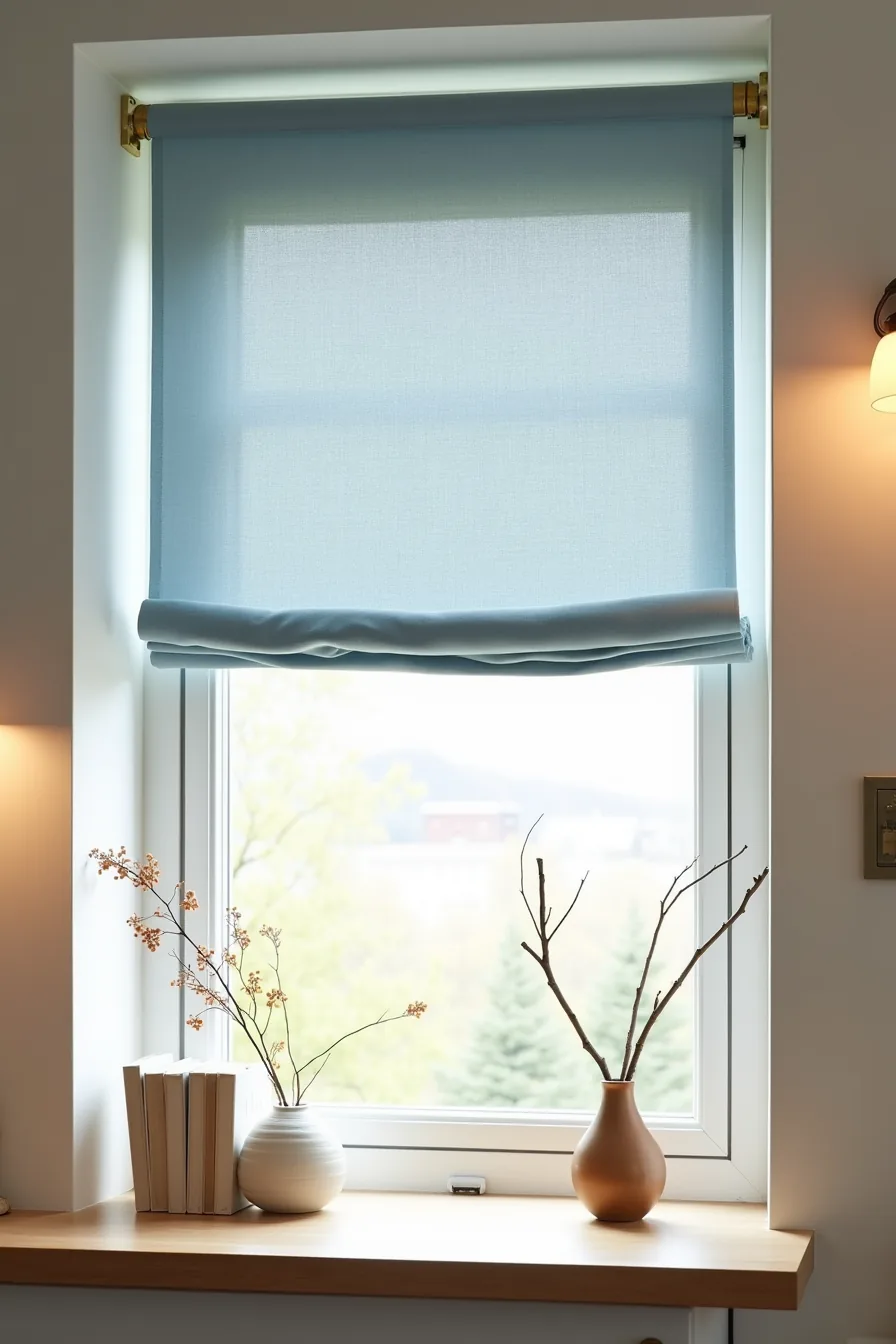
A tension rod mounted inside the frame with a removable linen panel in soft blue transforms the kitchen in under ten minutes, with zero tools and no permanent hardware. Two brass clip rings hold the panel in place, so you lift the entire treatment away for washing or swap in a heavier flannel version when the temperature drops. This approach suits renters who can’t drill into tile, or anyone who treats the kitchen as a space to re-decorate with the changing light.
Because the rod sits inside the frame, the panel skims the sill and keeps the visual weight compact, ideal for a window above a sink where a floor-length curtain would interfere with the faucet. The dried branches and small vase on the sill echo the panel’s natural texture without competing for attention. Budget-wise, a tension rod runs $8–$15 and a single linen panel costs $20–$40, making this the cheapest route to a seasonal shift.
Replace the clips with magnetic rings if your window frame is metal, and count on a 15-minute swap each season.
Where to start
Before you buy anything, measure your window and note how far the sink faucet reaches. That single measurement eliminates half the options immediately. Then match your choice to your tolerance for maintenance: linen and cotton need washing every 4-6 weeks; poly blends wipe clean with a damp cloth; wood and metal need only an occasional dusting.
If you want one decisive move, start with a tension rod and a single cotton panel. It costs under $30, installs in five minutes without tools, and gives you the exact proportions you need before you commit to a pricier treatment.
Frequently Asked Questions
What window treatment blocks light completely but still lets you see outside during the day?
A one-way mirror film applied to the glass blocks UV rays and glare while you see outside. At night, it reverses, so pair it with blinds or shades for privacy after dark.
Can you use regular curtains in a kitchen, or do they need special fabric?
Regular curtains work if the fabric is tightly woven and stain-resistant, like cotton-polyester blends. Avoid linen or silk, they absorb grease and odors quickly. Washable synthetic options outperform natural fibers near cooking zones.
How do you measure a kitchen window for a roller shade or café curtain?
For roller shades, measure the inside frame width at three points and use the narrowest. For café curtains, measure the window’s top half width, then add 4–6 inches for rod overlap. Always measure height to your sill.
What’s the cheapest way to add privacy to a kitchen window without replacing the glass?
Apply frosted or adhesive privacy film, costs $10–$20 per roll. It blocks views during the day, lets light through, and removes cleanly. For renters, use static-cling film that needs no adhesive or residue.