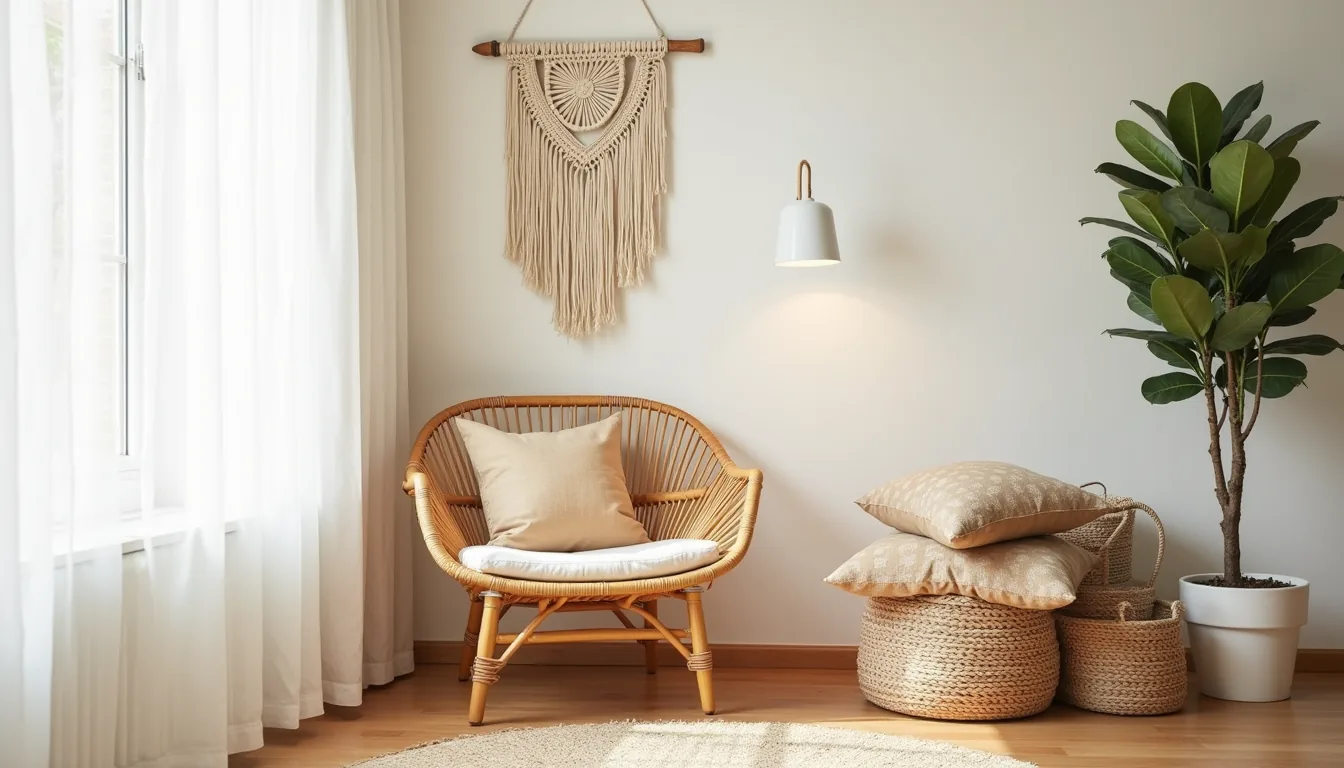
A rattan accent chair earns its place in a room not by matching a trend, but by holding its own against the sofa, the rug, and the light, so the real question is which silhouette, scale, and finish will do that work in your specific space. The answer depends on your floor plan, your traffic flow, and whether you want a piece that survives kids, pets, or a decade of style shifts. The six approaches below break down what each chair actually demands in square footage, upkeep, and budget, so you can match the right one to your room rather than forcing a look.
Key takeaways
- Rattan accent chairs work in boho, coastal, and minimalist rooms alike, but the finish and frame shape, not the material, determine the style fit.
- For small spaces, choose a chair with an open back and slim arms, keeping the footprint under 30 inches wide to avoid blocking walkways.
- To protect rattan in humid or sunny rooms, apply a clear lacquer annually and keep the chair at least 3 feet from direct heat sources to prevent cracking.
- Budget buyers should expect to pay $150–$400 for a rattan chair with a solid wood frame, while investment pieces with hand-woven cane run $600–$1,200 and last 10–15 years with proper care.
Boho Rattan with Layered Textiles and Warm Lighting
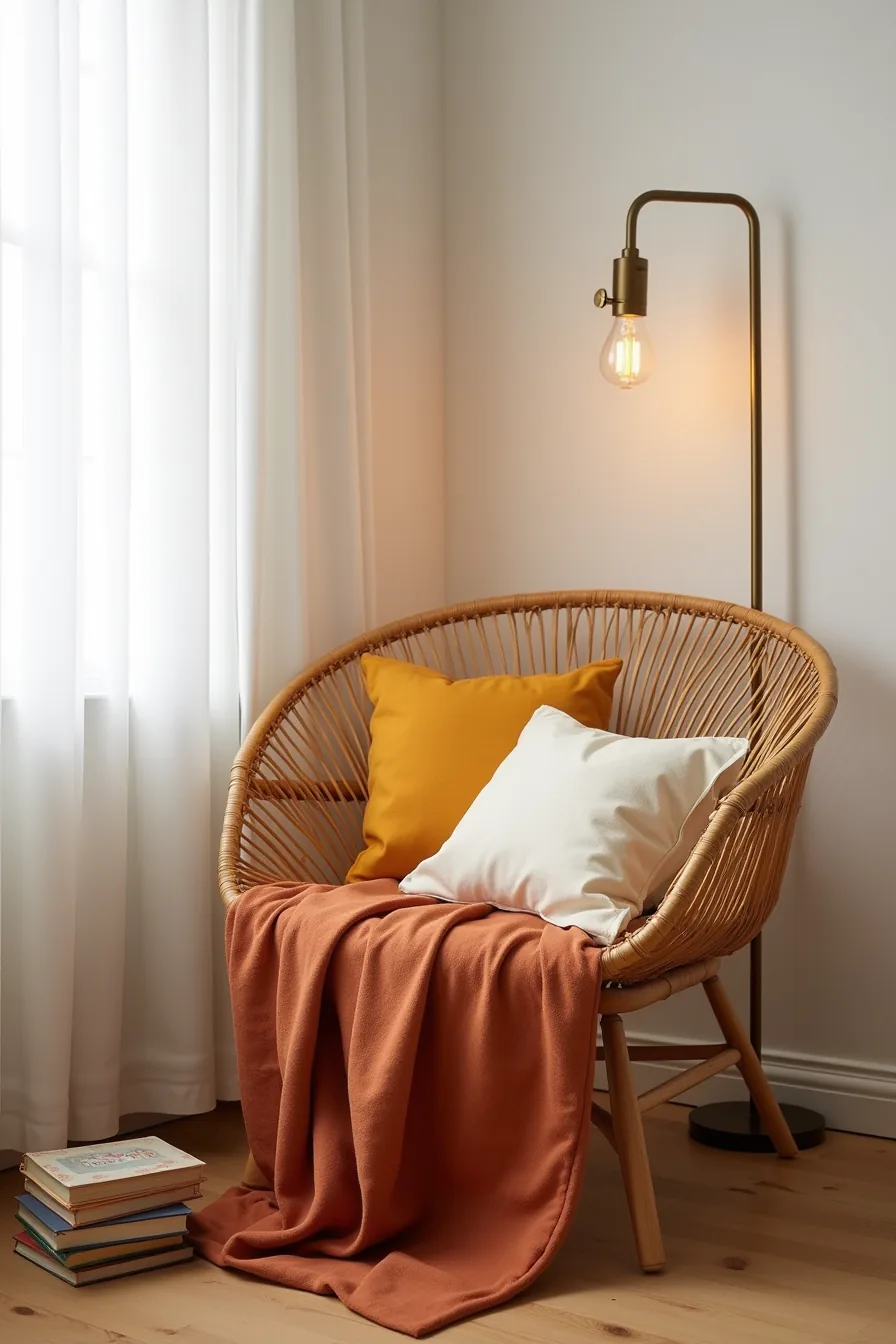
A honey-toned rattan accent chair anchors this boho corner because the woven material reads as neutral ground for texture play. Drape a rust-colored linen throw over one arm and let it fall asymmetrically, the fabric’s natural wrinkles are part of the aesthetic, so don’t smooth them out. Layer three throw pillows in mustard, terracotta, and cream across the seat, placing the largest at the back and the smallest at the front to create depth without burying the chair’s silhouette.
Position a brass floor lamp with a warm bulb beside the chair, angled so it casts soft shadows across the weave. This lighting choice matters: warm bulbs (2700K-3000K) make the rattan glow amber, while cool daylight washes out the material’s natural color. The setup suits living rooms or bedrooms where you want a lived-in focal point, not a pristine showpiece.
It works best in medium spaces (12-15 feet wide) where the chair becomes a secondary seating option without competing with a sofa. For renters, skip permanent wall hooks and rely on the lamp and textiles to define the zone; everything here’s freestanding and removable within minutes. Expect to spend most on the chair itself (generally $200-$600 for quality woven rattan), while the textiles and lamp can come from budget retailers for under $150 total.
Coastal Rattan: Light Palettes and Weathered Finishes
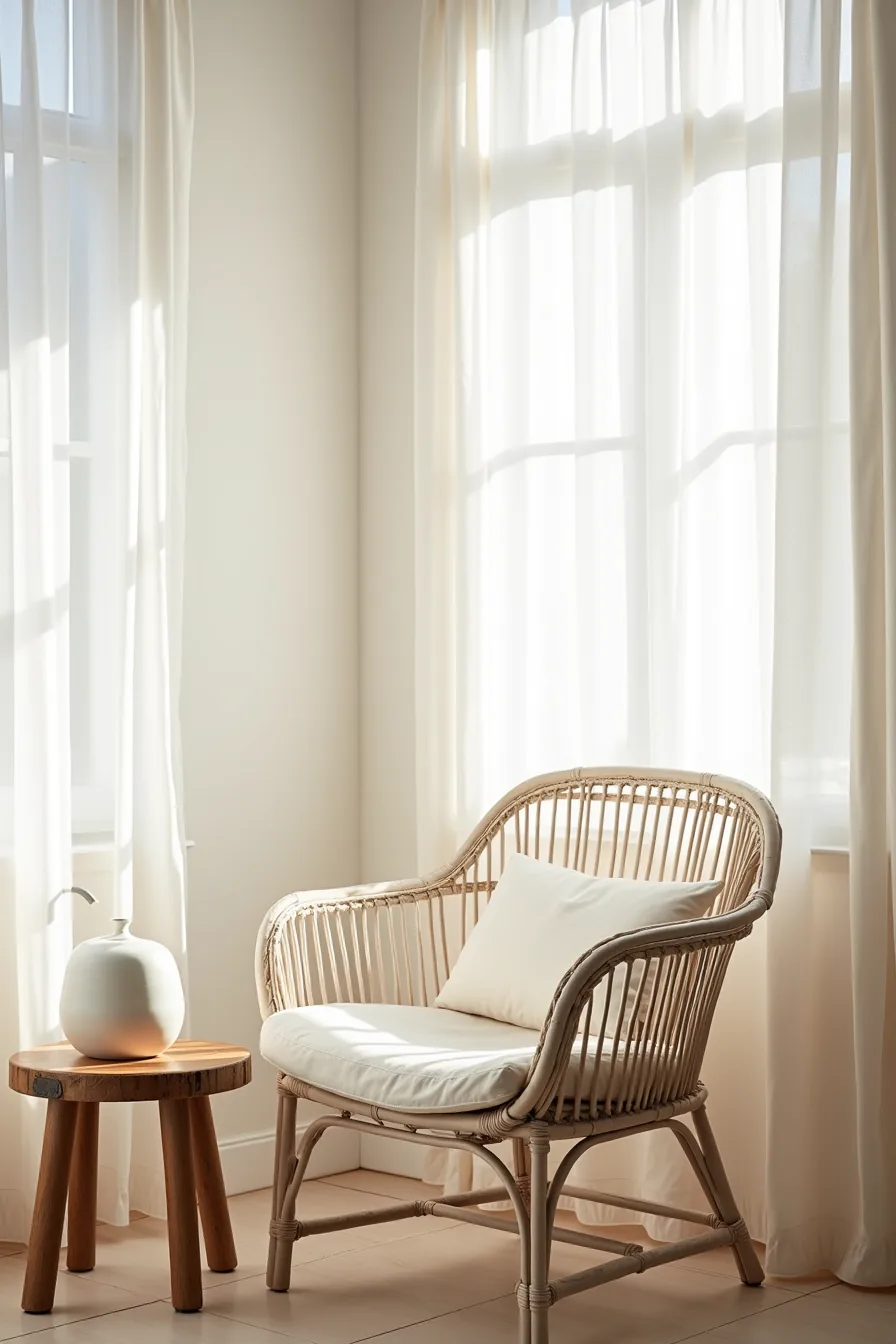
Boho styling leans into warm, saturated tones, but coastal rattan flips that script with whitewashed frames and cool neutrals. The whitewashed rattan chair here anchors the corner because its pale finish reflects light instead of absorbing it, making the space feel larger than its actual footprint. A cream linen cushion softens the seat without competing with the open weave, choose a removable cover so you can wash it monthly, as white linen shows wear quickly.
The weathered driftwood side table introduces a gray-brown contrast that echoes the chair’s natural origins without matching it exactly. Set a white ceramic vessel on top; its matte surface picks up the curtain-filtered light and keeps the vignette from feeling sterile. Place the chair within two feet of the window so the linen curtain grazes the armrest, this proximity matters because coastal styling depends on soft, diffused daylight rather than artificial warmth.
This setup suits a sunroom, a bright breakfast nook, or a bedroom in a small space (under 10 feet wide), where the pale palette prevents visual heaviness. Expect to pay $250-$700 for a whitewashed rattan chair with a quality cushion; the side table and vessel can come from thrift stores for under $60 total, and the finish requires only occasional dusting with a soft brush.
Rattan Accent Chair in Modern and Minimalist Rooms
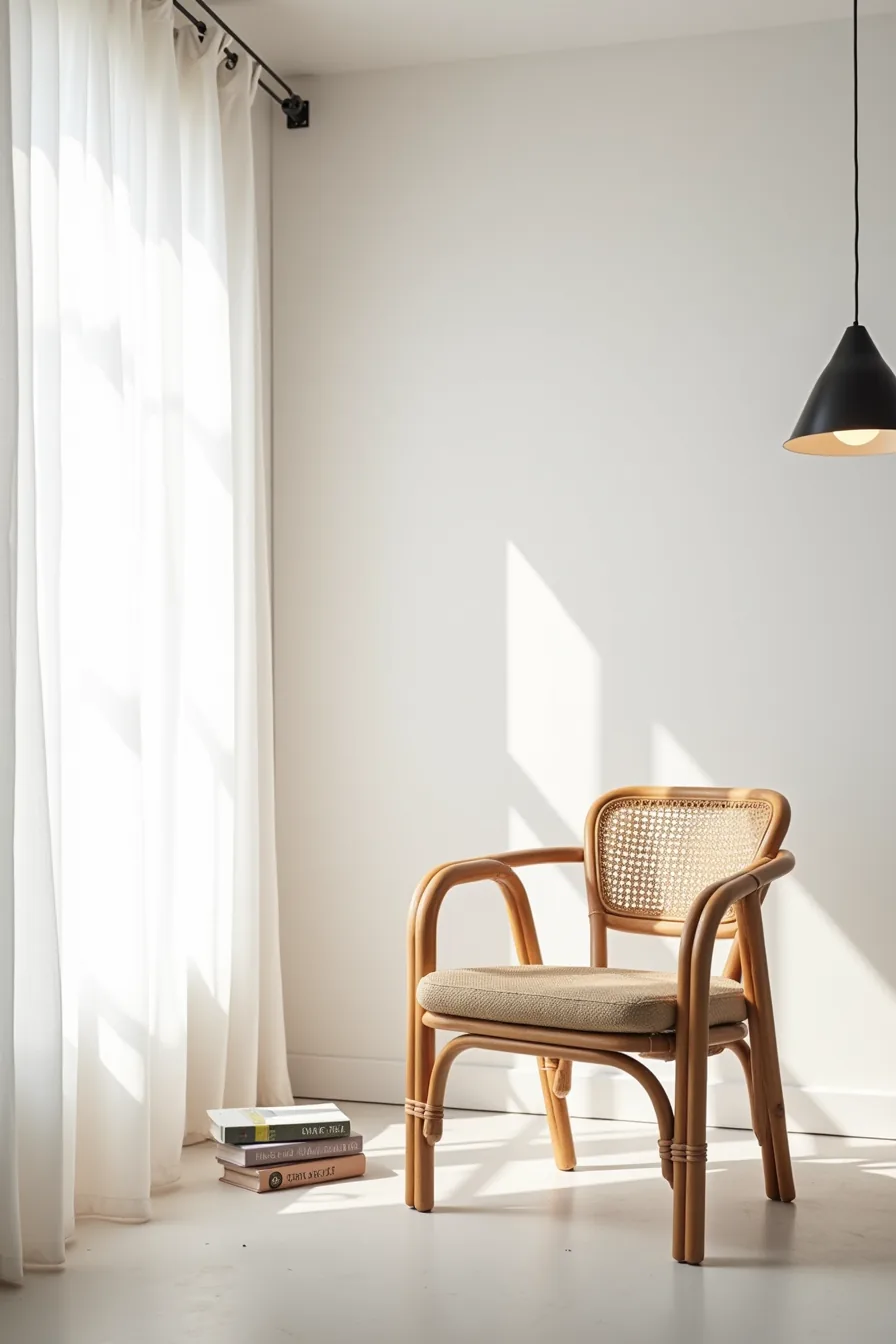
Modern decor succeeds on restraint, so the rattan chair must carry the visual load alone. The natural rattan chair works because its undyed frame provides the room’s sole texture contrast against the concrete floor and white wall, skip cushions entirely to preserve the clean silhouette. The single black pendant light overhead creates a hard focal point that frames the chair; position the light two to three feet above the seat height so it draws the eye down to the weave without competing with it.
The negative space around the chair is the real design element. Keep at least three feet of clearance on all sides in a minimalist room, which forces the eye to register the chair’s form rather than its surroundings. No side table, no rug, no accent pillow, every addition dilutes the impact.
This setup suits a studio apartment (under 700 square feet) or a modern living room where you already have two seating zones and need a third that doesn’t demand attention. Expect $200-$500 for a natural rattan chair without cushions; the concrete floor and white walls are finishing choices that cost $3-$8 per square foot installed. Dust the weave weekly, and note that direct sunlight will yellow the natural fiber over a year or two, rotate the chair seasonally if the window faces west.
Creating a Textural Reading Corner with Rattan
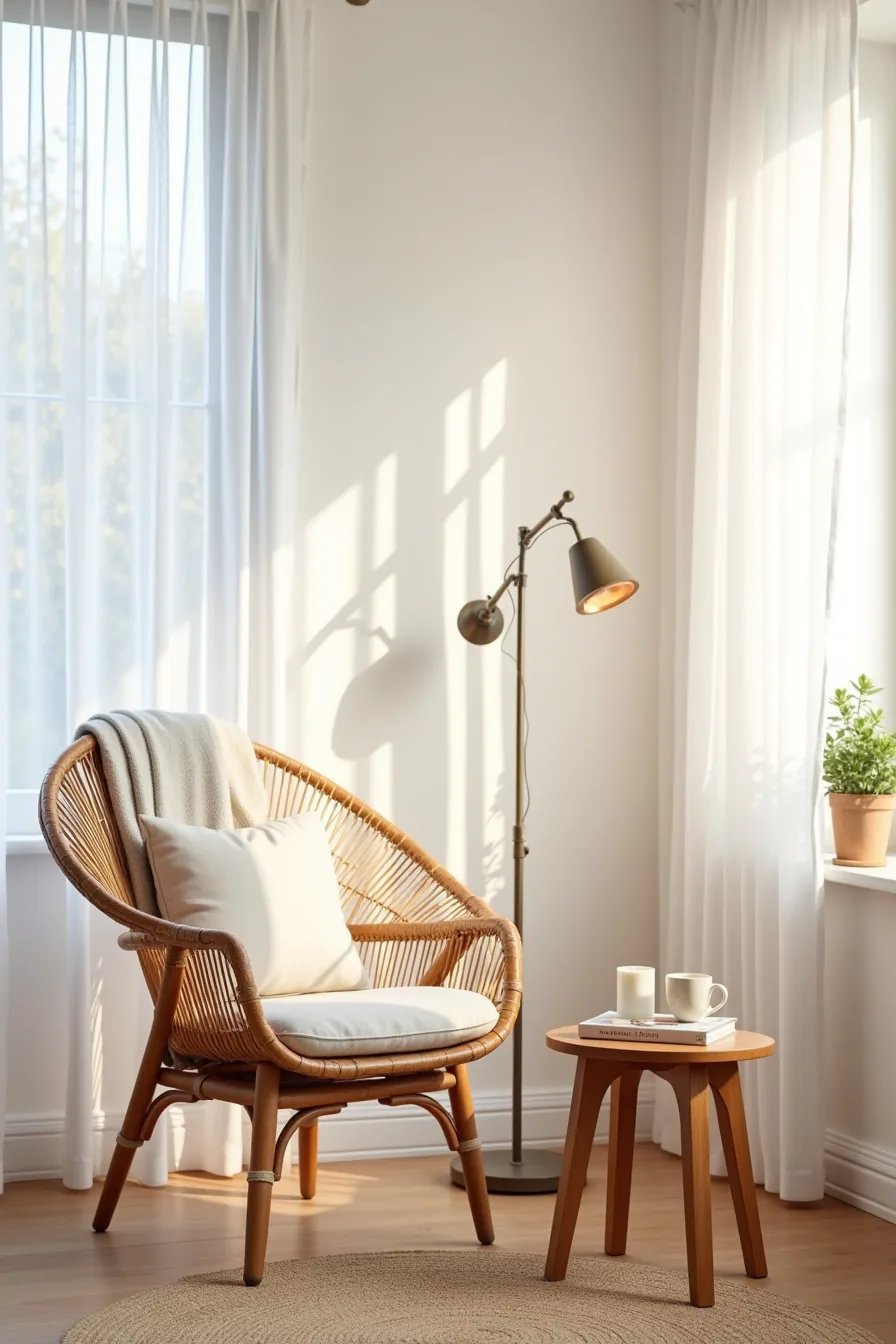
This corner stacks three distinct textures, the rattan’s open weave, the wool rug’s nap, and the ceramic mug’s glaze, so every surface you touch feels different from the last. The low wood side table should sit 4-6 inches below the chair’s armrest, which lets you reach a mug without lifting your elbow off the arm. Your eyes should land at the top of the candle flame when you’re seated, meaning the tabletop sits roughly 20-22 inches from the floor for a standard-height chair.
The adjustable arc floor lamp bends over the chair so the shade hangs at seated eye level or just behind your shoulder, casting light onto the page rather than into your face. Angle the woven rug so it extends two feet beyond the chair’s front edge, that’s where your feet rest when you lean back, and the rug’s grip keeps the chair from sliding on hard floors. This setup works best in a bedroom corner or a hallway nook at least 5 feet wide, where the chair doesn’t block foot traffic.
Skip the throw if you read for more than an hour at a time; the cushion’s natural fiber will compress under sustained weight, and the extra layer only speeds that process.
Rattan Accent Chairs for Breezy Summer Rooms
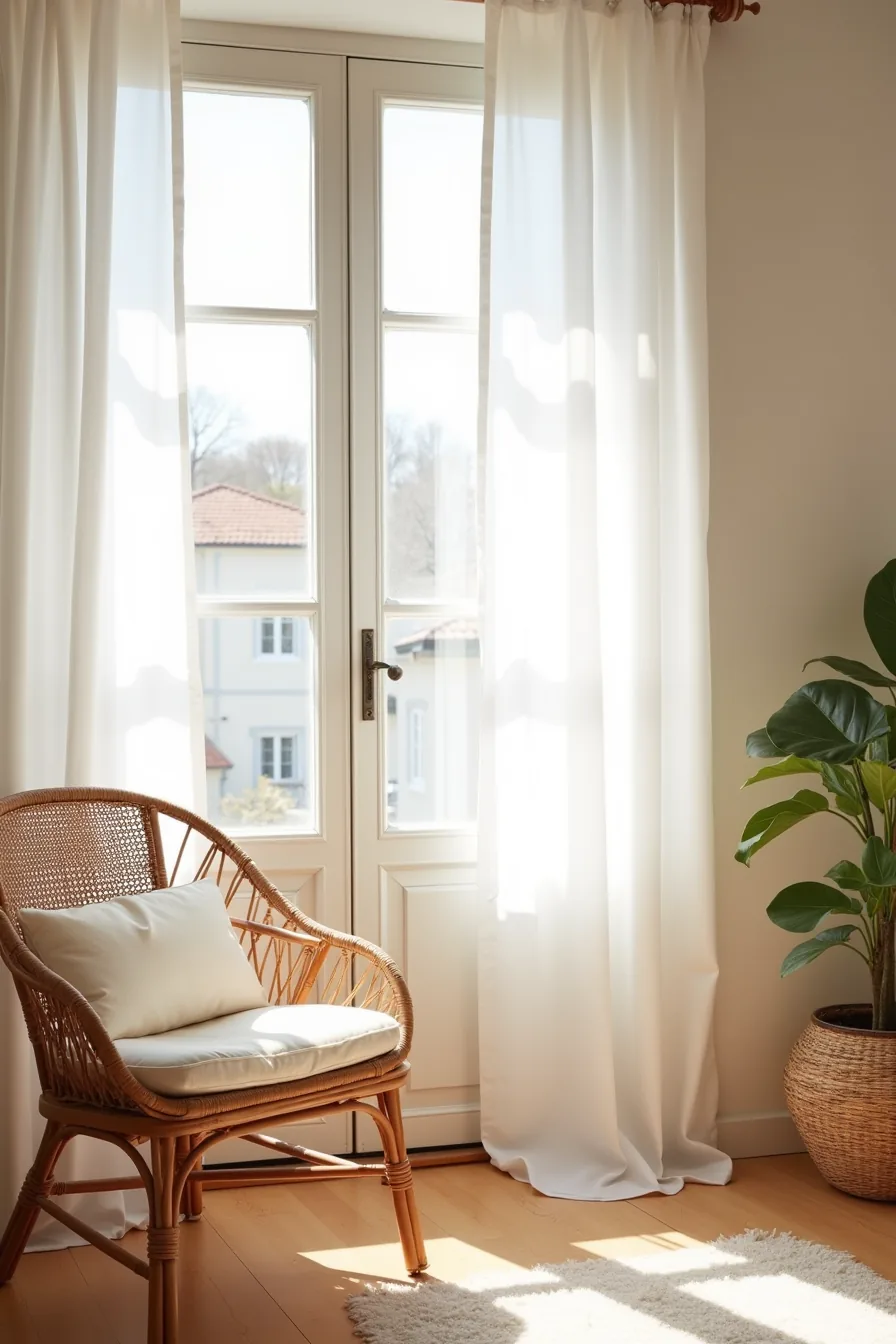
For warm-weather months, an open-weave rattan chair earns its place near French doors or wide casement windows. The gaps between the cane strands let air move freely around your back and legs, which keeps you noticeably cooler than a solid upholstered seat would. Position the chair so the doors swing open without catching the frame, and leave at least 18 inches of clearance behind it so the curtains billow without tangling in the armrests.
Skip the cushions entirely in this setup, the bare woven seat dries within an hour after a stray rain gust, while a foam pad traps moisture and invites mildew between the fibers. Sheer white curtains diffuse direct sunlight before it hits the rattan, preventing the straw from drying out and becoming brittle over the season. Direct rays accelerate fading and embrittlement, so if your doors face west, pull the sheers closed during the hottest afternoon hours.
At summer’s end, wipe the frame with a damp cloth and let it air-dry in the shade before moving it indoors; this routine prevents the dust-and-humidity film that dulls natural cane within two seasons.
Sizing and Placement Across Room Dimensions
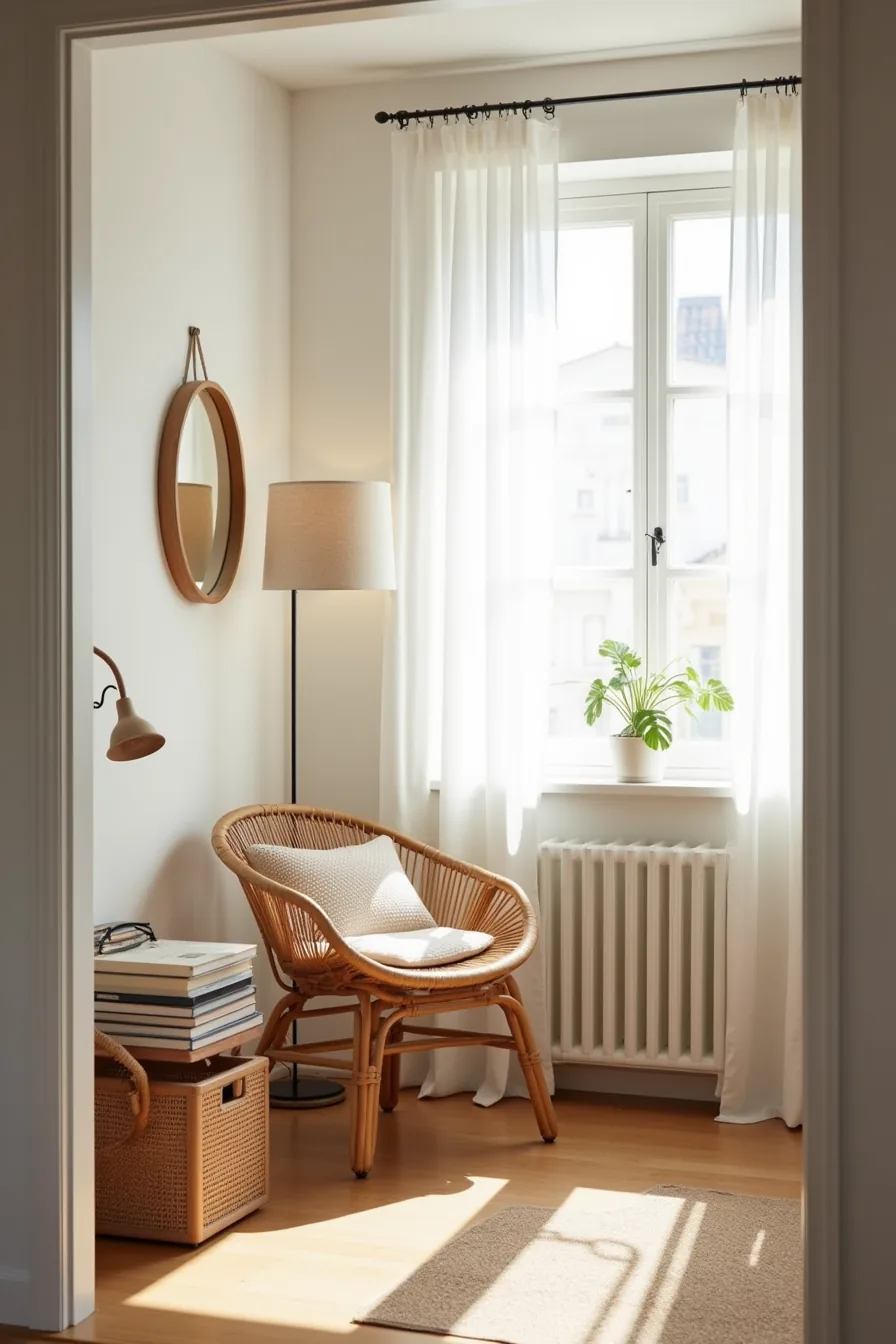
A compact rattan accent chair needs roughly 28–32 inches of width and 30–34 inches of depth, which lets it tuck into corners that would swallow a standard upholstered piece. In a small room, keep the chair at least 24 inches from the doorway swing path and leave 16–18 inches between the seat edge and the nearest coffee table, this preserves a walking lane without forcing people to sidestep. Pair it with a narrow side table no wider than the armrests and a small round mirror hung at eye level to pull the eye upward instead of letting the furniture anchor the floor visually.
Stacked storage baskets beneath the chair’s open base take advantage of the air gap under the seat, adding function without expanding the footprint. In medium rooms, you can move the chair 8–10 inches off the wall to create depth, but in tight spaces keep it flush against the wall to protect the cane weave from repeated brushing contact. For large rooms, anchor the chair on a rug that extends at least 6 inches beyond its front legs, and place it at an angle facing the room’s main focal point to break up long sightlines.
Your 10-minute decision plan
Before you add a rattan accent chair to your cart, check three things: measure your floor space (you need at least 24 inches of clearance in front for comfortable sitting), confirm the chair’s weight capacity suits your household, and test the weave’s flexibility, a stiff, brittle cane indicates poor drying during production.
For most rooms, start with one chair, not a pair. Place it where it gets indirect light and keep it at least 12 inches from radiators or vents to prevent cracking.
Your next step: grab a tape measure and mark out a 30-inch circle where you plan to put the chair. If that space feels comfortable when you walk past it, you’re ready to buy.
Frequently Asked Questions
How do you tell the difference between boho and coastal rattan styling?
Boho pairs rattan with layered textiles, warm earth tones, and plants. Coastal leans on whitewashed frames, linen upholstery, and blue-gray accents. Both use natural fibers, but boho feels layered; coastal feels airy.
Can you put a rattan accent chair in a modern minimalist room?
Yes. Choose a clean-lined frame with tight woven cane, no cushions, and a neutral finish. Let the chair be the single textural contrast against flat surfaces and monochrome walls. Avoid curved, carved, or tasseled designs.
What maintenance does a rattan accent chair need in humid or sunny conditions?
In humidity, wipe weekly with a dry cloth and keep indoor humidity below 60 percent to prevent mold. In direct sun, rotate the chair monthly and apply a UV-protective furniture wax twice yearly to prevent fading and brittleness.
How much floor space does a rattan accent chair actually require?
Most standard rattan accent chairs need a 26–30 inch width and 30–34 inch depth, plus 18–24 inches of clearance in front for sitting. Allow a 36-inch walkway beside it in high-traffic areas.