
A pattern accent chair is the single highest-impact piece you can add to a neutral room, instantly injecting personality, color, and visual weight into a corner that otherwise reads as unfinished. It works because it carries two jobs at once, providing a functional seat while anchoring the room’s entire visual story. But not every patterned chair performs equally, and the wrong scale, fabric, or placement can turn a bold statement into a cluttered mistake.
The key is matching the chair’s pattern type, silhouette, and material to your specific wall color, floor finish, and available square footage, which is exactly what the six approaches below break down for you, along with the realistic costs and upkeep each one demands.
Key takeaways
- Choose florals for traditional or eclectic rooms when you want the chair to carry the room’s personality, but verify the pattern’s background color matches your existing rug or wall tone to avoid visual clash.
- Use geometric patterns as a modern focal point by keeping the chair’s frame slim and placing it opposite a solid sofa, which anchors the eye without competing for attention.
- In small spaces, select a chair with a light ground and a small-scale pattern, and keep it to a wall-hugging position to preserve a 28–36 inch clearance for walking paths.
- For long-term care, pick solution-dyed polyester or treated cotton upholstery, expect to flip cushions monthly, and budget for professional cleaning every 12–18 months to prevent pattern fading.
Floral Patterns for Traditional and Eclectic Rooms
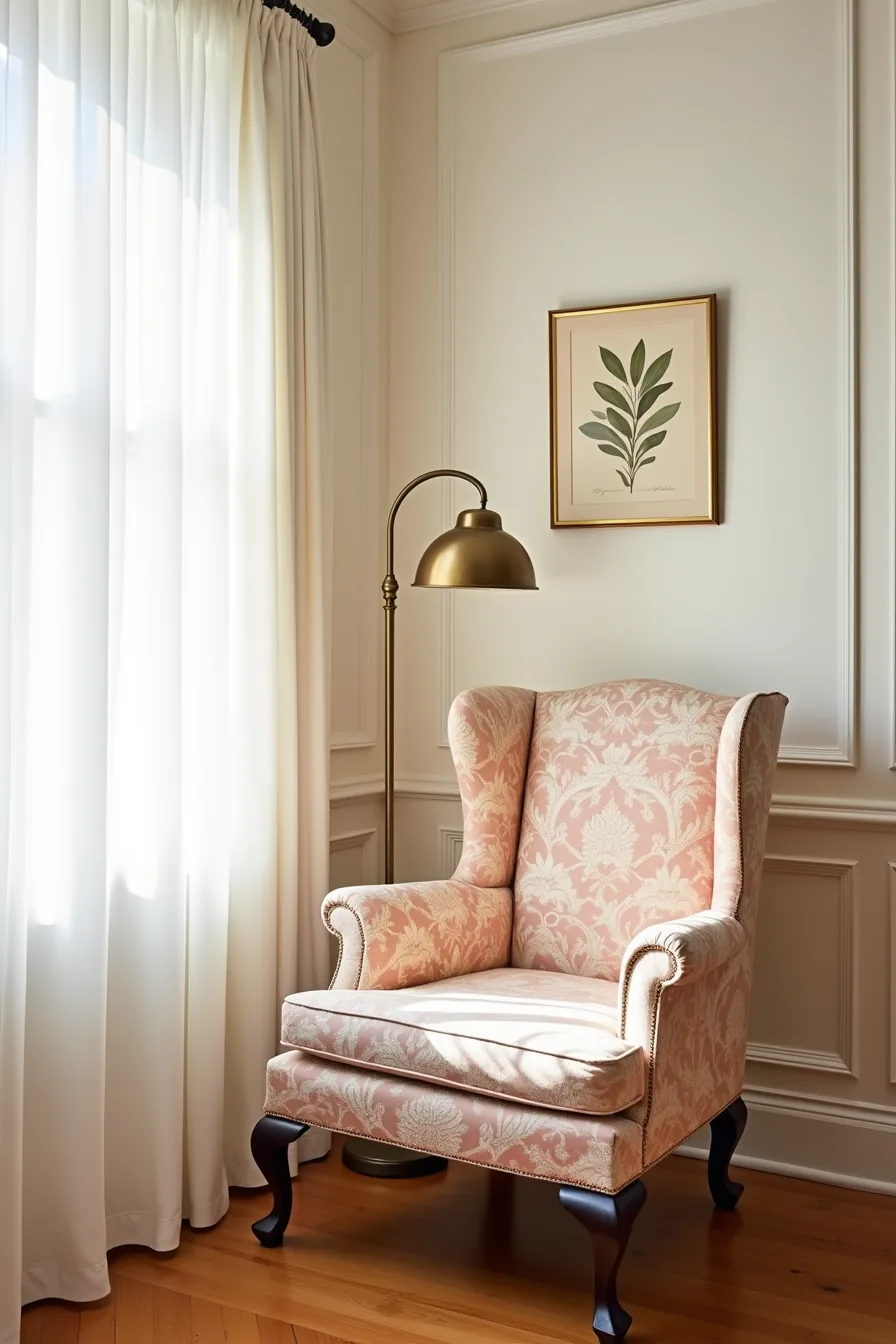
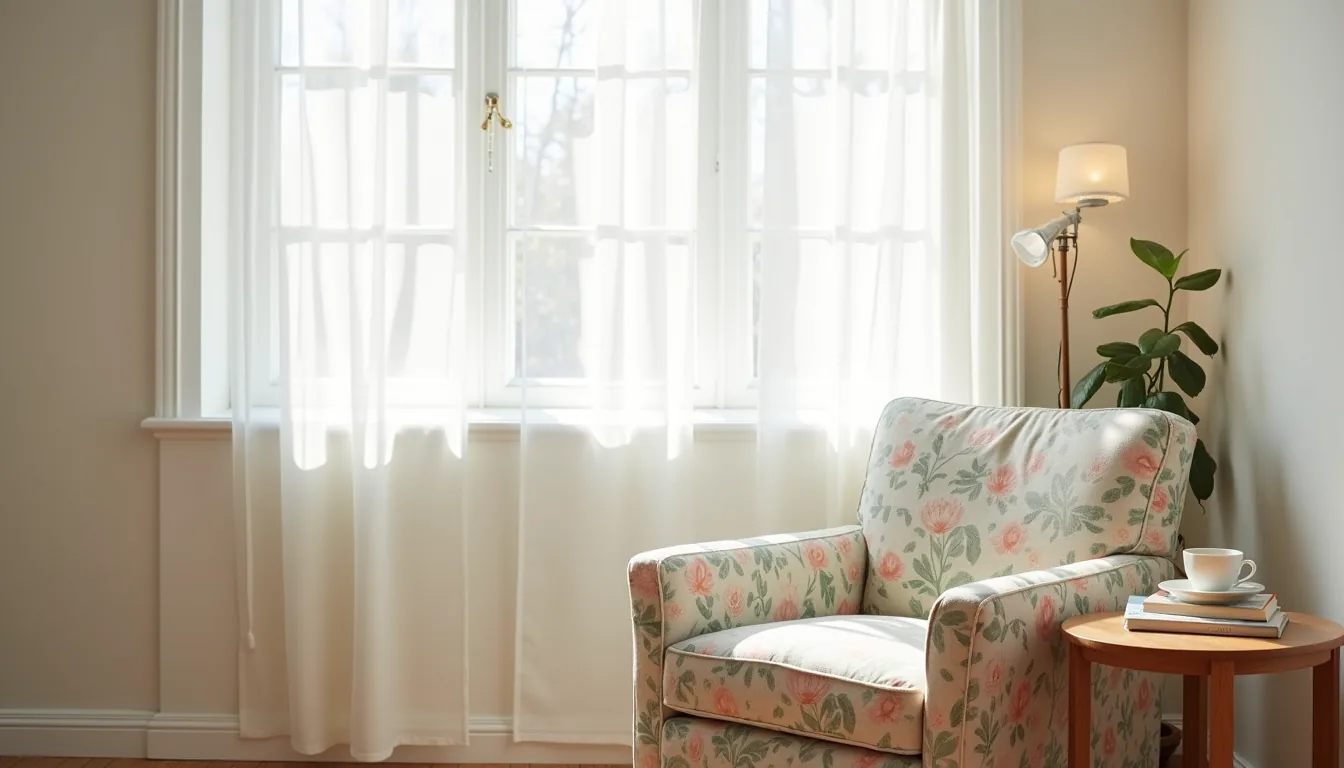
A wingback floral chair reads as instant tradition, but its real strength is how it anchors a mixed-style room. The rose-and-cream damask in this setup works because the pattern scale matches the chair’s generous proportions, large blossoms would fight the wingback silhouette, while a micro-print would get lost. Cream wainscoting and a hardwood floor give the eye a quiet place to rest, letting the upholstery carry the visual weight.
The brass floor lamp and botanical print aren’t decorative afterthoughts; they form a color-echo system. Pull the cream from the damask for the walls, the rose for the artwork, and the brass for the lamp finish, and you create a room that feels curated rather than cluttered. If you’re mixing florals with other patterns, keep the second pattern at half the floral’s scale and share at least one background color between them.
This chair suits a south-facing room where natural light softens the pattern’s contrast, in a dark corner, the damask will read as brown sludge.
Geometric Patterns as Modern Focal Points
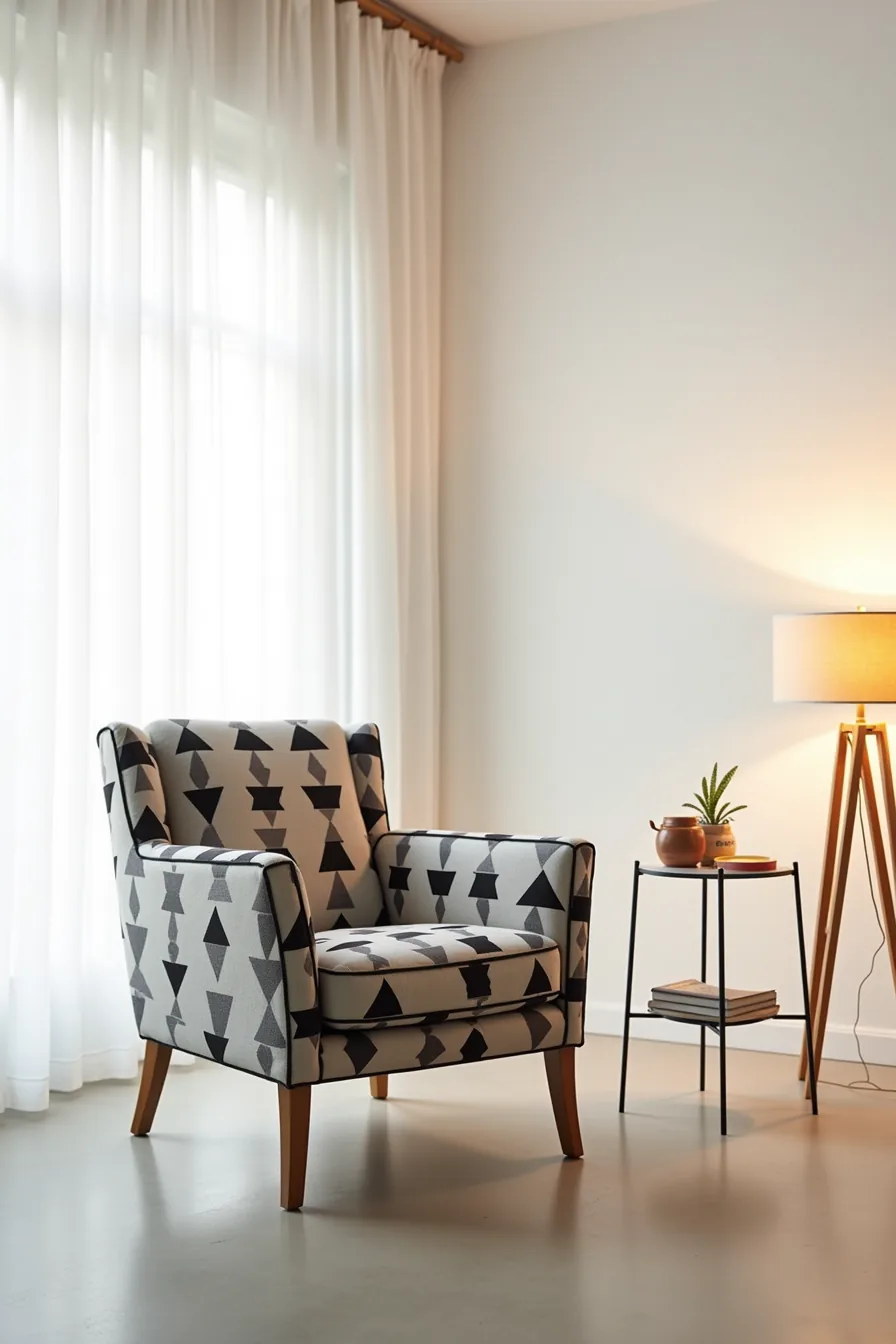
A single geometric-pattern accent chair can carry a room on its own, provided you give it the negative space to breathe. The black-and-white triangle upholstery here works because the pattern is graphic rather than busy, it holds attention without demanding interpretation. Placing it alone on a concrete floor with white walls converts the chair from a seating option into a deliberate focal point, the visual equivalent of a sculpture.
A chrome side table with thin legs matters more than it seems. The metal finish offers a textural counterpoint that prevents the space from feeling stark, and the airy silhouette keeps the chair’s angular pattern from competing with another heavy solid form. For this look to succeed, keep all other furnishings within a neutral, low-saturation palette and allow a minimum of 24–36 inches of clear floor space around the chair so the pattern remains readable from every approach.
This setup suits a loft, studio, or a room with at least 150 square feet; in a tighter space, the same chair will overwhelm rather than anchor.
Pairing a Patterned Chair With a Solid Sofa
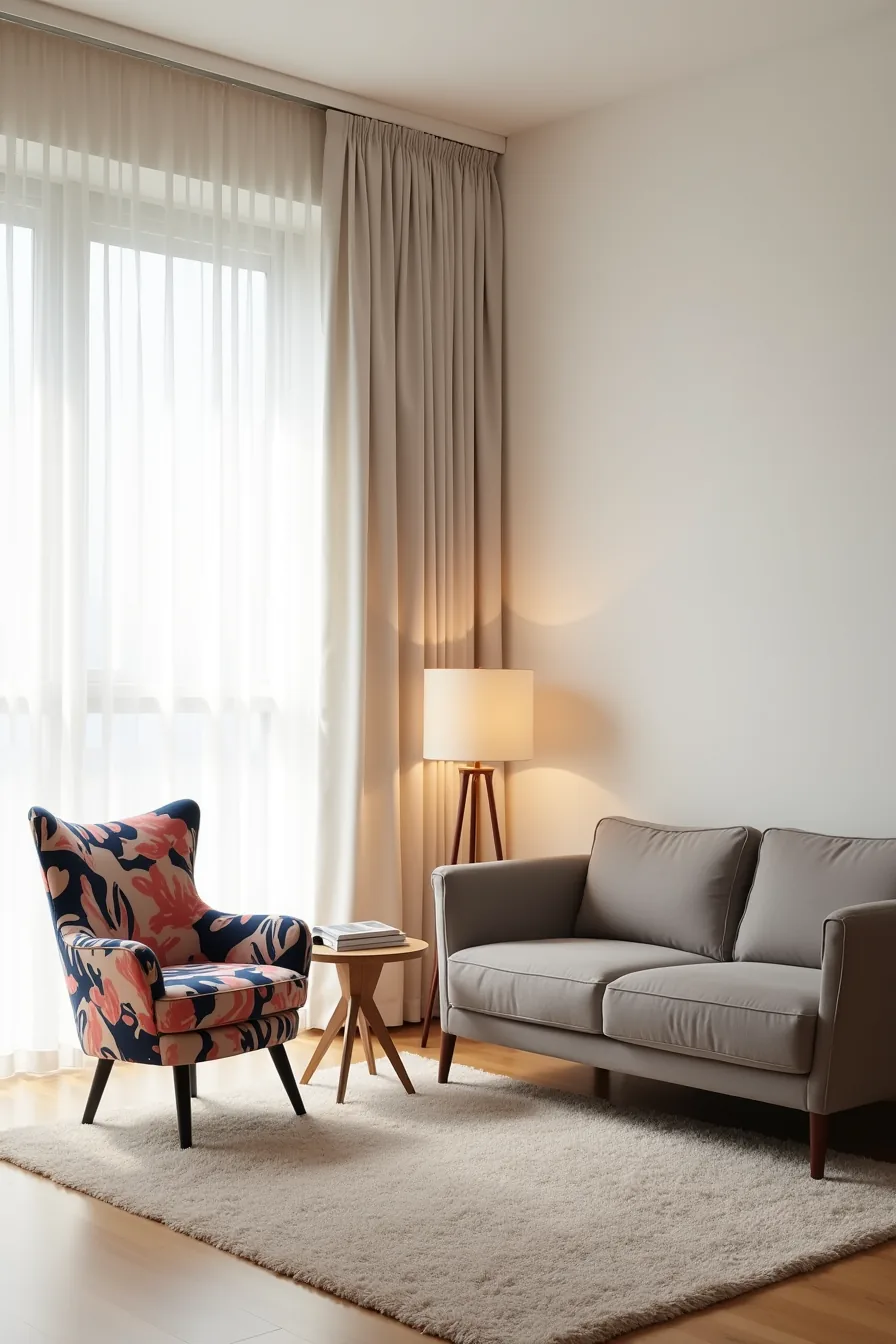
When you place a patterned accent chair beside a solid sofa, the goal is contrast without competition. The navy-and-coral abstract design works specifically because it pulls two colors from the gray sofa’s neutral field and amplifies them, the chair becomes an echo, not an argument. Position the chair perpendicular to the sofa, angled slightly toward the coffee table, so both pieces face the same area rug and share a conversational sightline.
The warm wall color behind the sofa acts as the color bridge that ties the coral in the chair to the room’s backdrop. Without that tonal connection, the chair risks floating as an isolated pattern. The wooden coffee table adds a third texture that softens the transition between upholstered pieces.
This arrangement suits living rooms where the sofa handles 60–70% of seating duty and the chair functions as a secondary perch. Keep the rug low-patterned or solid so the chair remains the only patterned element in the immediate sightline. For a tighter footprint, reduce the table size rather than shrinking the chair, the chair’s visual weight needs the sofa’s mass to feel intentional.
Small-Space Solutions: Pattern Without Overwhelm
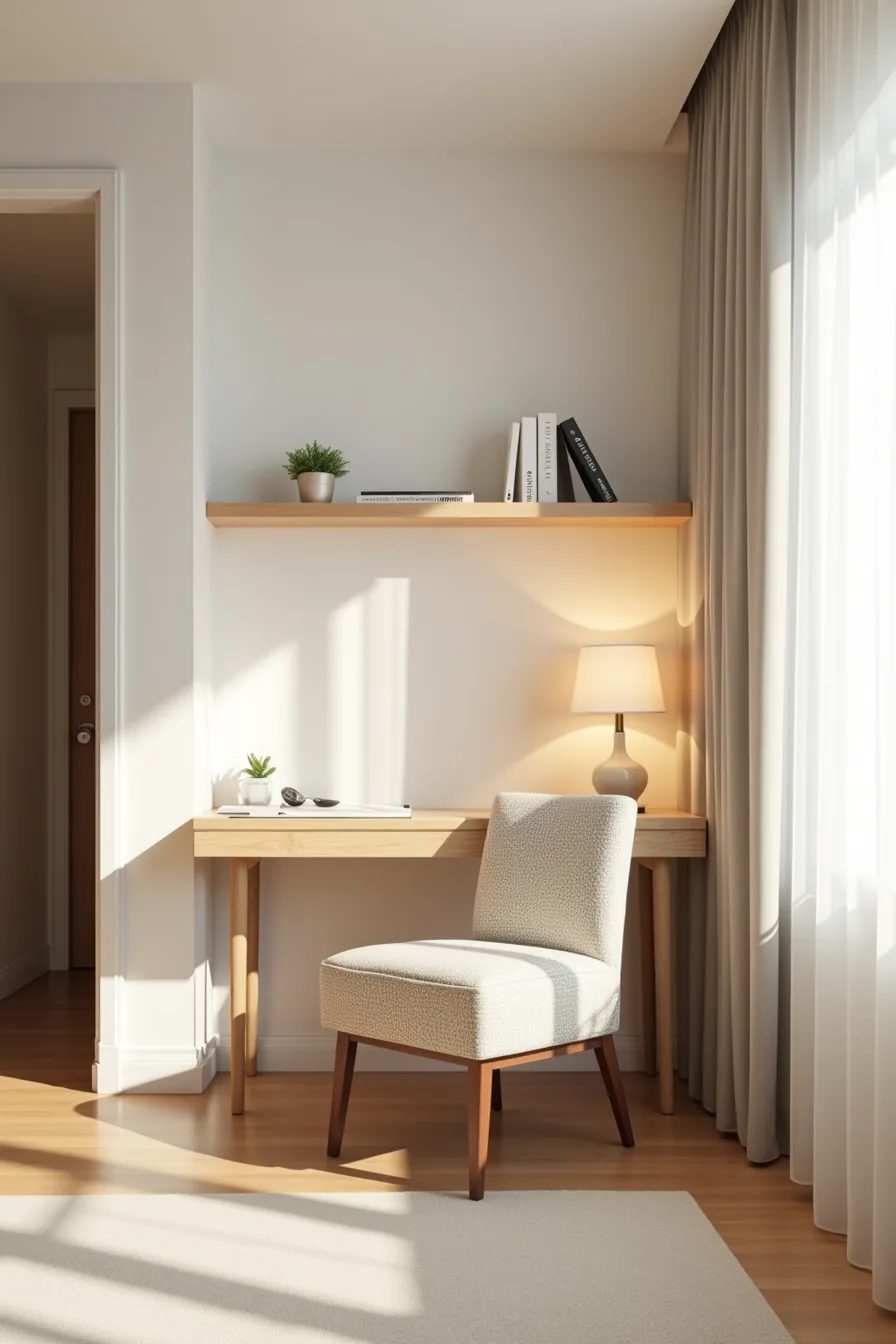
Small rooms punish oversized patterns. A bold floral on a bulky frame will visually swallow a 10×12-foot floor plan, so scale the print down with the footprint. Choose a compact chair with a tight back and exposed legs, this keeps sightlines open to the floor, making the room read larger than it’s.
A subtle geometric in a muted tone offers the pattern hit you want without demanding the attention a high-contrast design would.
Position the chair snugly against the desk rather than floating it in the center. That placement creates a defined work-and-read corner without blocking the path to the hallway entrance. The floating shelf above holds three items only, edit hard here, because clutter competes with pattern for your eye.
This setup works best in studios where the chair doubles as guest seating and a desk chair; the compact scale lets it pull double duty without dominating the room.
Budget, Rental, and Investment Routes
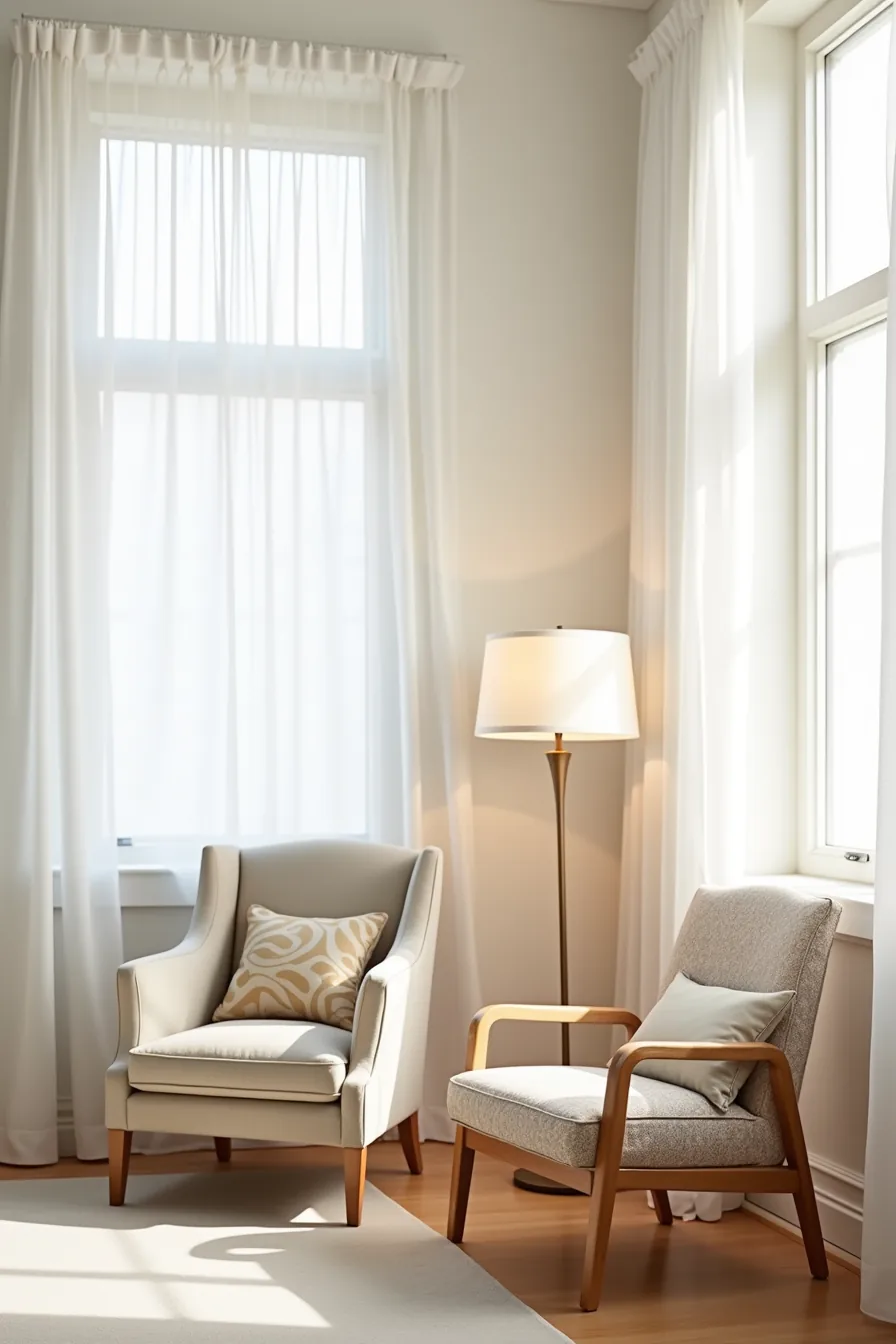
Your purchasing strategy should match how long you plan to keep the chair. A budget patterned chair in a polyester blend costs roughly $150–$300 and handles two to three years of light use, making it the right call for a first apartment or a guest room that sees sporadic traffic. Expect the pattern to fade faster in direct sun than pricier options, and re-cover rather than repair when the foam loses its shape.
For renters, a rental-grade chair in a low-contrast geometric offers damage resistance without the anchor weight of a large piece you must move twice a year. Tight-back construction and slipcovered cushions mean you can wash the covers before the security deposit walkthrough, and the neutral pattern hides the minor scuffs that inevitably happen during a move. Pair it with a budget floor lamp to keep the total corner under $400.
The heirloom route trades upfront cost, typically $1,200–$2,500, for a kiln-dried hardwood frame and high-resilience foam that holds its shape for 15 years or more. A detailed upholstery pattern in a wool-blend fabric wears better than cotton, and the wood frame can be reupholstered twice before the structure itself needs attention. This is the option for a permanent home where the chair will anchor a room for decades, not a temporary rental season.
Maintenance, Fabric Choice, and Long-Term Care
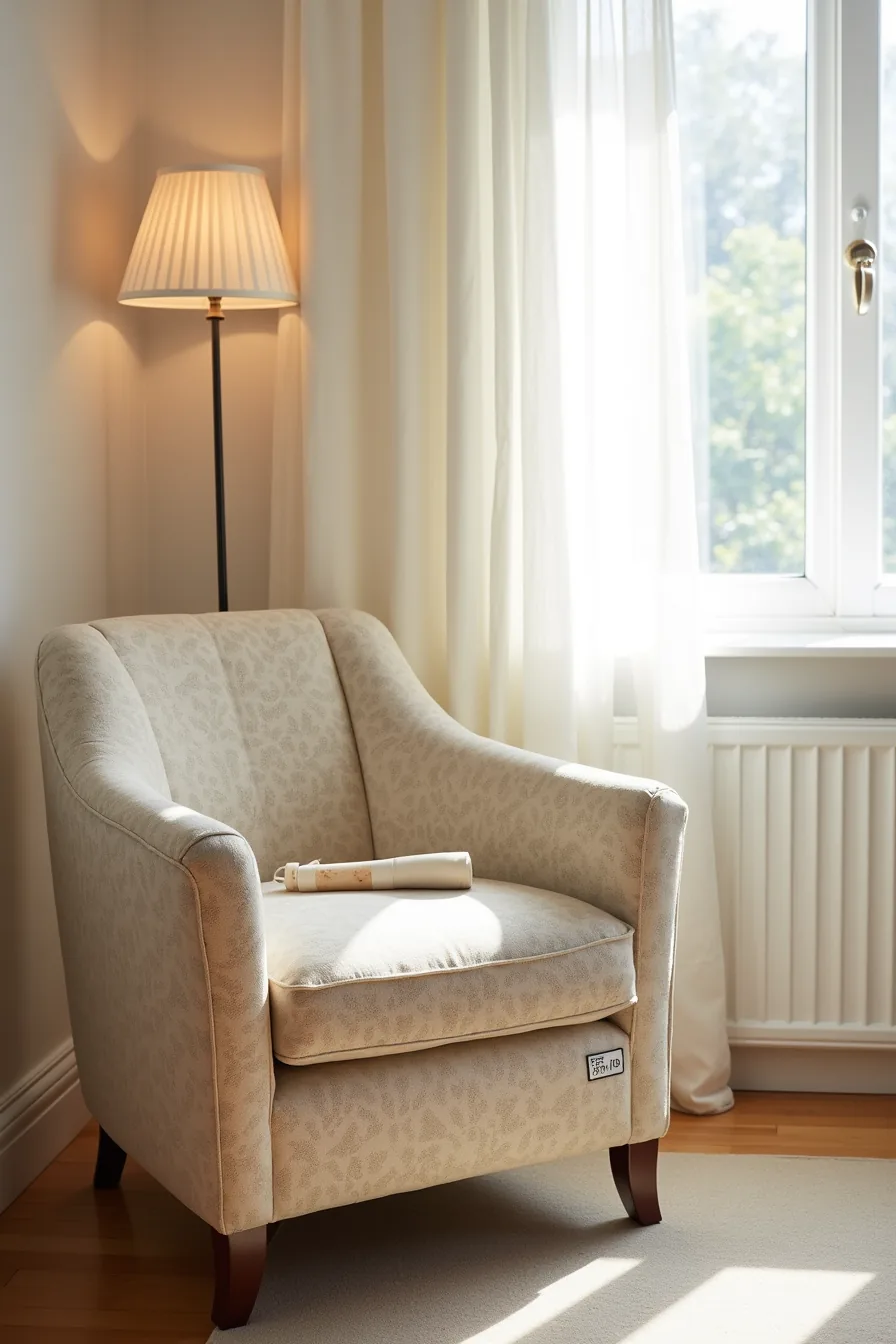
Fabric performance ratings matter more than the pattern itself. A heavy-duty rating of 30,000–50,000 double rubs suits daily seating, while 15,000–25,000 works for occasional use, check the care tag hanging from the seam before you commit. Cotton and linen blends offer breathable comfort but stain quickly; a Crypton or solution-dyed polyester resists spills for roughly twice the cost per yard.
Your daily routine takes under two minutes: run a lint roller over the seat and arms weekly, and vacuum the crevices monthly with a brush attachment. A visible stain on the seat cushion means you need immediate blotting with cold water and a mild detergent, never rub, as that pushes the pigment deeper into the fibers. For a patterned chair, spot-cleaning risks leaving a lighter halo around the treated area, so test any cleaner on the underside first.
Plan for reupholstery when the fabric pills, fades unevenly, or the cushion foam loses its resiliency. A standard accent chair requires 4–6 yards of fabric, and professional labor runs $300–$800 depending on your region. If the frame is solid kiln-dried hardwood, reupholstering beats replacement; if the joints wobble or the springs sag, buy new.
Your Pattern Accent Chair Checklist
Before you buy, measure your floor space and the chair’s footprint. Confirm the pattern scale suits your room size, large prints overwhelm small nooks, while tiny motifs get lost in open-plan areas. Check fabric durability against your lifestyle: cotton blends for low-traffic reading corners, performance weaves for homes with kids or pets.
Set a budget that includes potential reupholstering costs. A $200 thrifted find might need $400 in fabric and labor, while a $900 new chair with quality construction could last decades without extra expense.
Your next step: Print a life-size template of your shortlisted chair dimensions, tape it to the floor, and live with the footprint for 48 hours before purchasing.
Frequently Asked Questions
What size pattern accent chair fits a small living room without blocking sight lines?
Choose an armless or low-back style with a seat height under 18 inches and a depth around 30–34 inches. Place it diagonally or against a wall, keeping 18–24 inches of clearance from walkways.
Can I use a patterned accent chair if my sofa is already patterned?
Yes, if the chair’s pattern is smaller in scale or uses a different colorway that pulls from the sofa’s background tone. Keep both patterns in the same family, geometric with organic, for example, and let the chair occupy a separate visual zone.
How do I keep a patterned accent chair from looking dated in 5 years?
Choose a timeless motif, stripes, ikat, or abstract florals, over a trend-driven print like animal spots or oversized tropical leaves. Stick to two or three colors maximum, and pair it with neutral furniture so the pattern reads as intentional, not seasonal.
What fabric performs best for a pattern accent chair in a high-traffic home?
Look for solution-dyed polyester or a polyester-olefin blend with a rub count of 30,000–50,000 double rubs. Avoid cotton and linen blends, which pill and fade within two years. Choose a pattern with a dark background to hide stains and pet hair between cleanings.