

A wooden chair design succeeds or fails on three decisions before you ever consider aesthetics: the joinery that holds it together, the curve of the backrest, and the seat height relative to your table. Get these right, and the chair disappears into comfortable use; get them wrong, and no finish or silhouette will save it. The six approaches that follow range from a $40 DIY stool to a heirloom-grade piece that will outlast your dining table, each with the specific dimensions and trade-offs you need to match one to your room, your budget, and your tolerance for maintenance.
Key takeaways
- Joinery beats finish: A chair with mortise-and-tenon or through-wedge joints will outlast a glued-and-screwed frame, no matter how flawless the stain is.
- Curved backs win comfort: A curved backrest follows your spine’s natural arch, reducing lower-back strain during meals or desk work, while straight backs demand upright posture and suit formal dining only.
- Scale dictates placement: In a small room, choose chairs with open backs or slim arms (under 20 inches wide) to preserve visual floor space, while large rooms can handle heavy, closed-frame designs without feeling cramped.
- Rental-safe means removable: For renters, pick chairs with bolt-together legs and no permanent wall anchoring, so you can disassemble and move them without leaving marks or losing a deposit.
Joinery Detail Focus: Why Construction Matters More Than Finish
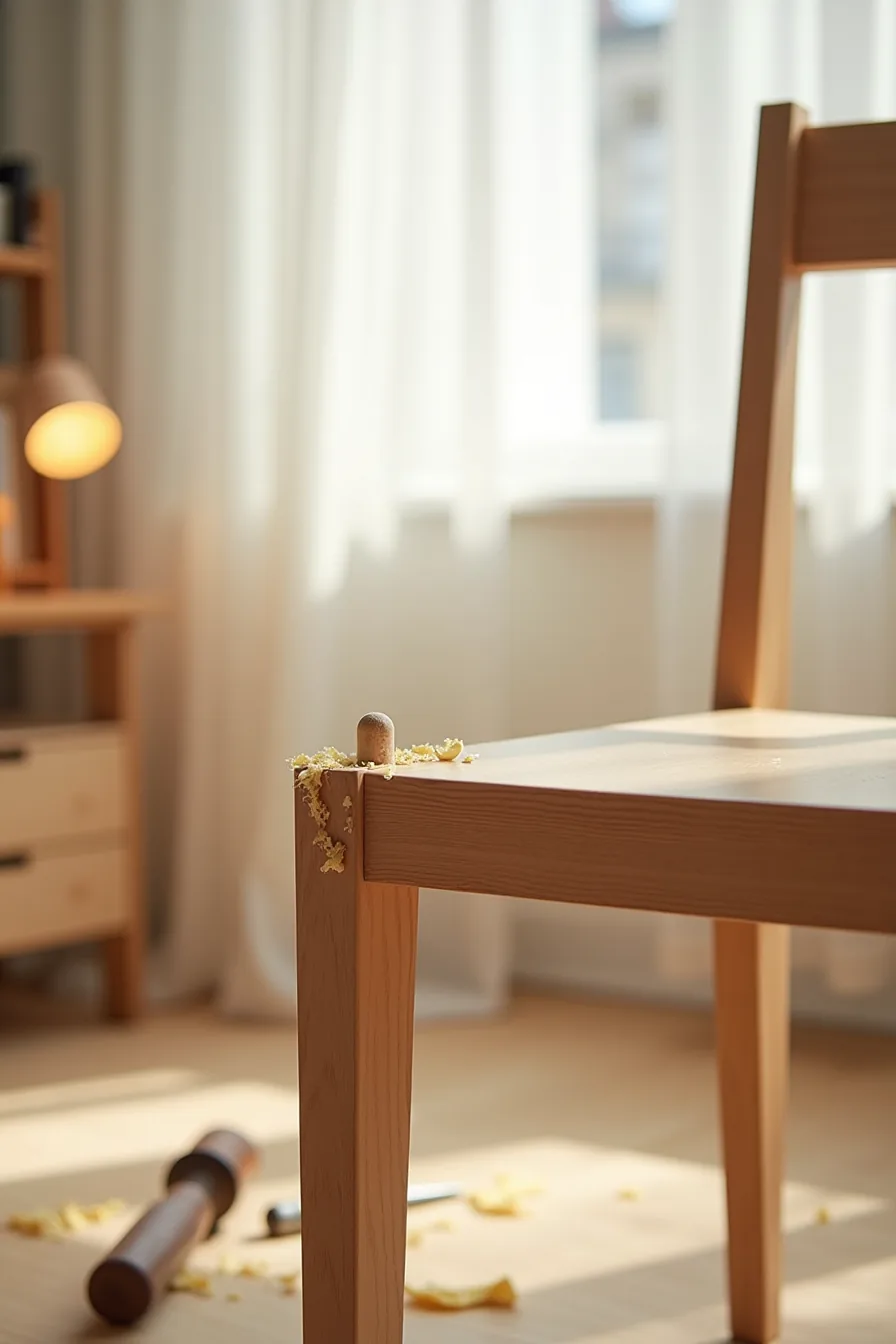
Dowel-pinned mortise-and-tenon joints, like the one in this setup with chisel and sandpaper resting nearby, outlast most glued butt joints by decades. The dowel pins you see driven through the seat rail into the leg lock the tenon mechanically, so the joint stays tight even if the adhesive fails. That repairability is the real advantage, a loose dowel joint can be knocked apart, re-glued, and reassembled; a failed butt joint usually means replacing the whole chair.
For everyday dining chairs, look for through-tenons or visible dowels at the seat-to-leg connection. They add visual weight that reads as craftsmanship, and they signal that the chair can survive a decade of daily use. Furniture-grade plywood chairs with hidden fasteners cost less but sacrifice repairability entirely, budget roughly 30–50% more for visible joinery, and expect to inspect the joints annually for hairline cracks.
If you buy secondhand, push gently on the seat from side to side; any play means the joint has already begun failing.
Straight Back vs. Curved Back: Performance and Comfort Trade-offs
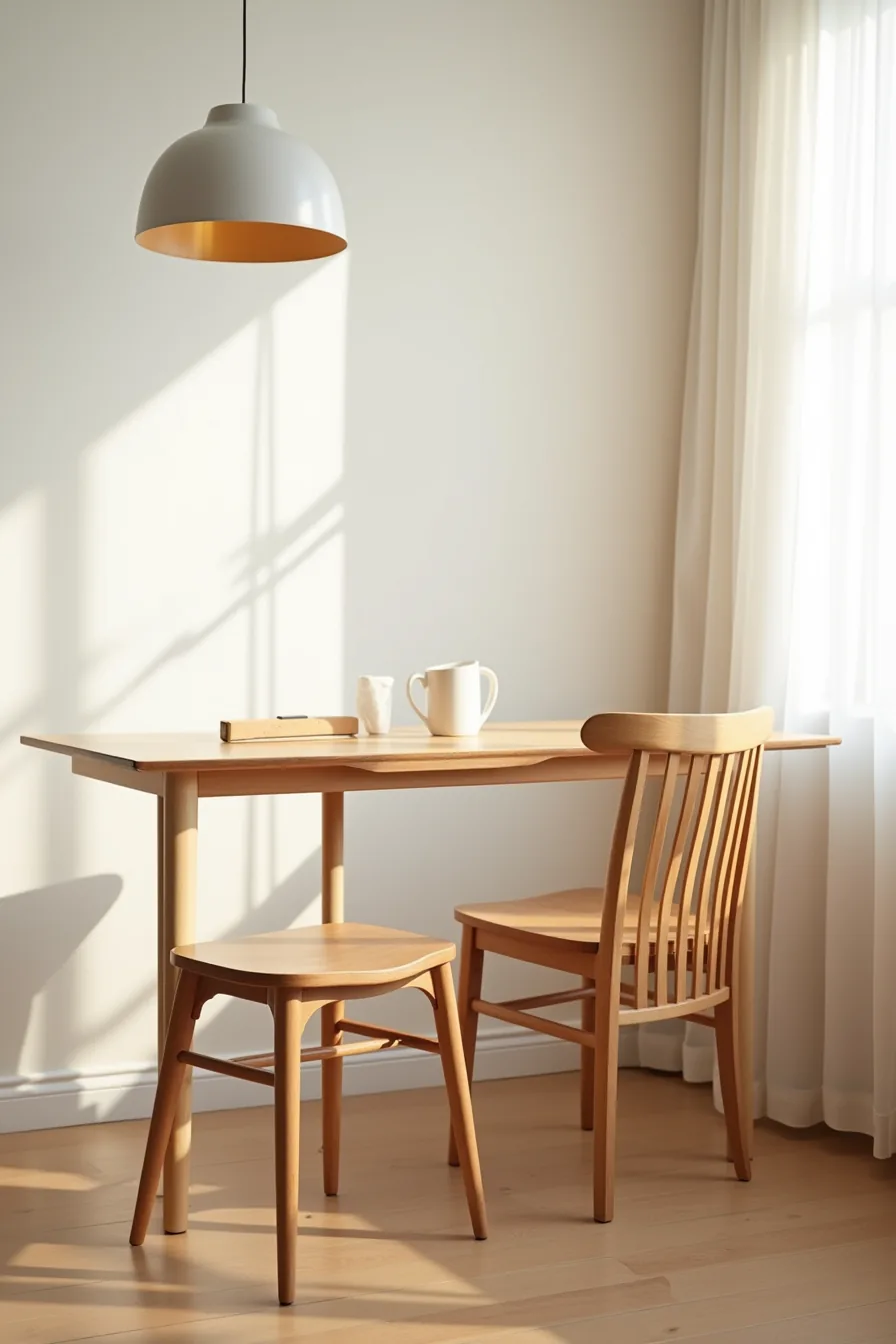
A straight-back chair with vertical slats supports your upper back firmly but forces your spine into its natural forward curve at the lumbar region, which most people feel as pressure after 20–30 minutes. The curved back, by contrast, cradles the lumbar area actively, reducing fatigue during longer meals, but it demands more precise sizing. If the curve’s apex sits too high or low for your torso length, it becomes a constant pressure point rather than a support.
Measure your seated height (from seat bone to shoulder blade) before choosing. Straight backs suit taller users and formal dining rooms where upright posture matters more than lounging; curved backs fit casual eaters who linger over coffee and compact spaces, since the inward sweep frees 3–4 inches of leg clearance behind the chair. Both versions shown at the dining table perform equally for occasional use, but for daily meals lasting over 30 minutes, the curved profile is the safer ergonomic bet.
Expect to pay 15–25% more for a well-shaped curved back, as it requires steam-bending or laminating rather than simple straight cuts.
Traditional Wood Chairs for Longevity and Formal Spaces
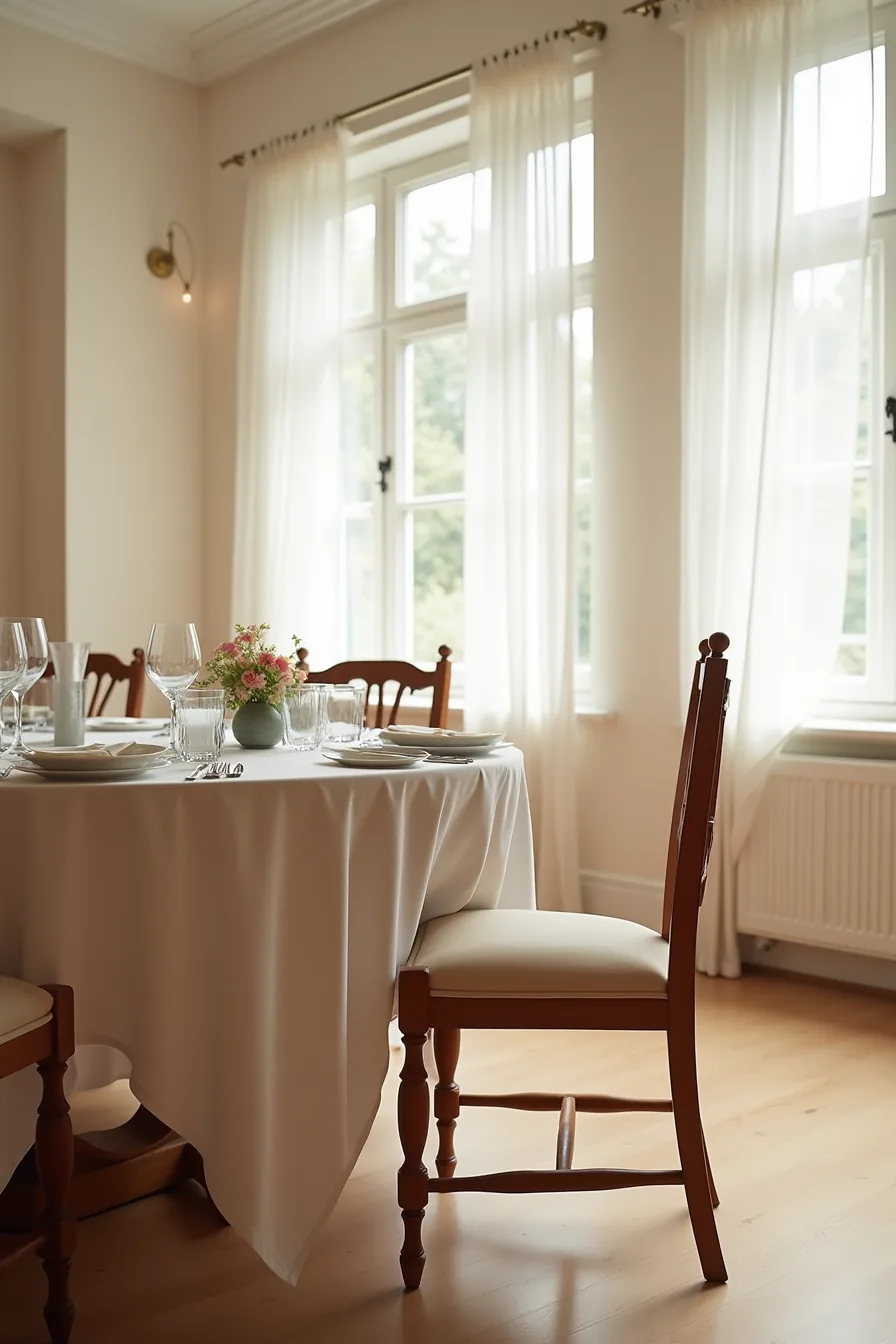
The traditional wooden chair with turned legs and a decorative back splat earns its place in formal dining rooms through joinery you can verify at a glance. Look for mortise-and-tenon joints where the back post meets the seat, if you can see a pin or dowel securing that connection, the chair will outlast a glued-and-screwed alternative by decades. A solid hardwood like oak, walnut, or cherry resists the racking forces of daily use far better than softwoods, and the difference shows in the seat: traditional versions use a solid slab 1–1.5 inches thick, not a plywood panel.
Finish matters as much as construction. A hand-rubbed oil or lacquer allows the wood to breathe and develops a patina over years, while a thick polyurethane coating will eventually crack and peel, requiring full stripping. Expect to pay 2–3 times more than a comparable modern chair for the handwork involved in turning and carving, but the trade-off is a piece you can re-finish, re-glue, and pass down.
This style suits homeowners who prioritize investment over flexibility, it anchors a formal dining table set with place settings, and its upright posture keeps conversation lively rather than lounging. For a budget-conscious entry, purchase a single antique or vintage chair at auction (typically $80–$150) and have it re-glued professionally before committing to a full set.
Modern Wooden Chair Design for Flexible Living
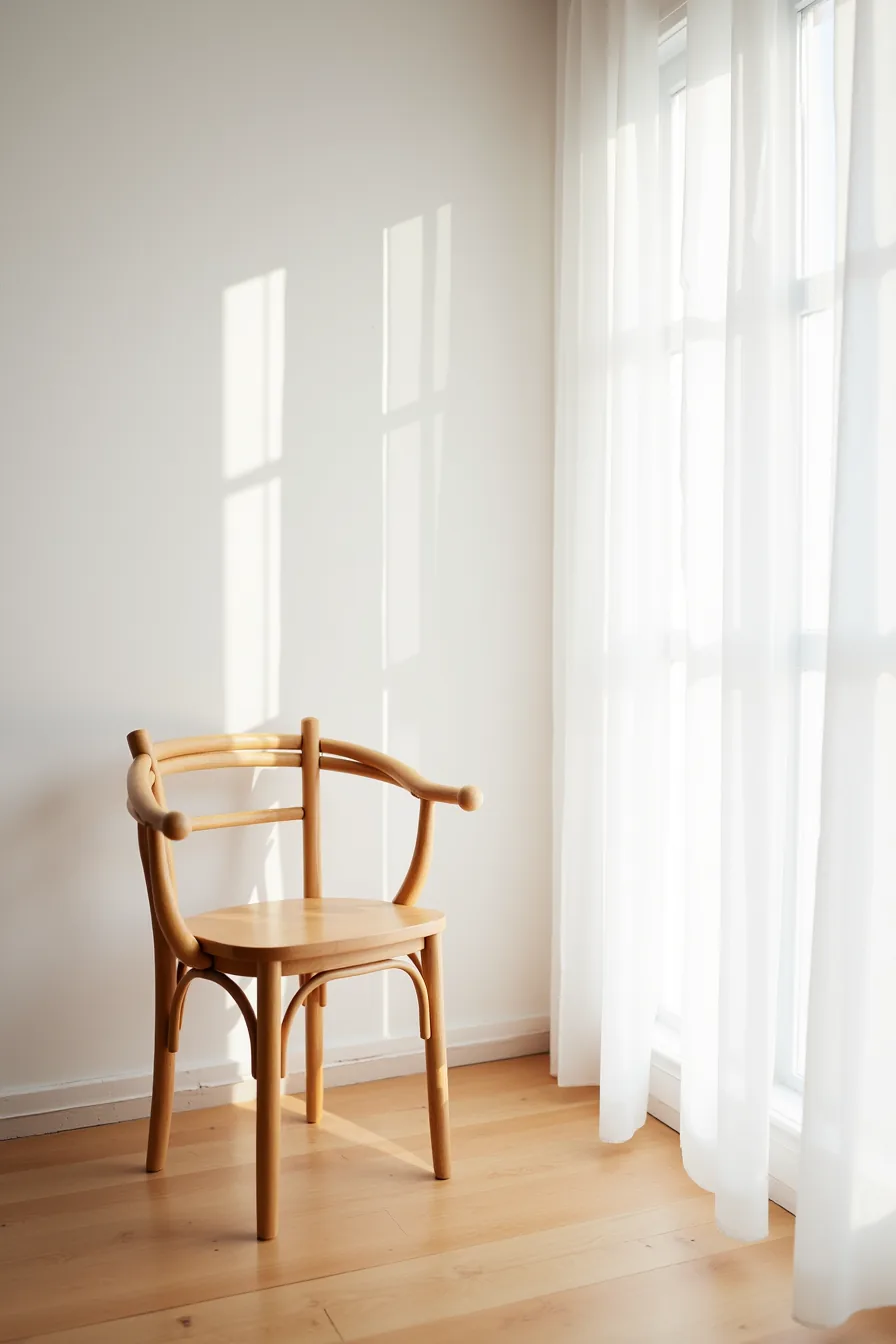
The modern wooden chair with tapered legs and an open back thrives in open-plan homes because it performs two jobs at once: it defines a seating zone without the visual weight of upholstery, and its minimal frame lets surrounding architecture stay the focal point. A single chair with clean, unadorned lines placed against a white wall on hardwood flooring reads as intentional sculpture, yet it remains fully functional for reading nooks, desk work, or pulling up to a side table. The tapered leg, typically splaying outward from 1.5 inches at the top to 1 inch at the floor, creates visual lightness while maintaining stable ground contact.
Mixed materials extend the versatility further. A beech or ash frame with a molded plywood seat offers ergonomic comfort without cushions, making it suitable for 2–3 hour work sessions, while a steel-and-wood hybrid drops the weight to around 8–10 pounds for easy relocation between rooms. Simplified joinery, such as exposed finger joints or wedge-through tenons, reduces production cost by 30–40% compared to turned traditional chairs, yet keeps structural integrity for daily use.
Choose a matte oil or hard-wax finish in a neutral tone, white oak, natural ash, or black-stained beech, to coordinate with changing décor schemes; this chair adapts to minimalist, Scandinavian, or industrial interiors without requiring the room to match its period.
Choosing Wooden Chair Shapes That Suit Small Rooms
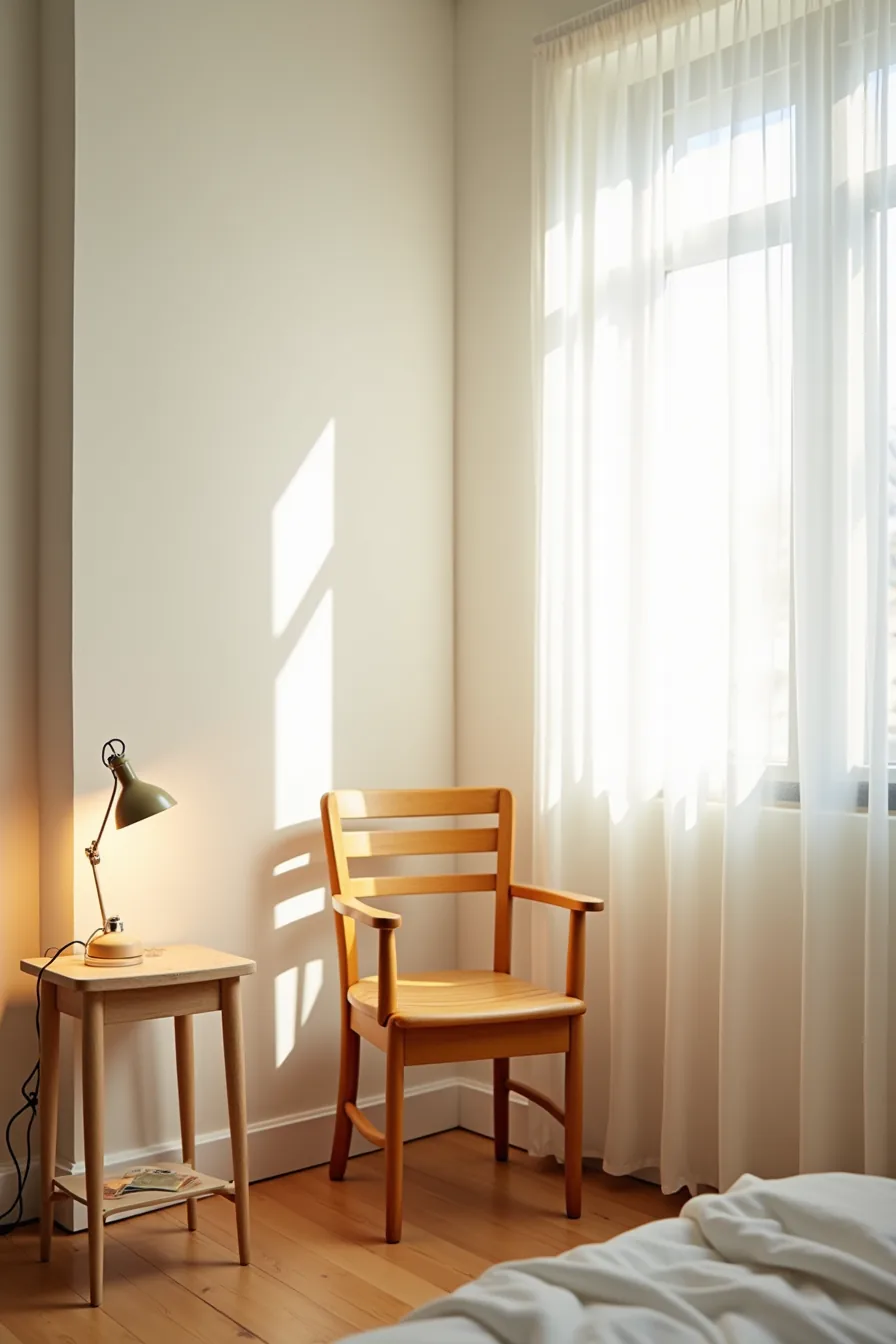
In a compact corner, the difference between a chair that works and one that overwhelms comes down to three numbers: seat height, back height, and arm width. For a standard 30-inch dining or side table, look for a seat height around 17–18 inches. Keep the back height under 32 inches so it clears window sills and doesn’t visually block the room’s sightline.
A narrow-arm profile, typically 2–3 inches wide at the widest point, prevents the chair from eating into walkway clearance. You need at least 24 inches of walking space behind the chair when it’s pulled out, so measure your corner nook before committing. The compact chair with narrow armrests placed beside a side table in a tight corner reads correctly because both pieces share a similar visual footprint; the chair’s low back height complements the table’s scale without competing for vertical attention.
For truly tight spaces, skip arms entirely. An armless chair saves roughly 4–6 inches of width per side, which often means the difference between a usable nook and a cramped one. Match the chair’s wood tone to your floor, lighter woods like maple visually recede, while darker walnut anchors the space if you want intentional contrast.
Budget, Rental, and Investment Routes: What Each Path Requires
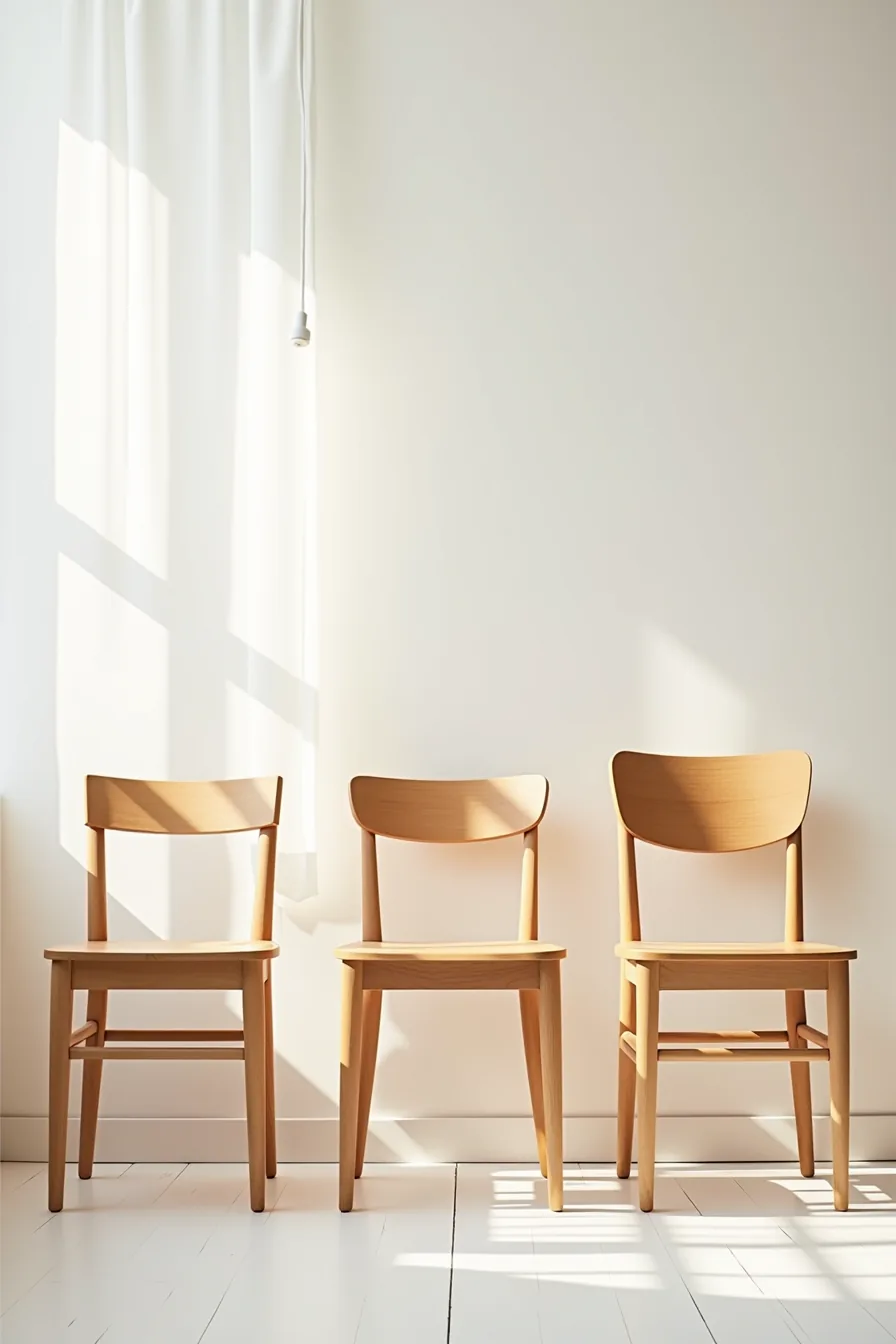
You’ve three realistic tiers when approaching wooden chair design, and each demands different time and money commitments. A budget wooden chair, typically flat-pack pine or rubberwood, costs $40–$90 and assembles in under an hour with a hex key. Expect 3–5 years of daily use before joints loosen; tightening screws twice a year extends that, but the finish will scratch and dull noticeably by year two.
The mid-range wooden chair, pre-assembled solid oak or ash, runs $150–$350 and suits renters because it’s light enough (12–18 pounds) to move between apartments without strain. You can re-oil its surface every 12–18 months, and with reasonable care it holds structural integrity for a decade. The trade-off: a mid-range finish is more susceptible to water rings than a sprayed lacquer, so coasters are non-negotiable.
An investment wooden chair, fine-joinery, hand-finished hardwood like walnut or cherry, starts around $600 and goes to $2,000-plus. It requires annual conditioning and occasional professional regluing, but it’s the only tier where the piece appreciates in design value and survives 20+ years. The three chairs stand in a row here, and their construction differences are immediately legible: the budget chair’s exposed screws and thin seat slab, the mid-range’s clean mortise-and-tenon joints, and the investment piece’s smooth dovetails and hand-rubbed oil sheen.
Choose based on how long you’ll stay put, not on the showroom appeal alone.
Where to start
Walk through your room with a tape measure and mark the exact floor space your chair can occupy without crowding the traffic path, most dining chairs need 18–24 inches of clearance behind them for comfortable passage. Sit in each candidate for five minutes, not five seconds, to test seat depth and lumbar support.
Your next move: pick one room, measure the available footprint, and narrow your search to three chairs that fit both the space and your maintenance tolerance. That single constraint eliminates 80% of the wrong options before you ever compare styles.
Frequently Asked Questions
What wood species is best for a wooden chair that will last 20+ years?
Choose white oak, hard maple, or black walnut. These dense hardwoods resist dents and warping. Avoid softwoods like pine or poplar for daily-use seating unless you accept visible wear within a few years.
Can I move a wooden chair design between rooms without it looking out of place?
Yes, if you select a neutral finish like clear matte lacquer or light whitewash. Stick to simple, straight lines rather than ornate carvings. Match the chair’s wood tone to your floor or trim, contrast works, but clashing undertones will stand out.
How often does a wooden chair need refinishing or repair?
Expect to tighten loose joints every 2–3 years and apply a fresh coat of oil or polyurethane every 5–7 years for chairs in regular use. Scratches or water rings may need spot touch-ups annually. Full sanding and refinishing typically happens once per decade.
What’s the difference between a wooden chair that costs £150 and one that costs £1,500?
The £1,500 chair uses kiln-dried hardwood, mortise-and-tenon joinery, and hand-finished surfaces, all repairable. The £150 chair likely has glued dowels, softer wood, and a sprayed finish that chips. You pay for longevity, repairability, and ergonomic shaping, not just aesthetics.