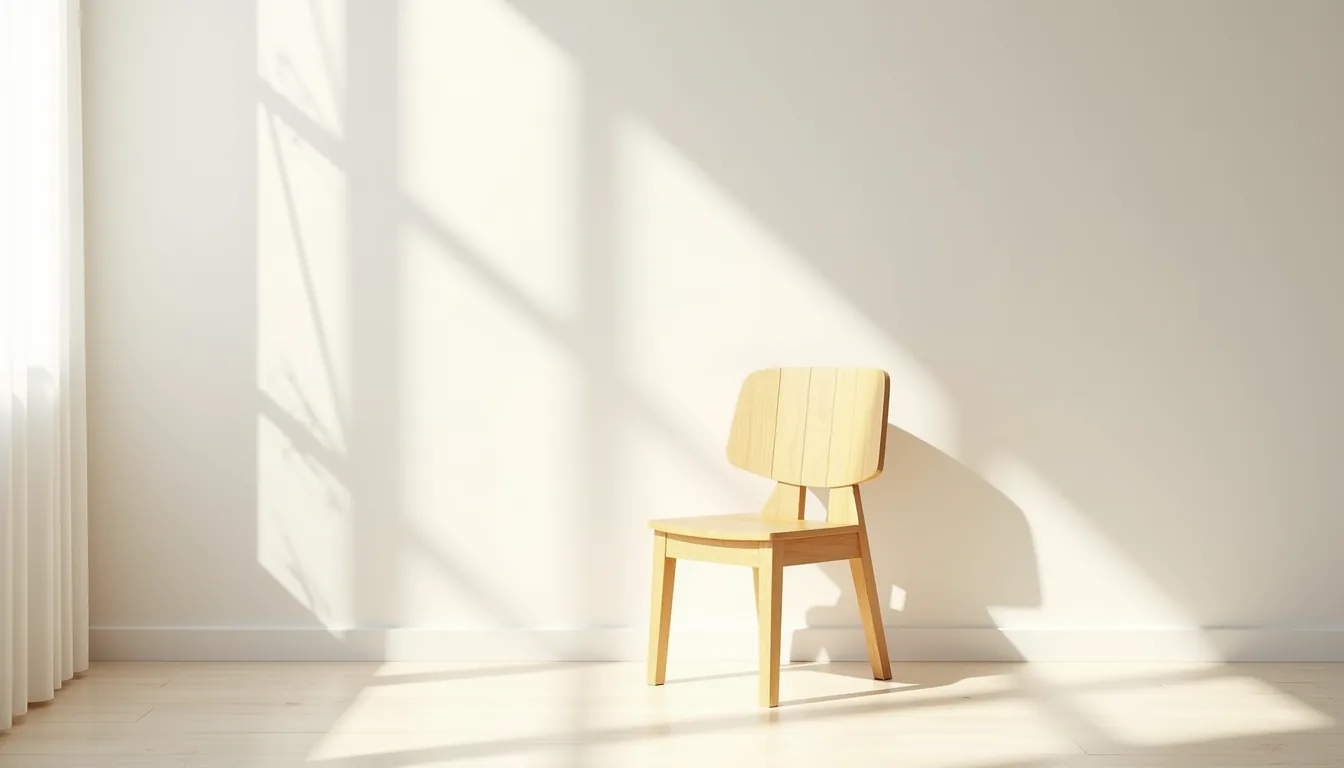
Wooden chair design modern isn’t a single look, it’s six distinct approaches, each with its own trade-offs in space, budget, and upkeep. From sculptural lounge pieces that anchor a large living room to slim, stackable dining chairs that fit a 30-square-foot breakfast nook, the choices hinge on joinery, grain, and seat depth. You’ll need to decide between white-oak durability, walnut’s dark warmth, or ash’s light flexibility, and whether you’re renting (go for knock-down frames) or buying forever (invest in mortise-and-tenon).
The cost spread runs roughly $80 to $1,200 per chair, and the wrong scale can ruin a hallway or overstuff a bedroom. The next six sections break down each style, its ideal room type, and the exact maintenance and measurements that keep it functional.
Key takeaways
Tapered legs on Scandinavian-style chairs read as modern, but they demand solid hardwood, pine will bend under repeated weight, so budget for oak or ash instead. Curved wood profiles need steam-bending or laminated construction; expect to pay 30–50% more than straight-leg equivalents, and verify the chair fits under your table’s apron height. Exposed joinery like wedged through-tenons adds visual interest but requires periodic checking, dry indoor air can shrink joints, so maintain 40–50% humidity or accept seasonal creaks. Upholstered seats with wooden frames balance comfort and style, but choose removable covers for cleaning, and confirm the seat height (17–19 inches typical) matches your dining table before buying.
Scandinavian Influence: Clean Lines and Tapered Legs
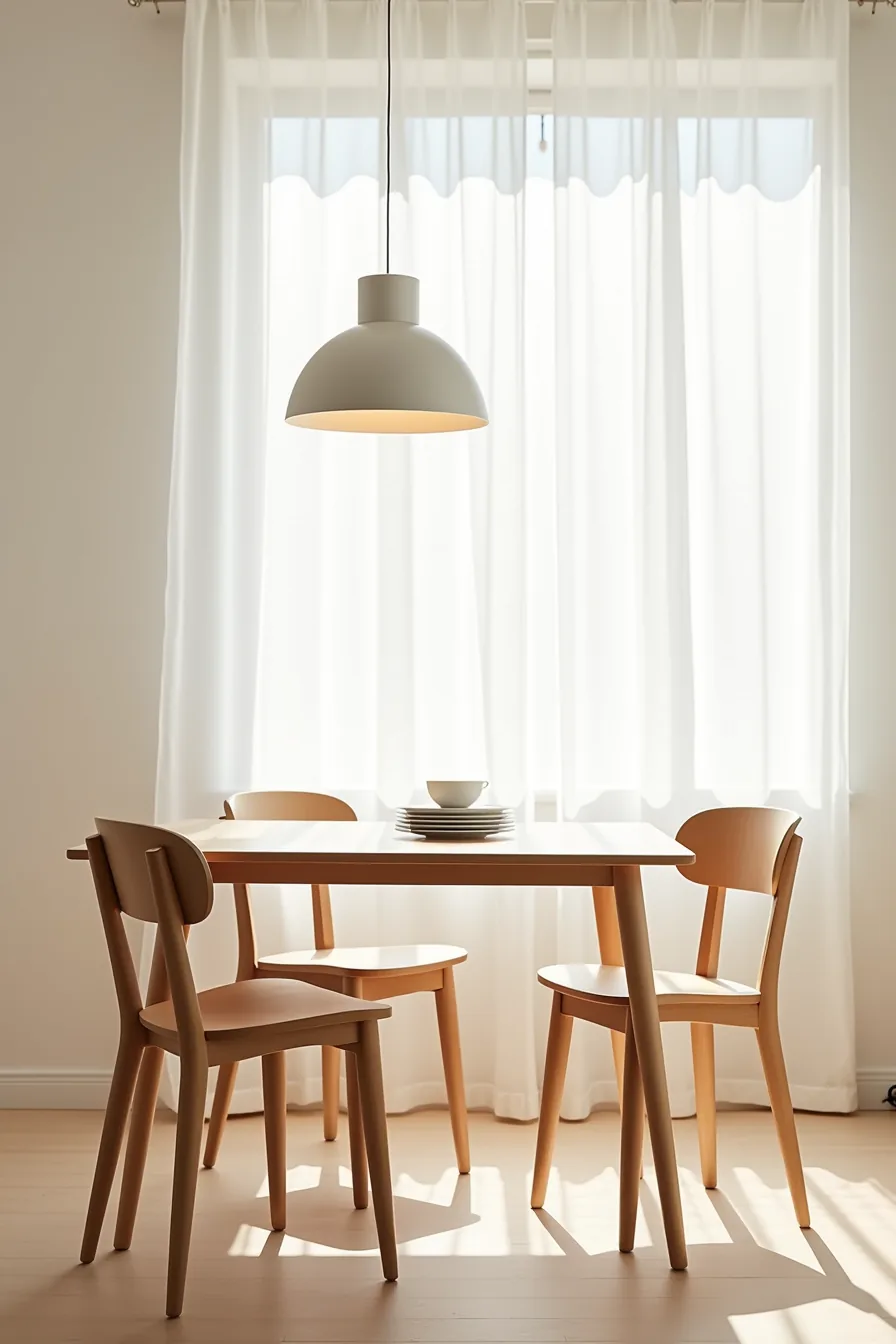
This is the most accessible entry point into wooden chair design modern. The Scandinavian influence strips away ornamentation, leaving you with a dining chair defined by four tapered legs, a curved backrest, and a light wood finish like birch or ash. The visual weight sits high on the backrest, while the legs angle slightly outward to create negative space beneath the seat, a detail that makes a small dining area feel less crowded.
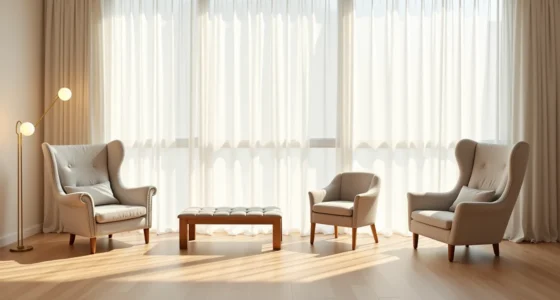
The setup here works because the three chairs share the same proportions as the rectangular table, with roughly 10–12 inches of clearance between the seat front and table edge. This arrangement suits renters and first-time buyers: the light finish hides scratches better than dark lacquer, and the uncomplicated form pairs with almost any existing table. In a compact apartment, choose chairs with a seat height around 18 inches to keep the sightline open; in a larger room, you can size up to a wider seat without breaking the visual rhythm.
Expect to pay between $80 and $250 per chair for solid wood, anything below that range usually means veneer over particleboard.
Curved Wood Profile: Organic Forms Without Excess
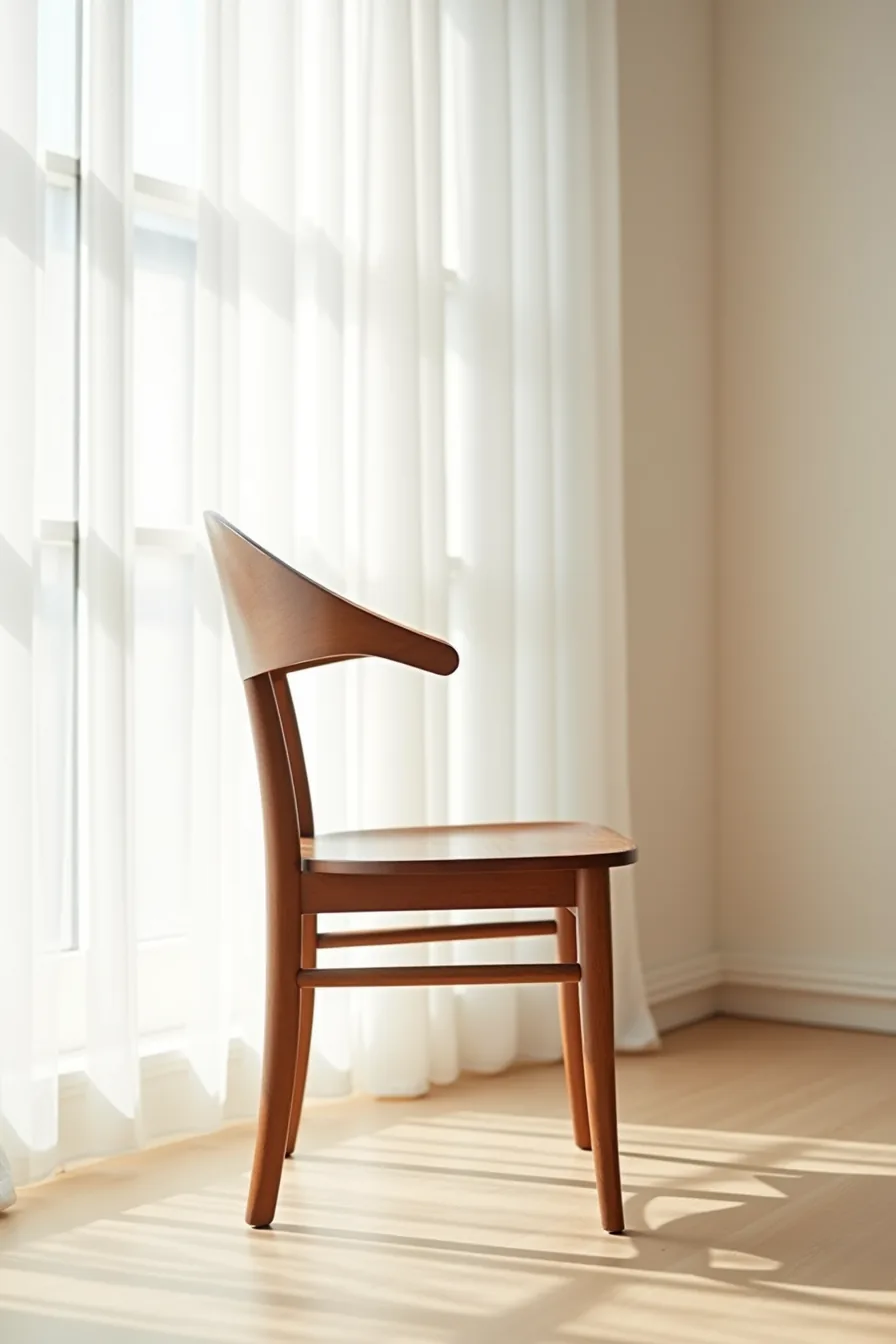
The curved wood profile trades angularity for a single continuous sweep that unites backrest and seat. This design works because bent laminations, thin wood veneers glued and pressed into shape, create strength without bulk, unlike steam-bent solid wood which requires thicker stock and more careful drying. Walnut or cherry suits the technique best: both compress and hold their shape reliably, and their medium-dark tones make the curve read as a deliberate silhouette rather than an accident.
Because the form lacks arms and cushioning, it occupies less visual floor area than a lounge chair, but the sweeping lines direct the eye horizontally. In a compact room, place this chair against a wall or at the end of a table where the profile faces the open space; turning it toward a corner hides the very feature that makes it modern. Expect to pay $300 to $600 per chair for quality bent-lamination construction, the process is labor-intensive, and cheaper versions often use molded plywood with a printed grain that won’t deepen with age.
You can recognize the difference by running a finger along the back edge: real bent laminations show subtle parallel grain lines running with the curve, while printed grain stops abruptly at the edge.
Modern Joinery Exposed: Structural Honesty as Design
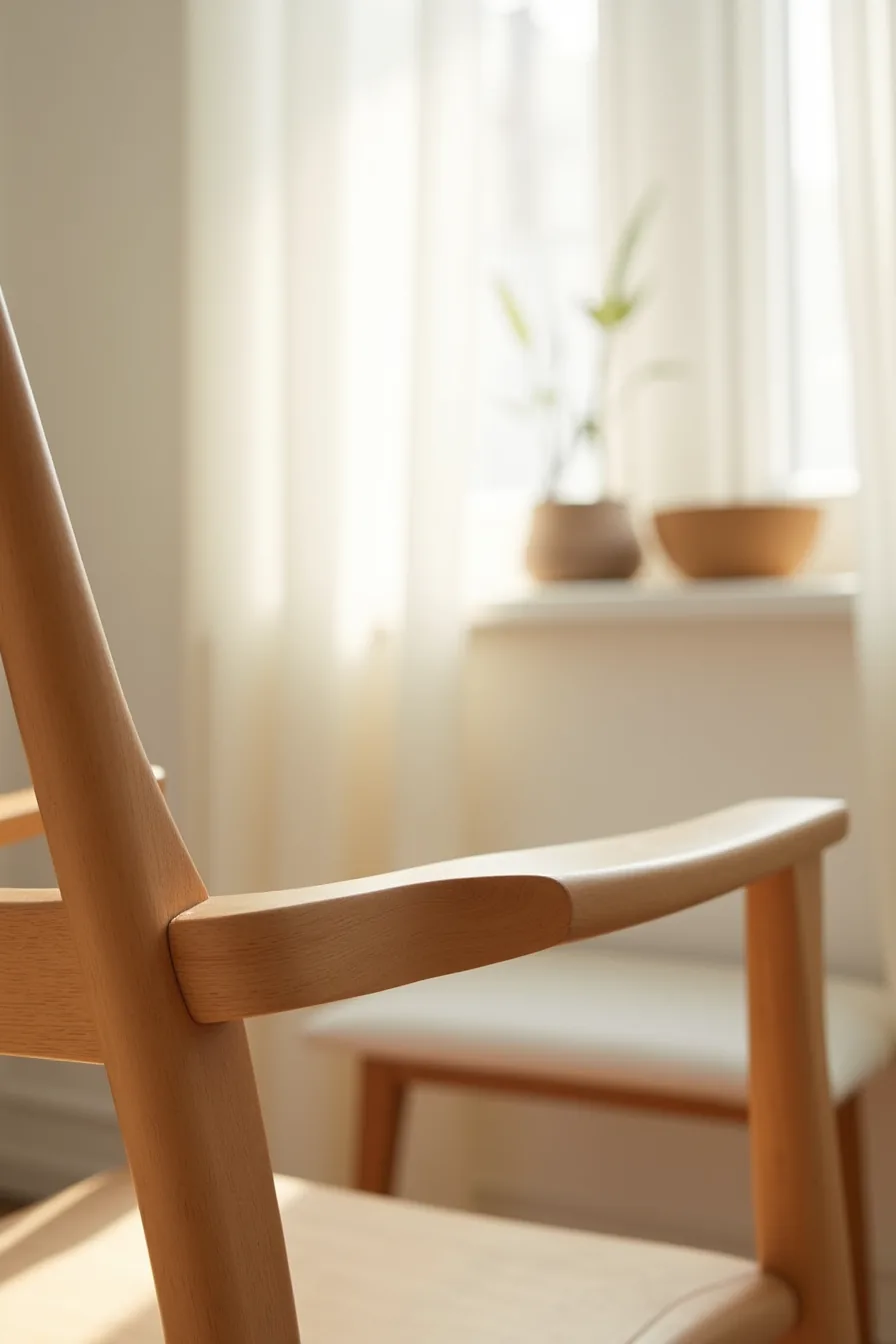
Visible joinery turns the chair’s construction into its primary ornament. A mortise-and-tenon connection, where the tenon slides into a precisely cut mortise and locks with a wedge or pin, shows craftsmanship that a glued-and-screwed joint can’t fake. The dowel connection, a cylindrical peg driven through both pieces, adds mechanical strength and a repeating visual rhythm when left slightly proud of the surface.
Wood grain running uninterrupted through both members proves the joint is structural, not decorative.
This approach suits a room where tactile materials matter more than color. It works best in medium to large spaces where you can view the chair from multiple angles; against a wall, the joint detail hides. Expect $400 to $900 per chair: hand-cut joinery demands a skilled maker, and hardwood species like oak or ash are required to hold the tight tolerances.
Maintenance is minimal, occasional waxing of the exposed joint prevents moisture from loosening the connection over years of seasonal humidity changes.
Upholstered Seat with Wooden Frame: Balancing Comfort and Aesthetics
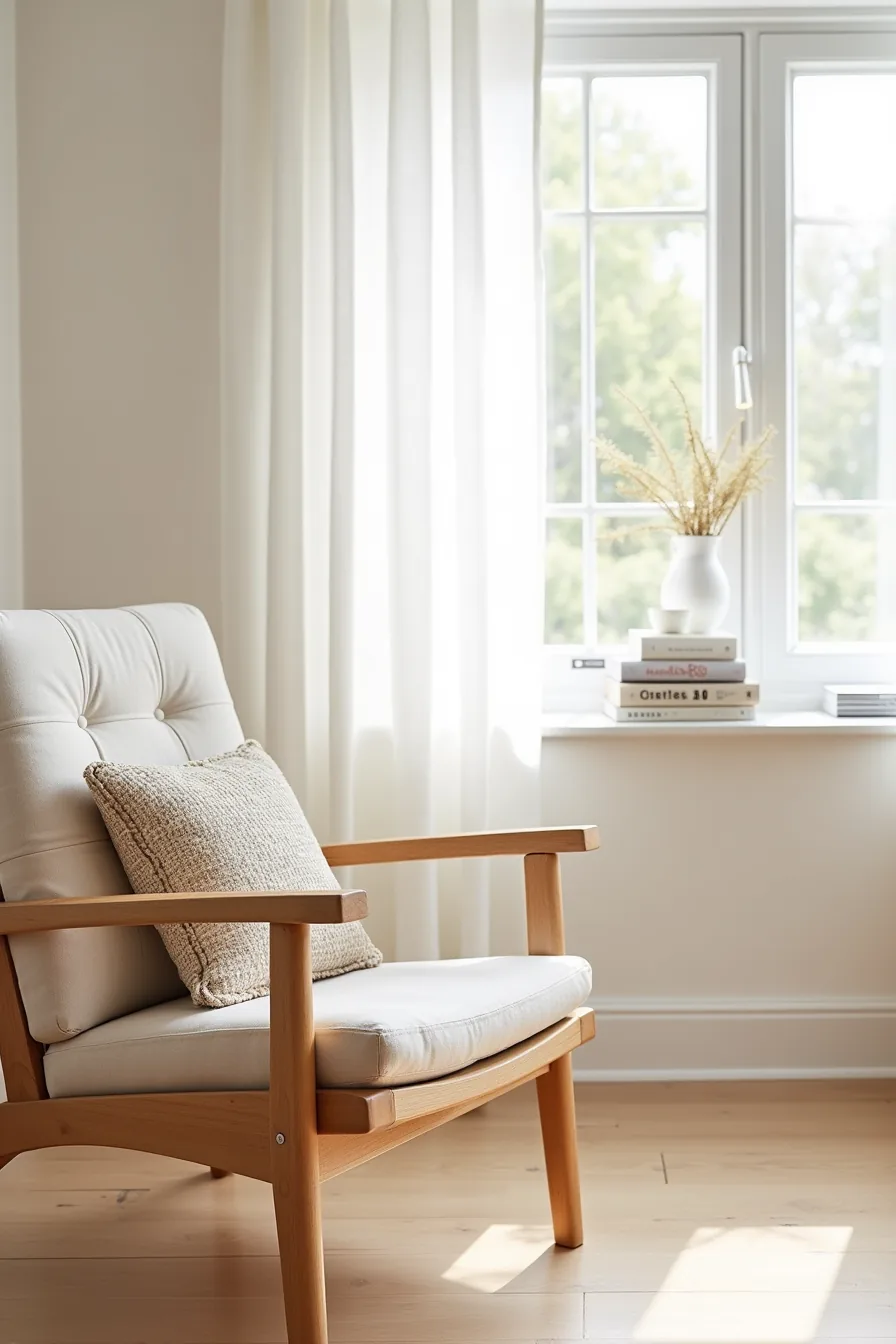
The hybrid approach pairs a rigid ash or oak frame with a generously padded seat, giving you the visual warmth of wood with the sitting comfort of a lounge chair. The junction between frame and fabric is where the design succeeds or fails, look for a recessed cushion that sits inside the rails rather than on top, which keeps the profile slim and prevents the upholstery from reading as an afterthought. A smooth, untufted cushion in neutral linen or canvas creates a calm contrast against the natural wood grain and resists the dated look that deep button tufting can introduce.
Fabric durability matters more here than anywhere else in the home. Choose a heavy canvas or linen with a rub count above 30,000 double rubs if the chair will see daily meals; below that, you’ll notice pilling or thinning within two years. For proportion, match seat depth to the user’s thigh length, most adults need 17 to 19 inches of seat depth, and ensure the cushion compresses no more than an inch under weight, or your legs will feel pressure at the front edge.
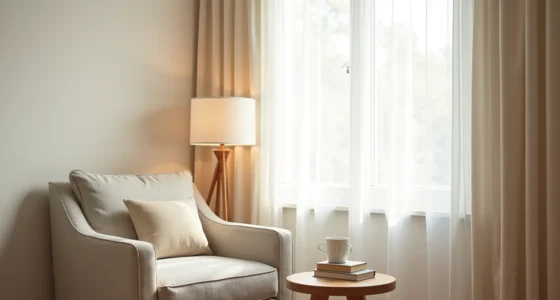
Cleaning is straightforward: vacuum the cushion weekly, spot-clean with a damp cloth and mild soap, and specify a removable cushion cover at purchase so you can wash or replace the fabric without reupholstering the entire frame. This route suits dining rooms where guests linger over coffee, and it pairs well with Modern Wooden Chairs for Calm Dining Spaces if you keep the wood finish natural and the fabric tone muted.
Color and Finish Strategies for Modern Wooden Chairs
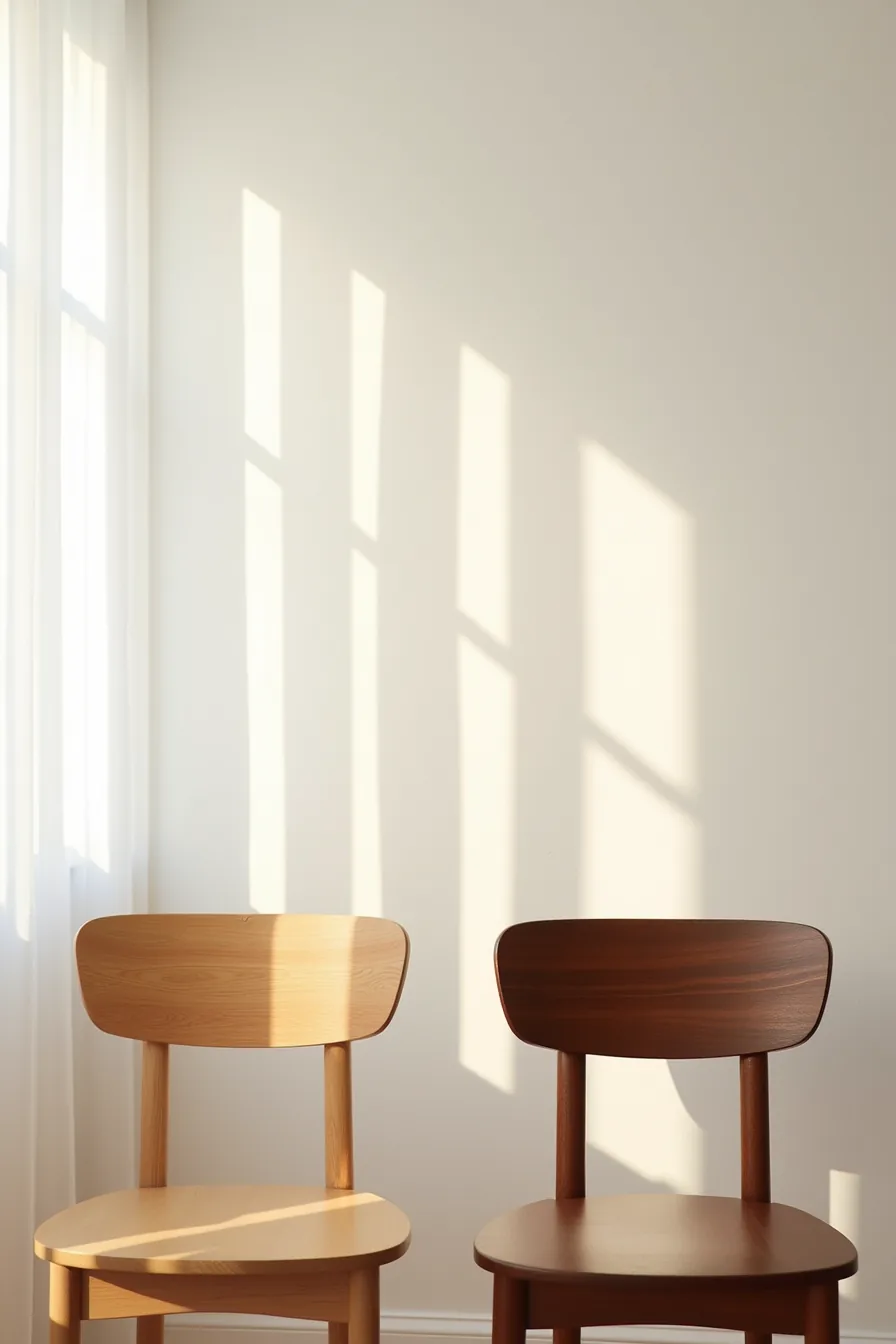
Finish choice alters perceived weight more than shape does. A matte natural finish on oak or ash keeps the grain visible and the chair visually light, which suits small dining areas where dark wood can crowd the room. Matte finishes also hide fingerprints and minor scratches better than any gloss, making them the lower-maintenance pick for households with children, expect to refinish a matte chair every 8 to 12 years, depending on sunlight and handling.
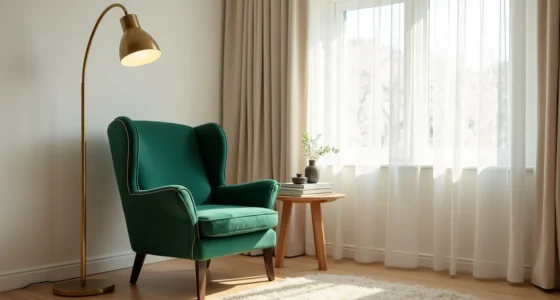
A darker stain with a satin sheen reads more formal and anchors a large, open-plan dining space, but it shows dust and smudges within days and requires a microfibre wipe-down weekly. Satin sits between matte and gloss: it offers some depth without the high-reflectivity that reveals every swirl mark from cleaning. For either finish, request a pre-stain wood conditioner if you choose pine or beech; without it, blotchy absorption ruins the uniformity you see on the matte chair in the image.
Avoid glossy polyurethane on the seat surface, it becomes slippery and cold, and it cracks along the grain within five years under repeated sitting pressure.
Adapting Wooden Chair Design Modern to Your Space and Budget
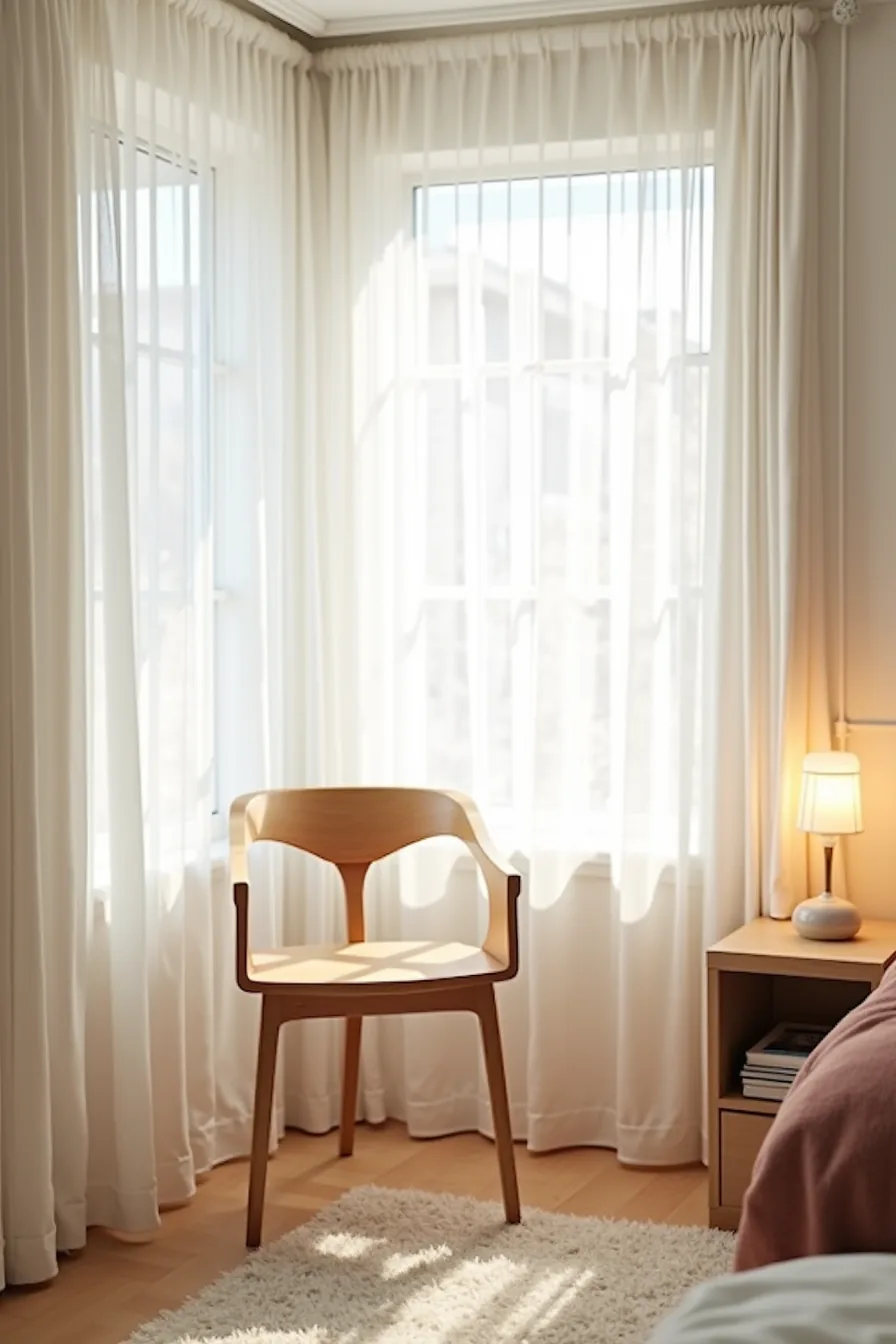
Your budget dictates which route into wooden chair design modern makes sense. At the entry level, flat-pack chairs from major retailers run $80–$150 per unit; assembly takes 30–45 minutes with a hex key, and solid rubberwood versions hold up for 5–7 years of daily use before joints loosen. This suits a first apartment where you need four chairs now and will likely move within three years.
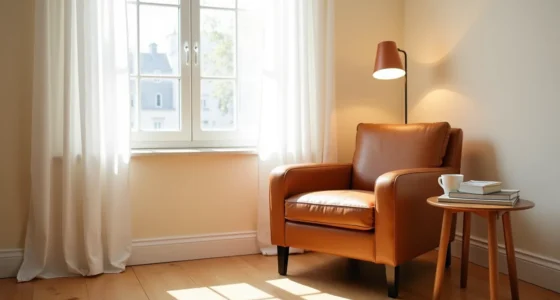
For renters, a rental-friendly wooden chair design modern option means a rental subscription service that delivers a piece for $20–$35 monthly. You get a designer chair without ownership, and the service handles pickup when you relocate, ideal for a compact corner like the one in your setup, where a single chair beside a side table must not dominate the floor plan.
The investment route involves a local maker crafting a chair to your seat height and depth, typically $400–$900 each, with a 6–10 week lead time. These chairs last 20+ years and can be reupholstered or refinished, making them the right choice for a permanent home where the wooden chair and side table corner becomes your daily reading spot. Choose this only if you’ve measured your corner, allow 28–32 inches between the table edge and the wall for comfortable seating clearance.
Your decision checklist in 30 seconds
Before you buy, confirm the seat height matches your table (most dining chairs run 17–19 inches at the seat). Check the arm span clears your table’s apron by at least 6 inches. Choose oak or ash if you want to refinish later; rubberwood if you need budget-friendly durability.
Match the chair to your room’s dominant line, curved backs soften a rectilinear space, while slatted designs reinforce it. For rentals, stick to freestanding pieces with no wall mounting. For long-term use, budget for a hardwood frame with mortise-and-tenon joints.
Your next step: Measure your table’s underside clearance right now, then compare it against the three chair specs you’ve shortlisted. That single number eliminates half your options instantly.
Frequently Asked Questions
What wood species work best for modern wooden chairs that won’t splinter or warp?
Oak, walnut, and ash offer superior dimensional stability with proper kiln drying. Birch and maple are budget-friendly alternatives. Avoid softwoods like pine for high-traffic seating; they dent and splinter easily.
Always check for FSC certification.
Can I use wooden chair design modern in a small apartment without making the space feel cramped?
Yes. Choose chairs with slim profiles, exposed legs, and open backrests, they create visual airiness. Opt for lighter finishes like beech or pale oak.
Use a 24-inch round or 30-inch square table to keep circulation clear. Avoid bulky armrests.
How often do I need to refinish or treat a modern wooden chair to keep it looking new?
With daily use, apply a hardwax oil or polyurethane topcoat every 12–18 months. Lightly sand and re-oil every 2–3 years for matte finishes. High-gloss lacquer lasts 5–7 years but requires professional touch-up for scratches.
Humidity changes accelerate wear.
What’s the difference between a Scandinavian-style wooden chair and other modern wooden chairs?
Scandinavian designs emphasize steam-bent curves, tapered legs, and pale woods like beech or birch, prioritizing ergonomics and light reflection. Other modern styles may use geometric angles, dark walnut, or mixed materials like metal frames. Both are minimal, but Scandinavian feels softer and warmer.