A sectional with accent chair isn’t a single look, it’s a pairing strategy that solves the two biggest living-room problems: filling dead corners and breaking up a monolithic sofa line. The key is matching scale and visual weight, not matching fabric or color. You can use the chair to anchor a reading nook, balance an open-plan layout, or introduce a material contrast that makes the sectional feel intentional rather than default.
Done right, the combo upgrades traffic flow and adds a second focal point without cluttering the room.
Key takeaways
- An L-shaped sectional pairs best with one accent chair placed opposite the chaise, angled 45 degrees toward the coffee table to create a conversation zone without blocking the main walkway.
- For small rooms, swap a full chaise for a loveseat-sized sectional and place a slim, armless accent chair at a 90-degree angle to the corner, keeping 18-24 inches of clearance for traffic flow.
- A renter-friendly route uses a modular sectional with detachable pieces plus a lightweight accent chair (under 30 pounds), letting you reconfigure the layout without drilling into walls or committing to permanent placement.
- When investing long-term, choose a sectional with a kiln-dried hardwood frame and a performance-fabric accent chair (like solution-dyed polyester), which together withstand daily use for 10-15 years while resisting fading and stains.
L-Shaped Sectional Plus Accent Chair Opposite the Chaise
The most direct interpretation of a sectional with accent chair pairs the chair across from the chaise, creating a U-shaped conversation layout. You want roughly 8 to 10 feet of open floor between the chaise edge and the chair’s front legs, enough for two people to sit with knees uncrossed, but close enough that voices carry naturally.
This configuration works best in rooms measuring 14 by 16 feet or larger. In tighter spaces, the chair across the chaise will choke the walkway, so shift the chair 30 degrees toward the TV instead. Choose a chair with a shorter seat depth (around 20 inches) than your sectional’s chaise; the contrast keeps the grouping from reading as two oversized loungers facing off.
Place a slim side table between them, 12 to 14 inches wide, to anchor the gap and give drinks a landing spot.
Angle vs Straight Placement: When to Rotate Your Sectional
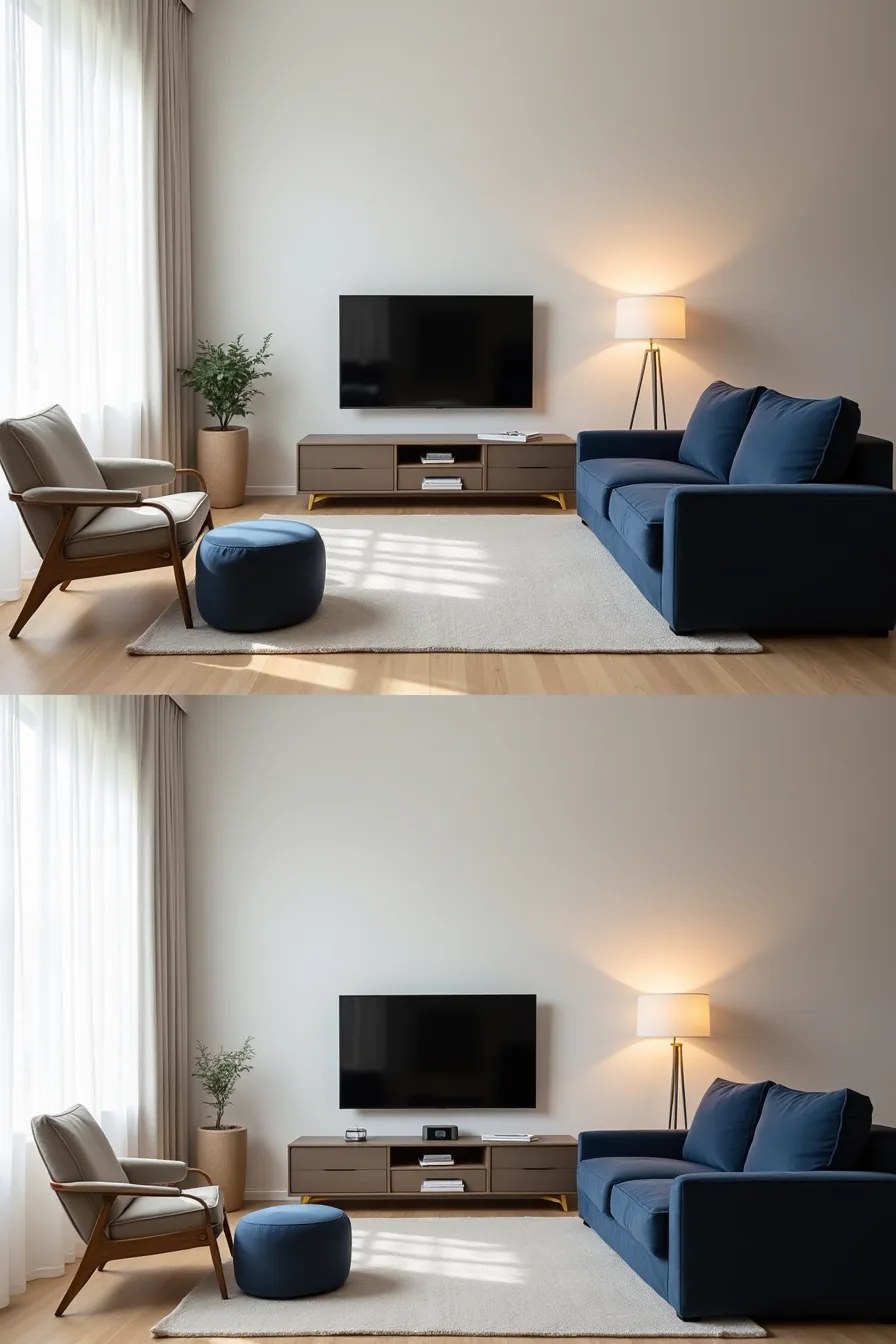
Angling your navy sectional 45 degrees toward a TV mounted on a feature wall changes how the entire room functions. That rotation creates a natural diagonal sightline, so you avoid glare and neck strain while watching. Straight placement against walls keeps the room feeling larger and more formal, but it pushes the seating away from the focal point and wastes corner space.
Rotation suits rooms where the TV and a window compete for attention. You can place the accent chair perpendicular to the angled sectional, closing off the corner behind it. Straight placement works better when you need to preserve a clear path from the entry door to the kitchen or hallway.
Before rotating, measure the diagonal distance from the sectional’s back to the opposite wall, you need at least 4 feet of clearance behind the chaise for people to walk comfortably. Angled layouts also leave awkward triangular gaps at the corners, so budget for a floor lamp or tall plant to fill them.
Sectional and Accent Chair Ideas for Small Rooms
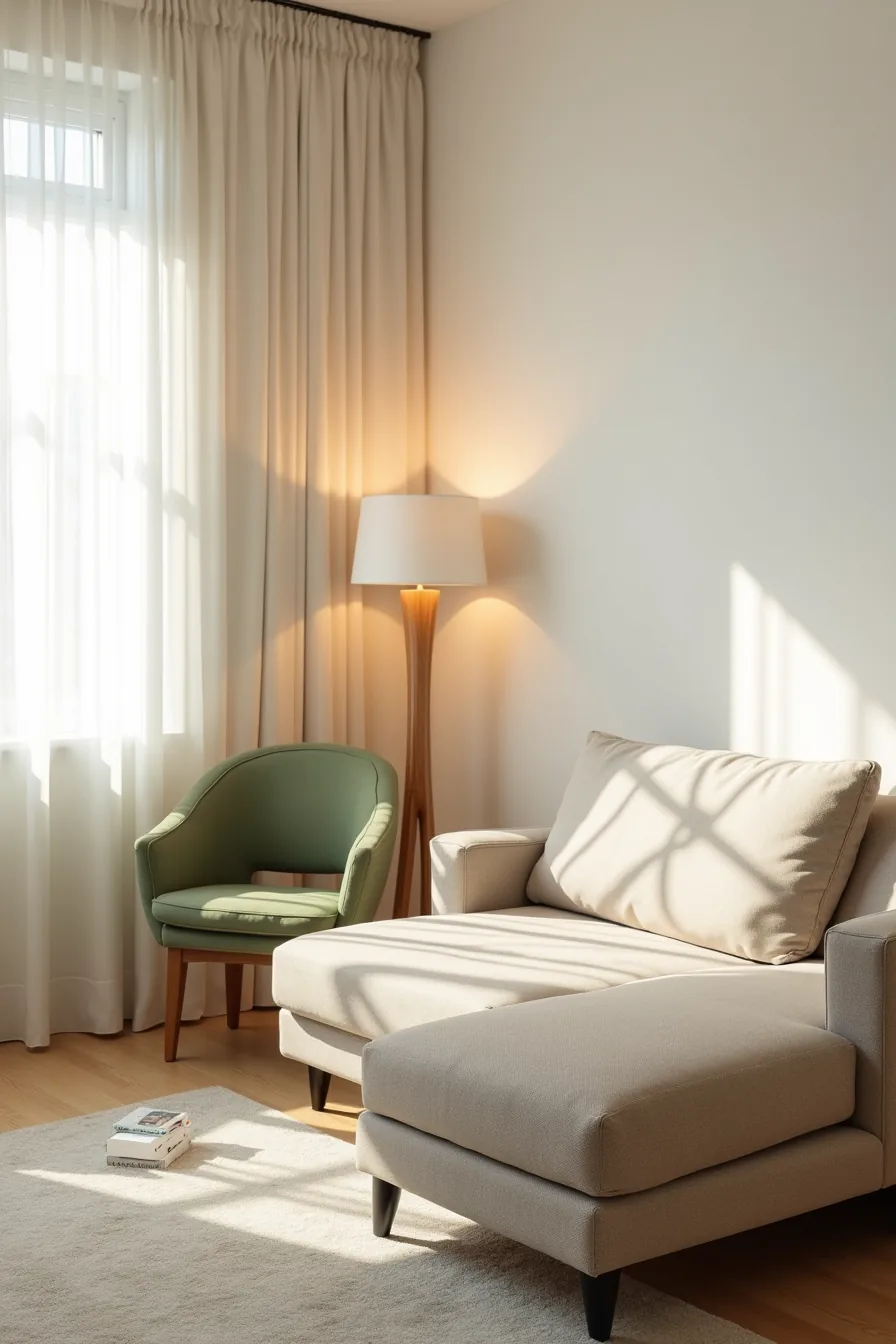
In a compact apartment, a one-armed sectional is your best ally. The open end where the armrest should be allows the piece to sit flush against a wall without wasting inches, and most one-armed models run 80–95 inches in total length. Pair it with a slim barrel accent chair, which typically measures 28–32 inches wide, placed at a 90-degree angle to the chaise.
That orientation creates a defined conversation zone without blocking the path to the balcony or kitchen.
The beige upholstery on the sectional keeps the large silhouette visually quiet, while the sage green chair adds contrast without overwhelming the palette. Slide a narrow console table, 10–12 inches deep, behind the sectional to catch keys and remotes, it also prevents the sofa back from crowding the wall. A 5×7-foot area rug under the front legs of both pieces anchors the grouping and makes the arrangement feel intentional rather than squeezed.
You need at least 30 inches of walking space between the chair and any opposing furniture to keep the room usable.
U-Shaped Sectional With Flanking Accent Chairs
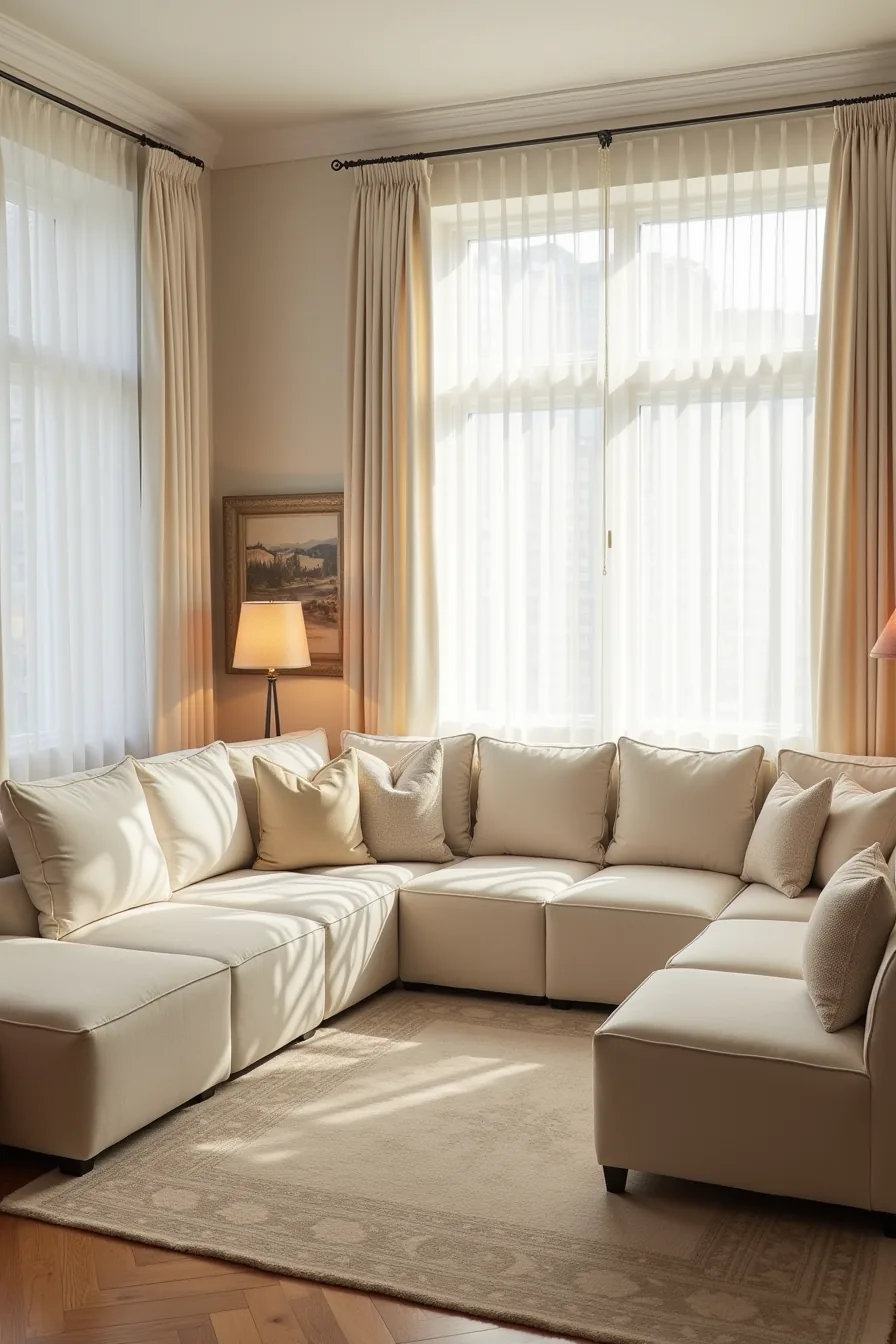
When your room clears 16 feet on its longest wall, a U-shaped sectional creates a true conversation pit, the kind of layout that pulls a crowd into one defined zone instead of scattering it. The cream linen upholstery keeps the massive footprint visually weightless, while the two matching wingback chairs at the outer corners act as bookends that close the composition. Expect a U-shaped sectional to run 110–130 inches wide, so measure your room’s perimeter before committing; you need 36–42 inches of clearance behind the chaise for people to pass without scraping their hips.
The wingbacks, typically 28–34 inches wide, sit angled slightly inward at each corner, which shortens the visual distance between opposing seats and makes conversation feel intimate even in a cavernous space. A patterned area rug large enough to fit all four pieces’ front legs, usually 8×10 feet or 9×12 feet, anchors the arrangement and prevents the furniture from drifting visually. This layout suits formal entertaining, but it also means every seat faces the center; if you want a television in the room, that screen becomes the focal point whether you planned it or not.
Choose performance linen or a Crypton-treated fabric here, because a sofa this size sees heavy traffic and cleaning a full U-shaped piece isn’t a weekend project.
Renter-Friendly and Budget Routes to Sectional Seating
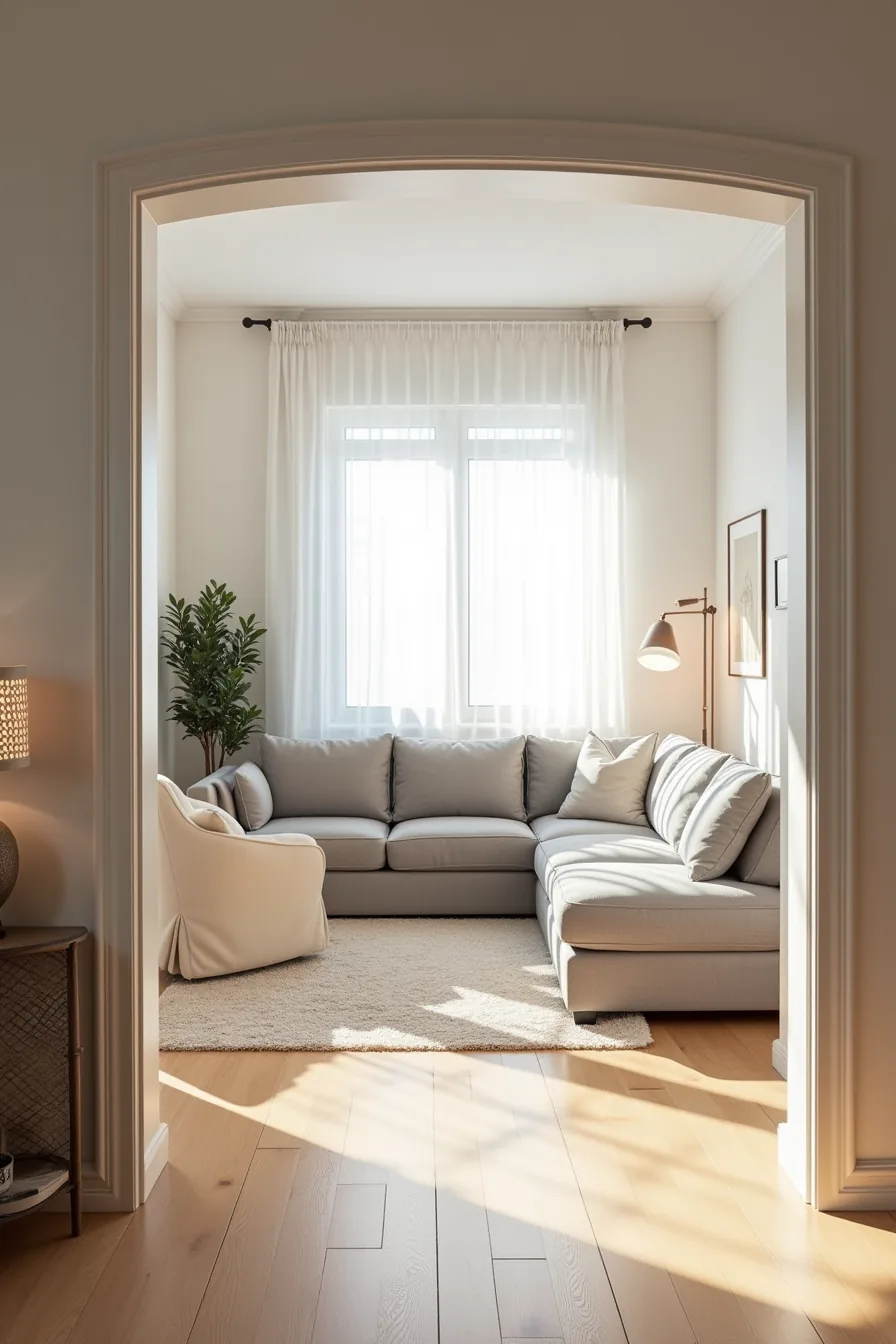
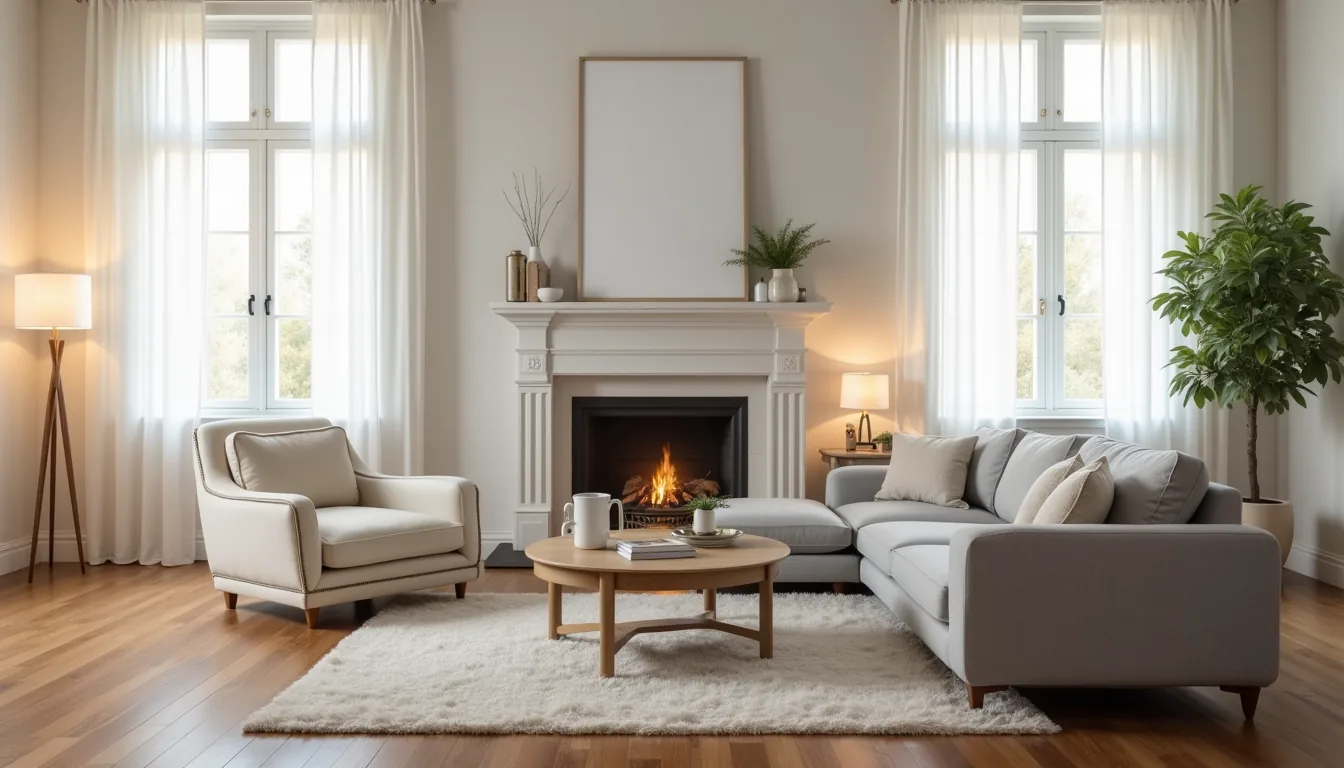
Modular sectional pieces in neutral gray arranged in an L give you the full sectional footprint without the commitment. Individual modules, typically 30–40 inches each, break down into manageable carrying sizes, so you can reconfigure the shape when you move rather than wrestling a one-piece monster up a stairwell. Budget brands price these sets in the $700–$1,500 range, and the gray polyester covers resist the fading that cheaper fabrics often suffer near windows.
Pair that modular base with a slip-covered accent chair in natural linen. The slipcover unzips for machine washing, which is the single most practical choice for homes with pets or kids. A ready-made cover runs $60–$150, letting you swap the chair’s color seasonally without reupholstering.
Skip wall anchors and drilled mounting entirely. Instead, lay a non-slip rug pad under the sectional’s feet, it grips the hardwood floor and stops the modules from sliding apart during daily use. Add felt pads under the accent chair’s legs; they protect the finish and let you drag the chair a few inches when you need extra floor space for guests.
This setup disassembles in under ten minutes with zero repair costs when your lease ends.
Long-Term Investment: Sectional and Accent Chair Durability
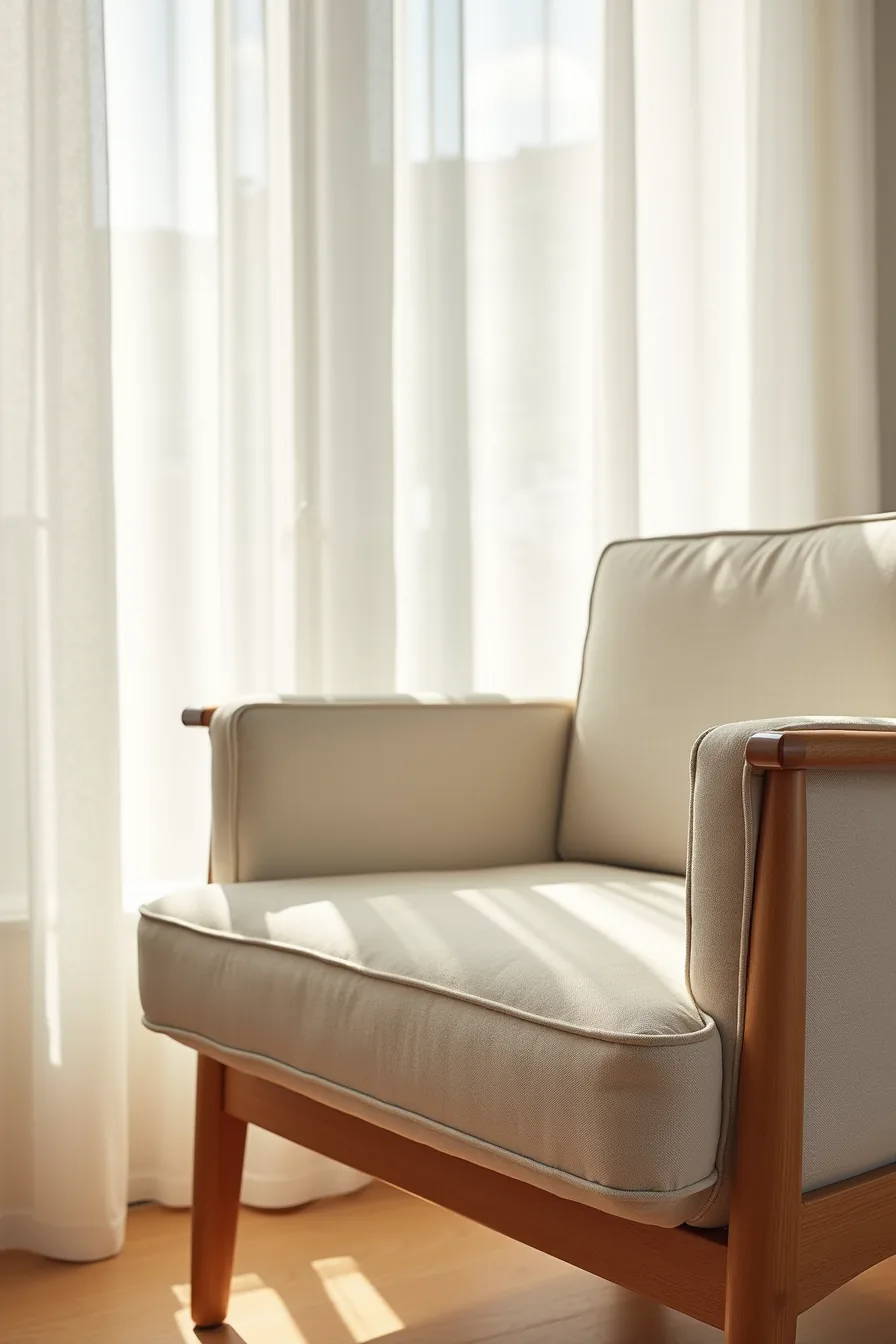
When you’re buying for a decade, not a lease term, the frame is where you separate furniture from firewood. A kiln-dried hardwood frame with eight-way hand-tied springs typically holds its shape and support for 10–15 years, whereas glued panel frames often sag within 5. Wedged, doweled, or dovetailed corner joints, visible in the open upholstery of a quality piece, resist the racking stress that everyday sitting and reclining applies.
Fabric performance ratings matter more than color. Look for a double rub count of 30,000 or higher on the sectional; that rating approximates heavy residential use, while the accent chair can get away with 15,000–20,000 since it sees less traffic. A tight-weave, solution-dyed polyester or a Crypton-style performance fabric will outlast a natural linen by several years in direct sun, though it costs roughly 20–30% more upfront.
Budget for maintenance as part of the investment. Rotate the accent chair quarterly and flip the sectional’s seat cushions monthly for the first six months to equalize wear. Have the springs and webbing inspected at year five; a $100–200 tune-up at that point commonly doubles the sofa’s usable life.
Where to start
You don’t need to nail every detail at once. Measure your room’s longest wall and your sectional’s footprint first, then pick one accent chair that fits the remaining floor space with at least 18 inches of walkway clearance. That single measurement eliminates most layout mistakes before you shop.
Match the chair’s seat height to your sofa’s within two inches. Test the pairing in person if possible, or order swatches before committing.
Your next step: sketch your floor plan on graph paper, block in the sectional, and circle where a chair could land without crowding the coffee table. That sketch becomes your shopping guide.
Frequently Asked Questions
What is the ideal distance between a sectional and an accent chair in a conversation layout?
Keep 36–48 inches between the front edges for comfortable talk flow. In tighter rooms, 30 inches works, but anything less blocks legroom and makes the space feel cramped.
Can you use an accent chair opposite a chaise lounge in a small living room?
Yes, if the chair is slim-armed and the gap stays 24–30 inches. Angle the chair toward the chaise to open sightlines, and skip a coffee table to avoid crowding.
What fabric holds up better for a sectional with an accent chair in a high-traffic household?
Performance weaves like solution-dyed polyester, olefin, or Crypton outlast cotton and linen. Look for a 50,000–100,000 double-rub rating, and treat both pieces with a stain repellent for daily wear.
How do you arrange a sectional with an accent chair when the room has an awkward shape?
Anchor the sectional against the longest uninterrupted wall, then float the accent chair perpendicular or at a 45-degree angle to break the odd geometry. Use a rug to define the seating zone, and pull the chair 6–12 inches off the wall to avoid visually trapping the space.